
Two lifelong friends and a road full of surprises
What does it take to turn a simple tire purchase into a motorcycle adventure? For BTA contributor Mike, all it took was a conversation with a friend, an intriguing story about an amethyst mine in southern Brazil, and a few days off work.
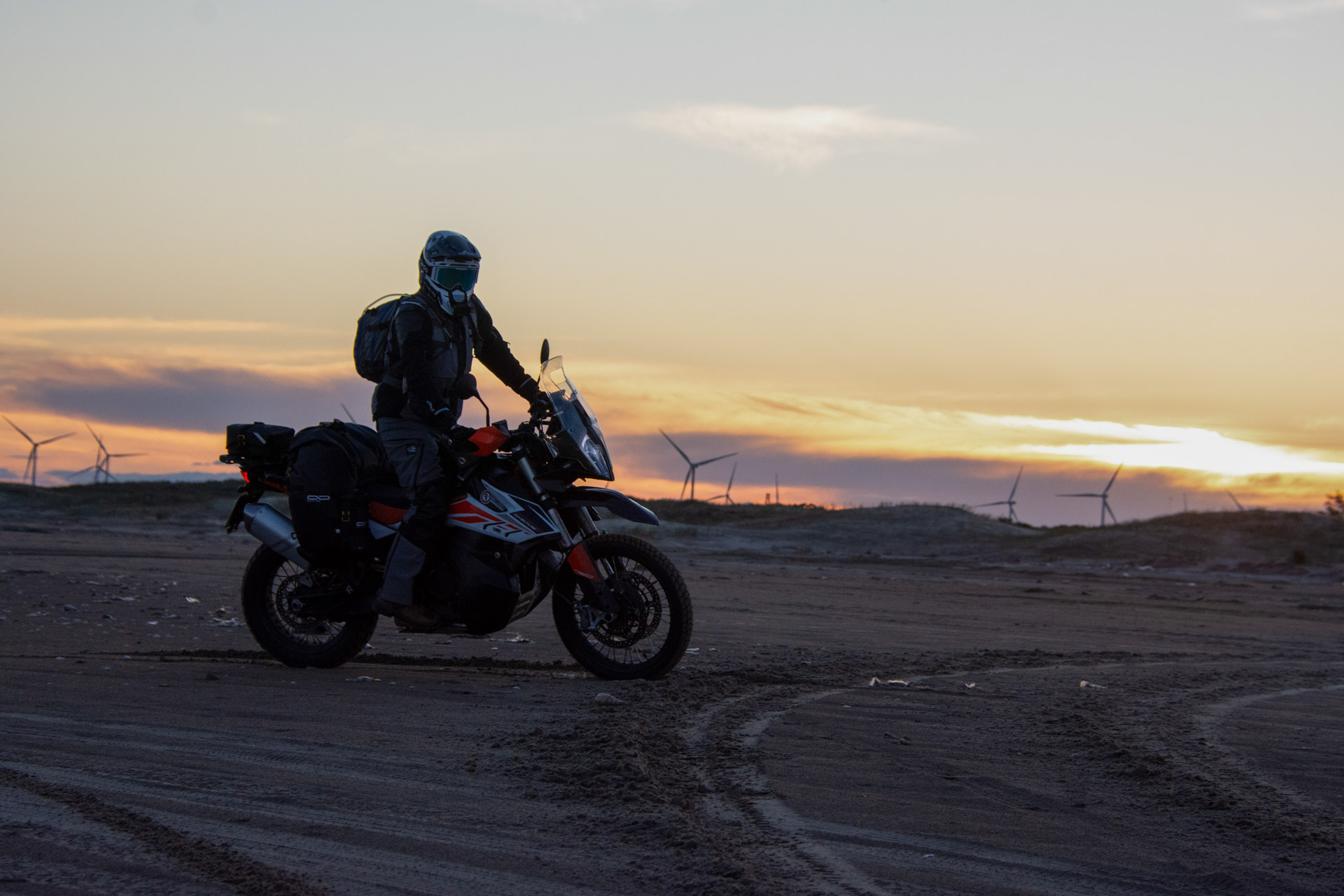
With his KTM 790 Adventure R freshly serviced and his longtime friend Philip riding a BMW G 650 GS Sertão, the two set off from Argentina with a straightforward mission: find new tires and explore an underground mine on their motorcycles.
What followed was a week of unexpected encounters, changing plans, and the kind of camaraderie that makes motorcycle travel so rewarding. Along the way, they discovered that leaving room for the unexpected can lead to some remarkable experiences.
Here’s Mike’s story.
A Reason to Ride
Most motorcycle trips begin with a destination in mind. We study maps, calculate distances, and try to figure out what lies ahead. This one started with a set of tires.
I had another motorcycle trip coming up in three weeks, and my KTM 790 Adventure R was in for a scheduled service. I needed fresh tires for the off-road riding we’d planned. On Friday, I mentioned it to my friend Charly. “Go to Paraguay or Brazil,” he suggested. “You’ll probably find a good deal.”
Then he mentioned an amethyst mine in southern Brazil where visitors could apparently ride their own motorcycles through underground tunnels. That was all I needed. Ride to Brazil, buy tires, and explore a mine on two wheels.
I wanted to leave the following Wednesday. There was only one problem. I had nobody to ride with.
Finding a Riding Partner
On Saturday, I was heading to the wedding of my friend Pablo’s son. Pablo is a lifelong friend and the creator of Bike Travel Adventures Magazine. I was traveling with Philip, another childhood friend with whom I’ve shared countless adventures.
“I’m going to Brazil to buy tires,” I told him.
“Can’t you buy them somewhere closer?”
“Of course. But there’s also an amethyst mine where you can ride your motorcycle underground.”
“I’ll come with you,” he said.
“Are you kidding?”
“No, seriously. I could use a few days away to clear my head.”
And just like that, I had a riding partner.
Pre-Trip Prep and the Road to Chajarí
Sunday was spent preparing my old BMW G 650 GS Sertão for Philip. I’d ridden it for over ten years and still couldn’t bring myself to part with it. Maintenance, tools, accessories, and last-minute preparations kept us busy until Tuesday. By Wednesday morning, we were on the road.
Our first stop was Chajarí, in Argentina’s Entre Ríos province, roughly 370 miles (600 km) from Buenos Aires. Its thermal pools sounded perfect after the hectic days before departure.
Beyond that, we had two motorcycles, about a week, and two things we wanted to accomplish. We’d figure out the rest along the way.
The Road Has Other Plans
We crossed into Brazil over the international bridge connecting Santo Tomé, Argentina, with São Borja, in Rio Grande do Sul. After immigration and customs, we were back on the road, surrounded by rolling green hills known locally as coxilhas.
Farmland and pastures stretched across gentle hills, occasionally interrupted by deep ravines filled with dense vegetation. Tall trees and tangled vines covered the slopes, creating unexpected pockets of forest.
Chance Encounters and New Rubber in Chapecó
By our third day, with nearly 750 miles (1,200 km) behind us, we reached Chapecó, in Santa Catarina. Our mission was simple: find a tire shop and get the KTM fitted with new rubber.
While riding around town looking for a few addresses, we spotted a group of adventure motorcycles parked at a gas station. Their riders were standing nearby, apparently getting ready for a ride. We immediately turned around and pulled in among them.
Before I had even taken off my helmet, two guys approached us, curious about the Argentine license plates. We explained where we had come from and what we were looking for. One of them listened for a moment and said, “That’s easy. Follow me.”
He hopped on his motorcycle and led us straight to Moto A, a large motorcycle accessories shop, where he introduced us to Luis, the owner and a fellow rider.
Minutes earlier, we’d been searching an unfamiliar city for tires. Now we were making friends who were helping us plan the next leg of our journey.
I ended up choosing Michelin Anakee Adventure tires, with a road-oriented tread that hadn’t been part of my original plan. I liked them immediately and figured I could buy another set with a more aggressive off-road tread once I was back in Buenos Aires. That way, I’d have two sets ready to swap depending on the kind of riding I had planned.
Then Luis suggested an extraordinary route along the Atlantic coast: over 125 miles (200 km) of riding directly on the beach.
My answer was immediate. No way. With those tires, I wasn’t particularly enthusiastic about spending an entire day riding through sand.
We thanked Luis, discussed a few other places worth visiting, and continued toward the amethyst mines.
As it turned out, we hadn’t heard the last of that beach.
Into the Mountain
The following morning, we left Chapecó for Ametista do Sul. Before departing, the hotel owner, a former motorcycle traveler who now toured in a motorhome, offered a few suggestions for places to visit. We listened with interest. Another conversation that might change our route.
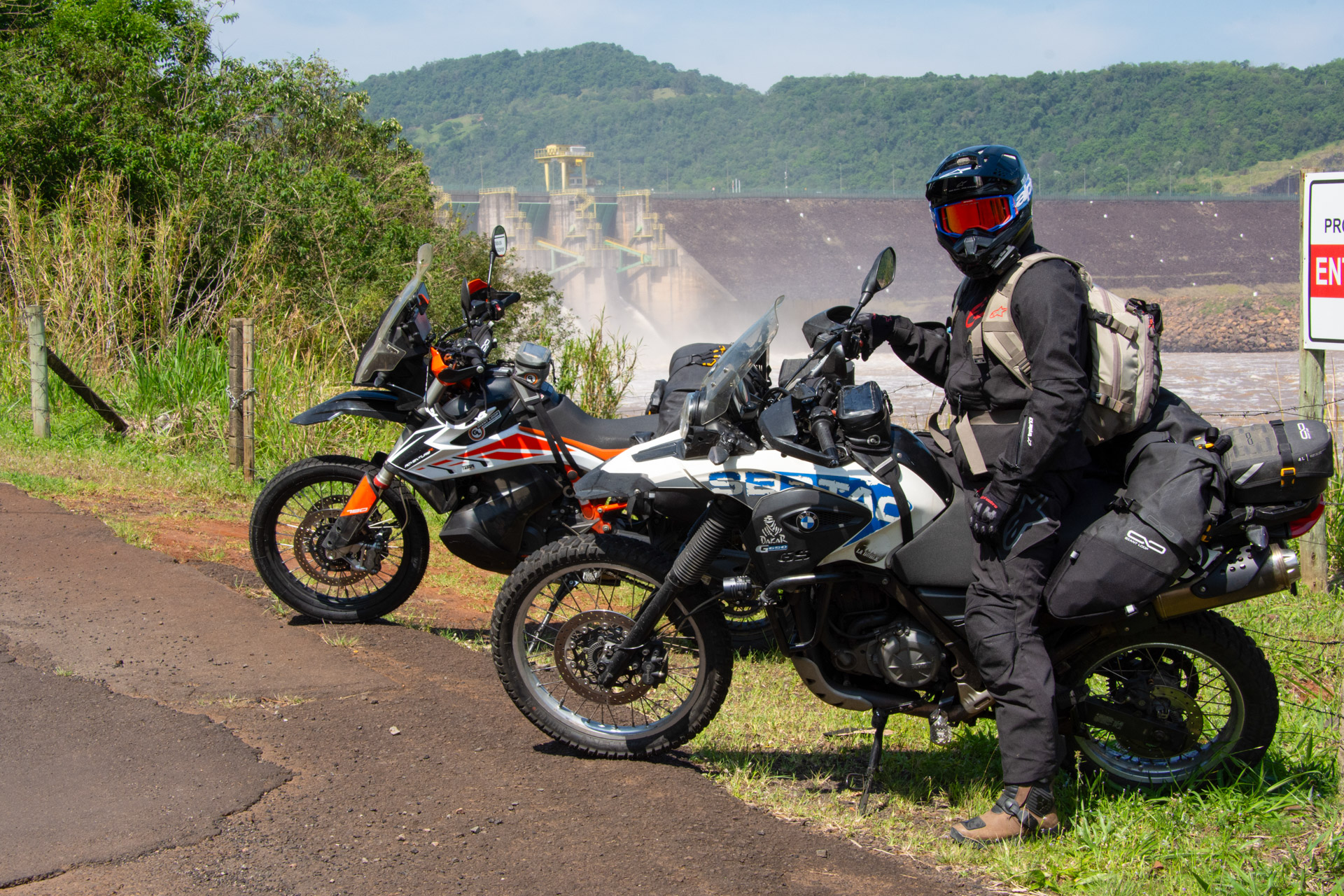
After passing through Águas de Chapecó and São Carlos, we reached the Uruguay River, which separates the Brazilian states of Santa Catarina and Rio Grande do Sul. At the Foz do Chapecó hydroelectric dam, we encountered an unexpected spectacle. The reservoir was exceptionally high, and all the spillway gates were open. Water thundered downstream, filling the air with spray and foam. We stopped to watch before continuing toward the mines.
Riding Underground at Garimpo em Atividade
Ametista do Sul celebrates the purple quartz that has made the region famous. Signs advertised underground restaurants and mine tours. We headed for Garimpo em Atividade, an active amethyst mine where visitors can ride their own motorcycles through underground tunnels.
We arrived around noon, with the next tour scheduled for 1:15 p.m. Just enough time for lunch at the restaurant beside the mine, its walls decorated with motorcycle club flags and stickers.
Our host, Eder, explained how amethyst is extracted. We watched workers drill and prepare a controlled blast, followed by an actual detonation. Even from a safe distance, the explosion made quite an impression.
Then came the moment we’d ridden all this way to experience.
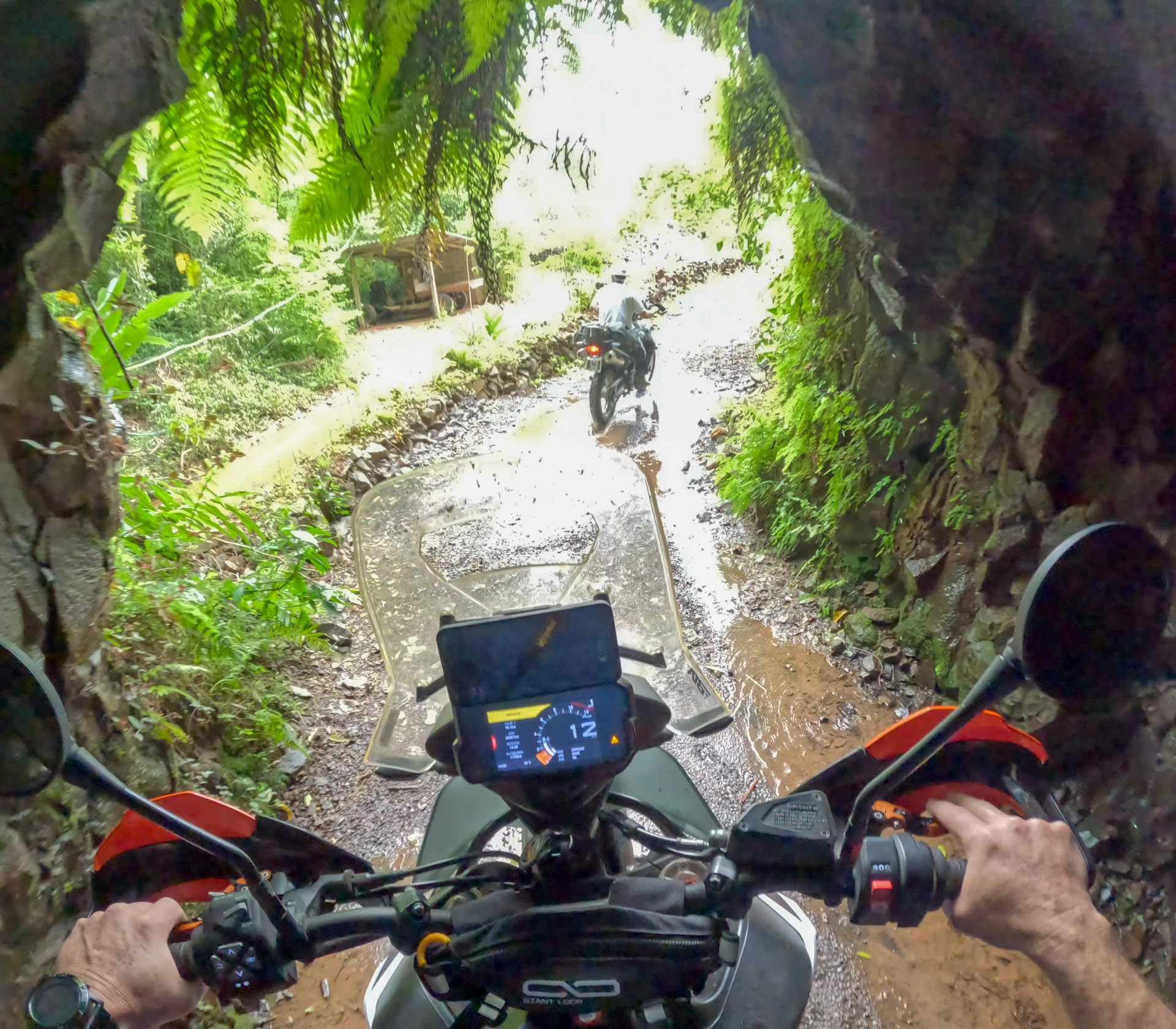
We followed our guide into the mountain on our motorcycles. The underground route covered approximately 1.5 miles (2.5 km), through tunnels some 165 feet (50 meters) below the surface. The passages were narrow, with ceilings low enough to make us duck instinctively. Before entering, we’d exchanged our motorcycle helmets for construction-style hard hats provided by the mine to accommodate the low clearance.
Small ceiling lights illuminated the winding corridors. Philip rode ahead on the Sertão while I followed on the KTM, watching his taillight disappear around each corner. We eventually reached a spacious chamber where our guide explained the next part of the experience.
Pitch Black Inside the Mine
We continued through the tunnels and emerged on the opposite side of the mountain. Our guide led us on a short loop before bringing us back into the same tunnel, this time with the corridor lights turned off. We followed him using only our motorcycle headlights.
Back in the main chamber, he asked us to shut down our engines and turn off every light. I even had to stop recording with my GoPro. He told us to close our eyes while he continued speaking, his motorcycle still running nearby.
Then he switched off the engine.
The silence was immediate.
“Now open your eyes,” he said softly.
Nothing changed.
I raised my hand in front of my face. I knew exactly where it was, yet I couldn’t see a thing. There was no distant glow, no outline of the tunnel, no sound from the outside world. For several minutes, we stood quietly inside the mountain, surrounded by complete darkness.
When the guide finally started his motorcycle, the sound of the engine and the return of light brought the underground world back into focus.
We fired up our bikes and followed him toward the exit, leaving enough distance between us to experience the tunnels individually. Philip’s auxiliary lights cut through the darkness ahead while I recorded the winding passages from behind.
Back in daylight, I couldn’t stop smiling. We’d come to Brazil with two goals: buy tires and ride through an amethyst mine. Both were accomplished, and the underground experience had been everything we’d hoped for.
Now we had another question to answer.
Where should we go next?
Following the Weather
With our new tires fitted and the amethyst mine behind us, we suddenly had no particular destination in mind. We could explore more of southern Brazil, head home, or continue into Uruguay. There was plenty to consider, although the weather was about to make the next decision for us.
Storm warnings kept appearing on our phones, with heavy rain expected across the region that evening. We checked the weather radar and decided to continue south, hoping to find a place to spend the night before the storm arrived. We reached Cruz Alta, filled our tanks, and checked into a hotel. By the time we went out looking for dinner, rain was pouring down.
A Shift in Course Toward Praia do Cassino
The following morning, Philip spoke with a friend in Uruguay. We’d been considering a ride through the country’s rural interior, but the overnight rainfall had been intense, and the unpaved roads were likely to be in poor condition. His advice was simple: head toward the coast and enjoy Uruguay’s Route 9.
That sounded good to us.
Looking at the map, Pelotas seemed a reasonable destination for the day. But we still had time, so we continued south toward Praia do Cassino, a seaside town on Brazil’s Atlantic coast.
We arrived in the late afternoon under a clear blue sky, with the sun already dropping toward the horizon. Before looking for a hotel, we headed straight for the ocean. A road led onto a wide stretch of firm sand where cars and motorcycles were moving along the shoreline.
We stopped to take photographs in the beautiful evening light and watched the vehicles passing by. The beach looked remarkably solid, still damp from the recent rain. A little farther south, the shoreline seemed almost deserted.
Philip and I looked at each other. There was really only one thing to do.
We put our bikes into first gear and rode onto the beach.
Within minutes, we were enjoying ourselves like a couple of kids, riding along the Atlantic with the waves breaking nearby. The sand felt firm beneath our tires, and the open shoreline invited us to keep going.
Then I remembered Luis, back in Chapecó, telling us about that long stretch of beach riding. The same route I’d immediately dismissed because of my new Michelin tires.
Well, here we were.
We rode for a while, taking in the ocean and getting a feel for the surface. By the time we returned to town to find a hotel and something to eat, we’d made another decision.
Tomorrow, we’d try to ride the beach all the way south toward Uruguay.
Over 125 miles (200 km) of Atlantic coastline lay ahead.
And for once, we actually had a plan for the following morning.
Where the Road Meets the Atlantic
The following morning, we stopped at a gas station and asked a local man whether it was possible to reach Chuy, on the Uruguayan border, by riding along the beach. He paused, looked up at the sky as if considering the weather, and finally said, “É tá bom.” Good enough for us.
We headed for the ocean.
The first few miles were spent getting comfortable with the surface. The beach was incredibly wide, perhaps 330 feet (100 meters) in places, with damp, compact sand that offered good traction. Gentle dunes stretched inland, and somewhere beyond them ran the road. Getting two fully loaded adventure motorcycles across those dunes didn’t look particularly inviting, so we stayed near the shoreline.
Luis had warned us about streams flowing across the beach toward the ocean. Their depth would depend on recent rainfall, and we approached the first crossings carefully. Fortunately, the water was shallow. After a while, we’d encountered so many that crossing them became part of our rhythm, lifting the front wheel slightly and rolling through with a satisfying splash.
Shipwrecks, Sea Lions, and Whales
Then the coastline began revealing its surprises.
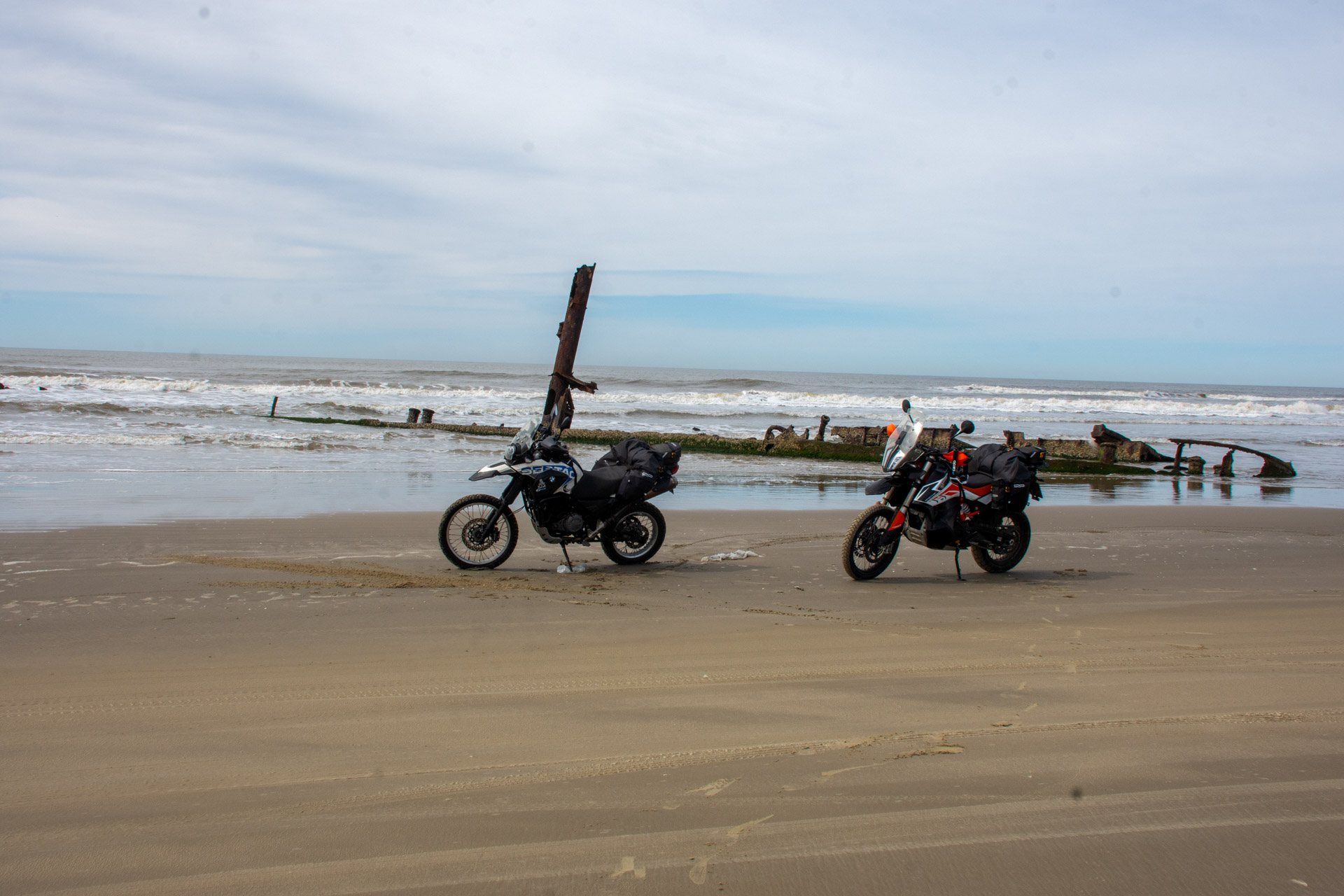
We passed the remains of several shipwrecks, some clearly weathered by years of exposure. One vessel sat stranded entirely out of the water, apparently still intact, with heavy cables running toward trucks positioned near the dunes. A recovery operation seemed to be underway. How anyone intended to move that enormous boat was beyond me, and I was happy to leave that problem to people who knew what they were doing.
A little farther along, we spotted sea lions resting on the sand. We gave them plenty of room, steering inland to avoid disturbing them. Philip, however, couldn’t resist taking a closer look at one of them.
He approached slowly, until the animal raised its head, opened its mouth, and began moving toward the motorcycle.
Message received.
Philip promptly reconsidered his sightseeing plans, and we continued south. I suspect that sea lion was perfectly satisfied with the outcome.
The wildlife encounters weren’t over. Farther down the coast, we came across the enormous body of a stranded whale. Judging by its condition, it had been there for some time. We thought it might be a southern right whale, although we couldn’t identify the species with certainty. Several miles later, we encountered another whale, an immense animal lying motionless on the beach.
We also passed a couple of lighthouses, stopping at a distance to take photographs before continuing into the seemingly endless coastline.
Soft Sand and Hard Miles to Hermenegildo
For long stretches, the riding was wonderful. The firm sand allowed us to settle into a comfortable pace, with the Atlantic on one side and the dunes on the other. There were no buildings, no traffic, and almost no sign of human activity.
But the surface kept changing.
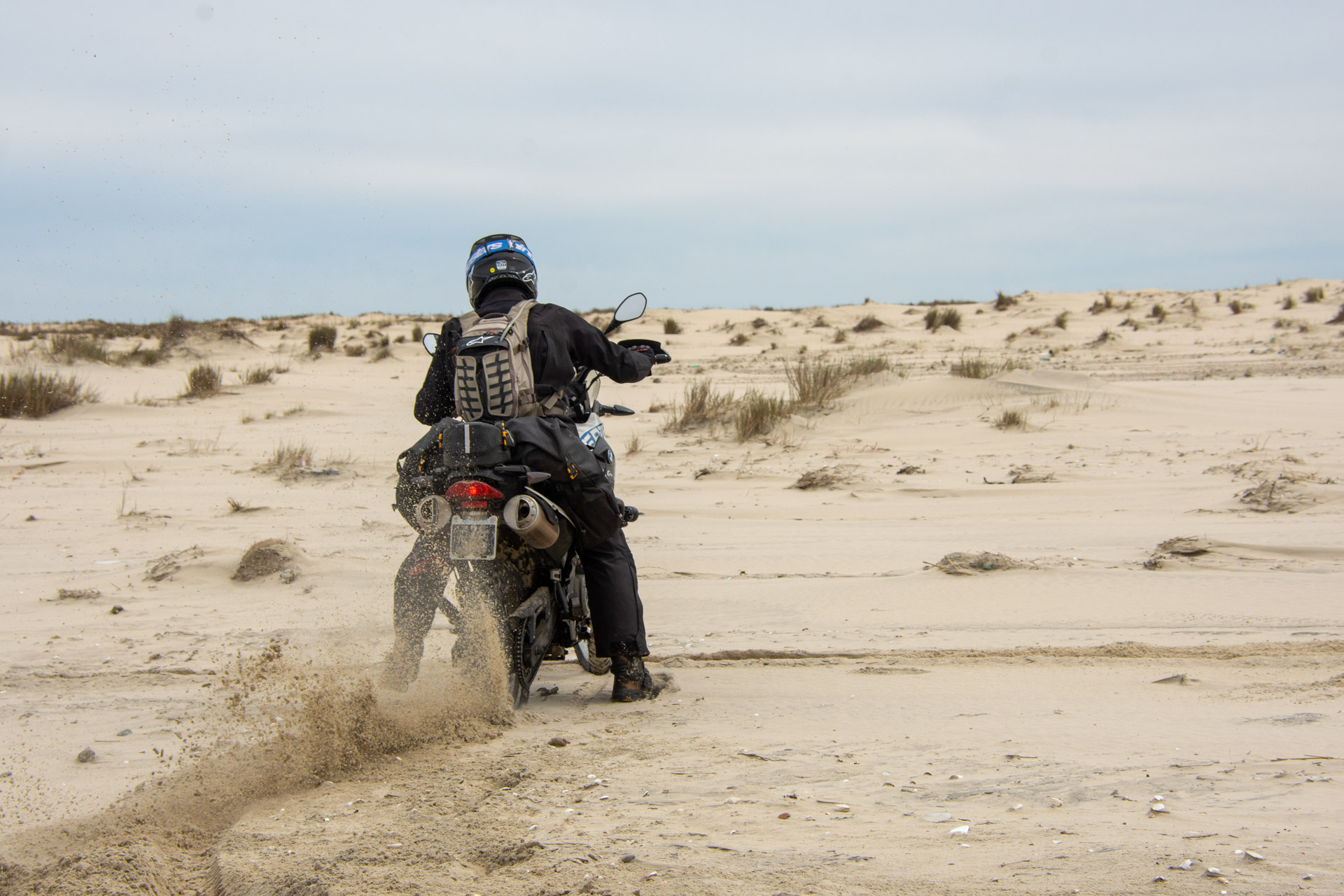
In some areas, the sand near the water became soft enough to threaten our momentum. We moved closer to the dunes, searching for firmer ground, although that wasn’t always successful either. With heavy motorcycles and luggage aboard, choosing the right line demanded constant attention.
There were moments when I found myself wondering what the hell we were doing out there. Luis’s name came to mind on several occasions, and I can’t promise every thought was particularly complimentary.
Still, we kept moving, adjusting our pace and picking our way through each difficult section. The beach had given us a beautiful morning, and it was making sure we paid attention.
Eventually, buildings began appearing in the distance. We’d reached Hermenegildo, where the long stretch of open coastline finally gave way to civilization.
We’d spent roughly four and a half hours riding along the beach, covering over 125 miles (200 km). Apart from the people working around the stranded boat, we hadn’t encountered anyone else along the way.
We stopped with sand on our motorcycles, salt in the air, and plenty to talk about.
A few days earlier, I’d been standing in a motorcycle shop in Chapecó, explaining why riding that beach with my new tires was out of the question.
Now I couldn’t stop thinking about how glad I was that we’d changed our minds.
The Miles That Stay With Us
After leaving the beach behind, we completed the Brazilian border formalities and crossed into Uruguay through Chuy. We found a place to have lunch and finally sat down to rest after our long morning on the sand.
As we continued south through the small towns along Uruguay’s Atlantic coast, we had one practical priority: washing the motorcycles. Four and a half hours riding beside the ocean had left them covered in sand and salt, and we knew the importance of getting that corrosive residue off the metal. In Rocha, we found a gas station with a washing facility and gave both bikes a thorough cleaning.
That evening, after an excellent dinner and a dessert we probably didn’t need, we checked the weather forecast again. Our original plan was to spend the following day exploring Uruguay at a relaxed pace, perhaps even visiting Philip’s friend who had recommended Route 9, before heading home the day after. Unfortunately, the forecast showed heavy rain for our scheduled return, including the final 220 miles (350 km) to Buenos Aires.
So we made one last change of plans. We decided to skip our leisurely day in Uruguay and tackle the remaining 500 miles (800 km) in one long ride, getting home a day early and, hopefully, ahead of the rain and dry.
It seemed appropriate that a trip built around spontaneous decisions would end with another one.
The Best Part of the Journey
Looking back, I remember the rolling hills of southern Brazil, the darkness inside the amethyst mine, the endless Atlantic coastline, and the people who helped us along the way. The riders in Chapecó who welcomed two complete strangers, Luis sharing his favorite routes, and all those conversations that began simply because we happened to stop in the same place.
But what I treasure most is the week I spent with Philip.
We’ve been friends since childhood, sharing countless experiences over the years. Yet it had been a long time since we’d spent seven uninterrupted days together, riding, talking, laughing, and enjoying each other’s company. There was always something to talk about, even when we had absolutely nothing important to say.
Our Cardo intercoms kept us connected throughout the ride. Sometimes we discussed the road ahead or where we might spend the night. Other times, an old memory or a ridiculous comment would have us laughing inside our helmets for miles.
Those are the moments I’ll remember whenever I think about this trip.
And perhaps that’s what I’d encourage anyone reading this to try. Find a good friend, make sure your motorcycles are ready, leave some room in your schedule, and head out with a few ideas instead of a detailed itinerary. Talk to people, listen to their suggestions, and allow the journey to take an unexpected turn.
You never know where the road might lead you.
We certainly didn’t when we left home looking for a set of tires.
Words by: Mike de la Torre – Photo Credits: BTA Media
Articles in this issue
BMW GS Trophy 2026
BMW GS Trophy 2026 Six Days in the Wild Carpathians Adventure riding has a way of bringing people together. Different backgrounds, different languages, and different riding experiences often lead to...
Edgar Canet Claims His First RallyGP Victory in Morocco
The 27th Rallye du Maroc brought the world's leading rally-raid riders to southern Morocco from September 28 to October 3, for the fourth round of the 2026 World Rally-Raid Championship. Starting in...
Heavy Metal in the Taurus
Heavy Metal in the Taurus Where the Taurus Mountains Become a Playground for Adventure BikesLet's get one thing straight: nobody builds a 485-pound adventure bike to go scrambling up a goat trail....
Riding to the Kingdom of Lo
Kathmandu to Lo Manthang by Royal EnfieldUpper Mustang was closed to foreigners until 1992. Reaching its walled capital by motorcycle means following a river gorge, crossing a 13,681-foot...
The Rally Idea Comes Home with the 2027 KTM 690 Rally
The Rally Idea Comes Home with the 2027 KTM 690 RallySome motorcycles arrive with a clear purpose. The 2027 KTM 690 Rally is one of them. Built on the current 690 Enduro R platform, KTM’s new Rally...
2026 Honda XL750 Transalp E-Clutch
2026 Honda XL750 Transalp E-Clutch Built Around the JourneyThe real test of an adventure bike often comes after the scenic overlook: a loaded climb, a slow crawl through traffic, a rough stretch of...