
2026 Honda XL750 Transalp E-Clutch
Built Around the Journey
The real test of an adventure bike often comes after the scenic overlook: a loaded climb, a slow crawl through traffic, a rough stretch of gravel, then another hour on the highway. Each asks something different of the rider. The 2026 Honda XL750 Transalp E-Clutch is designed for those transitions. Its electronic clutch can take over repeated clutch work, the suspension lets riders adjust damping at both ends, and a standard skid plate protects the underside of the engine.
Engine Architecture and Performance
The engine is a 755 cc liquid-cooled parallel twin with a 270-degree crankshaft. That crank layout gives the engine its uneven firing rhythm. Honda’s vortex intake is designed to increase intake-charge velocity through the low-to-middle rev range, especially from 3,000 to 8,000 rpm. That range comes into play when accelerating out of a bend or keeping momentum on a winding climb. The Transalp’s 87 mm bore, 63.5 mm stroke, and 11.0:1 compression ratio describe the engine’s dimensions. The intake design explains how Honda has focused its response.
Unicam Cylinder Head and Component Packaging
The Unicam layout uses one overhead camshaft to operate four valves per cylinder, keeping the cylinder head compact. The counterbalancer is driven directly from the crankshaft’s primary gear, and the water pump sits inside the alternator cover. These details show how Honda packages the engine’s components. For riders, the practical interest is the compact parallel twin and its intended low-to-mid-range response.
E-Clutch System and Operation
E-Clutch is the headline change. The rider still selects gears with the left foot through the six-speed gearbox, while electronic actuation handles clutch engagement during starts, shifts, and stops. The system coordinates clutch operation with engine control, and throttle-by-wire allows coordinated throttle blipping on downshifts. The clutch lever remains available for manual operation, and the electronic function can be switched off.
Low-Speed Control and Manual Lever Override
Think of a steep uphill stop, a string of traffic lights, or a slow section where repeated starts add work to an already long day. E-Clutch handles the clutch engagement in those moments while the rider continues to choose gears. On technical ground, a rider may want direct friction-zone control to balance at walking pace or ease over an obstacle. The lever makes that possible. Riders can adjust their approach as the route changes.
Suspension and Chassis Dynamics
Suspension setup becomes especially relevant when luggage is aboard. The 43 mm Showa SFF-CA inverted fork has 7.9 inches (201 mm) of travel, and the Pro-Link rear has 7.5 inches (191 mm). For 2026, compression and rebound damping are adjustable front and rear. Compression damping affects how the suspension moves into a bump; rebound damping affects how quickly it returns.
On a broken road with a loaded tail bag, damping settings let the rider tune how the bike responds to repeated edges and larger hits. Make changes methodically and check the result on familiar ground. Damping adjustments can’t fix an unsuitable spring or incorrect sag, so those remain part of setting up the bike for a load.
Pro-Link Rising-Rate Rear Linkage
The Pro-Link rear suspension uses a rising-rate arrangement. As it moves through its travel, changing leverage increases resistance at the wheel. This helps the suspension respond to small surface imperfections while retaining support deeper in the stroke. Riders may notice the value when a route alternates between ripples, potholes, and larger compressions, especially with luggage aboard.
Wheels, Brakes, and Ride Modes
The wire-spoked wheels carry a 90/90-21 front tire and a 150/70-18 rear. The 21-inch (533 mm) front wheel suits abrupt edges, and these tire sizes give riders options when selecting rubber for pavement, gravel, or a mixed route. Braking hardware consists of dual 310 mm front discs and a 256 mm rear disc. Rear ABS can be disabled for dirt riding. Sport, Standard, Rain and Gravel modes, along with customizable settings, let riders adjust electronic intervention to conditions.
Geometry, Weight, and Balance
The Transalp has a 61.5-inch (1,562 mm) wheelbase, 27-degree rake, and 4.4 inches (112 mm) of trail. Its 468-pound (212 kg) curb weight includes fuel and operating fluids. Weight is easiest to feel when the bike leans on uneven ground or needs to turn around on a narrow track. Packing affects how manageable it feels: keep heavy items low and close to the bike’s center. A well-balanced load is easier to handle than weight carried high behind the seat.
Ergonomics, Equipment, and Travel Readiness
The fairing provides wind and weather protection while leaving room around the rider’s legs. A standard skid plate covers the engine’s underside. It adds protection on rougher routes. The plate’s construction, mounting, and impact resistance determine how much protection it provides.
Seat Height, Cockpit Tech, and Fuel Range
The standard seat height is 33.7 inches (856 mm). An accessory seat lowers it to 32.6 inches (828 mm), improving ground reach without reducing suspension travel. The integrated rear carrier and passenger handholds support luggage and two-up riding. A five-inch TFT displays riding information, RoadSync adds phone-linked functions, and a protected USB-C socket beneath the passenger seat provides charging.
The 4.4-gallon (16.7 L) tank gives riders a starting point for route planning. Actual distance between fuel stops depends on speed, wind, surface, and luggage. On remote routes, use a range estimate that accounts for those conditions.
Summary
The Transalp’s features come into play across a full day of changing roads. E-Clutch can reduce repeated clutch work, damping adjustments help tune the suspension for the load, and the available riding modes let riders adapt electronic settings to conditions. Thoughtful packing and route planning matter too. Together, these choices help riders manage comfort, control, and effort over the miles ahead.
Photos: Honda Media – Words: Thomas Ferrero
Articles in this issue
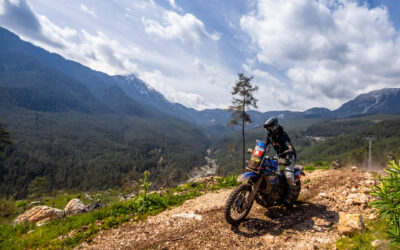
The Adventure of Sea To Sky 2026
Three days, one mountain, and a Turkish coastline that has drawn travelers for thousands of years. From Shoreline to Summit: The Challenge of Mount Tahtalı From the beach at Kemer, on Turkey’s...
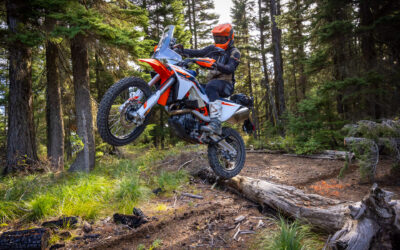
The Rally Idea Comes Home with the 2027 KTM 690 Rally
The Rally Idea Comes Home with the 2027 KTM 690 RallySome motorcycles arrive with a clear purpose. The 2027 KTM 690 Rally is one of them. Built on the current 690 Enduro R platform, KTM’s new Rally...