
USWE VST 30L Review
One Backpack, Many Adventures
There is an old contradiction at the heart of adventure travel: we want to carry everything we might possibly need, yet we would prefer not to feel as though we are carrying anything at all. Water, extra layers, food, electronics, tools and that collection of small objects that mysteriously becomes essential the moment civilization disappears all need to go somewhere.
That is exactly the problem the new USWE VST modular backpack system is attempting to address. For this first BTA test we used the USWE Rolltop VST 30L, fitted with the VST Thermocell Winter Harness, 3L Elite Hydration Bladder with Plug-N-Play coupling and the VST 3.0L insulated bladder sleeve.
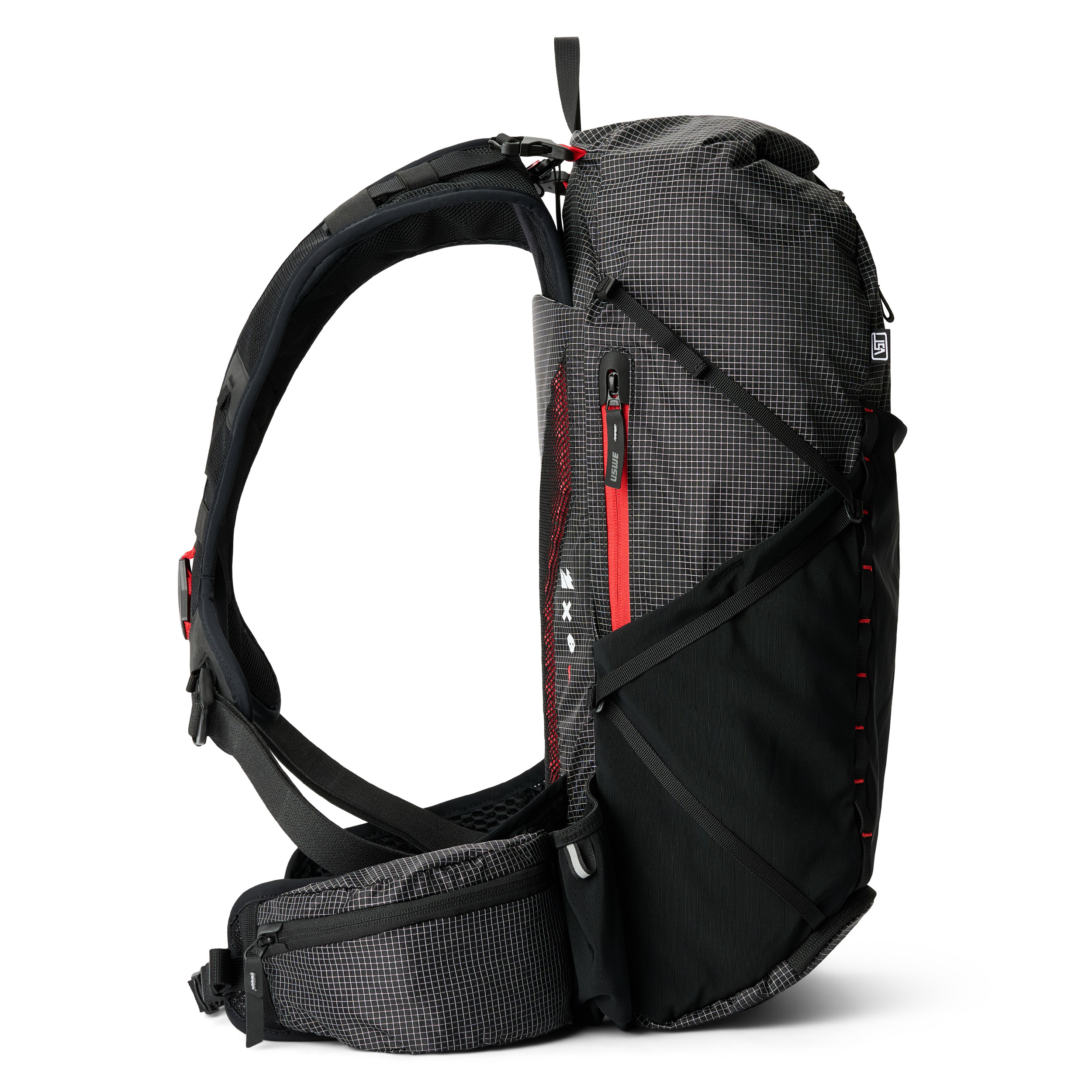
My first surprise was simply how little it felt like a conventional 30-liter backpack. There is useful space inside, certainly, but the pack does not feel particularly bulky once it is fitted correctly. More importantly, it stays remarkably close to the body rather than hanging from the shoulders and developing a personality of its own every time you change direction.
What Is the USWE VST Backpack System?
USWE introduced VST as a modular backpack platform rather than another single-purpose pack. The range includes Rolltop versions in 18 and 30 liters and Zippered models in 16 and 25 liters, with interchangeable harness systems designed for different applications.
That modularity is the interesting part for adventure riders. Instead of selecting one backpack and living permanently with the compromises built into it, VST allows the pack body, harness and accessories to be configured around the intended use. USWE offers different harness options along with accessories such as hydration components, phone and chest pockets, rain protection, dry storage, helmet-carrying equipment and other add-ons.
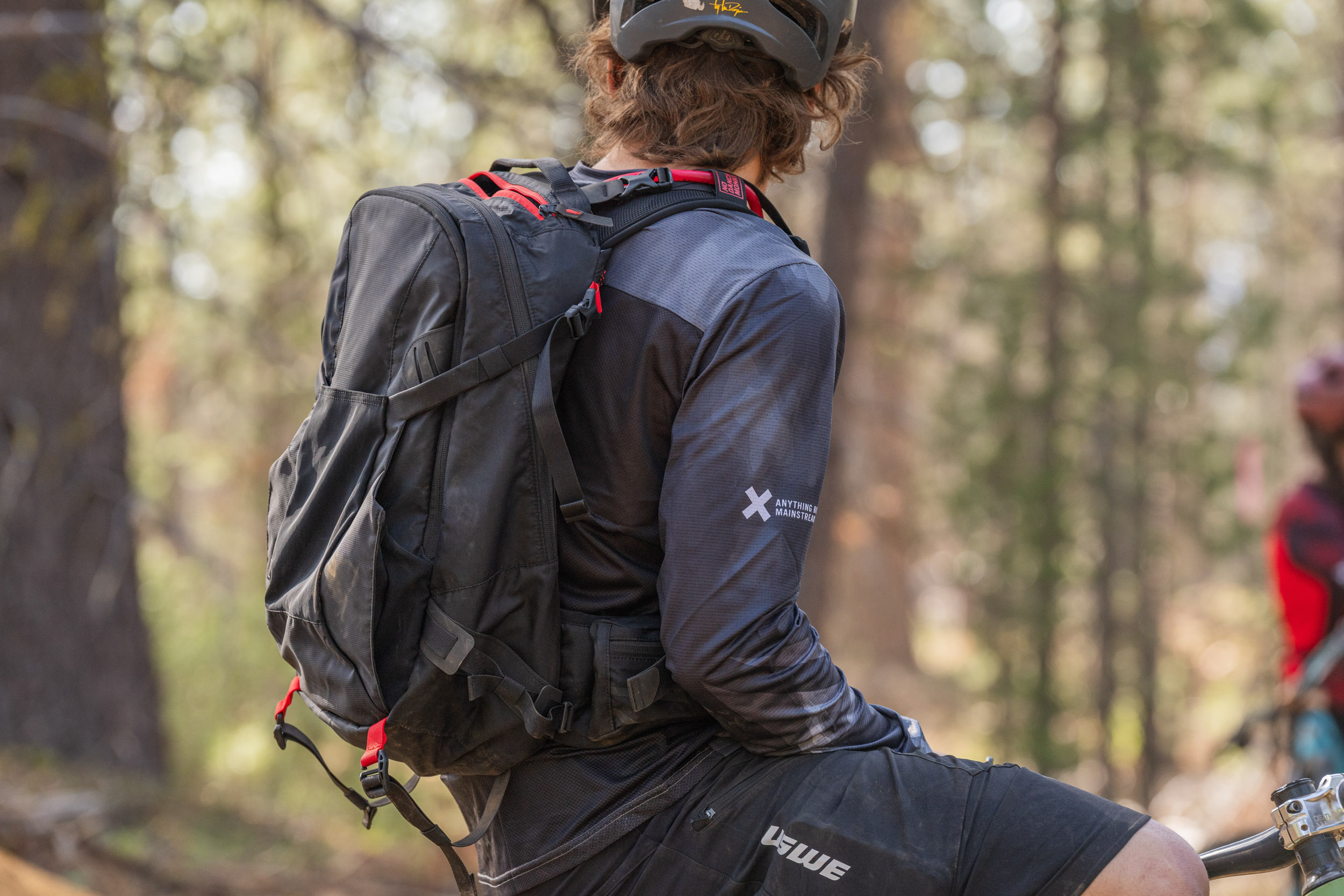
USWE specifically recommends the Zippered VST 25L with the Standard Harness as its adventure-riding configuration. The suggested system also includes a phone pocket, detachable chest pocket, rain cover, drybag, 3L Elite hydration bladder and 3L bladder sleeve.
Our configuration is different. We used the larger 30L Rolltop and cold-weather Thermocell harness. And that difference may actually demonstrate VST’s most interesting idea better than simply testing the manufacturer’s default motorcycle package: the same platform can be adapted according to where and how you are travelling.
There is motorcycle context behind the concept too. USWE was founded in Sweden in 2007 and has long specialized in hydration packs and its patented No Dancing Monkey harness technology. In 2022 the company acquired Oregon-based Giant Loop, a brand deeply associated with off-road motorcycle luggage. VST therefore arrives from a company that is increasingly connected to the adventure and off-road motorcycle world rather than merely borrowing the ADV label for a new backpack.
USWE VST 30L: Tested Configuration
- Pack: Rolltop VST 30L / 7.9 gal
- USWE-listed pack weight: 865 g
- Harness tested: VST Thermocell Winter Harness
- Hydration: 3L Elite Hydration Bladder
- Coupling: Plug-N-Play
- Insulation: VST Bladder Sleeve 3.0L
- Approximate test load: More than 5 kg
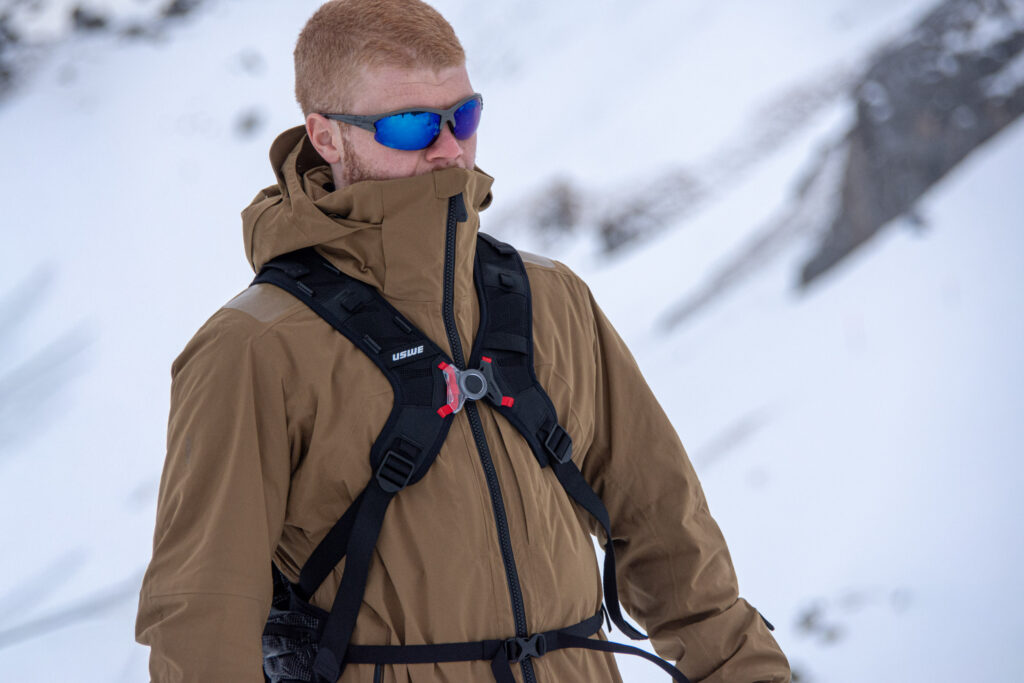
- Conditions tested: Prolonged cold, snow and sub-zero conditions
Comfort, Fit and the No Dancing Monkey Harness
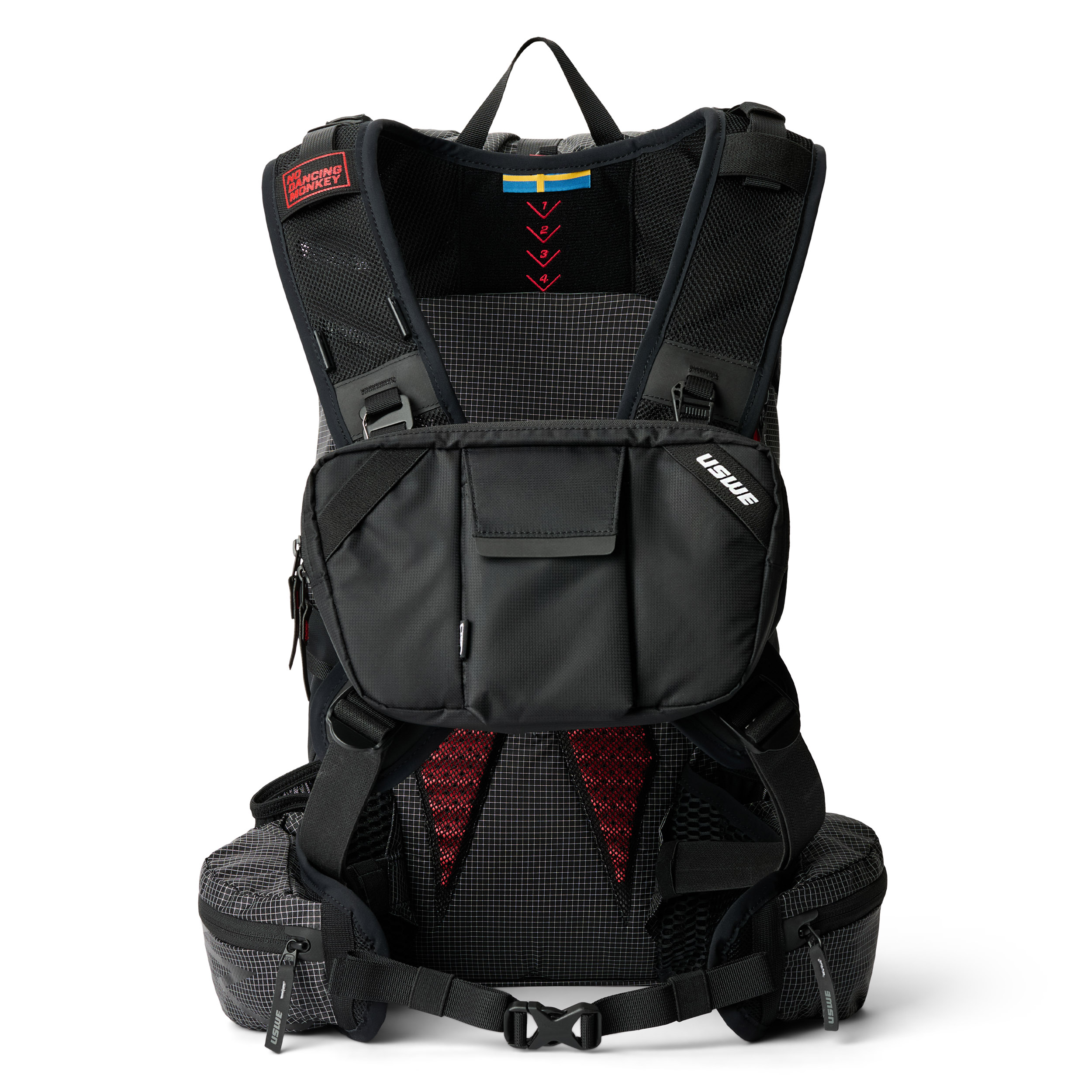
The name No Dancing Monkey may sound like something conceived after an unusually long Swedish coffee break, but the problem it addresses is familiar to anyone who has moved quickly with a loaded backpack: bounce.
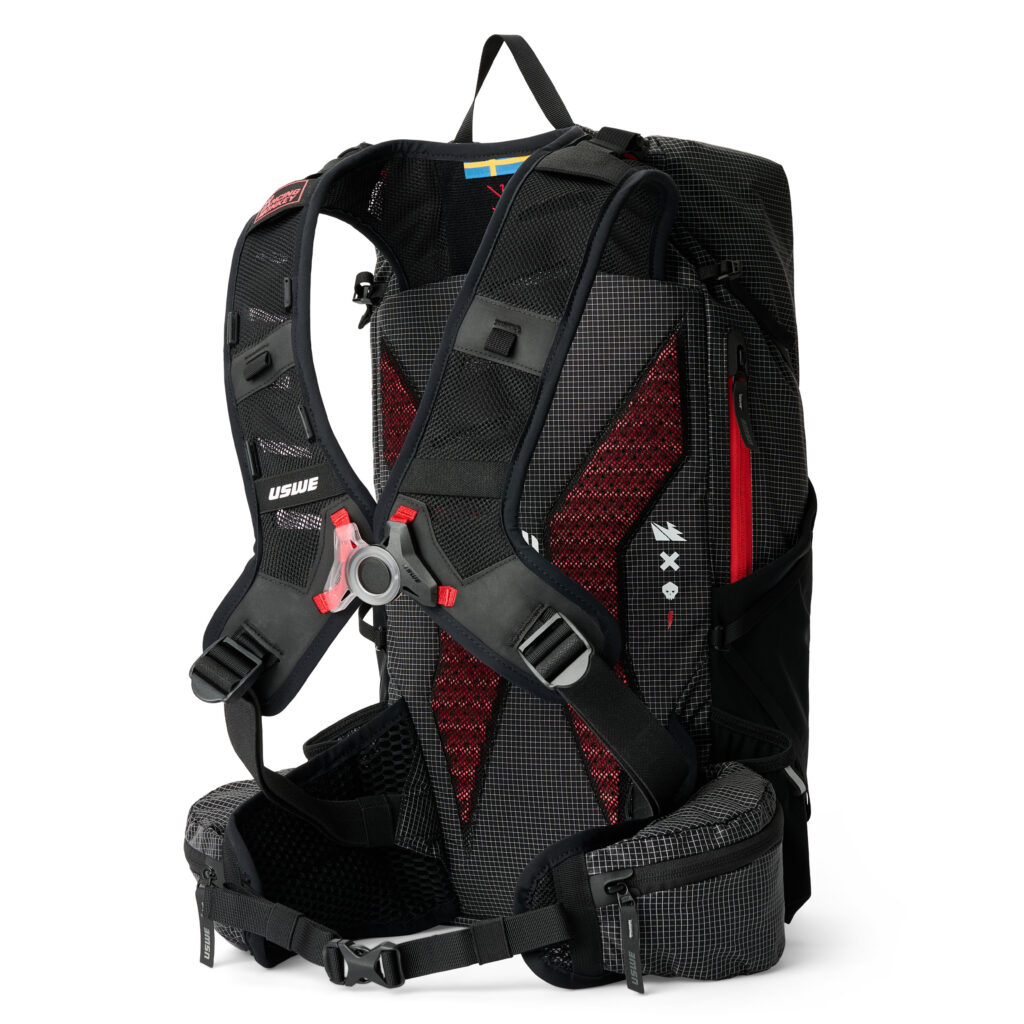
USWE describes its harness technology as designed to keep the pack secure against the body while allowing freedom of movement. The company’s absolute “bounce-free” language remains a manufacturer claim rather than something we are going to convert into a scientific conclusion, but the practical result during our test was convincing. The VST remained impressively stable even with a meaningful load on board.
Setting up the pack is straightforward. Back length can be adapted using Velcro attachment points and webbing. That initial fitting requires a few minutes if you want to get it right, but it is essentially a one-time job. Once set, putting on and securing the VST is quick.
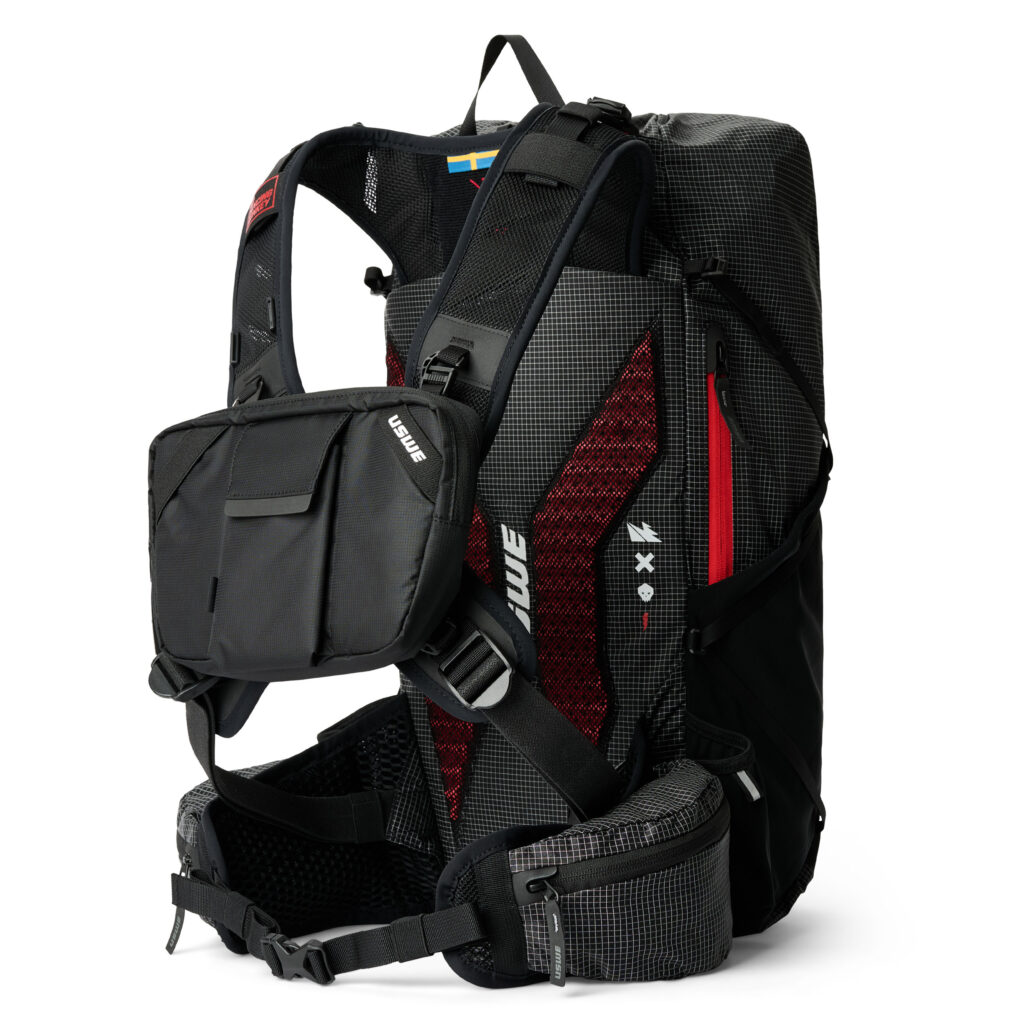
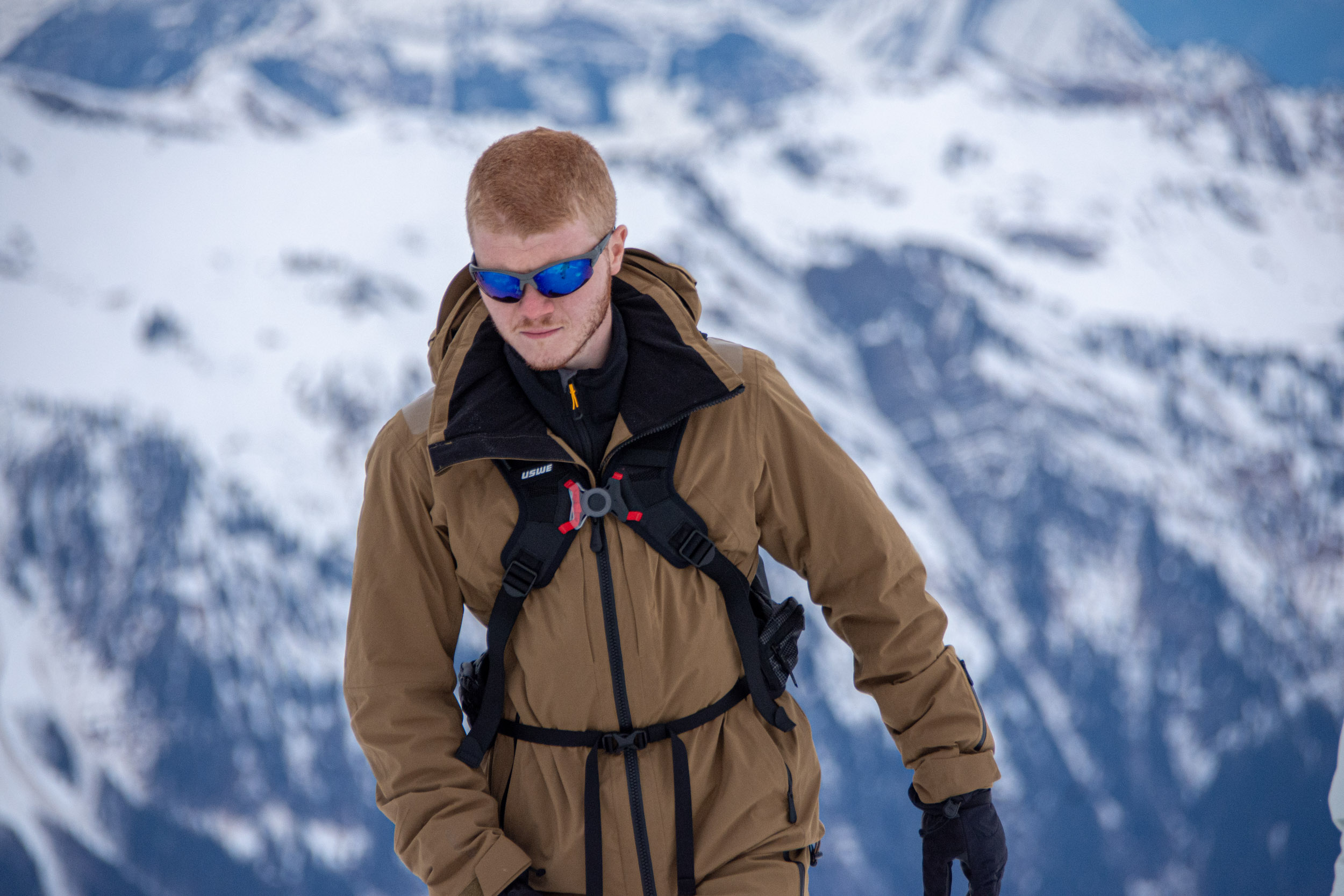
One of my favorite details is the circular central chest connector. It is simple, positive and remarkably easy to operate while wearing gloves—an apparently minor detail that becomes much more important when your fingers are cold or when you eventually use the system as motorcycle equipment.
The chest adjustment straps themselves are elastic. That allows the system to be tightened firmly without making the upper body feel locked into a rigid harness. Together with the waist connection, the pack feels securely attached to the torso rather than simply suspended from two shoulder straps.
I also suspect that the elasticity contributes to the way the system manages movement, allowing small changes in body position without letting the entire load bounce independently. That is an observation from wearing the pack, not a laboratory explanation of the mechanism, but whatever combination of geometry, elasticity and clever design is responsible, the result works.
Our total load was comfortably above five kilograms. Three liters of water alone accounts for roughly three kilograms, before adding food, multiple insulating layers and other equipment. Despite the load, the VST remained comfortable and never felt like an oversized 30-liter pack.
Equally important, there was still usable room inside. We did not encounter a situation where the hydration system consumed so much internal volume that the nominal 30 liters became misleading, nor did partially filling the pack leave everything floating around uncontrollably inside.
Rolltop Storage and Cold-Weather Performance
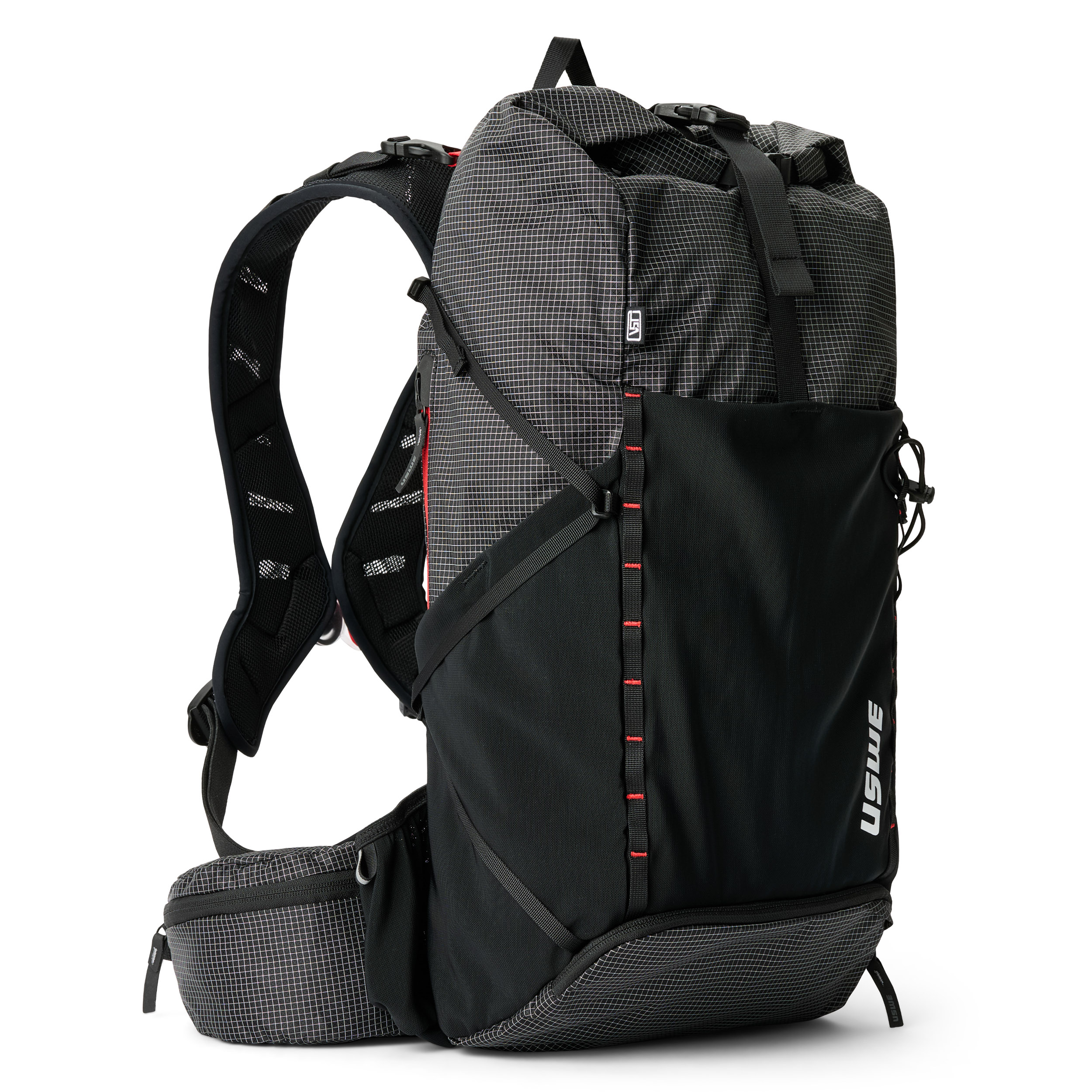
The Rolltop version also proved extremely easy to live with. Opening and closing the main compartment while wearing gloves was straightforward, and the design accommodated changes in load without complication.
Our test included significant exposure to snow and moisture. The contents remained dry throughout that use. There is an important distinction here: BTA has not subjected the VST 30L to a controlled waterproof test or prolonged riding in heavy rain, so we are not describing the backpack itself as fully waterproof.
What we can say is simpler and more useful: during the wet winter conditions we experienced, water did not reach our equipment. USWE also offers a separate rain cover and drybag for the VST system, which remains the sensible approach when carrying electronics or anything that absolutely must stay dry.
Durability was similarly reassuring. The pack received intensive use and, at the end of this first testing period, we could not identify any obvious point of premature wear. There were no areas that immediately raised concerns about abrasion, attachment points or the basic integrity of the pack.
This is not a five-year durability verdict, of course. It is simply what we observed after real use: so far, the VST still looks very healthy.
USWE Thermocell and the 3L Hydration System
The most unusual part of our configuration was not the backpack itself but the VST Thermocell Winter Harness. Hydration systems work beautifully until the temperature falls far enough for the drinking tube to discover that water has three states of matter.
USWE designed the Thermocell system to use warmth around the body to protect the hydration line from freezing conditions. We do not yet have enough independently verified technical data to assign the system a specific minimum operating temperature, so there will be no heroic claims about exactly how many degrees below zero it can survive.
What matters from our test is that the hydration system continued working throughout prolonged cold-weather use. We experienced no frozen drinking tube and no interruption in water flow.
The 3L Elite bladder itself was uncomplicated to use. Filling it was quick, installation presented no problems and the Plug-N-Play connection operated as expected. The VST’s openings for routing the hydration tube also worked cleanly with the harness, so using the system never became one of those occasions when a supposedly convenient piece of equipment requires fifteen minutes of negotiation.
We used the bladder in conjunction with USWE’s 3L insulated sleeve. Again, we are careful not to transform one successful field test into an absolute thermal specification. What we know is that the complete system worked in the conditions in which we used it, including temperatures below freezing.
That potentially has genuine relevance for adventure motorcyclists. ADV trips regularly cross substantial changes in altitude and climate, and a system capable of adapting between warmer and genuinely cold environments makes considerably more sense than a backpack optimized for only one narrow window.
The Thermocell harness, however, should be viewed as specialized equipment rather than automatically the best choice for every ADV trip. We have not yet tested it in warm summer conditions, so we cannot make a meaningful judgment about heat buildup. USWE’s more ventilated harness configurations appear better suited to hot environments on paper, but that is something BTA will evaluate separately rather than predict.
USWE VST 25L vs 30L: Which Makes More Sense for Adventure Riding?
This may ultimately be the most interesting purchasing decision in the VST range. USWE recommends the Zippered VST 25L with Standard Harness for adventure riding, whereas our first test concentrated on the Rolltop VST 30L.
The argument for the 25L Zippered is obvious. Adventure riding involves frequent stops and frequent access to small items. A zippered design should make it easier to reach electronics, snacks, documents or an additional layer without opening a large top-loading compartment. Twenty-five liters is also substantial capacity for a rider who keeps tools, camping equipment and the majority of dense luggage attached to the motorcycle.
The 30L Rolltop takes a different approach. It gives you an additional five liters of capacity, a simple main compartment and excellent flexibility when carrying bulky layers or when the load changes significantly during the day. In our use, those 30 liters did not translate into an awkwardly oversized backpack.
That makes the Rolltop particularly interesting for travel through variable climates, where additional clothing consumes volume very quickly, or for riders who want a backpack that remains useful when they leave the motorcycle behind and continue exploring on foot.
There is no reason to manufacture a winner before riding both configurations. At this stage, I would see the 25L Zippered as the more obvious dedicated motorcycle choice, while the 30L Rolltop makes a strong case as the more flexible travel companion.
What We Like So Far
- Excellent stability against the body
- Very comfortable considering its 30L capacity
- Fast initial fit and easy everyday adjustment
- Central chest connector is simple to use with gloves
- Useful real-world capacity with more than 5 kg carried
- Rolltop proved easy to open and close
- Contents remained dry during exposure to snow and wet conditions
- 3L hydration system was straightforward to fill, route and use
- No drinking-tube freezing during our cold-weather testing
- No obvious wear after intensive use
What BTA Still Needs to Test
- Fit over an adventure motorcycle jacket and body armor
- Comfort while seated versus standing on the pegs
- Stability over rough off-road terrain
- Helmet and collar clearance
- Warm-weather ventilation
- Performance during prolonged heavy rain
Is the USWE VST a Good Backpack for Adventure Motorcycling?
There is an important distinction to make at this stage of our review. This first phase concentrated on fit, load carrying, movement, storage, cold-weather performance, hydration and durability. It was not BTA’s dedicated adventure-motorcycle test.
That means I am not going to tell you that the VST works perfectly over a motorcycle jacket, that it never interferes with a helmet or that the pack becomes invisible while standing on the pegs. We have not established those things yet.
What we have established gives us very good reasons to take it onto the bike. The pack is impressively stable against the torso. It is easy to operate with gloves. Thirty liters of capacity feels considerably less cumbersome than the number might suggest. Hydration integration is clean, the Rolltop worked well in poor weather, and the Thermocell configuration kept water flowing during demanding cold-weather use.
Each of those characteristics has obvious relevance to adventure riding, particularly on trips that cross changing weather and terrain.
The other important consideration is weight. A full three-liter bladder already puts approximately three kilograms of water on the rider before anything else enters the backpack. For motorcycle travel, my inclination is to keep water, lightweight layers and immediate essentials on the body while placing dense tools and other heavy equipment on the motorcycle wherever practical.
We will explore that balance much more closely during the dedicated ADV test.
For now, VST’s strongest argument may not be any single specification. Adventure motorcycling has always demanded equipment that adapts. One day can involve hot asphalt, the next wet gravel and the next a mountain pass where the weather has apparently decided that seasons are merely suggestions.
Equipment that travels well is rarely equipment optimized for one perfect scenario. It is equipment capable of coping when the scenario changes.
That is where USWE’s modular concept starts making real sense. Rather than asking whether the VST 30L is simply another good backpack, the more interesting question is whether changing the harness and accessories can allow one pack platform to follow the rider through substantially different trips and climates.
After this first phase of testing, the USWE VST Rolltop 30L has already impressed us with its comfort, stability, useful capacity, glove-friendly operation and particularly its cold-weather hydration performance.
The next phase is the one that matters most to BTA: body armor on, helmet on, motorcycle underneath it, and enough broken terrain to discover whether the No Dancing Monkey really can keep the monkey from dancing.
So far, it has been remarkably well behaved.
FAQ
Is the USWE VST designed for adventure motorcycle riding?
The VST platform includes configurations intended for motorcycle use, and USWE recommends the Zippered VST 25L with its Standard Harness for adventure riding. BTA’s first test used the 30L Rolltop with the Thermocell Winter Harness. A dedicated motorcycle test will follow.
What is the difference between the USWE VST 25L and 30L?
The 25L VST uses a zippered pack design, while the 30L tested here uses a Rolltop closure. The Zippered 25L prioritizes access and organization, while the Rolltop 30L provides greater capacity and a simple, load-flexible main compartment.
How much water can the USWE VST carry?
The VST packs are compatible with a 3-liter hydration bladder. Our test setup used USWE’s 3L Elite Hydration Bladder with Plug-N-Play coupling together with the VST 3.0L insulated bladder sleeve.
Does the USWE Thermocell harness stop the hydration tube from freezing?
USWE designed the Thermocell Winter Harness to protect the hydration system in freezing conditions. During BTA’s own prolonged cold-weather testing, we experienced no frozen drinking tube and no interruption in water flow. We have not established a specific minimum operating temperature for the system.
Is the USWE VST 30L waterproof?
BTA does not describe the VST 30L itself as fully waterproof because we have not verified a published waterproof rating or subjected it to a controlled waterproof test. During our exposure to snow and wet conditions, however, the contents remained dry. USWE also offers separate rain-cover and drybag options for additional weather protection.
Photos/Videos: BTA Media, USWE Media- Words: Thomas Ferrero
Related Articles

Red Bull Romaniacs 2026 Adventure Bikes Find Their Race
Red Bull Romaniacs has spent more than two decades sending riders into the Carpathian Mountains with a GPS, a motorcycle, and very little room for error. The 2026 UNSTOPPABLE edition carried that...
Daniel Sanders Rules the 2026 Desafío Ruta 40 YPF
From San Juan to San Rafael and back again, the Red Bull KTM rider turns a brutal week in western Argentina into a commanding rally-raid victory.The 2026 Desafío Ruta 40 YPF ran from May 24 to 29...
Where the Sun Refuses to Leave
Riding to Nordkapp - Chapter 3 of 3By the time the road turned toward Norway, the journey had already become more than a route across Europe. Behind were long days through England and Scotland, the...