
Red Bull Romaniacs 2026 Adventure Bikes Find Their Race
Red Bull Romaniacs has spent more than two decades sending riders into the Carpathian Mountains with a GPS, a motorcycle, and very little room for error. The 2026 UNSTOPPABLE edition carried that formula into new territory. One hundred Adventure Bike competitors entered three dedicated classes, facing a city Prolog, four Offroad Days, abandoned mines, alpine ridges, rock gardens, deep ruts, and the final climbs of Sibiu. Machines associated with long-distance travel arrived prepared for competition and entered terrain built around precision, balance, and endurance.
The week brought together former Gold Class contenders, Dakar winners, Adventure specialists, filmmakers, instructors, and riders with large online followings. Mario Román entered the category for the first time and won Adventure Ultimate aboard a CFMOTO 450MT. Pol Tarrés fought until the final day on the Yamaha Ténéré 700, while Kevin Gallas, Dieter Rudolf, Jonny Walker, Sam Sunderland, Adam Riemann, and dozens of others gave the category depth beyond the podium. Their motorcycles broke parts, crossed mines, climbed hills, and sometimes needed several hands to keep moving. By the final afternoon, Adventure had claimed a clear place inside Romaniacs, shaped by elite skill, mechanical preparation, and a community that remained present after the timing screen had recorded the result.
When Adventure Bikes Entered the Prolog
The first obstacle waited in the middle of Sibiu with no interest in engine size, reputation, or good intentions.
Ahead lay a 700-meter (2,300-foot) course packed with nineteen obstacles. Logs appeared almost everywhere. Rocks, tractor tires, concrete barriers, ramps, water, gaps, and excavator buckets filled the narrow strip of pavement along Bulevardul Corneliu Coposu. Thousands of spectators pressed against the barriers while engines echoed through the city.
For the first time, Adventure Ultimate riders were allowed to test the unmodified Prolog during DEMOmaniacs. Their multi-cylinder motorcycles carried enough mass to punish a rushed line. Every landing mattered. Every loss of balance demanded strength, timing, and a calm throttle hand.
Alternate lines offered an easier path around several obstacles, but carried a time penalty. The decision was simple. Take the safer route and lose seconds, or commit to the direct line and accept whatever waited on the other side.
Pol Tarrés arrived as the defending Adventure Ultimate winner and one of the riders who helped push large-capacity Adventure motorcycles into extreme enduro terrain. Kevin Gallas, Dieter Rudolf, Jonny Walker, and a field of experienced competitors added pressure to the start.
Then Mario Román found his rhythm.
After ten years in Gold and five Romaniacs podiums, the Spaniard entered Adventure Ultimate aboard a CFMOTO 450MT. The category was new to him. The obstacles were not.
Tarrés and Gallas traded positions during the opening laps while Román stayed close. Water carried onto the course made the logs and ramps slick. Tarrés fell, and the opening appeared. Román moved into the lead, kept the motorcycle flowing from one obstacle to the next, and avoided costly mistakes.
He crossed the finish first, ahead of Tarrés and Rudolf.
It was Román’s first victory at Red Bull Romaniacs.
The following morning, the riders would leave the pavement behind for four Offroad Days across the Carpathian Mountains. Mines, alpine ridges, deep ruts, rock gardens, forest climbs, and long hours on the motorcycle were still waiting.
Adventure Ultimate had survived the show.
Now it had to survive Romaniacs.
Five Days Across the Carpathians
Red Bull Romaniacs began in 2004 with an idea that still sounds unreasonable. Bring riders to Sibiu, Romania, send them into the Carpathian Mountains, and keep testing them for five consecutive days.
The In-City Prolog opens the competition in front of thousands of spectators and determines the starting order for the first Offroad Day. The third-place finisher leaves first, followed by the runner-up and then the Prolog winner.
From there, the city gives way to four long days of mountain racing. Each morning begins at an Offroad start, passes through a mandatory Service Point, and continues toward the finish. Routes vary by class, with some covering up to 180 kilometers (112 miles) in a single day. A missed line, a mechanical problem, or several minutes spent lifting a motorcycle can reshape the standings quickly.
Nine classes competed in 2026 across three categories. Gold, Silver, Bronze, Iron, and Atom formed the Enduro field. Adventure Ultimate, Adventure Core, and Adventure Lite carried the Adventure category, while eMoto Hobby completed the lineup.
The UNSTOPPABLE edition also pushed the rally into the Jiu Valley, a historic mining region absent from the route since 2018. Competitors spent two nights away from Sibiu, with Enduro riders based in Straja and the Adventure field staying in Petroșani. Petrila and Lupeni added abandoned buildings, narrow corridors, broken stairways, and coal dust to a route already filled with forests, alpine ridges, loose rock, deep ruts, and steep gullies.
Gold Class carried the hard enduro roots of Romaniacs.
Mani Lettenbichler entered the week chasing a seventh victory. He controlled the opening Offroad Day and built an advantage while Teo Kabakchiev kept the pressure on, winning the Prolog and Offroad Day 3. A mechanical problem on the final morning cost Kabakchiev valuable time, and Lettenbichler reached the Sibiu Hillclimb Arena to secure victory number seven, drawing level with Graham Jarvis.
Jarvis spent the week making history of his own.
At 51 years old, he entered Gold aboard the electric Jarv-E, completed all four Offroad Days, and posted the second-fastest time through the massive rock features of the LIVEmaniacs stage on Day 2. His trials background showed in the precise movements across the boulders while the Jarv-E gathered real race data in the event’s premier class.
Gold established the rules of this world.
The Adventure riders had arrived to see how far their own machines could follow.

Adventure Builds Its Own Race
Large Adventure motorcycles had appeared at Romaniacs before, usually as rare experiments carried out by riders with unusual levels of skill and a relaxed relationship with mechanical sympathy.
By 2026, the experiment had become a complete racing category.
Adventure Ultimate, Adventure Core, and Adventure Lite brought three distinct levels of difficulty to the Carpathians. Ultimate sent experienced riders into technical climbs, deep ruts, loose rock, and demanding enduro-style terrain. Core combined long days with physical sections and classic Romaniacs obstacles. Lite offered a gradual entry, though its riders still faced rocky trails, alpine routes, difficult descents, and hours of concentration.
None of the three classes offered a sightseeing tour.
The field included motorcycles from CFMOTO, BMW, KTM, Triumph, Yamaha, Kove, Honda, Suzuki, Aprilia, and Ducati. The lineup ranged from 450cc machines to large twins and three-cylinder motorcycles carrying familiar Adventure-bike silhouettes.
That familiarity helped the category connect with a wide audience. Riders could recognize a Ténéré 700, Tiger 900 Rally Pro, KTM 890, CFMOTO 450MT, or BMW F 900 GS, then watch those motorcycles disappear into rock gardens, abandoned mines, and steep mountain tracks.
The riders added another layer. Former Gold Class competitors, Dakar winners, Adventure specialists, instructors, filmmakers, and online creators brought experience and their own audiences into the paddock. Dedicated Adventure channels delivered daily footage, while riders and media crews shared repairs, crashes, missed lines, exhausted faces, and moments that never appeared on the timing screen.
The attraction was immediate. These motorcycles looked familiar. The terrain did not.
The images also required perspective. These were competition-prepared bikes, supported by experienced teams and ridden by exceptional pilots. Watching Pol Tarrés, Mario Román, or Jonny Walker clear a brutal climb was never an invitation to repeat it on a weekend ride.
It was a demonstration of skill, preparation, and commitment.
Adventure had entered Romaniacs years earlier as a possibility.
In 2026, it arrived as a race.

Ten Years Before the First Win
Mario Román knew Red Bull Romaniacs well enough to understand how quickly a good week could disappear.
He had spent ten years in Gold, reached the podium five times, and learned to read terrain designed to break rhythm. A hidden rock could bend a wheel. A poor line could bury a motorcycle in a rut. One fall late in the day could erase hours of precise riding.
What Román did not know was how that experience would translate to the CFMOTO 450MT.
He arrived in 2026 without a previous Adventure Bike race behind him. The motorcycle demanded a different approach to braking, balance, and energy management, but the instincts built through a decade in Gold were still there.
The Prolog victory provided the first answer.
Román carried that form into Offroad Day 1, where 149 kilometers (93 miles) of damp ground, dust, deep ruts, and an abandoned mine separated the start from the finish. Pol Tarrés stayed close on the Yamaha Ténéré 700, while Dieter Rudolf followed aboard the KTM 890.
Less than one minute covered the leading three.
Román won again on Day 2. A severe rock garden and repeated technical sections kept Tarrés within reach and Rudolf firmly in third.
Behind them, Kevin Gallas kept pressure on the podium group aboard another Yamaha Ténéré 700. Jonny Walker wrestled the Triumph Tiger 900 Rally Pro through the same terrain with much of its production equipment still in place. His week nearly ended after mechanical trouble on Day 2, until Triumph teammate Ivan Cervantes gave up his own Adventure Core race and donated the parts Walker needed to continue.
Romaniacs records finishing positions. It rarely measures the value of a decision like that.
Tarrés finally interrupted Román’s run on Offroad Day 3, winning by five seconds after hours of racing. The result sent both riders into the final morning with the title still open.
Then the terrain fought back.
While passing riders in heavy dust, Tarrés struck a large rock and damaged the right footpeg assembly and rear brake controls. He continued toward the Service Point without a secure place for his right foot, losing a critical contact point for controlling the motorcycle through rough terrain. A later crash damaged his visor.
Román kept his day clean.
He protected the advantage built earlier in the week. Rudolf pushed from third. Gallas finished fourth and became the first Adventure competitor to conquer the main hillclimb at Sibiu. Walker brought the Tiger home in sixth.
When Román crossed beneath the final arch, his first Red Bull Romaniacs victory had arrived on his first attempt in Adventure Ultimate.
Tarrés was one of the first people he thanked.

Familiar Bikes in Impossible Places
Part of the fascination surrounding Adventure Ultimate came from the motorcycles themselves.
They carried names found in dealerships, travel films, and weekend ride reports. Yamaha Ténéré 700. Triumph Tiger 900 Rally Pro. KTM 890. BMW F 900 GS. CFMOTO 450MT.
Romaniacs placed those familiar silhouettes inside terrain that seemed determined to pull them apart.
Race preparation often began by removing anything the rider would not need. Passenger footpegs, rear grab handles, unnecessary brackets, and other equipment disappeared. Some teams even removed one front brake disc and caliper to save weight.
Every pound mattered when a motorcycle had to be lifted from a rut or dragged back onto a line.
Jonny Walker’s Triumph took a different approach. His Tiger 900 Rally Pro retained much of its production equipment, including both front brake discs. Adam Riemann joked that it looked like a dealership demo bike wearing racing graphics.
Walker still finished sixth in Adventure Ultimate.
The riders faced steep climbs, loose descents, deep ruts, hidden rocks, and long sections where standing on the footpegs became a constant physical exercise. The weight returned with every correction, through the handlebars when the front wheel dropped into a channel and through the legs when the rear stepped sideways on loose stone.
Then the route entered the mines.
Offroad Day 1 finished inside the abandoned Petrila complex. Riders passed through damaged concrete buildings, narrow corridors, ruined stairways, fallen beams, and piles of debris before reaching the timing line covered in black coal dust.
Lupeni followed on Day 2. Rusted steel structures and industrial remains turned another historic mining site into a technical finish, forcing wide Adventure motorcycles through spaces that left little room for error.
The images travelled far beyond Romania.
Adam Riemann documented his BMW project and the reality of racing it. Kevin Gallas shared the Yamaha camp with Pol Tarrés while his media crew chased the competition through alternate mountain routes. Sandro Schmid moved between access points with cameras and riding gear, often creating a separate adventure just to reach the next shot.
Other riders and creators filled social media with onboard footage, repairs, crashes, exhausted conversations, and motorcycles stuck at angles that never appeared in the official highlights. Chris Birch, a former Romaniacs winner and an early figure in bringing large Adventure bikes into the event, followed the action as an expert commentator.
The official results explained who gained time.
Those cameras showed what every second cost.

The Last Hill and the Final Push
Adventure Core reached Sibiu with its battle still alive. René Columna secured the overall victory aboard a CFMOTO 450MT, while Sam Sunderland charged through the final day on the Triumph Tiger 900 Rally Pro to finish second, eleven minutes behind. New Zealand’s Chris Power completed the podium on another CFMOTO 450MT.
Adventure Lite ended with CFMOTO 450MT motorcycles filling all three podium positions. China’s Guishu He took the victory, followed by Romania’s Adrian Răduță and Czech rider Matěj Oliva after four days of rocky trails, alpine terrain, difficult loops, and long hours in the Carpathians.
Every remaining competitor eventually faced the Sibiu Hillclimb Arena.
Steep climbs, motocross-style ramps, technical obstacles, and a gap jump waited at the final approach. Thousands of spectators lined the arena as riders arrived carrying four days of dust, damaged motorcycles, tired arms, and the finish arch finally within sight.
Kevin Gallas reached it fourth overall and became the first Adventure rider to conquer the main hillclimb.
Jonny Walker arrived later with another mechanical problem on the Triumph.
The Tiger had already survived a difficult week. An earlier failure had nearly ended Walker’s race before Ivan Cervantes surrendered parts from his own motorcycle to keep his teammate moving. Now, within sight of the finish, the machine stopped cooperating again.
Walker began pushing.
Gallas had already finished. His helmet was off and the finisher medal hung around his neck. When he saw Walker struggling, he ran back toward the course and put both hands on the Tiger.
Another competitor joined them.
The three riders leaned into the motorcycle and forced it toward the arch. Boots slipped against the ground while Walker stayed at the handlebars, guiding what was left of the week toward the line.
The Tiger crossed.
For five days, Romaniacs had measured every rider in minutes and seconds. One of its final images needed neither.
For a few seconds, the stopwatch had nothing left to say.
Words by: Mike de la Torre – Photo Credits: Red Bull Media, BTA Media
Articles in this issue
Daniel Sanders Rules the 2026 Desafío Ruta 40 YPF
From San Juan to San Rafael and back again, the Red Bull KTM rider turns a brutal week in western Argentina into a commanding rally-raid victory.The 2026 Desafío Ruta 40 YPF ran from May 24 to 29...
Where the Sun Refuses to Leave
Riding to Nordkapp - Chapter 3 of 3By the time the road turned toward Norway, the journey had already become more than a route across Europe. Behind were long days through England and Scotland, the...

At Home Almost Anywhere
At Home Almost Anywhere TRiding the 2026 Kawasaki KLE500 across Oregon, from Cascade pavement to the disappearing trails of the Giant Loop Ride.Oregon is a good place to find out what an adventure...
BMW F 450 GS Review
BMW F 450 GS Review Playing Inside Austria’s Iron GiantThe arrival of the BMW F 450 GS immediately caught our attention. A new 420 cc parallel twin, 48 hp, a serious electronics package, capable...
ALPINESTARS ANDES PRO DRYSTAR® XF
Adventure riding gear faces a difficult contradiction. It needs to protect against impact, abrasion, rain, wind, and cold, yet remain comfortable enough to wear for eight hours on the bike. It has...
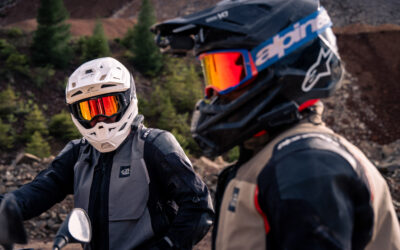
ALPINESTARS VISION 8 WORDMARK GOGGLES
Two weeks, two continents, and nearly every kind of weather Goggles are not easy to judge in a showroom. Their real strengths and weaknesses only become apparent after hours inside a helmet, when...