
Stolen Miles
Cascades, lava fields, high desert, hot springs, and the Giant Loop Ride
At BTA Magazine, we are always looking for the kind of journey that still carries the taste of discovery. Not simply a ride through beautiful country, and not another polished itinerary built around familiar viewpoints, comfortable stops, and roads already worn smooth by repetition. We look for places where the landscape still speaks in its own accent, where local life has not been completely rearranged for visitors, and where the ride can still lead into something raw, practical, and real. Oregon had been on our minds for some time, but not necessarily the Oregon most travelers first imagine. The Pacific coast, with its green cliffs, cool weather, and postcard beauty, could wait for another chapter. We were interested in the Oregon beyond the obvious image: the volcanic mountains, the working ranchlands, the high desert, the hot springs, the isolated tracks, and the people who live and ride in those spaces without making much noise about it.
The opportunity arrived through our friends at Giant Loop. Their home base is in Bend, and their annual Giant Loop Ride would gather hundreds of adventure riders at Crystal Crane Hot Springs, a remote eastern Oregon outpost not far from the long pull toward Idaho. That changed the shape of the idea. We could have built a route north to south along the Cascades, and there is no question that Oregon would have rewarded that decision. But the more we studied the map, the more obvious it became that the real story was not in following the mountain range. It was in crossing the state’s many personalities from west to east, then returning to the mountains with the desert still on our boots.
Oregon’s great trick is variety. Ride it laterally and the state opens like a geological and cultural cross-section: damp western forest, alpine water, lava fields, old western towns, brewery culture, ranch roads, sagebrush, remote gravel, and finally the wide, exposed country where the map grows thin. So we opened OnX Offroad, began building the dream route across those enchanted lands, and asked the only question that matters before a proper adventure: would Oregon be as good from the saddle as it looked from the screen? The answer, we would learn, was larger than expected.
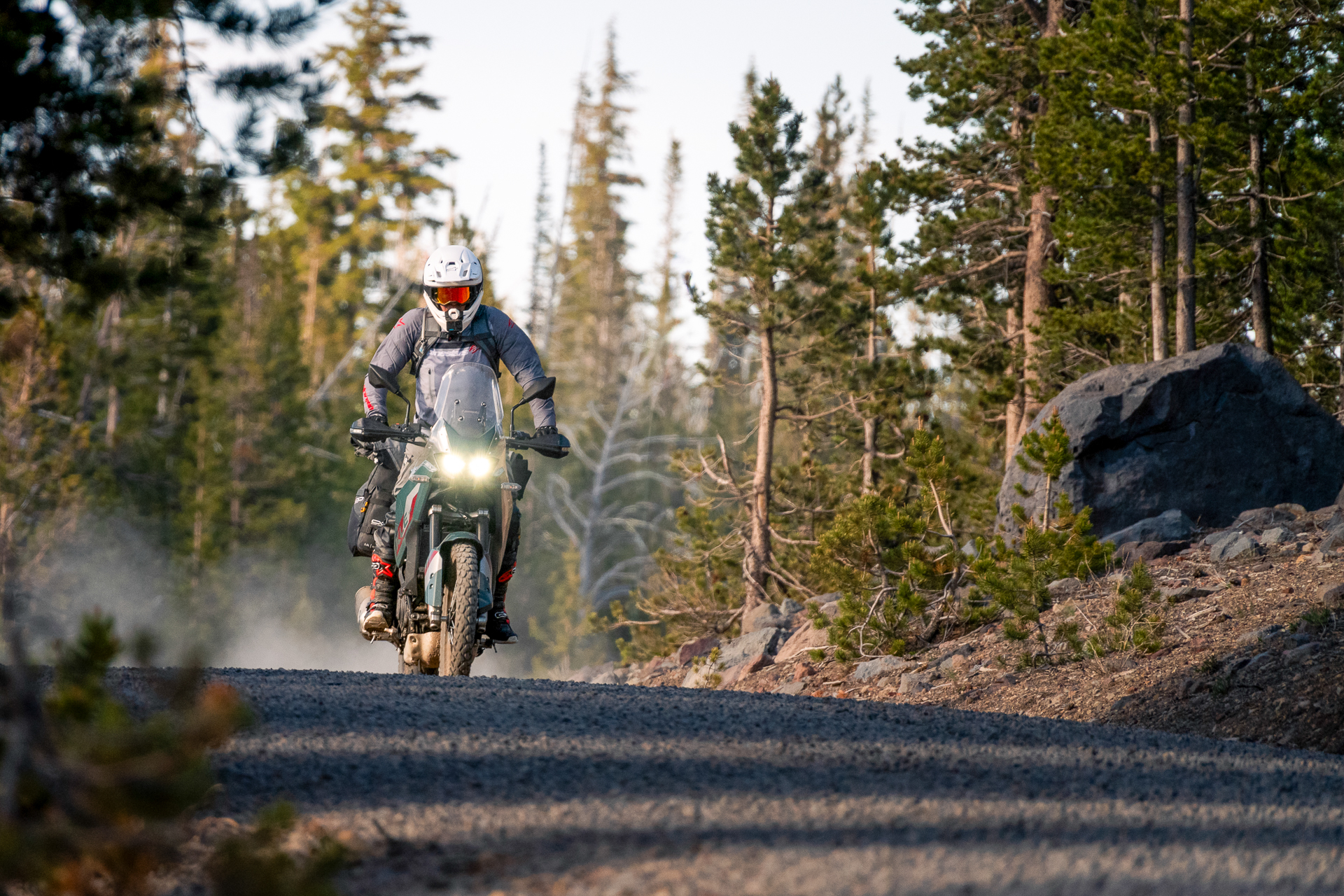
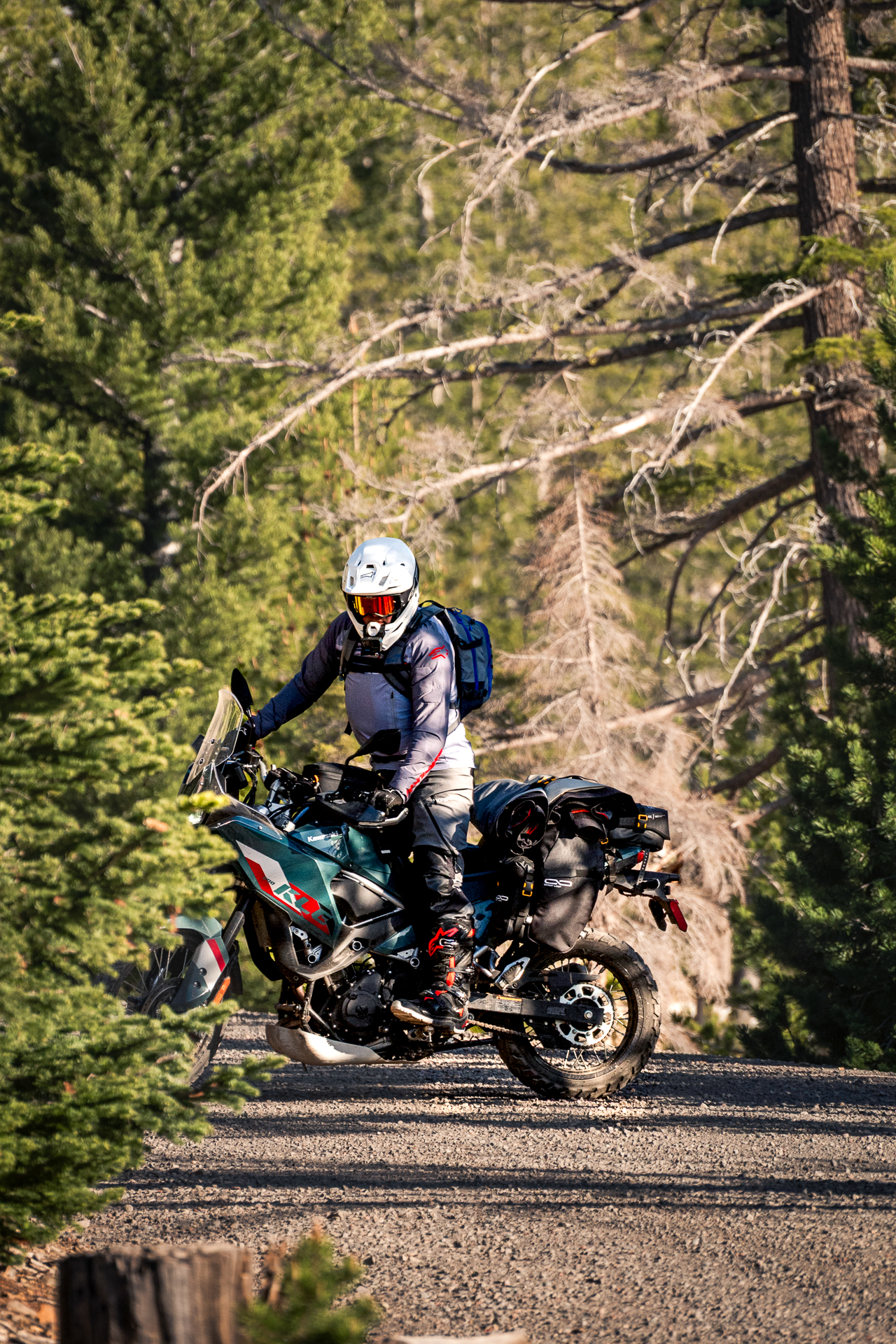
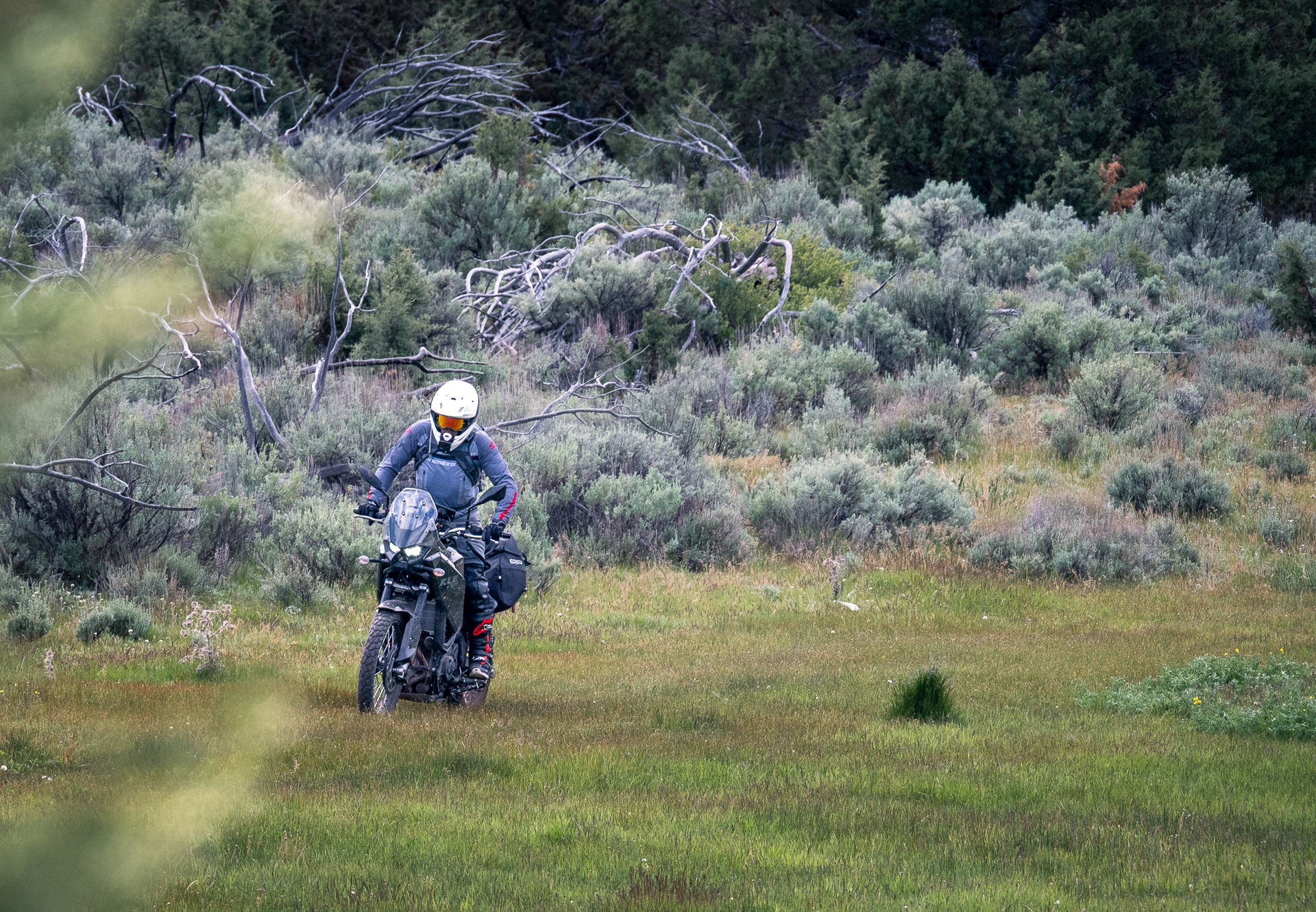
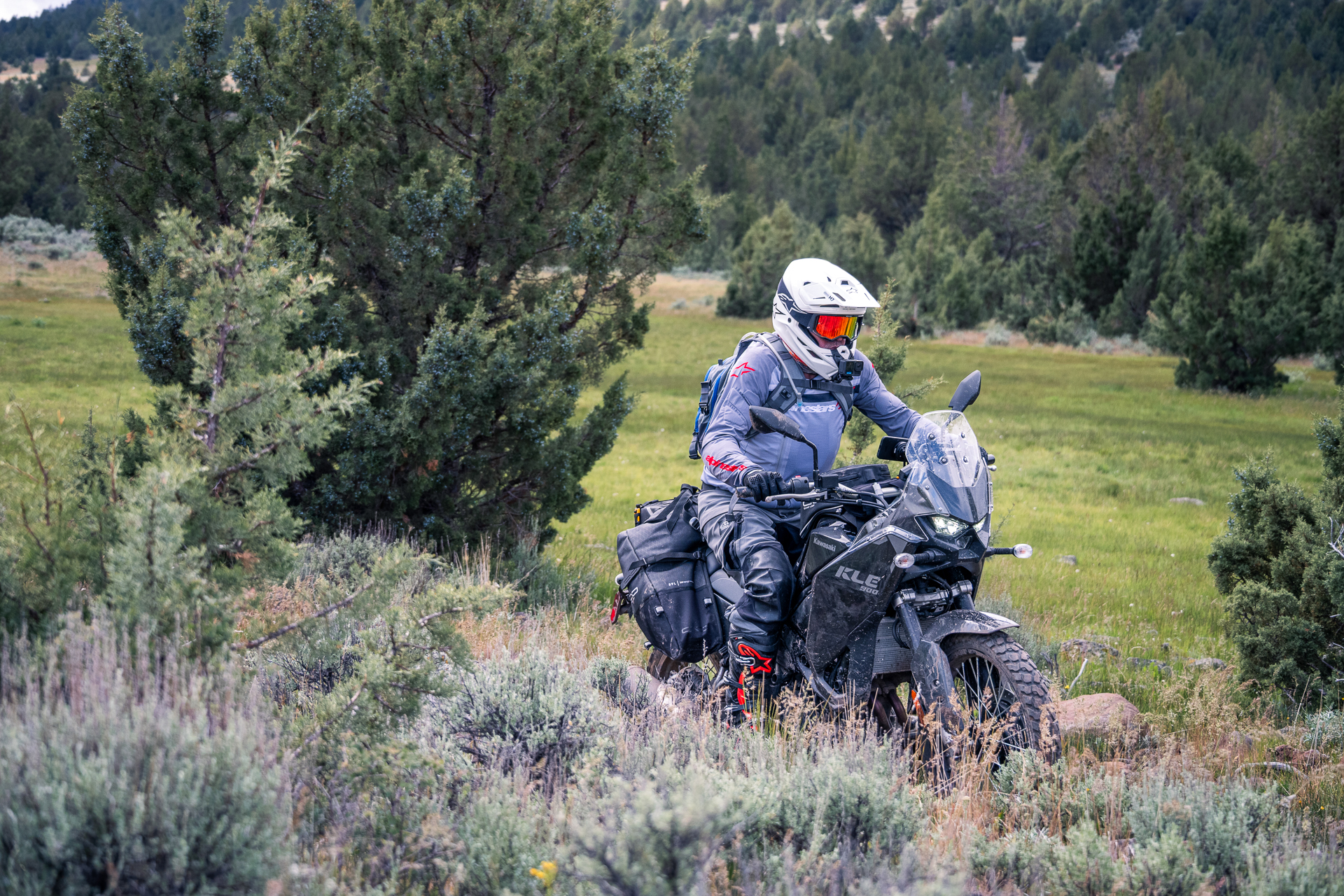
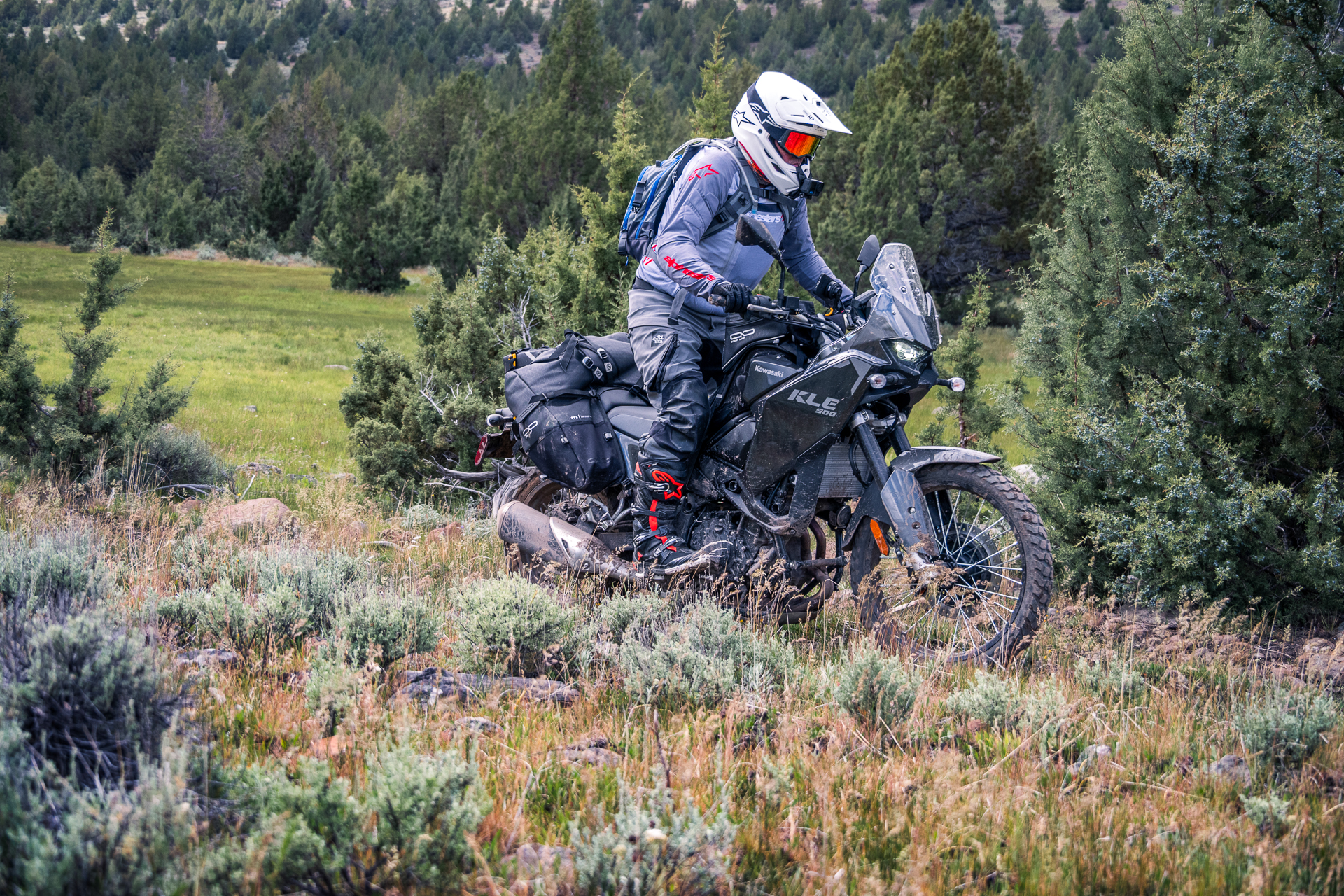
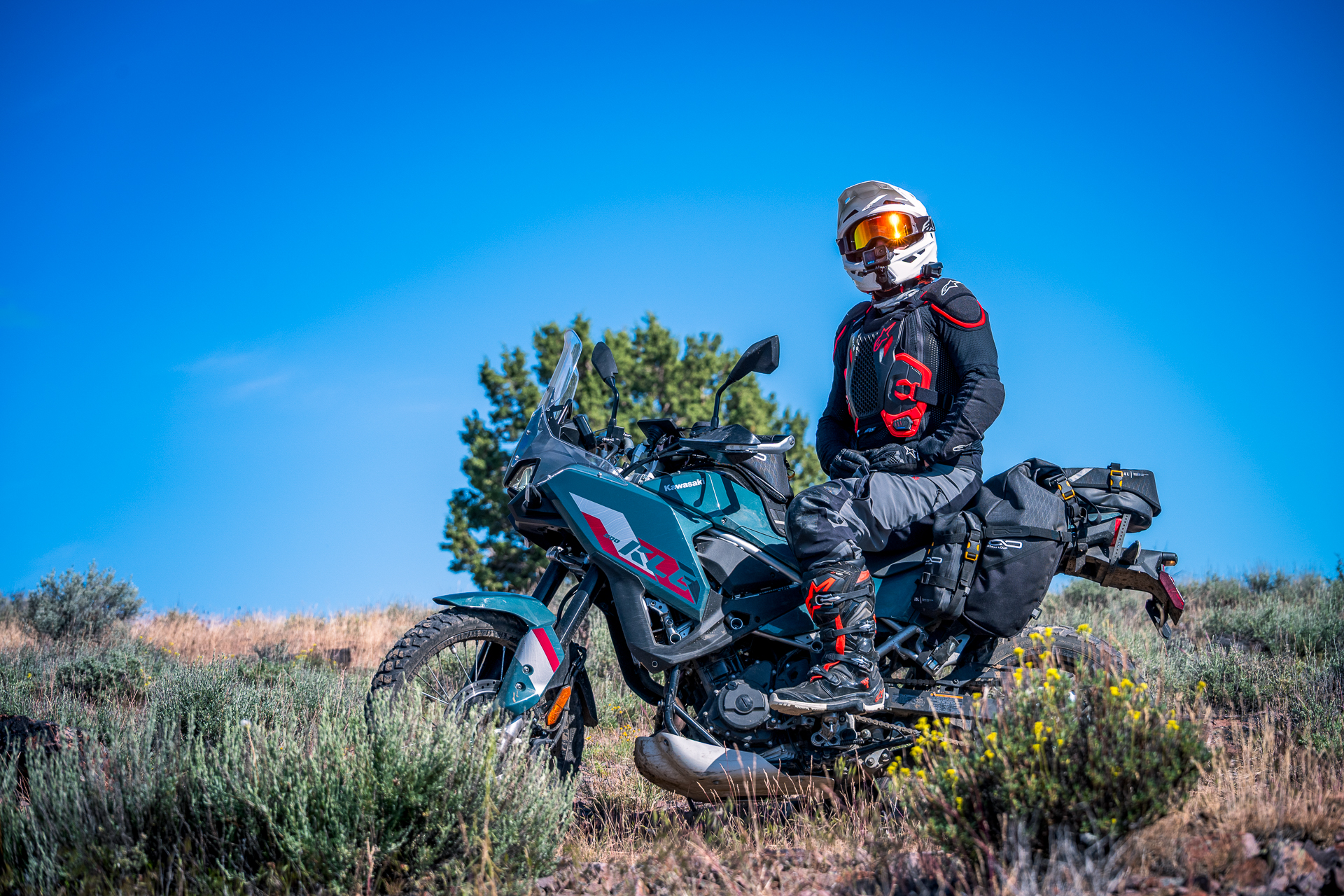
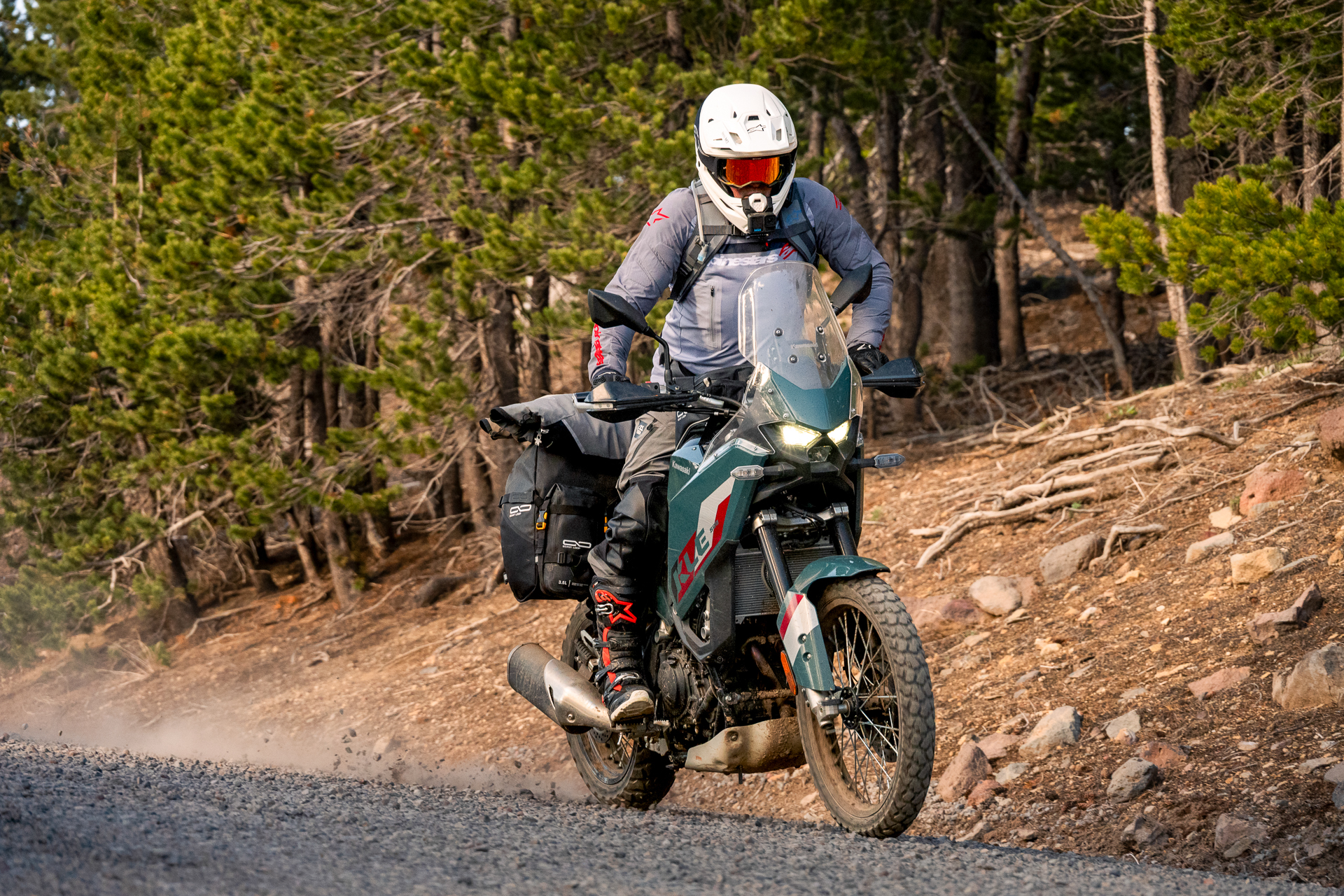
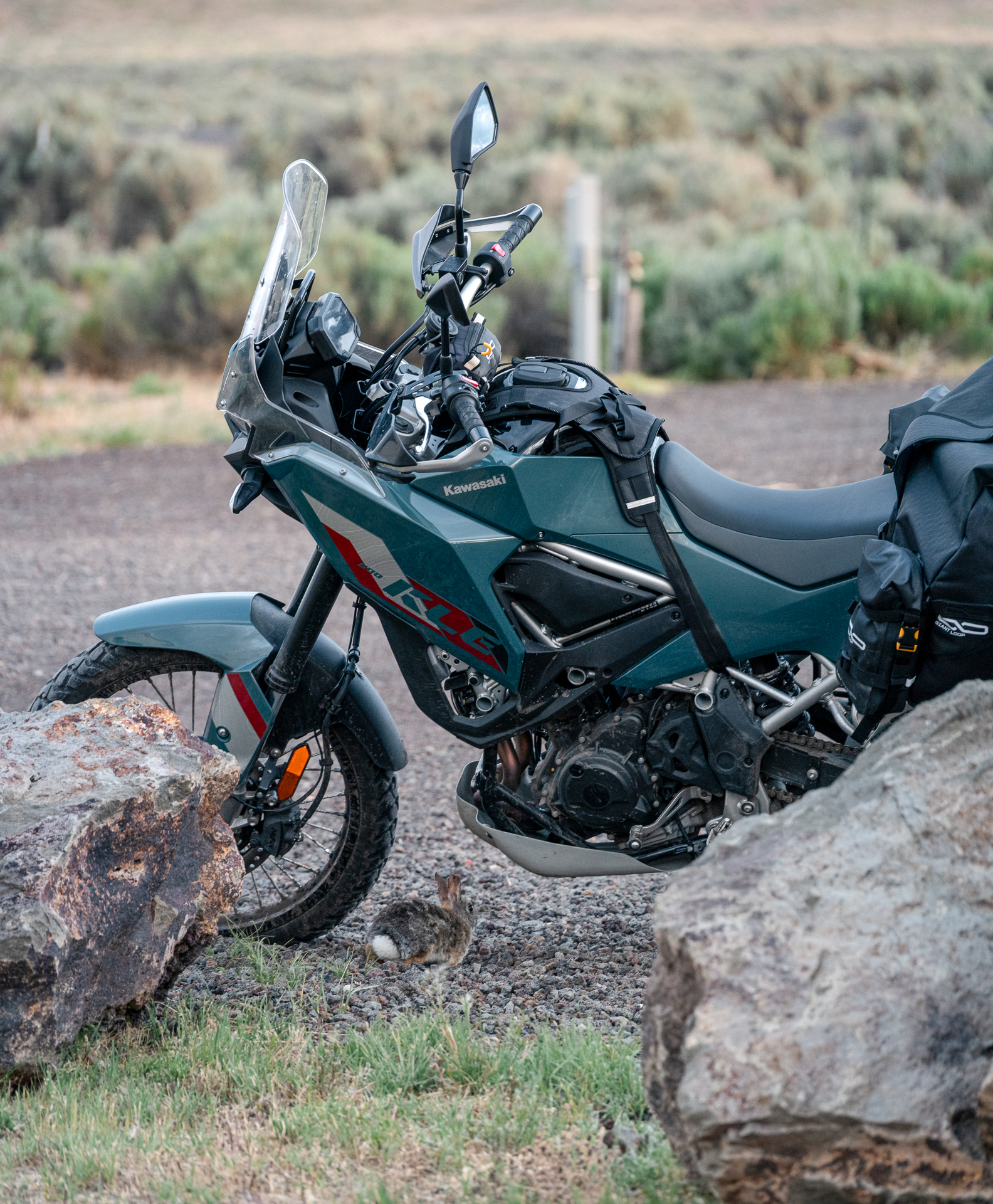
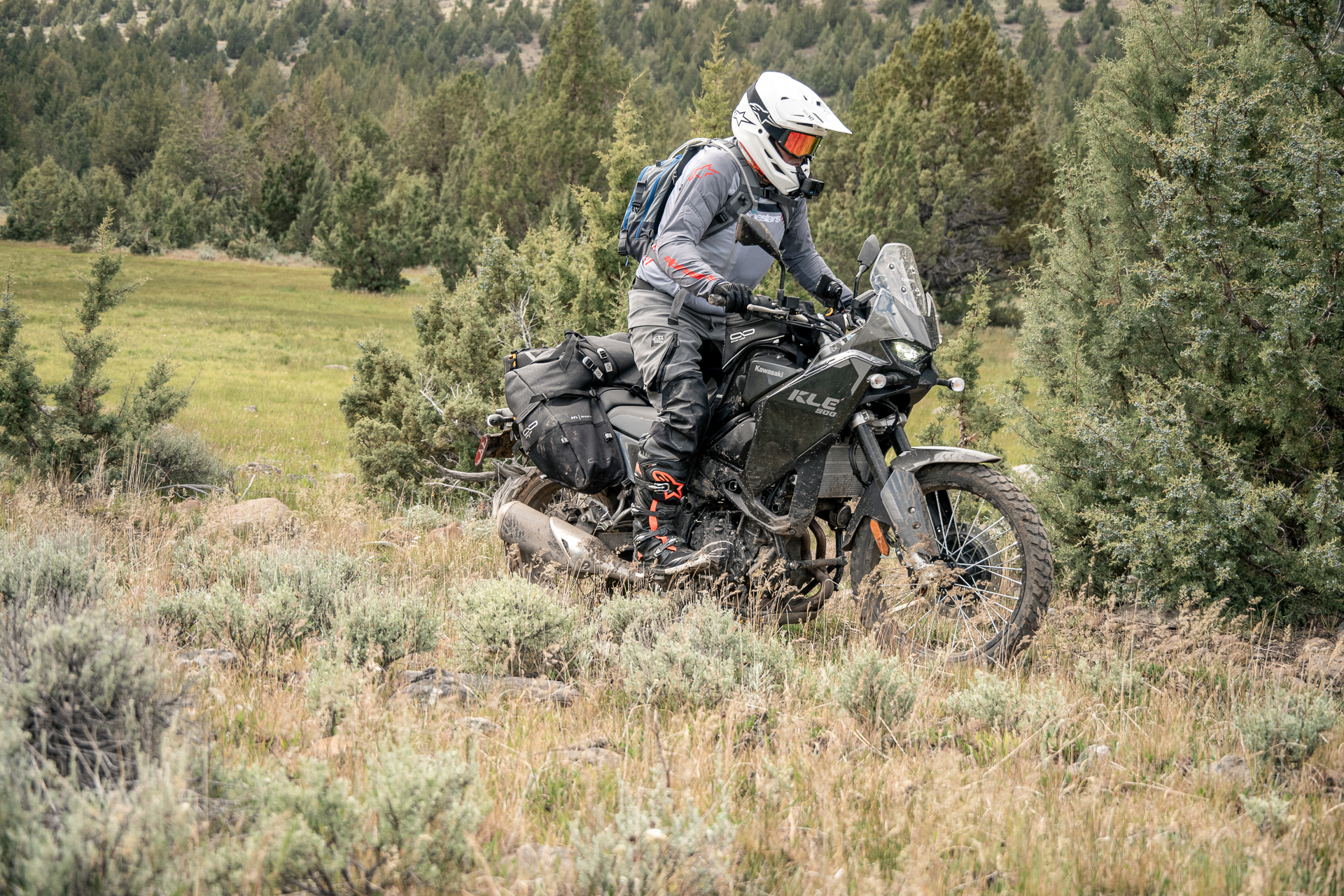
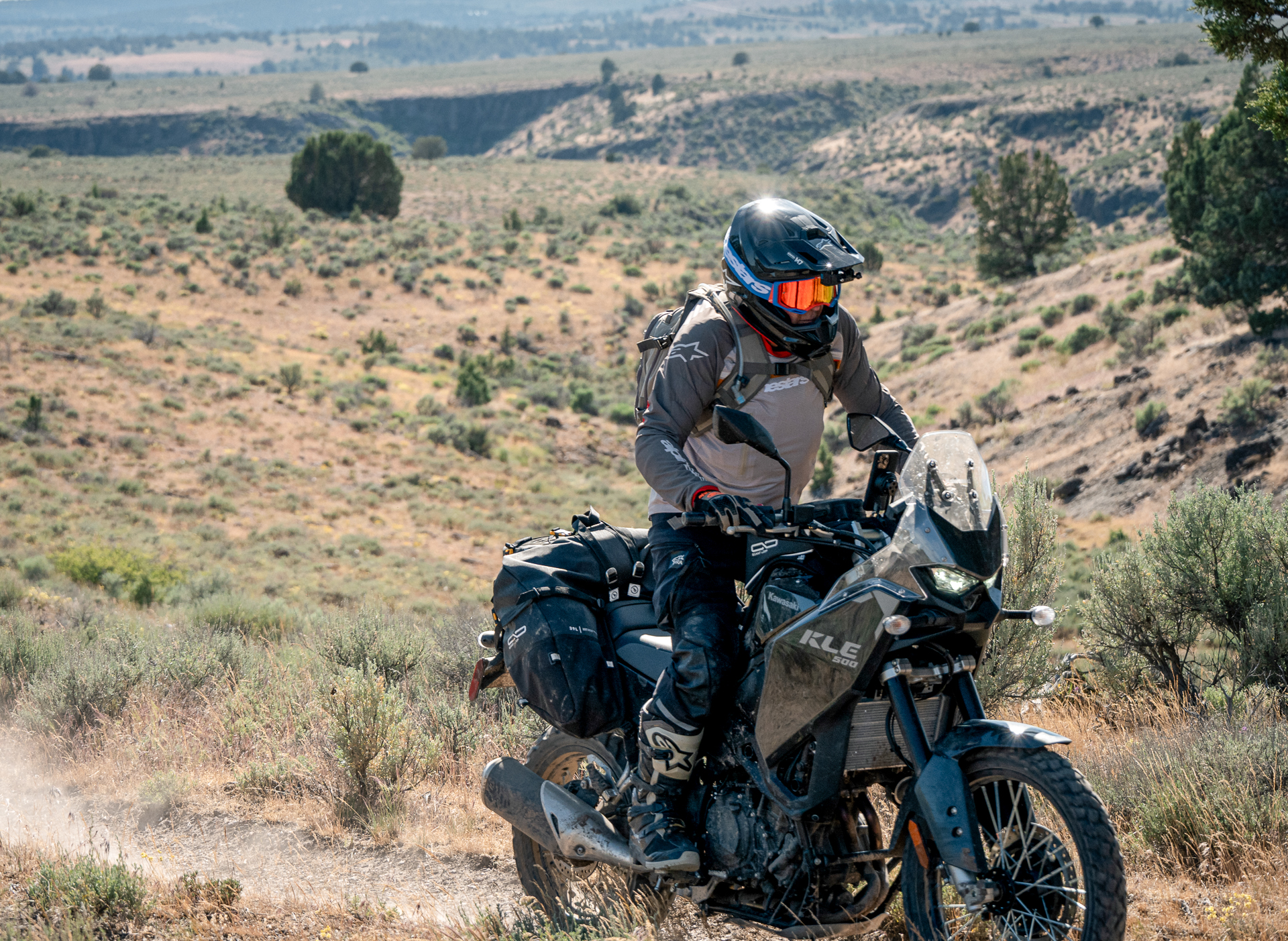
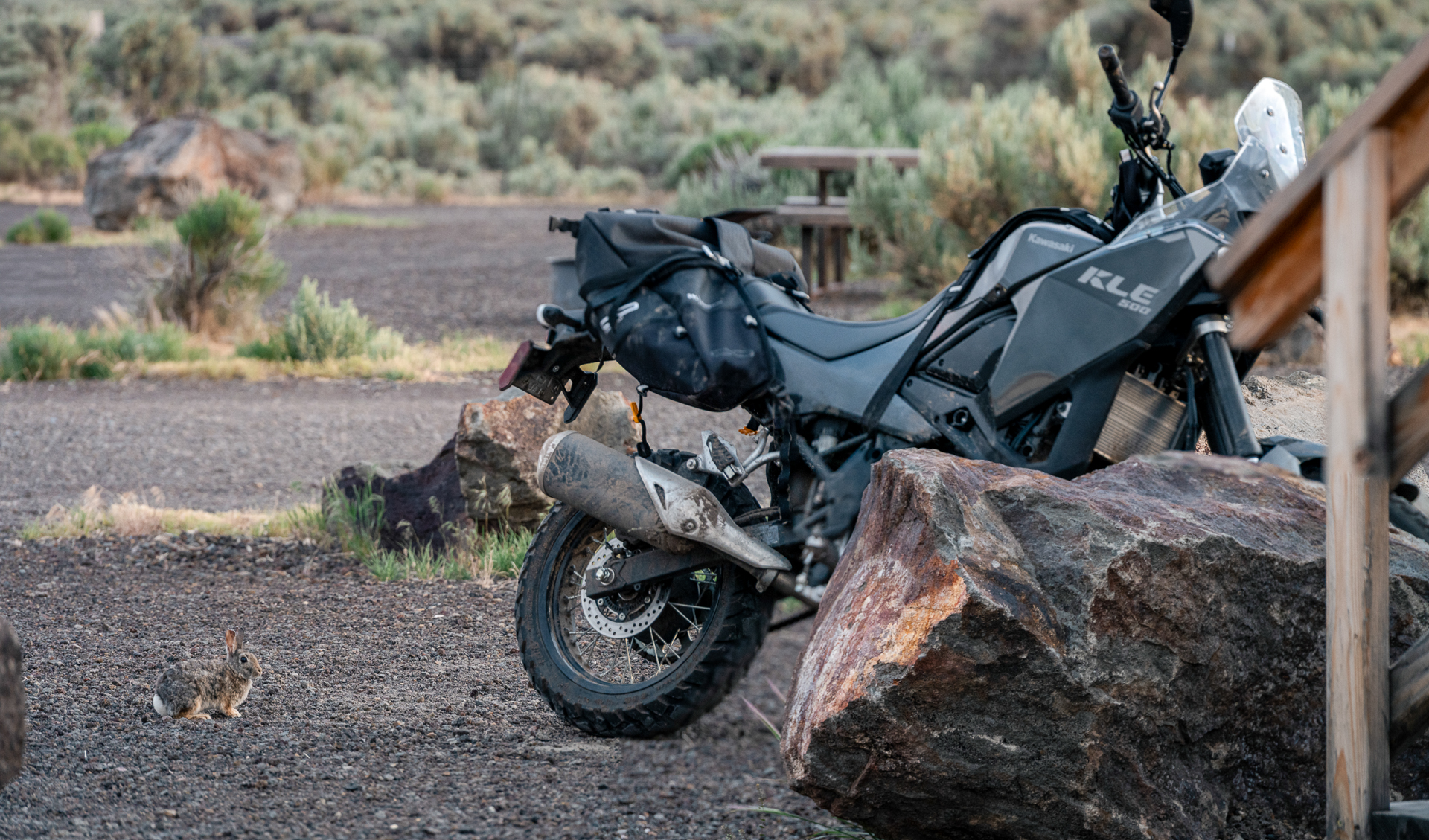
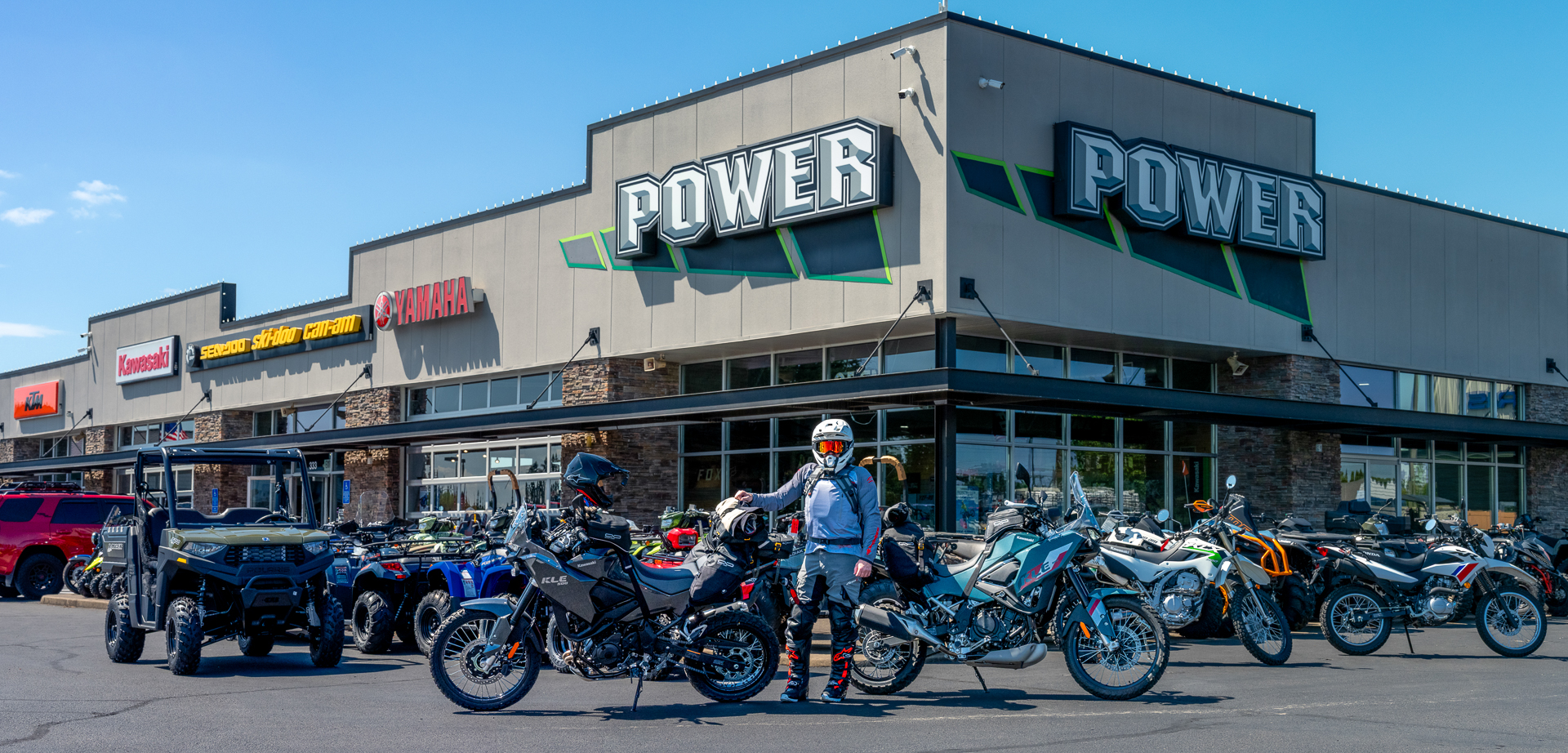
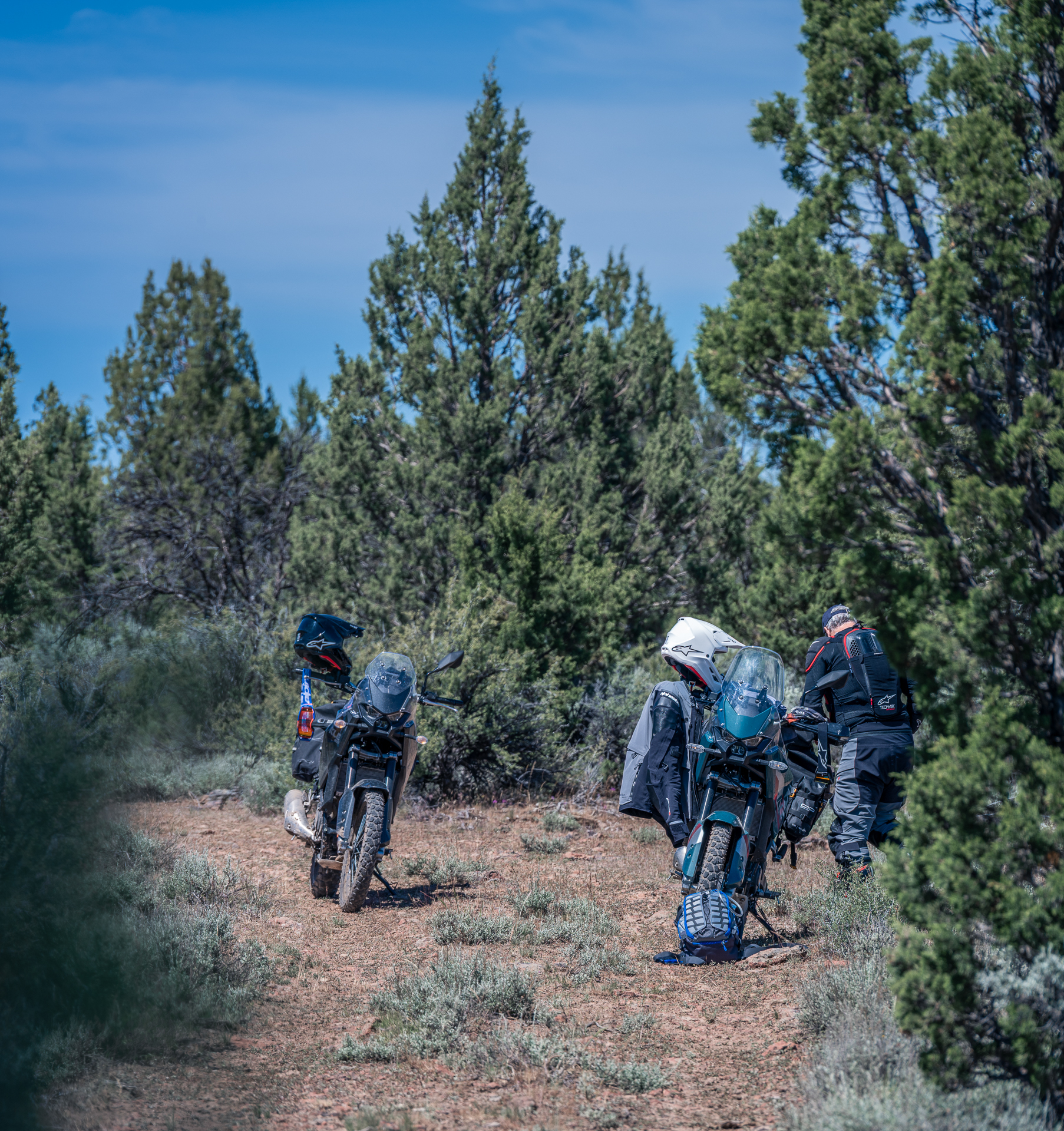
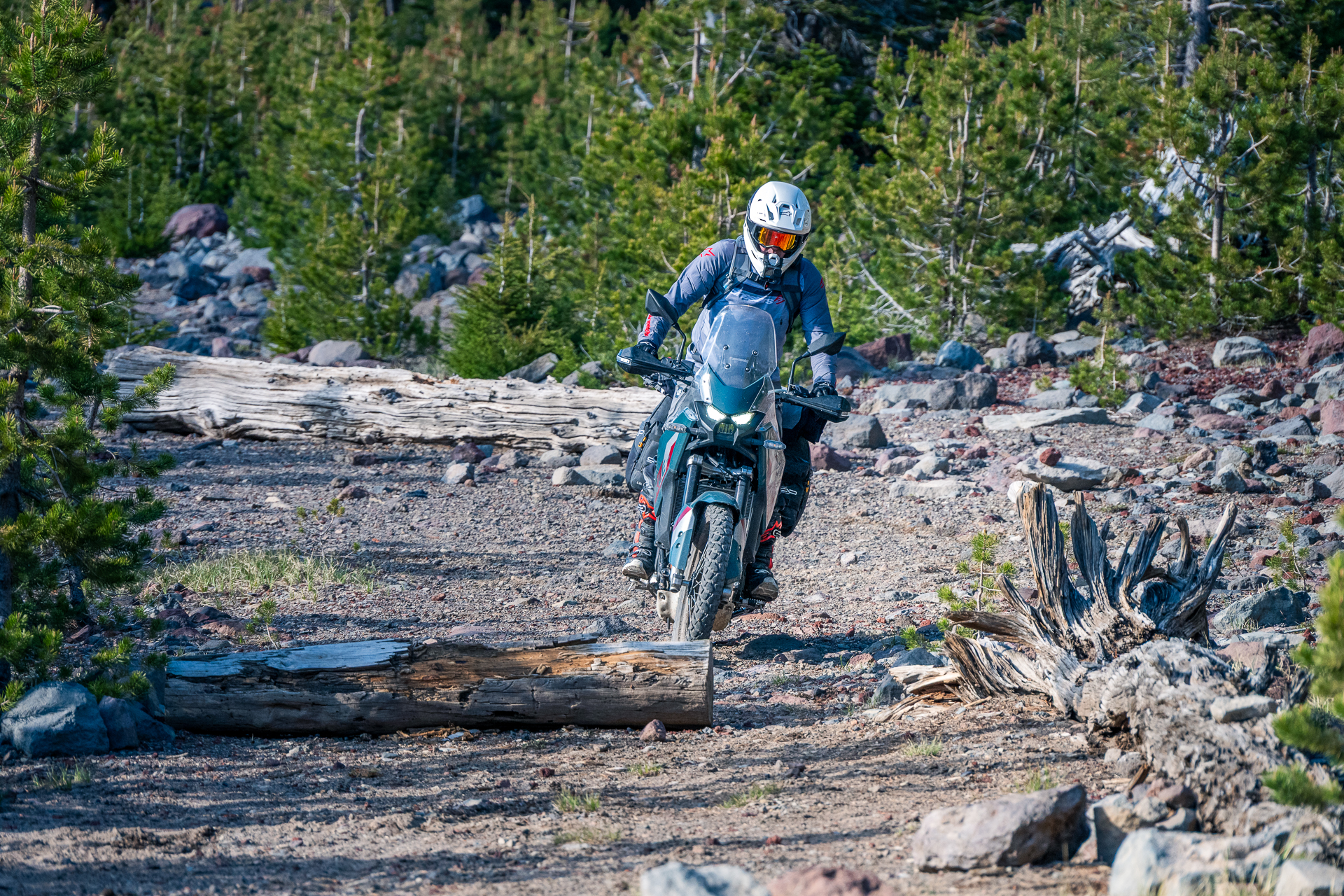
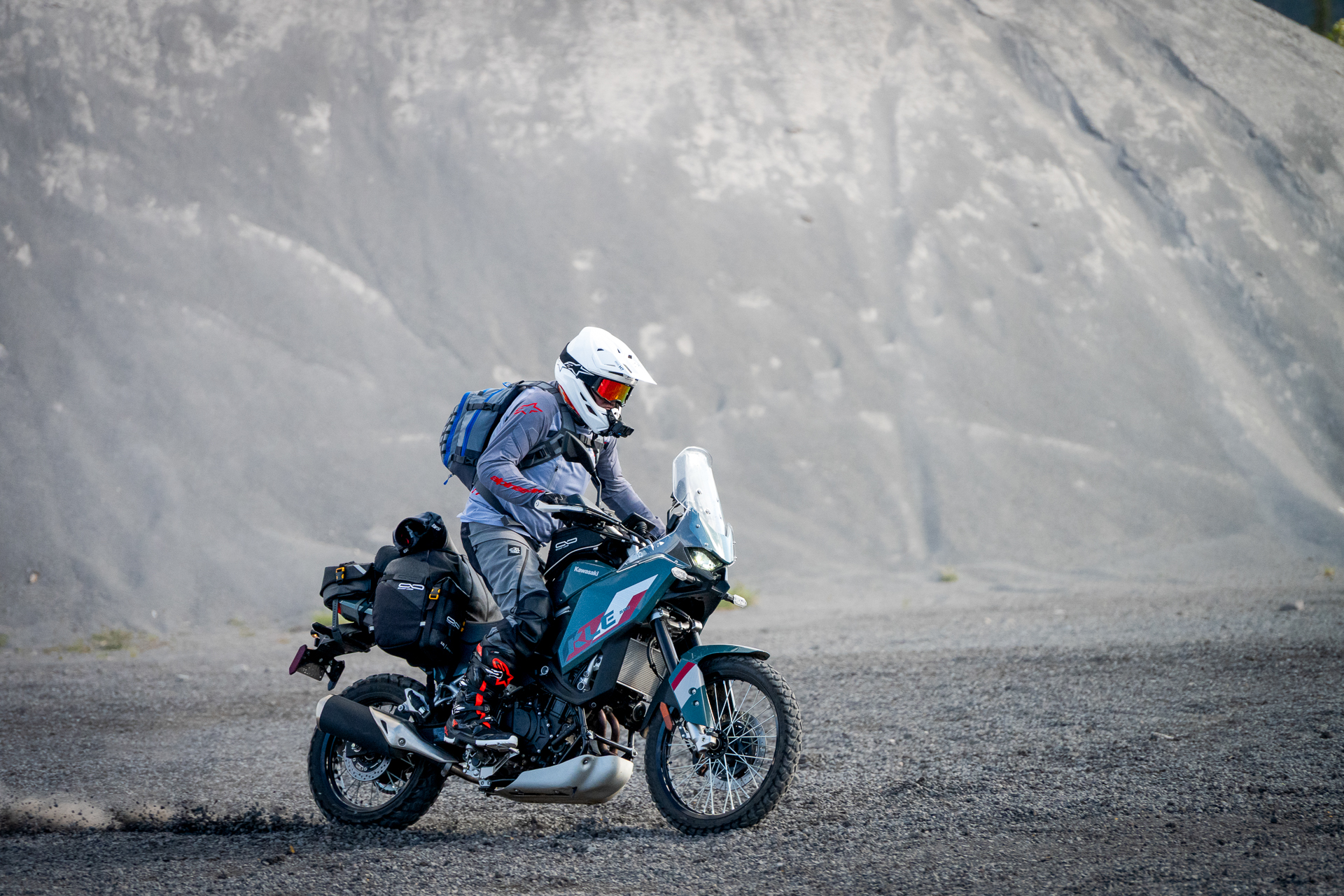
Preparation became the first act of the journey. The route analysis showed serious isolation, long stretches between services, changing surfaces, and weather that could not be treated casually. Kawasaki had the new KLE500s waiting for us at Powersports Sublimity, and this ride would give them the kind of test that matters: pavement transfers, gravel, mud, hail, ranch tracks, rocky two-track, mountain forest, and high-desert wind.
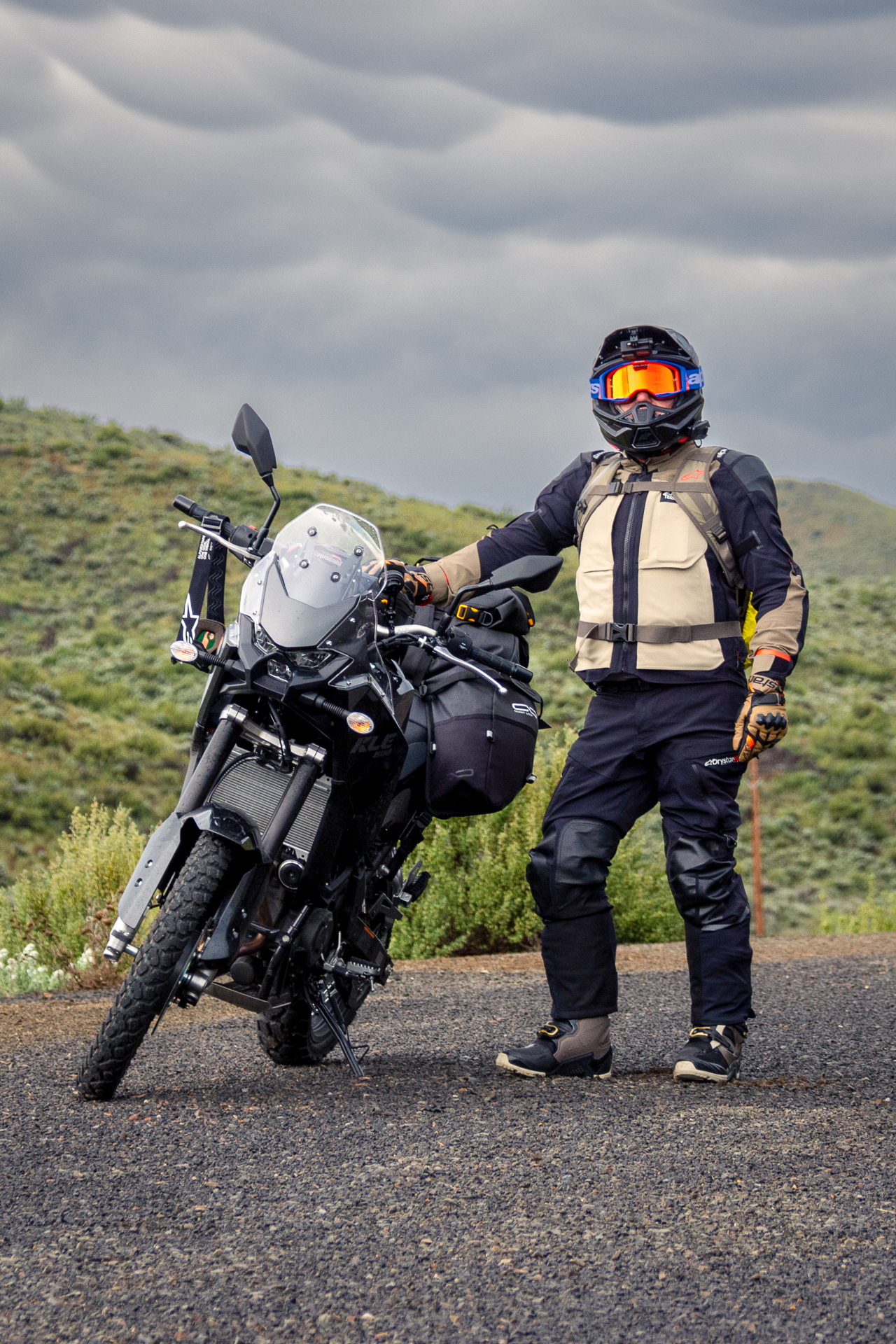
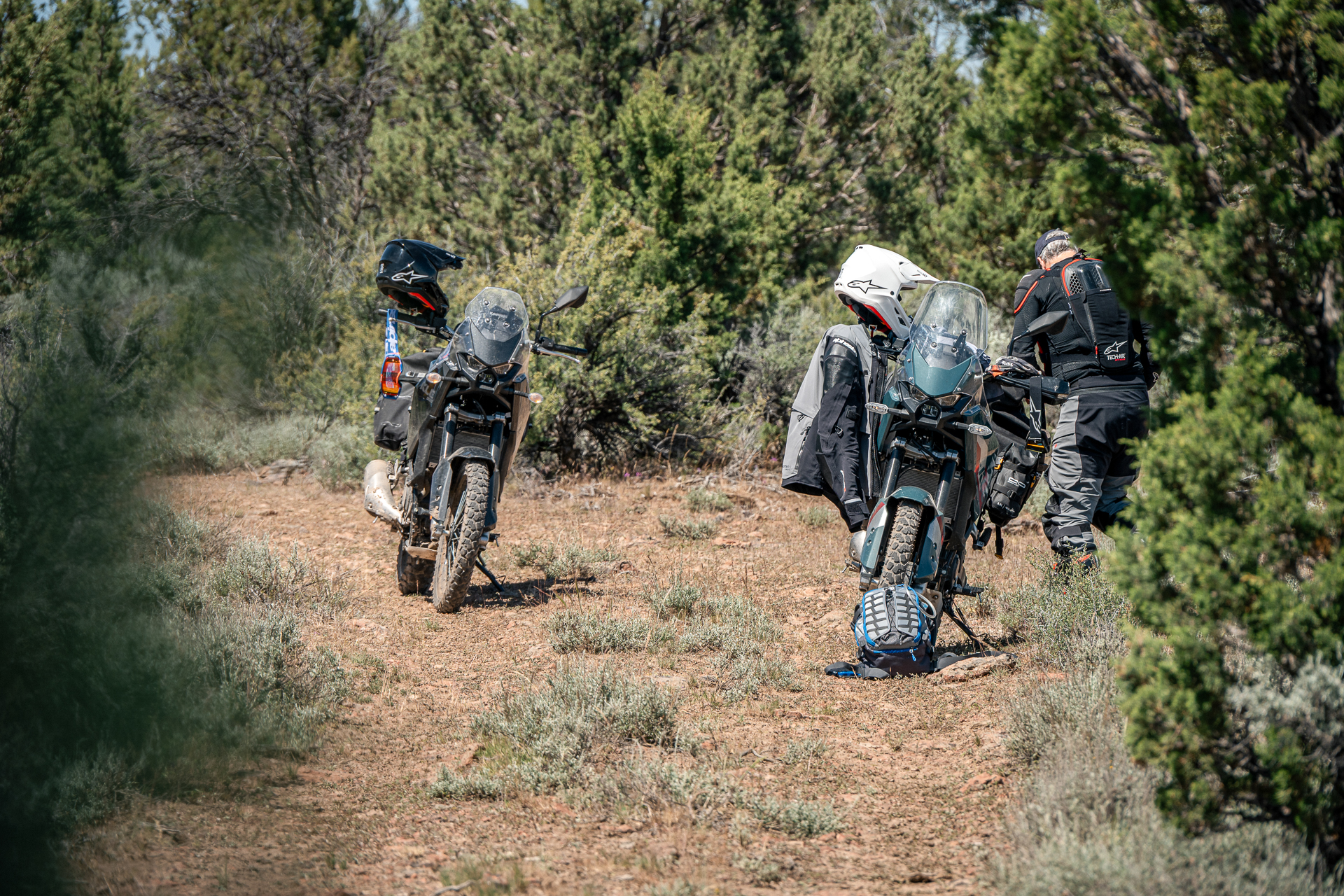
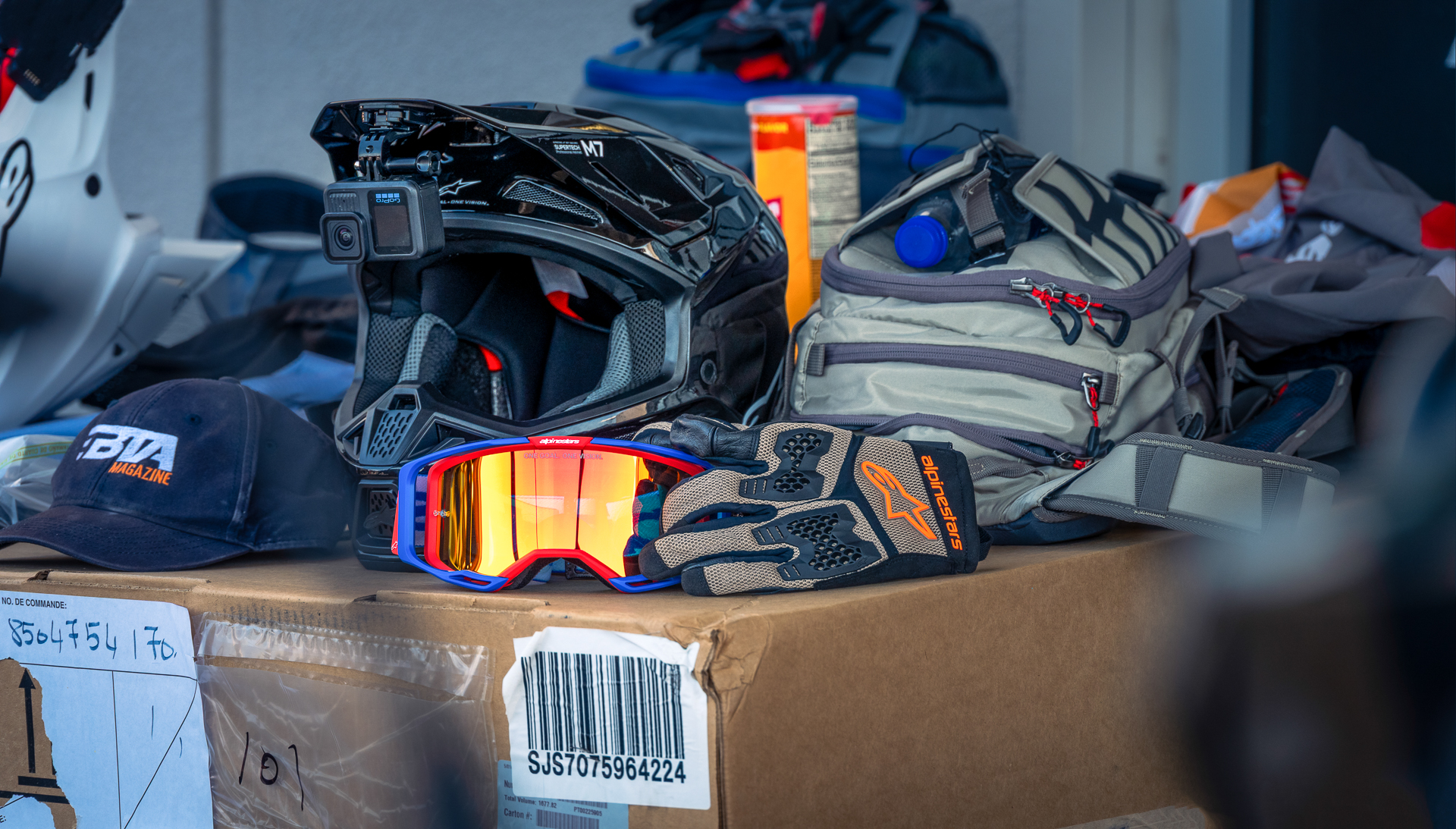
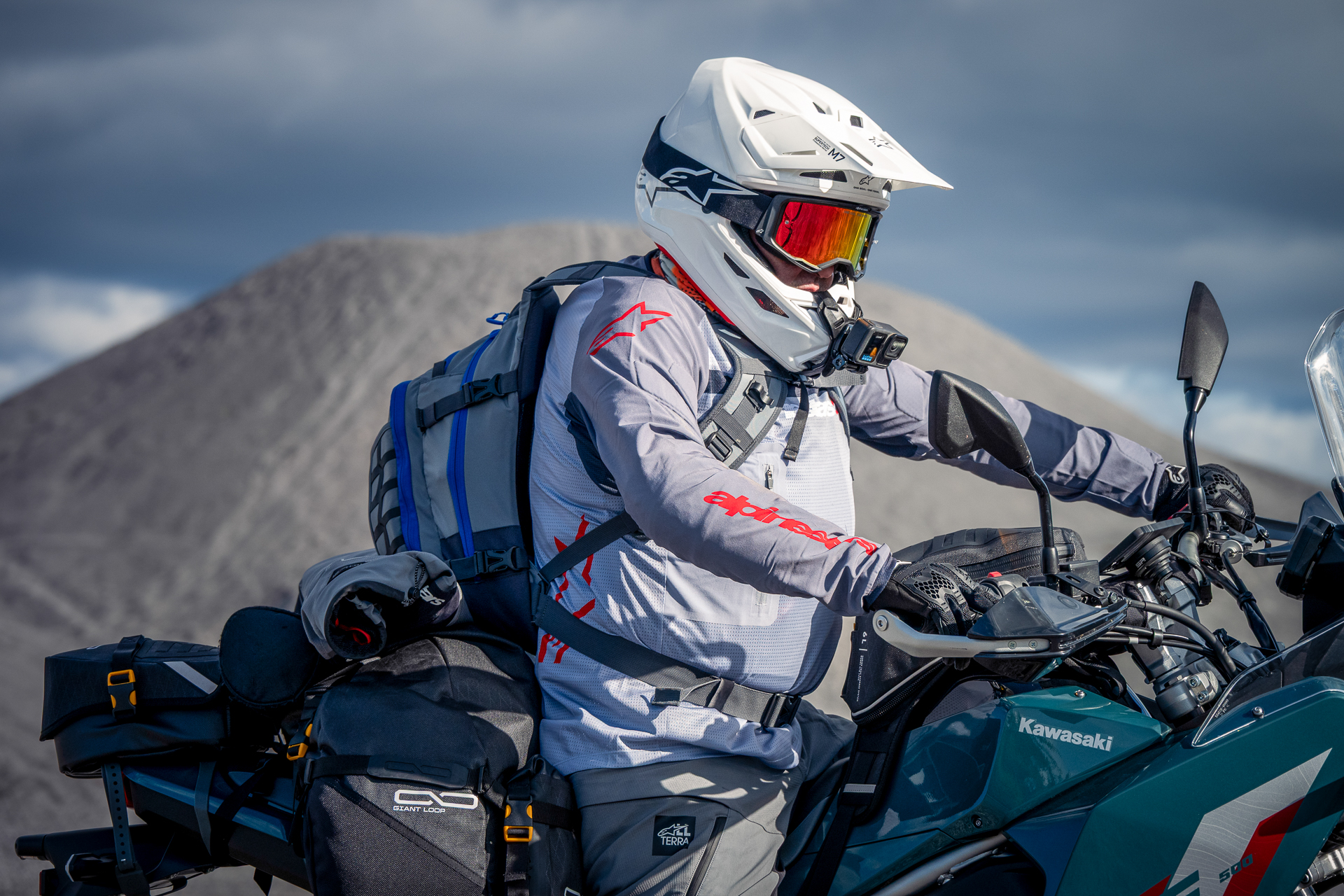
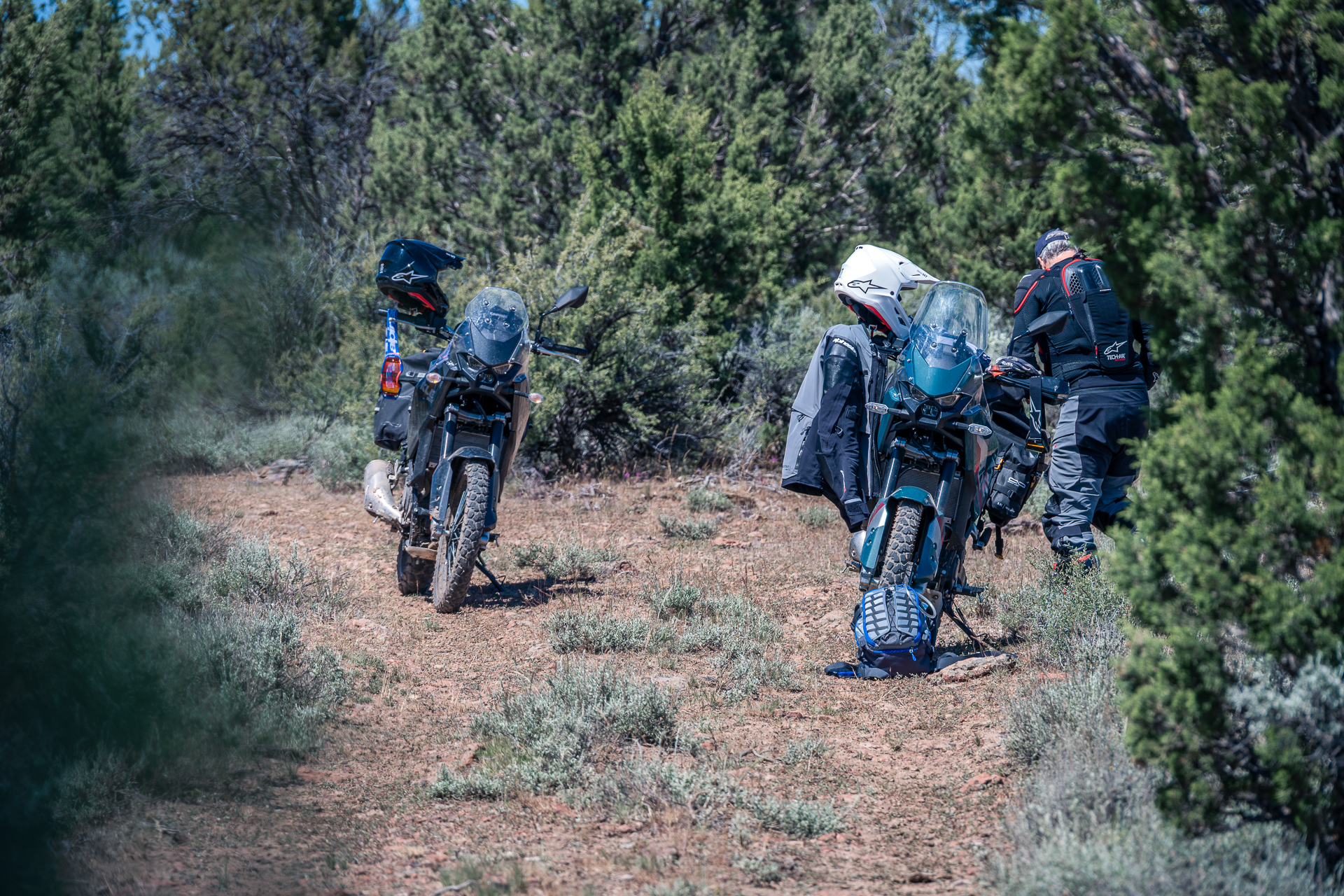
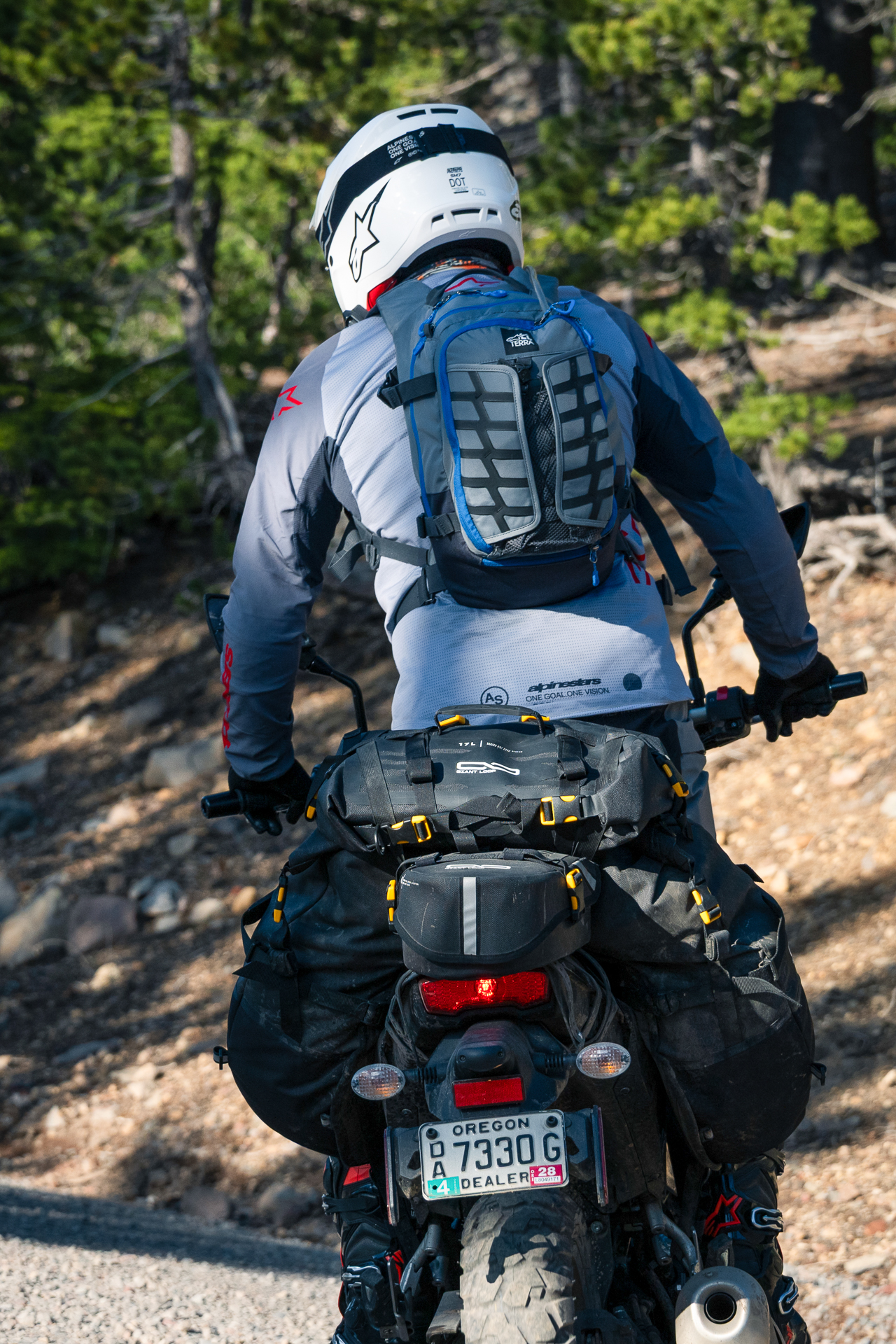
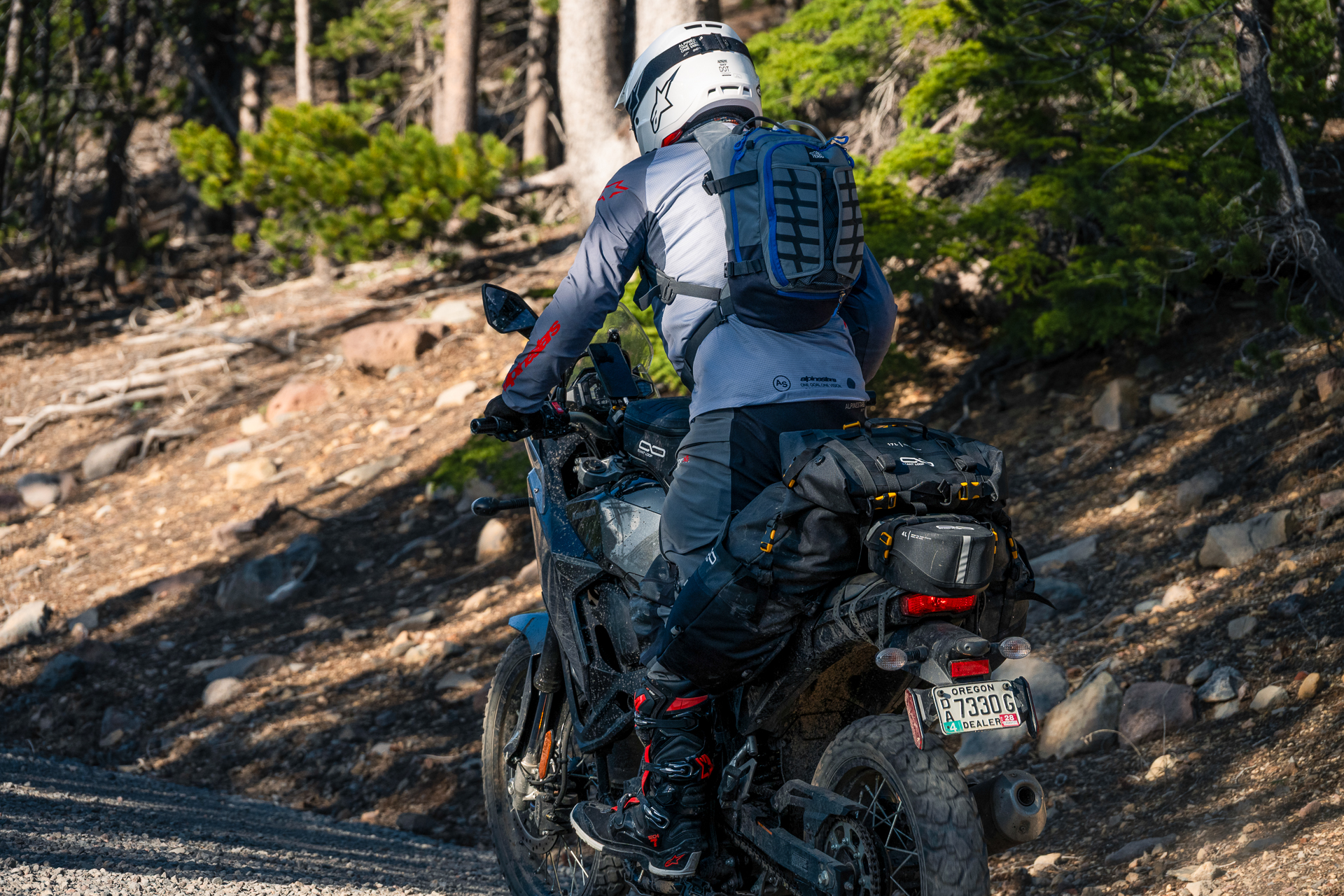
The rest of the setup had to match the route. We chose Alpinestars All Terra gear for the week, including the Andes Pro Drystar XF jacket and pants, ventilated and Drystar gloves, Tech-Air Off-Road protection, S-M7 helmets that allowed the Cardo units to be installed cleanly without altering the shell, and Tech 7 Enduro Drystar boots. Tools, safety kit, compressor, spare parts, photo and video equipment, and travel essentials were packed into Giant Loop soft luggage, keeping the bikes secure and manageable for the mixed terrain ahead. By the time we rolled out, we felt ready for whatever Oregon had waiting. As it turned out, Oregon had been saving plenty.
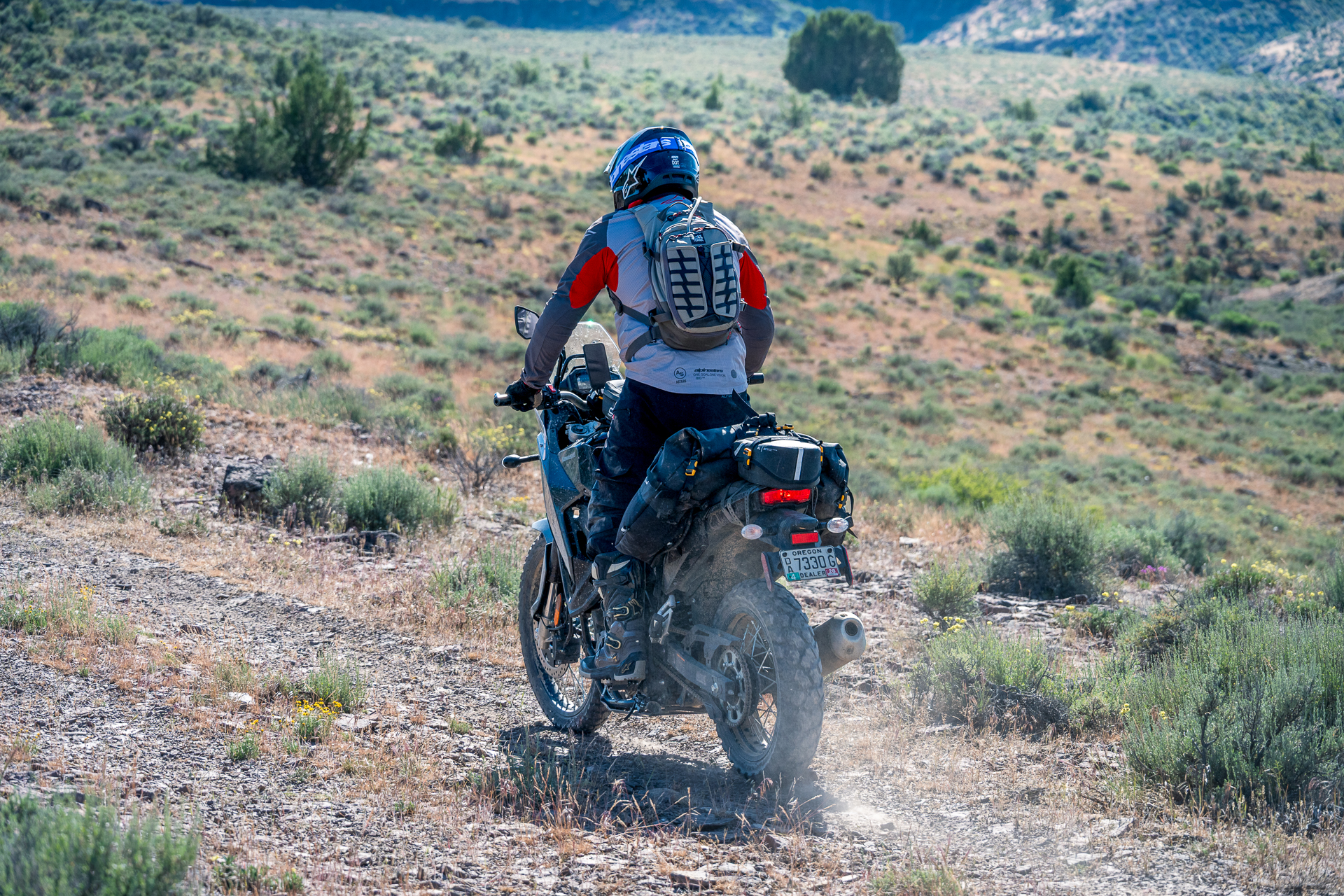
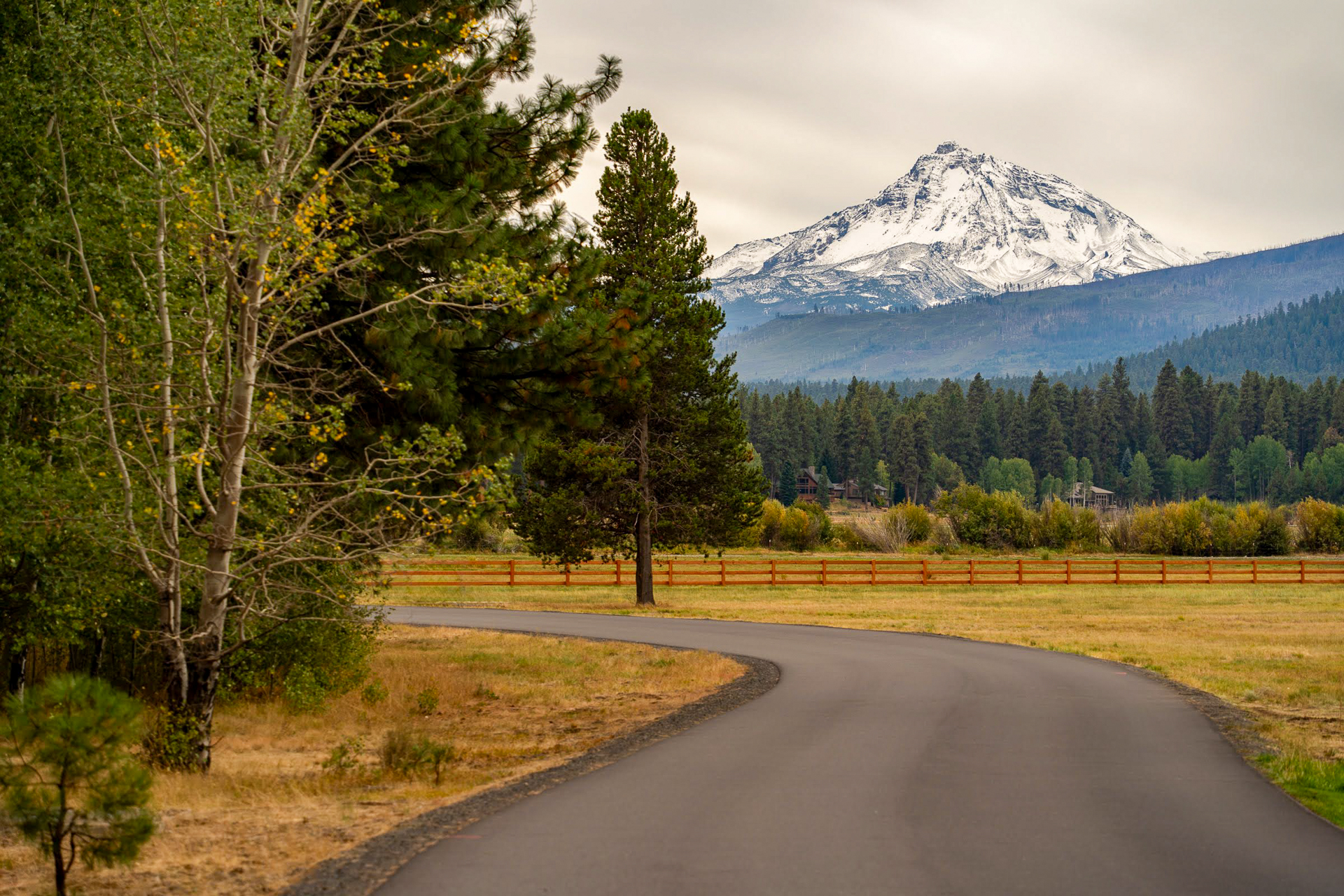
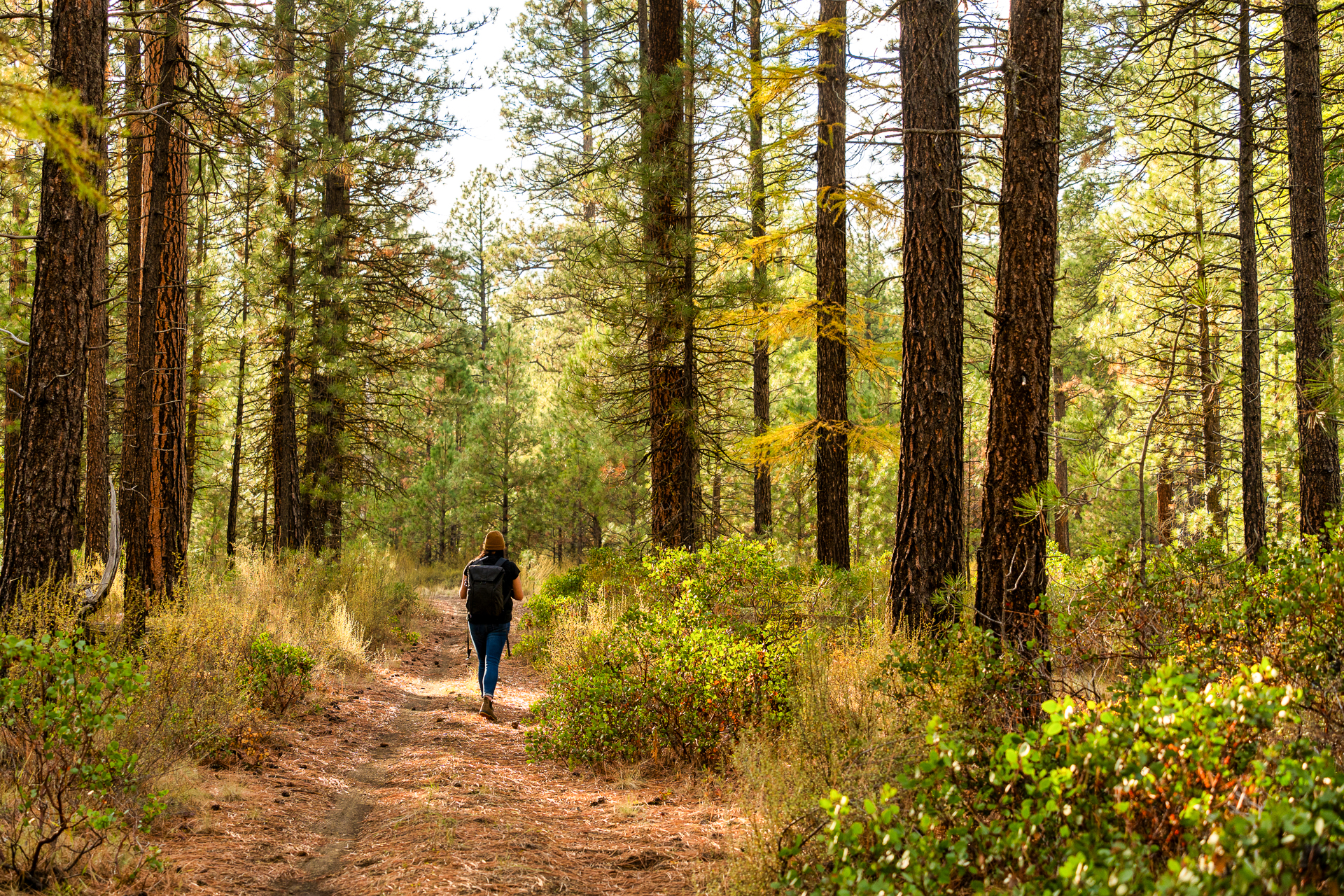
We rolled out of Powersports Sublimity with that familiar start-of-ride voltage: luggage strapped, communications paired, helmets clean, and the weather still feeling like something that might cooperate. The road soon climbed into the Cascades, where Oregon immediately began answering the question we had brought with us. The western side of the route was green, dense, and damp, with roads cutting between walls of timber and the air seeming to pass through fir needles before reaching the helmet.
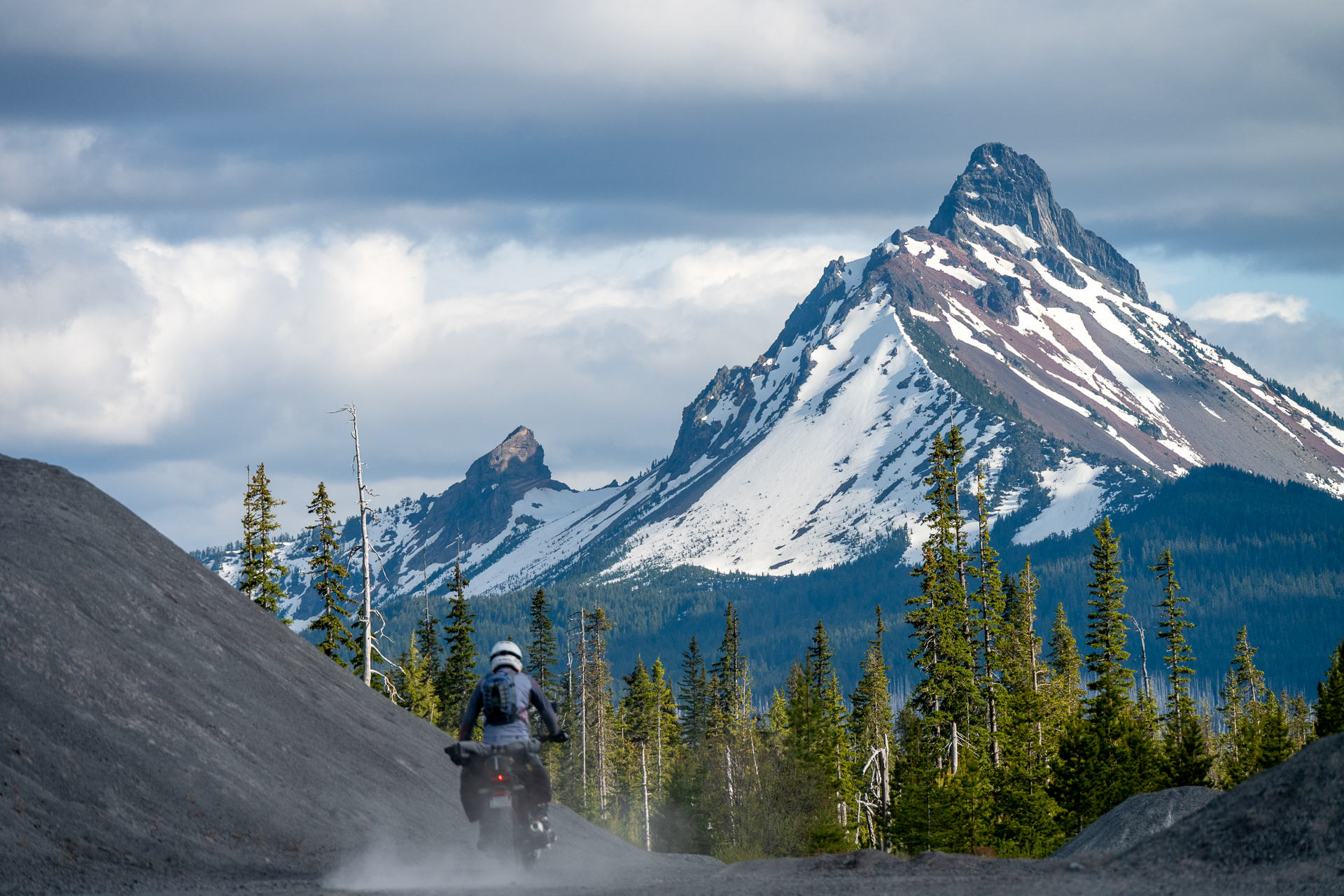
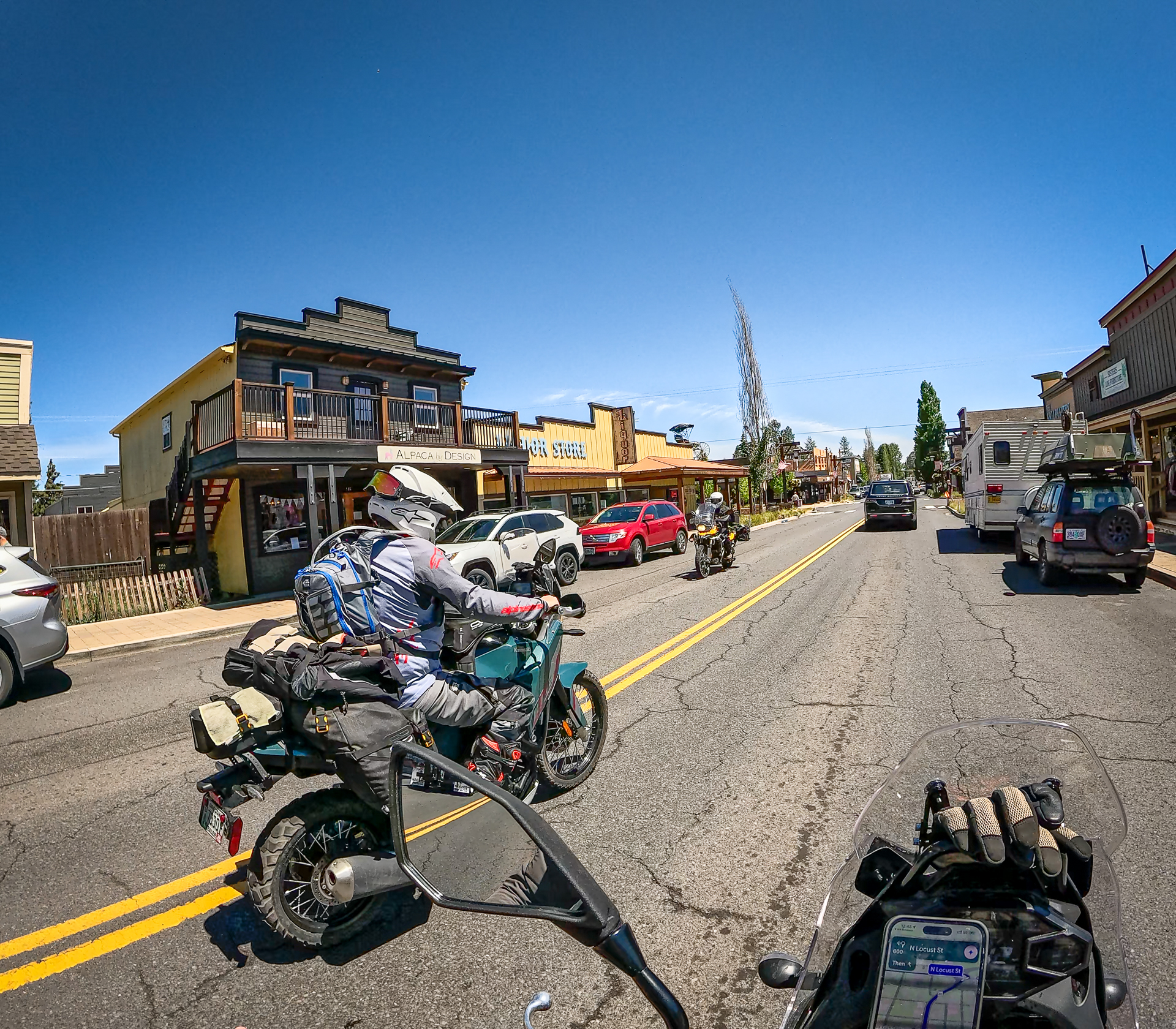
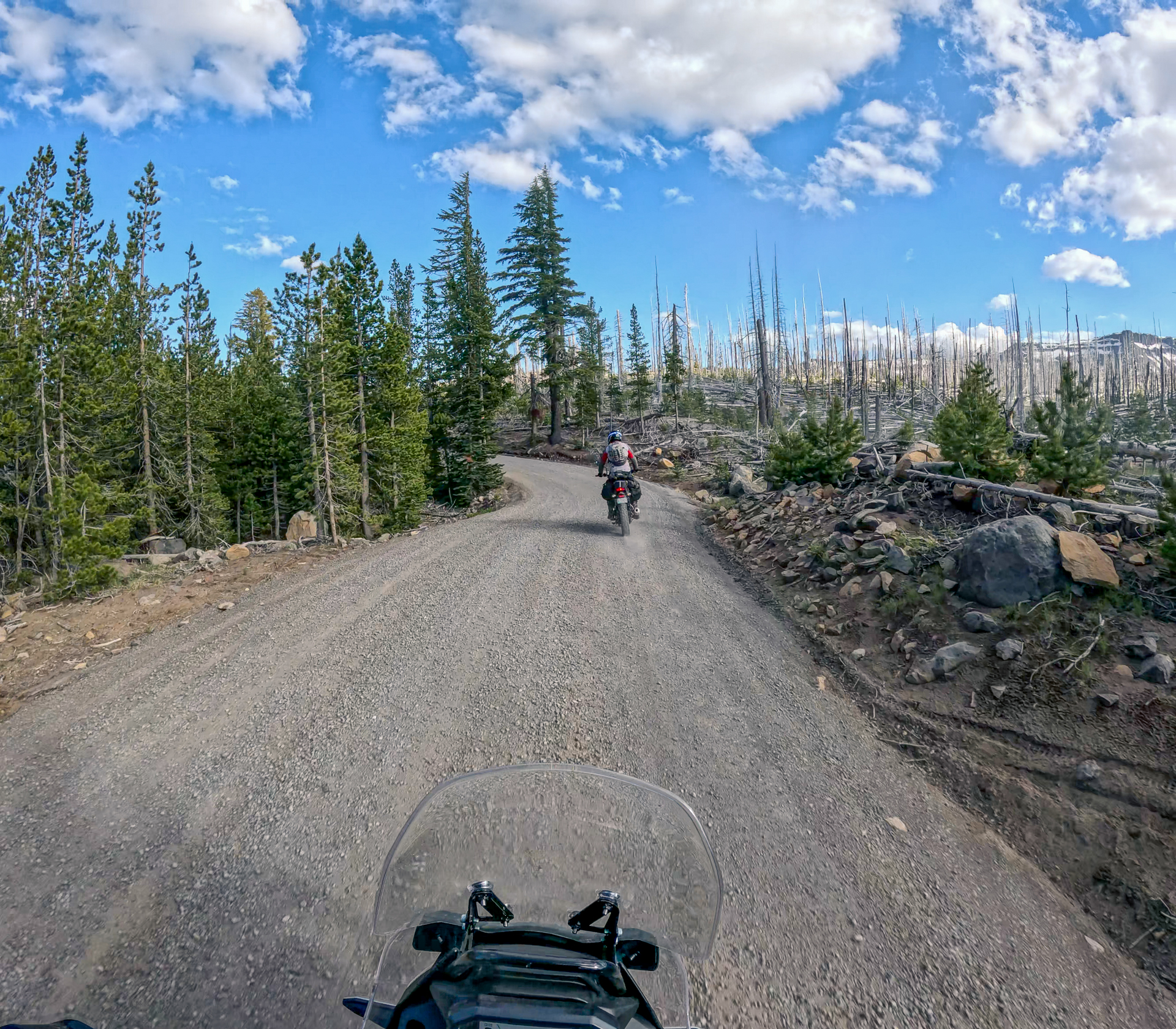
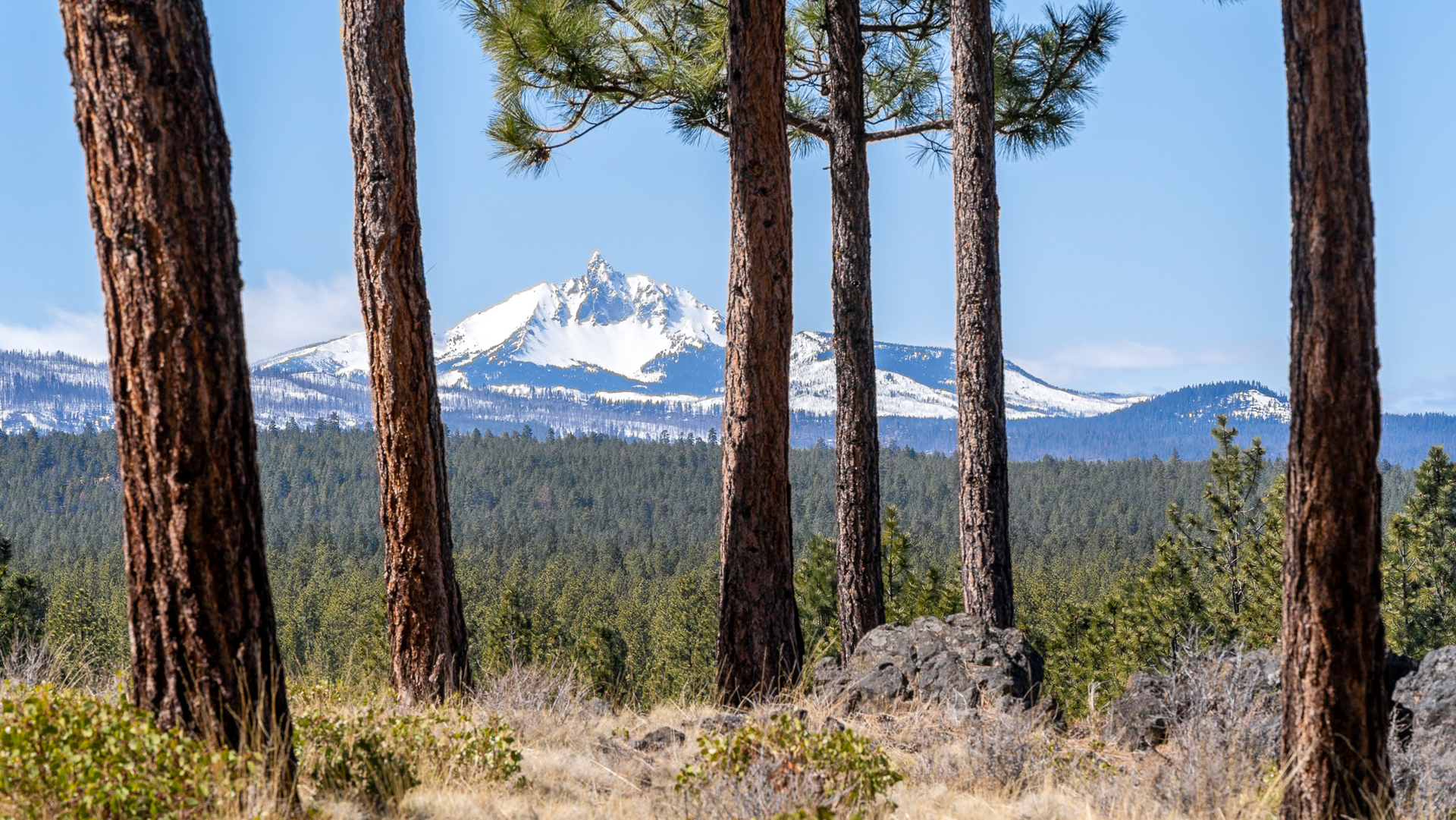
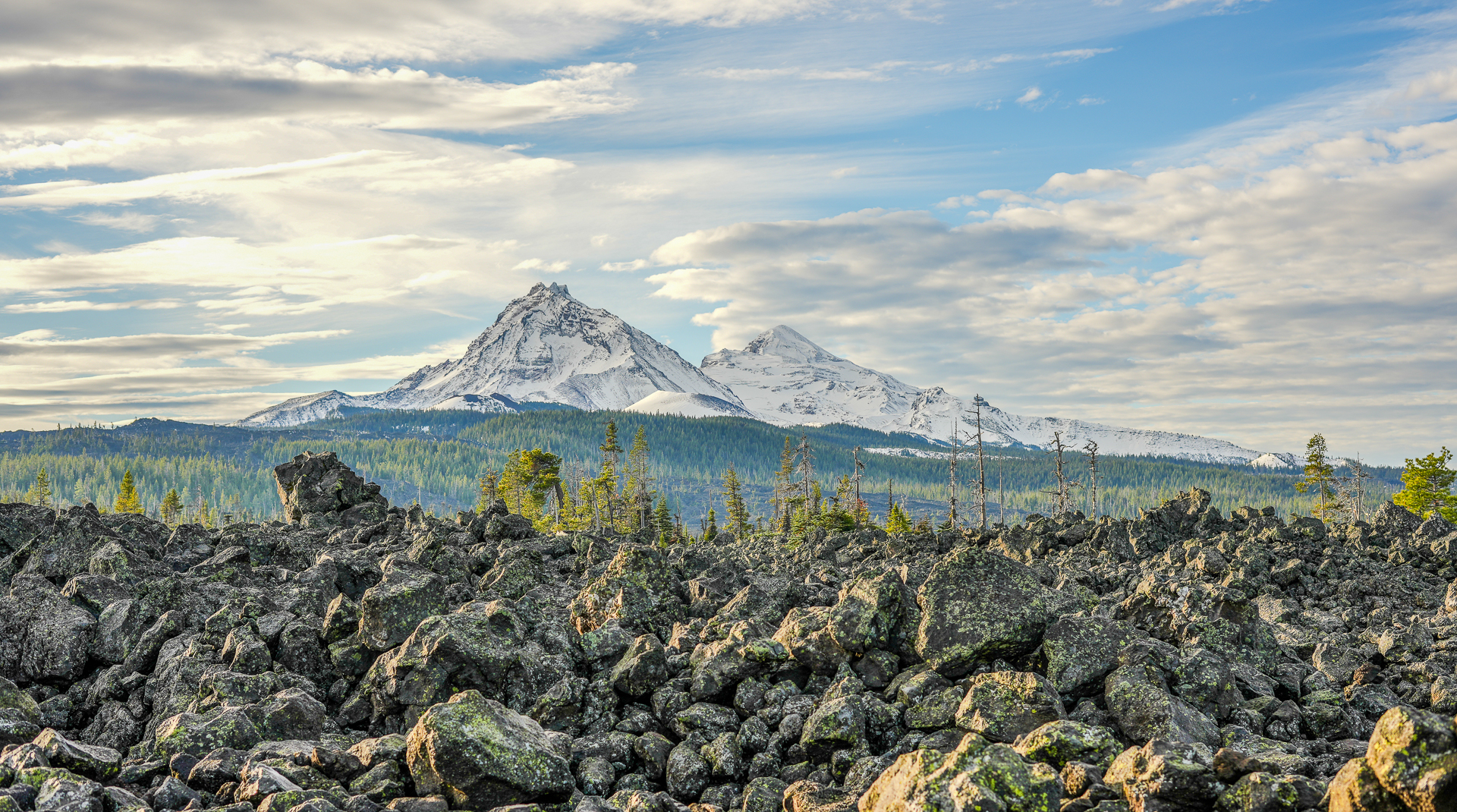
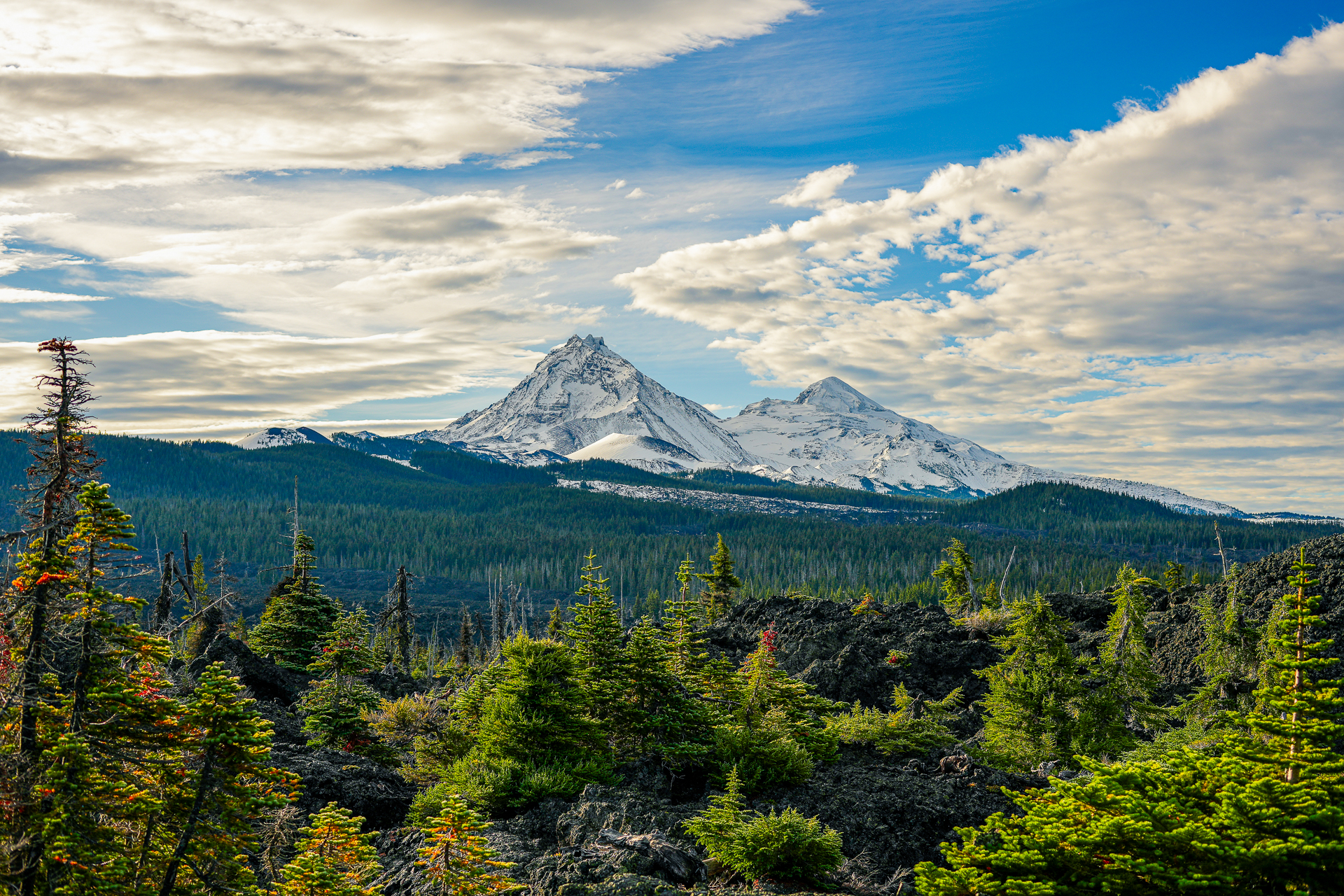
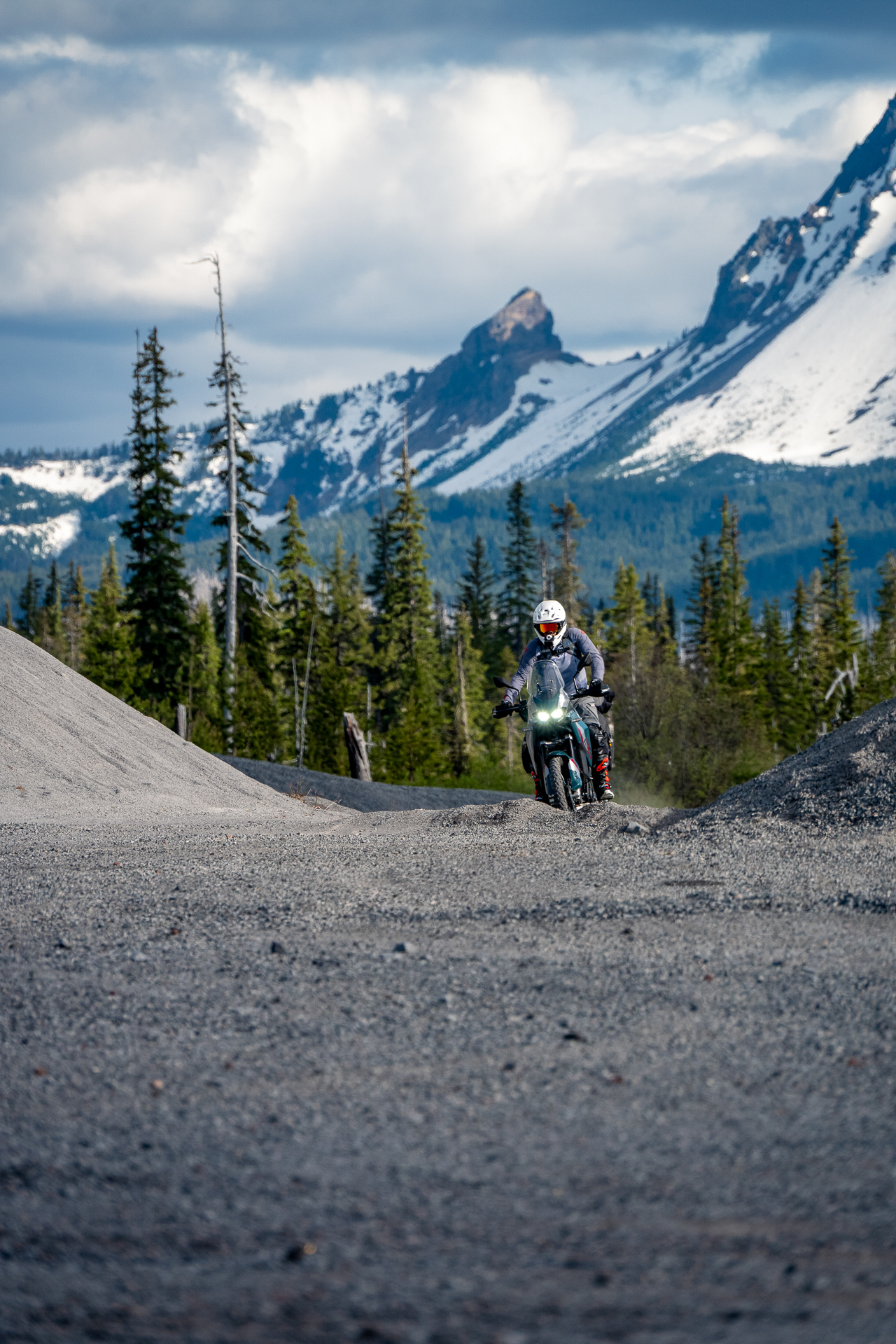
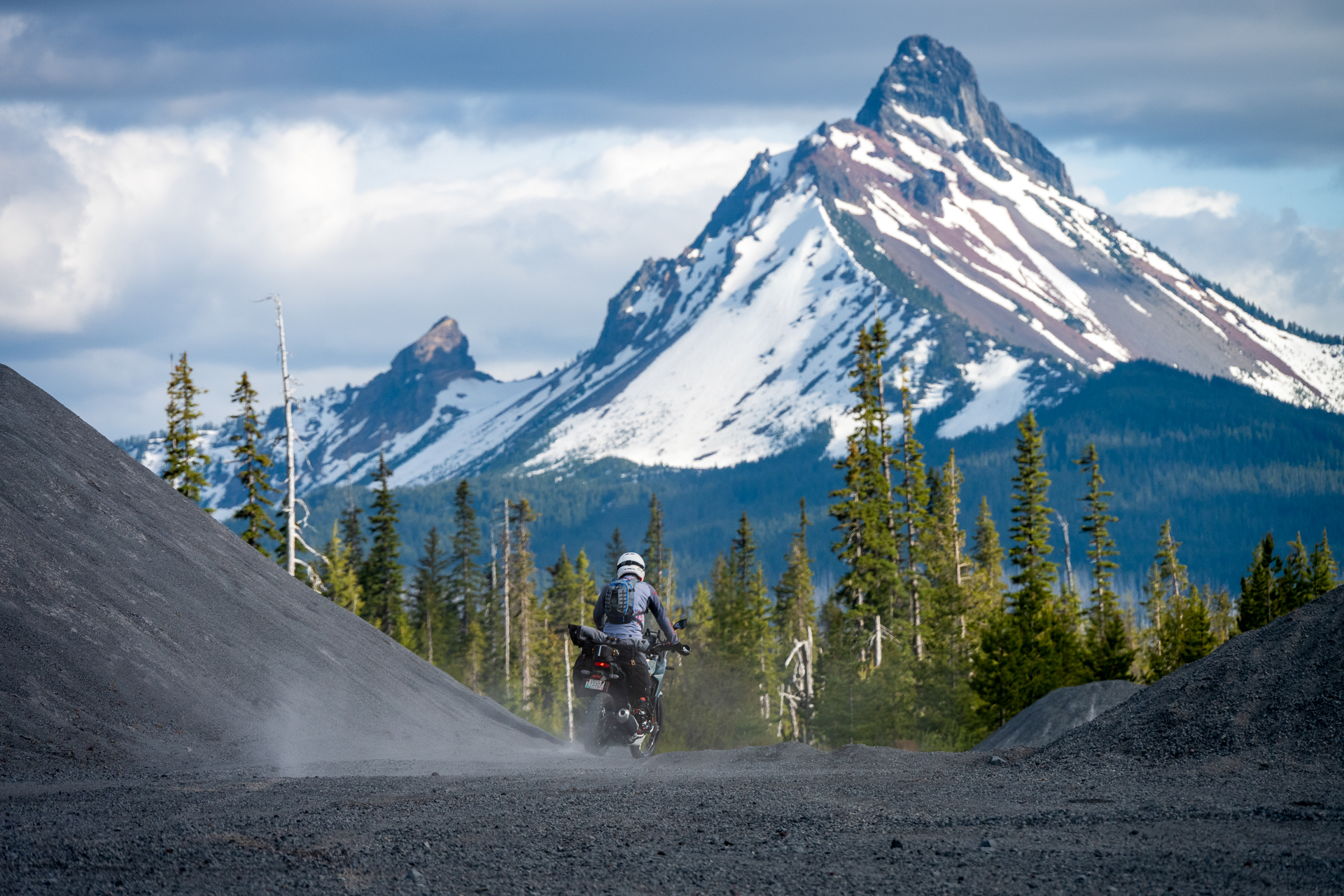
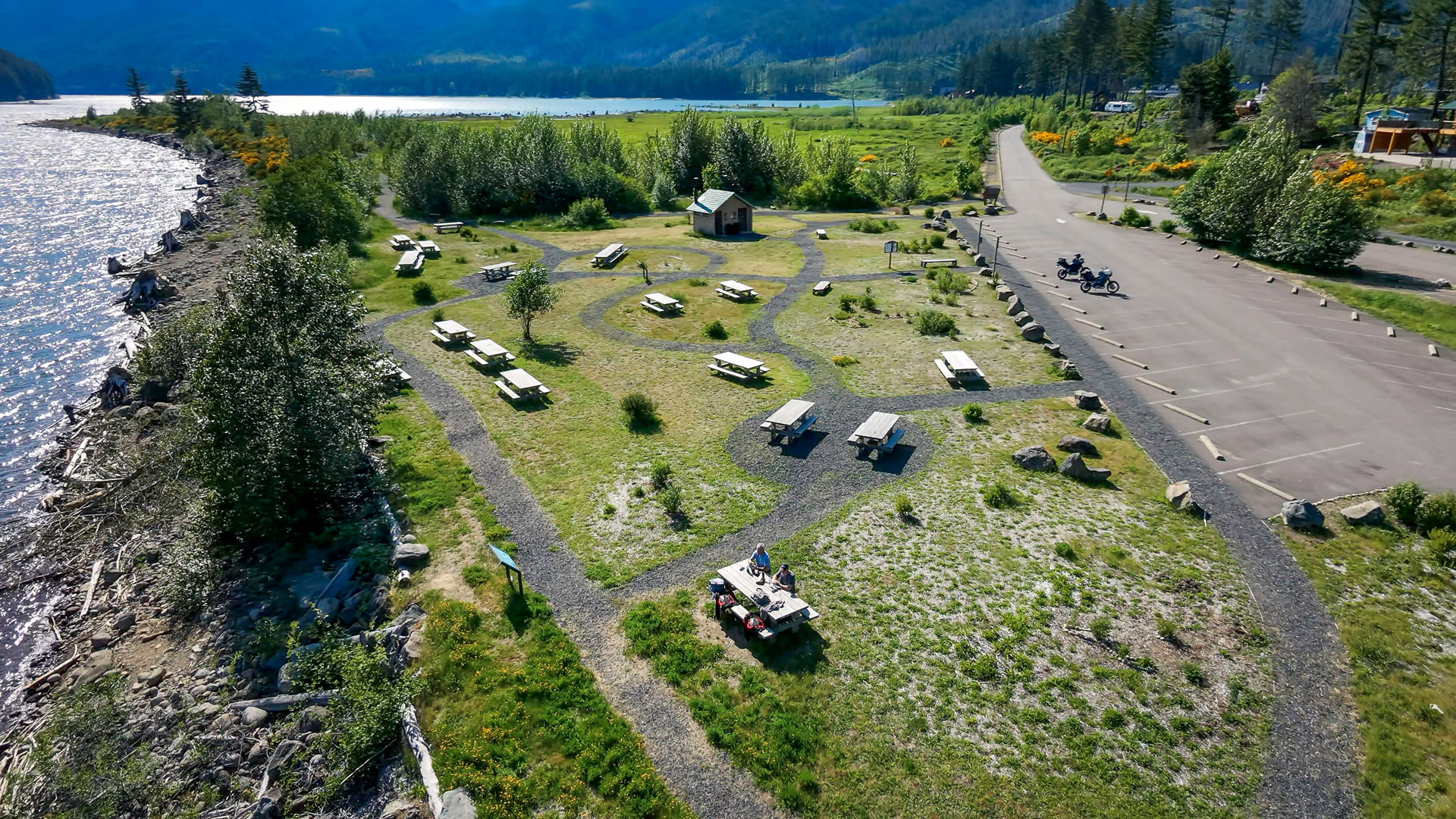
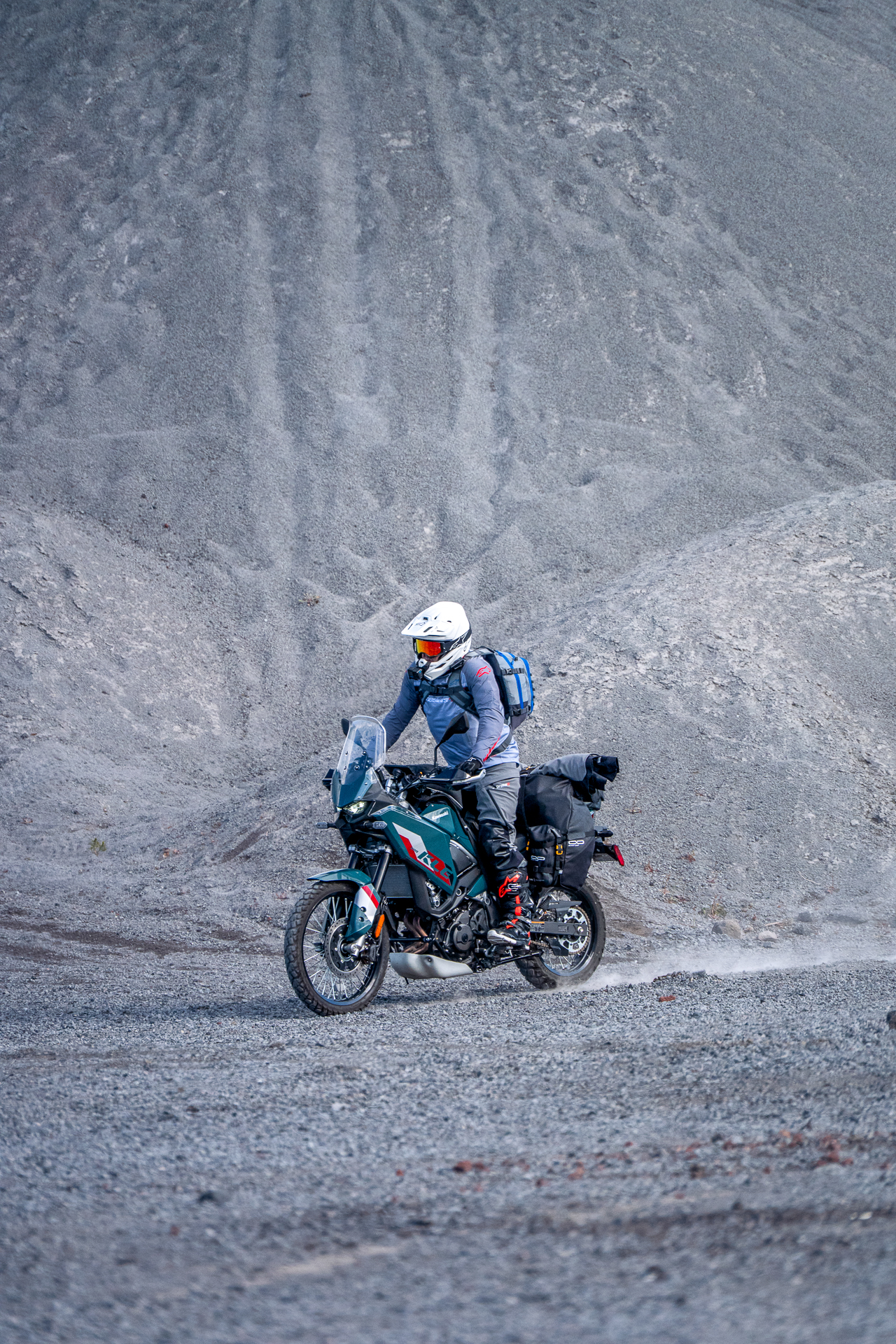
Detroit Lake gave us the first pause of the trip, a quiet lunch stop beside the water and a natural threshold into the gravel-and-dirt world ahead. Detroit also sits directly on the Oregon Backcountry Discovery Route, making it an ideal place to leave the certainty of tarmac and enter BDR country. East of the lake, the landscape hardened into Oregon’s volcanic story. Broad lava fields crossed the route, black and broken beneath views toward the Mount Washington area, while Sisters appeared briefly as an old western mountain town we wanted to explore but had to leave for another day.
By evening we reached Bend, where the trip exchanged mountain roads and volcanic rock for brick, beer, and a bed with history behind it. Bend’s modern identity is built on reinvention. The city grew from a logging town shaped by the Deschutes River and the arrival of major sawmills in the early 20th century, then gradually turned its river, mill heritage, and mountain access into the foundation of one of the Northwest’s great outdoor towns. McMenamins Old St. Francis School made a fitting stop in that context. Opened in 1936 as Central Oregon’s first parochial school, it now carries that past into its second life as a hotel, pub, brewery, theater, and gathering place. Dinner at Deschutes Brewery Bend Public House, a downtown fixture since 1988, closed the day in a city where beer culture has become part of the public rhythm. Bend felt like a comfortable hinge between Oregon’s green western slopes and the more exposed country waiting to the east. The ride had begun with beauty and order. By the next morning, the radar would redraw the map.
When Weather Takes the Map
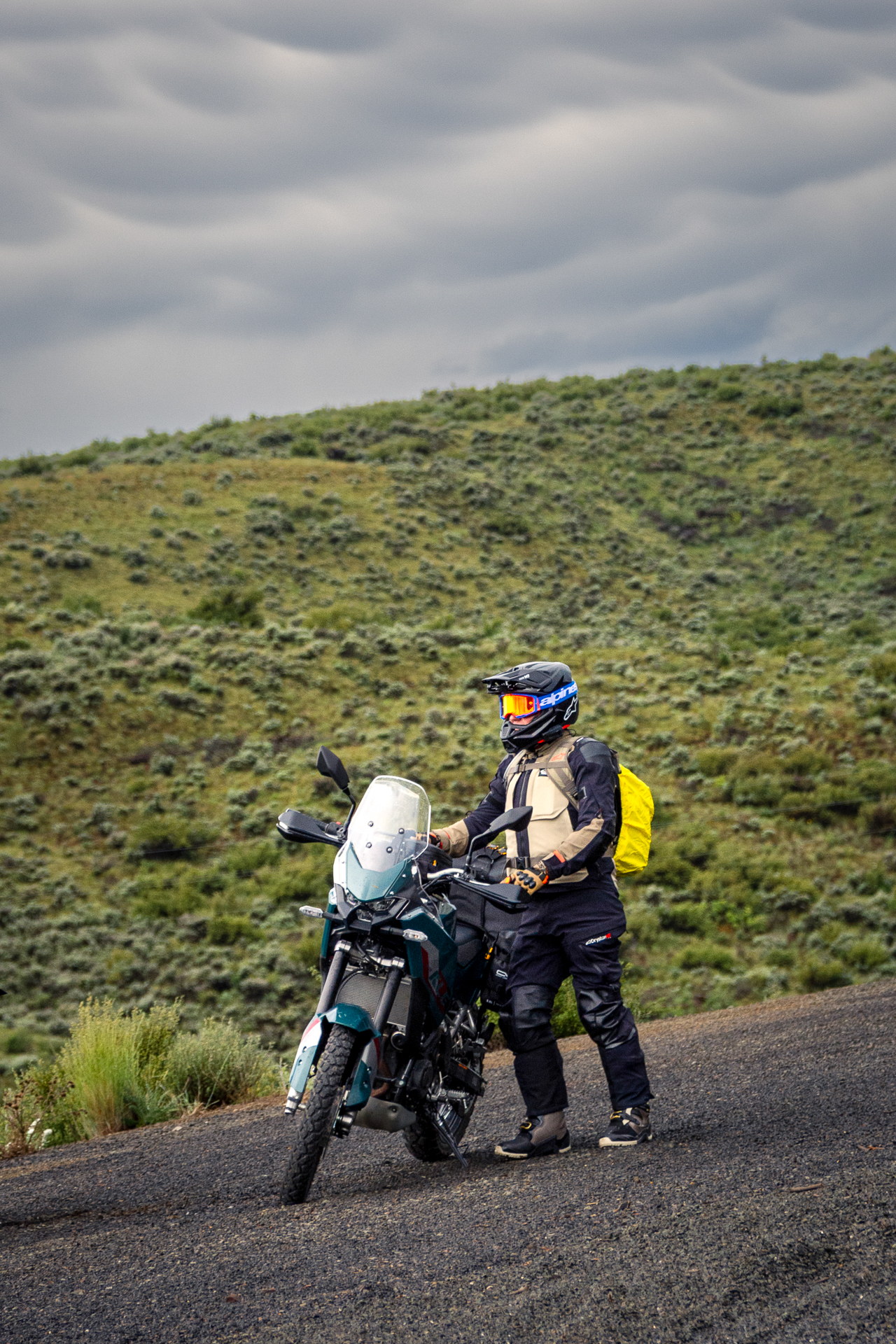
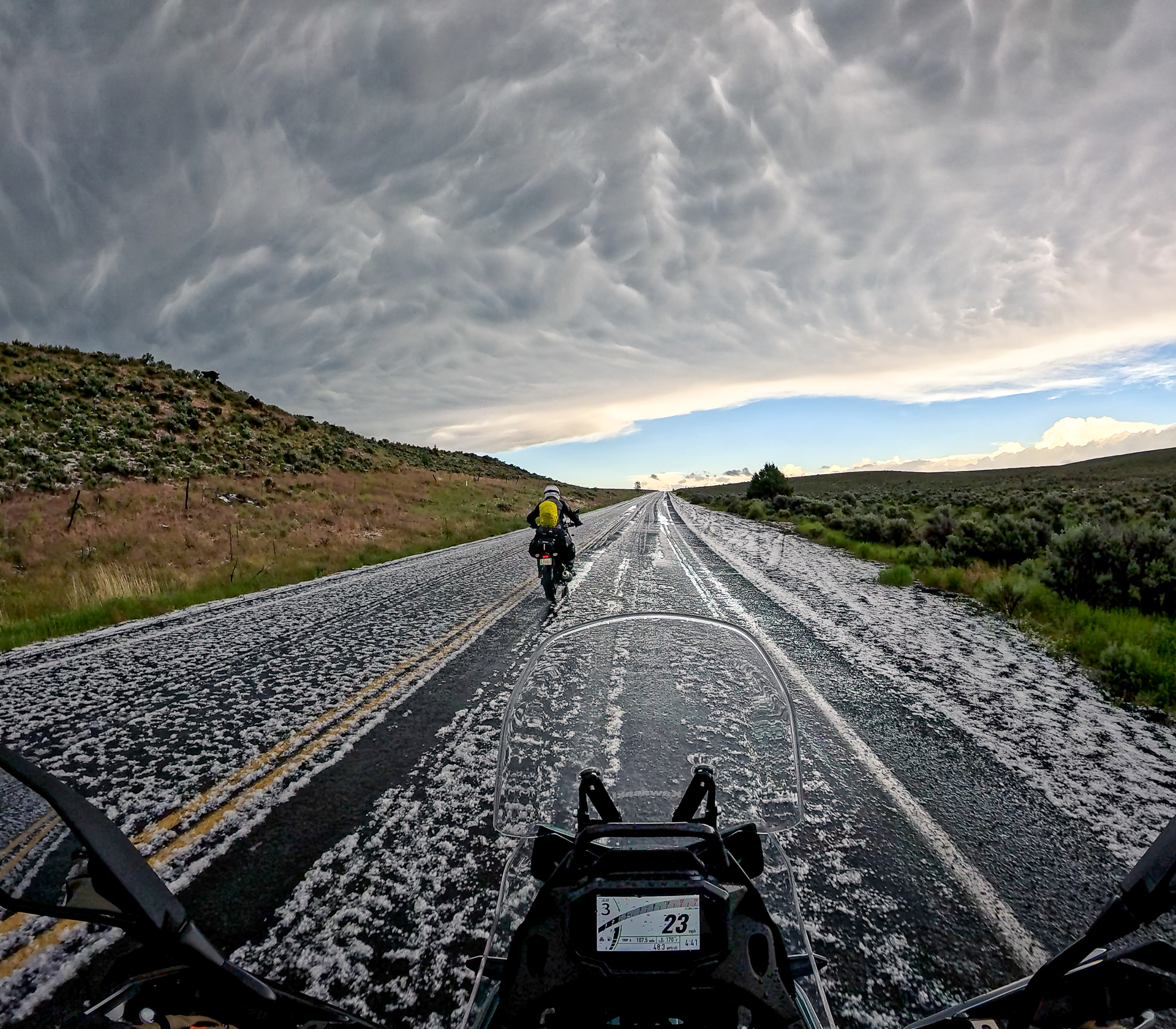
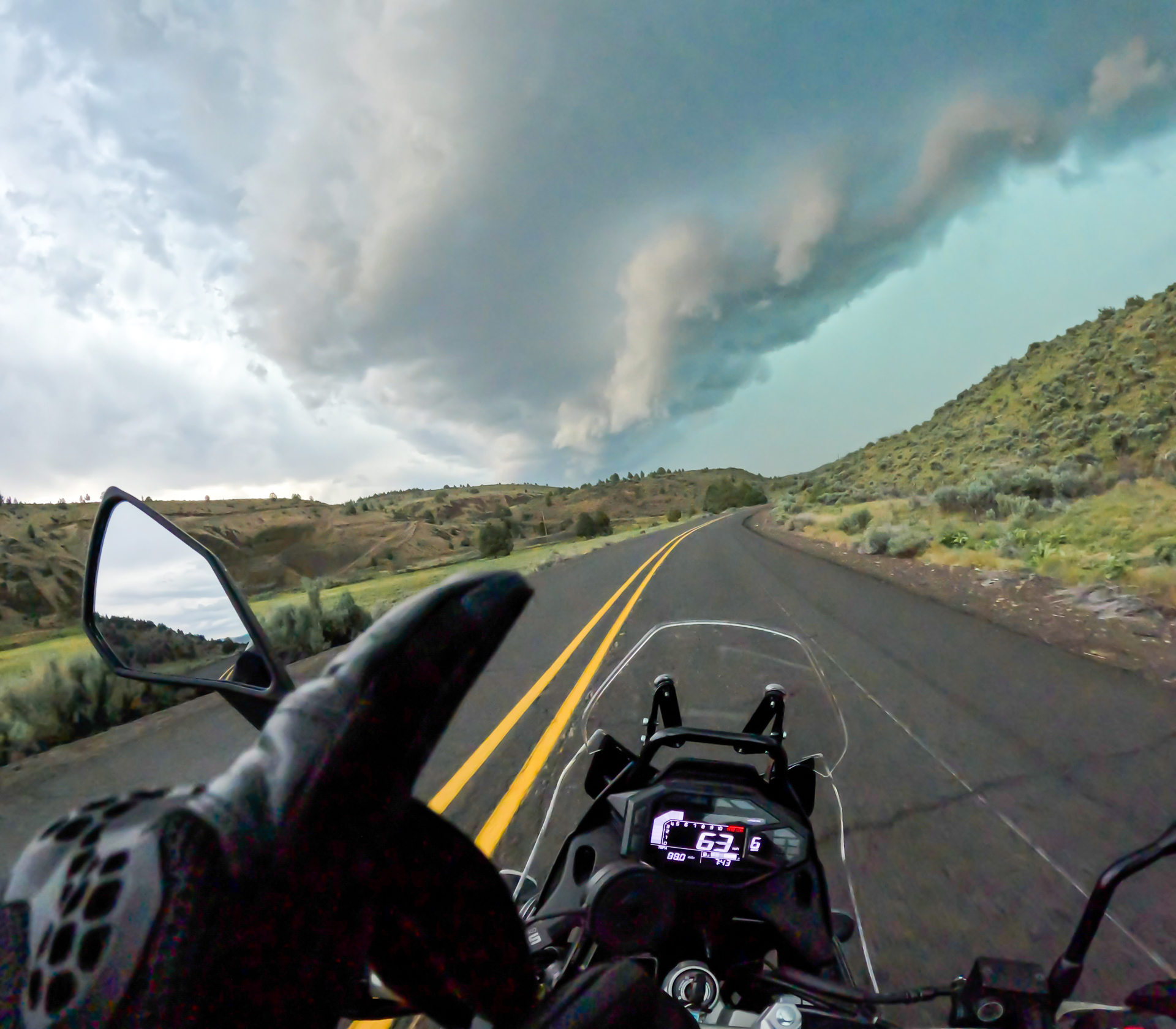
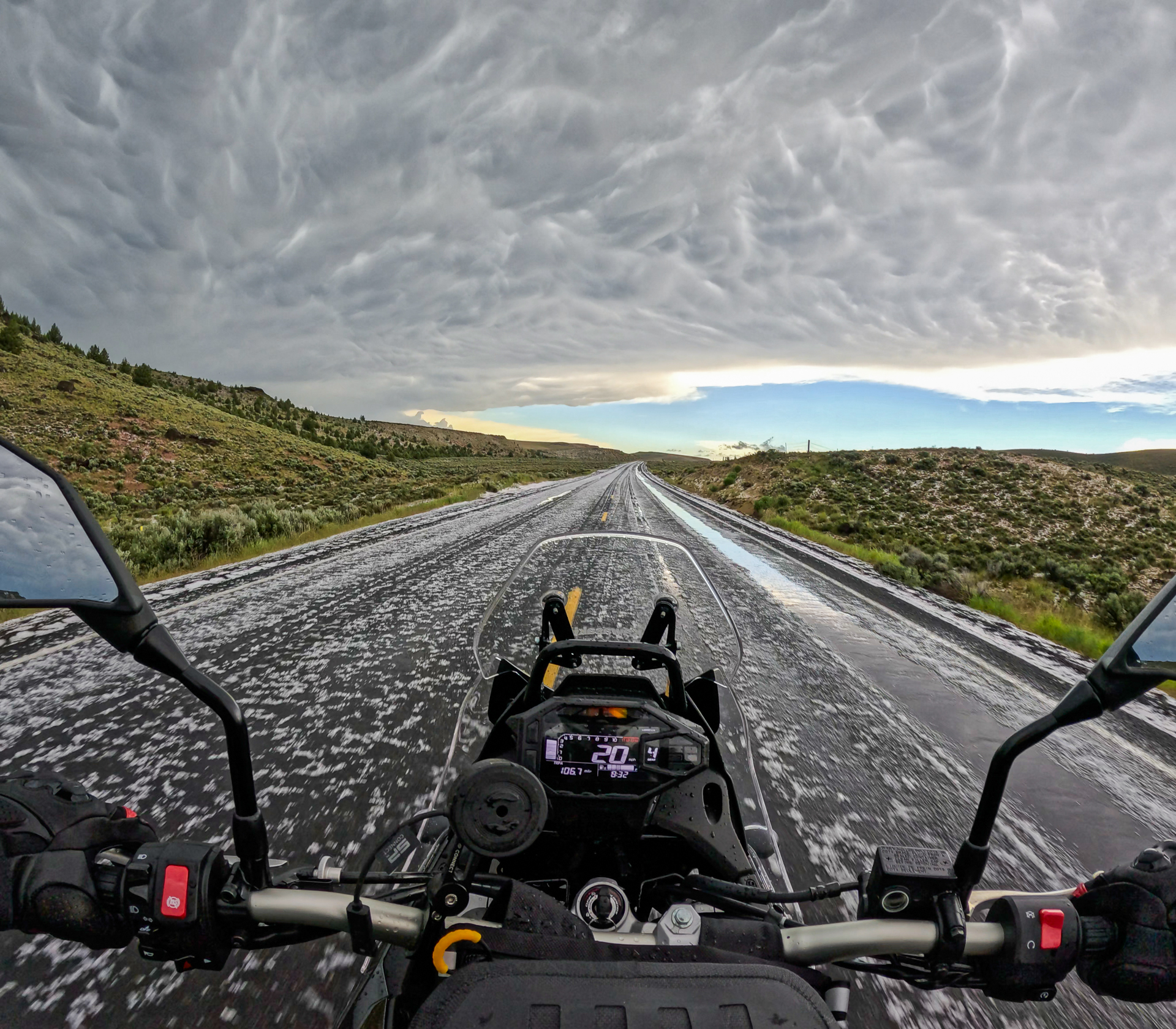
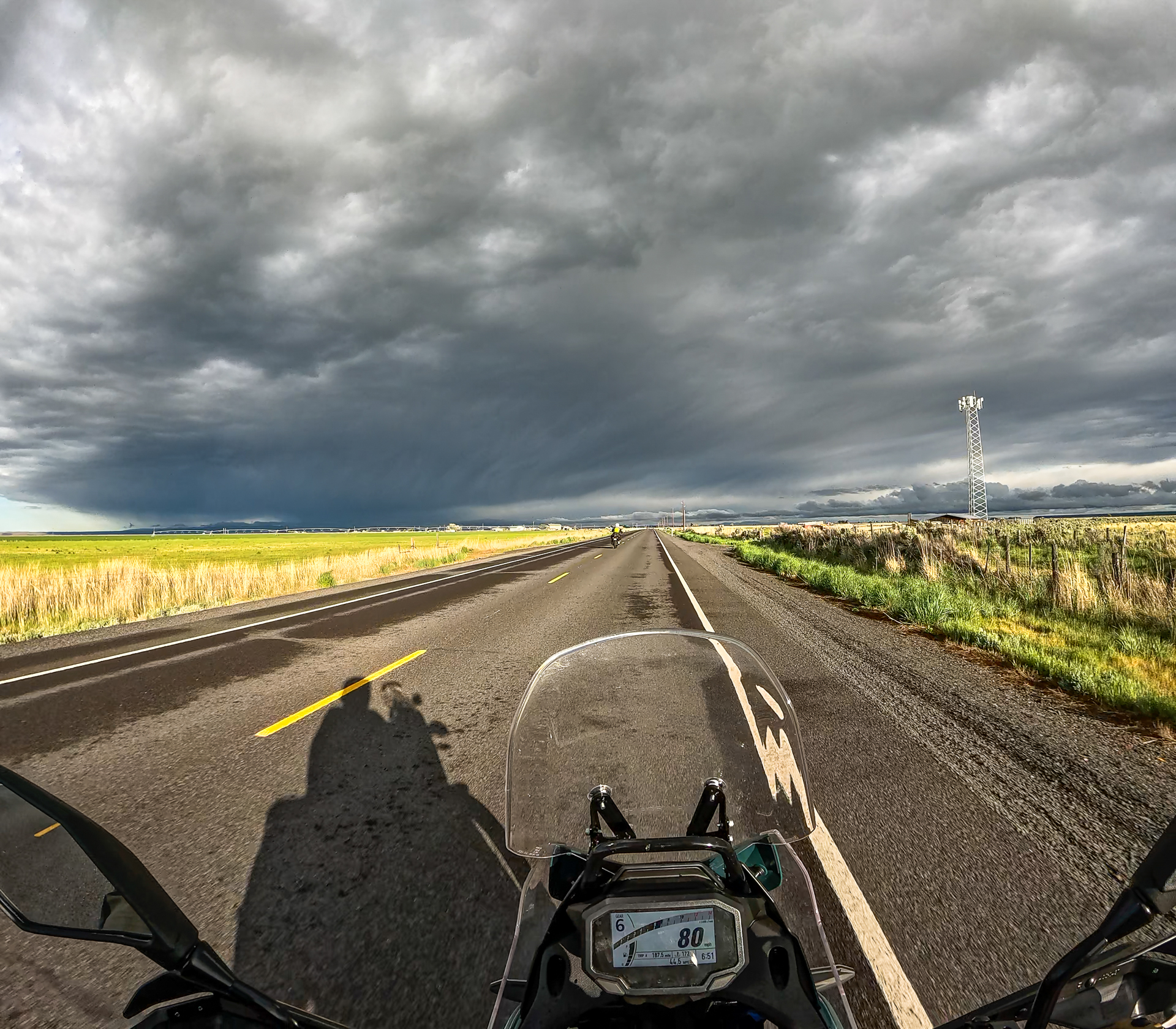
The original plan from Bend had included Tumalo Falls and additional mountain viewpoints, but weather has a different authority in Oregon, especially when the ride crosses from the Cascades toward the high desert. That morning, the radar did not show a passing shower or one of those vague mountain systems riders often try to outguess. It showed a serious Central Oregon storm day. Local forecasts were already warning of severe thunderstorms, damaging wind, hail, and even a small tornado risk. Farther east, Harney County would be hit by destructive cells capable of winds up to 80 mph and large hail. We did not know all of those numbers yet from the saddle, but we knew enough. The sky, the radar, and the warnings were all saying the same thing: Tumalo Falls would have to wait.
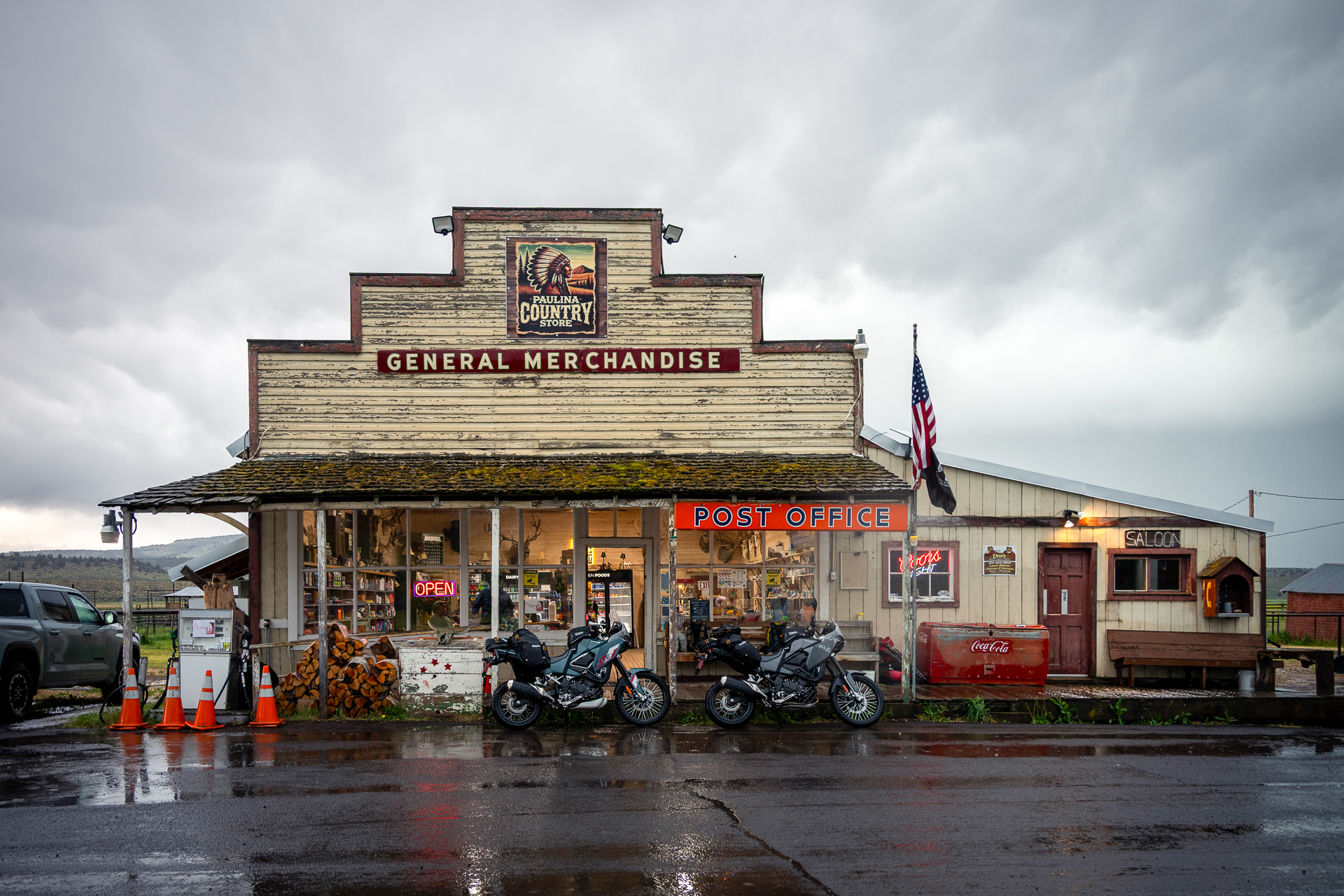
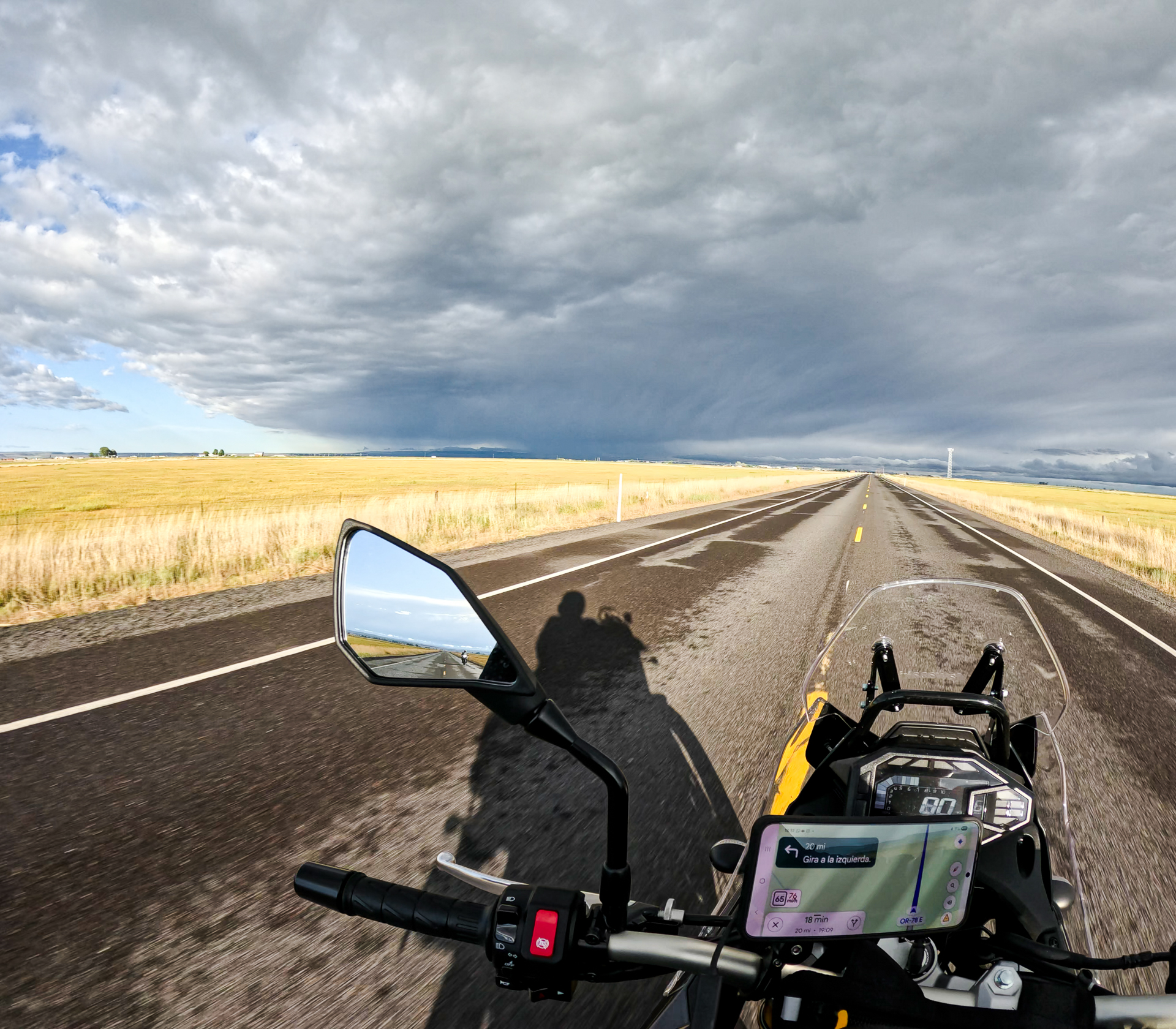
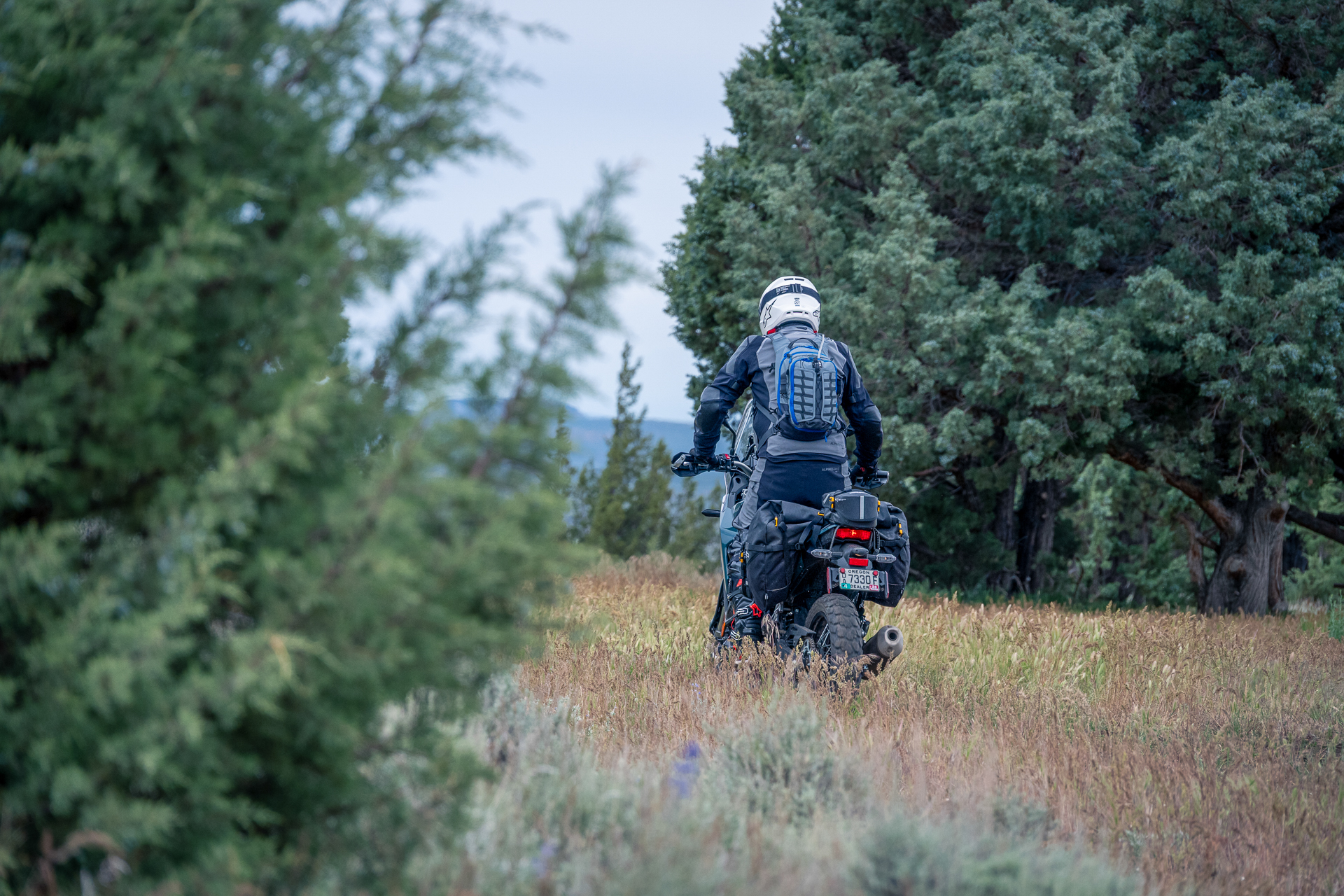
There is a particular disappointment in giving up a planned destination before the day has properly begun, but there is also a clean kind of freedom in accepting the truth early. The motorcycles were packed, the Alpinestars gear was ready, and the day still needed to move east toward Crystal Crane Hot Springs. The route simply had to change. We bent northward toward Prineville, then into the more open country leading toward Paulina, Burns, and the Giant Loop Ride. Bend’s cultivated outdoor energy faded behind us, and the land began to stretch into a more exposed Oregon, a place of working ranches, empty roads, long views, and weather that could be seen arriving from miles away.
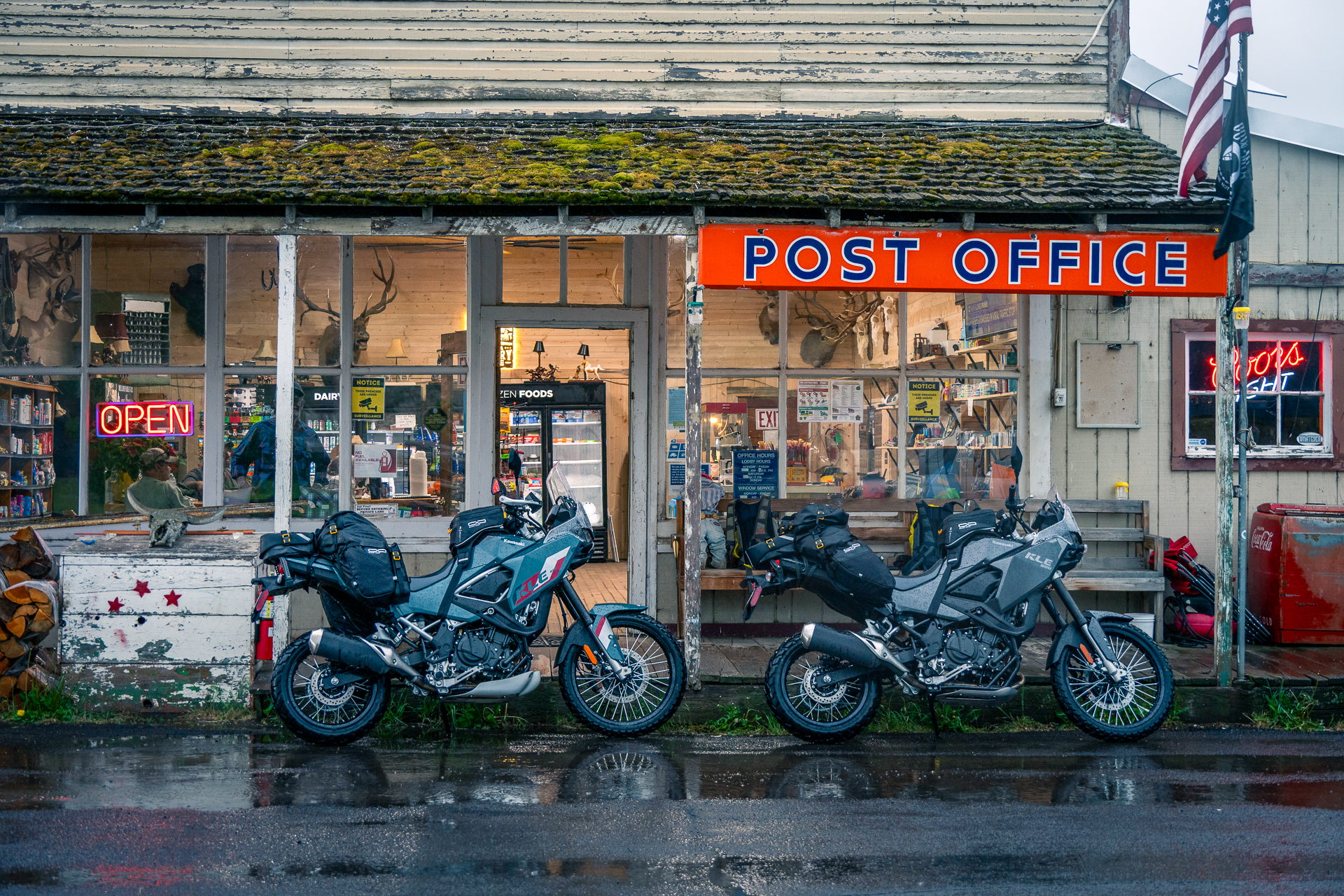
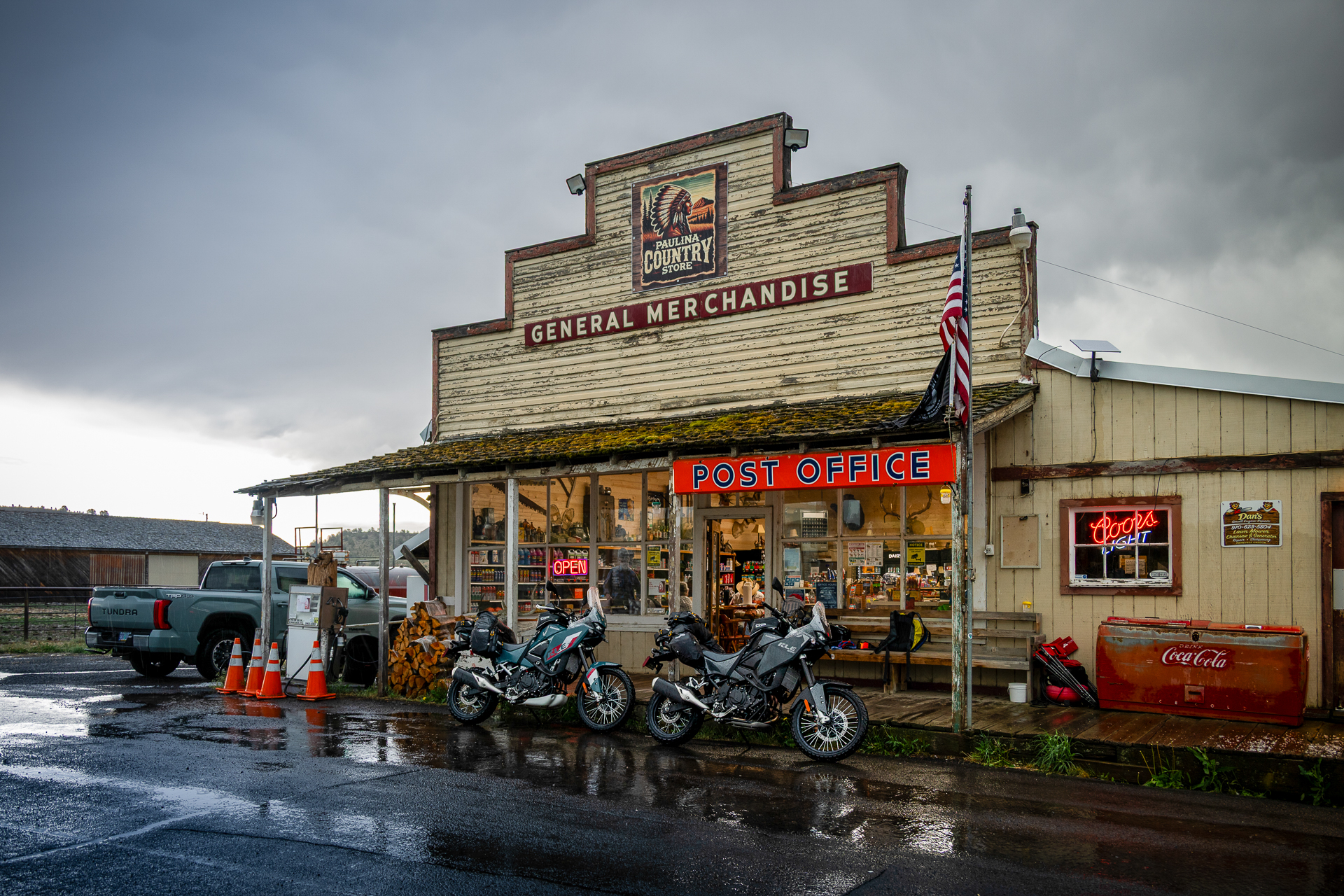
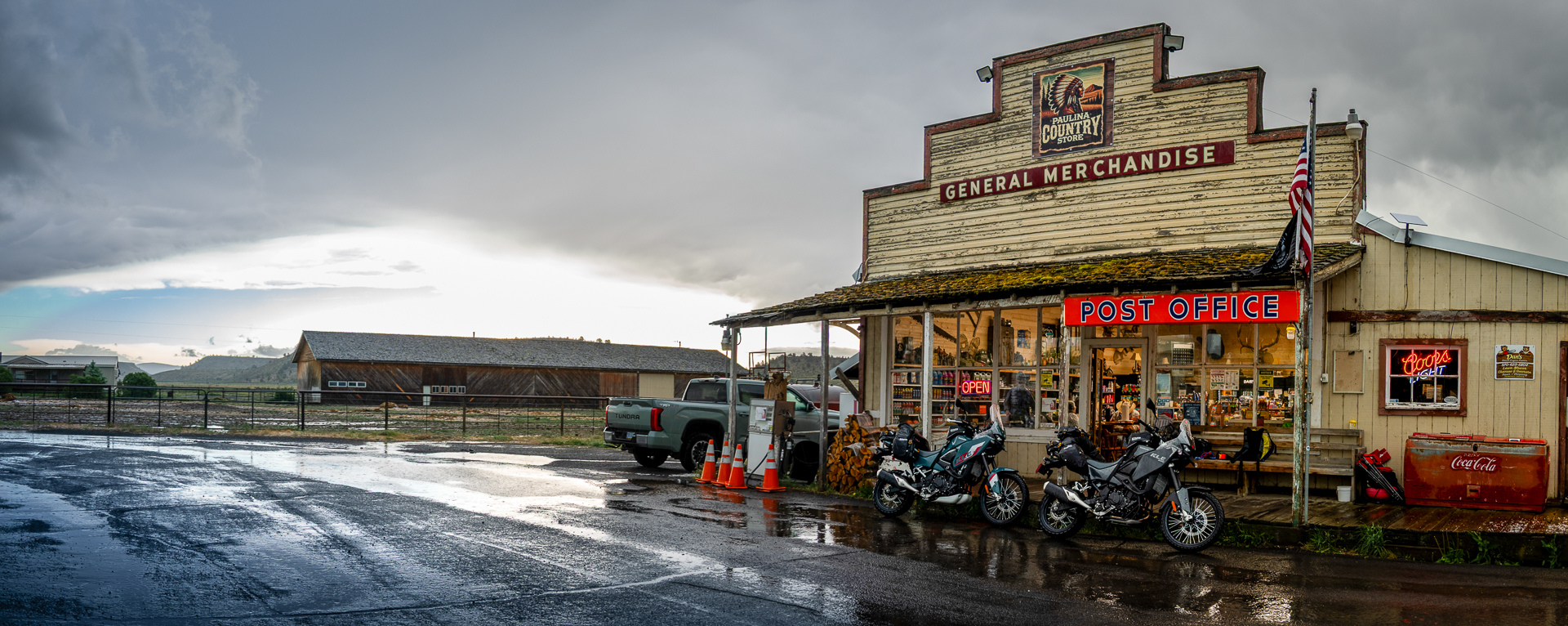
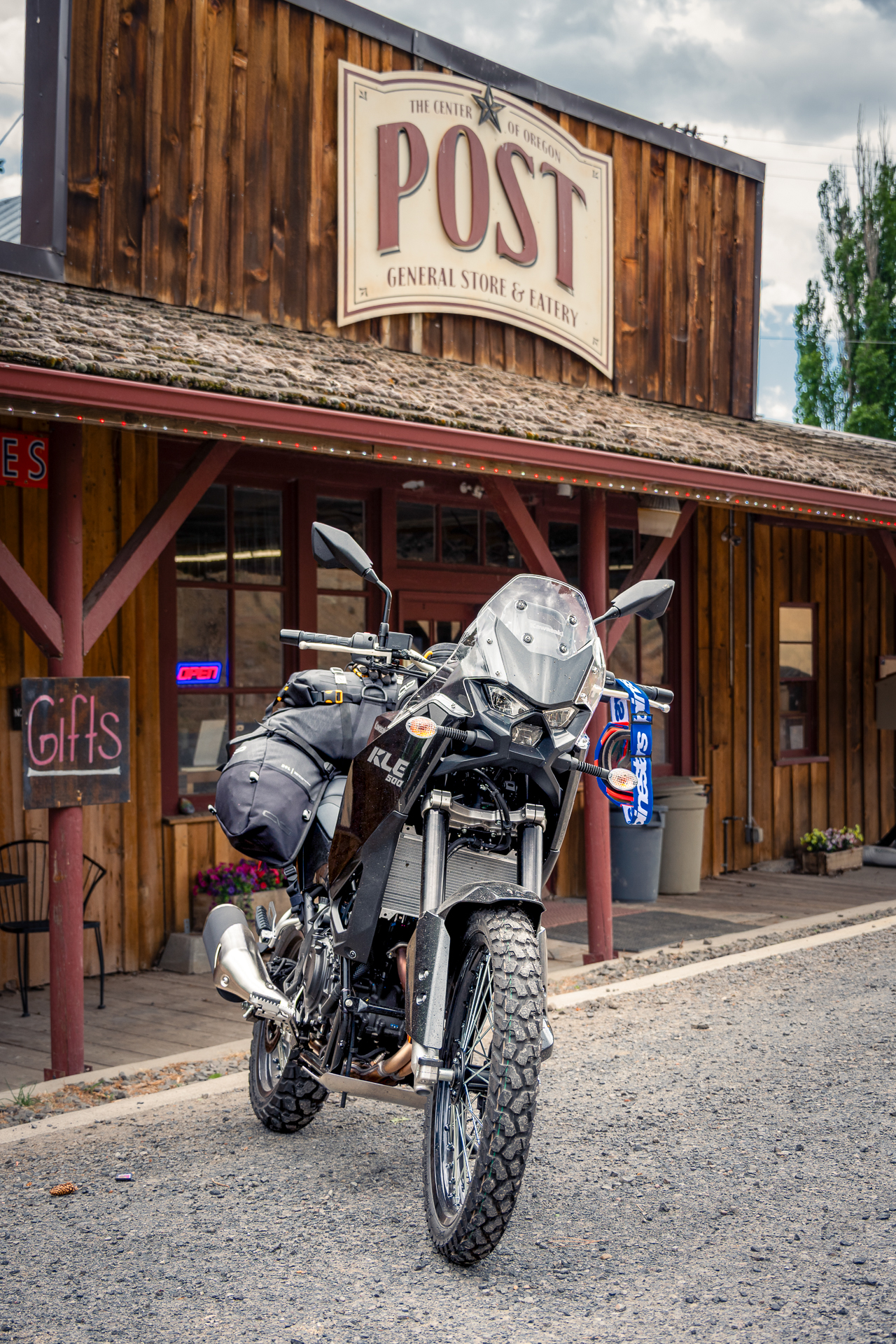
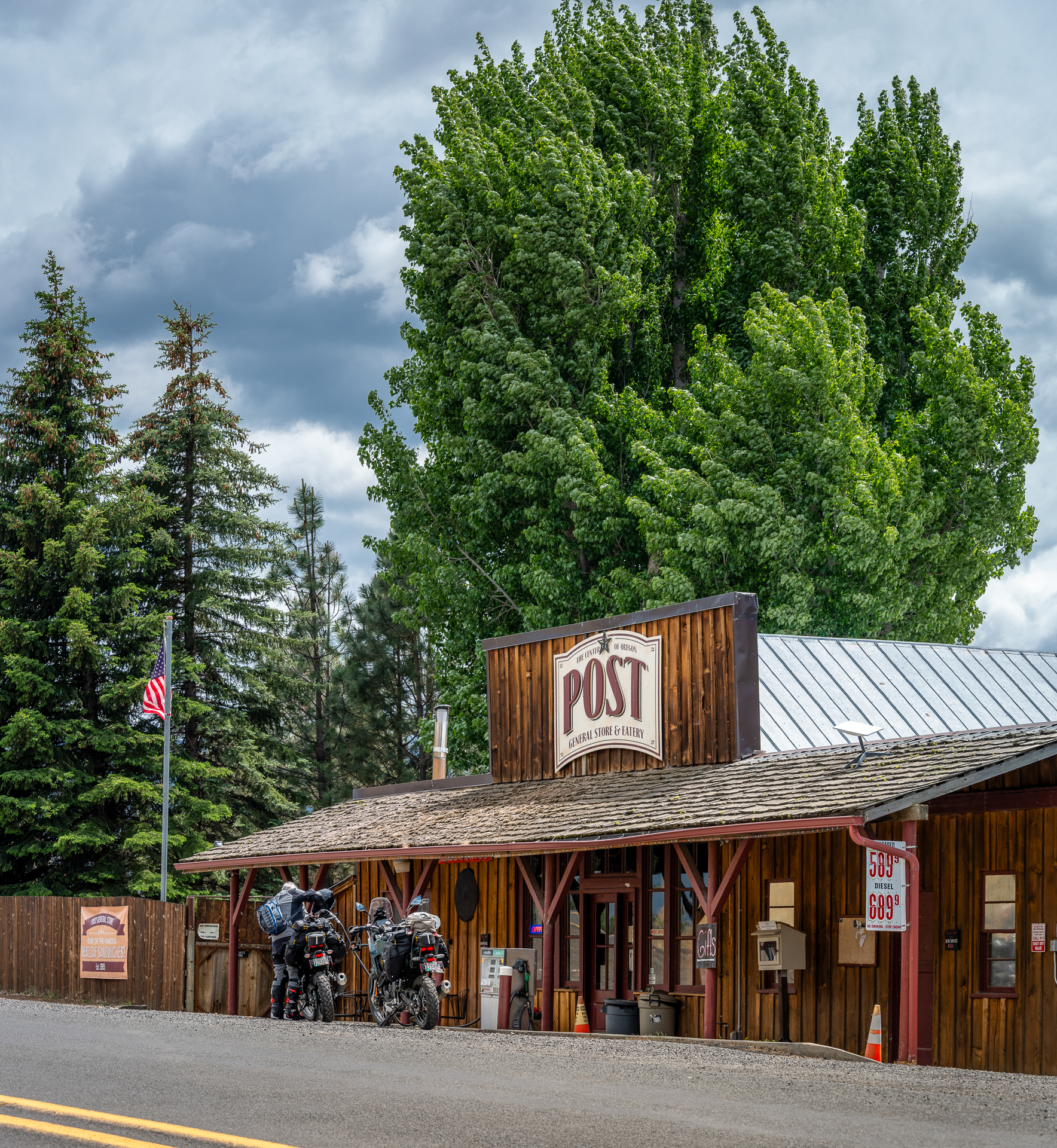
At the Post General Store, we stopped for fuel and found one of those rural warnings that carries more weight than any navigation alert: no fuel for the next 50 miles. The store is known among travelers for its meatloaf sandwiches, but on that day its greater value was simple geography. It was fuel, food, shelter, and information before a long, exposed section of road.
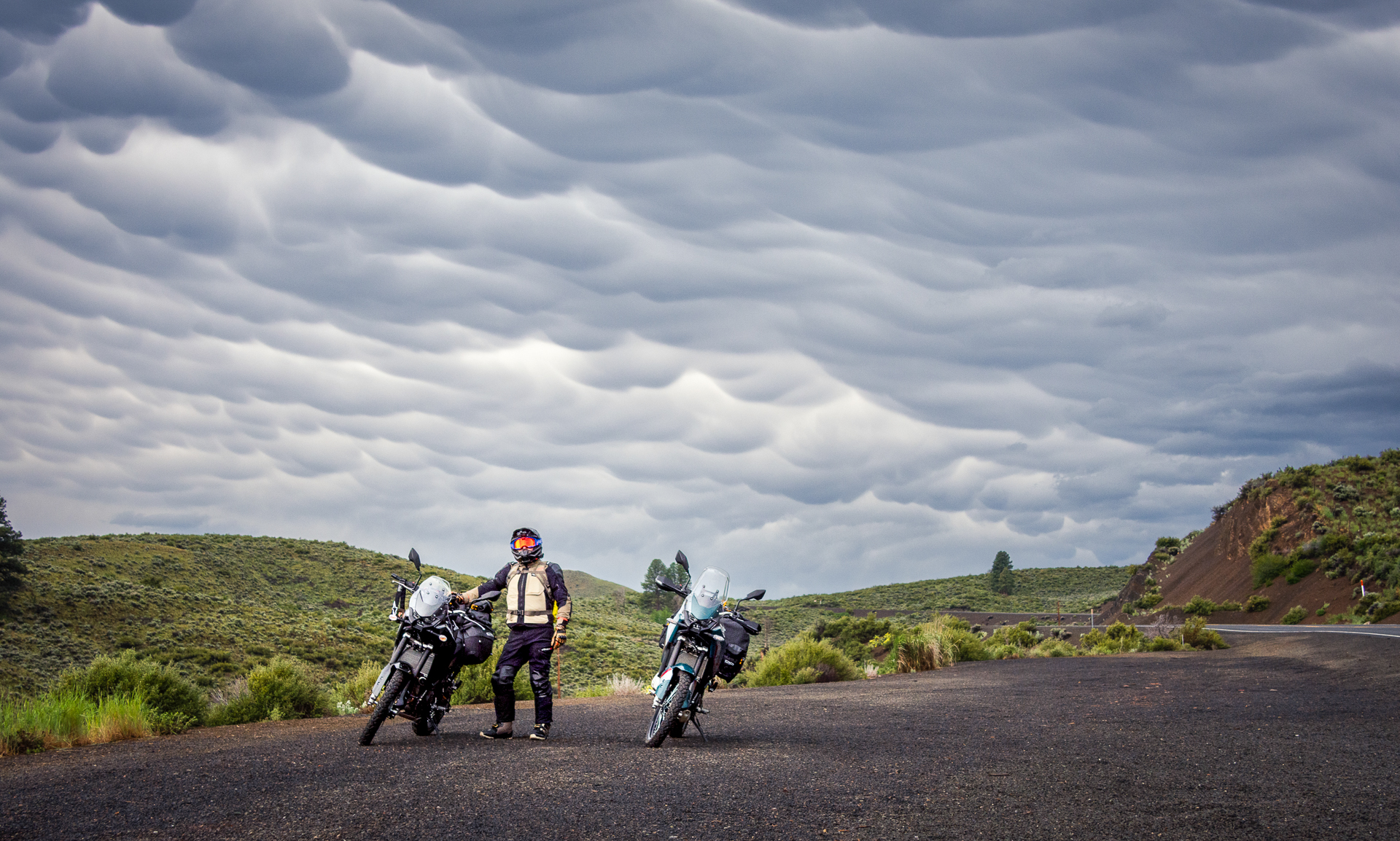
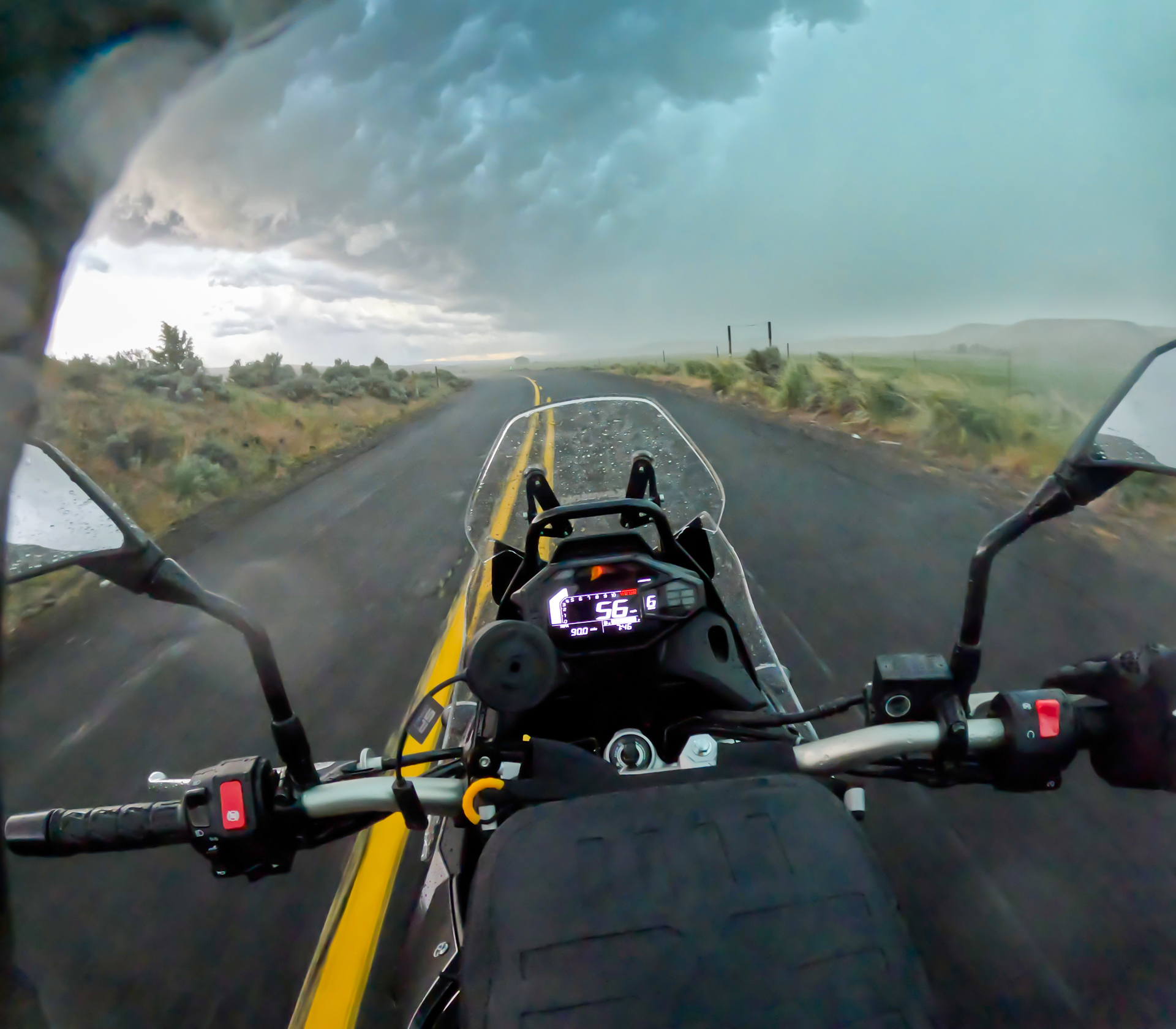
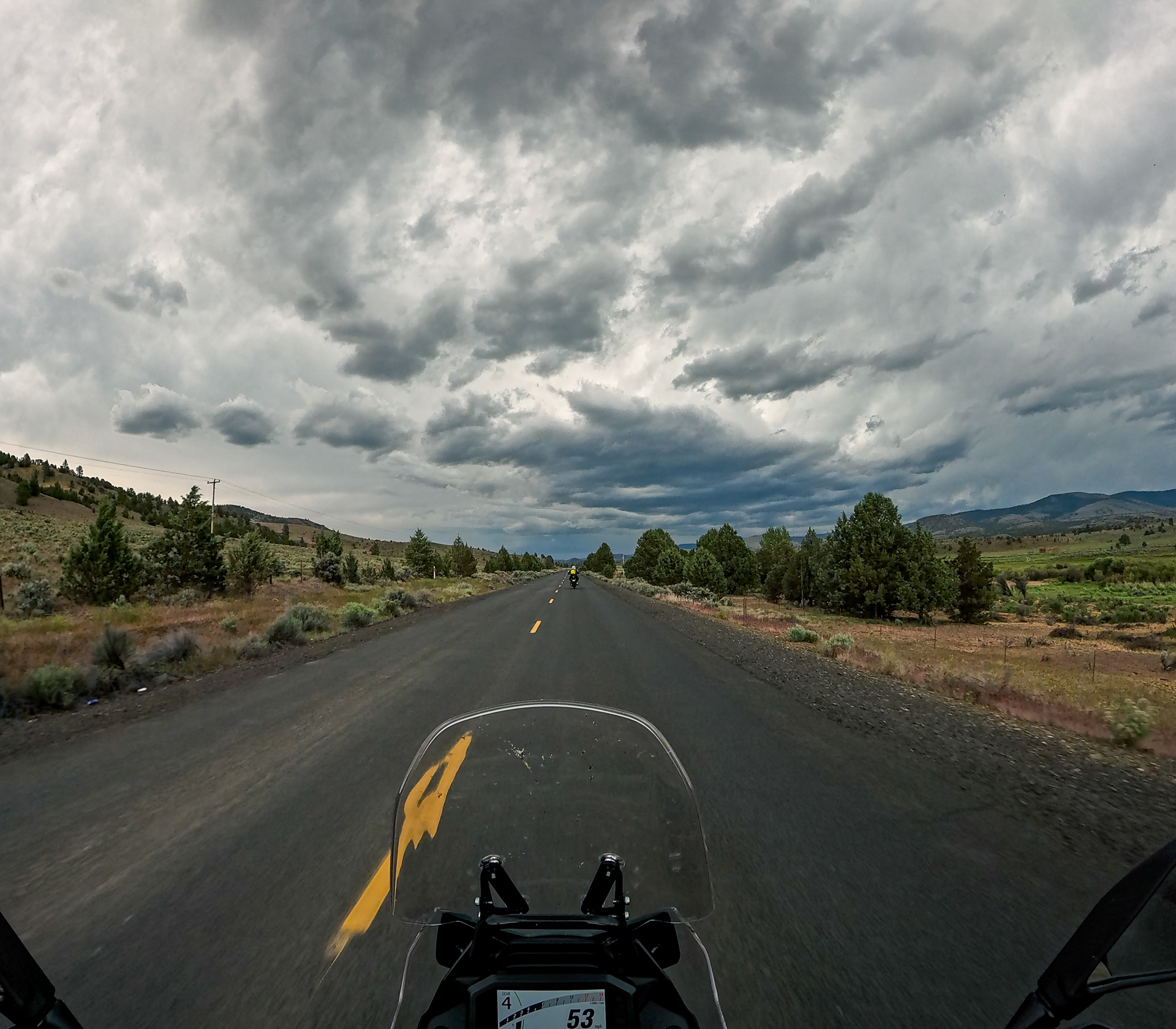
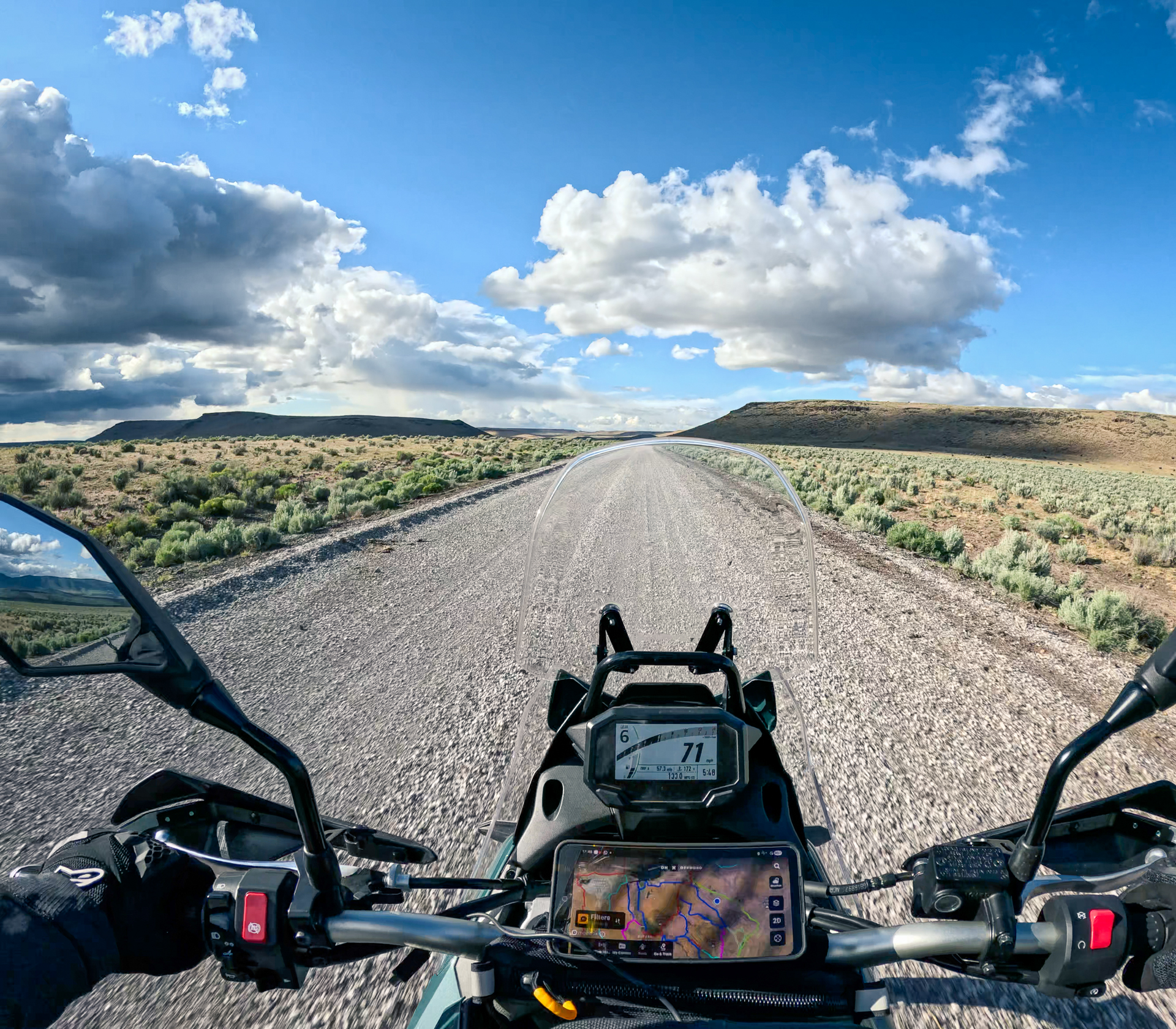
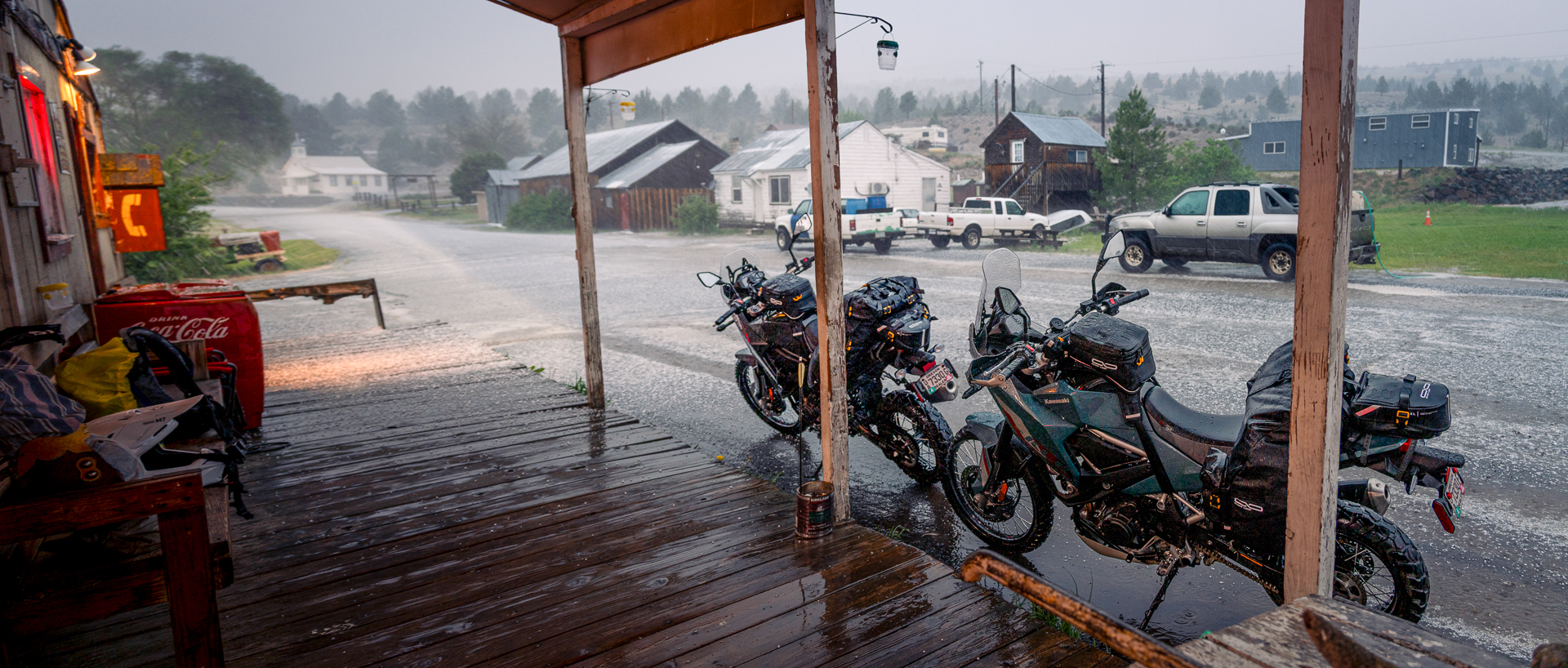
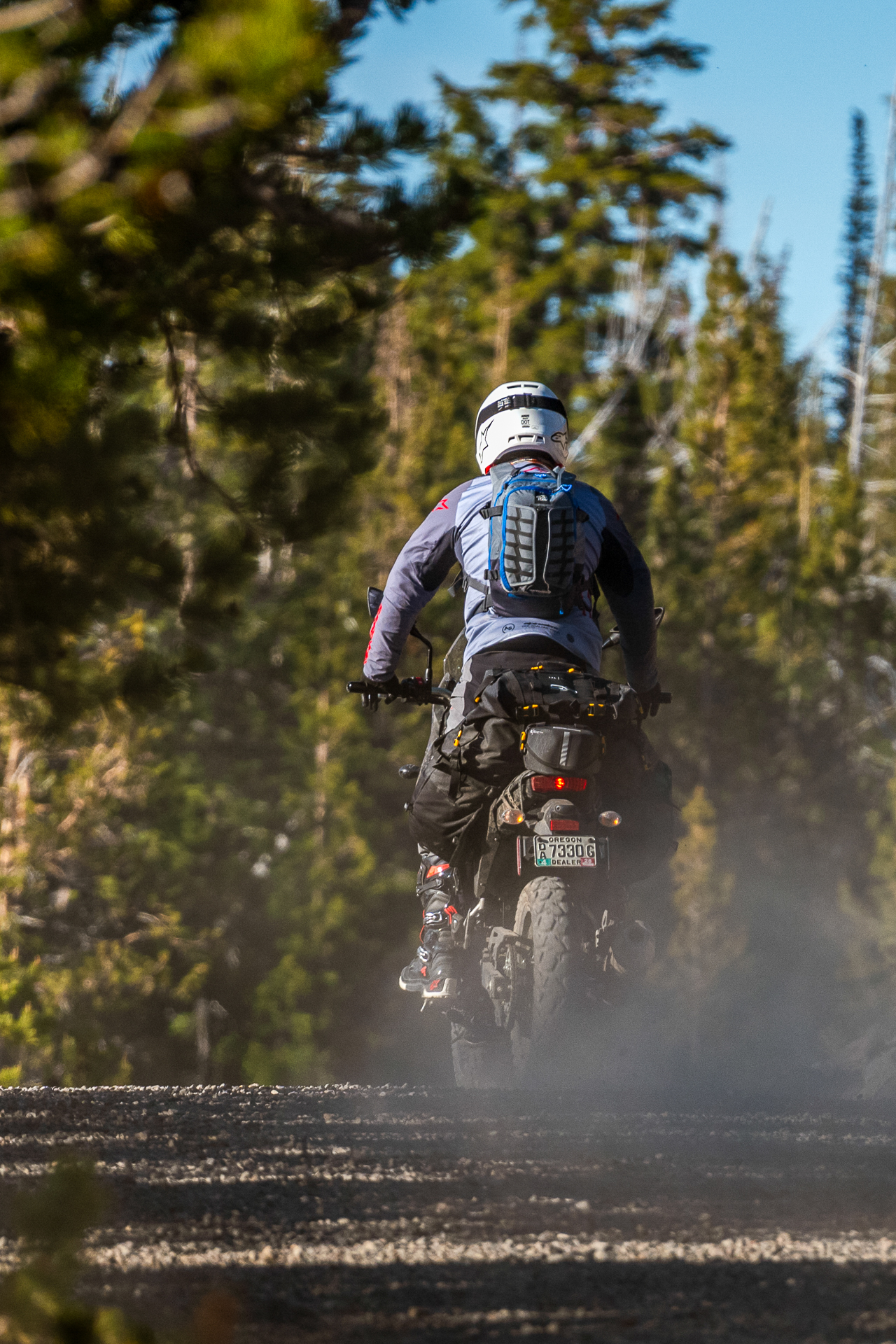
The sky darkened with a strange density as we continued east, the kind of haze that makes distance difficult to read. Then the wind arrived. Not as a steady push, but in punches. One moment the Kawasaki KLE500s were tracking cleanly, the next a gust would lean into the luggage, tug at the helmet, and ask a hard question through the handlebars: are you paying attention? Through the Cardo units, the conversation shortened to essentials. Watch the debris. Ease off. Big gust. Tumbleweeds stopped being western decoration and became moving obstacles, crossing the pavement fast enough to make every rider calculate timing and space. Vents were closed, gloves were checked, and the Alpinestars All Terra gear shifted from comfort to defense. Out there, under that sky, the ride stopped feeling like a transfer and became a negotiation measured in seconds.
Eastern Oregon, Where the Map Gets Thin
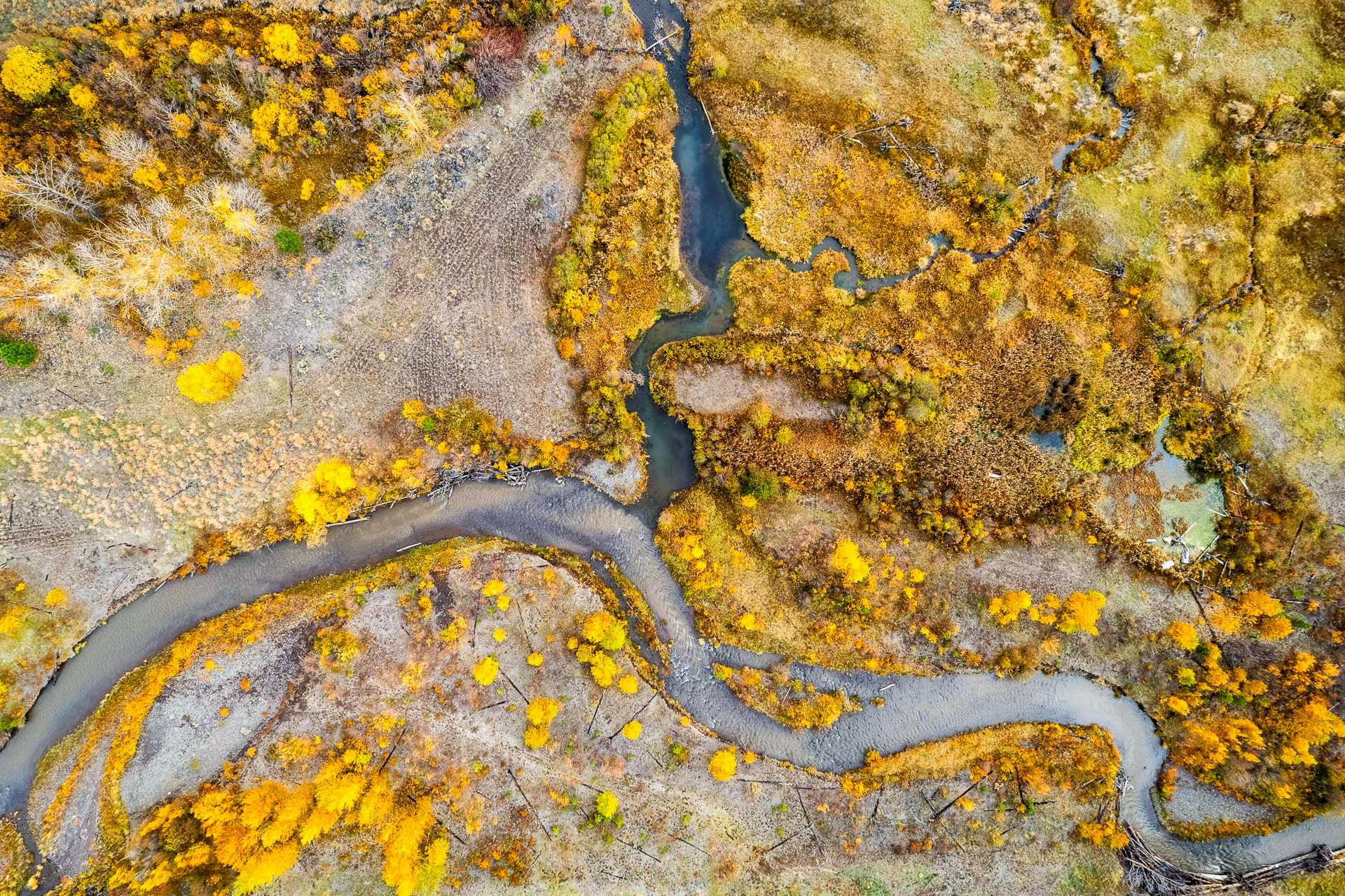
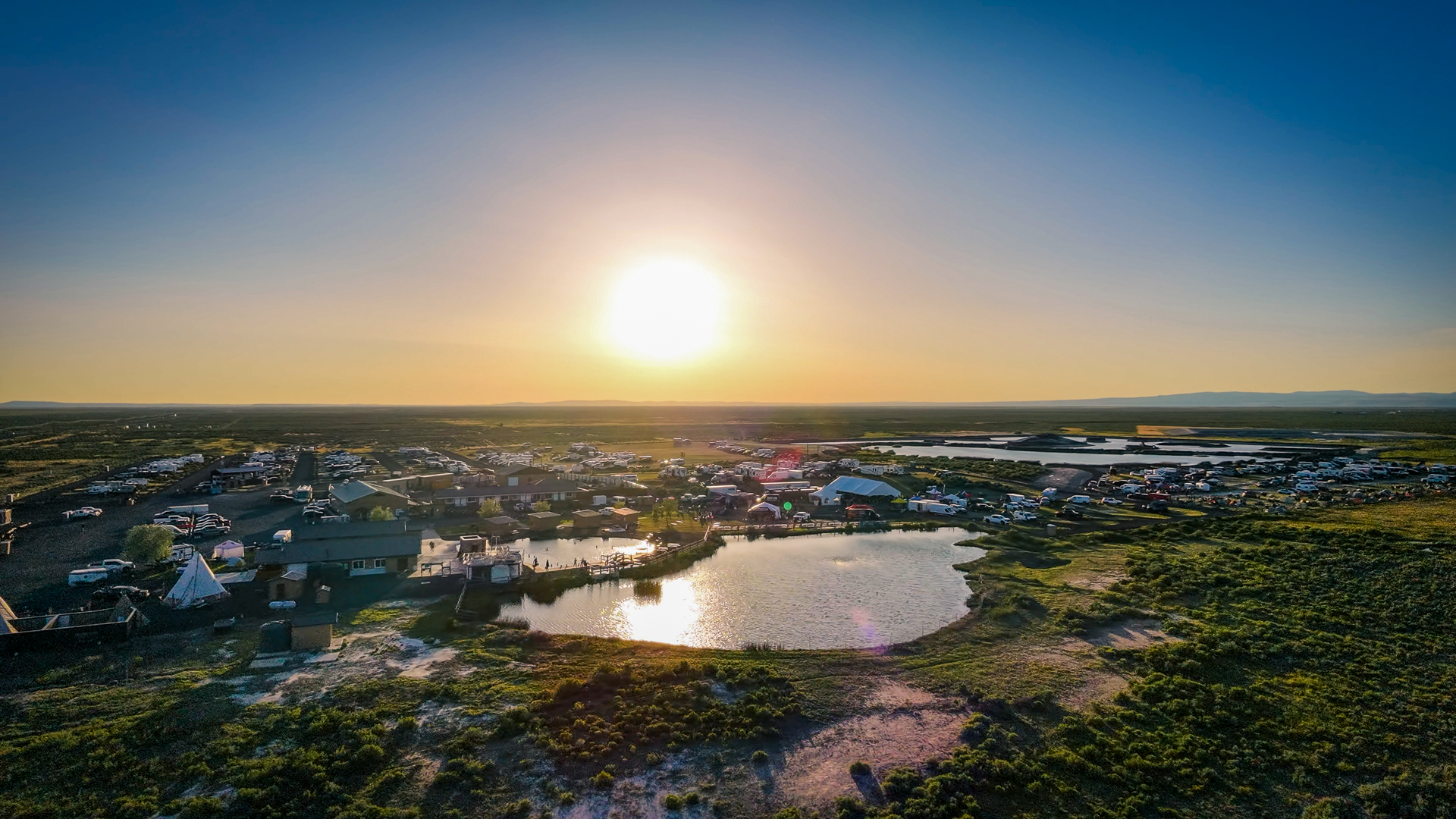
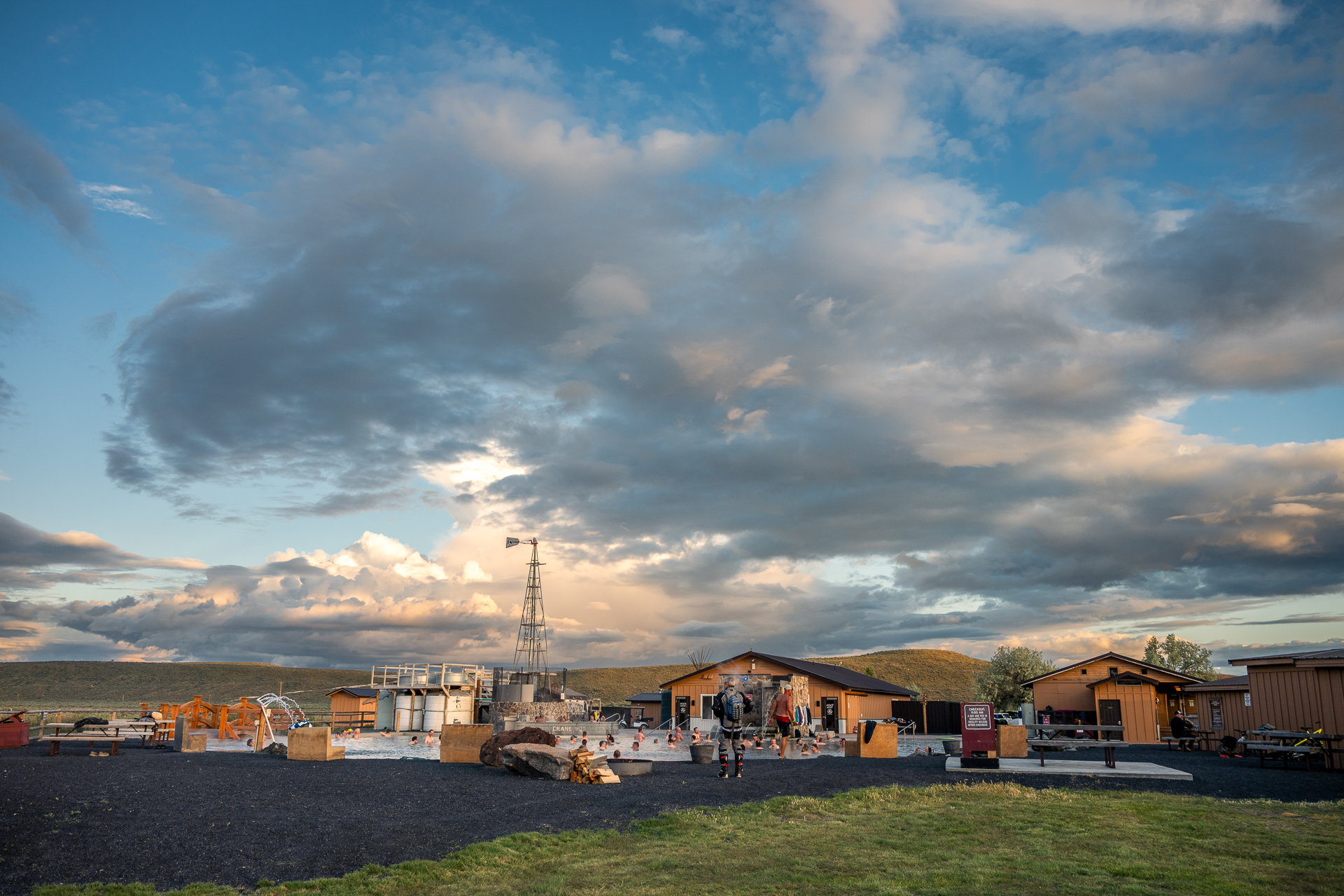
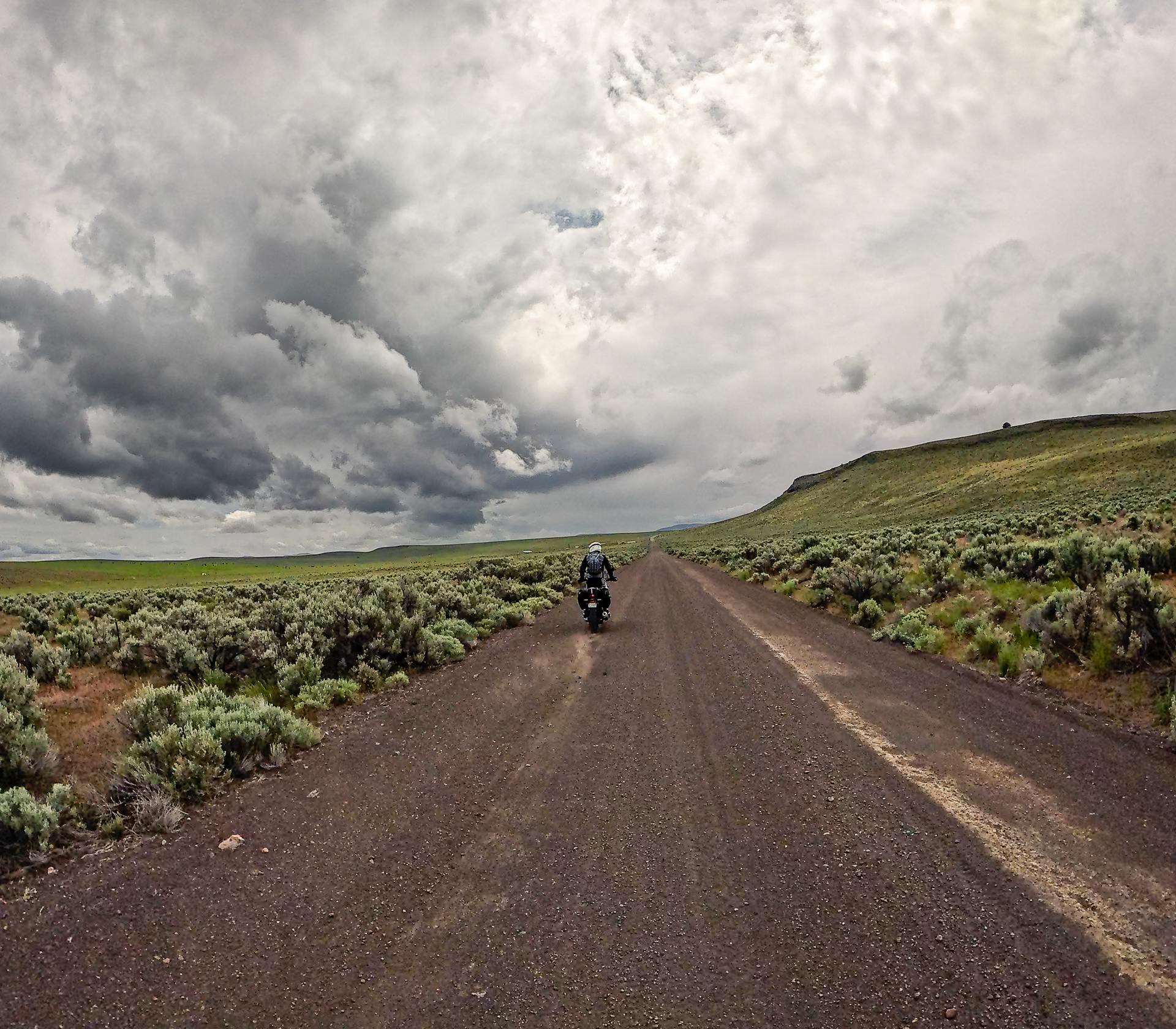
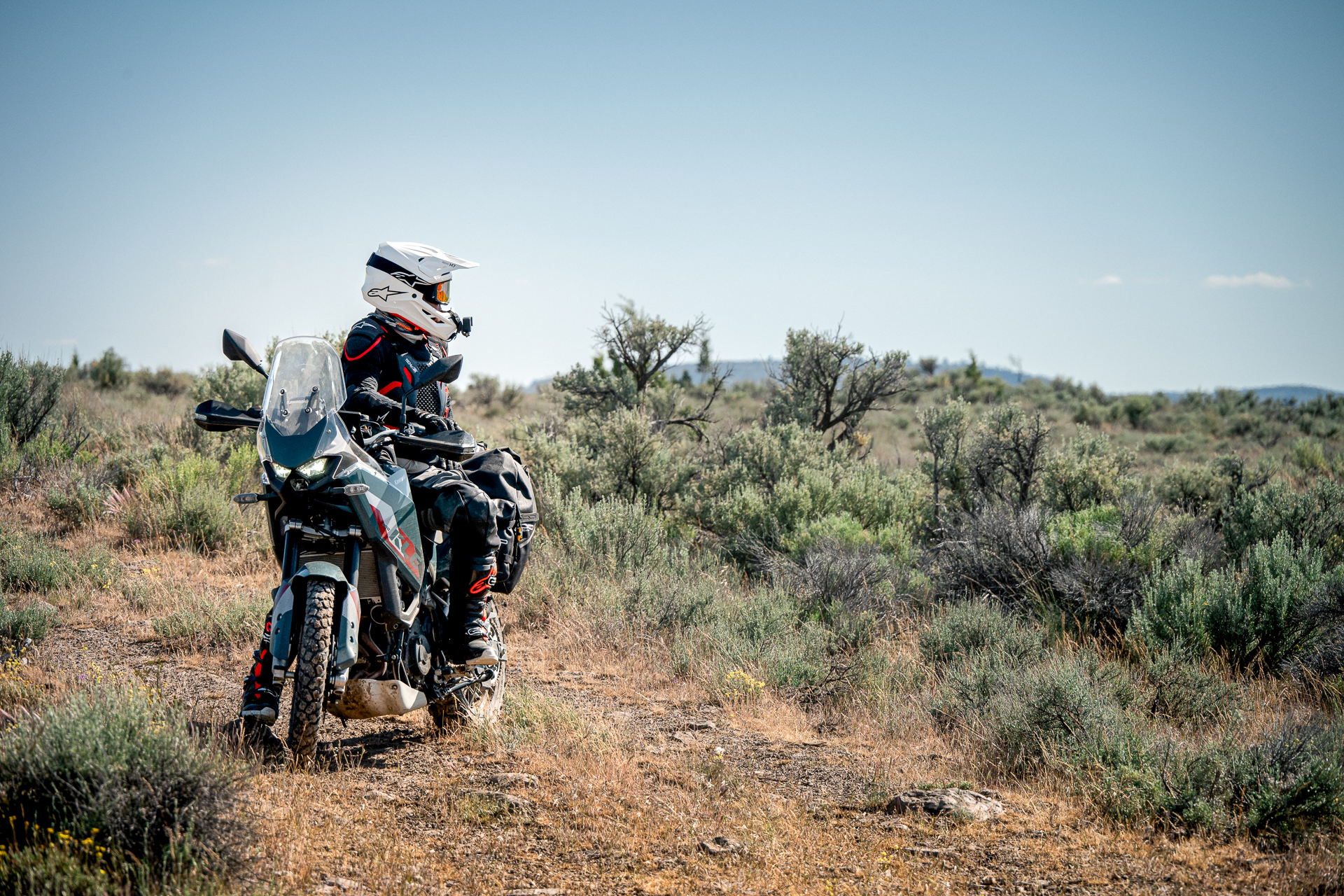
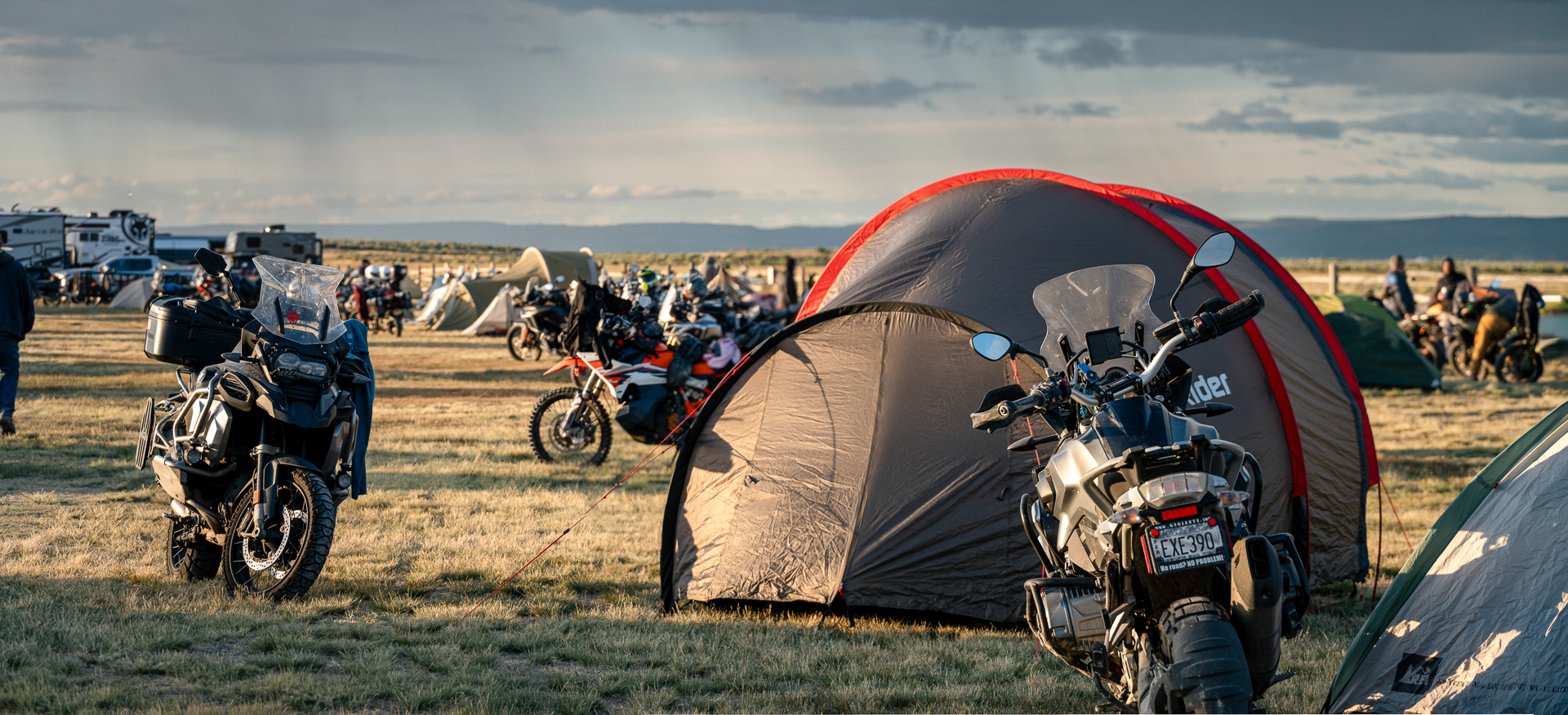
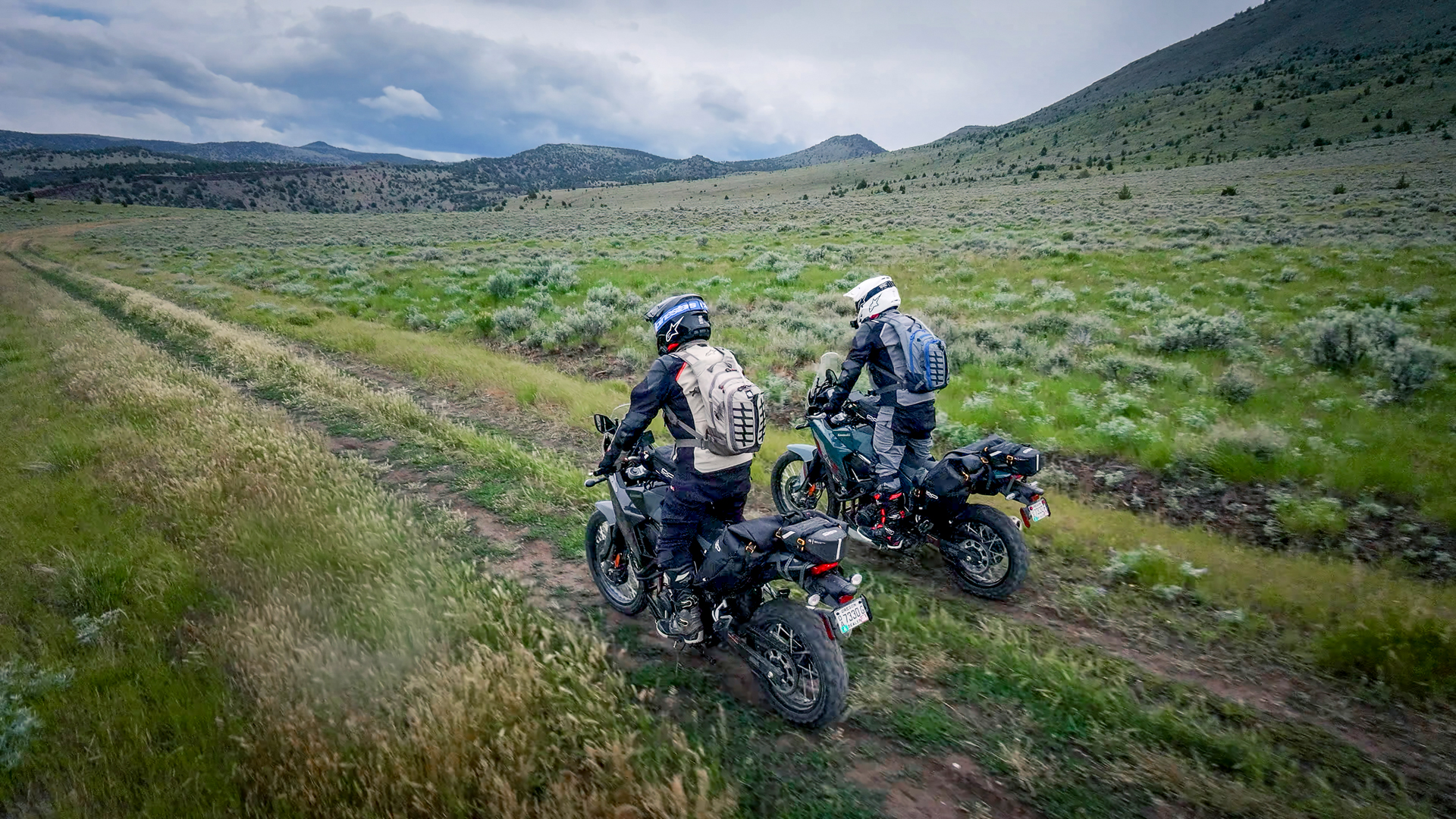
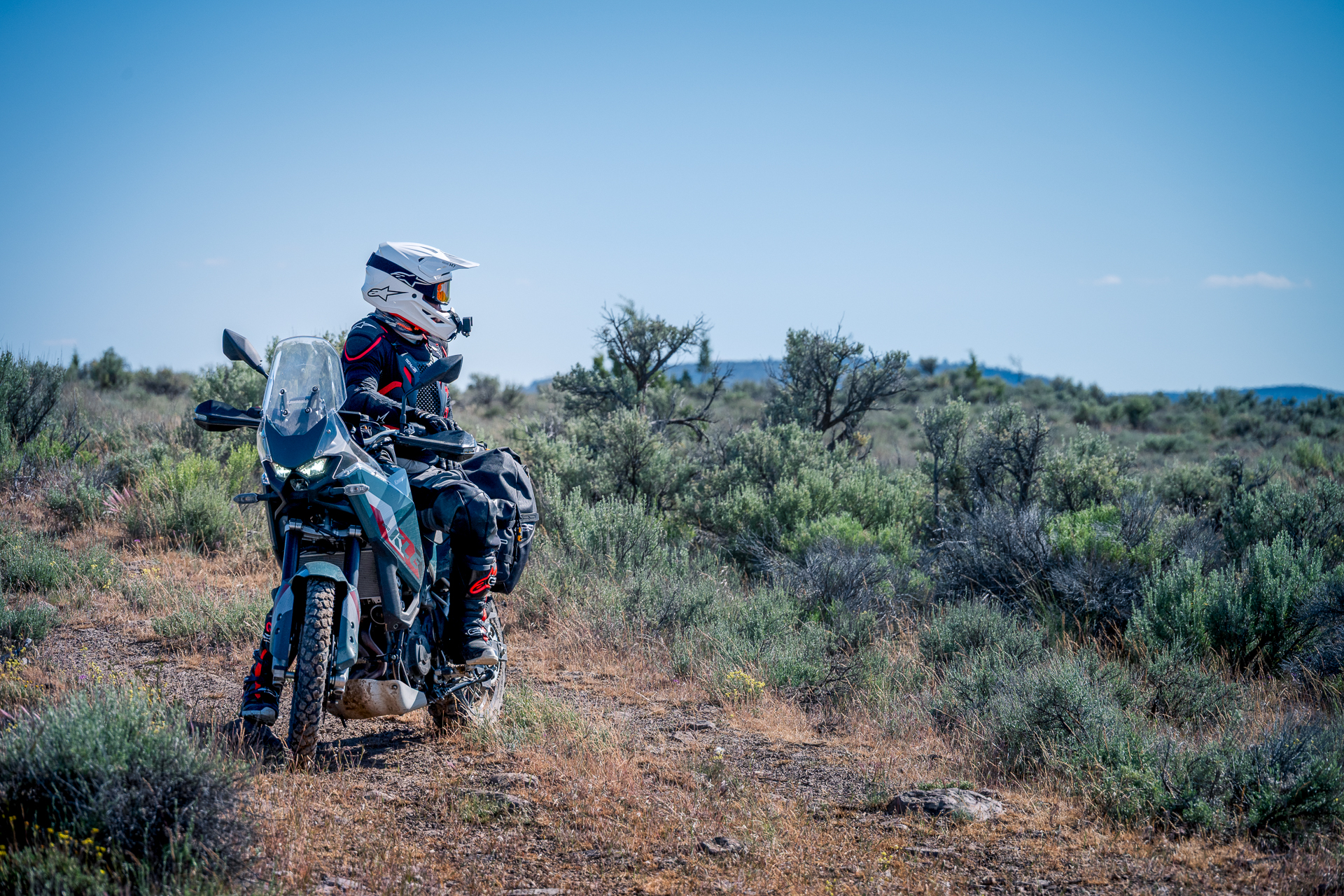
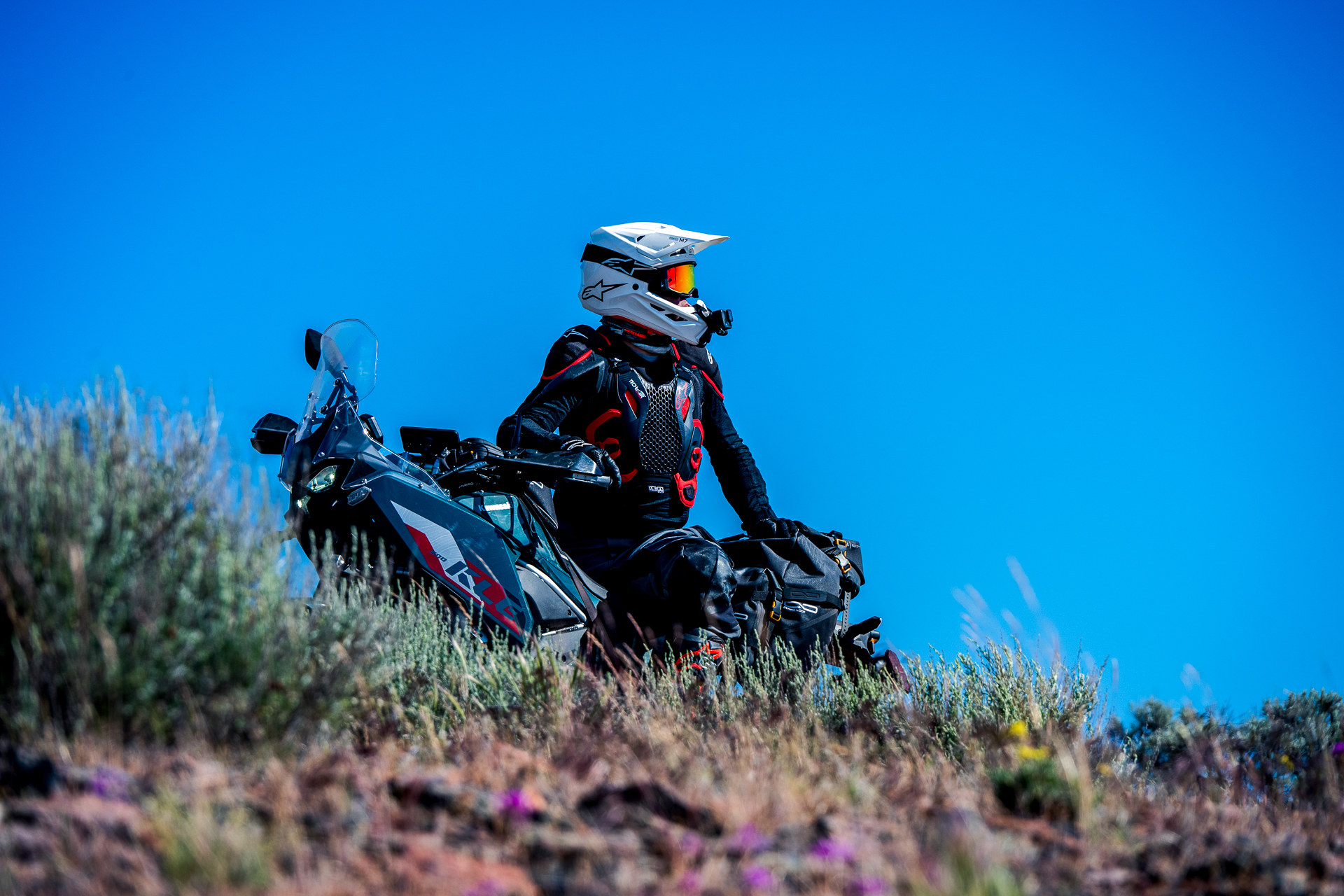
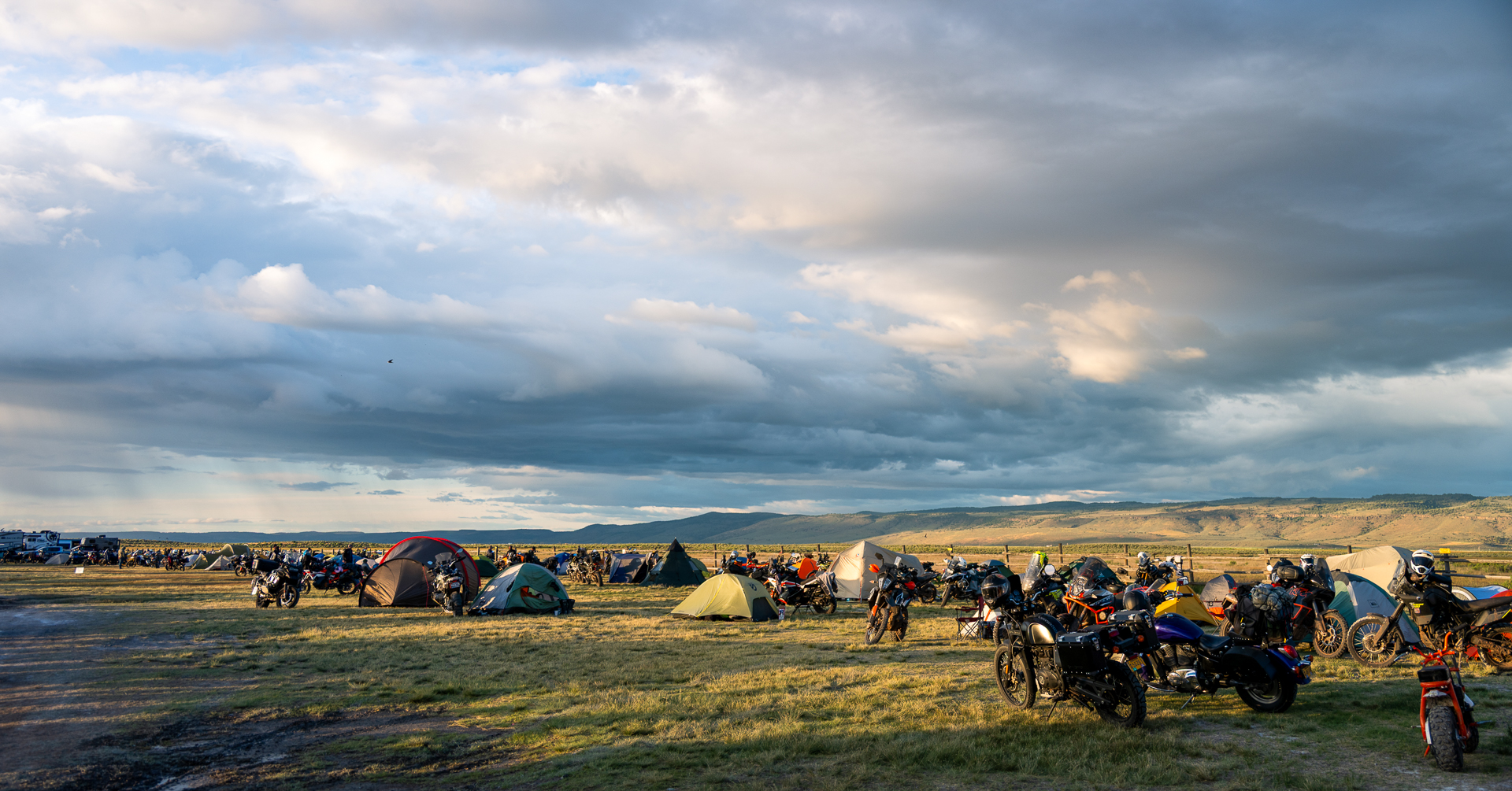
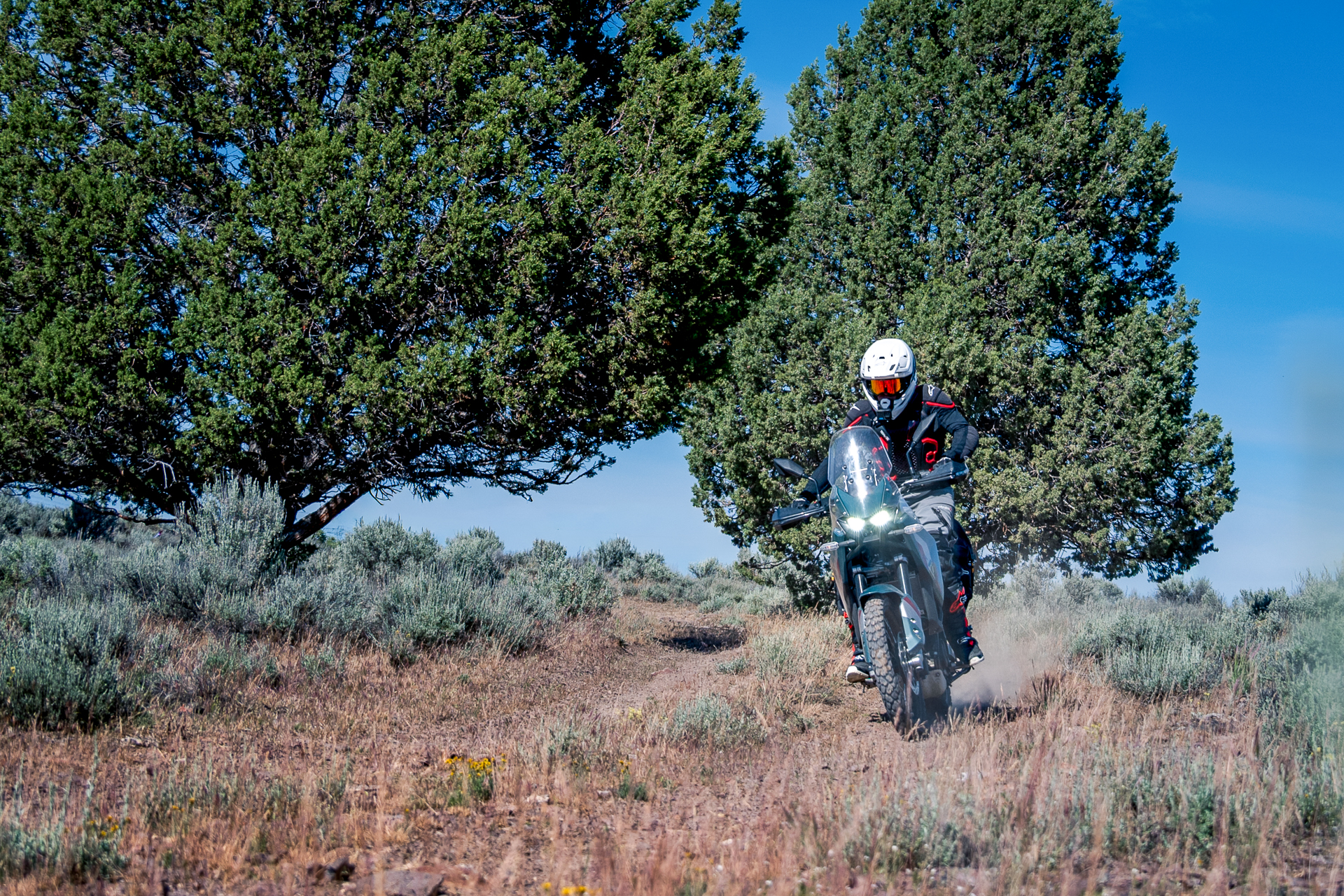
Crystal Crane Hot Springs became our base for discovering the other Oregon, the one far beyond the damp forests and polished mountain towns of the Cascades. Out here, the state opens into high desert, ranchland, sagebrush, rocky canyons, utility roads, cattle guards, volcanic uplands, and distant horizons that seem to move away as you ride toward them. Roads are longer. Fuel matters more. Weather can be seen approaching from miles away, and the ground itself feels less forgiving. This is where Oregon stops being scenic in the conventional sense and becomes something broader, rougher, and more honest to an adventure rider.
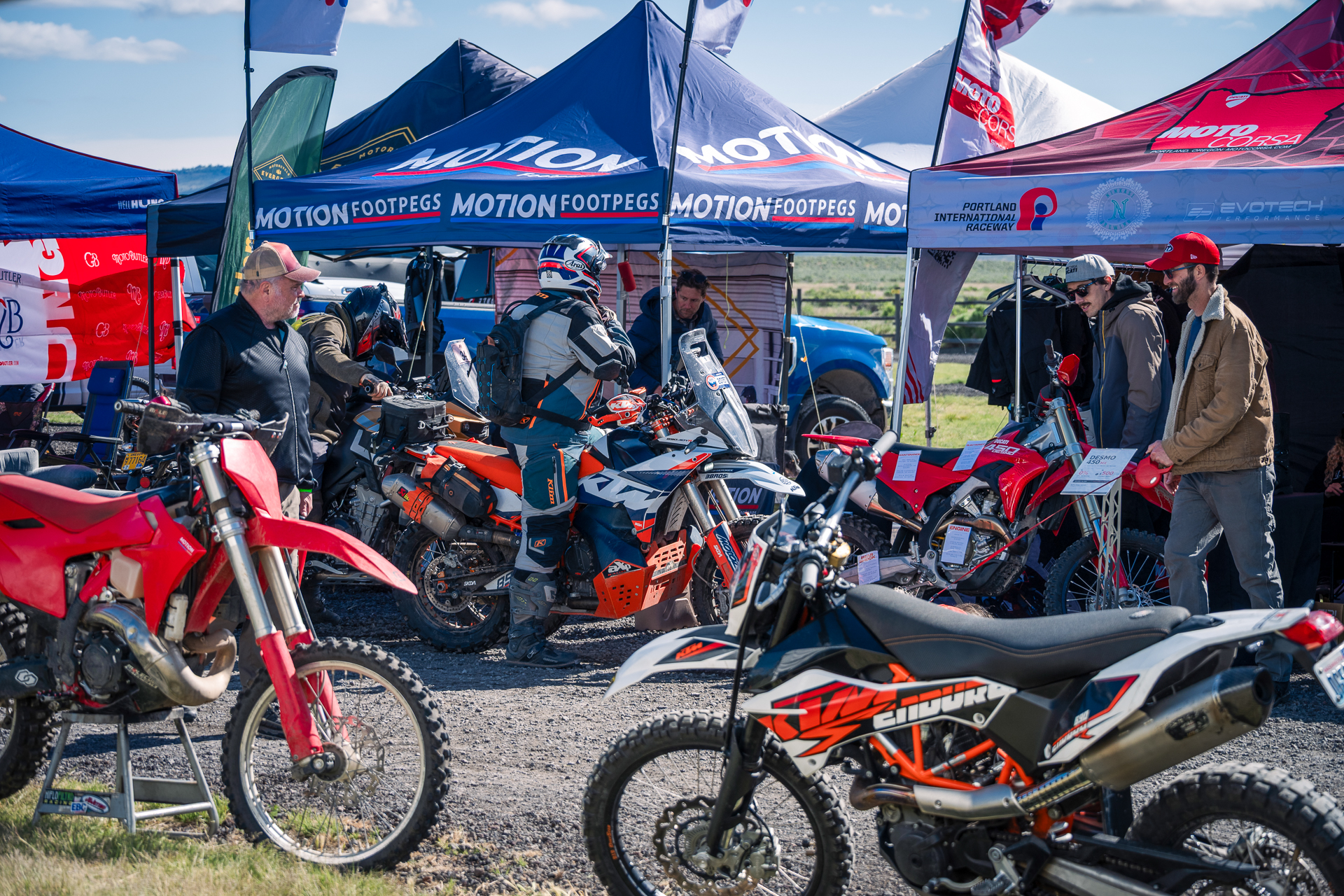
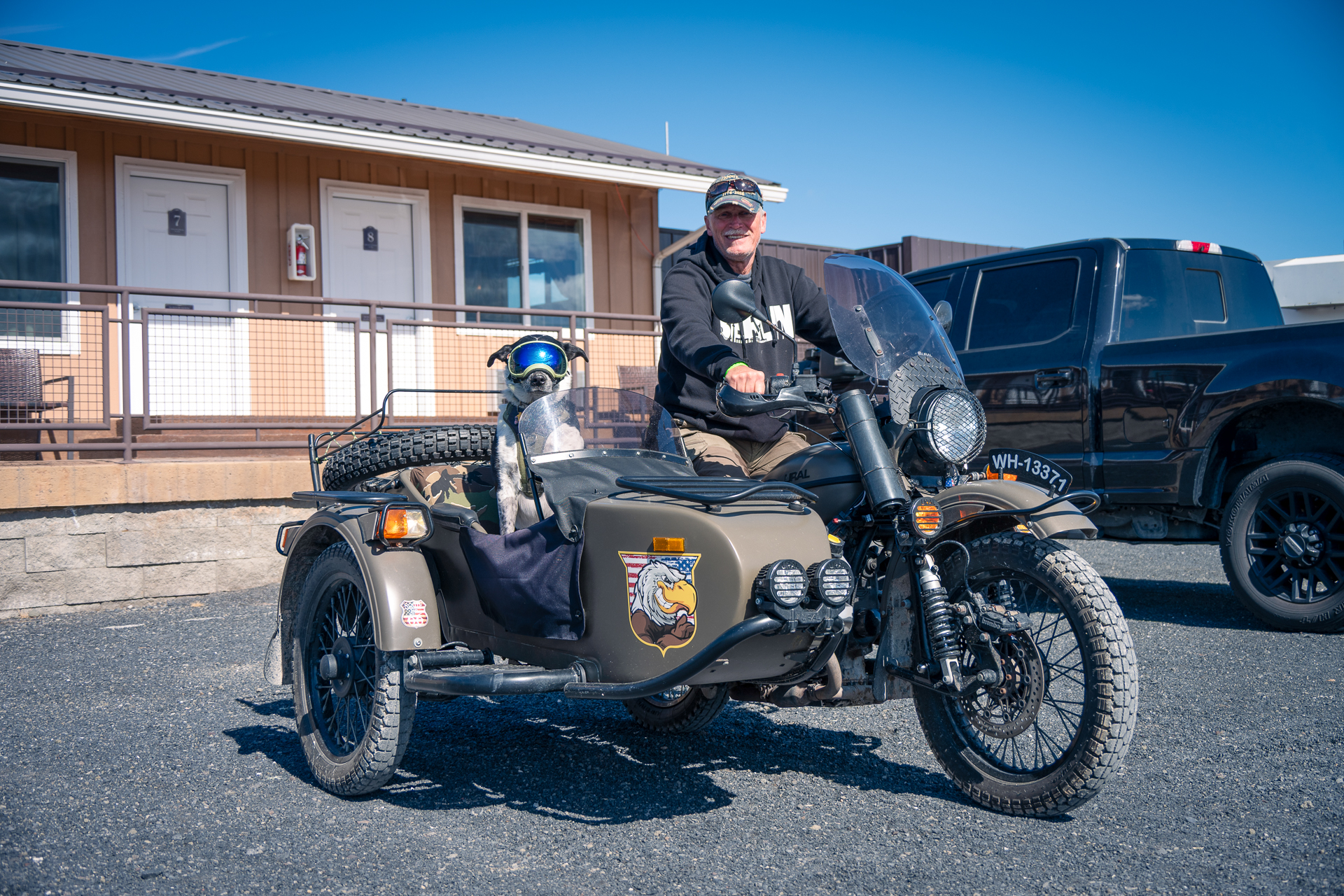
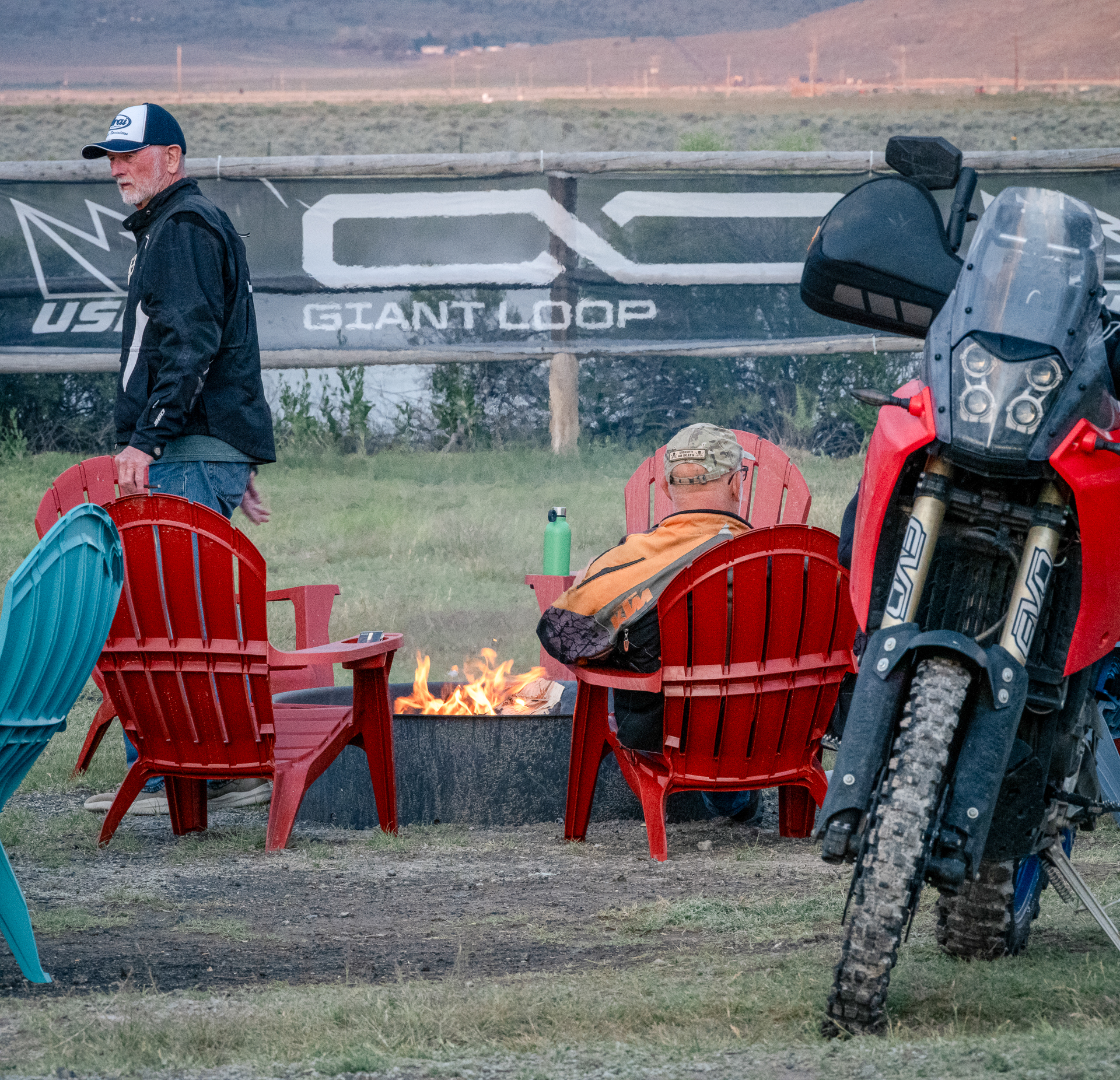
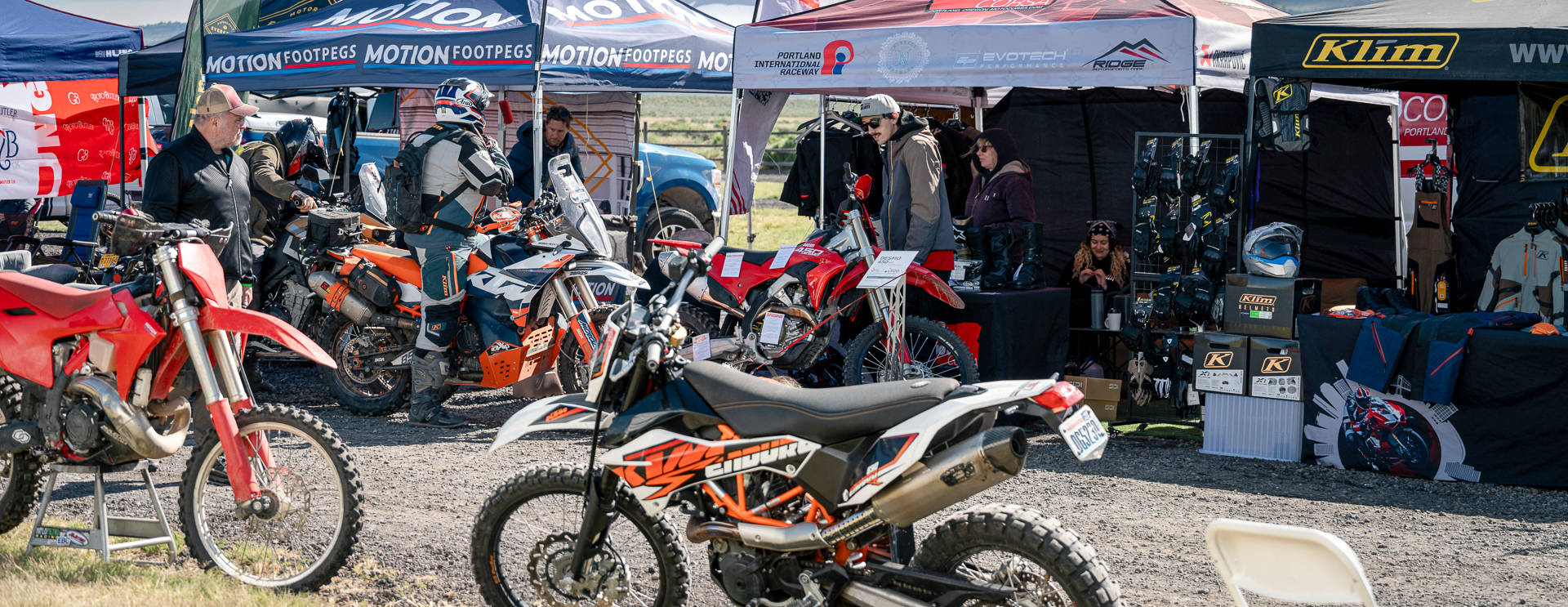
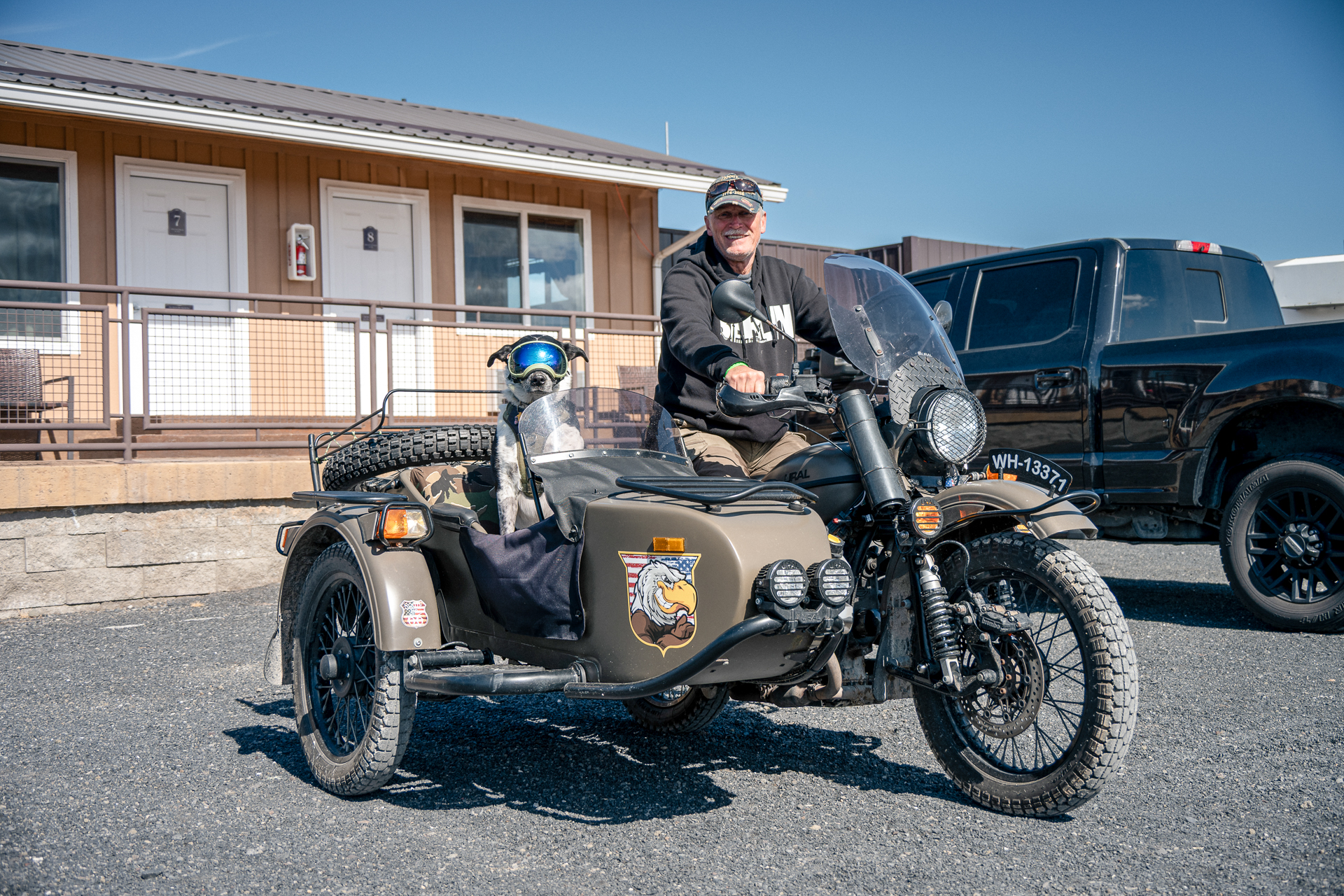
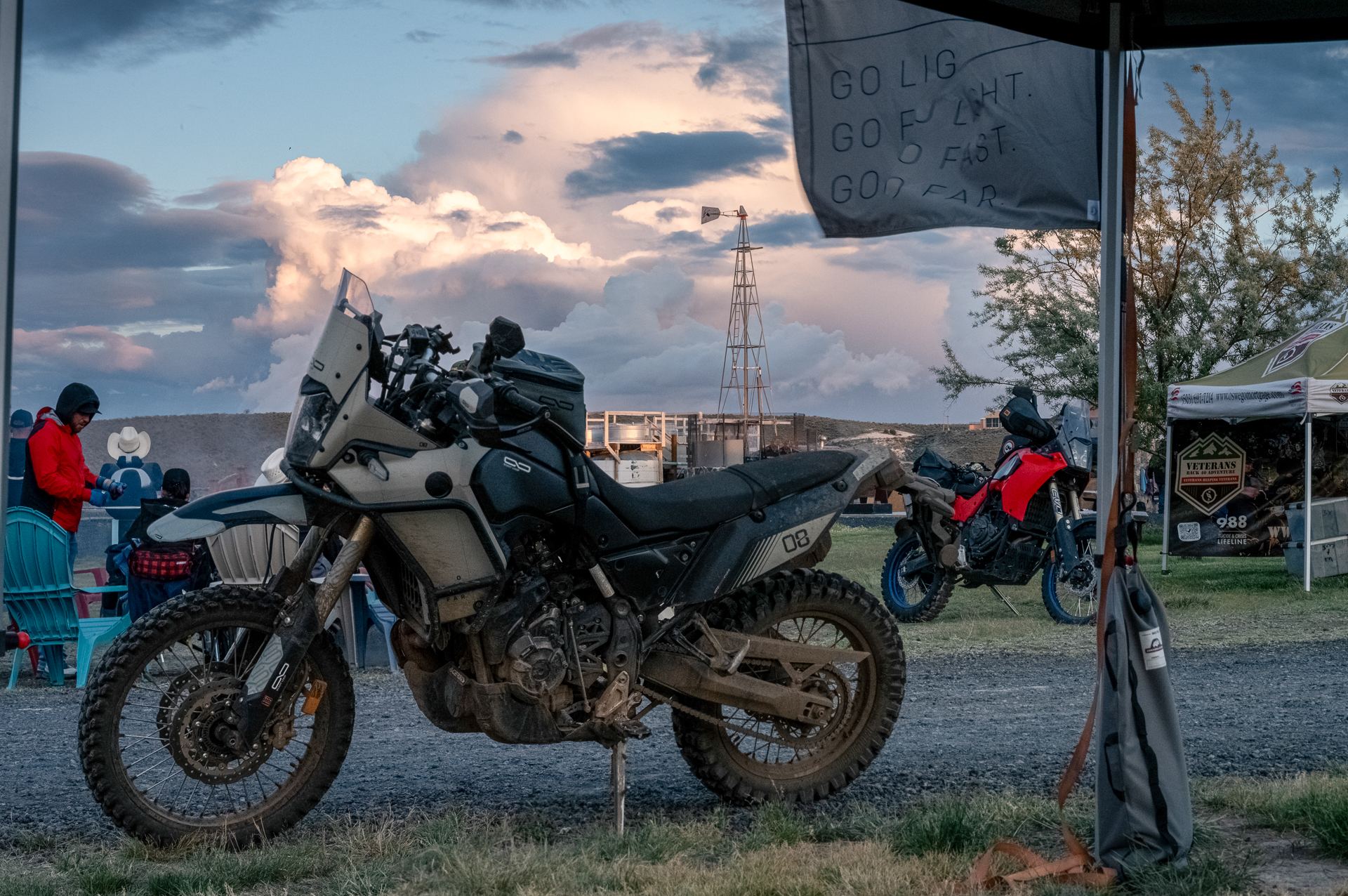
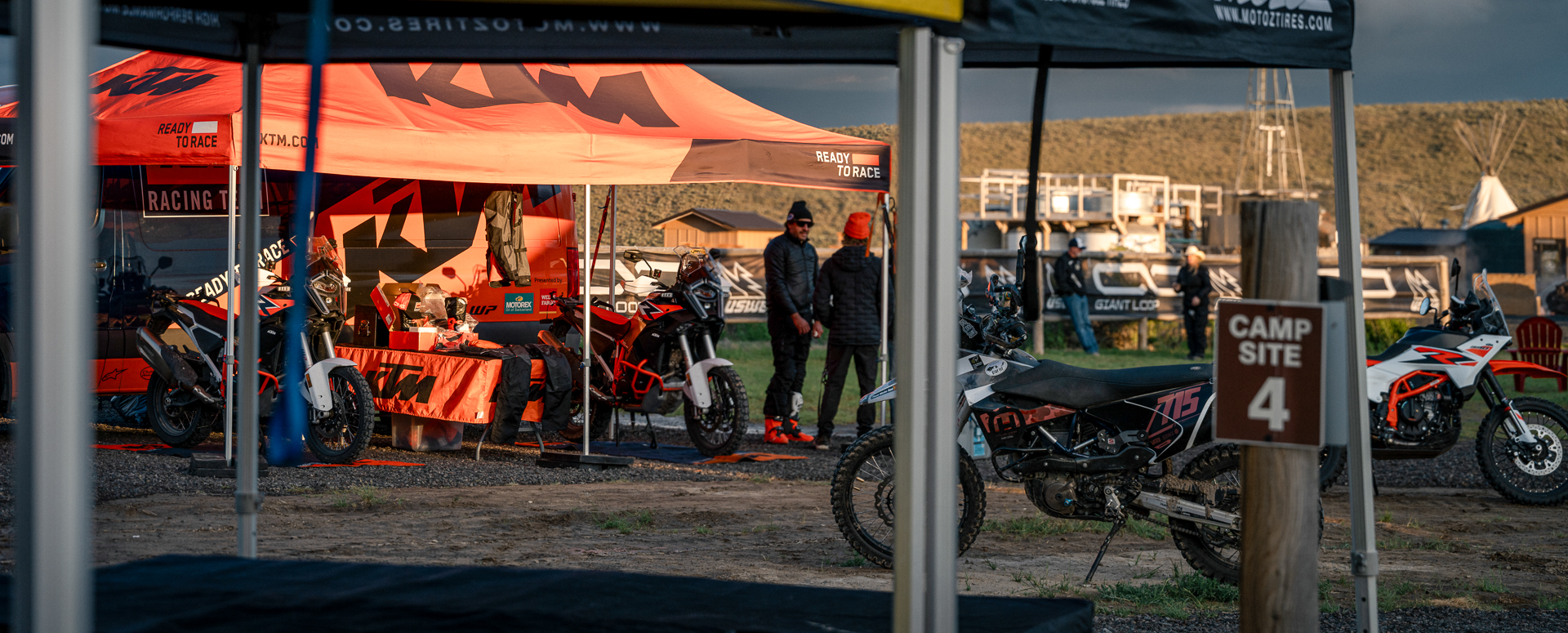
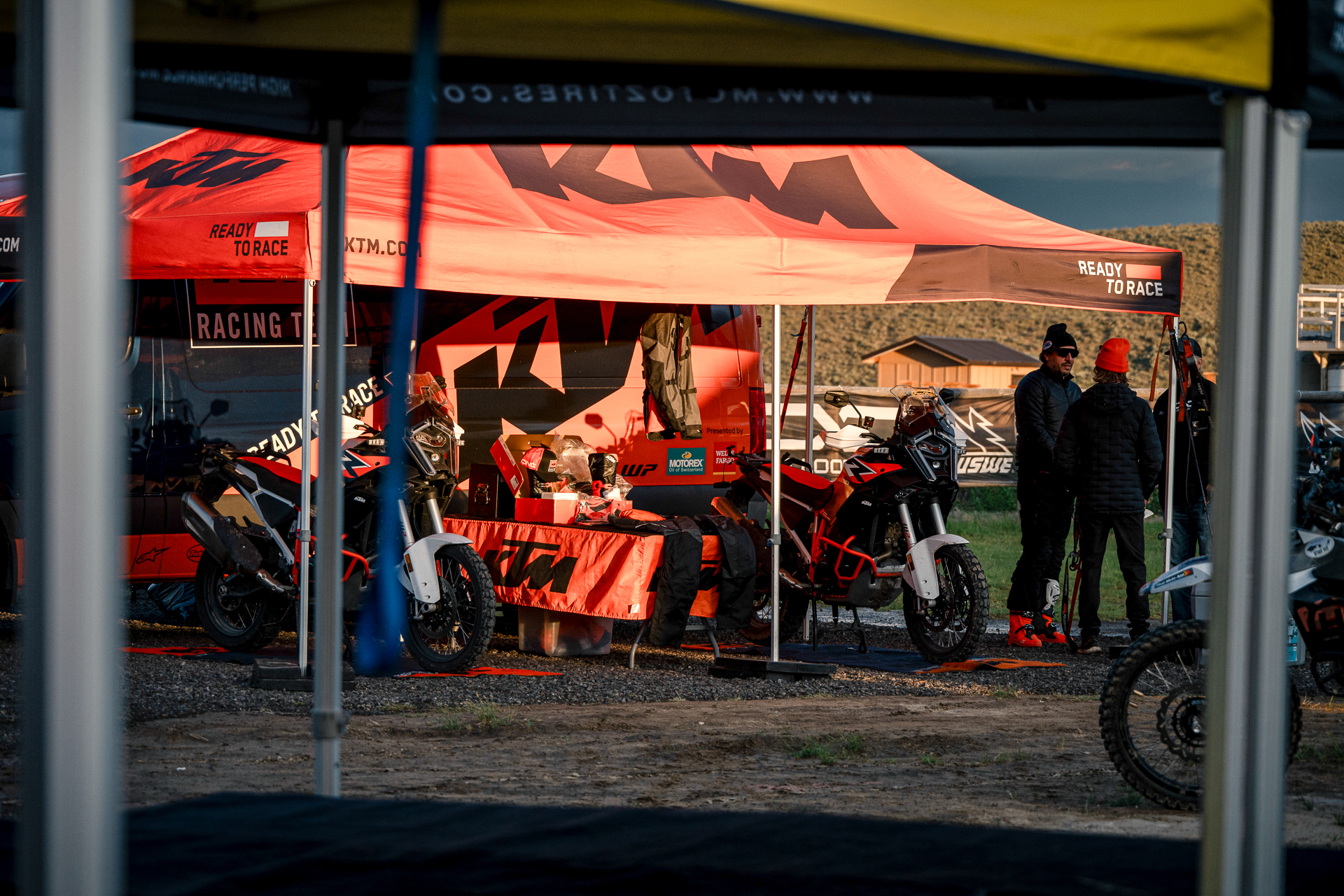
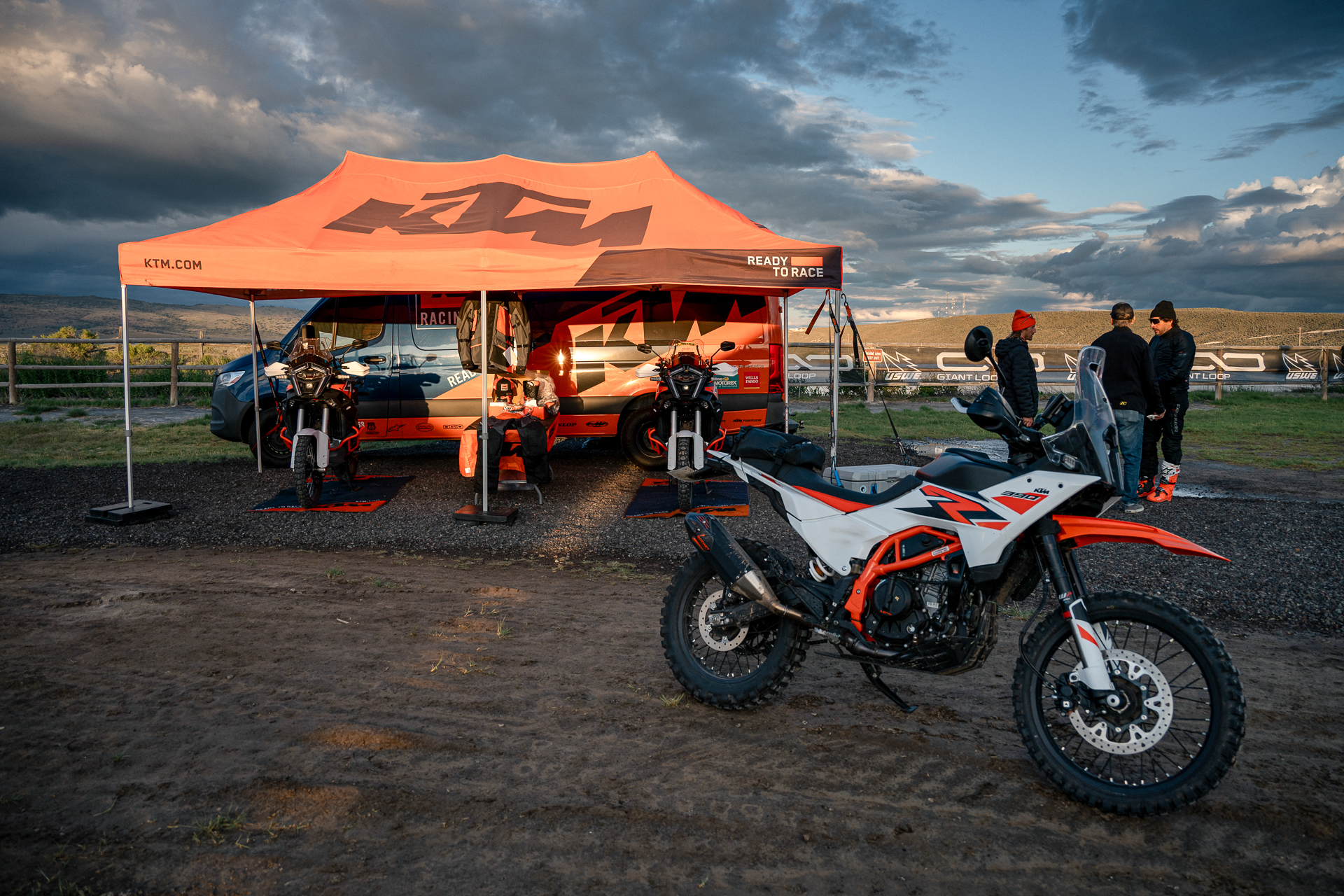
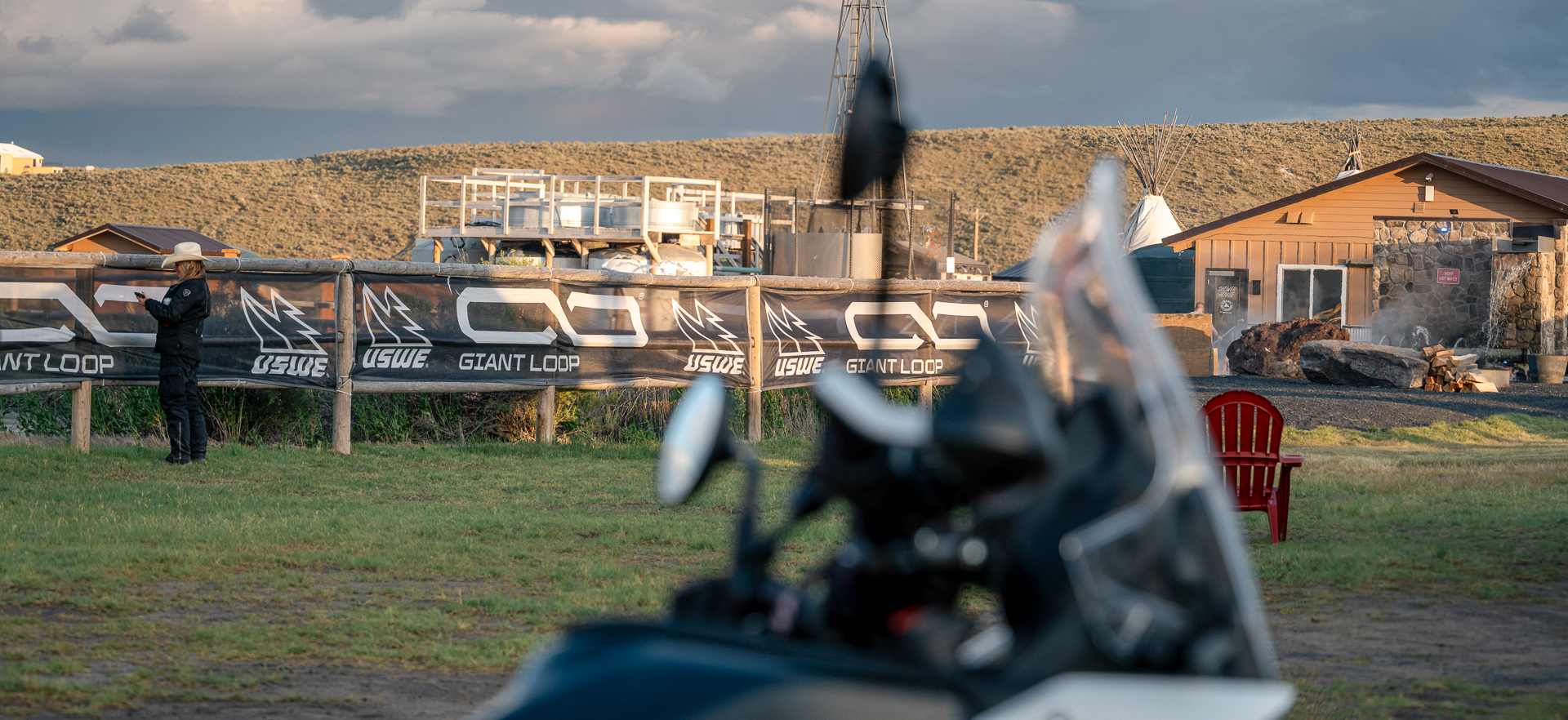
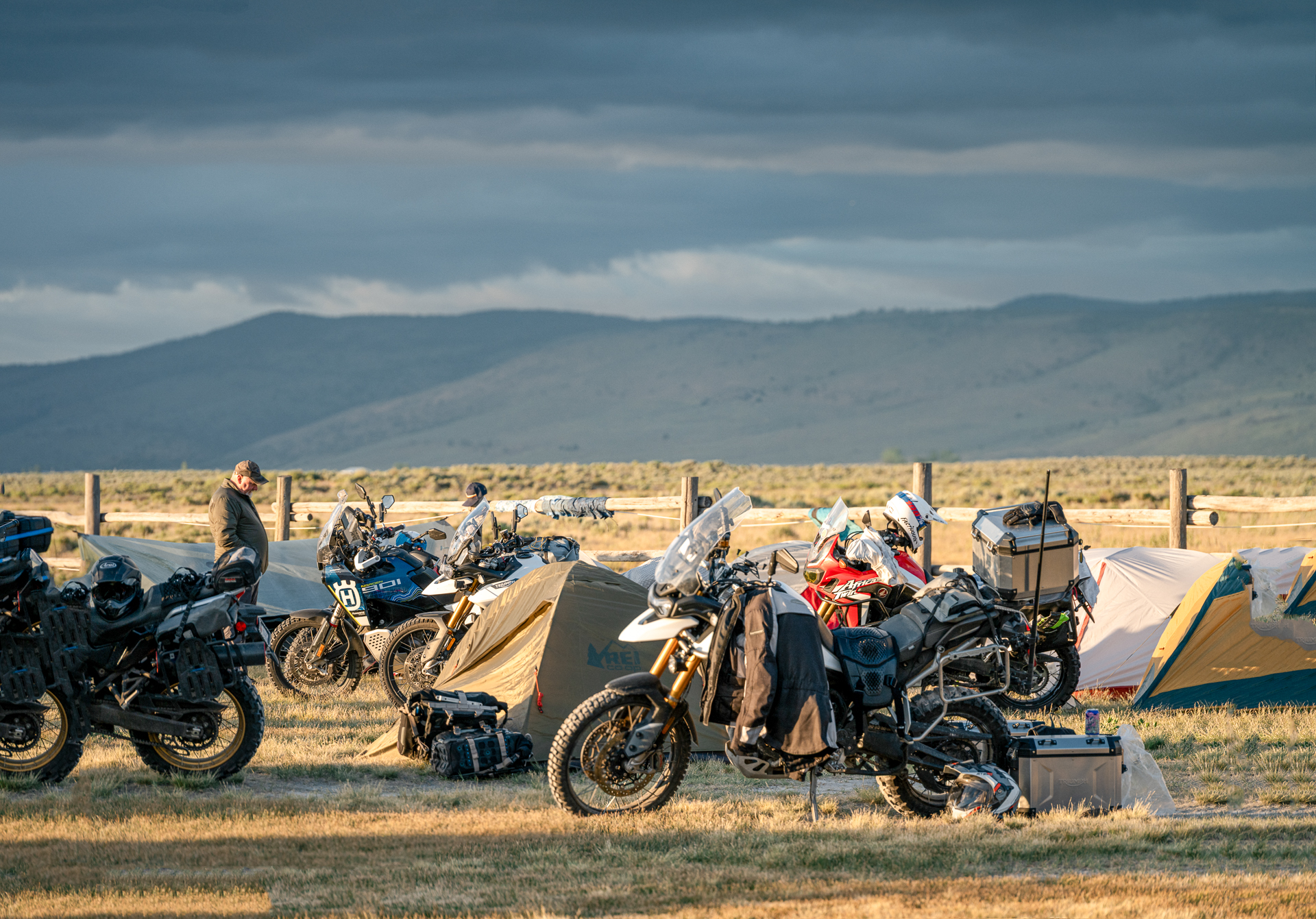
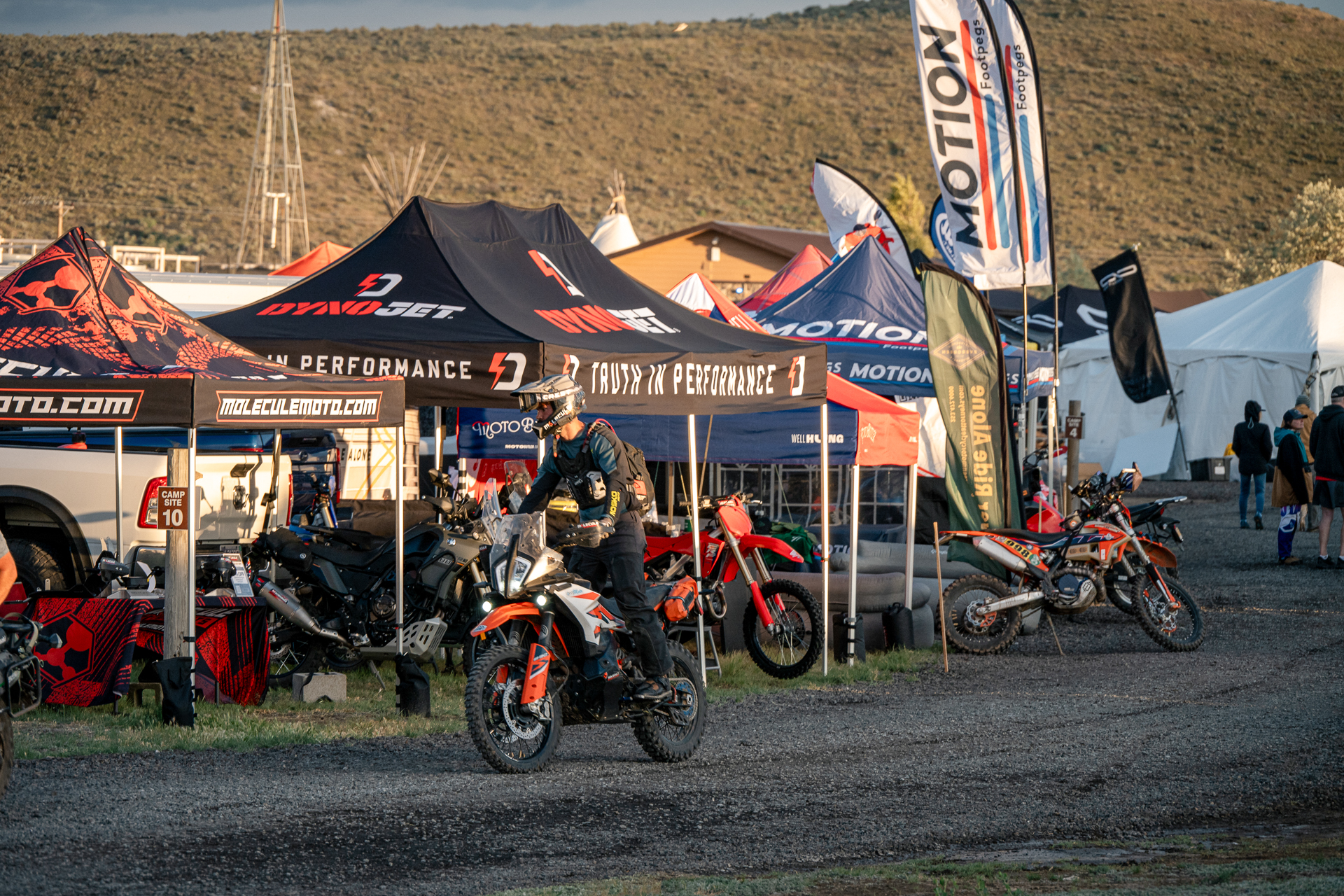
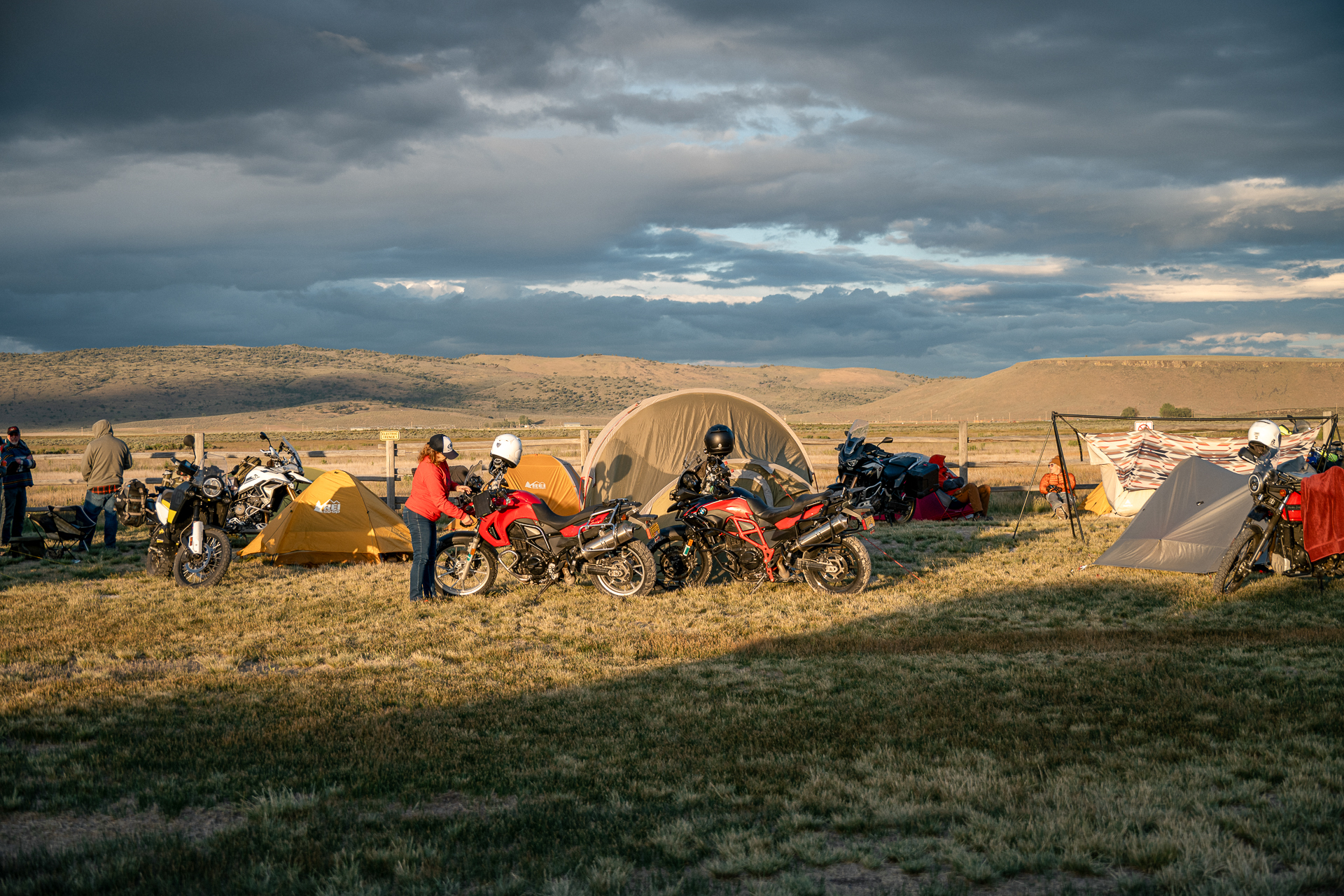
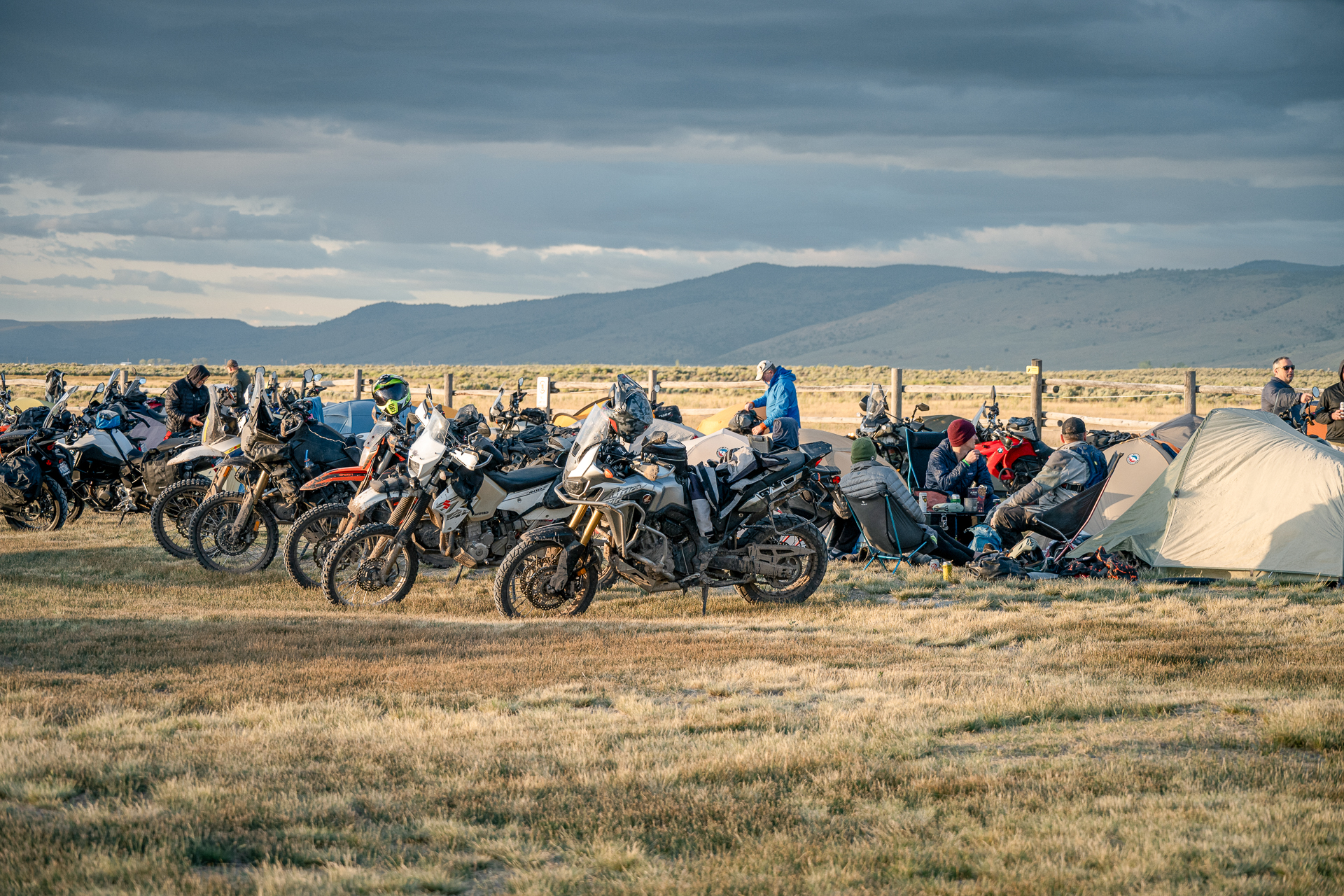
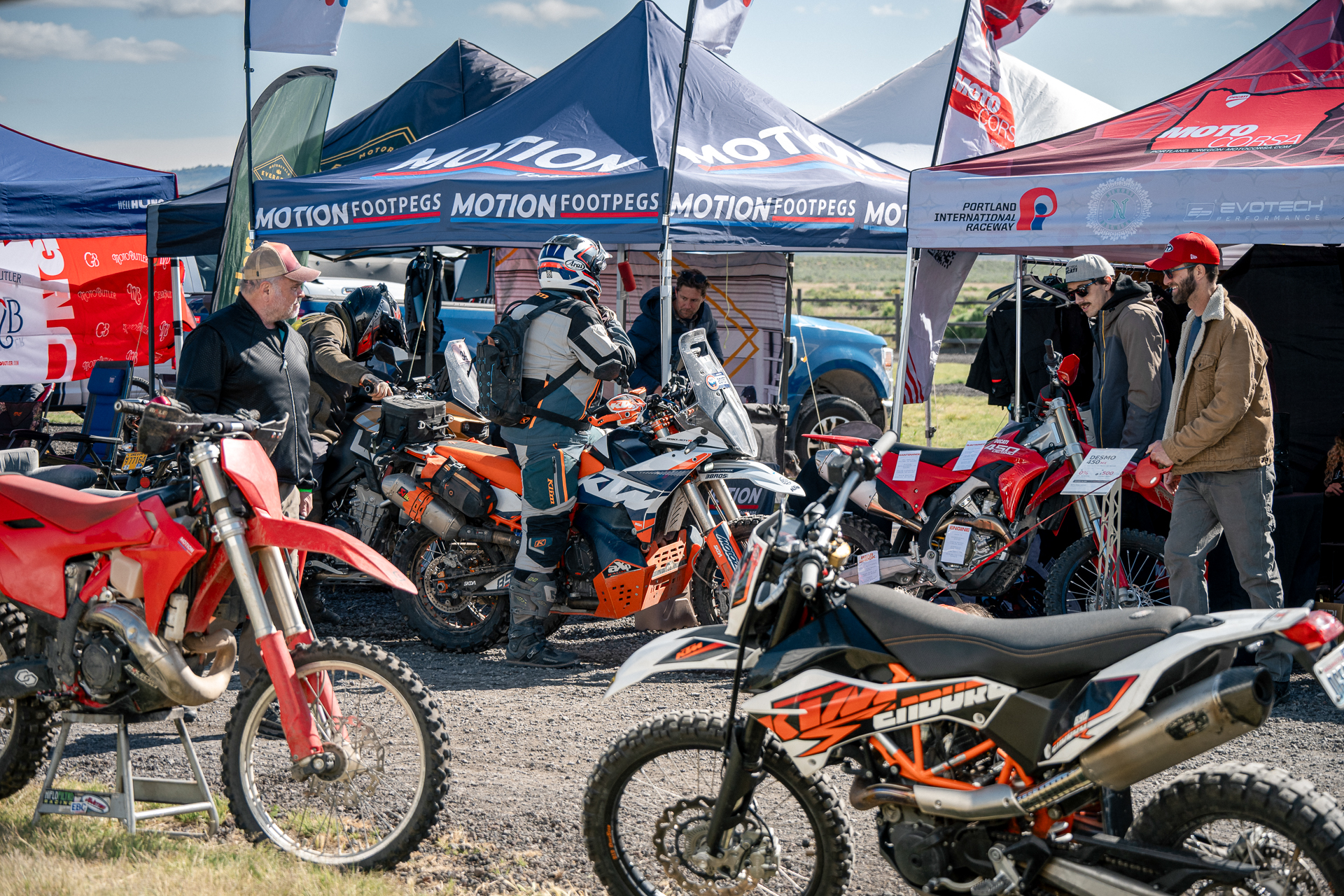
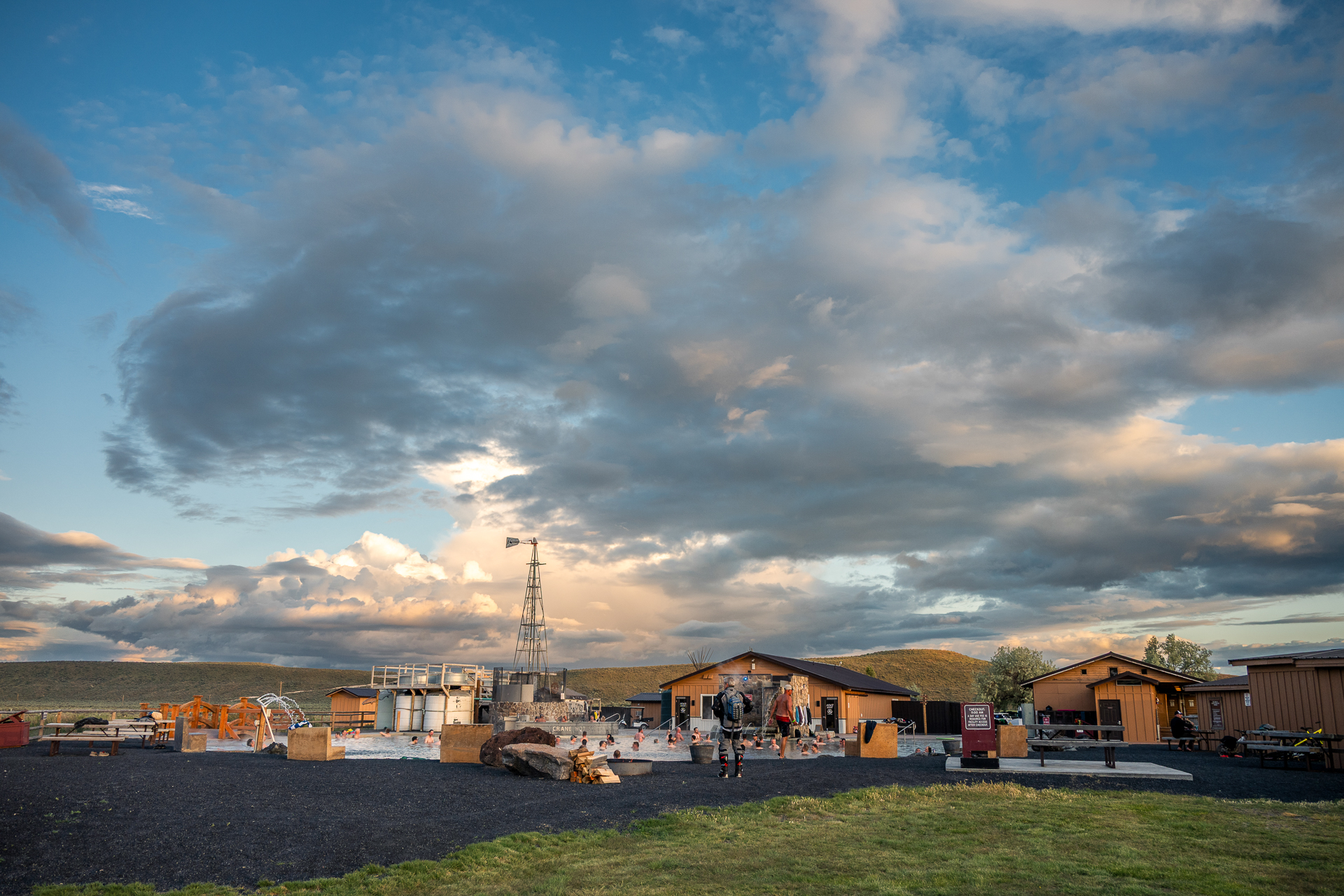
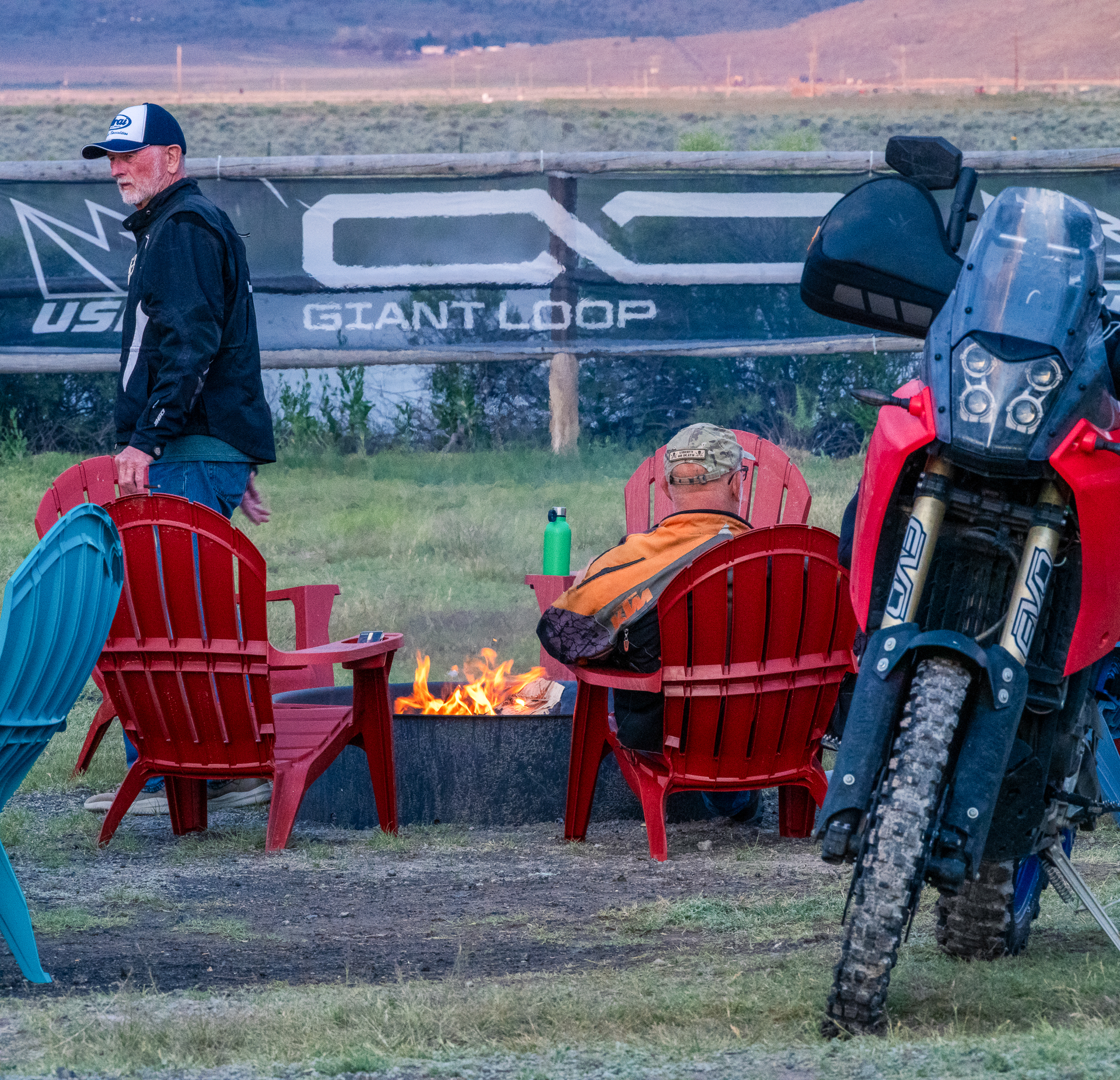
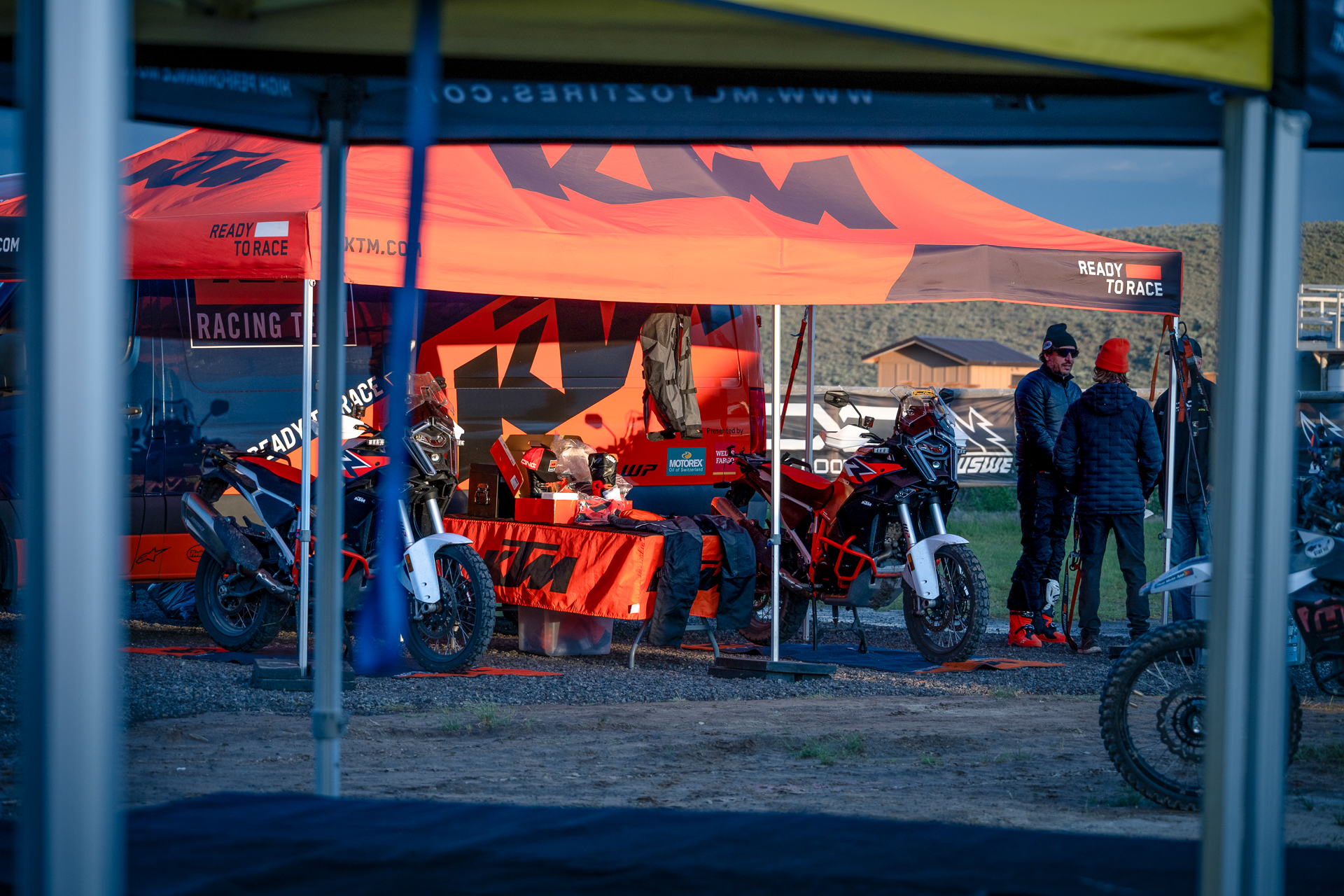
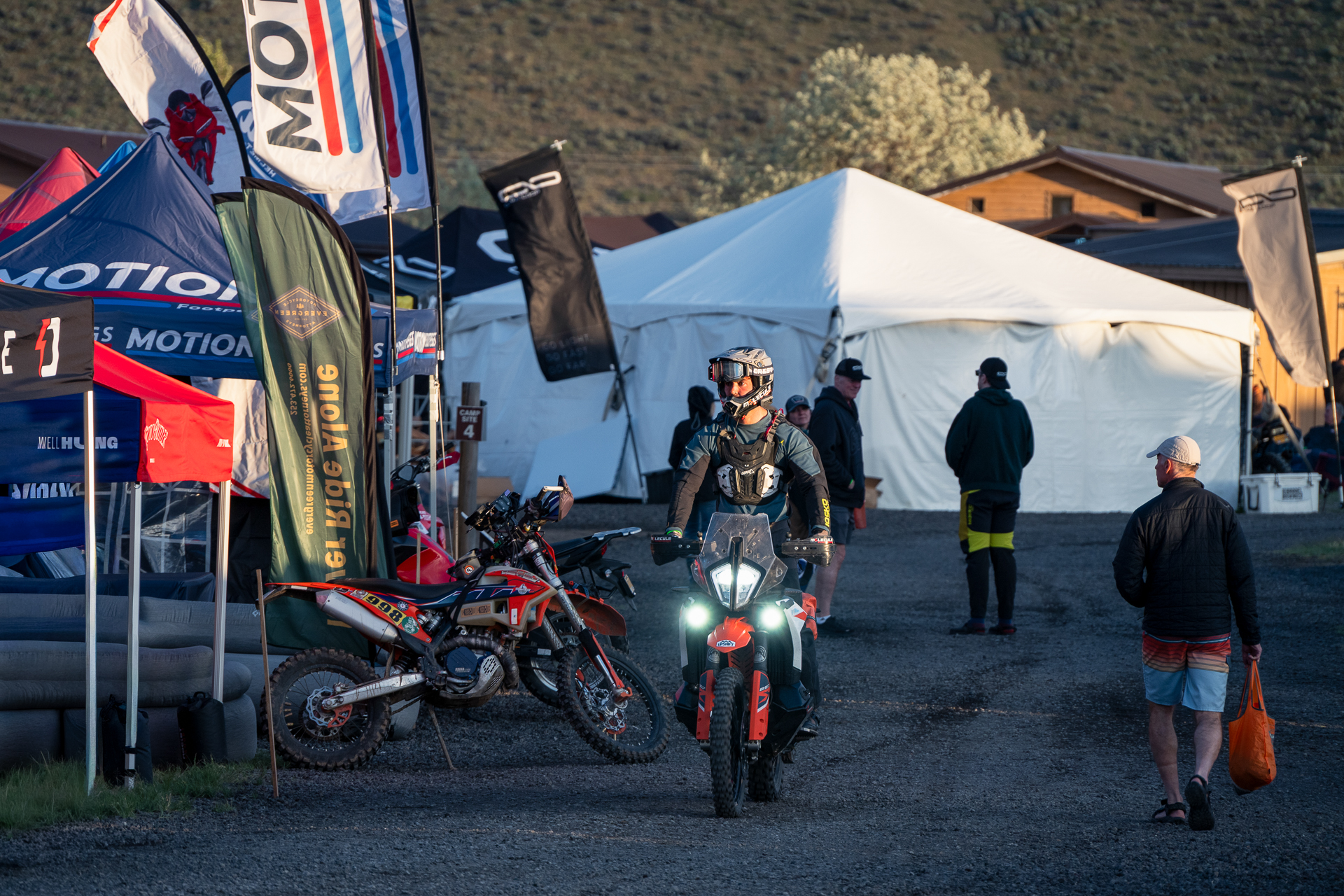
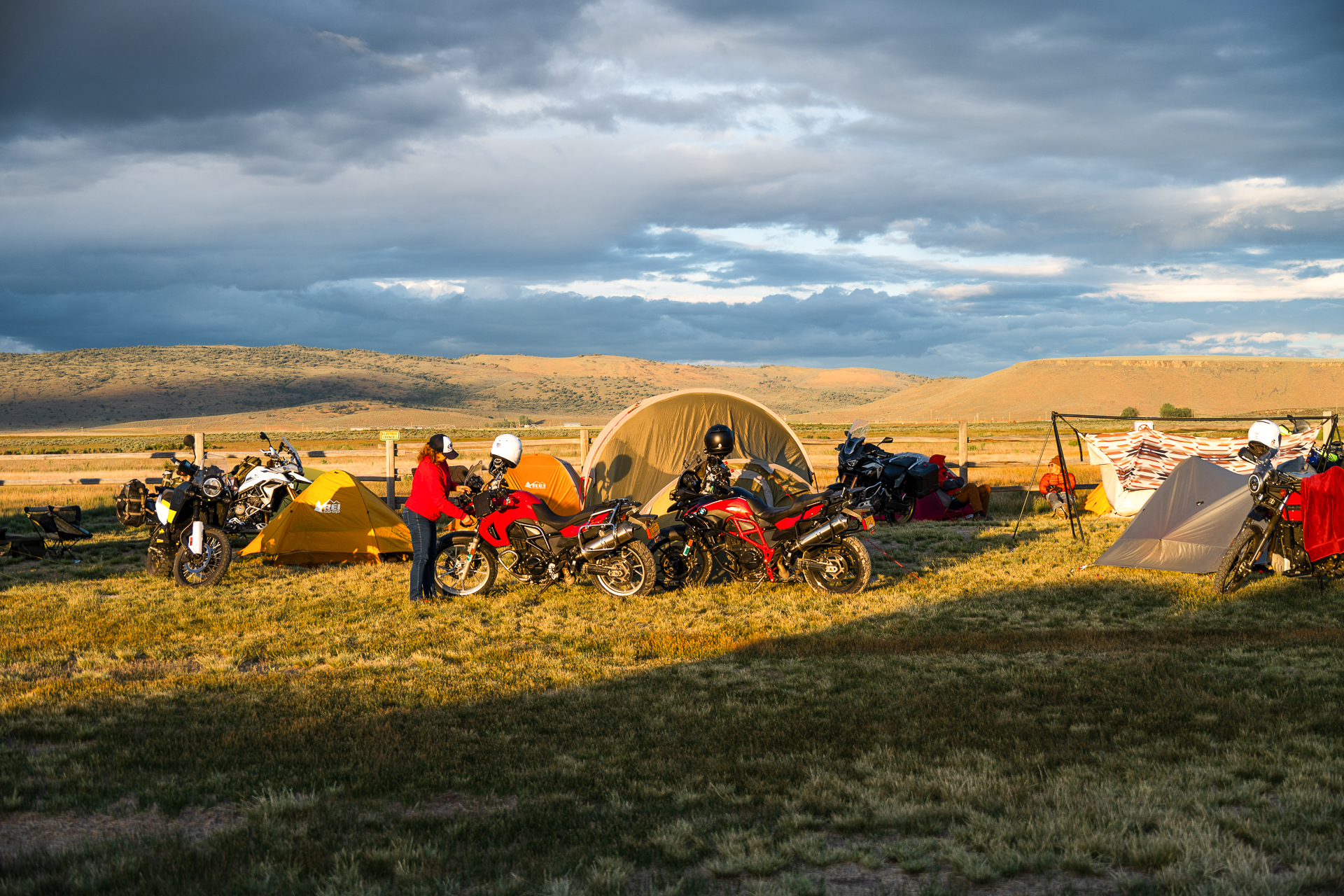
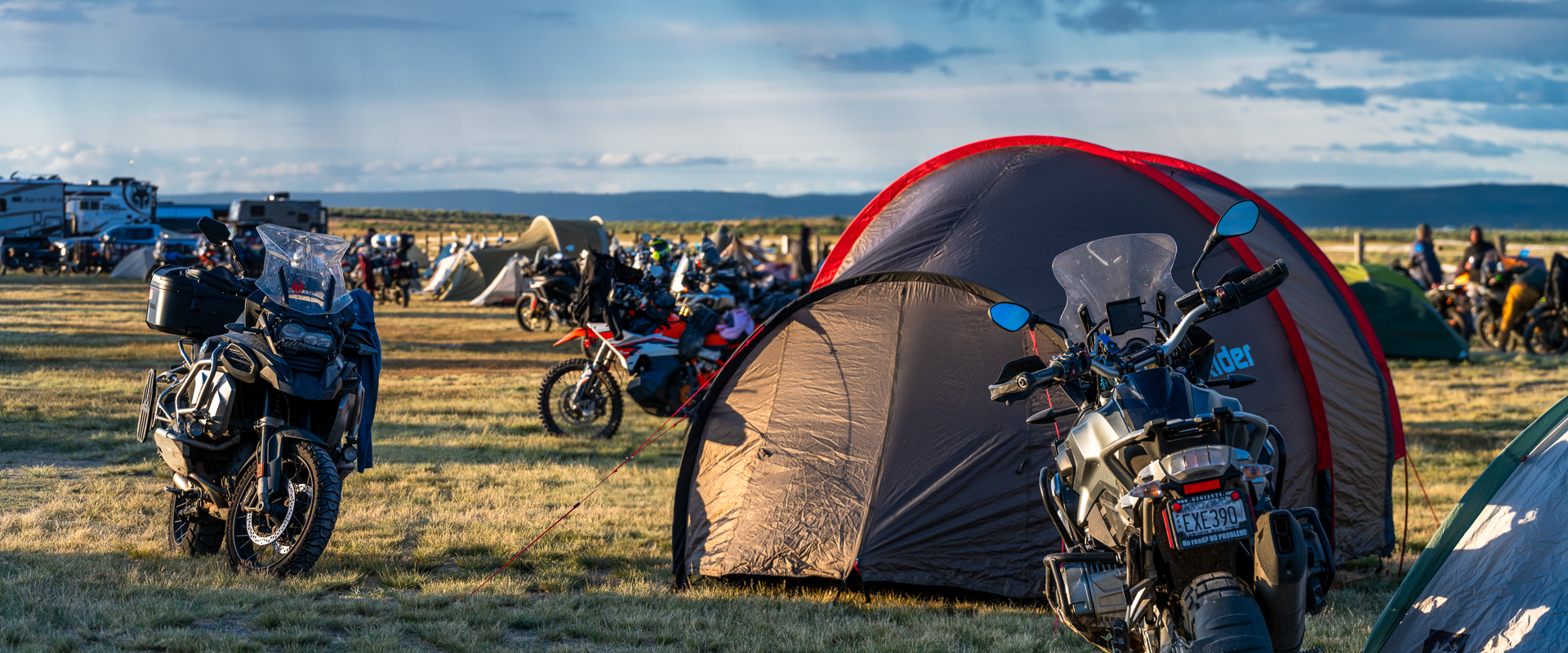
For a few days, Crystal Crane became a motorcycle town built on the edge of the desert, held together by dust, route files, coffee, tire pressure gauges, camp chairs, luggage straps, and more than 500 riders comparing plans for the day ahead. Breakfast and dinner were served in a communal tent, lunches were packed into take-away boxes, and each morning the crowd scattered outward into ranchlands, canyons, rocky tracks, and open desert.
The Solo Rider Briefings captured the best part of the event. Riders who had arrived alone found groups, compared experience, shared route information, and left together. It was not camaraderie performed for atmosphere. It was practical cooperation, and in country like this, practical cooperation matters.
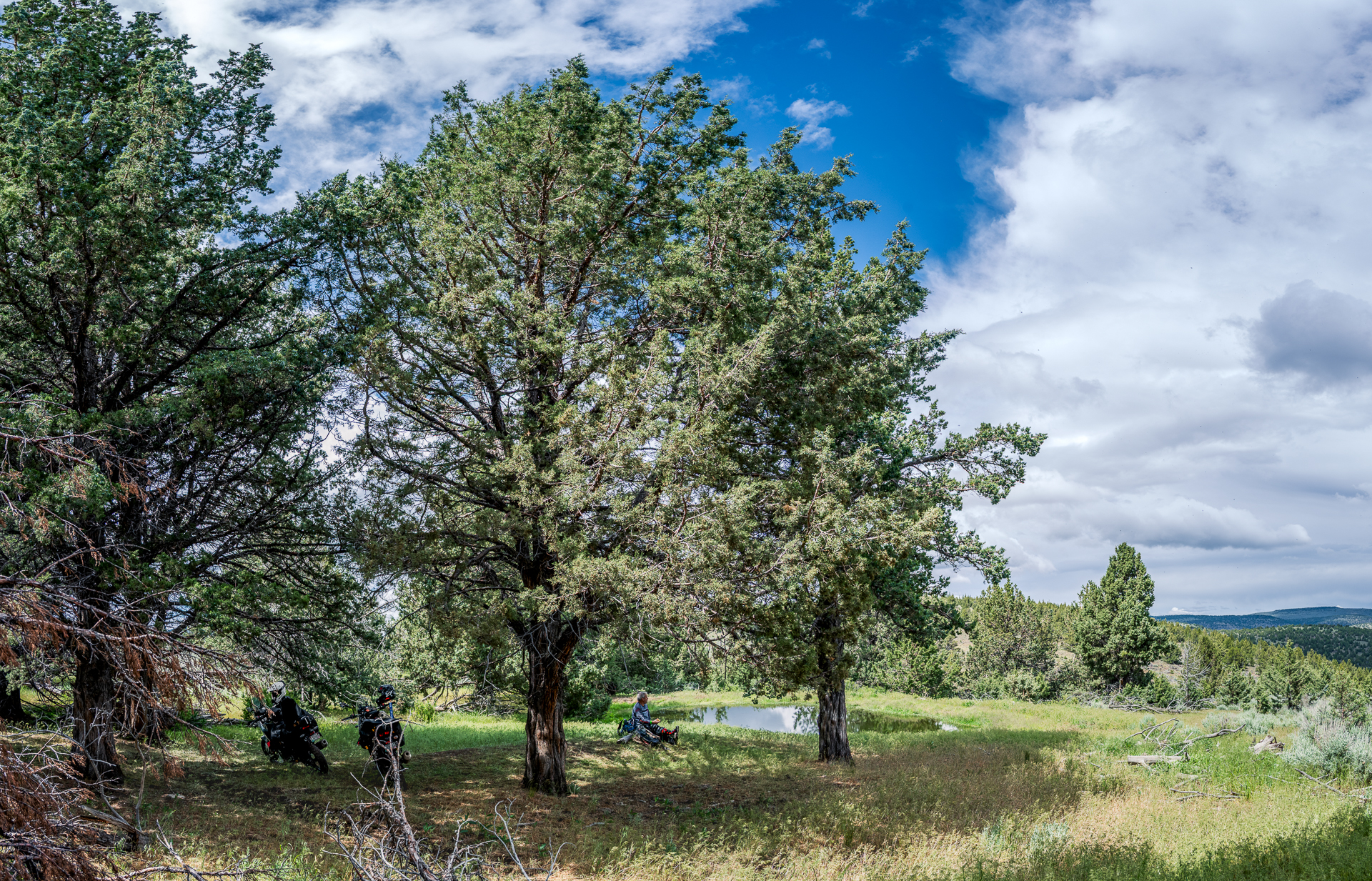
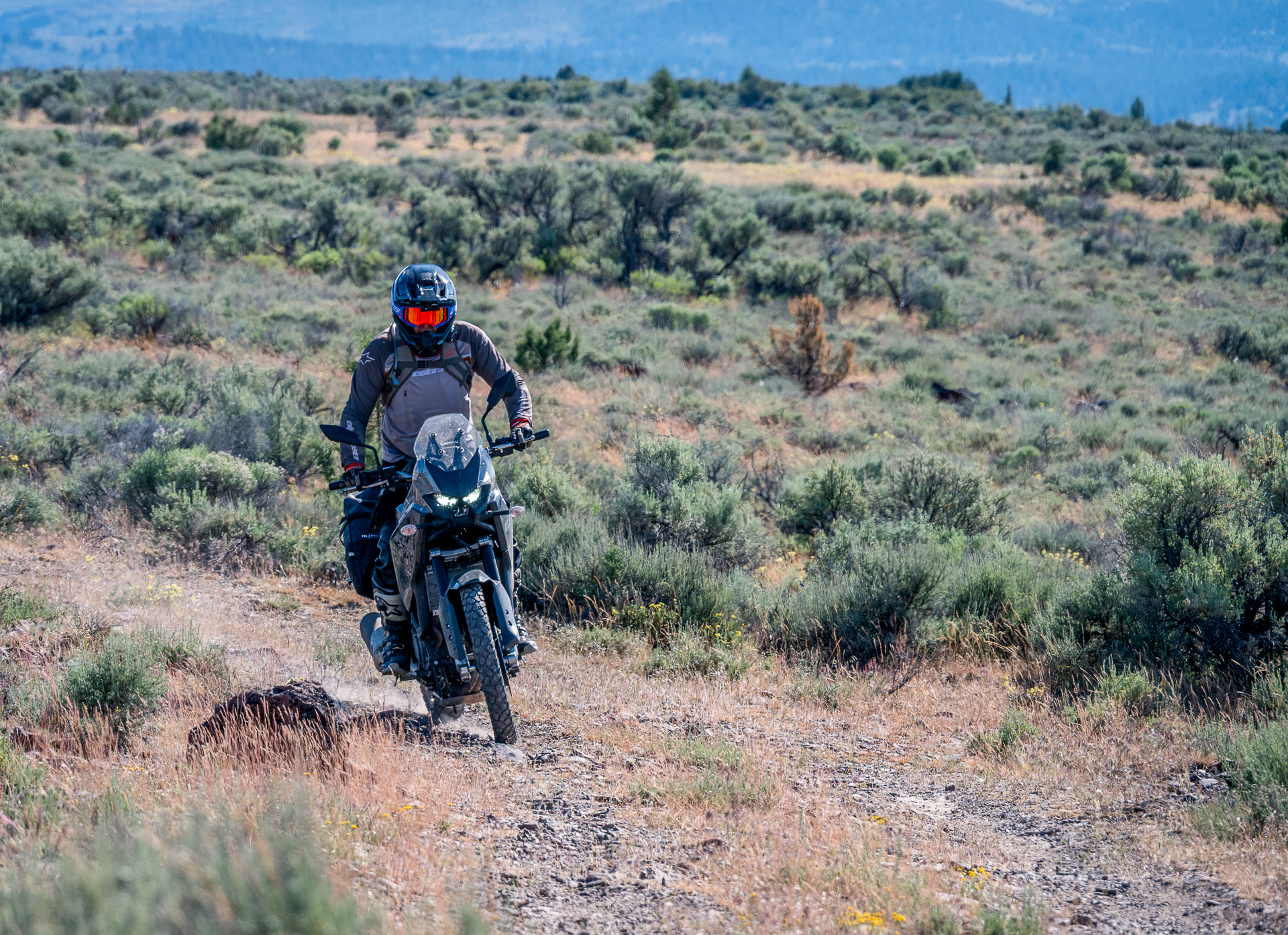
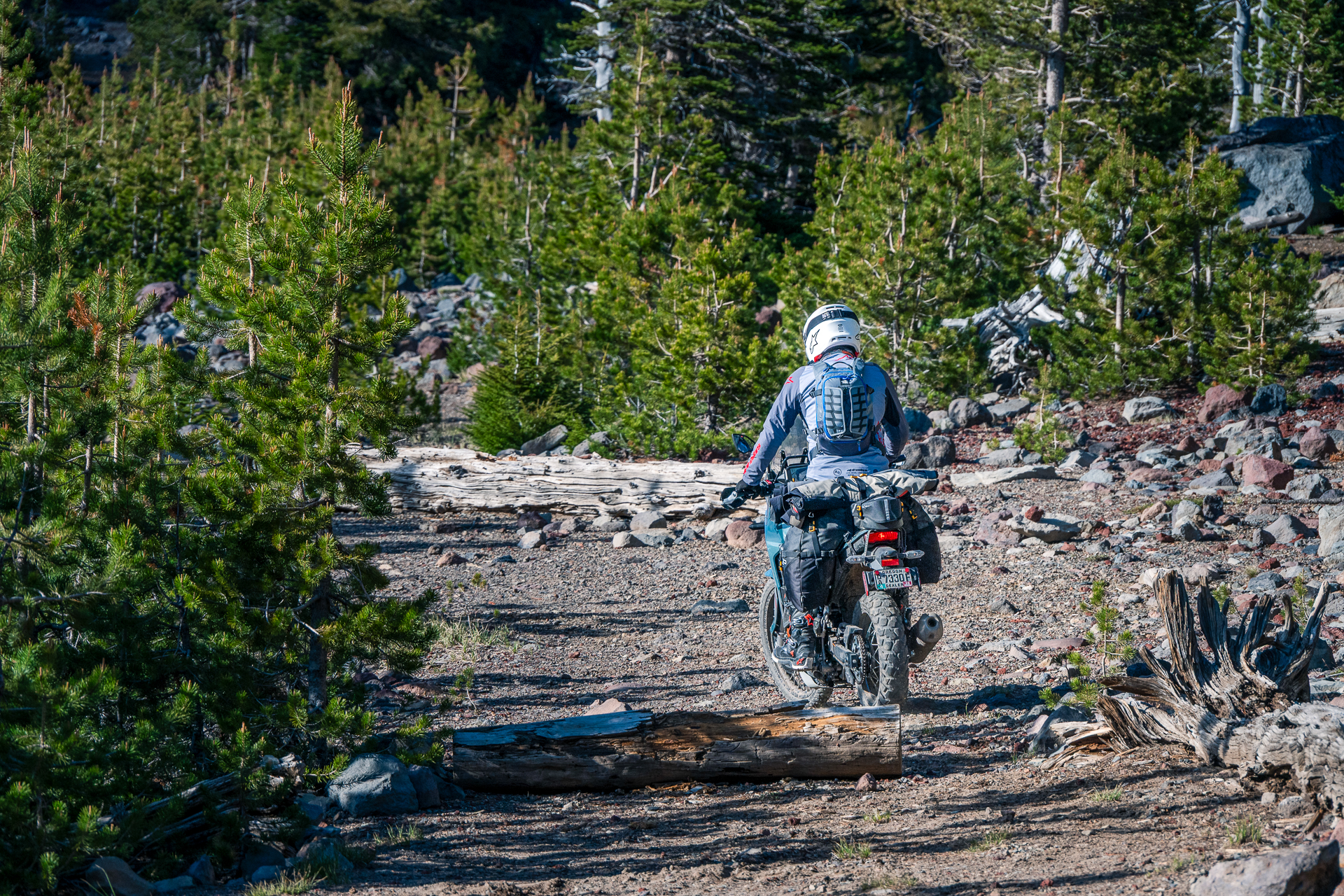
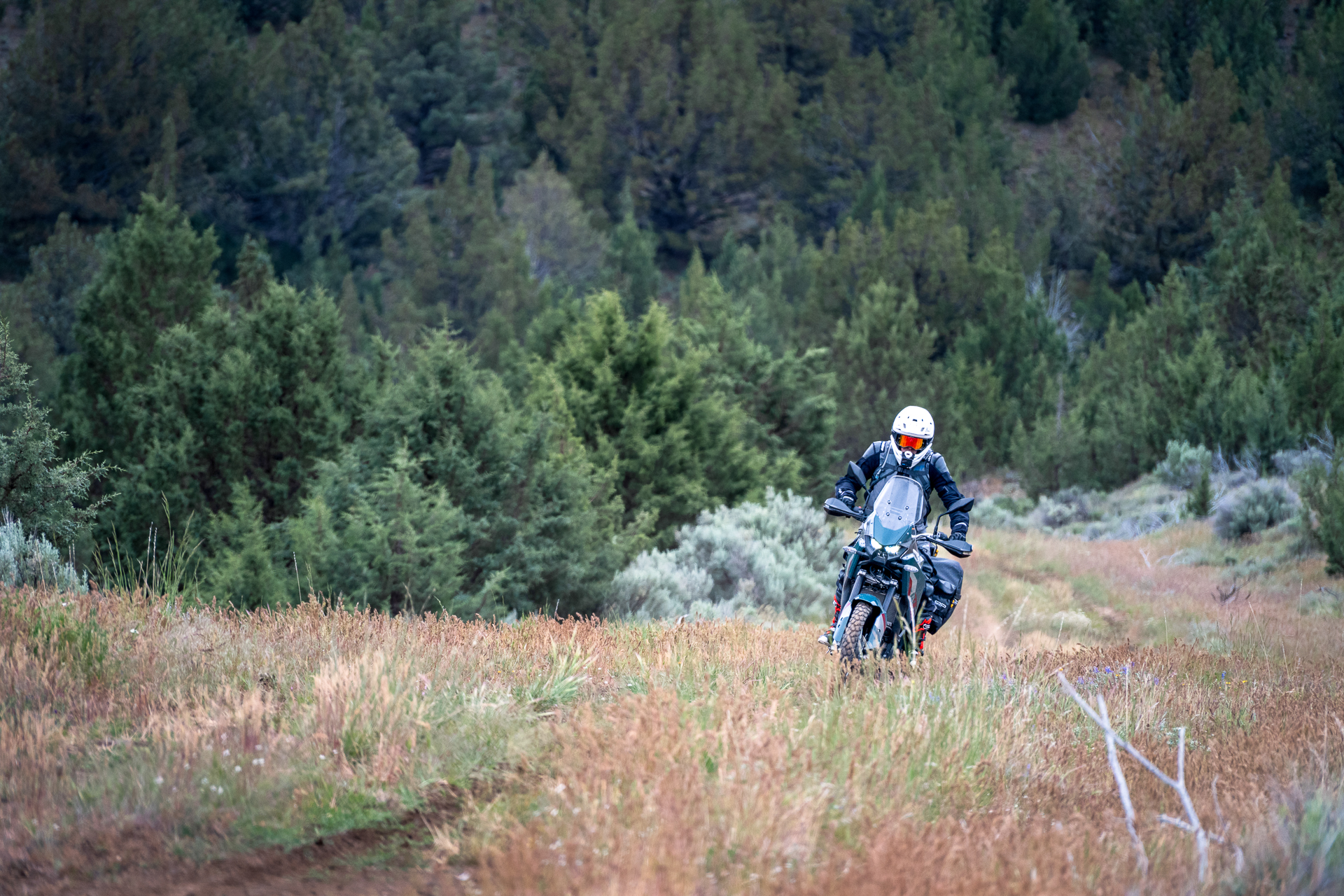
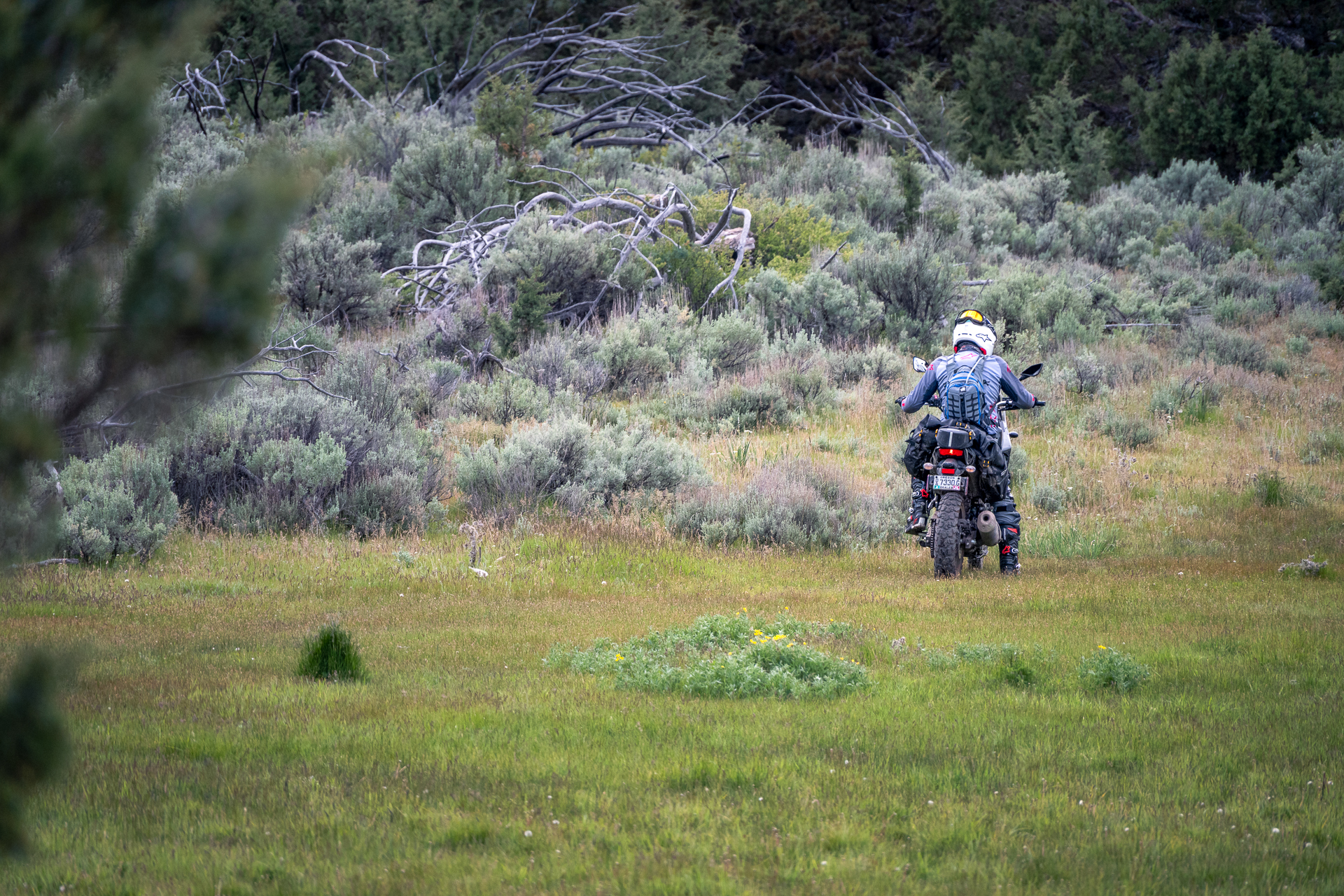
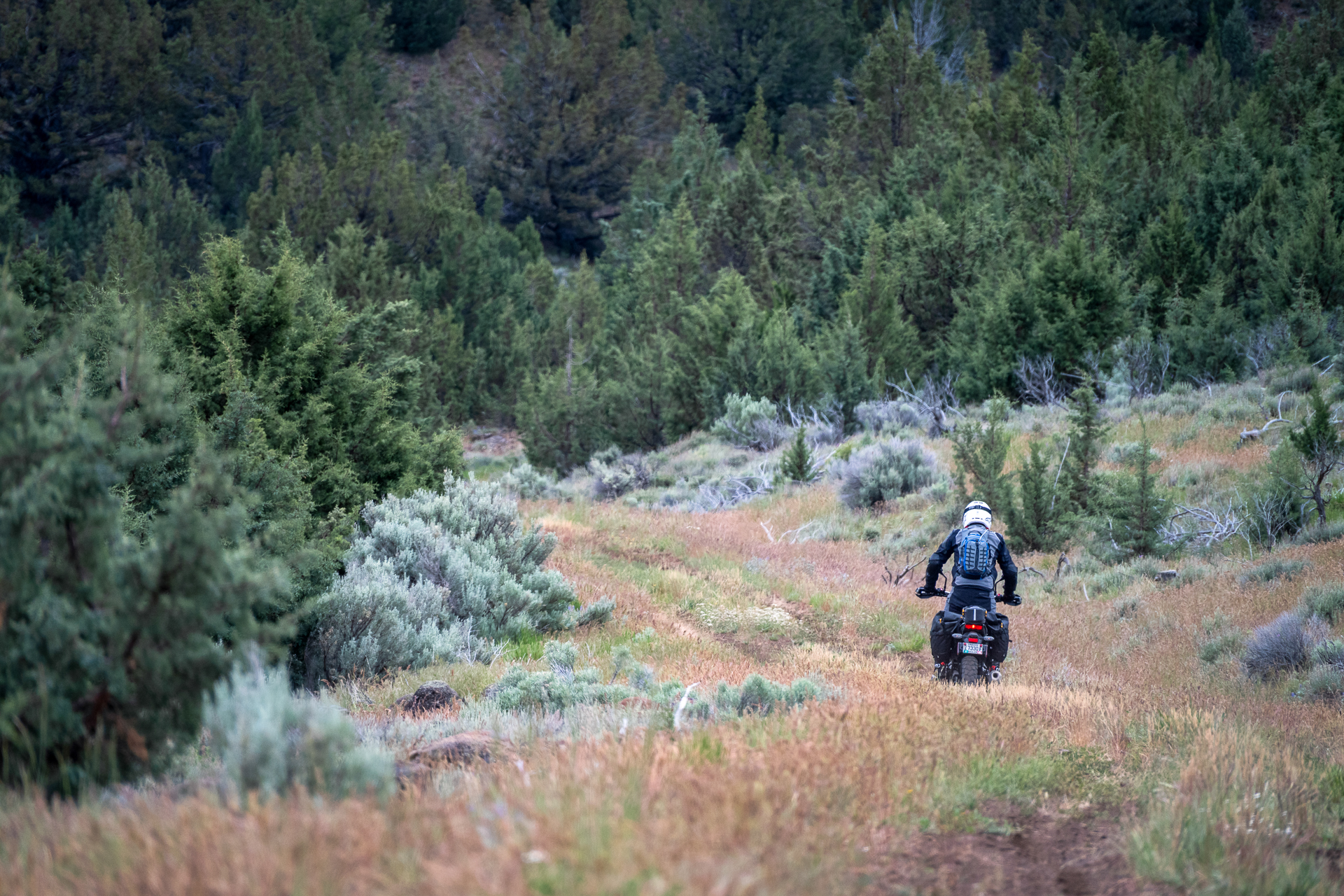
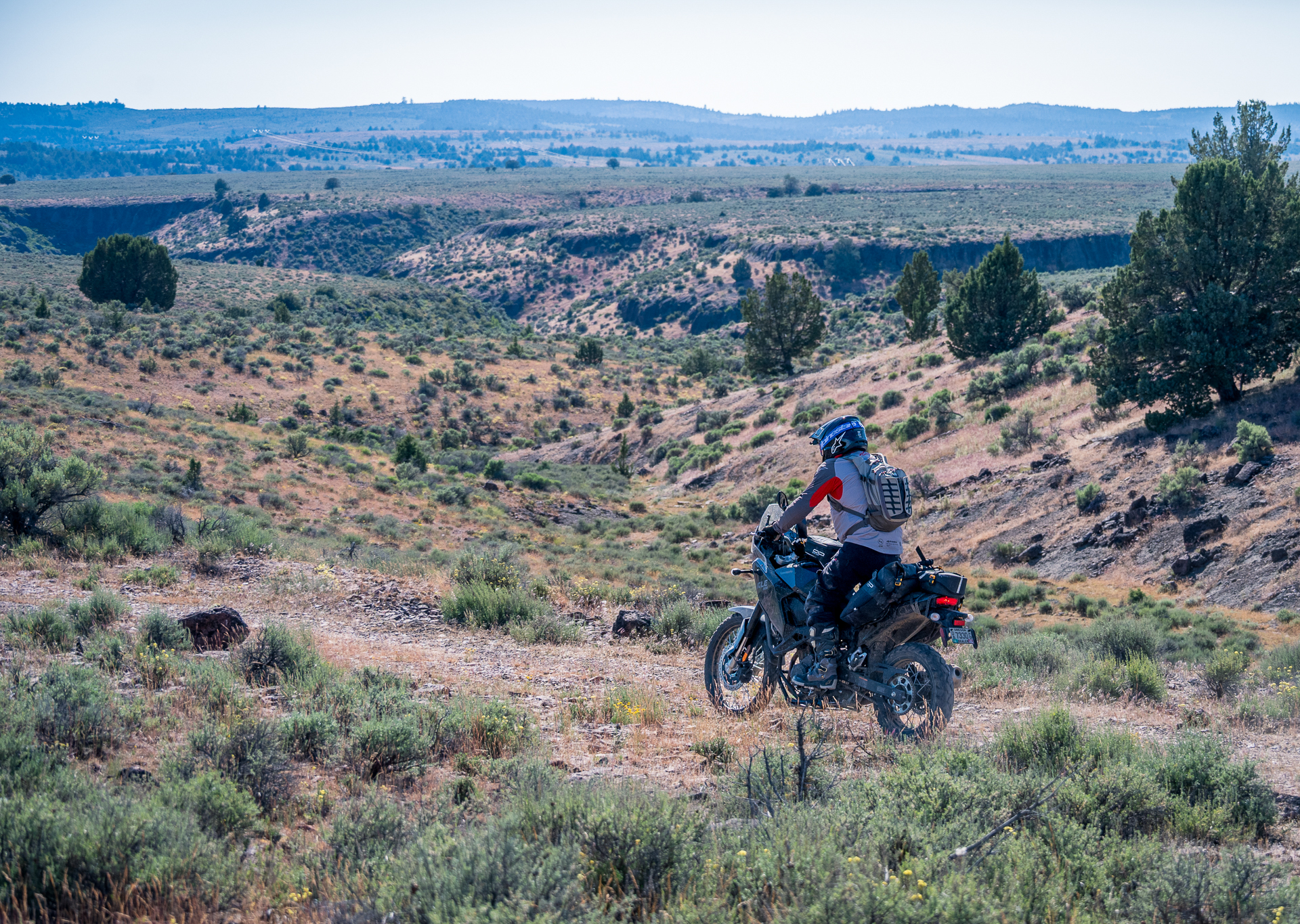
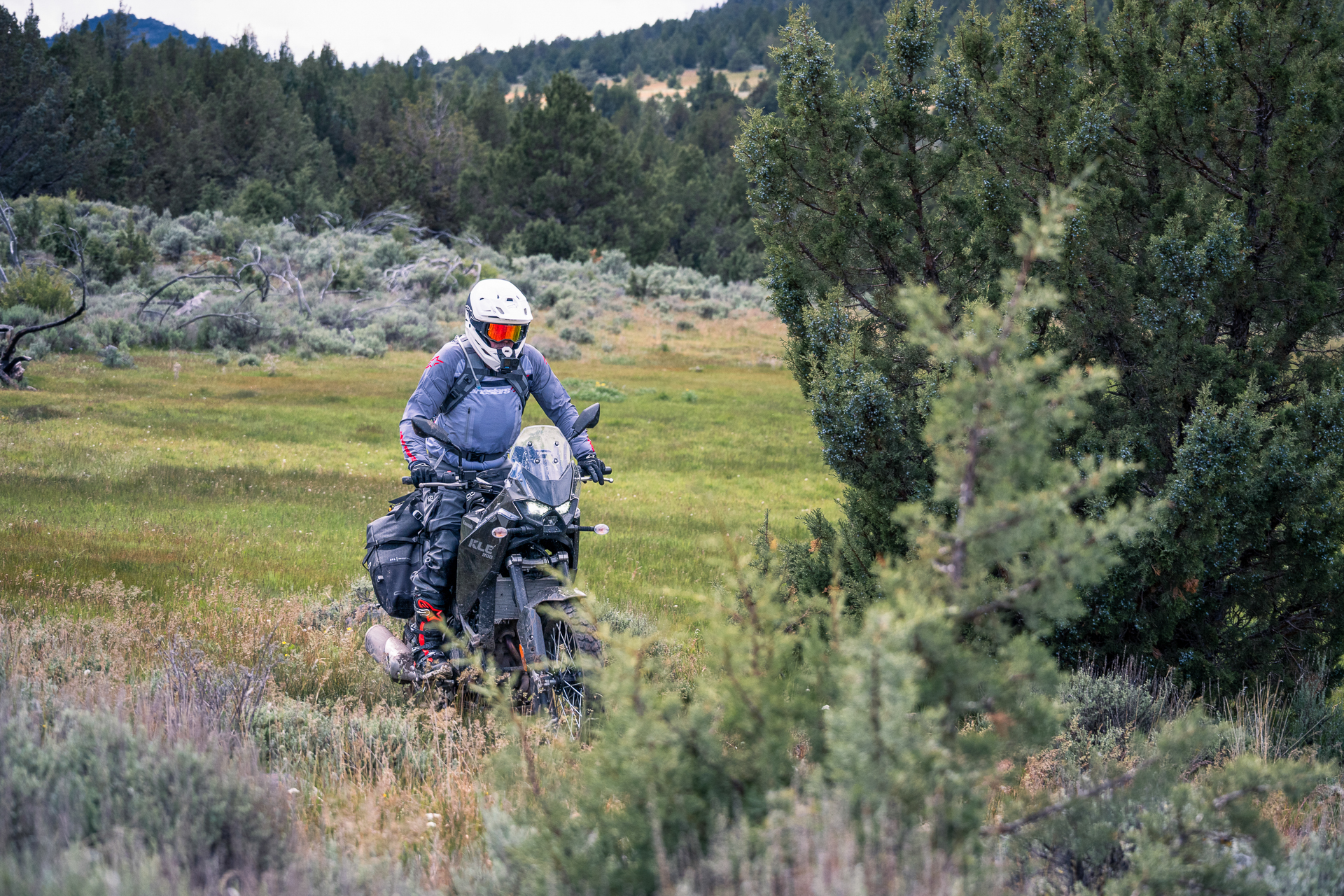
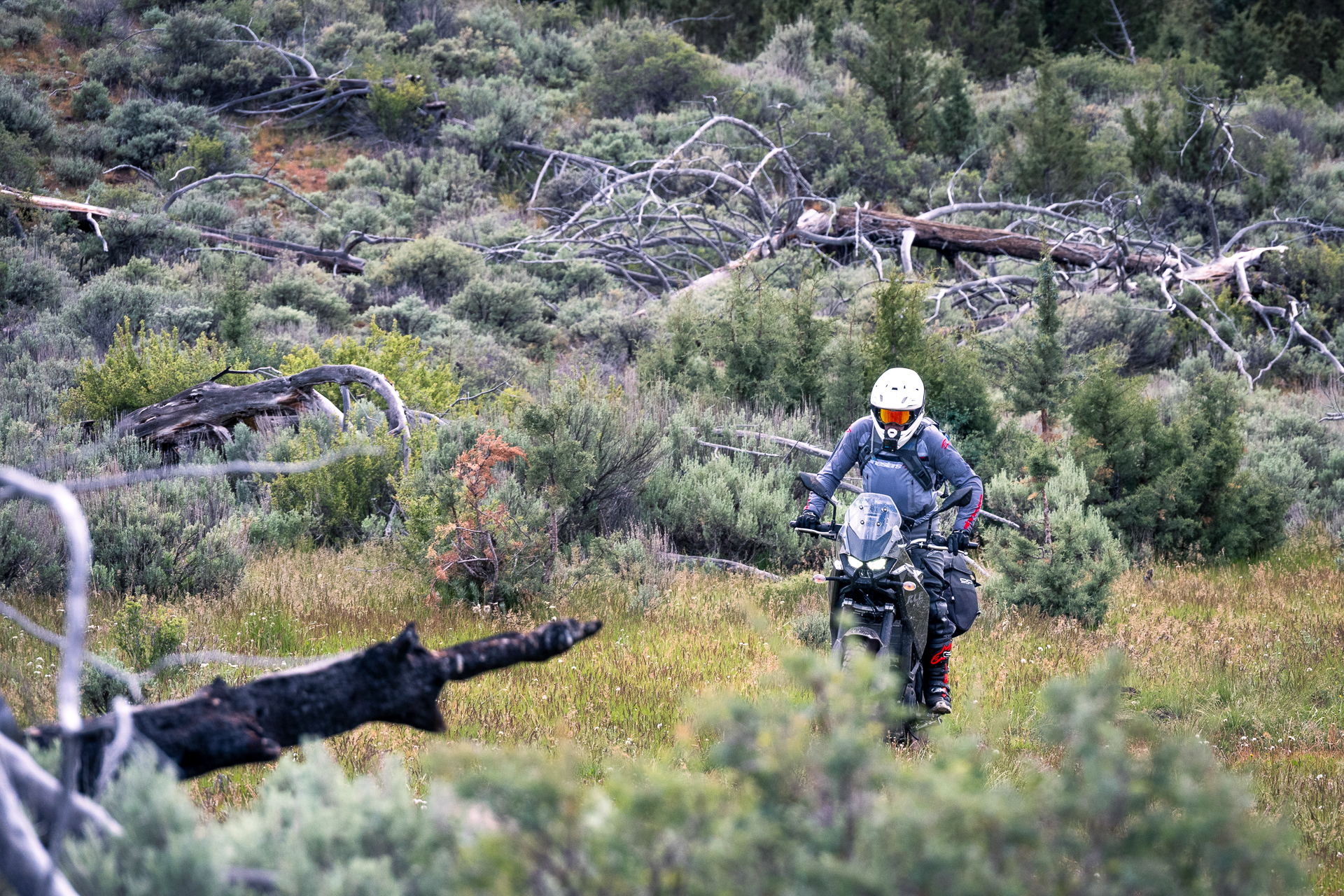
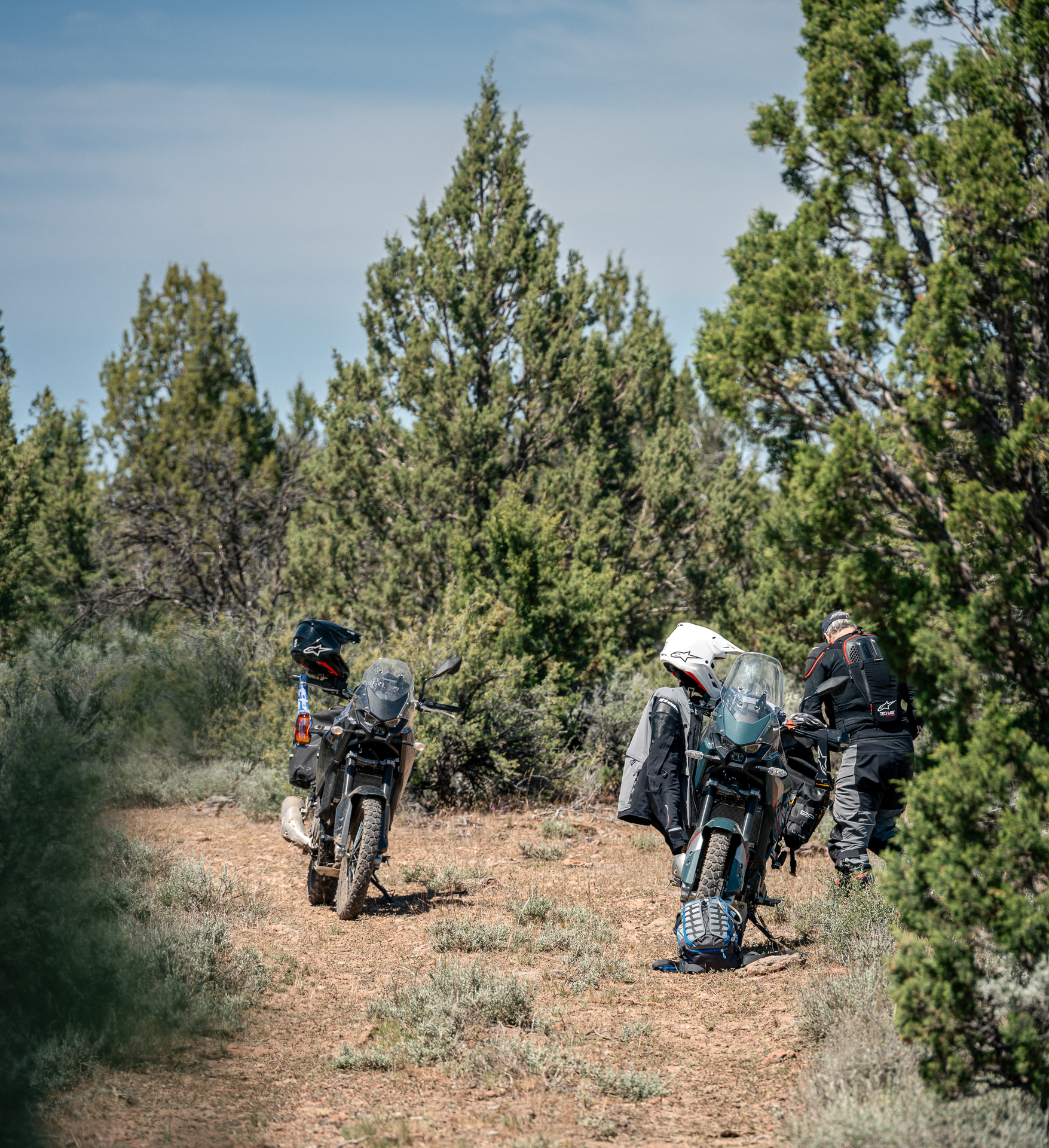
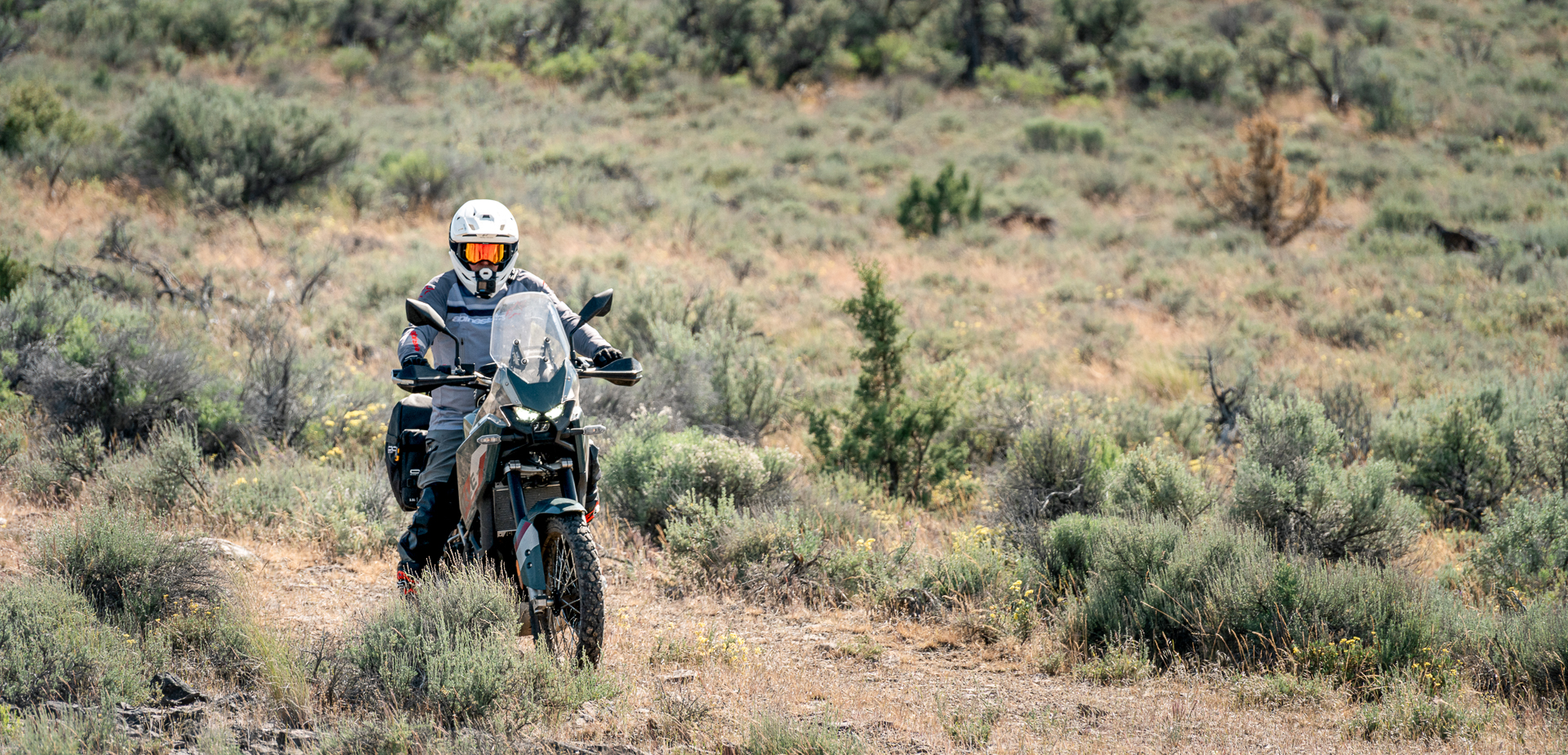
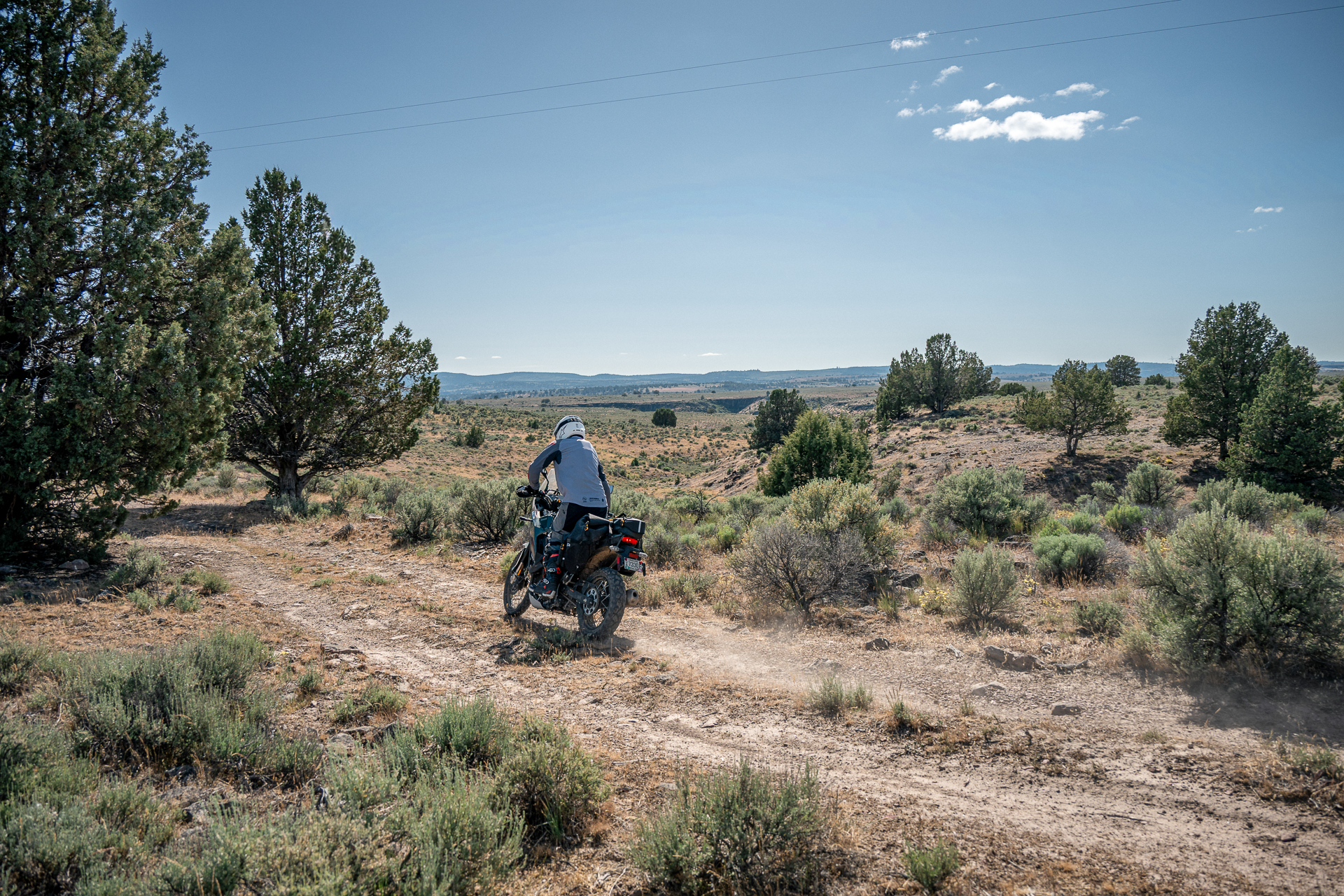
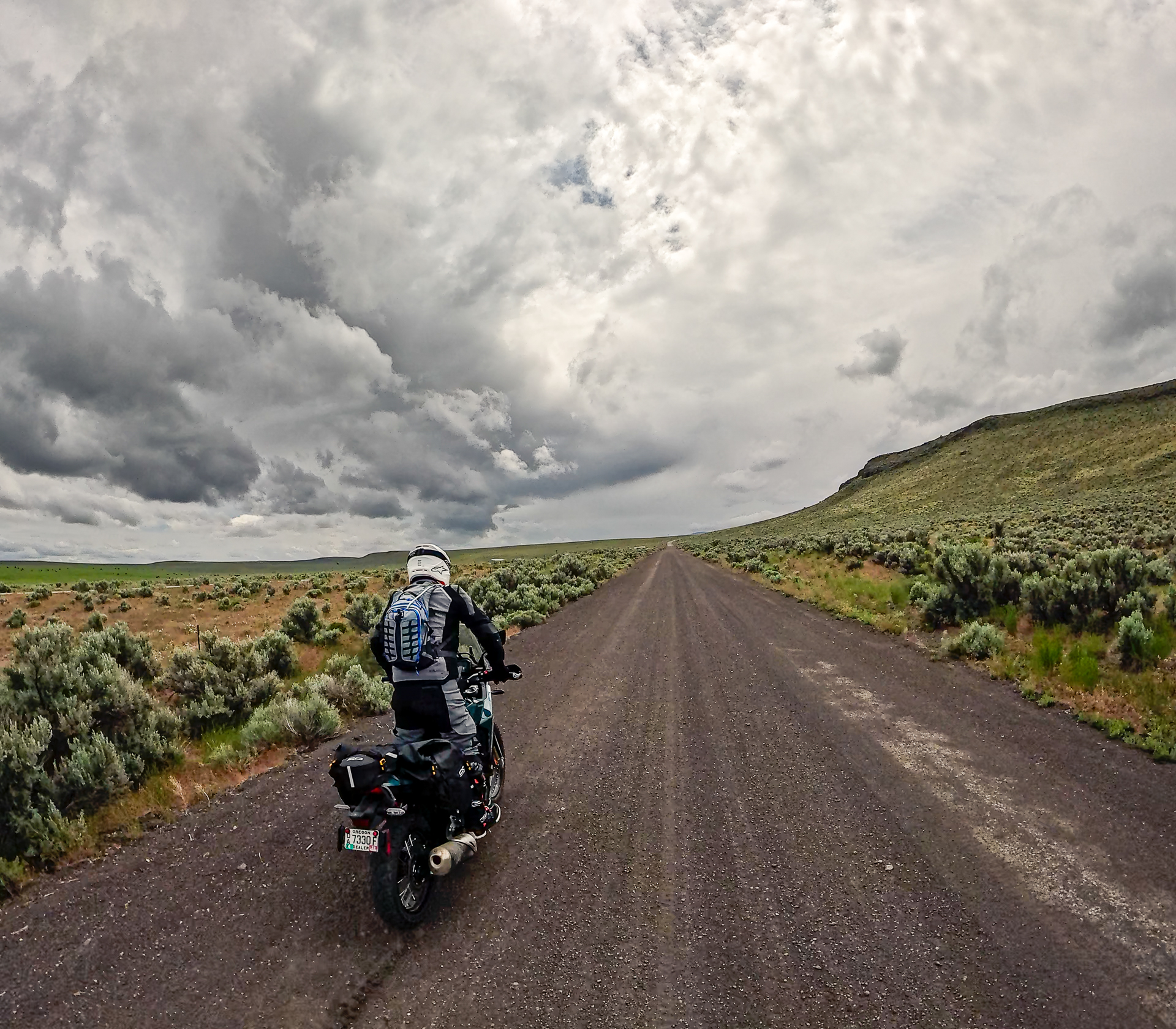
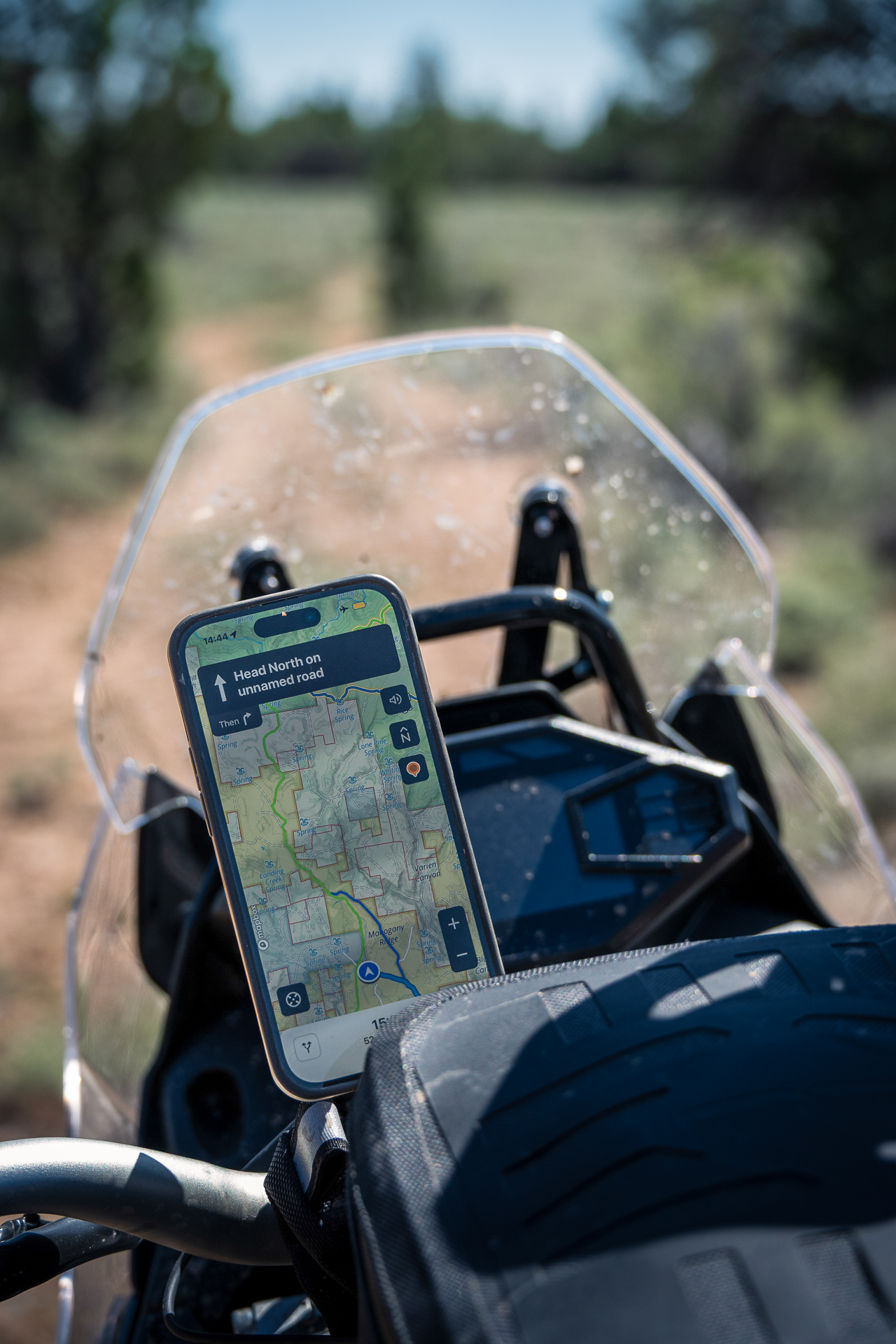
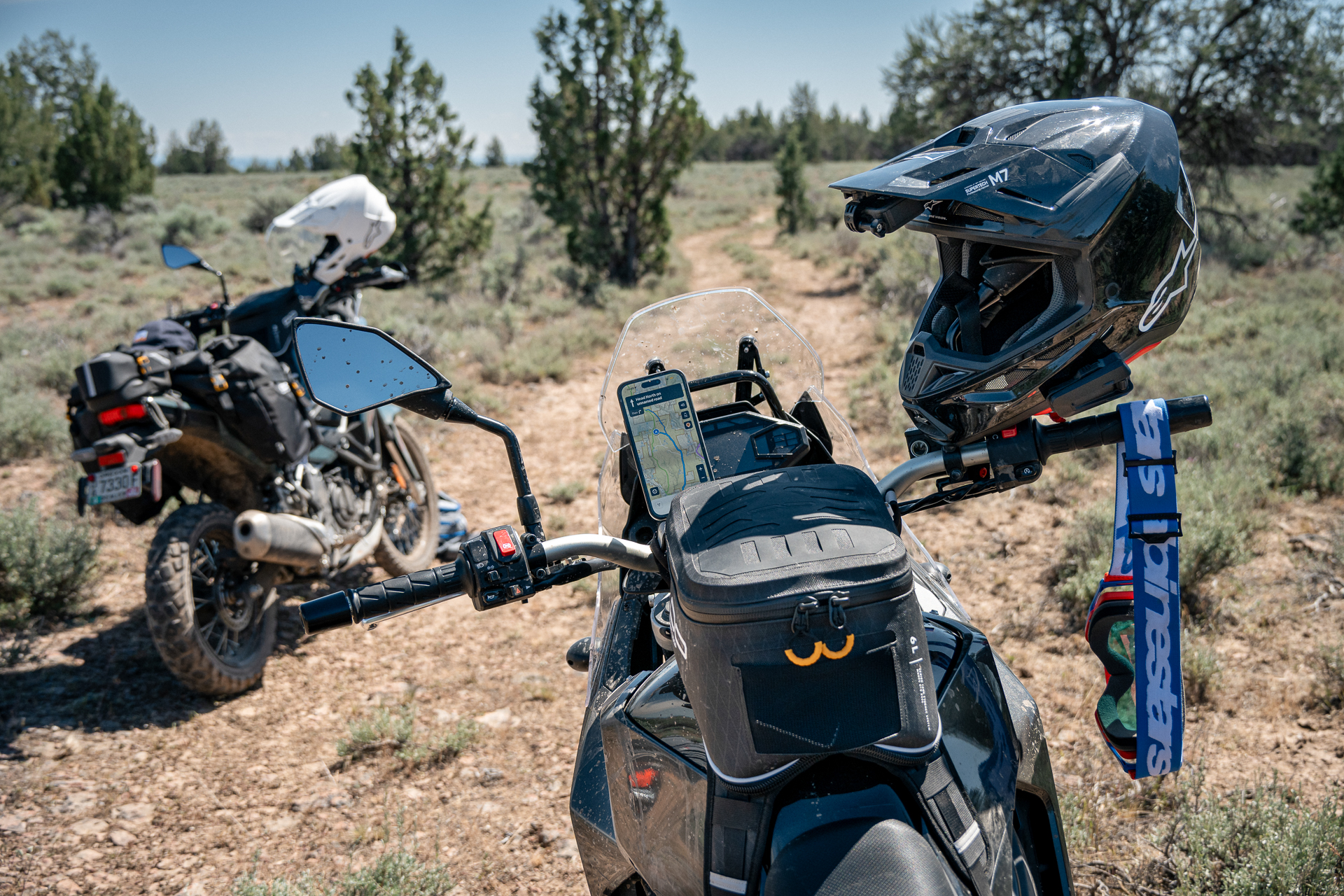
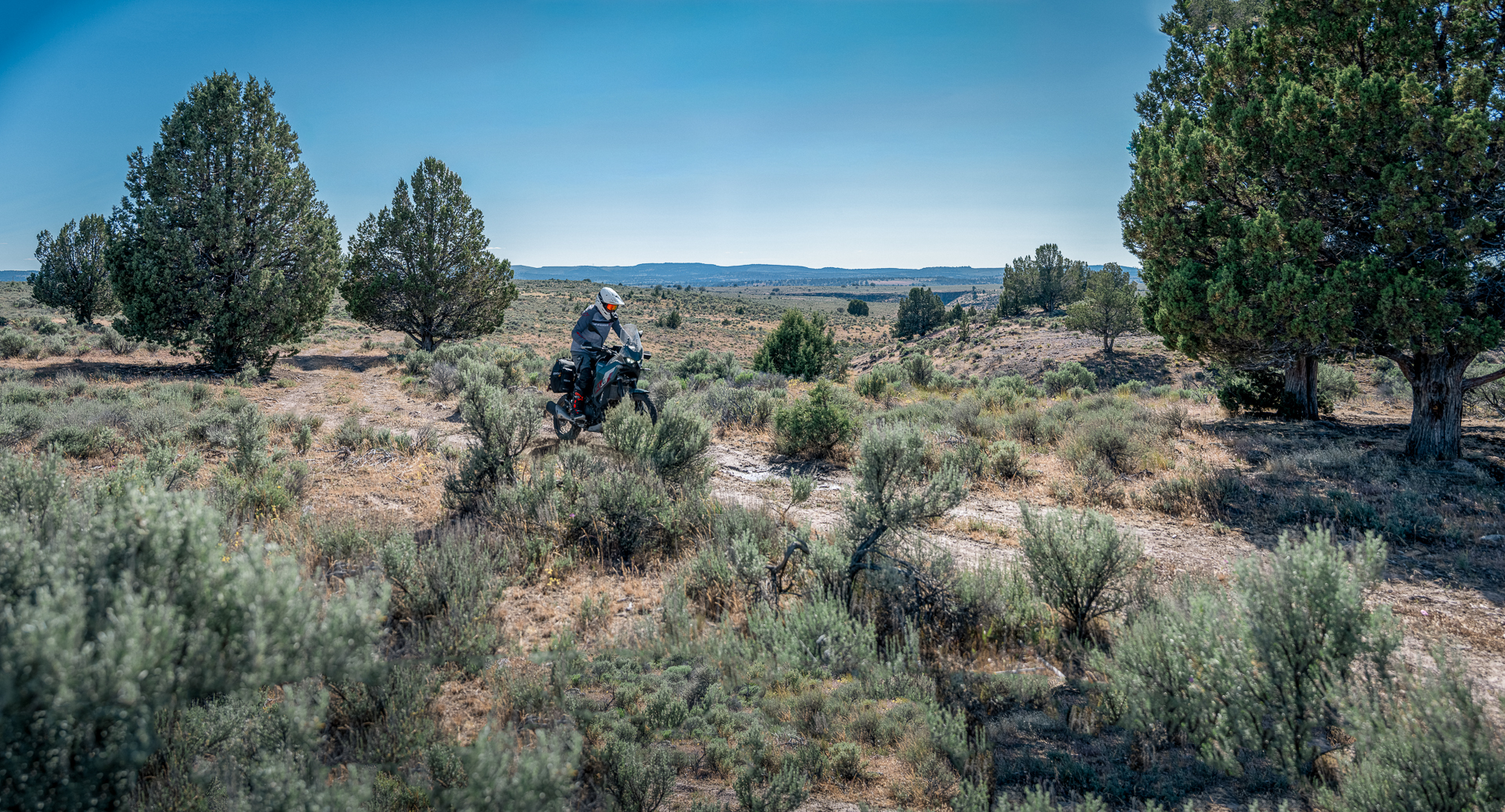
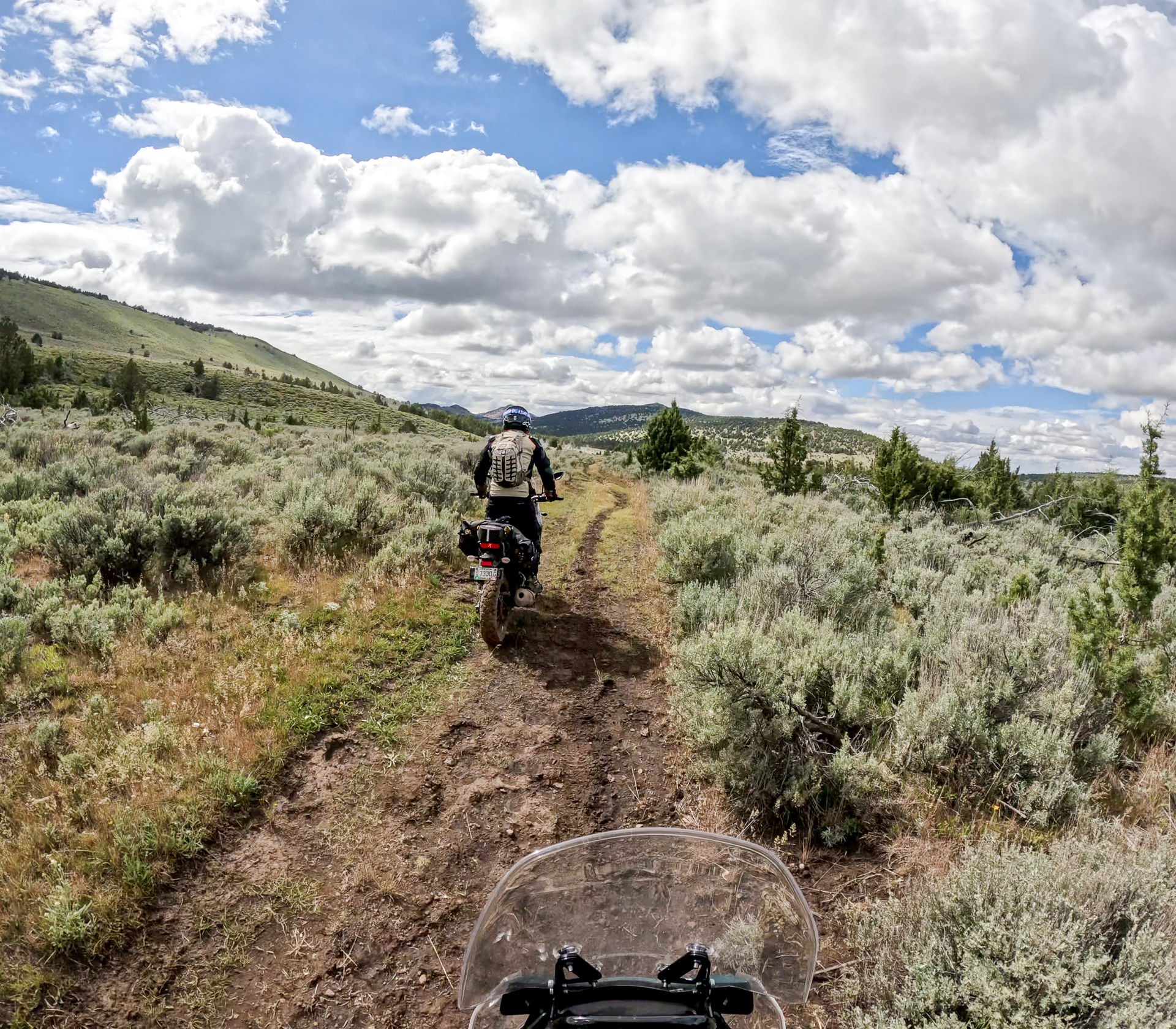
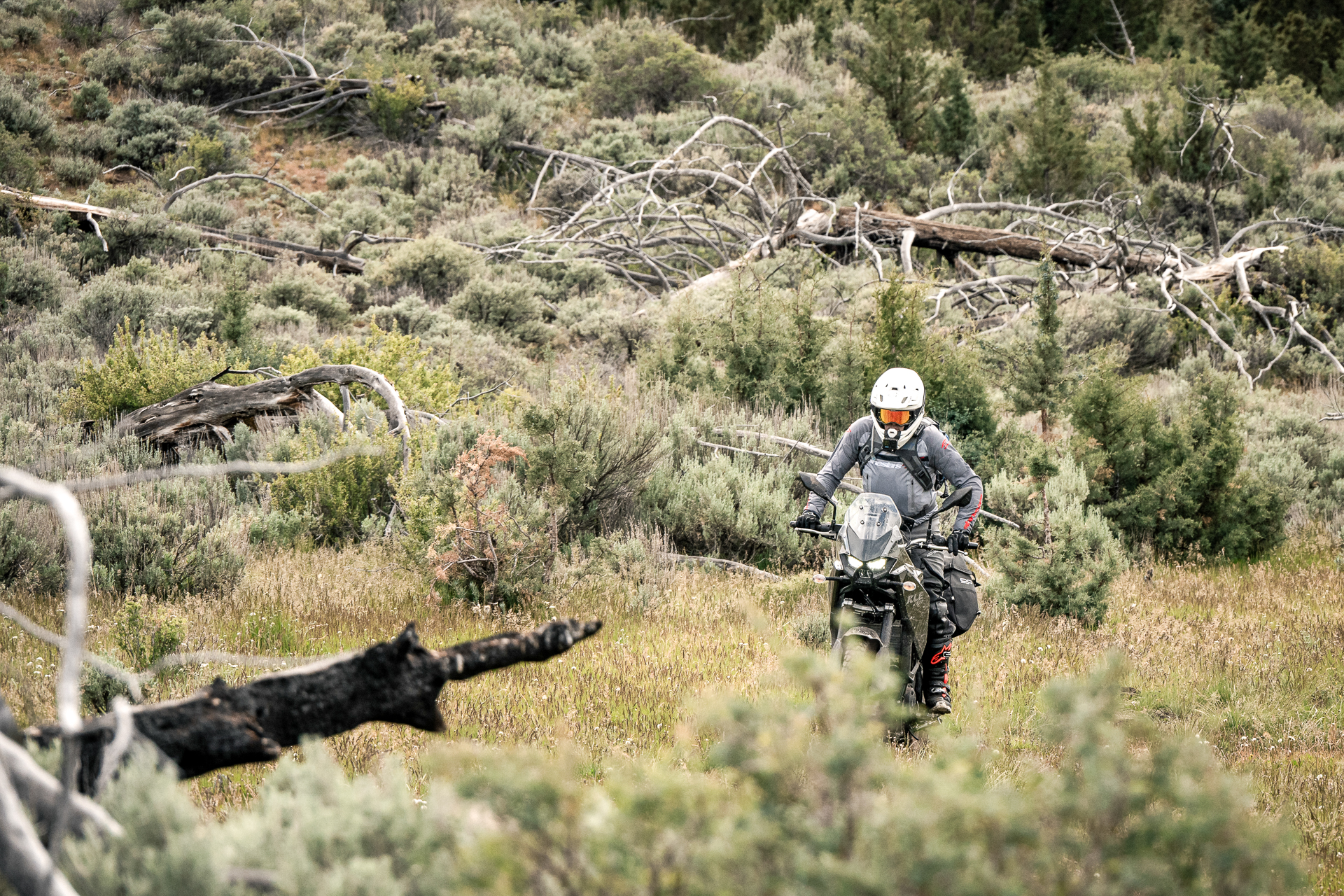
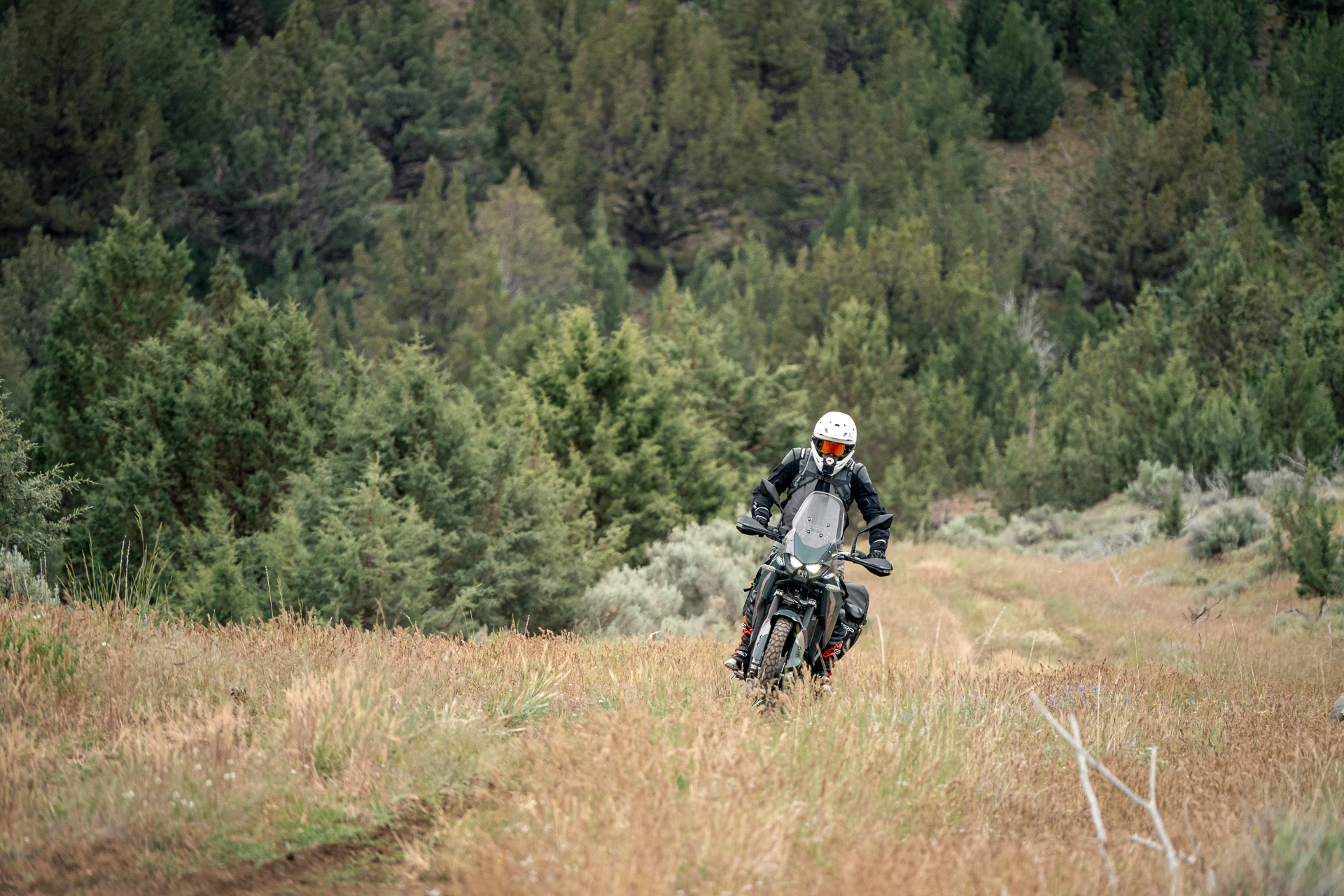
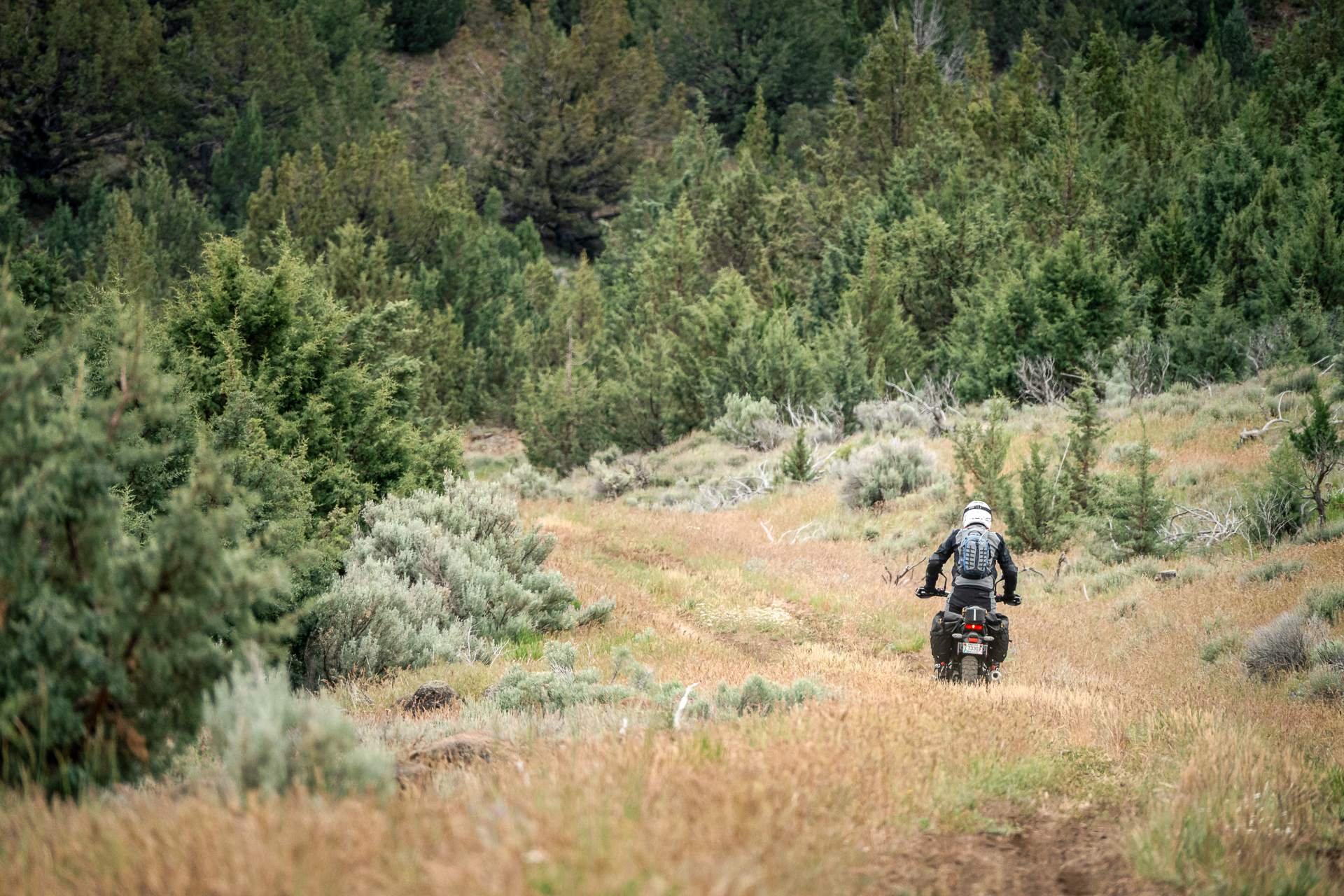
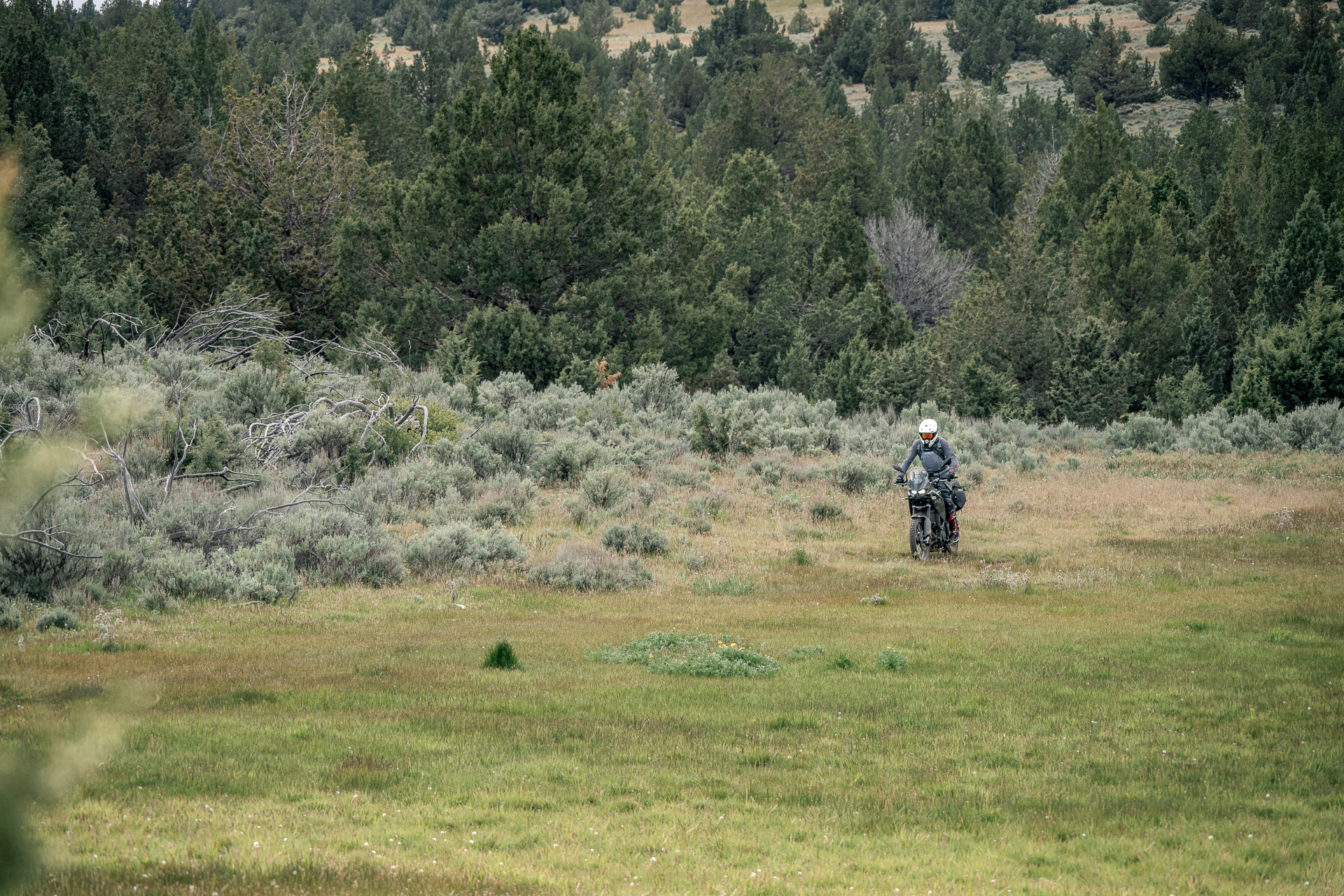
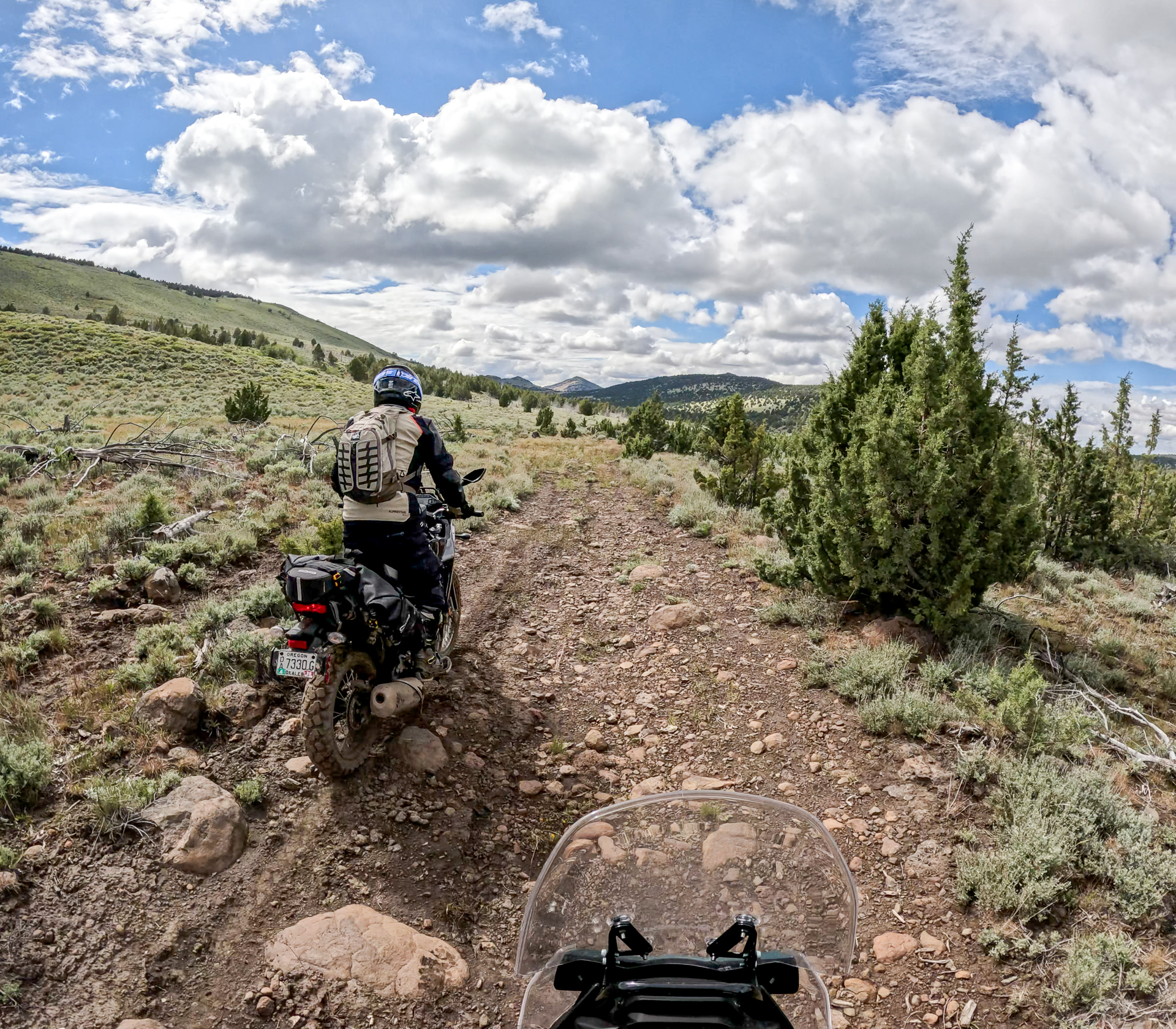
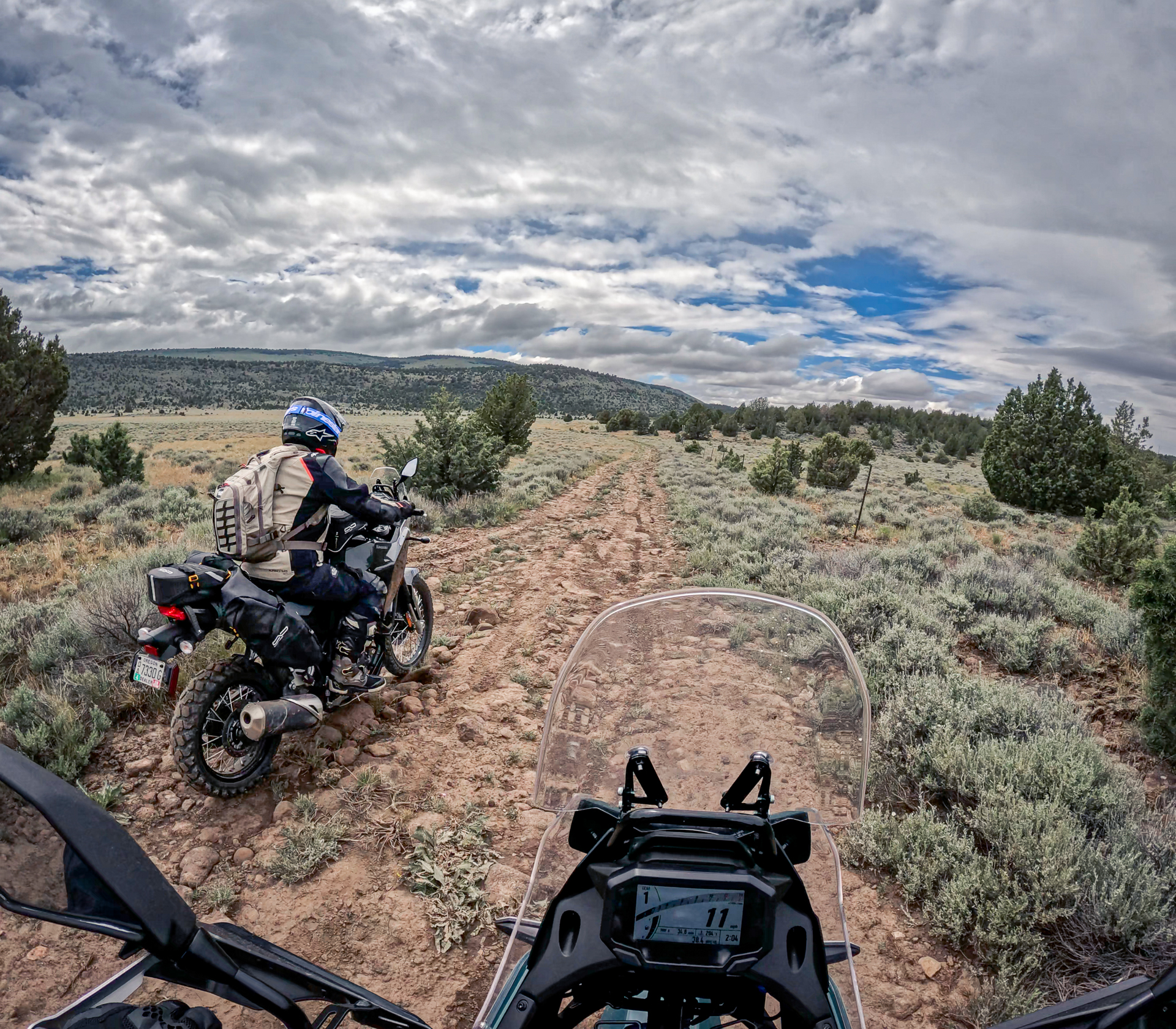
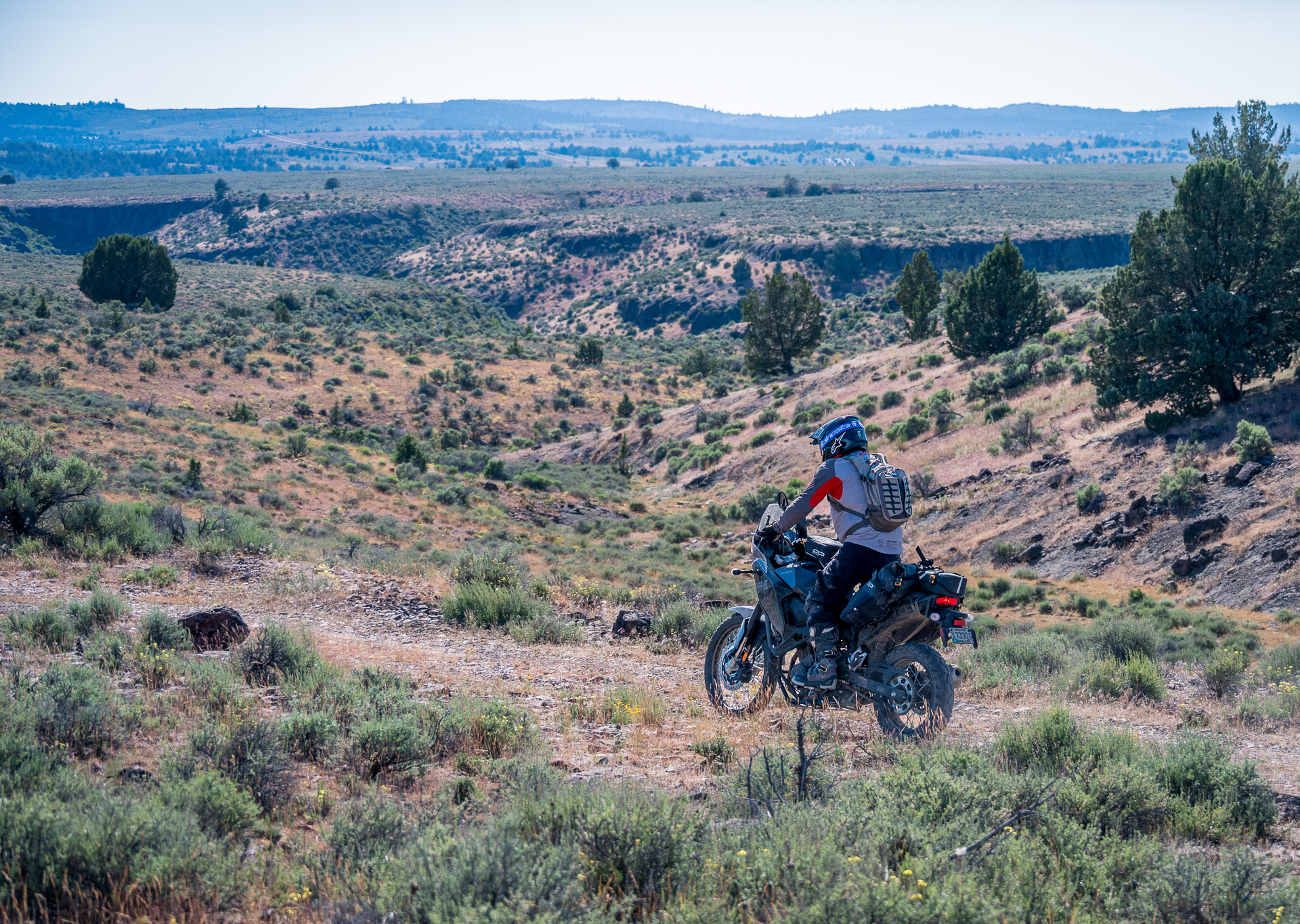
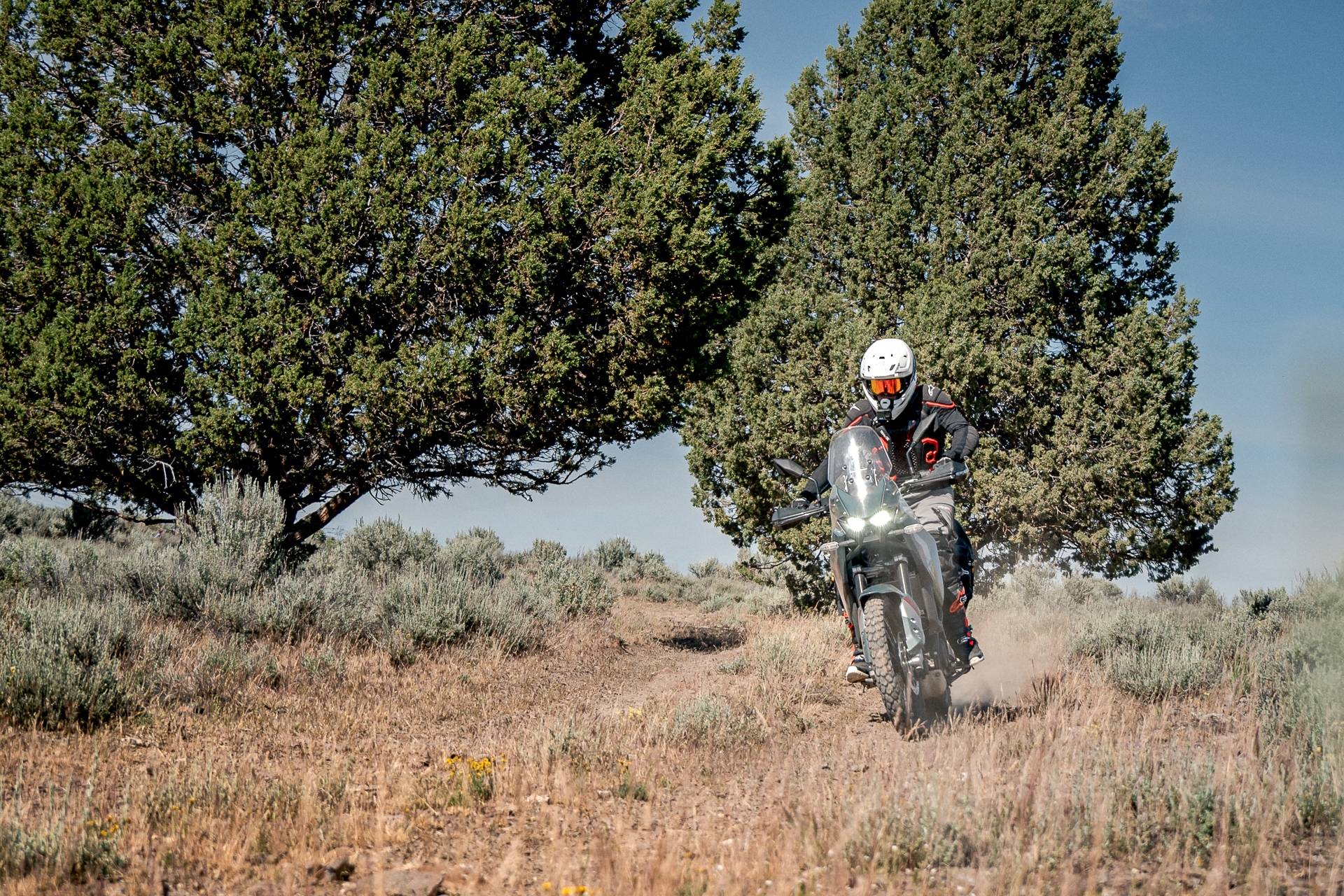
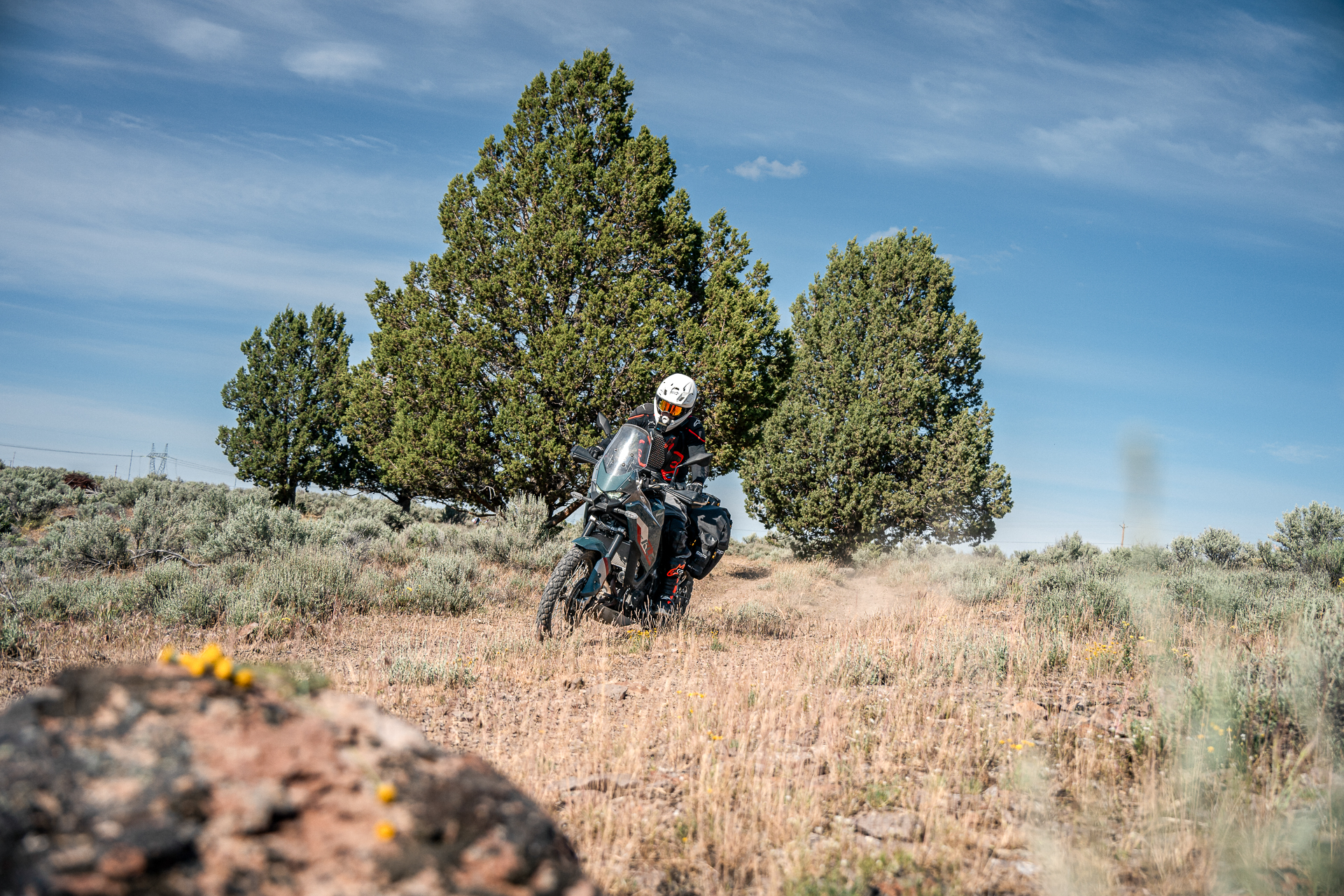
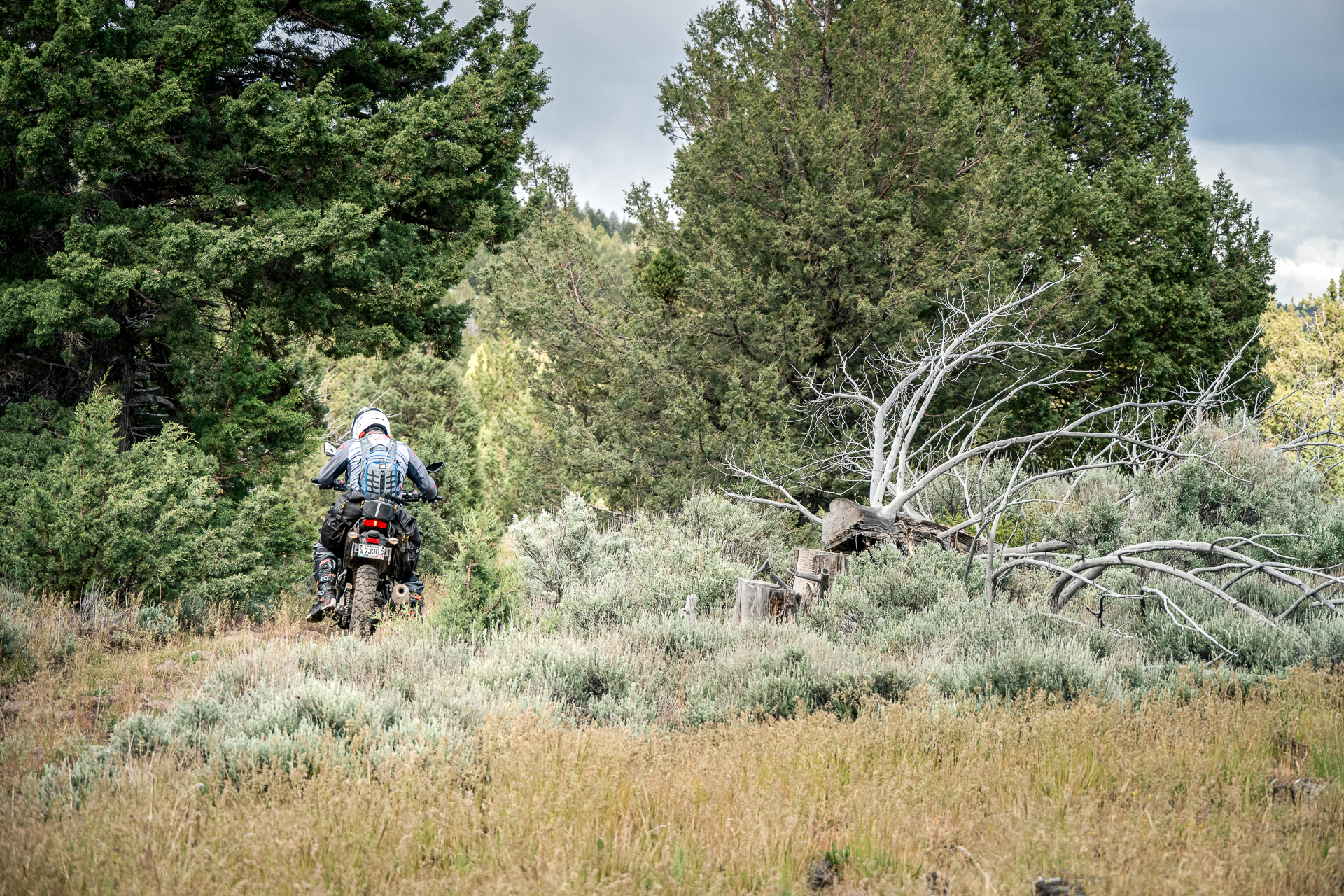
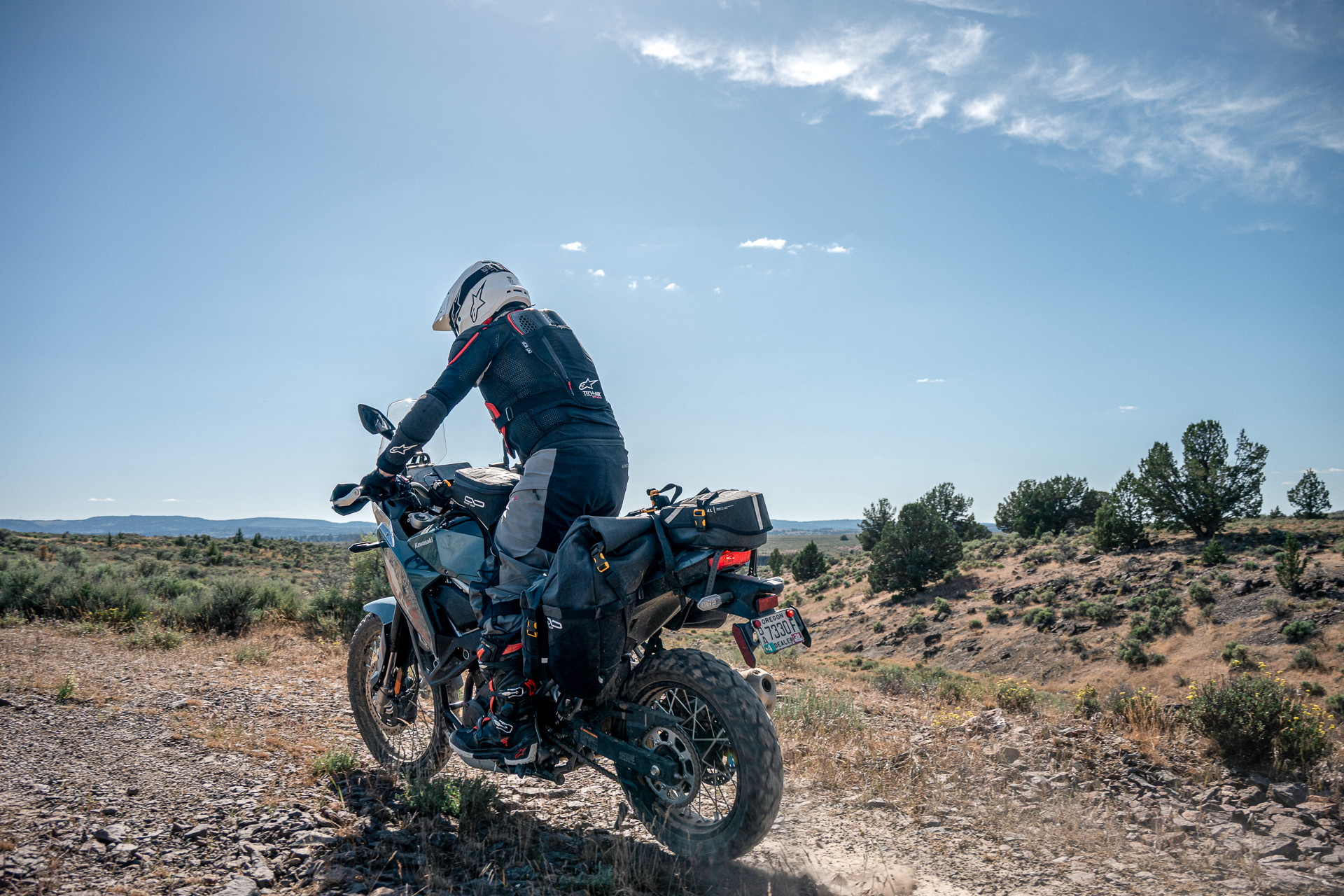
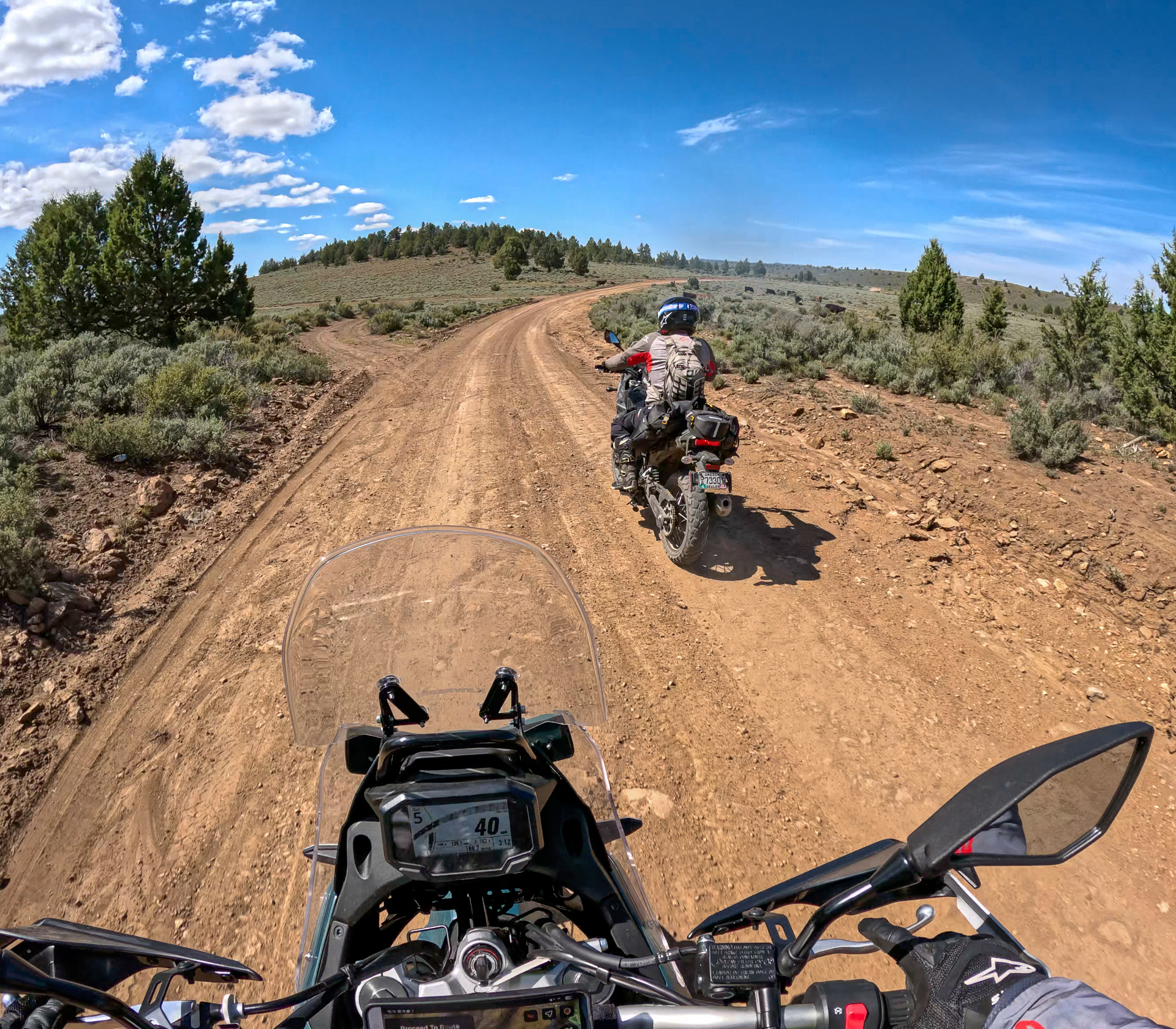
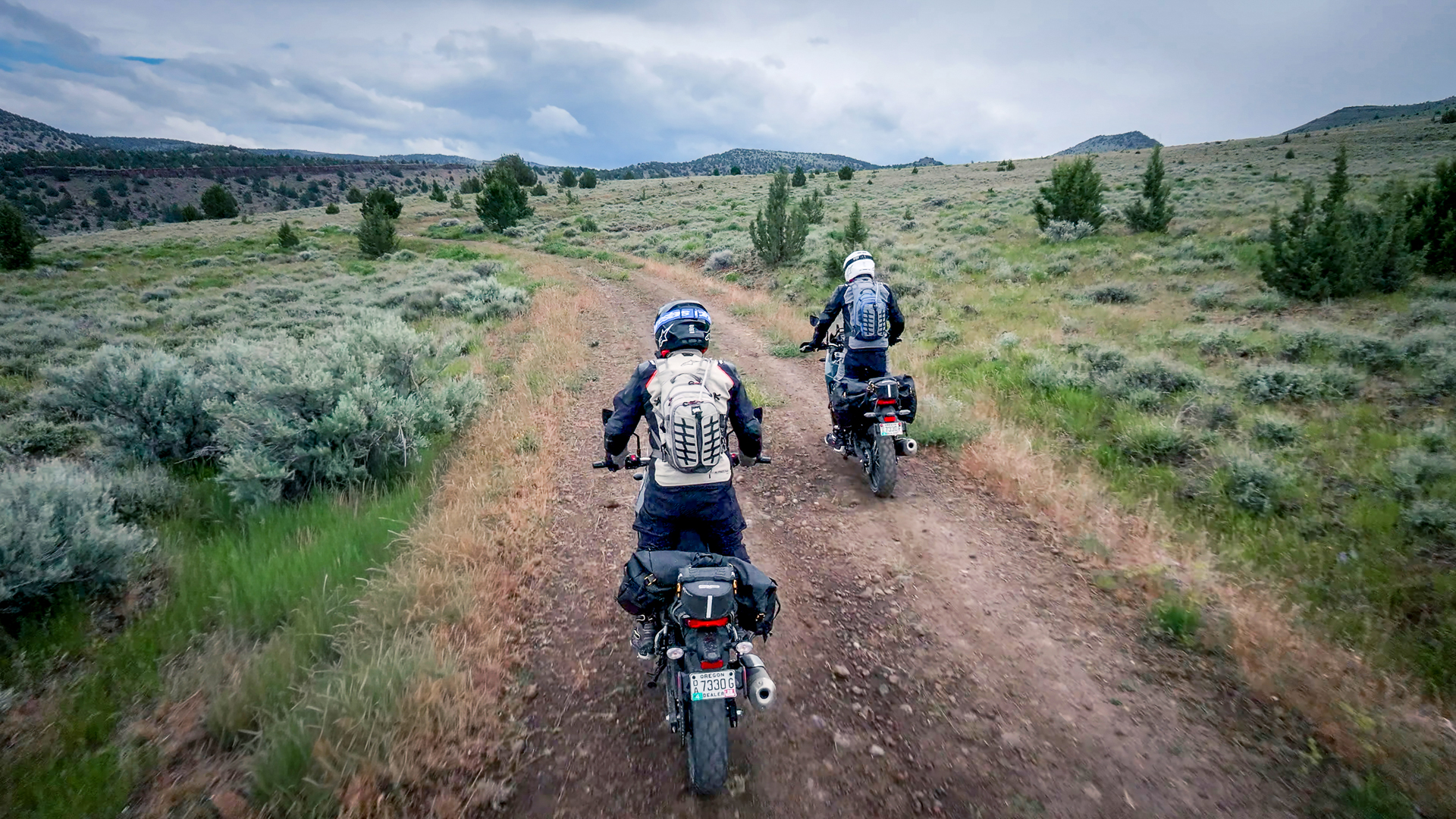
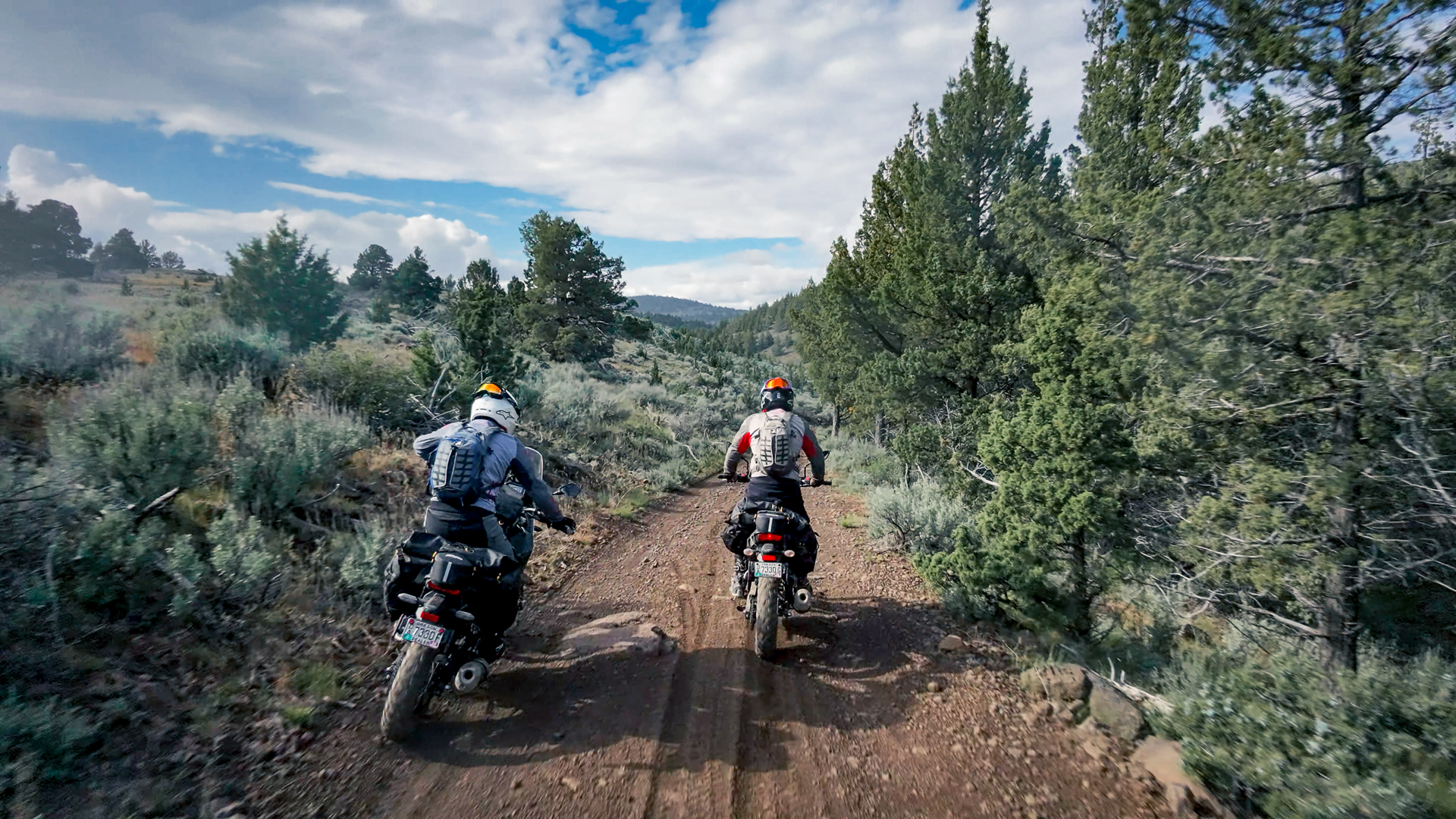
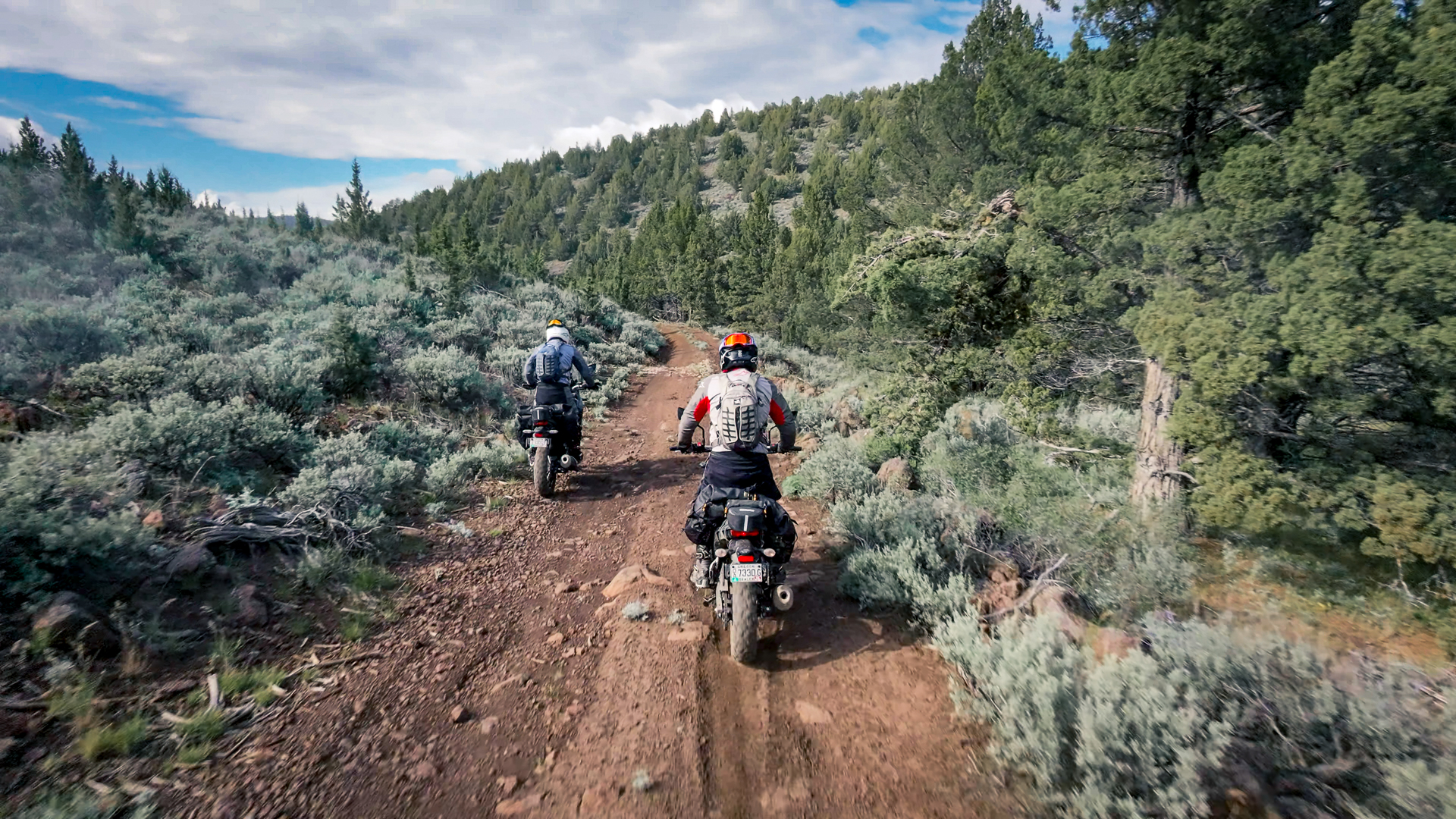
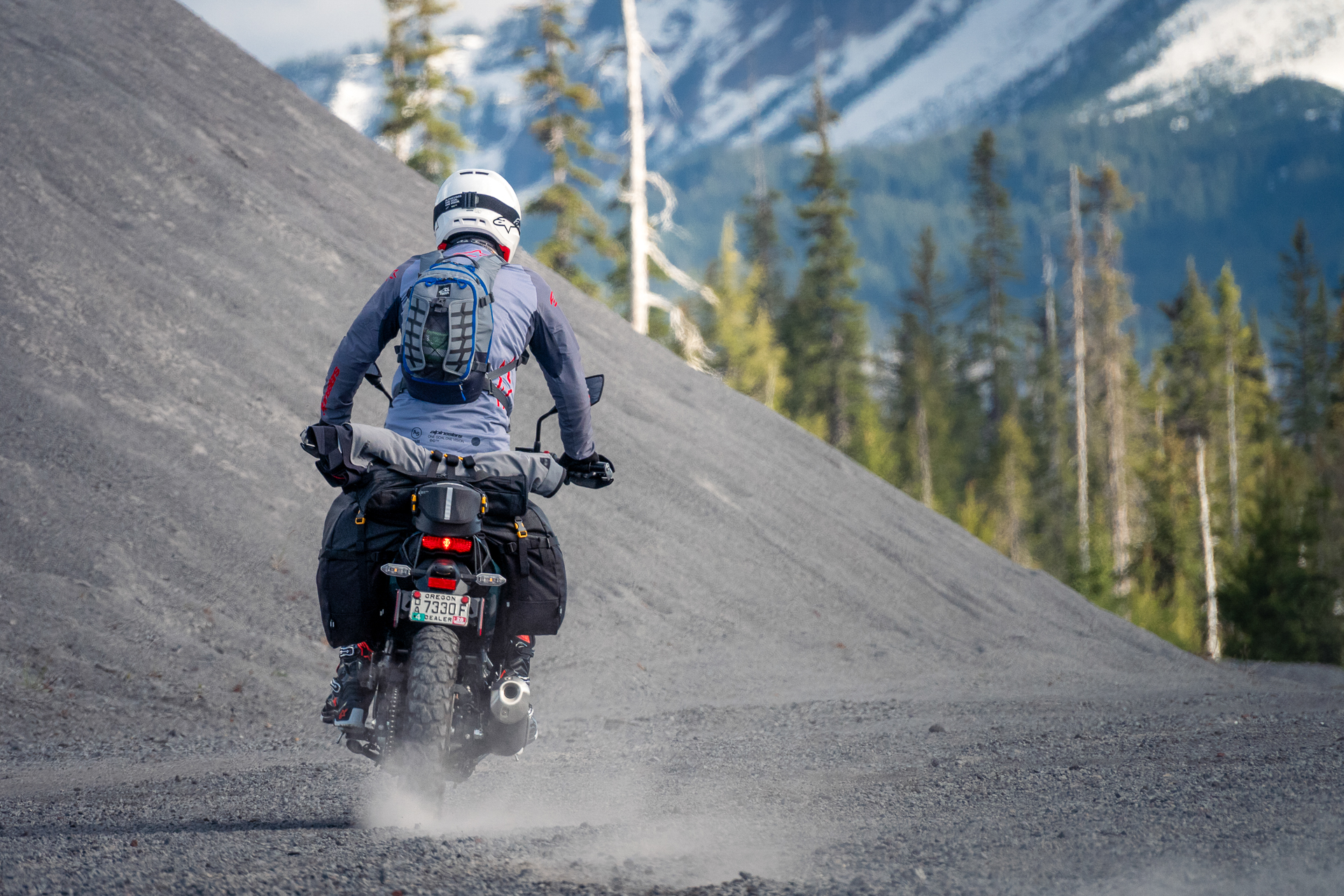
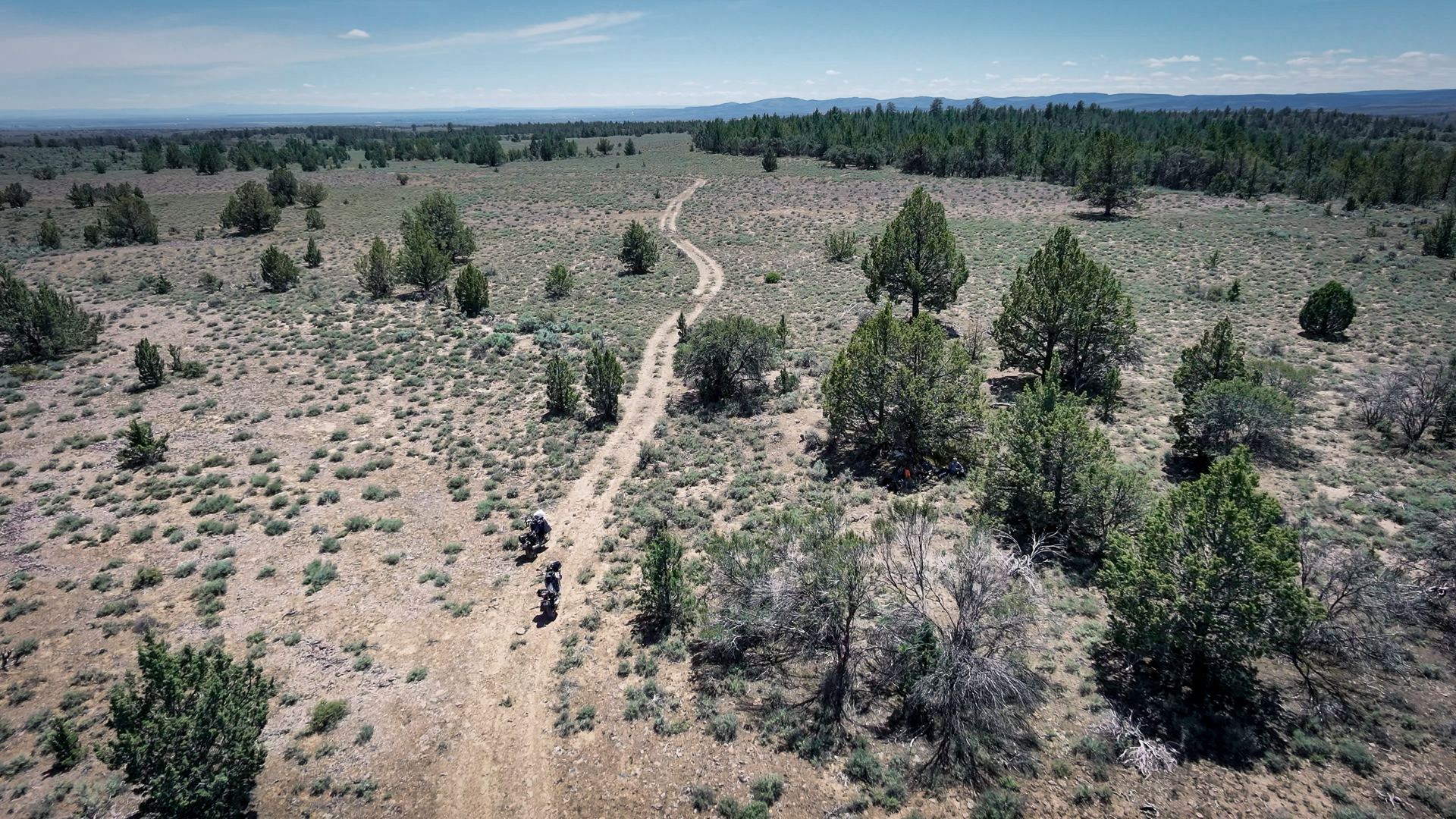
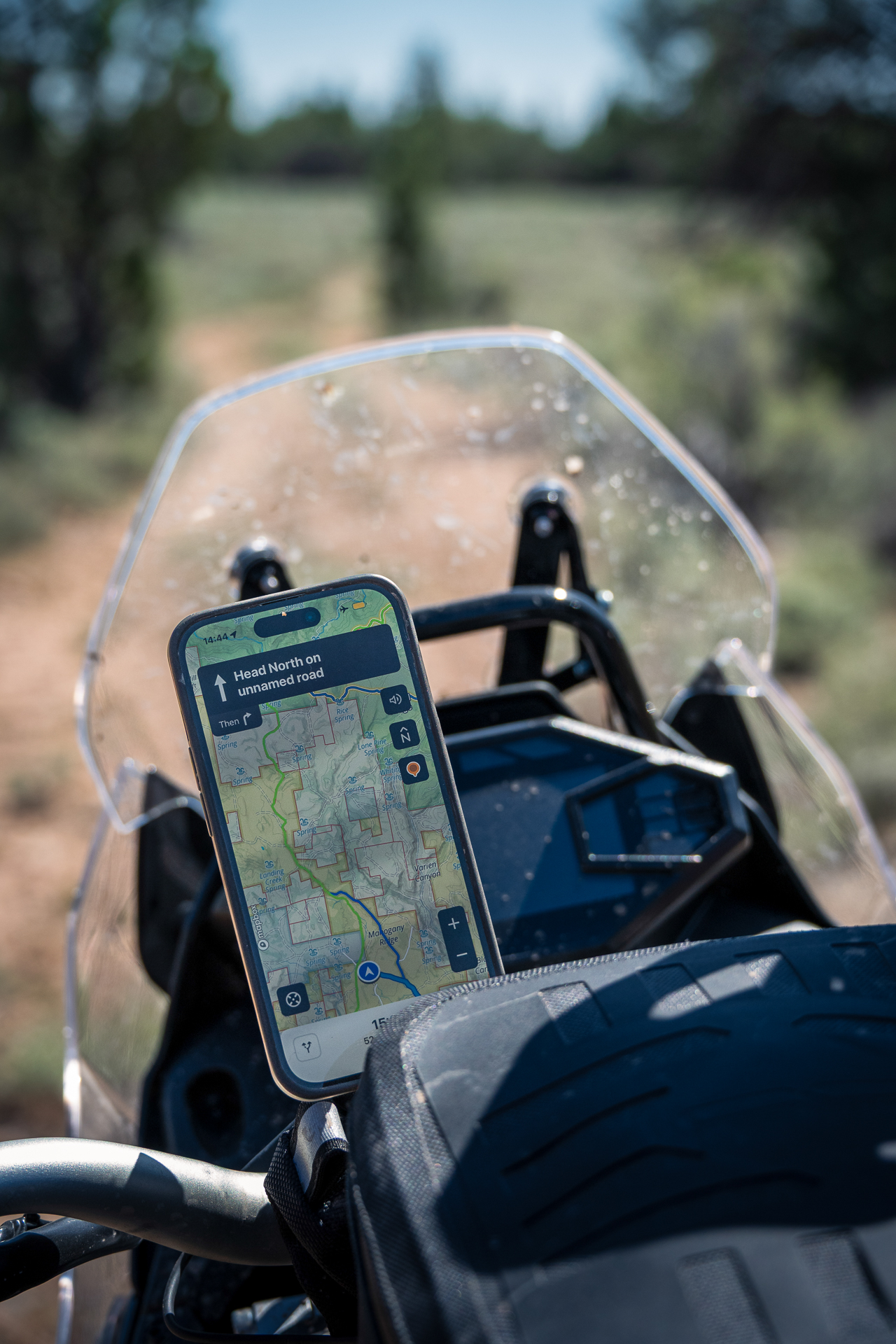
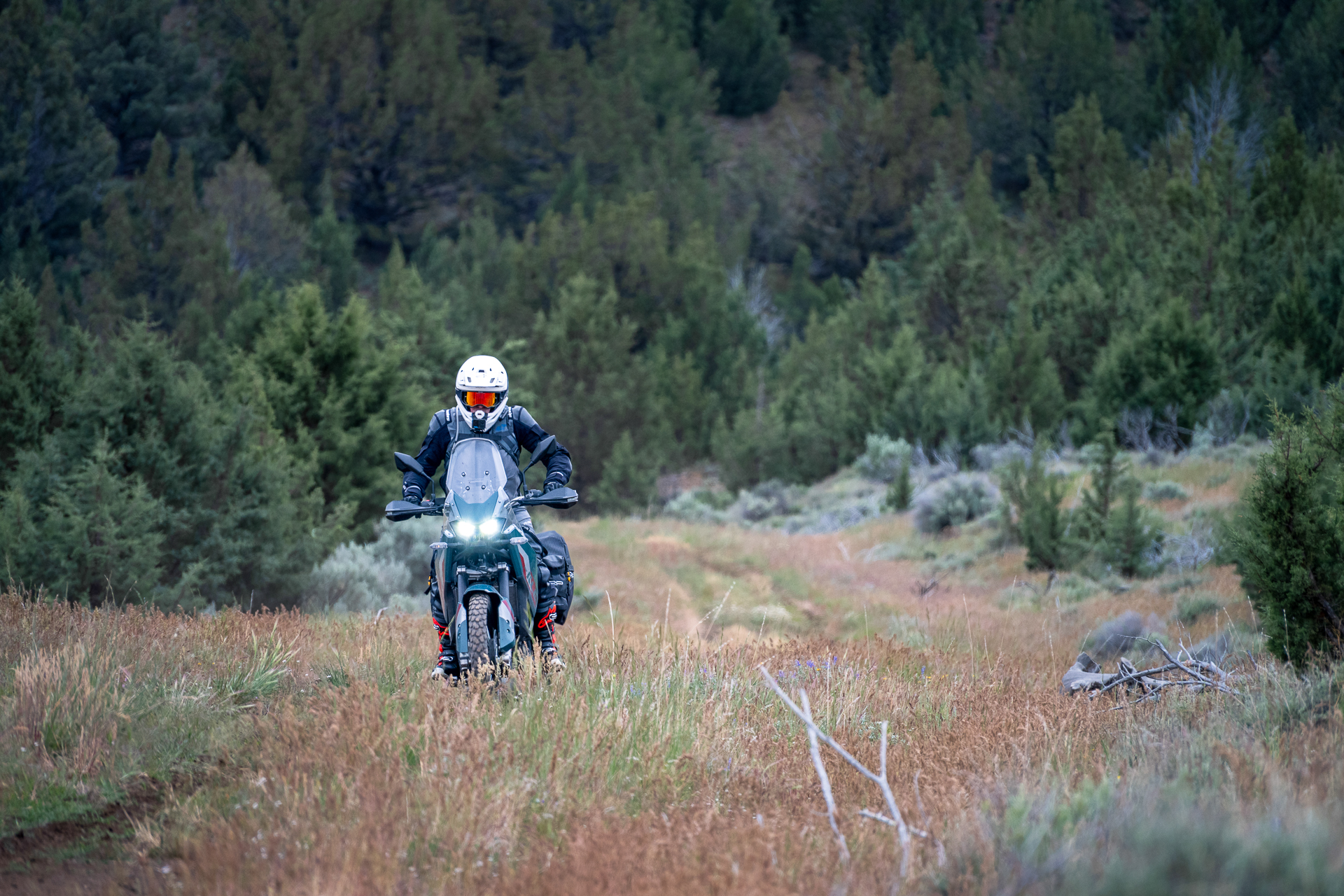
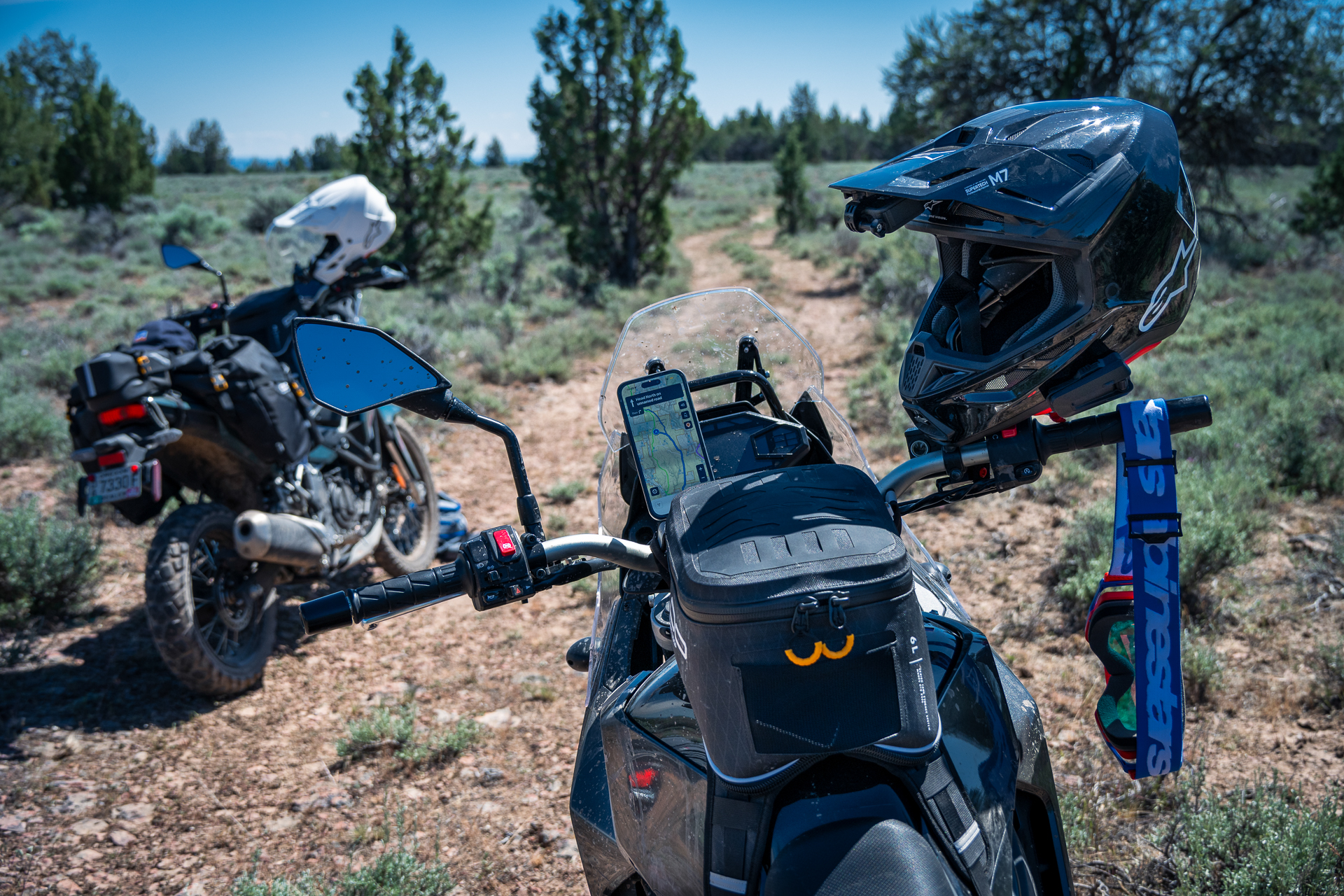
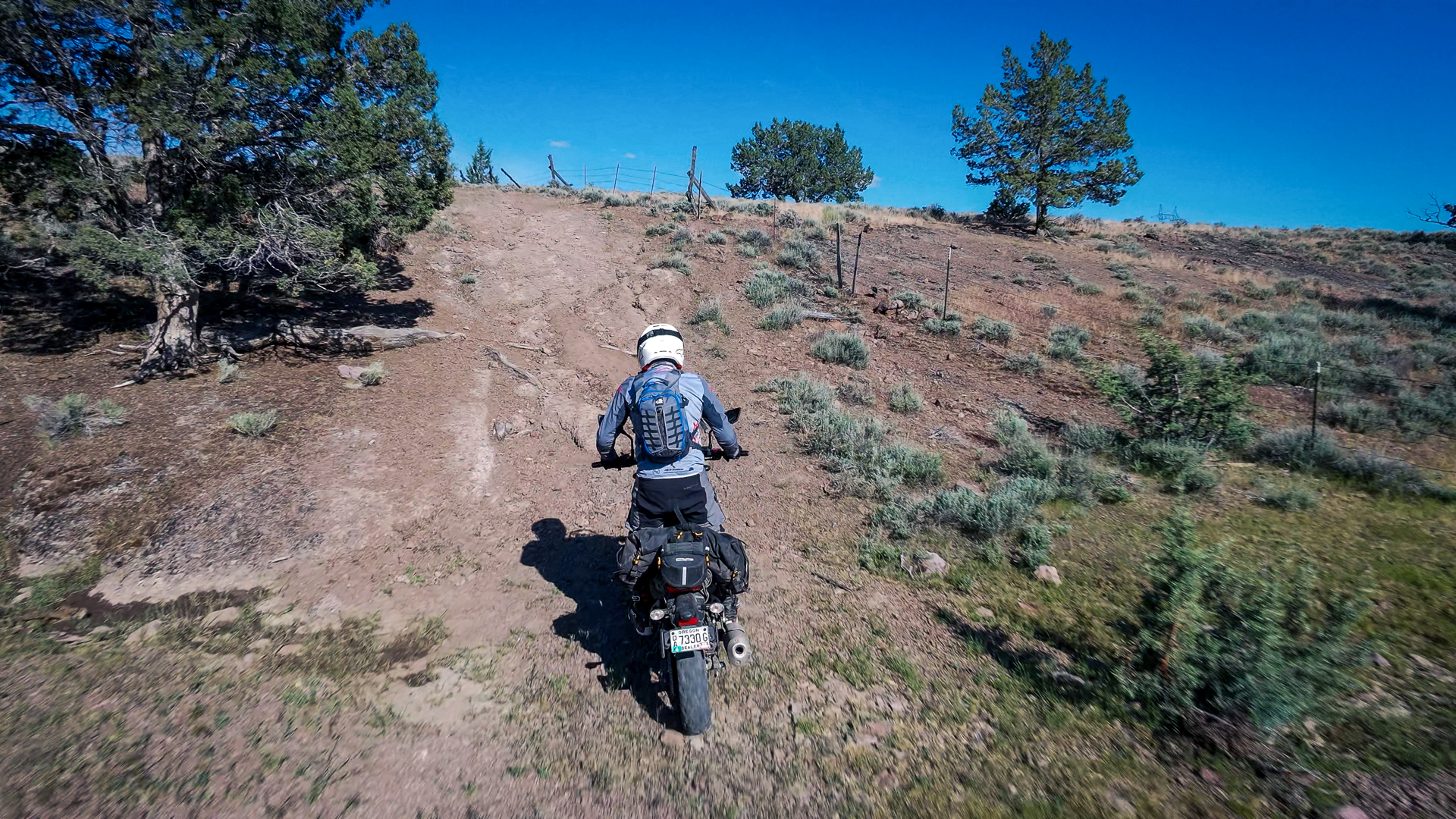
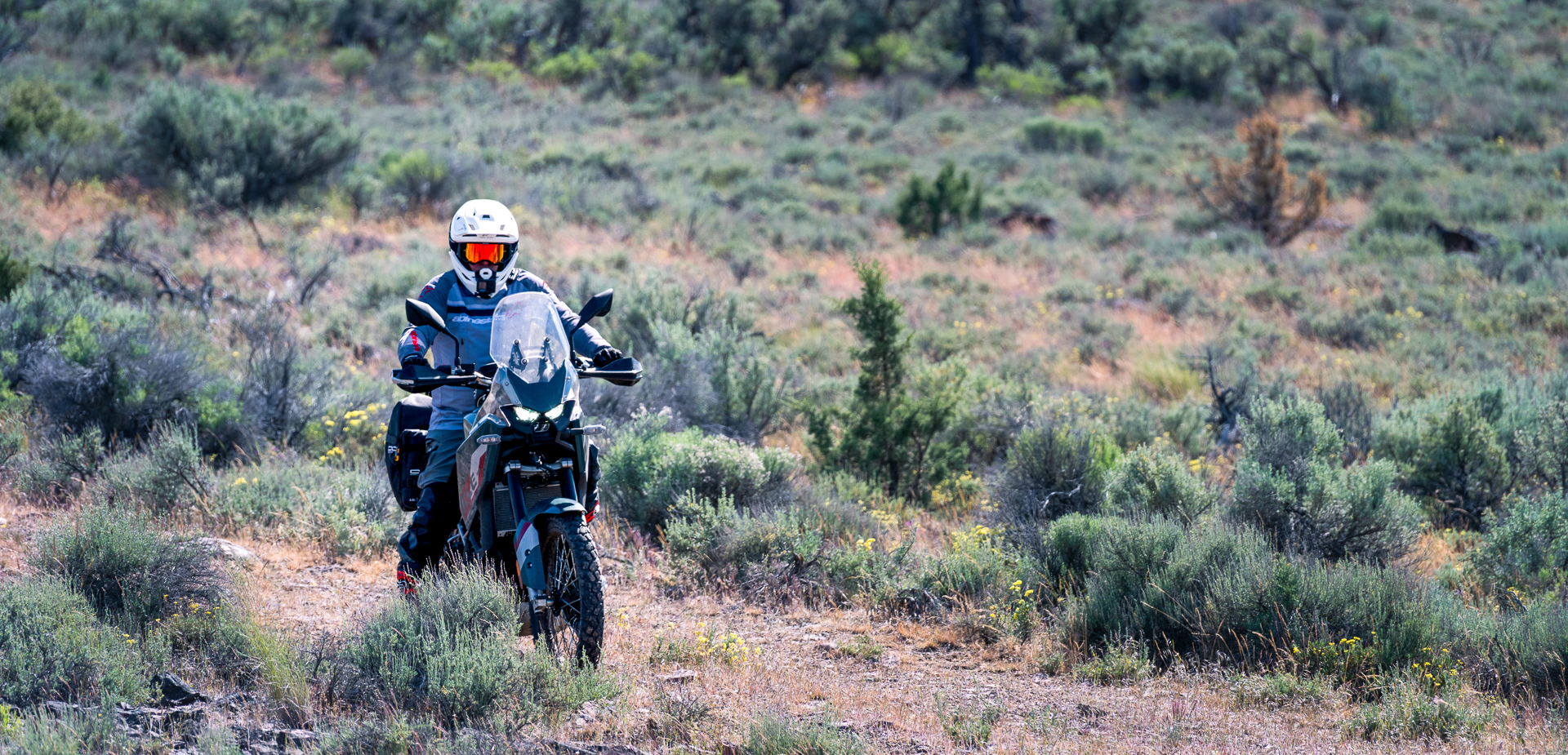
The routes east and north of Burns quickly explained why. On the S14A North Steens to Alvord Loop, the ride left behind the easy legibility of normal roads and moved into terrain that demanded constant attention. The track rolled through ranchlands and cattle guards, then into rocky canyons, low hills, scattered pines, and sections where the trail seemed to fade and reappear depending on light, grass, and wheel marks. OnX Offroad app became essential because many of these tracks do not exist in a useful way on conventional GPS systems. Even then, navigation was never passive. In Eastern Oregon, a rider is always comparing the device, the ground, the horizon, and the judgment of the group. The screen may show a line, but the land decides whether that line is obvious, legal, passable, or wise.
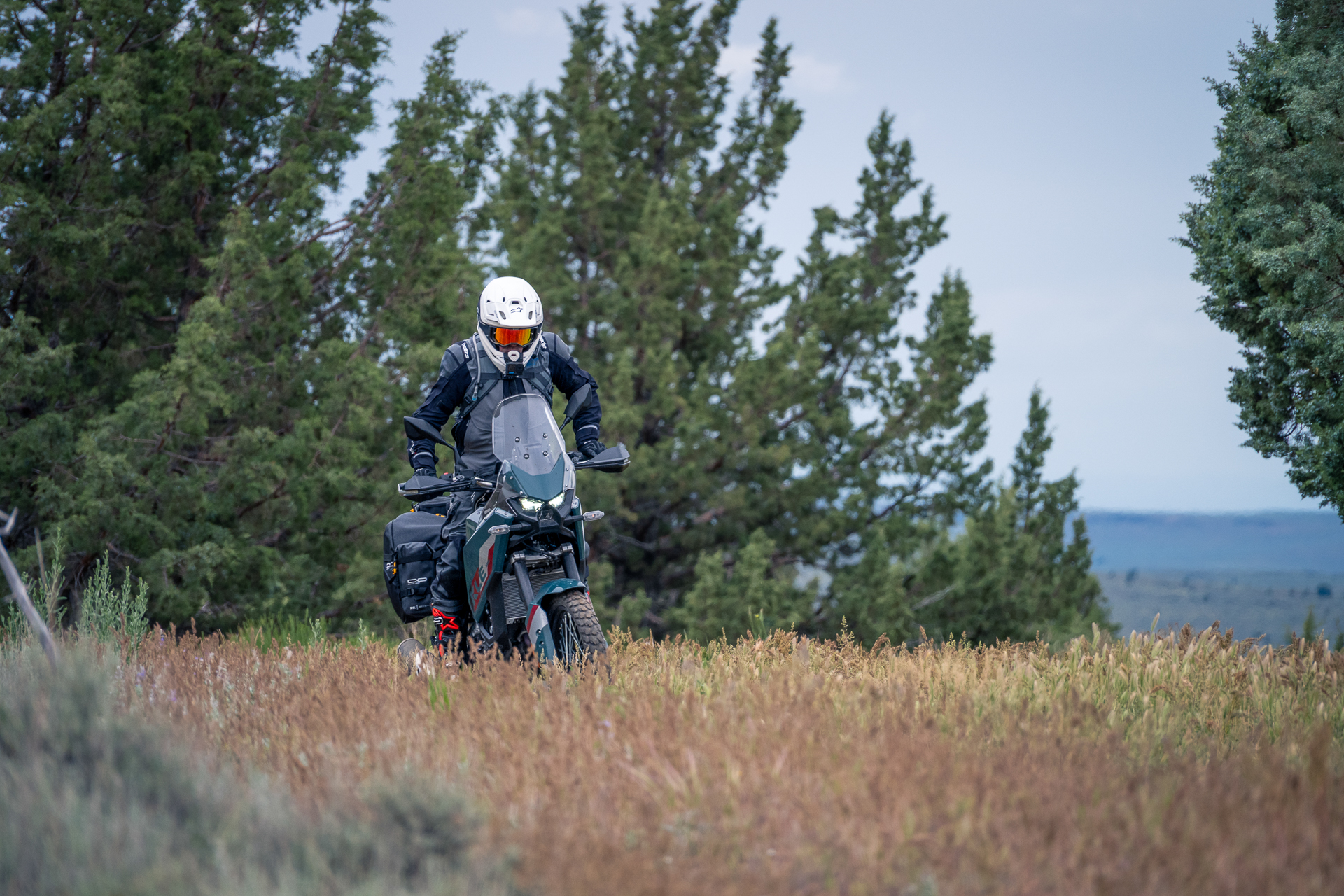
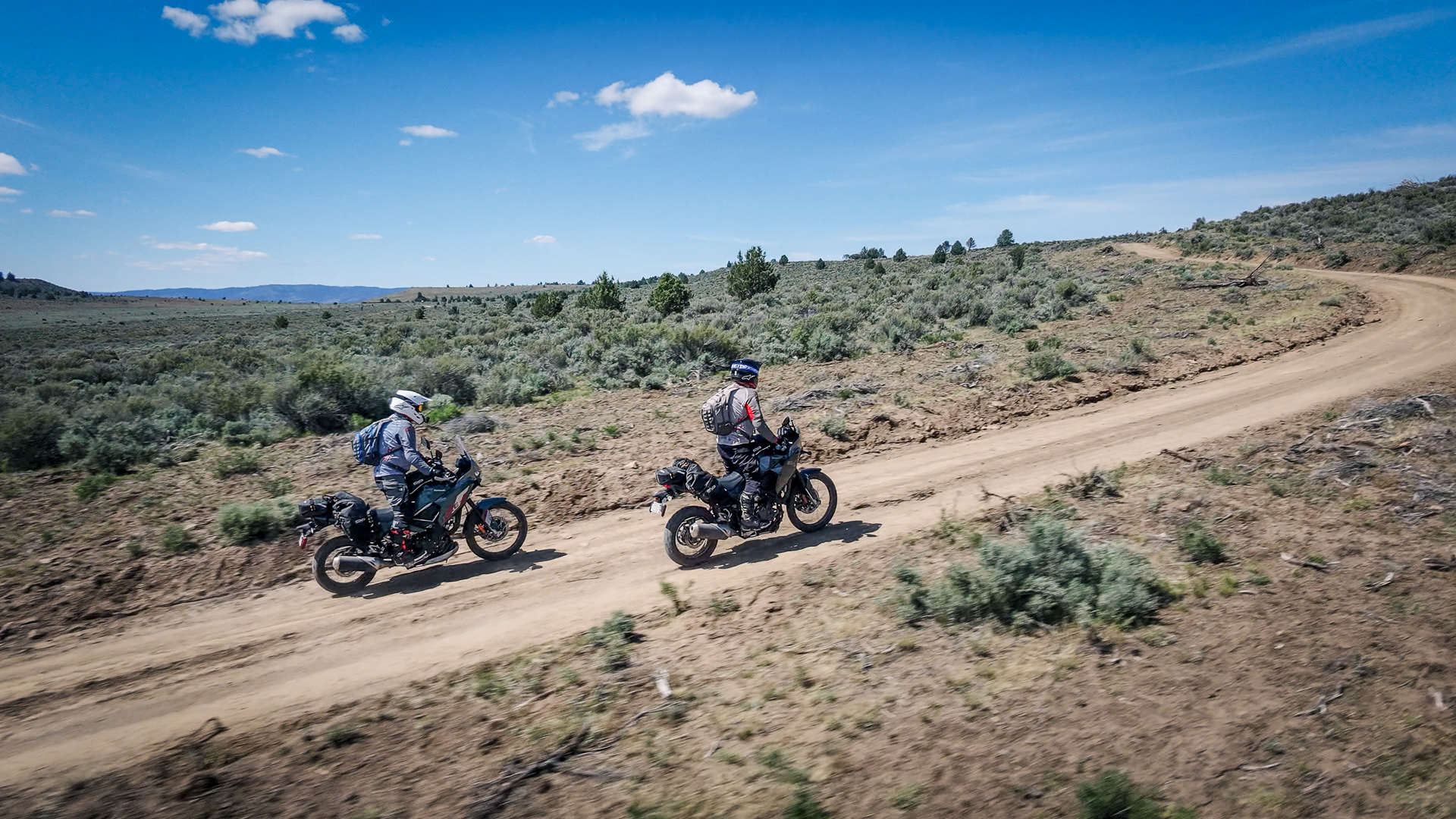
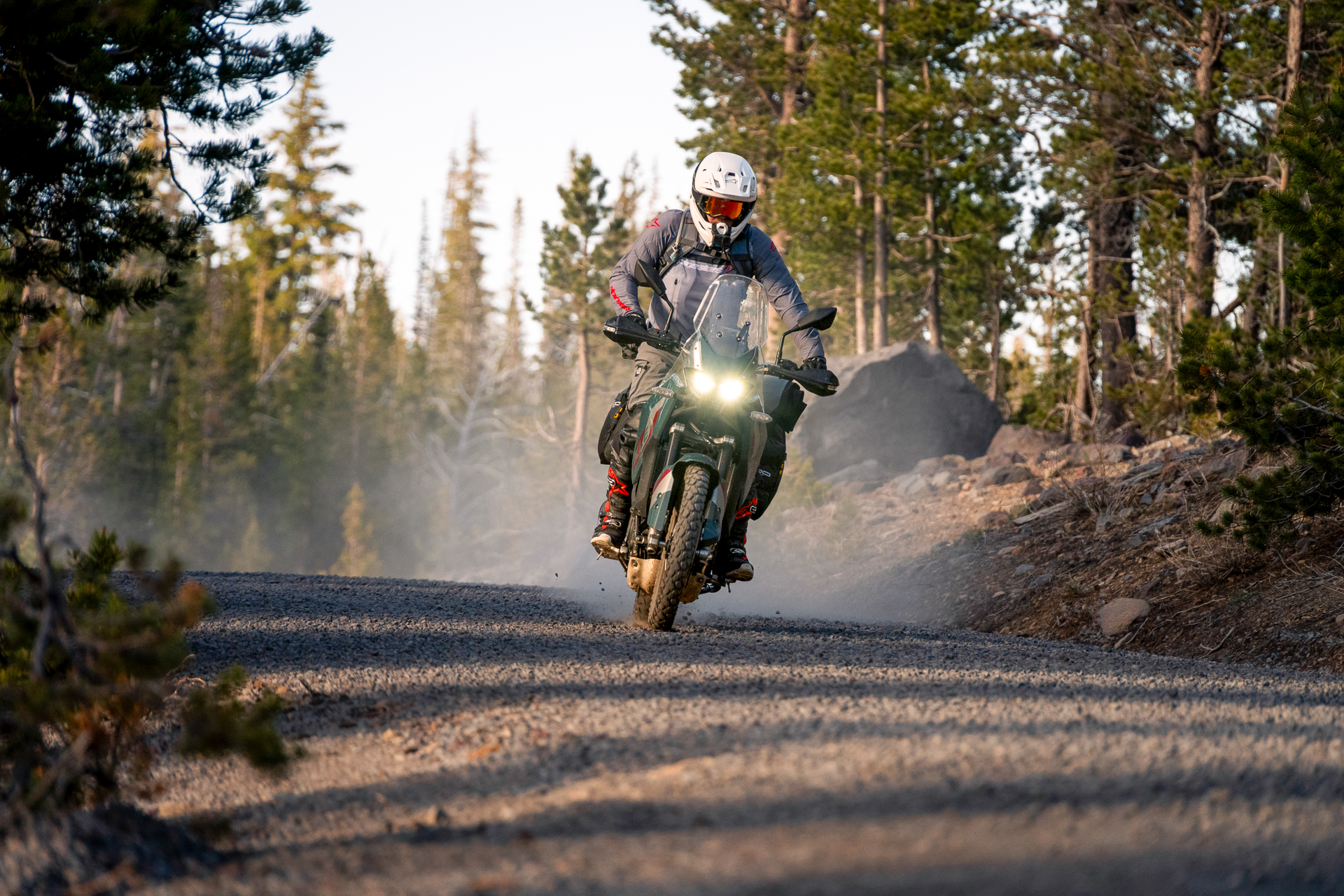
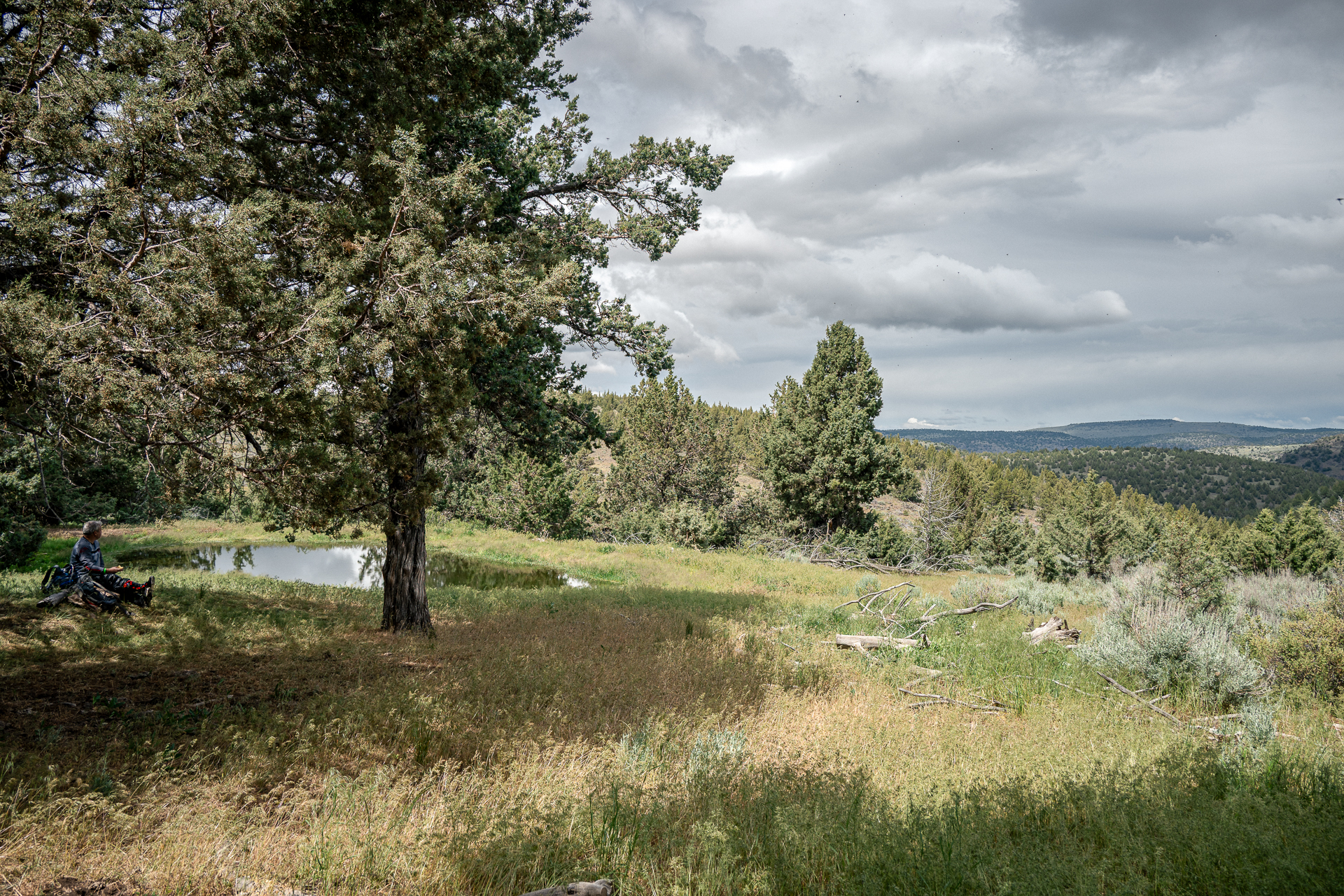
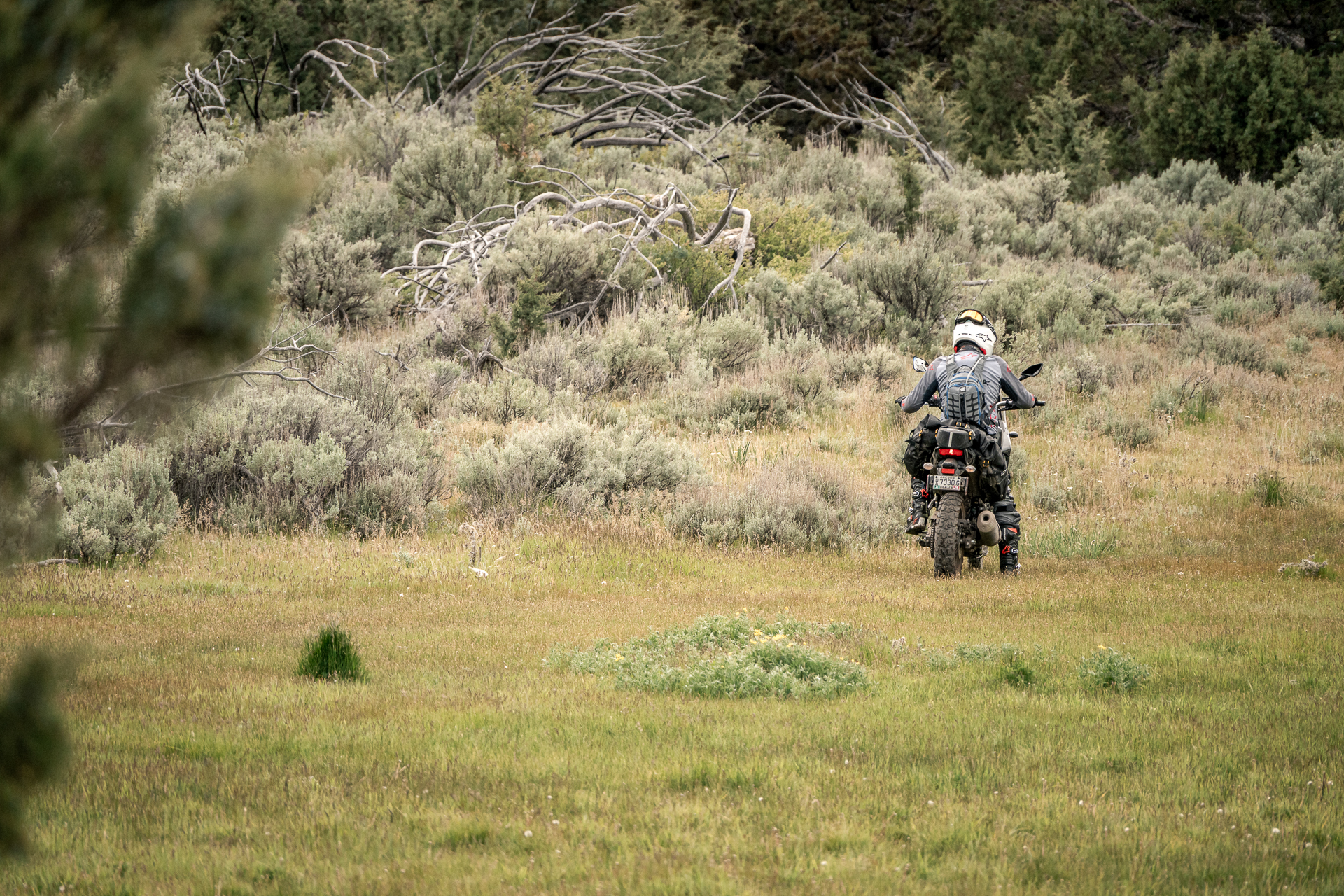
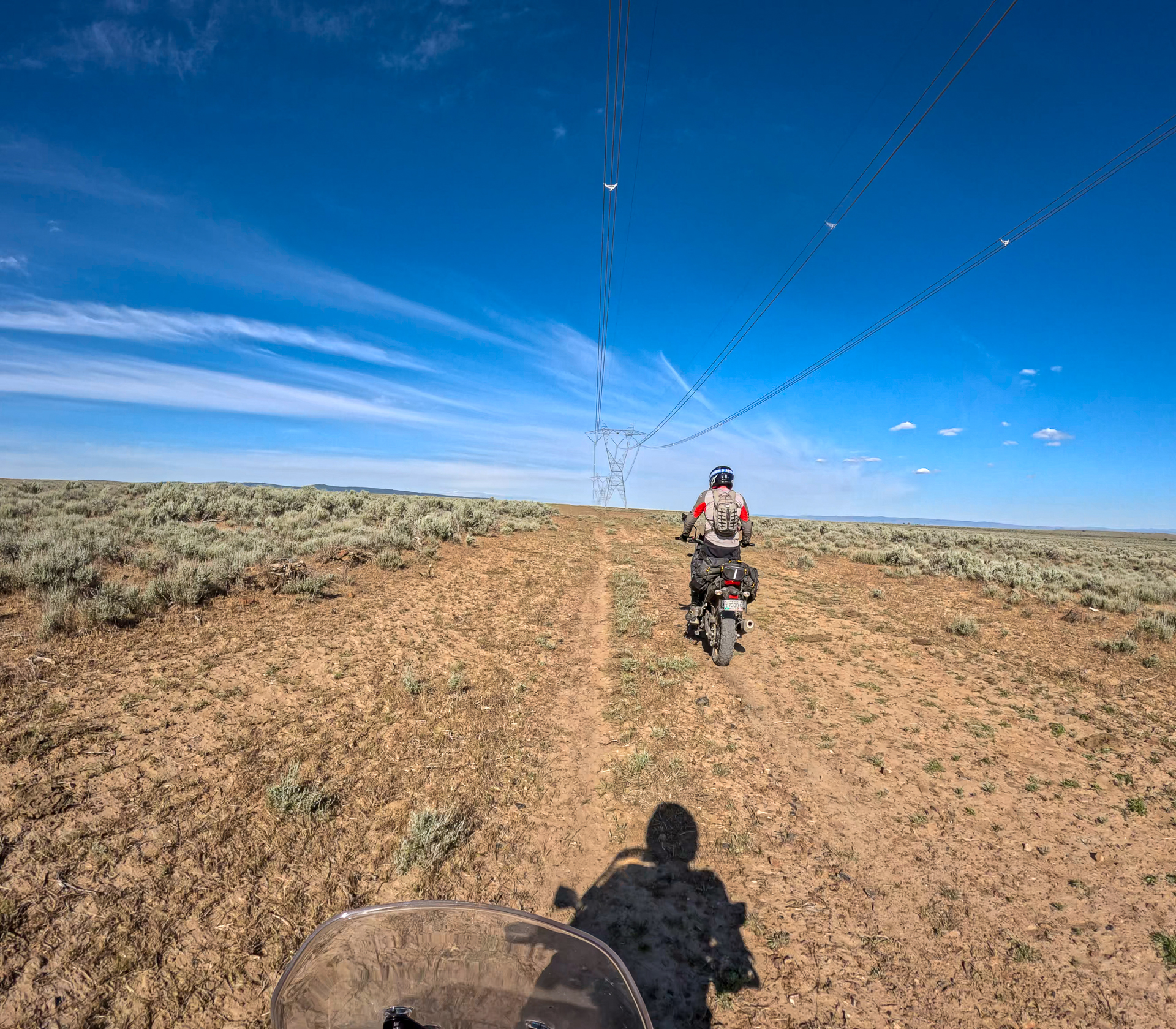
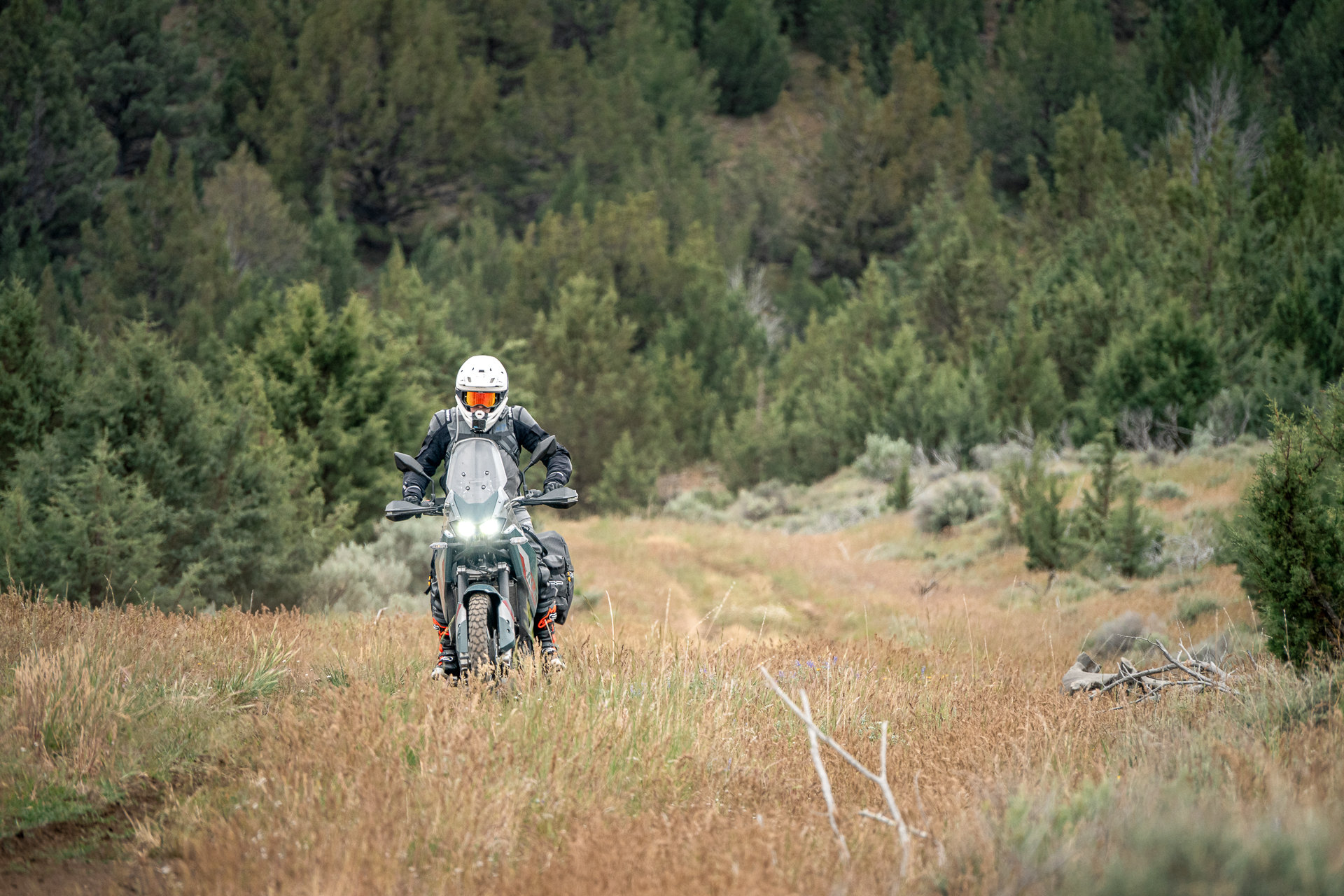
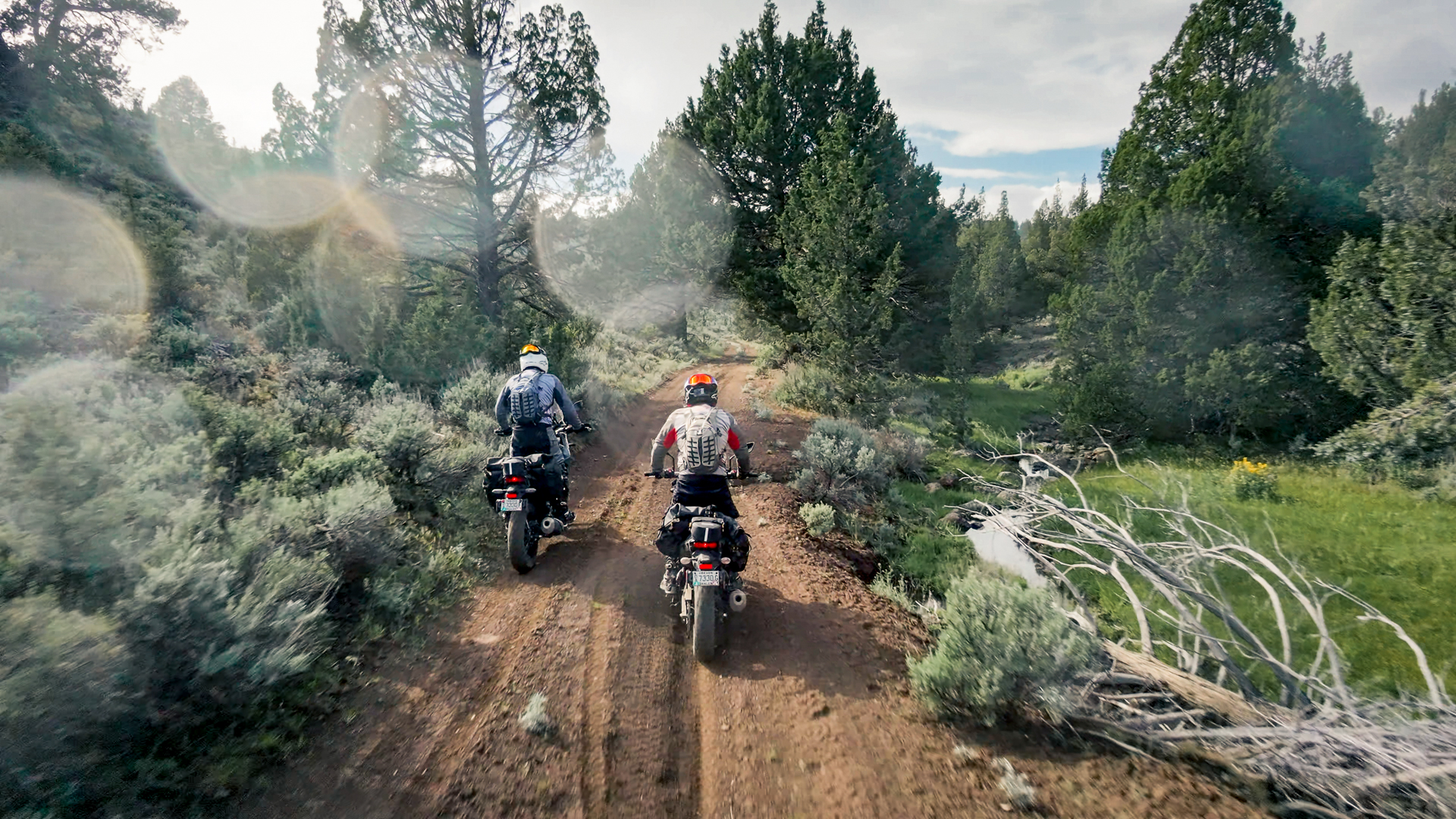
What makes the region so compelling is how often it changes character without warning. One stretch may be fast gravel between fence lines, with cattle grazing across wide pastures and open sky pressing down on the road. A few miles later, the same route may climb into arid uplands with sparse pines, sagebrush, dry slopes, and views over valleys that seem empty until you begin to notice the fine details: a two-track cutting across a hillside, a cattle guard half-hidden in dust, a canyon opening to one side, a set of power lines marking a maintenance road that suddenly becomes the most interesting trail of the afternoon.
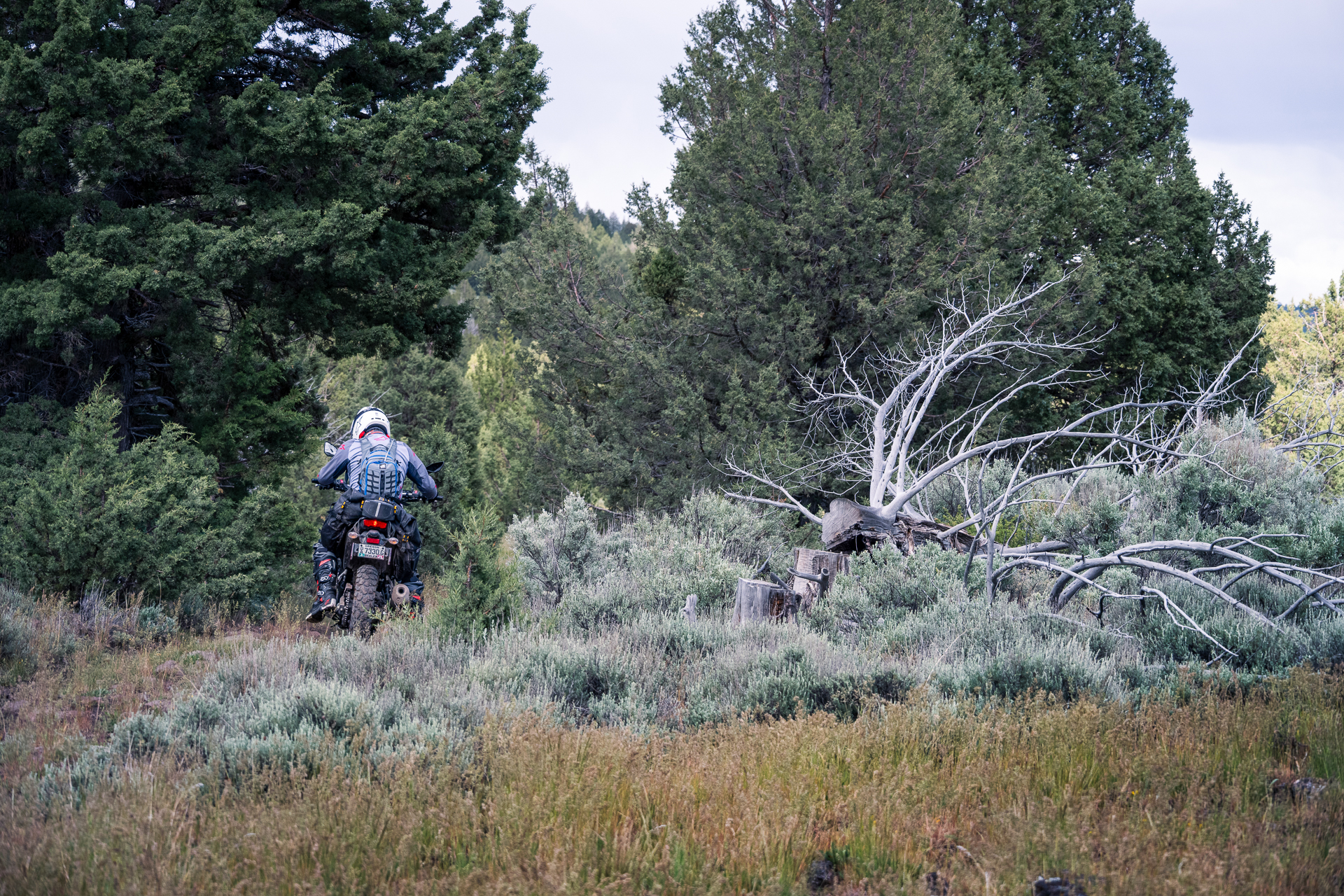
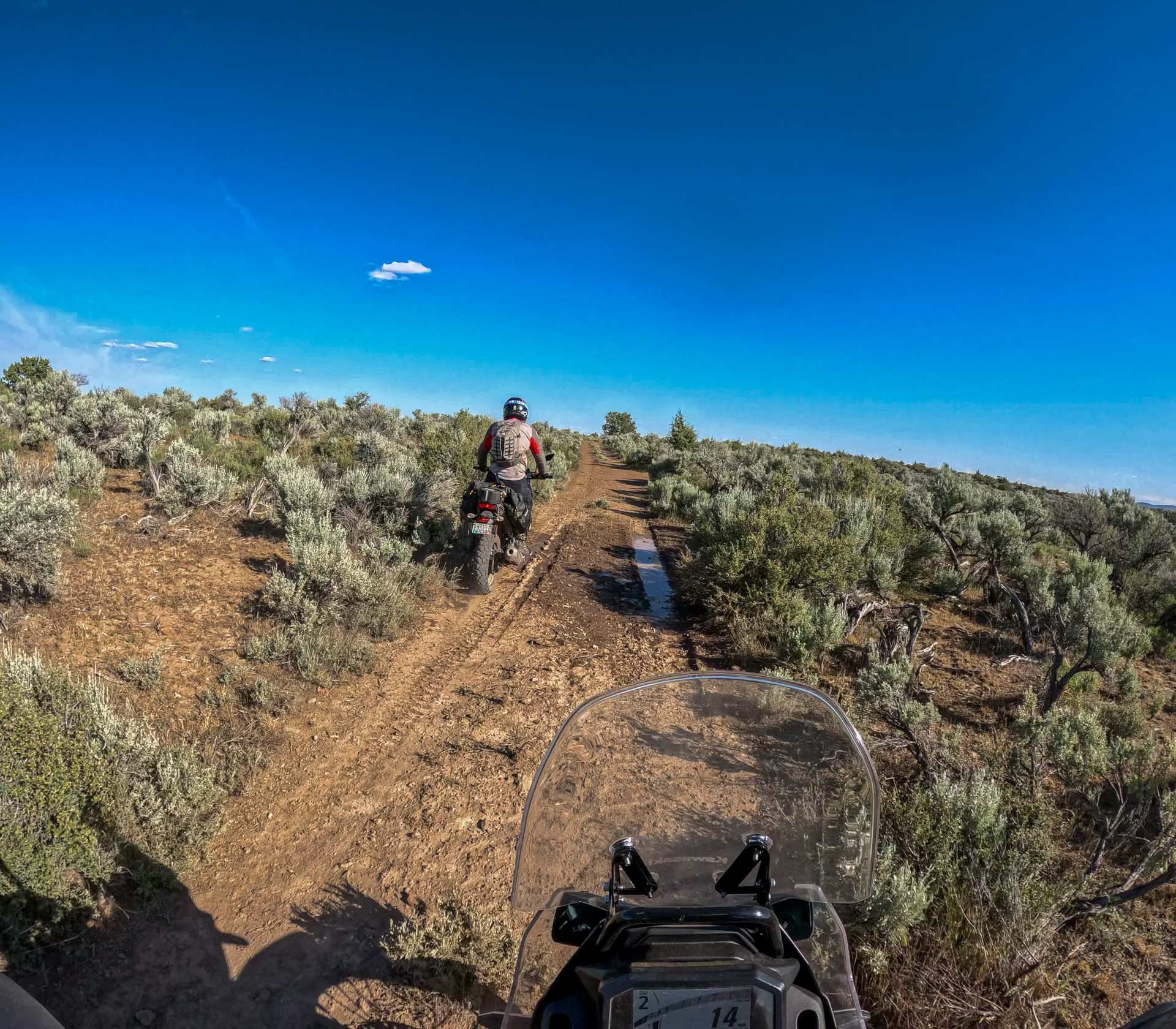
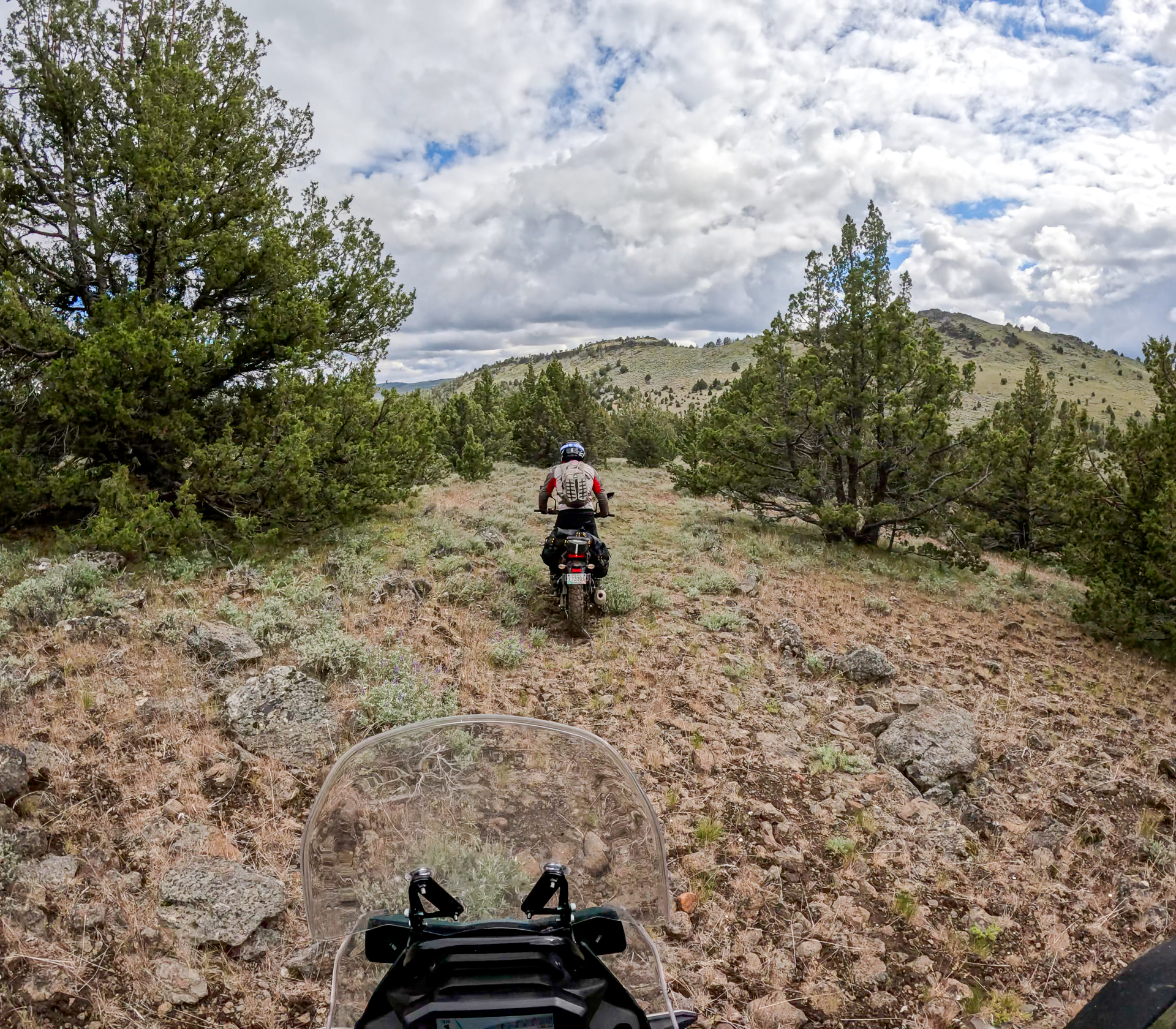
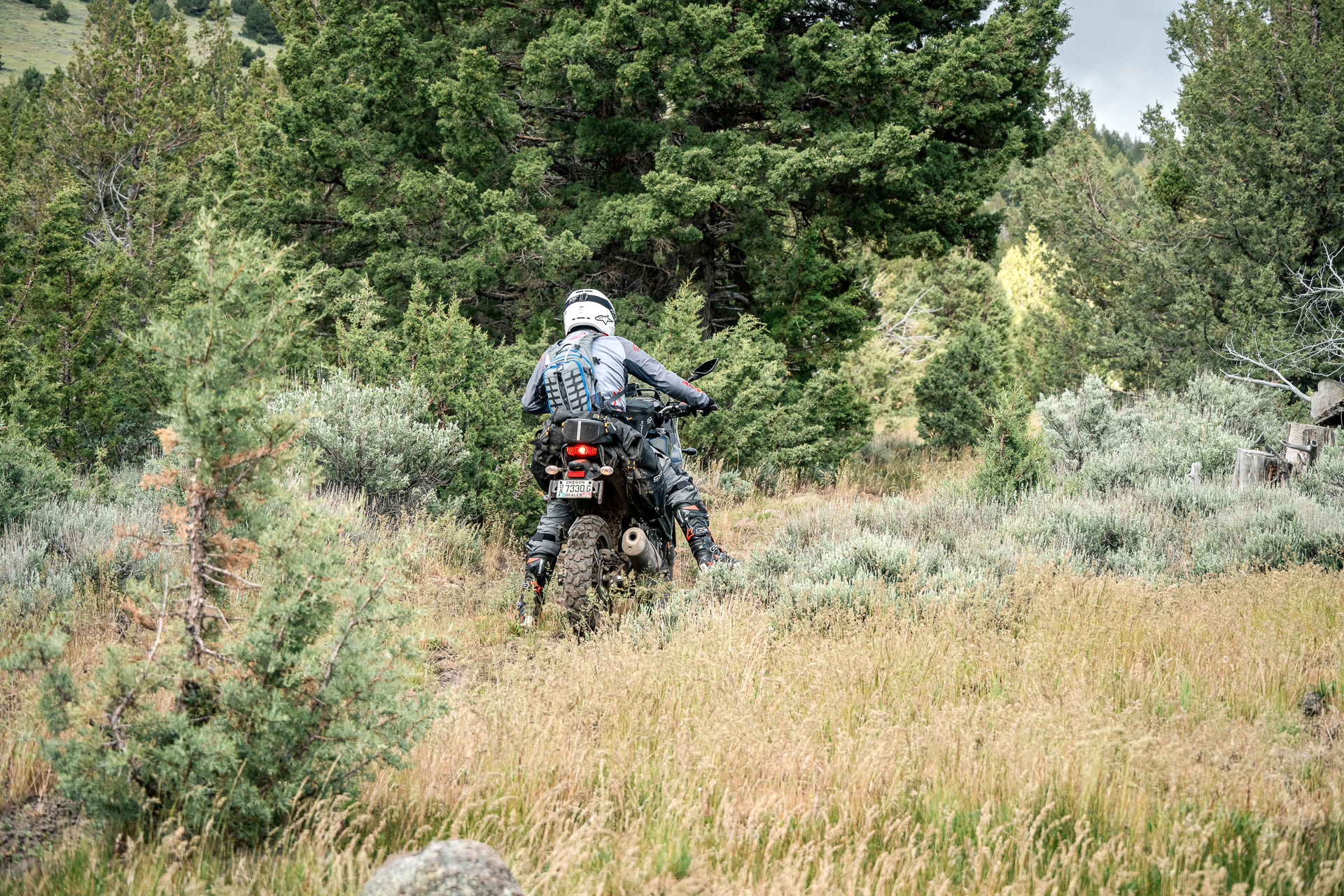
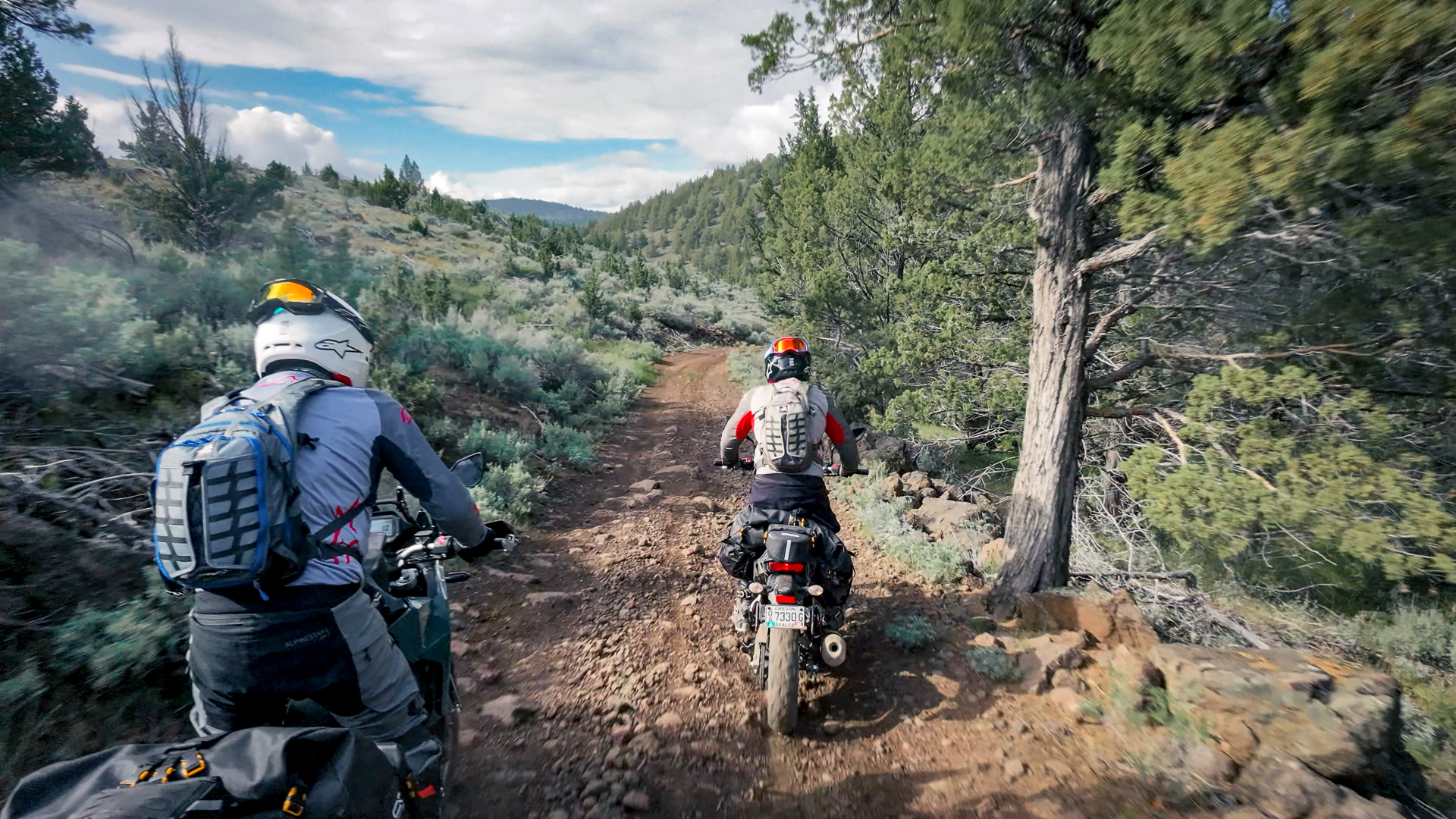
Some of the best sections arrived by accident, especially when closed ranch gates forced us away from the intended route and into improvised navigation through remote canyons, scenic backroads, and utility access tracks beneath transmission towers. Those roads were built for function, not recreation, but they delivered technical riding, loose surfaces, and the satisfying feeling of finding a way through without forcing passage where we did not belong.
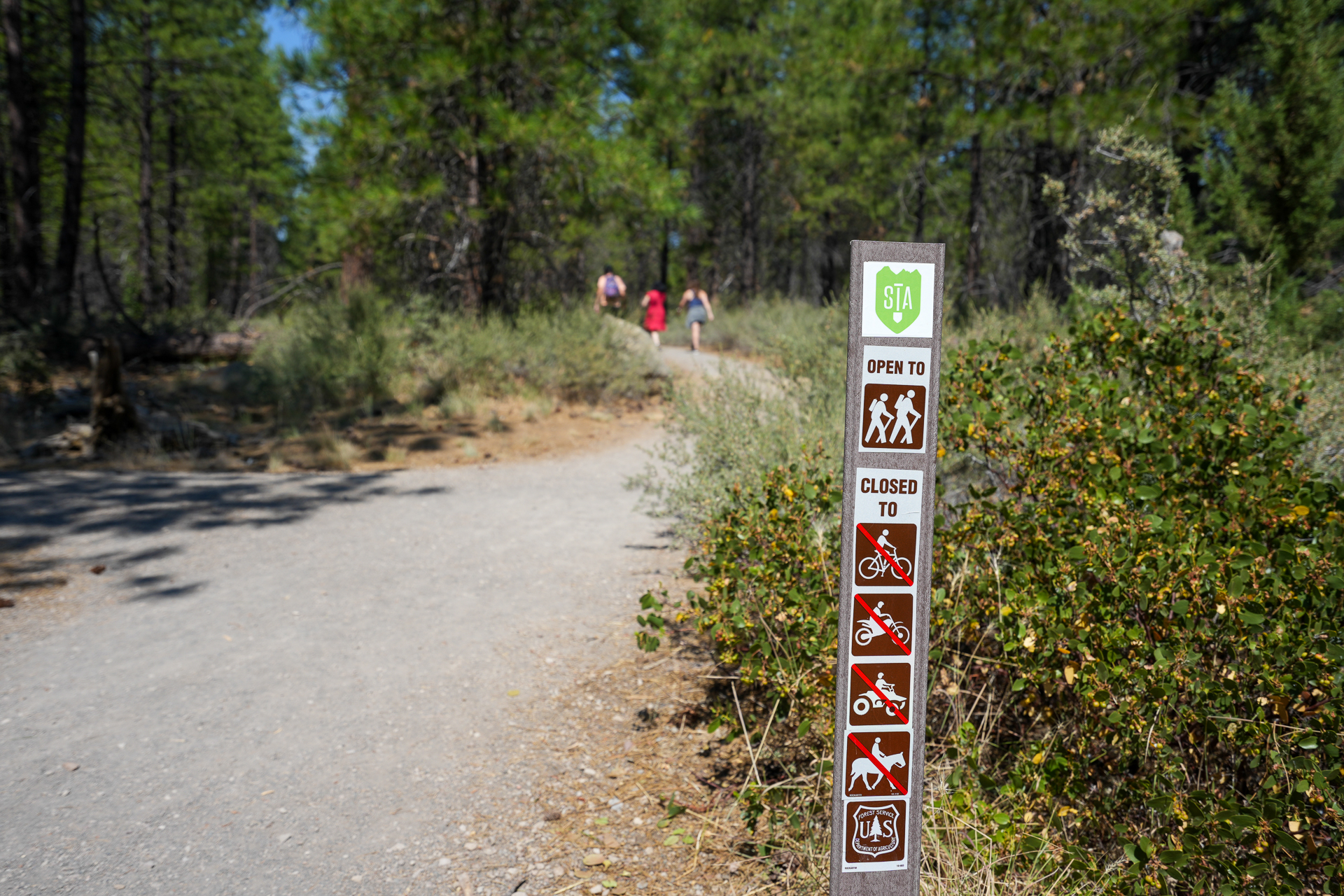
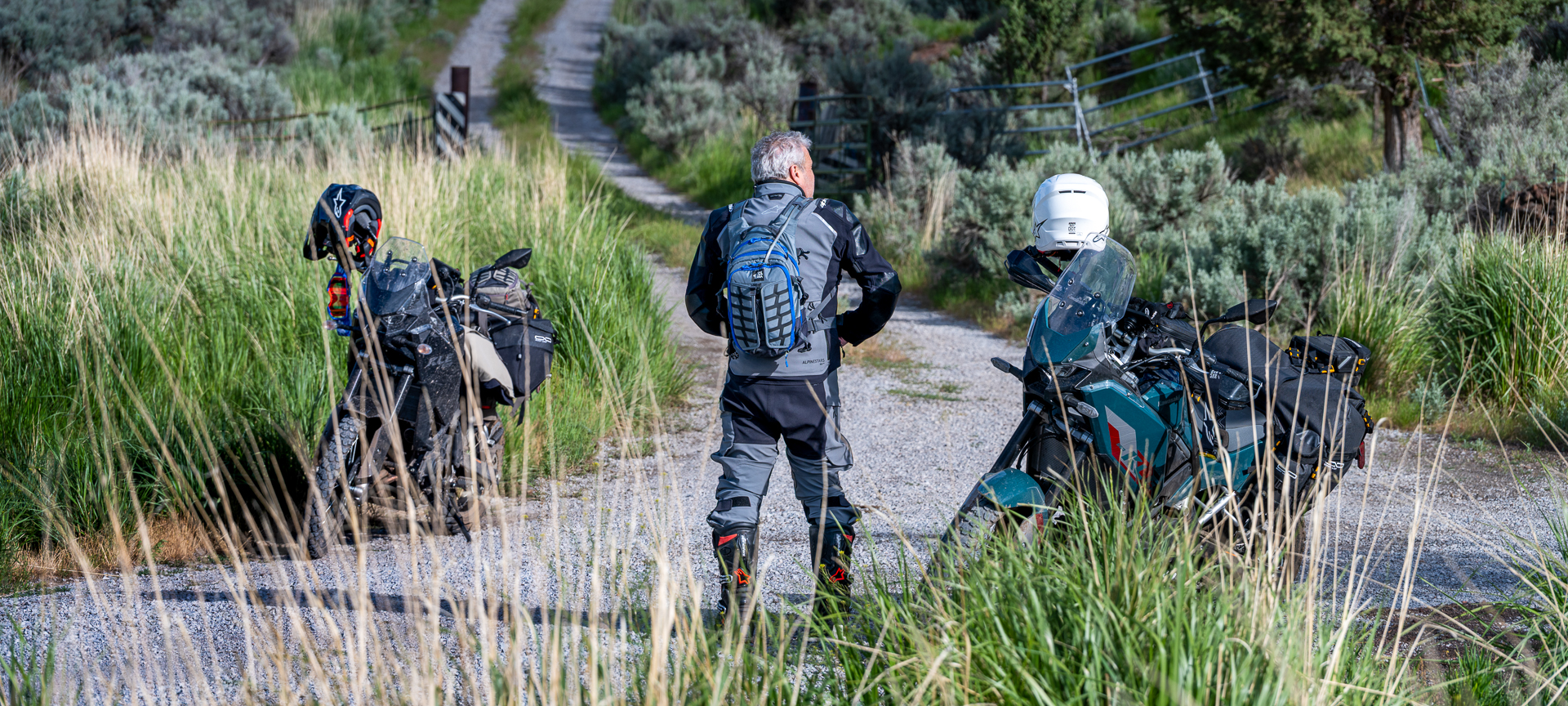
The closed gates were also a useful reminder that this is not empty land. It is working country. A solo rider warned us about a closure ahead, and when we reached it, the message was clear: a ranch gate was shut, with no legal passage. Another possible route ended the same way. Most likely, ranchers were moving livestock, and the decision was simple. Respect the closure, turn around, and find another way. Adventure riding depends on access, and access depends on respect. In that sense, Eastern Oregon teaches a different kind of discipline from a technical trail. It asks riders to understand where they are, who else uses the land, and when the right move is not to push through, but to adapt.
Equipment and Judgment
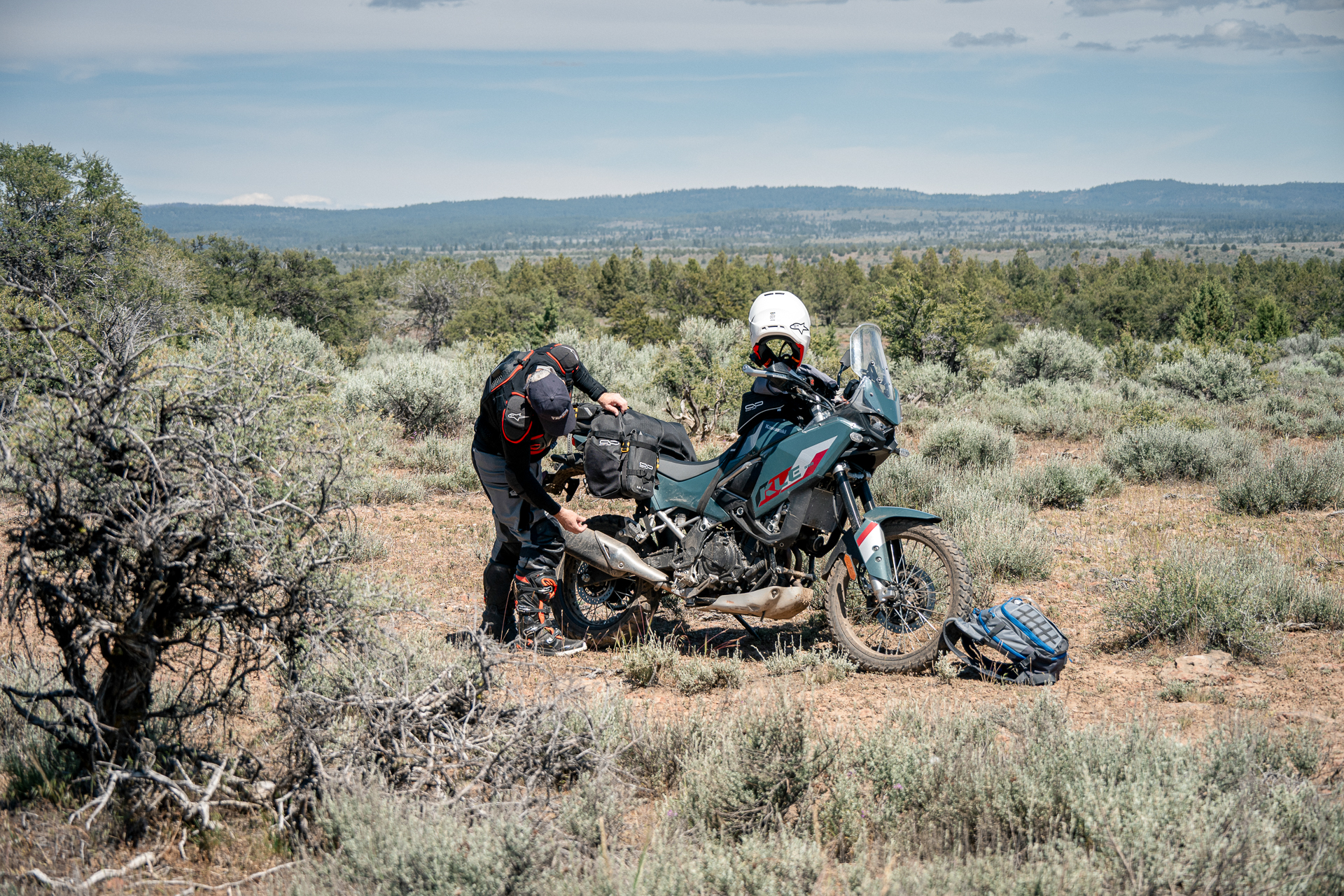
Eastern Oregon has a way of turning preparation into something physical. It is one thing to pack carefully in the morning, to check luggage straps, water, tools, communications, and navigation before leaving Crystal Crane Hot Springs. It is another thing to be miles out in ranch country, following a single track that keeps disappearing into grass and rock, and realize that every decision now has weight.
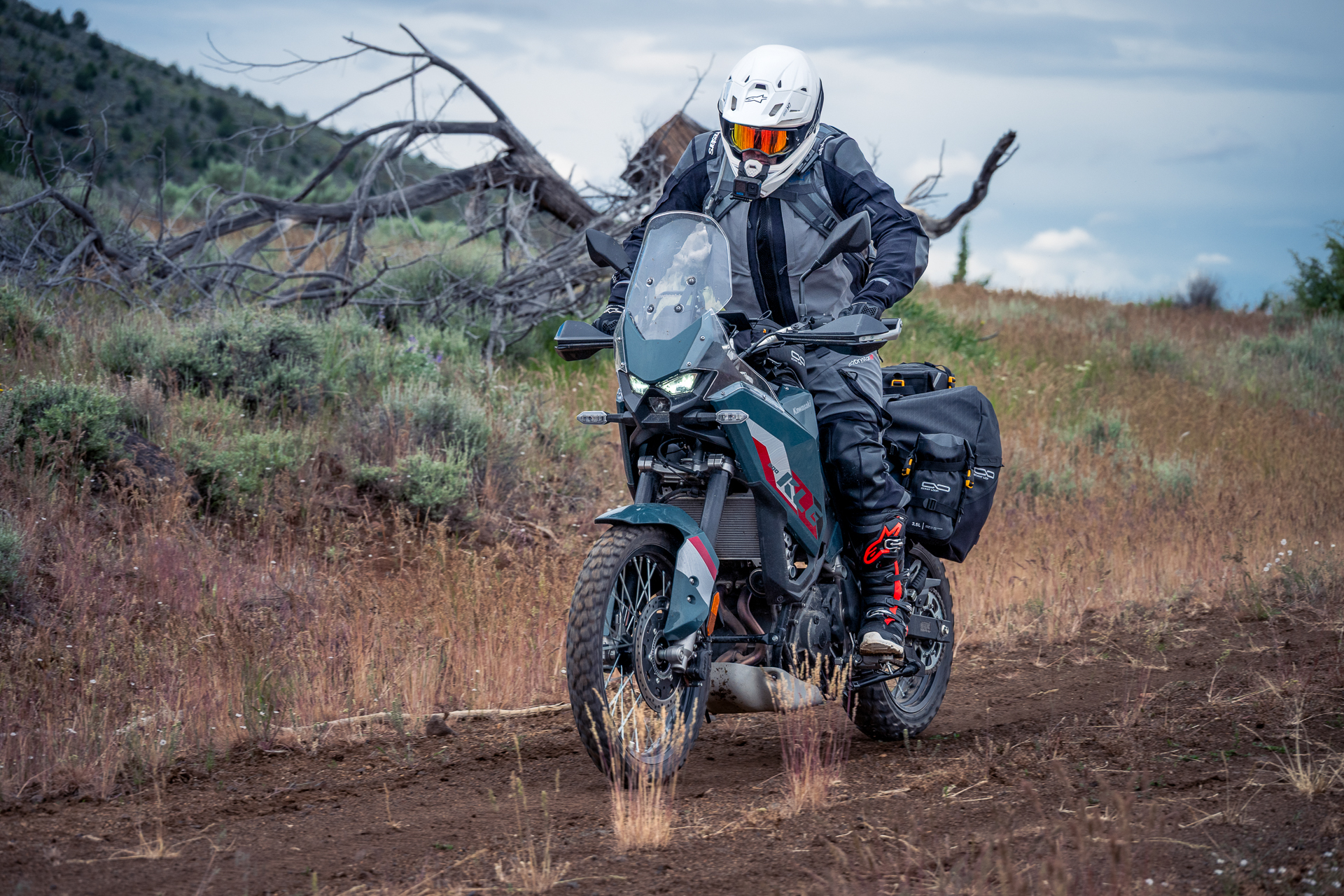
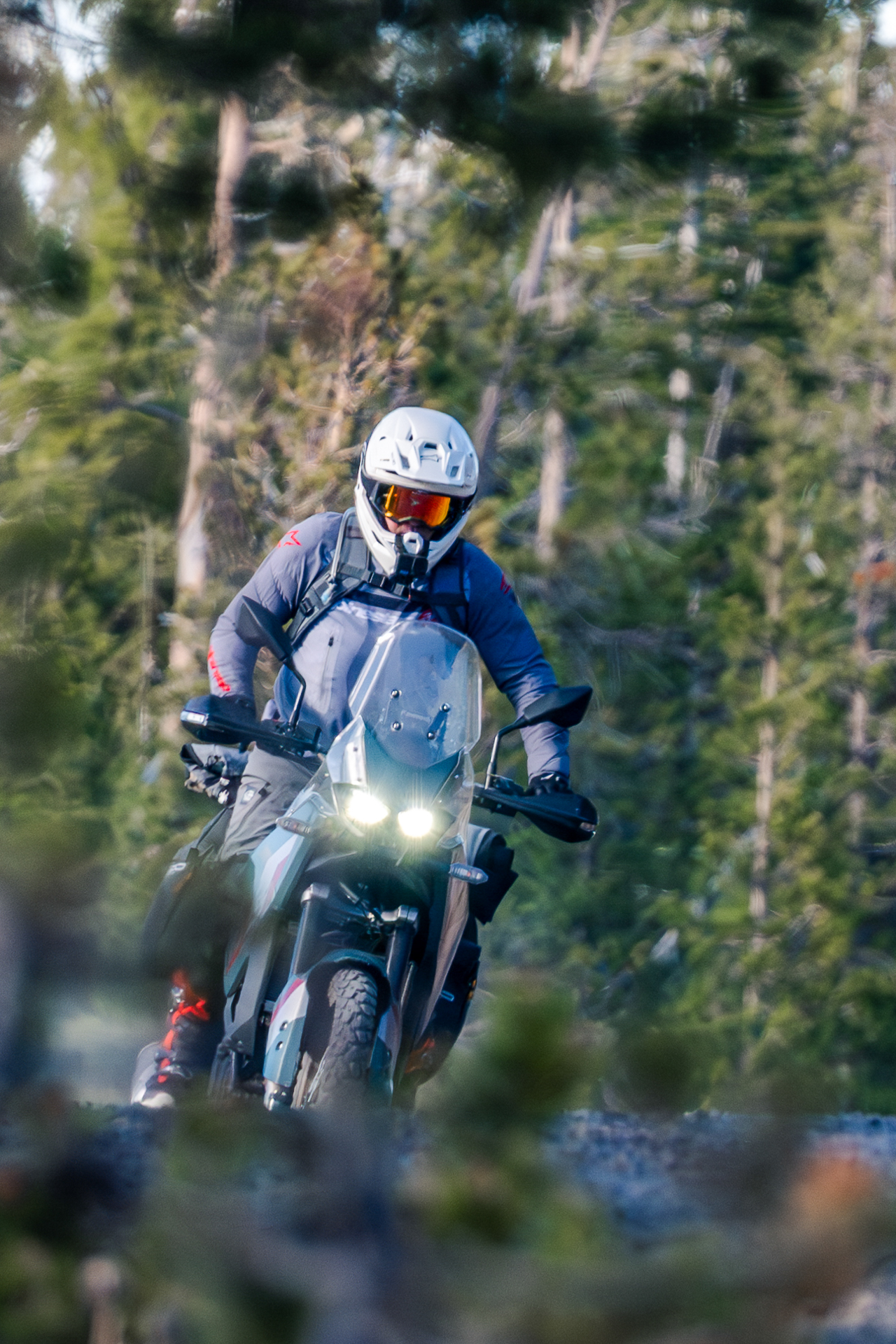
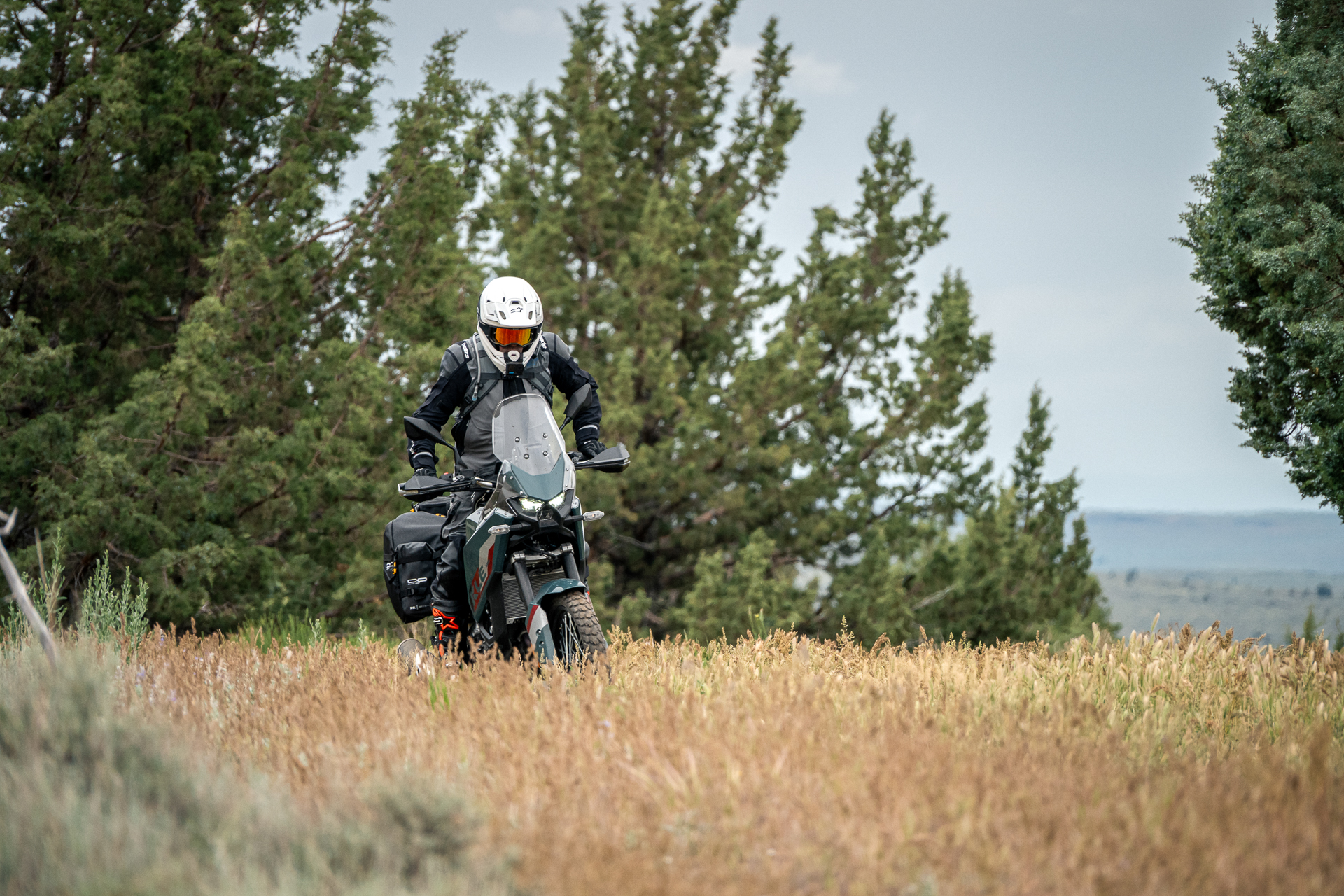
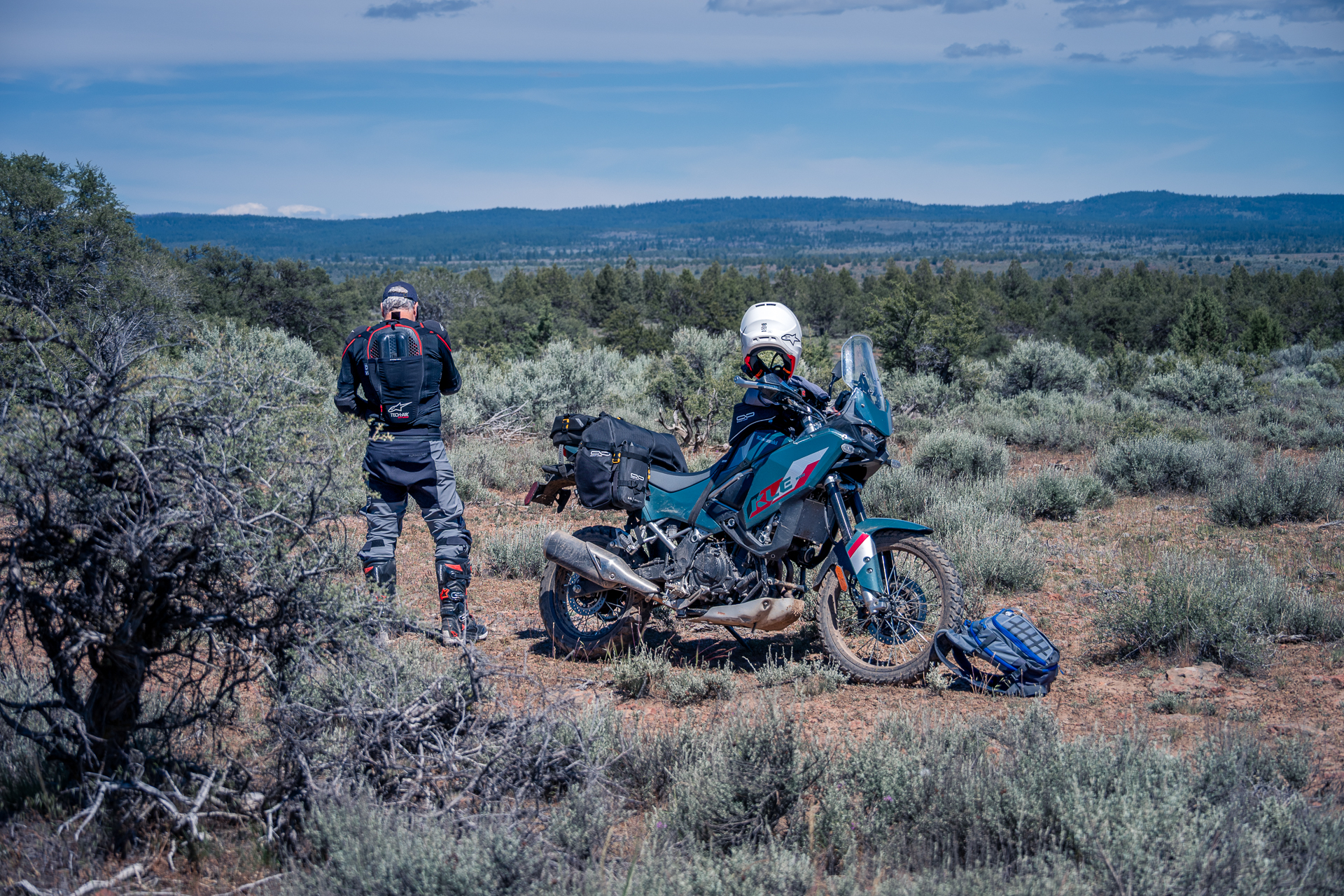
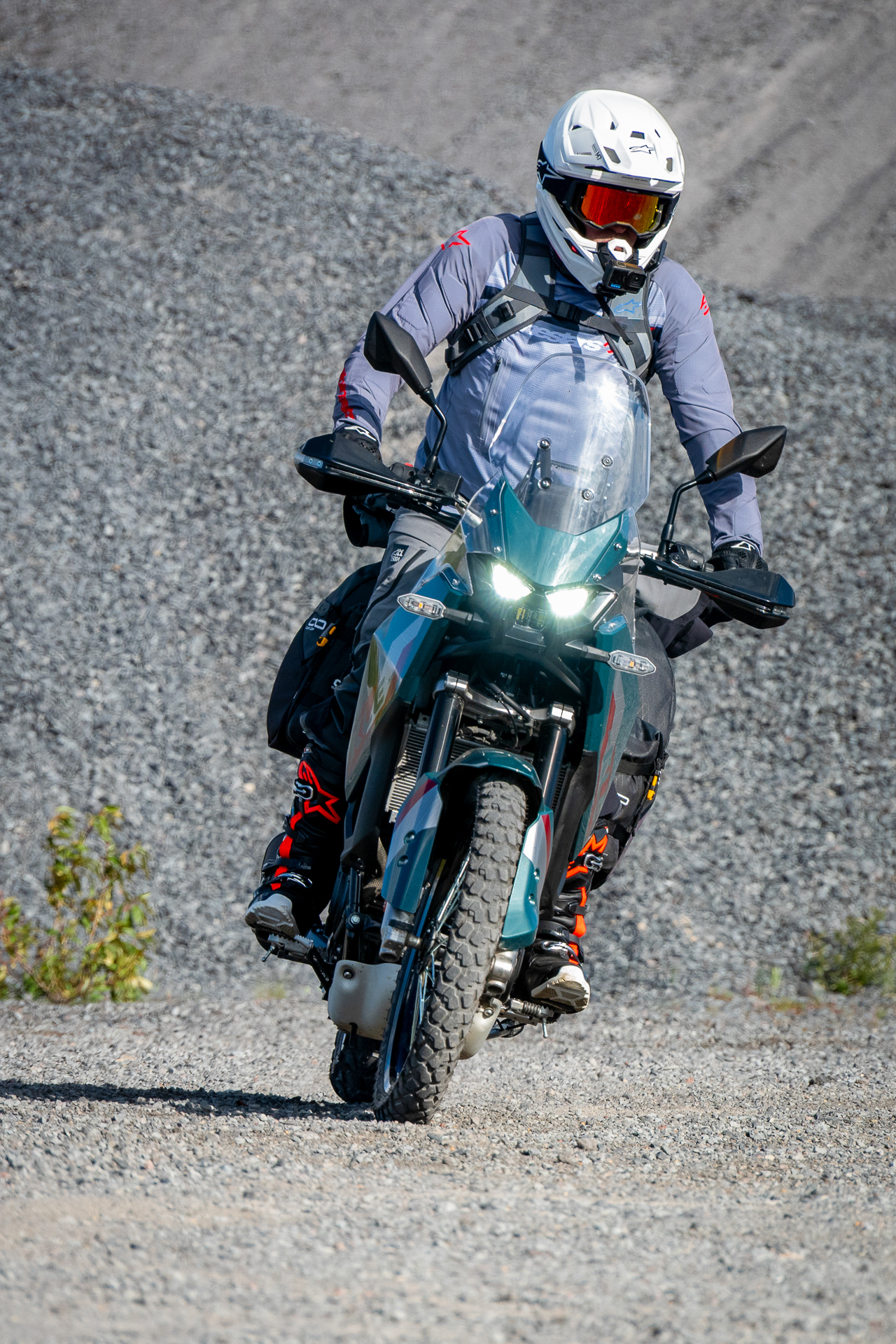
Out there, equipment stops being a list and becomes part of the ride’s nervous system. Hydration matters because the high desert pulls water from you quietly. Cardo matters because riders spread out in dust and need to warn each other quickly. OnX Offroad matters because the track on the ground does not always match the confidence of the line on the screen. The Kawasaki KLE500s were doing their job well, carrying us from pavement to gravel to rougher trails without asking the ride to be narrowed around them, but Eastern Oregon kept reminding us that the motorcycle is only one part of the equation. The rest is patience, judgment, and the willingness to stop before pride starts making decisions. That lesson arrived first as theory, then as mud.
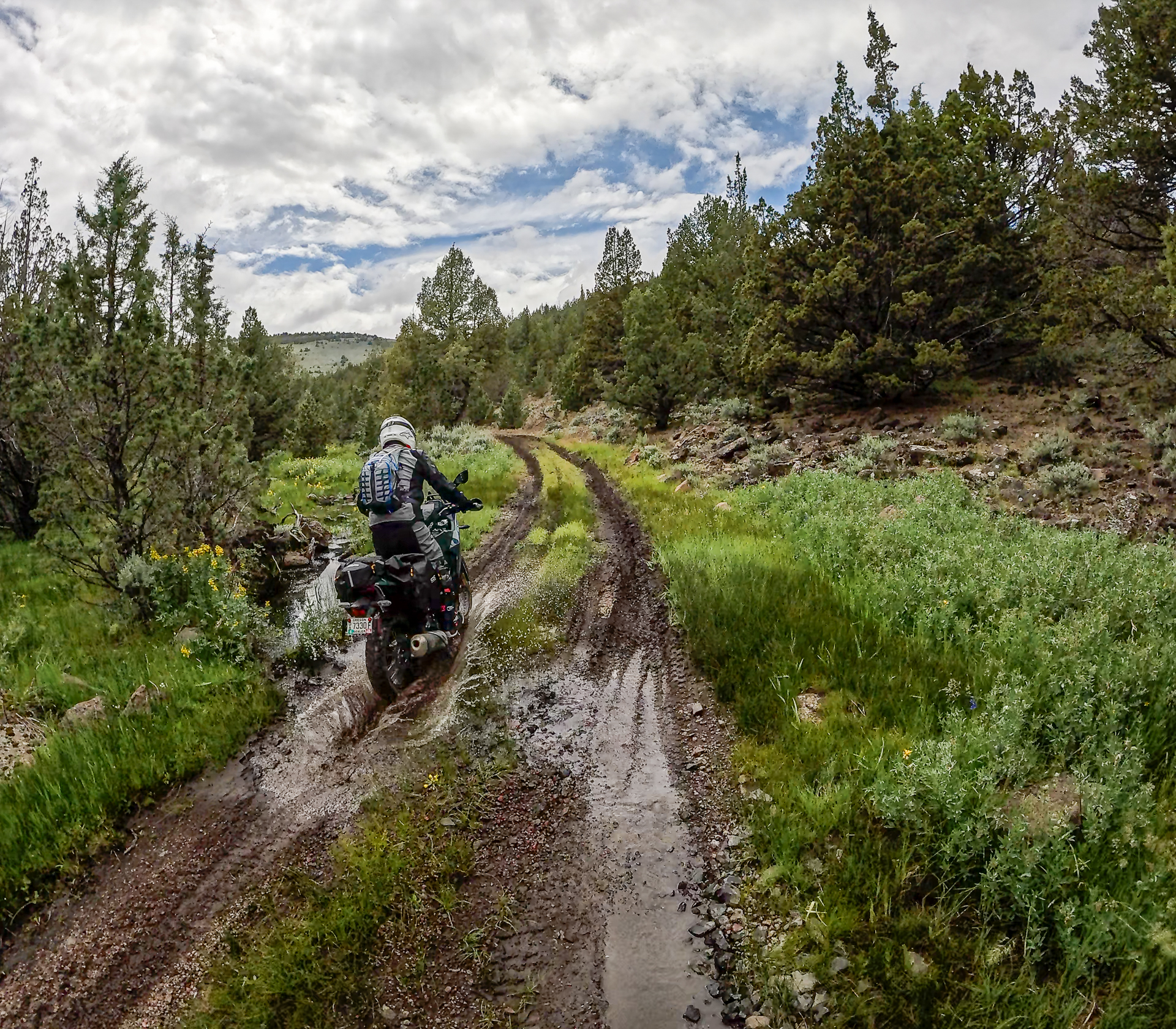
The mud crossing arrived on a section of single track that had already begun to fade in and out. I took a turn and, a few meters ahead, found a depression in the land filled with thick chocolate-colored mud. It did not look like an ordinary puddle. It looked like water pushing up from below, maybe from an underground river or reservoir, gathering in the lowest part of the trail. There was no clean way around it. To the left, wet loose rock made a bad option worse. To the right, the ground looked like it wanted to become a creek. The only realistic option was to go through. Looking back, maybe the smarter move would have been to stop, study the crossing, and read the terrain more carefully. But Mike was still behind the curve, the trail was disappearing, and the rhythm of the ride carried me forward.
Two trees stood on the right side of the crossing, one before the depression and one a few meters beyond it. They marked the high points of the ground, while the muddy pool sat in the low place between them. What I did not fully see were the roots. They had probably found their way toward the water and were lying just below the surface, barely visible under the mud. I stayed as far left as possible and entered the crossing. For a second, the line held. Then the front wheel found the hidden rut or root line, the bike stopped driving forward, and the Kawasaki dropped to the right.
Every rider knows that strange slow-fast moment. The bike is already falling, the line is gone, and there is enough time to understand what is happening but not enough time to change it. Then came the pop of the Alpinestars Tech-Air Off-Road system. I recognized the sound instantly. Mike, coming in behind, thought it was the impact of the fall, but the airbag had fired before I hit the ground. The engine stopped immediately. The bike was down in the mud, and for a few seconds the scene reduced itself to pressure, water, silence, and adrenaline.
The strangest sensation came after the fall. My first instinct was to move, and for a brief moment I had to understand what I was feeling. The motorcycle was not on top of me. I was clear of the bike. The Tech-Air system had fully deployed around my torso, supporting and stabilizing my upper body after the impact, exactly when that support mattered most. Once that realization arrived, the situation changed quickly. Rider first, motorcycle second. We checked for injury, found none, then lifted the bike and looked it over. The mirror had broken-free, but the structure had taken the fall well. In remote country, that felt like a generous outcome. The Tech-Air Off-Road system had performed exactly as intended, and after confirming there were no injuries, the ride was able to continue.
We took the usual five or ten minutes after a fall: drink water, breathe, let the adrenaline leave, make sure the hands are steady and the head is clear. Once everyone knows the rider is fine and the motorcycle can continue, relief often comes out as laughter. This time it came from Mike: “Why didn’t I have the GoPro on?” It was the right joke at the right moment. Not because the fall was funny, but because humor is how riders sometimes confirm that the danger has passed.
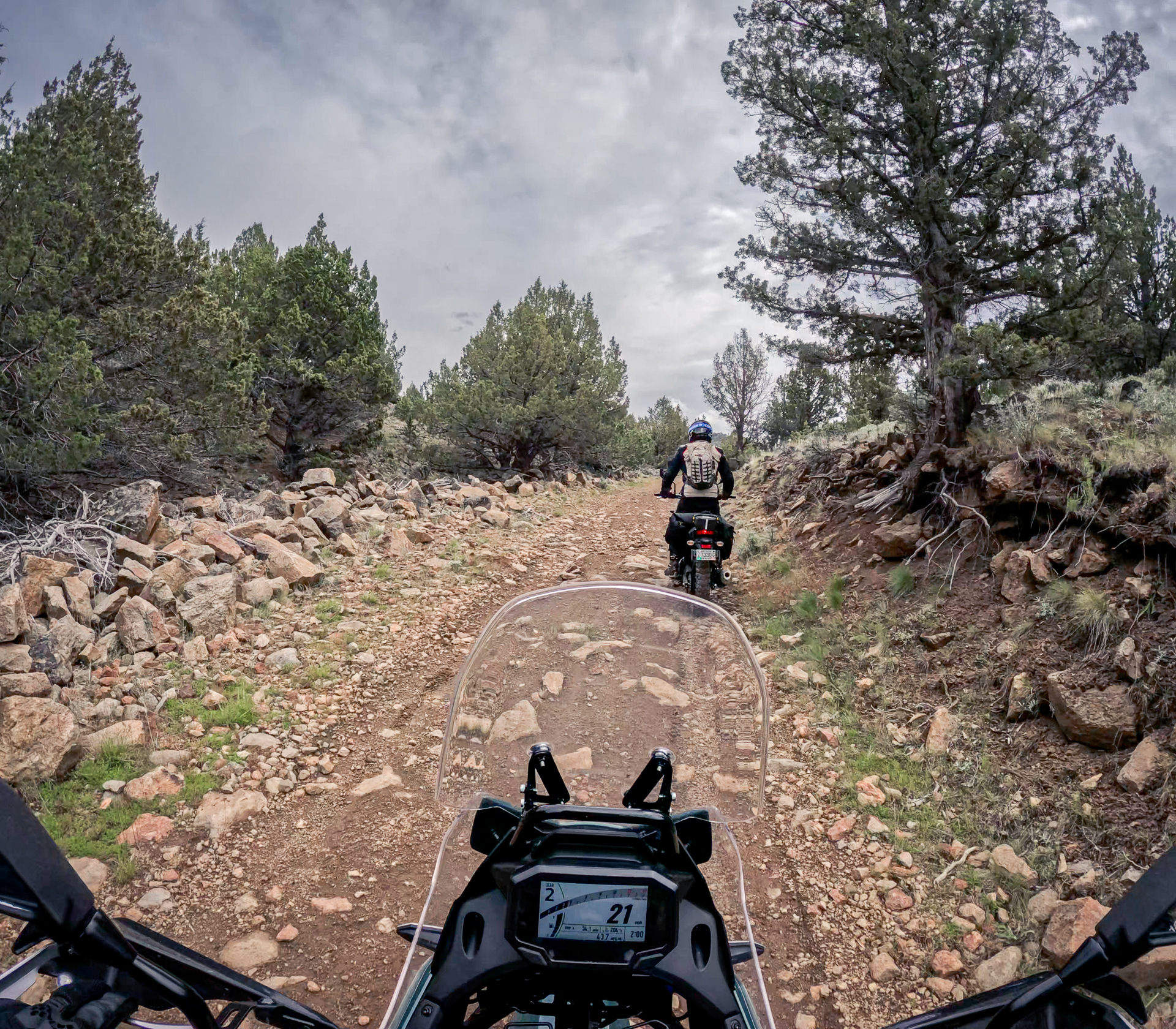
The crossing still had to be dealt with again on the return, and this time we approached it with more respect. That is the value of a real reminder. It sharpens the group without making it afraid. Lines were studied longer. Distance between riders improved. The conversation over the Cardo units became shorter and more precise. The terrain ahead also began to escalate. Large loose rocks appeared on steep climbs and descents, the kind of ground better suited to hard enduro machines than loaded adventure bikes. The KLE500s were performing admirably, especially considering the demands of the route, but the trail was no longer simply challenging. It was becoming a recovery problem waiting to happen.
Mike, the most experienced rider and the one responsible for safety decisions, made the call. We would turn around. The difficult section ahead was still long, and continuing meant adding unknown risk when we already had a known track back. In an isolated area, with no immediate help and any serious extraction measured in hours rather than minutes, that decision was not disappointing. It was the right one. Pride came from recognizing the limit and respecting it. Adventure riding is not about proving that a line on a map can be forced into reality. It is about making decisions that let the ride continue. In that moment, the smartest route was the one we already knew.
Back at Crystal Crane, the harder edges of Eastern Oregon softened each evening. The day’s dust gave way to dinner, stories, route comparisons, equipment talk, and the mineral warmth of the hot spring pond under a cold desert sky. One conversation exposed a small but serious gap in our preparation: we did not have a spare 17-inch rear tube. In remote Eastern Oregon, that is not a minor omission. Parts are not always available where the map shows a town, and a flat in the wrong place can turn a good ride into a logistical problem.
The answer appeared the next morning outside the RV door. A 17-inch inner tube had been left there with a note: “I don’t need it where I’m going, and it will save you in case of a flat.” It was from Jeff Vandehey, and it may have been the clearest expression of the whole Giant Loop community. In a city, that might look like a small thing. In Eastern Oregon, after days of remote tracks and long distances between services, it felt like someone had left confidence on the doorstep. The routes bring riders together, but the generosity is what makes them a community.
Back to the Cascades
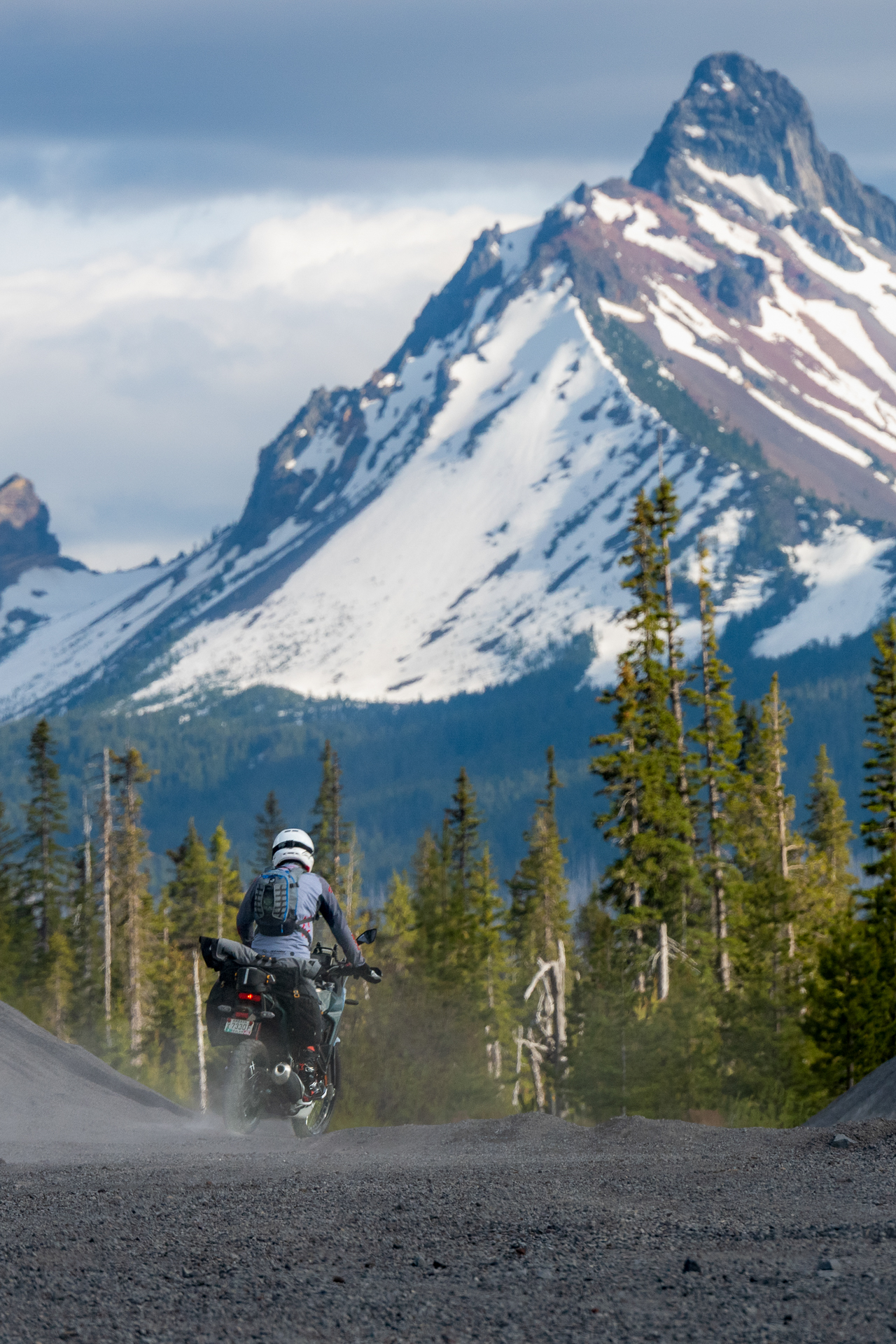
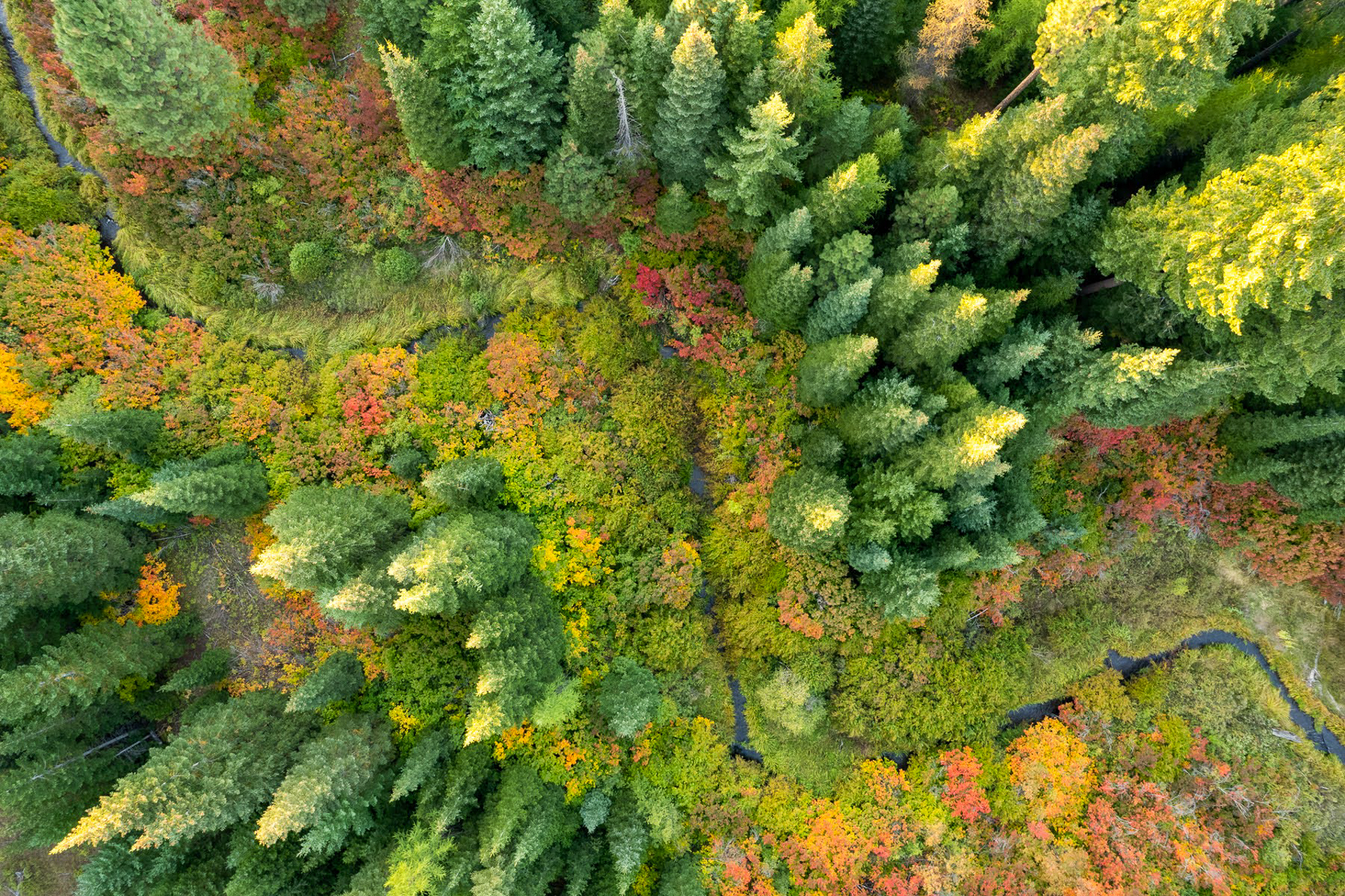
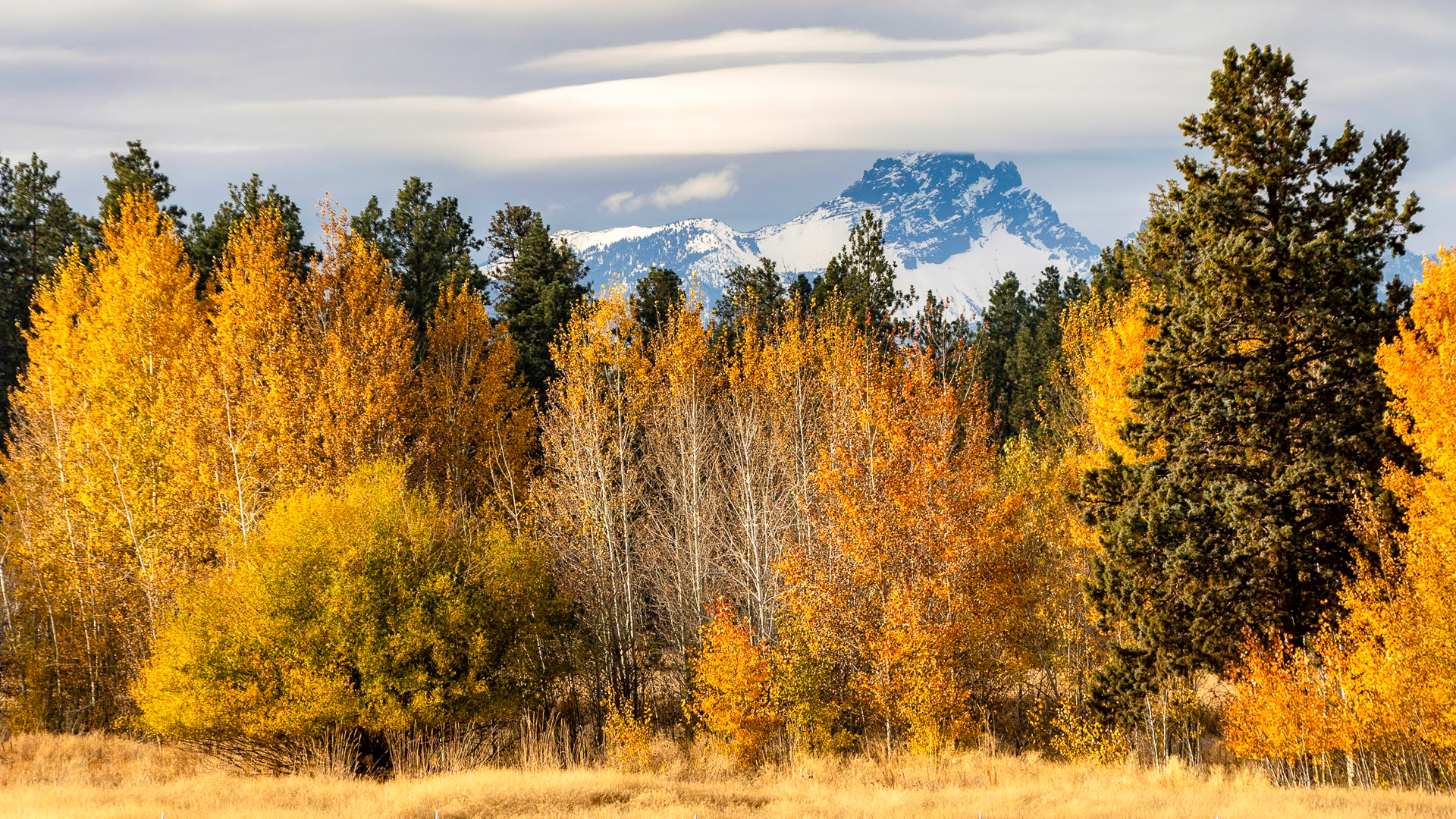
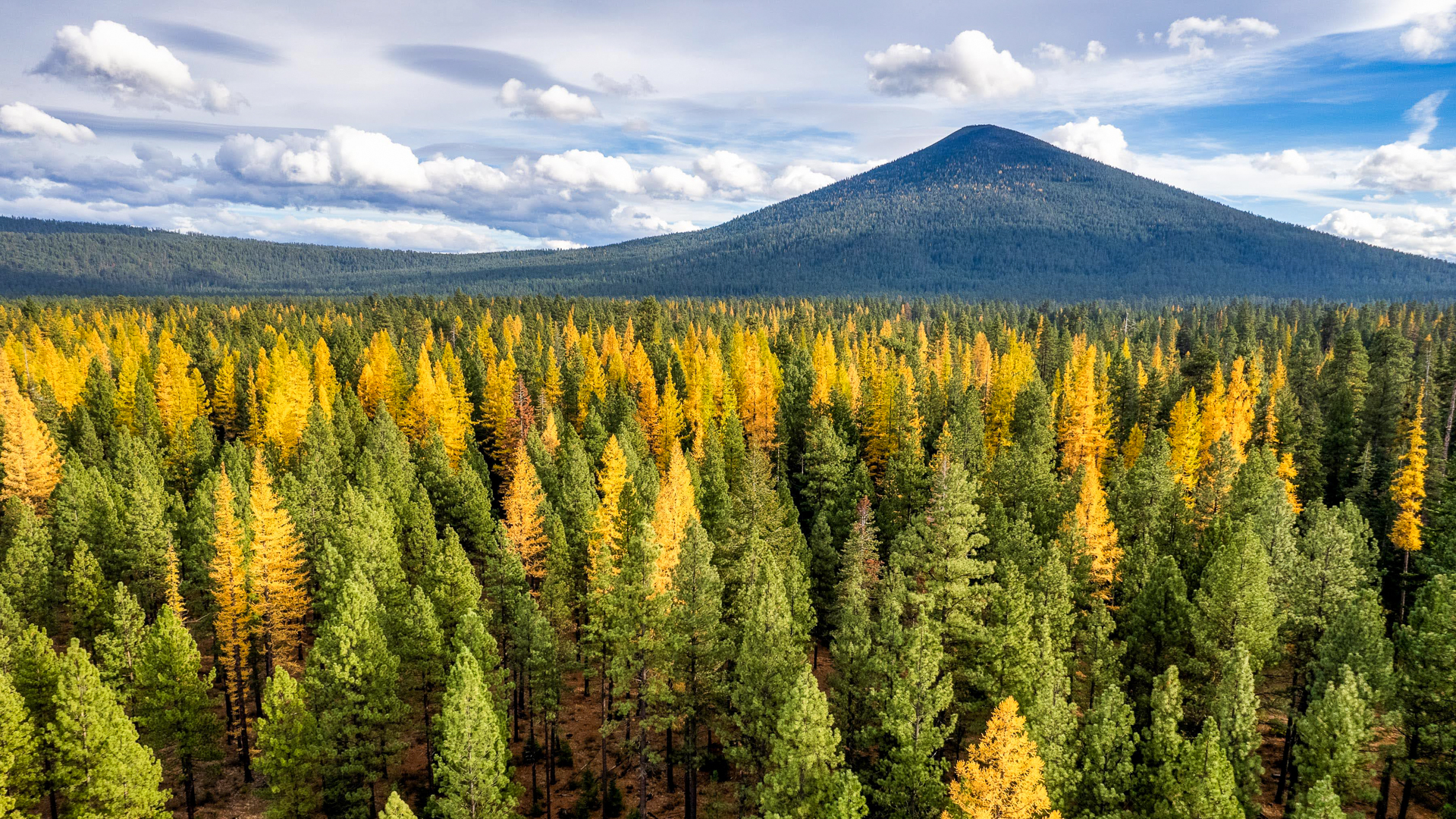
Leaving Crystal Crane Hot Springs felt like riding out of a small desert settlement that had appeared for a few days and would soon dissolve back into open country. We passed back through Burns and Bend, carrying the dust of the high desert and the quiet satisfaction of having seen Oregon from its harder, more remote side. Then the Cascades began to rise again, and the state changed character with the same speed that had defined the entire journey. Sagebrush and ranchland gave way to pine forests, cooler air, and mountain light. By the time we reached Sisters, it felt like entering the final chapter of the answer we had been chasing since Sublimity.
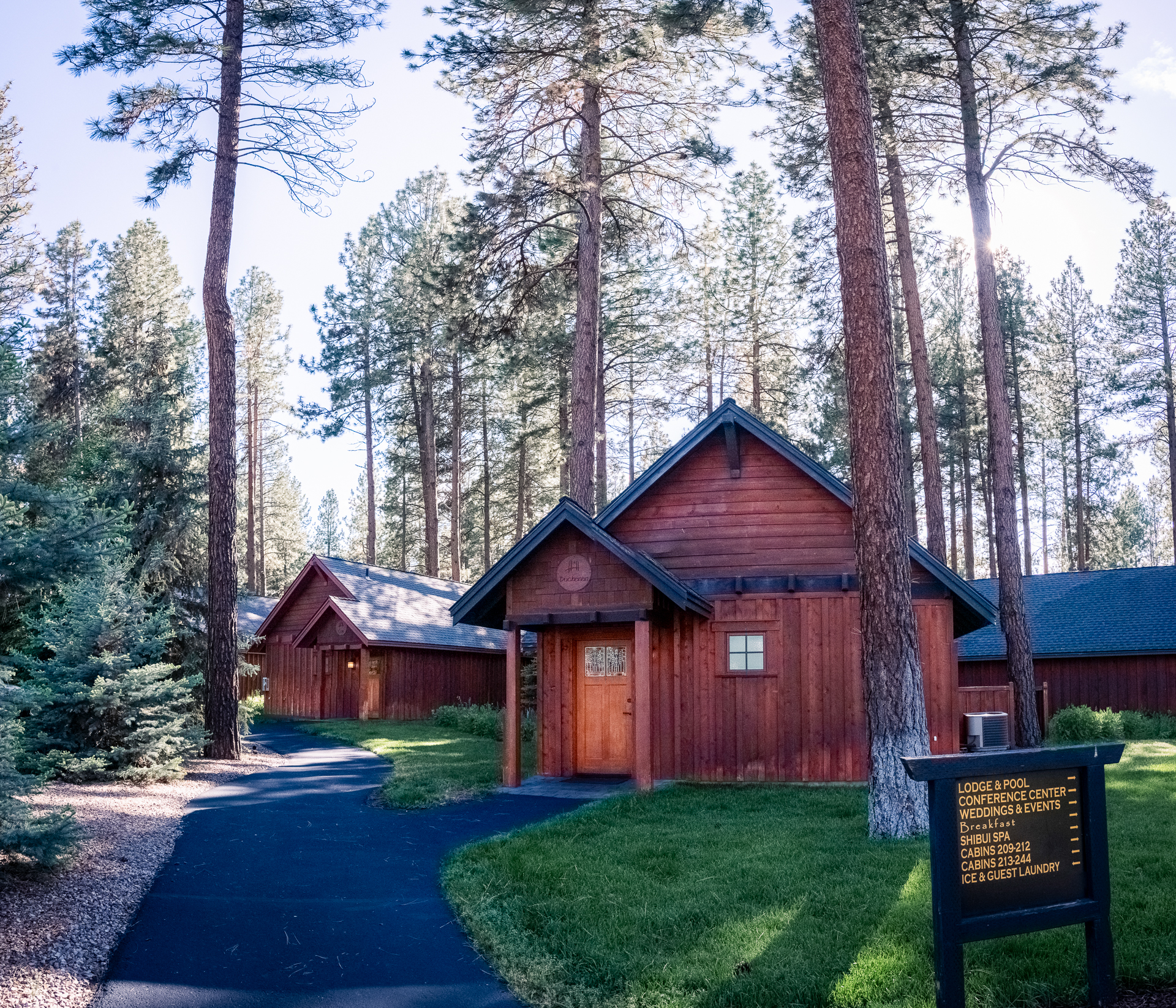
FivePine Lodge gave that transition a fitting place to land. Set into the forest rather than placed on top of it, the lodge feels designed around the trees, with individual cabins, stone fireplaces, private decks, and large soaking tubs that seemed almost extravagant after days of dust, hail, mud, and camp-event living. It was a different kind of Oregon comfort from Crystal Crane, but no less connected to place. One was hot spring steam rising from desert flats. The other was timber, quiet paths, and mountain-town calm. Together, they showed how wide the state’s riding personality can be within a few days of travel.
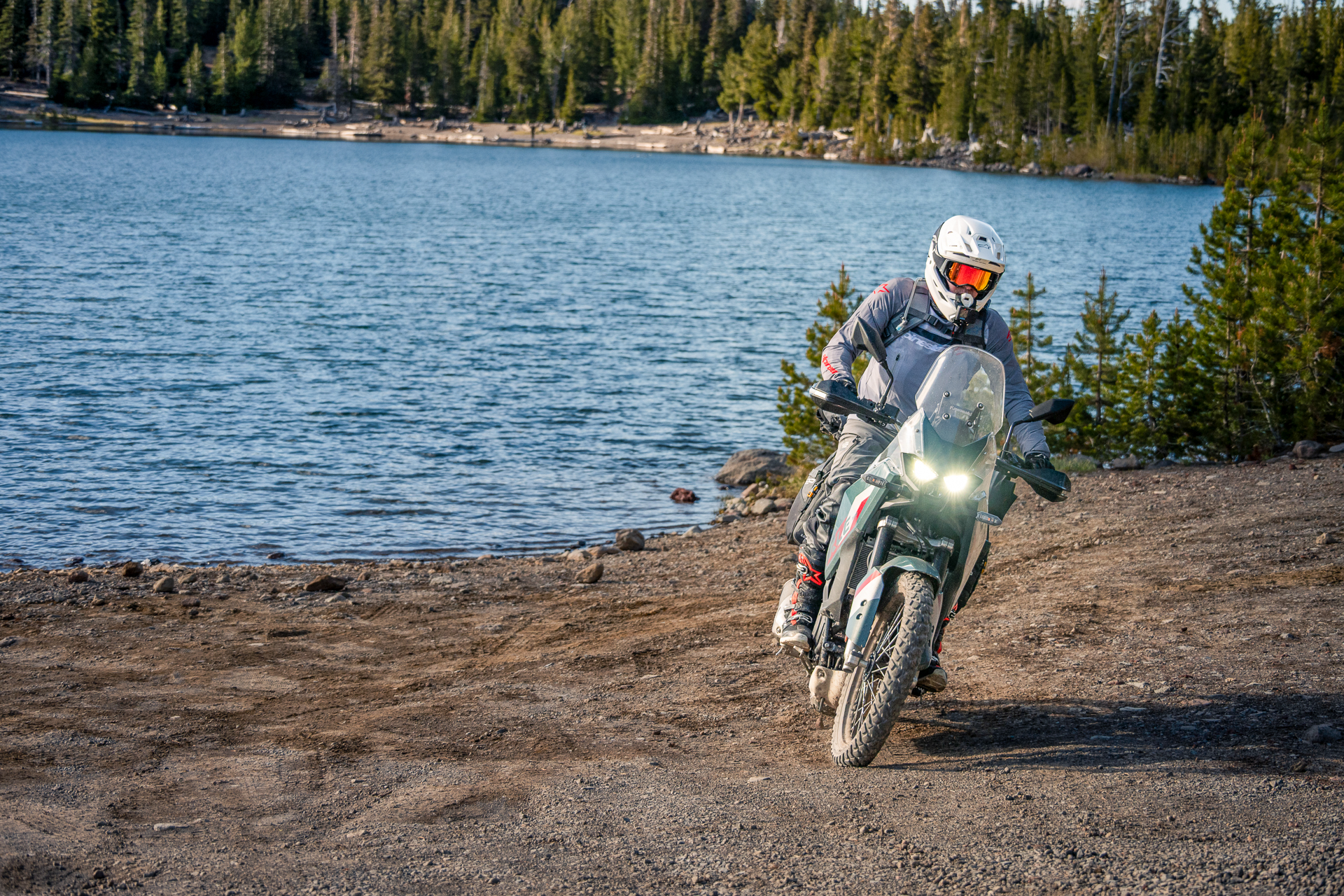
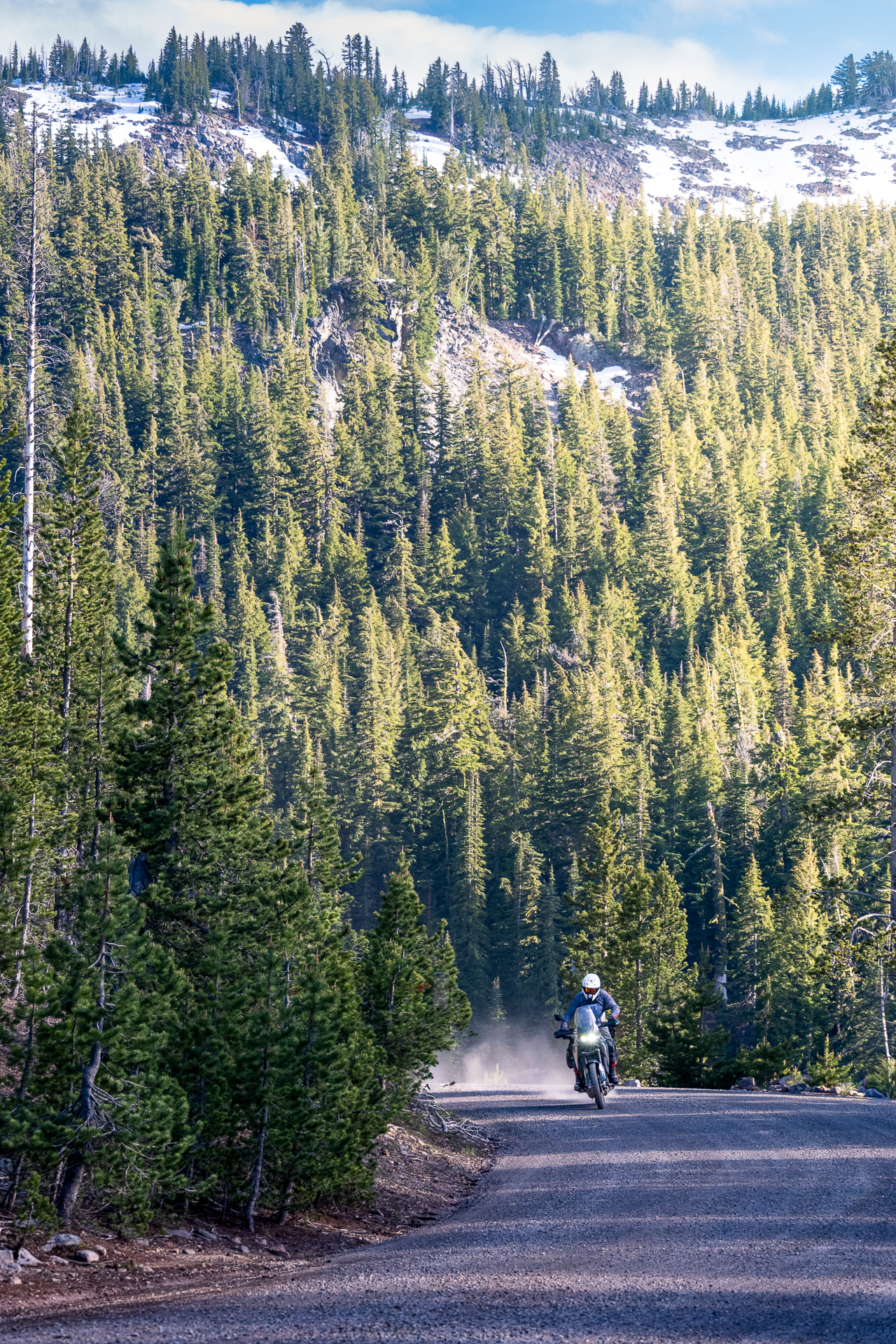
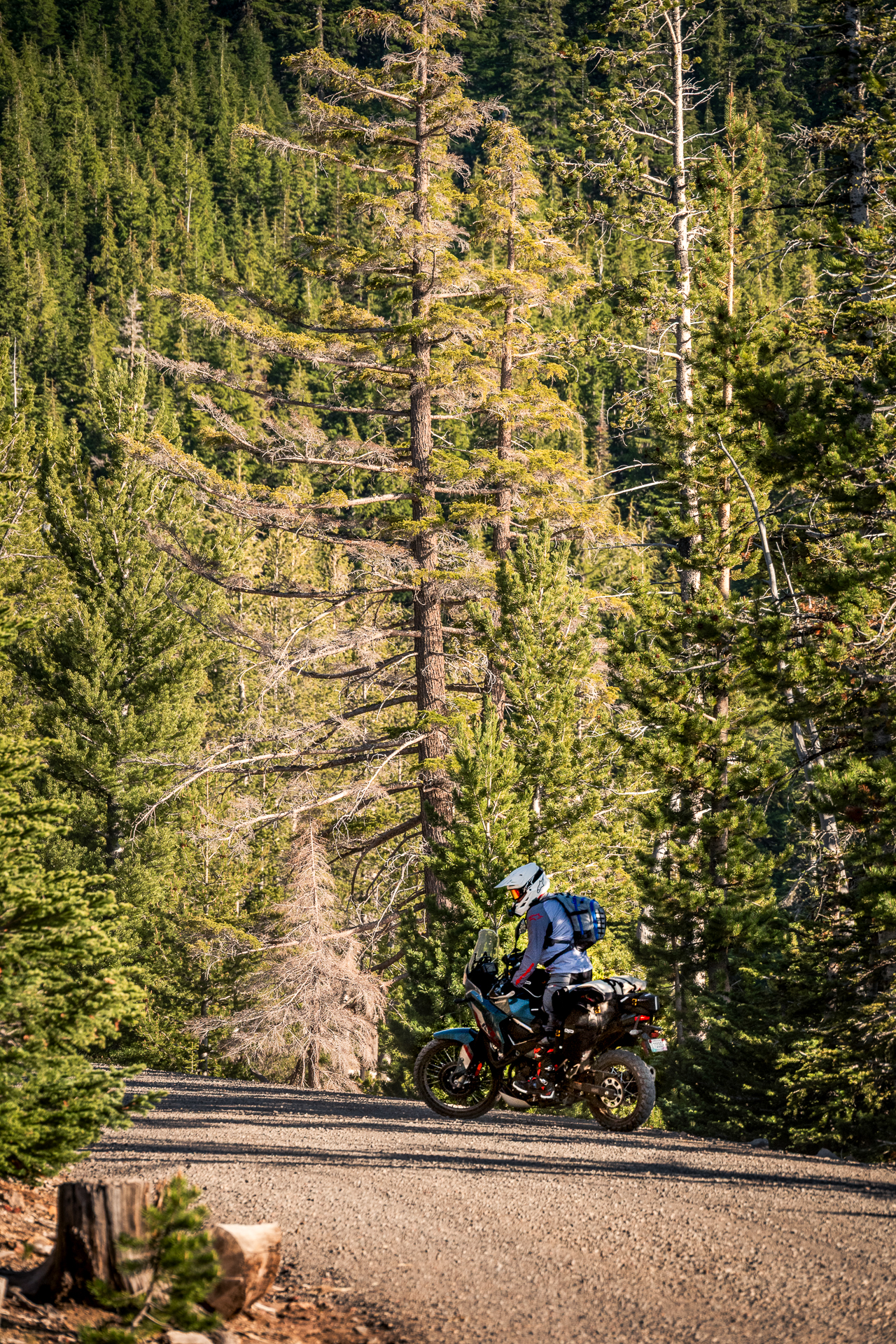
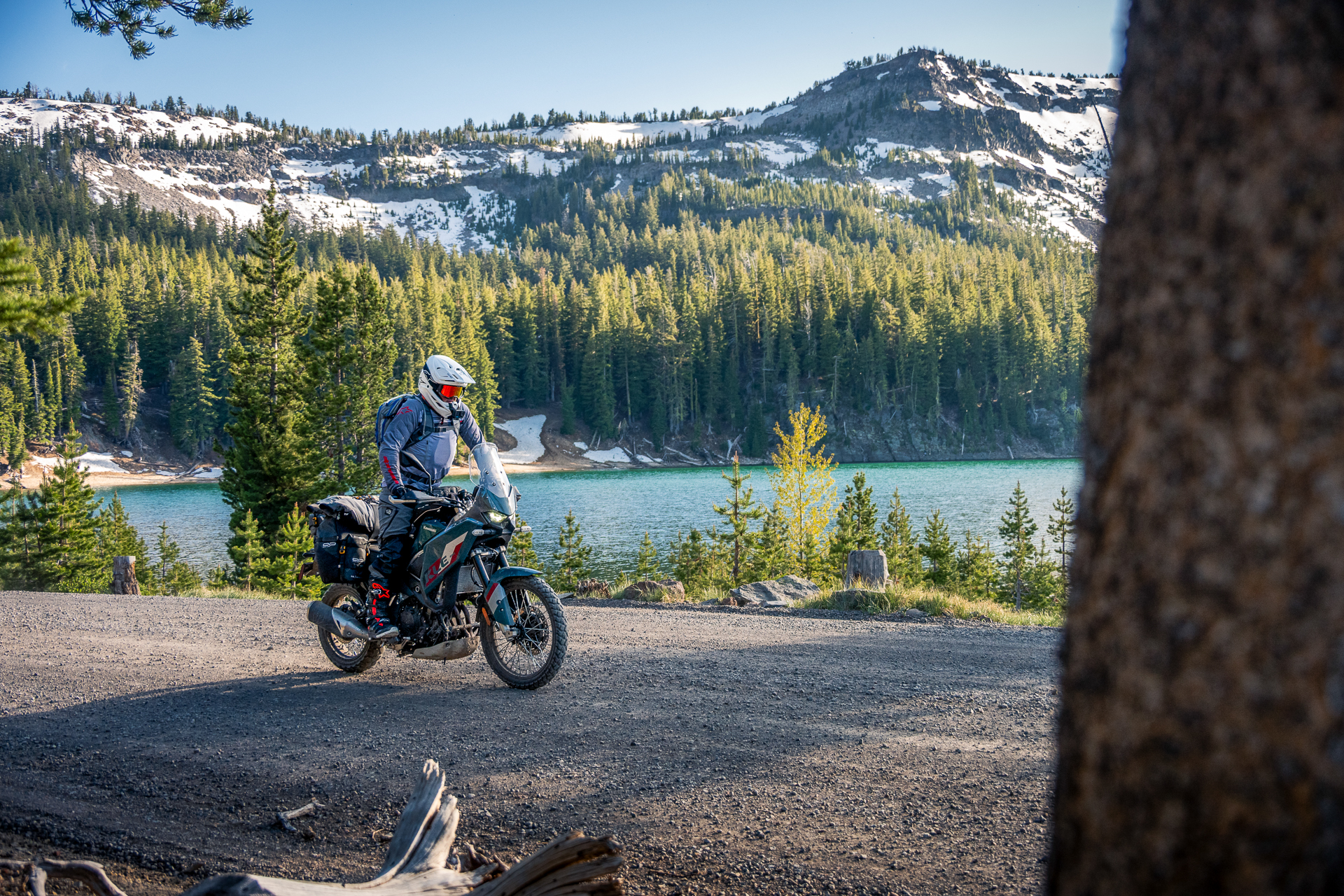
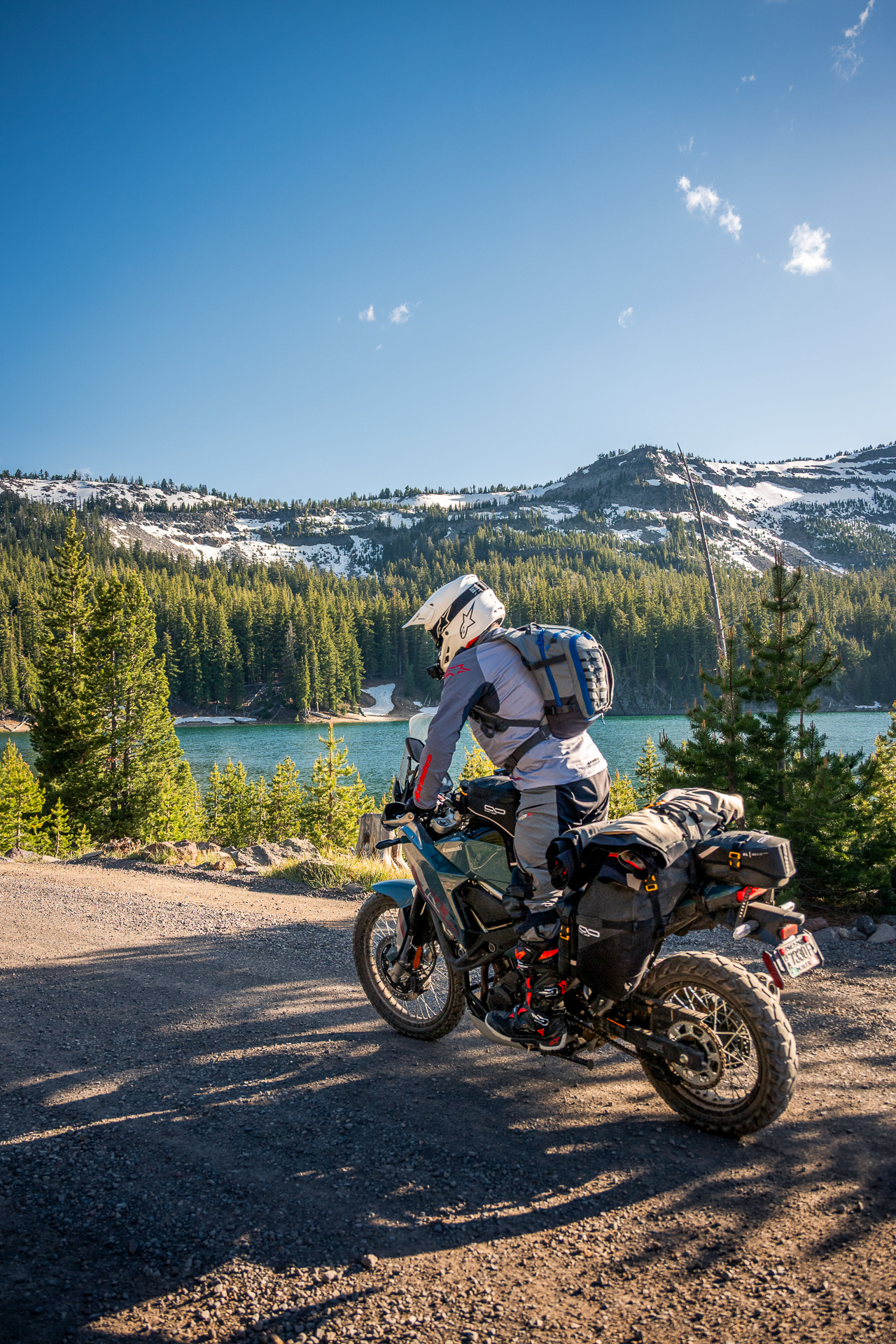
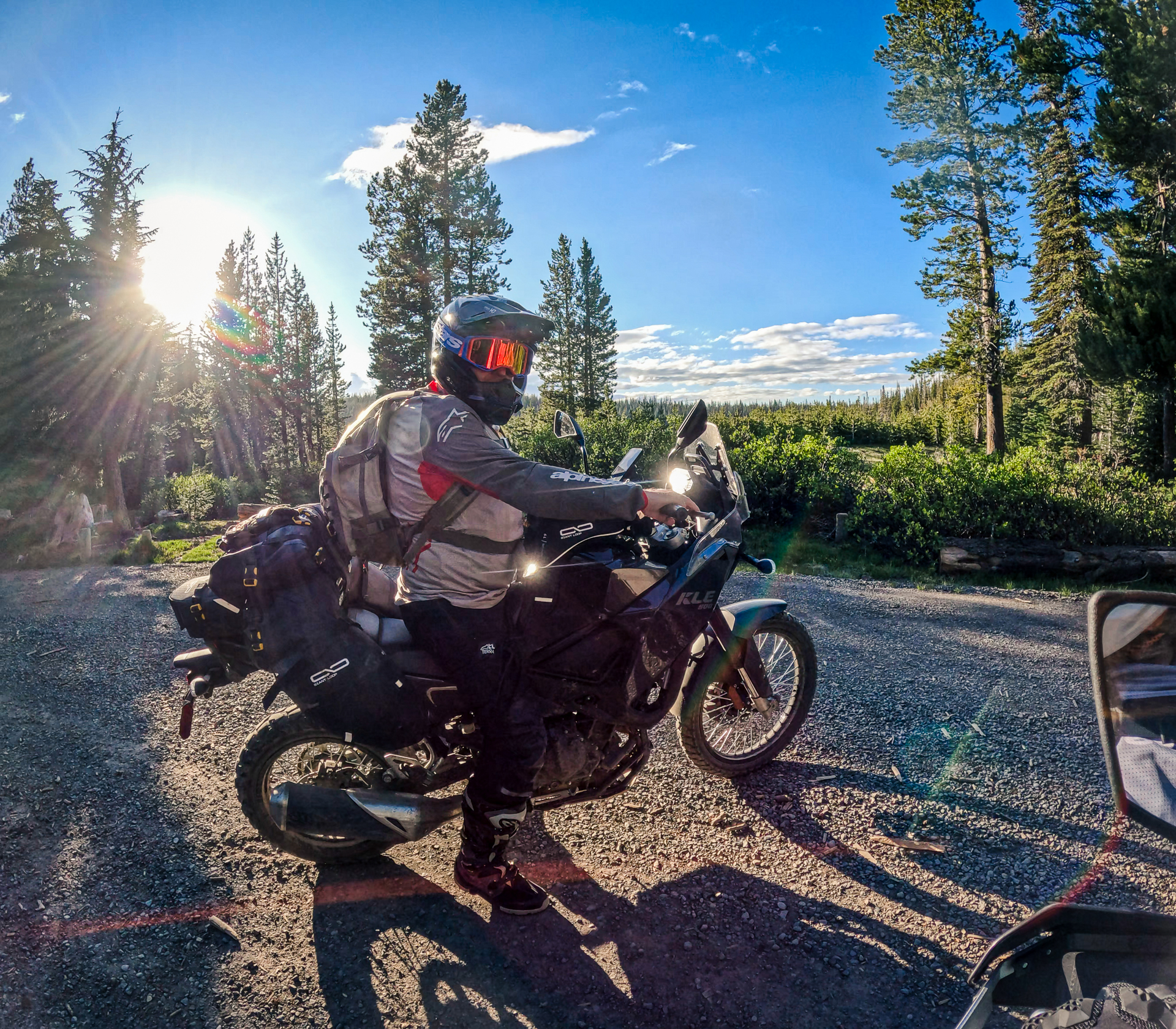
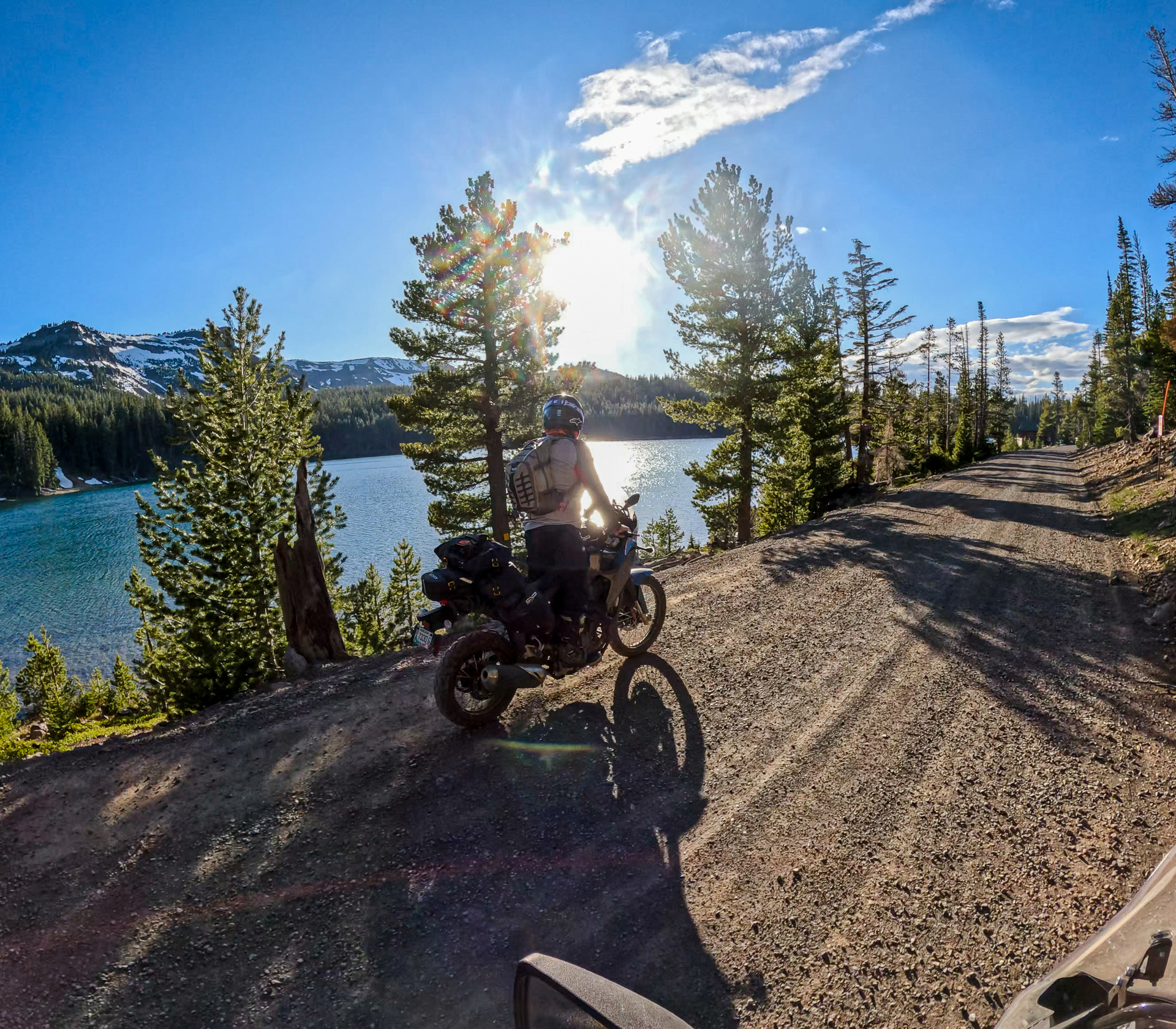
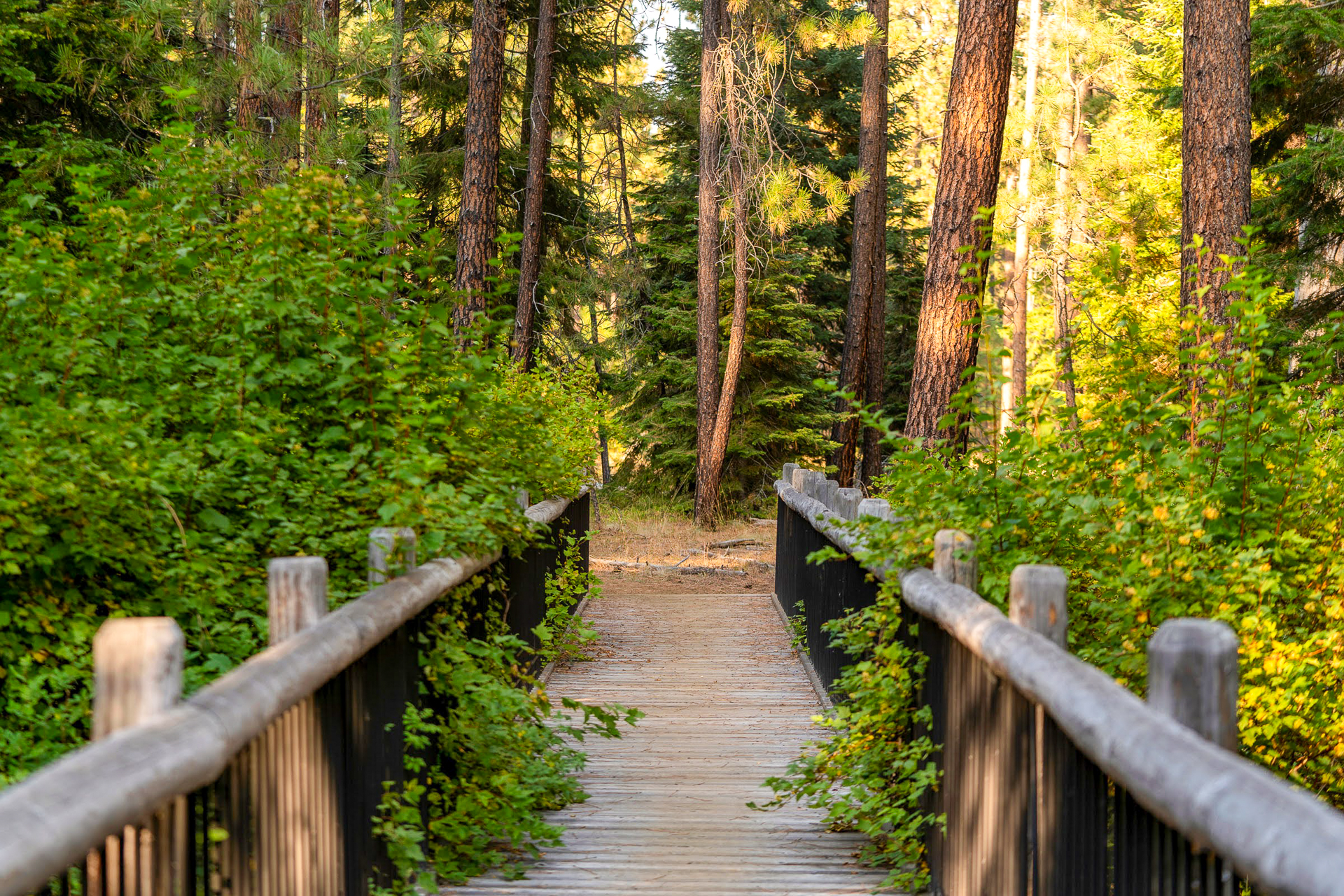
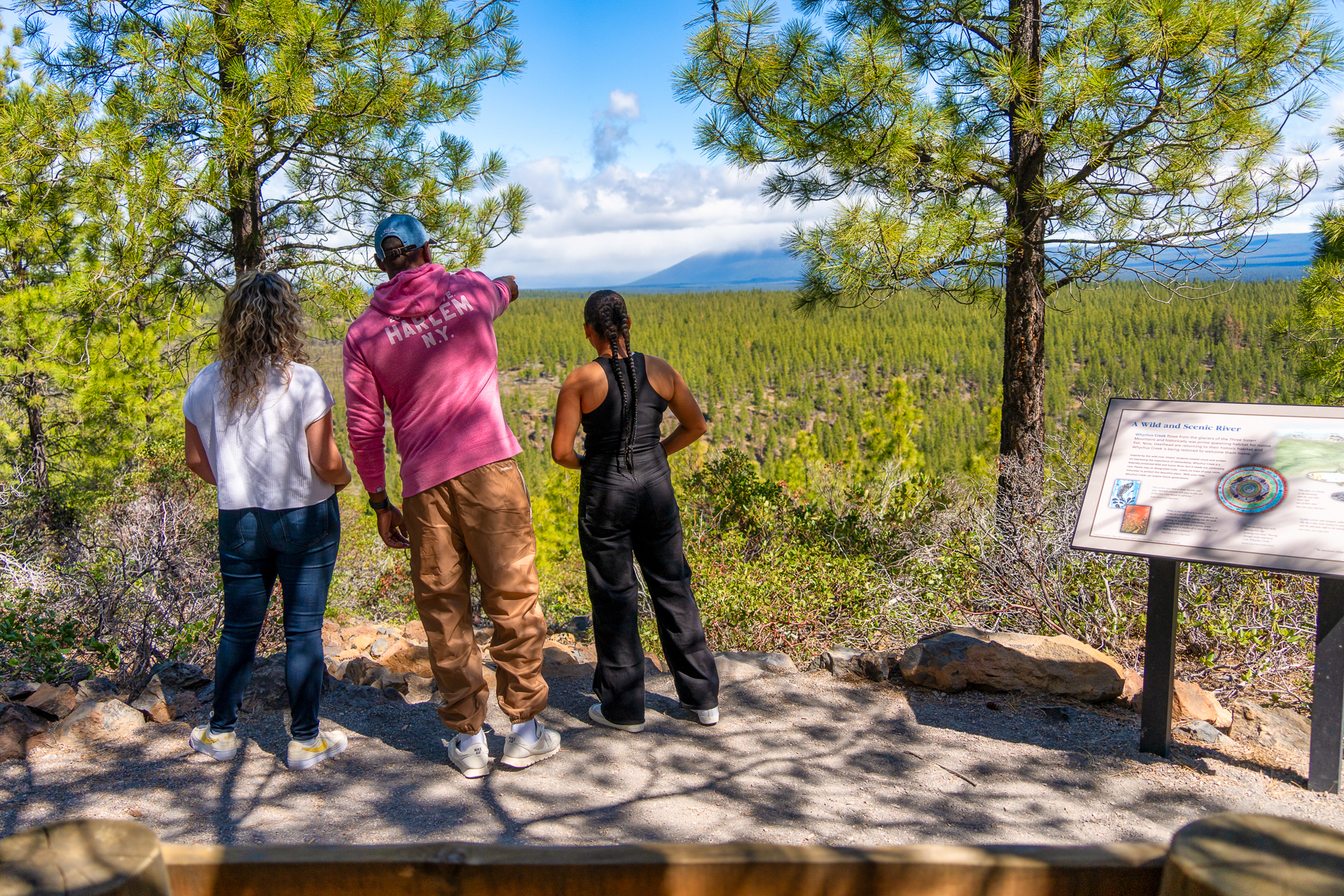
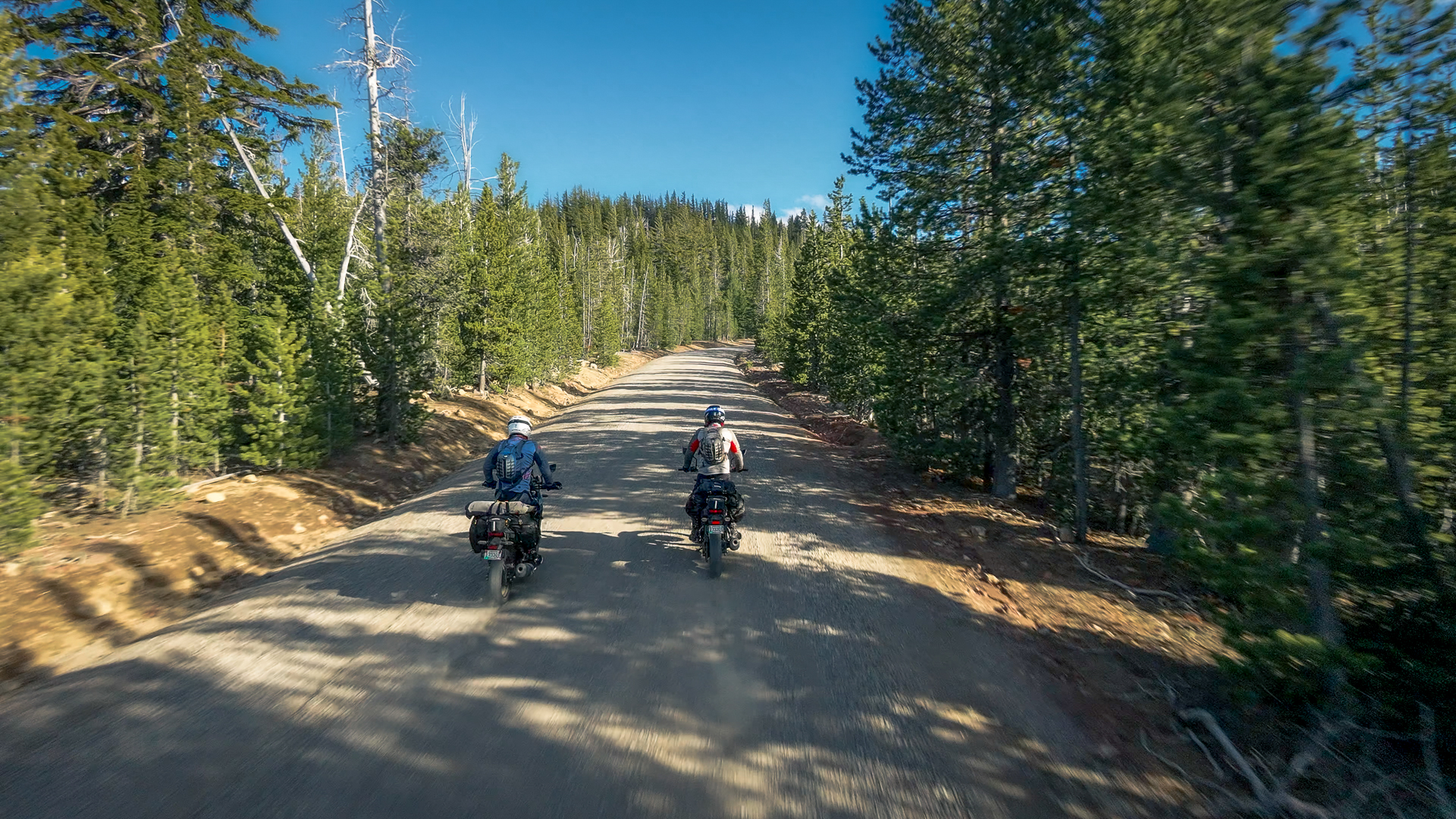
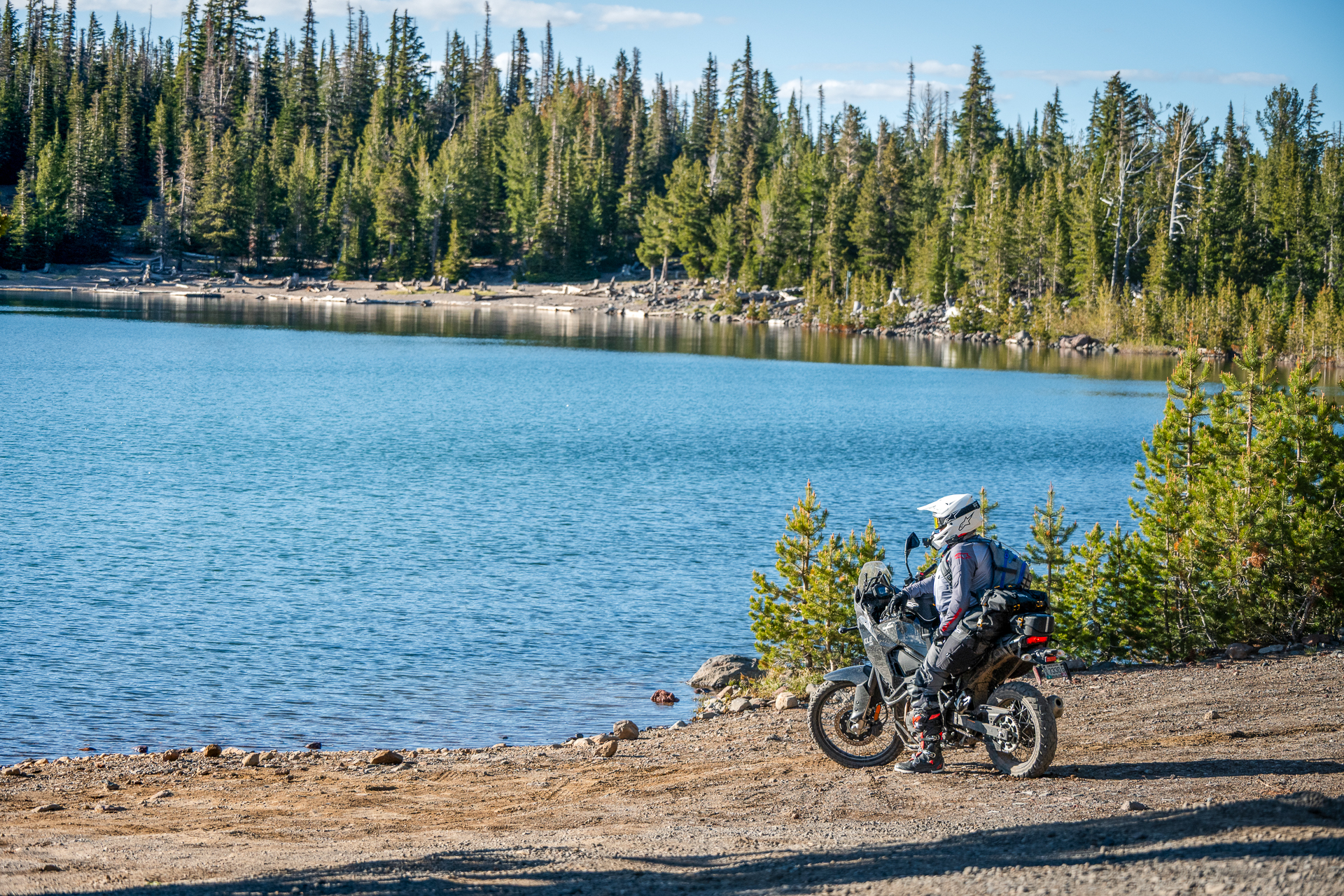
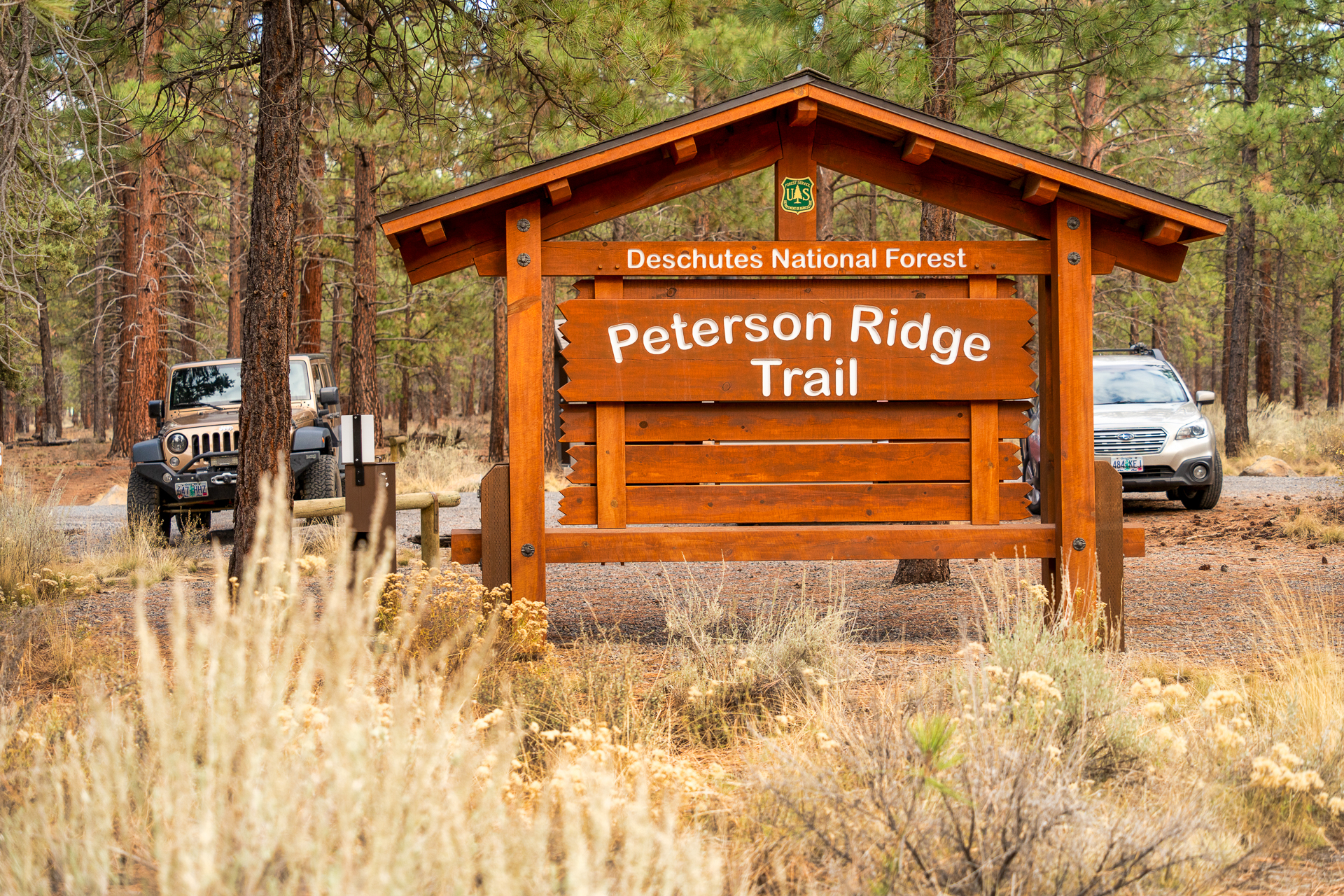
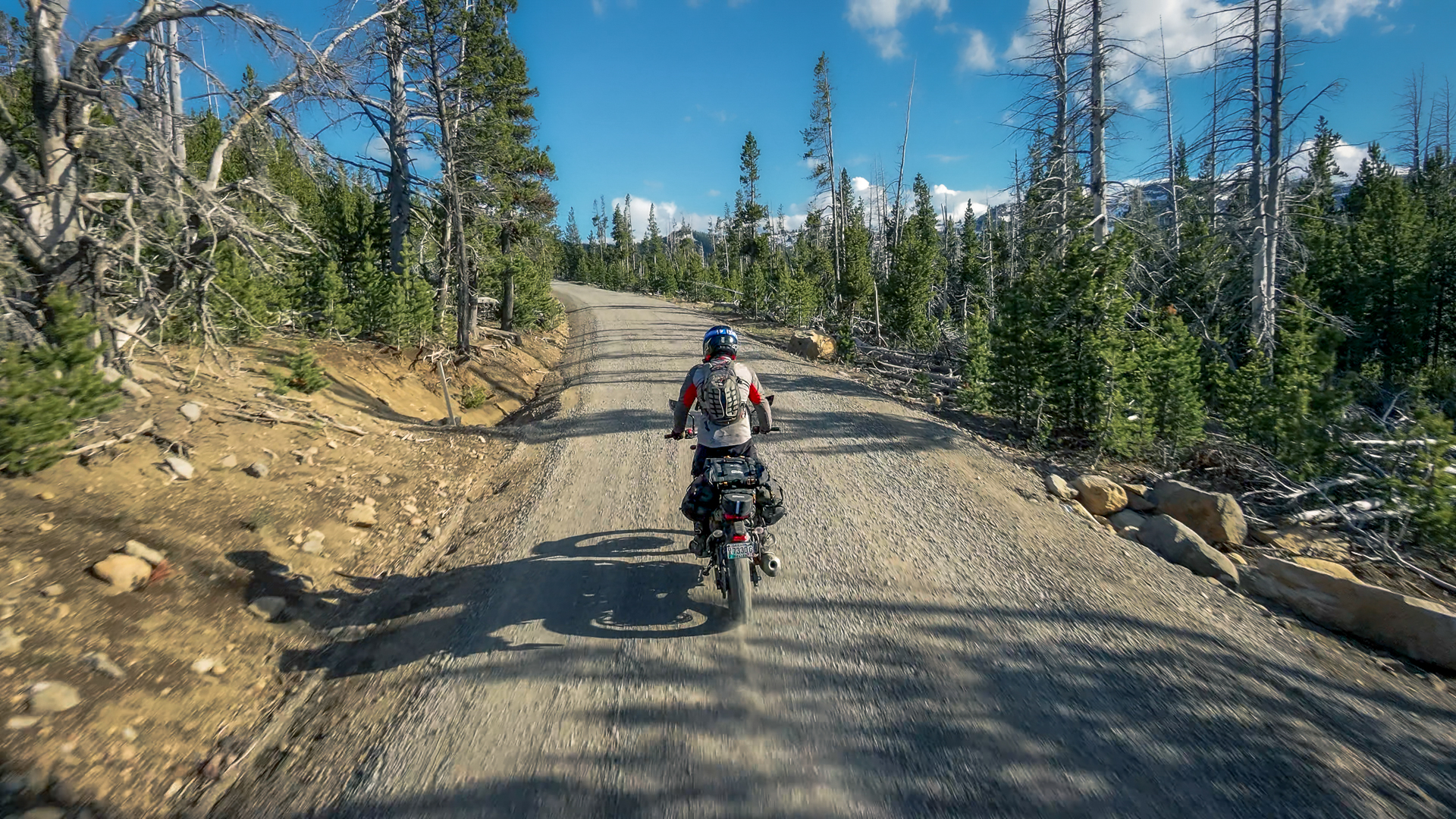
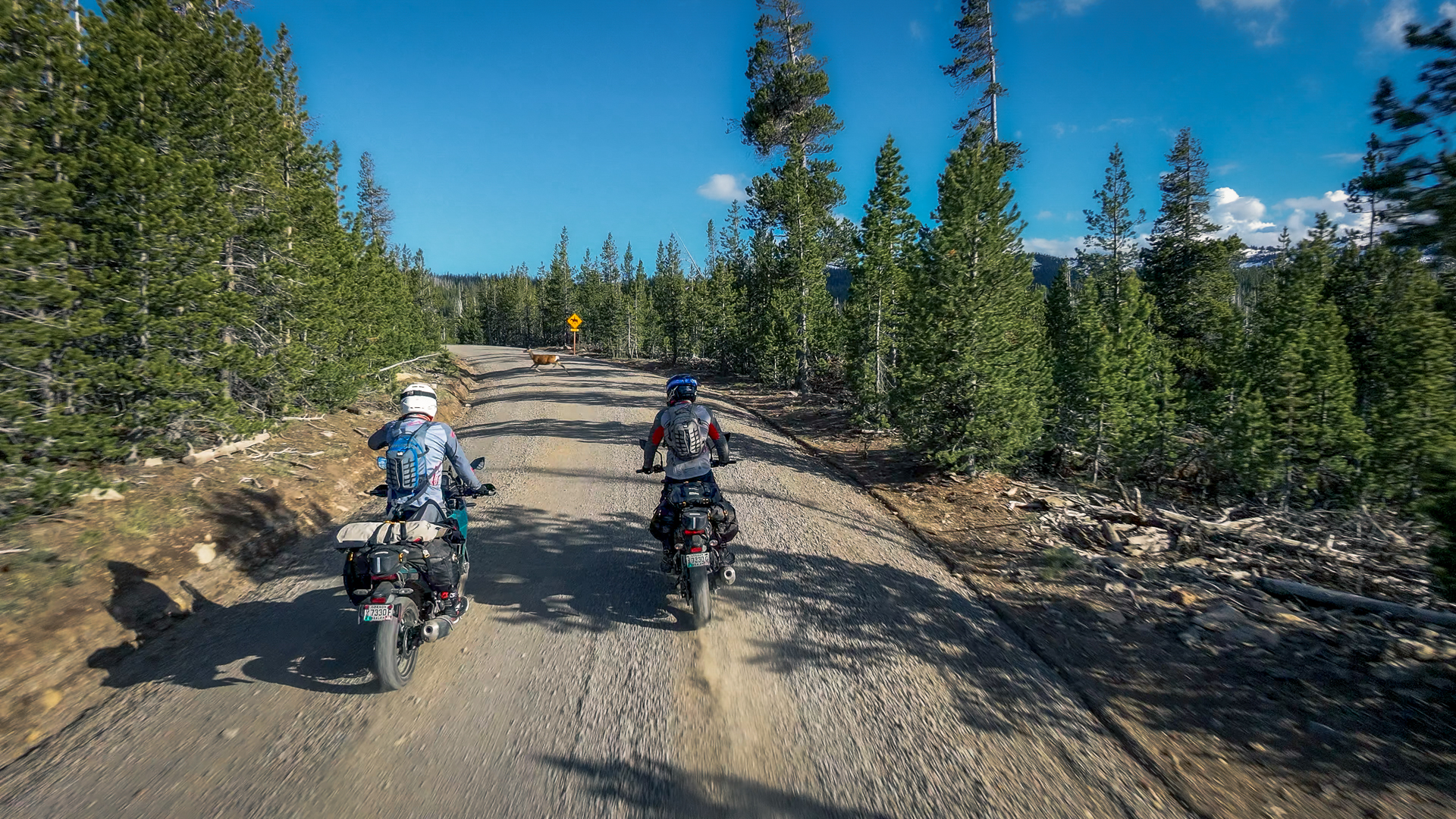
That evening, a local recommendation sent us toward Three Creek Lake, and it became one of the most beautiful short rides of the trip. The route climbed from Sisters into forest roads that form part of the Oregon Backcountry Discovery Route, trading town streets for gravel, trees, and the smell of cold mountain air. Snow still held in patches along the higher sections, deer crossed the road ahead, and the forest opened just enough to reveal the lake in its alpine bowl. After the heat, hail, ranch gates, muddy crossings, and desert miles, the scene felt almost impossibly clean: water, snow, rock, trees, and the Kawasaki KLE500s resting at the edge of it all.
Dinner brought us back into Sisters at the Sisters Saloon, founded in 1912 and still carrying the atmosphere of an old western town that has learned how to welcome modern travelers without sanding off all its edges. Over dinner with Greg Willitts, the conversation moved through the history of Sisters, its evolution into an adventure destination, and the mountain culture that now defines so much of the area. It was the right closing movement for the ride: hot springs to high desert, high desert to Cascades, remote tracks to an old saloon in a town that understands why people keep arriving with dust on their boots.
The final morning began quietly, with the return to Sublimity ahead but one more recommended stop before leaving the mountains. Wizard Falls offered a last, peaceful immersion in Oregon’s wilderness. The forest there felt ancient and composed, the river running clear enough to make every stone visible beneath the surface. It was not a dramatic finale, and that was its strength. After a week of changing weather, difficult navigation, remote tracks, rider gatherings, and terrain that shifted constantly beneath the wheels, Wizard Falls gave the journey a calm closing note. We checked the Giant Loop luggage one last time, settled back onto the KLE500s, and turned toward Powersports Sublimity.
We had started with a question built on a map: why Oregon, and why cross it west to east instead of following the easier logic of a north-south mountain route? By the time we returned, the answer was no longer on the screen. It was in the hail we still remembered outside Paulina, in the steam rising from Crystal Crane Hot Springs, in the ranch gates we respected, in the thin tracks OnX Offroad helped us follow, in the dust packed into the Giant Loop luggage, and in the people who gave the journey its real shape: the riders under the Giant Loop tent, the strangers who became riding partners, the local voices who pointed us toward better roads, and Jeff Vandehey leaving a 17-inch tube outside our RV door because he knew what that small piece of rubber could mean in a remote place.
Oregon had answered by refusing to become one thing. It gave us old forest and black lava, brewery-town comfort and high-desert exposure, hail-covered roads and hot spring nights, cattle guards and alpine lakes, closed gates, unexpected canyons, and the silence of remote gravel. That was the point of crossing the state from west to east and back again. We were not chasing a single landscape. We were looking for the transitions, the seams between worlds, the places where the ride changes character before the rider has time to settle into an idea of where he is. Oregon made us adjust, and in that adjustment it showed us something honest.
The Pacific coast can wait. There will be another time for sea air, coastal roads, and the green edge where Oregon meets the ocean. This ride belonged to the interior: to the Cascades, to the ranchlands, to the high desert, to the hot springs, to the working roads and thin lines that disappear into sagebrush. We returned to Sublimity with the feeling that we had not finished Oregon at all. We had only opened the door far enough to understand why riders keep looking at maps of this state and imagining another route. Some places give you a conclusion. Oregon gives you a reason to come back.
With Special Thanks
This Oregon adventure was made possible through the support of partners who helped us prepare, ride, navigate, communicate, recover, and experience the state from the Cascades to the high desert. BTA Magazine thanks each of these partners for helping bring this Oregon story to life.
- Giant Loop
Event host and motorcycle soft luggage systems
www.giantloopmoto.com - Alpinestars All Terra
Rider gear and protection
www.alpinestars.com - onX Offroad
Navigation and route intelligence partner
www.onxmaps.com - SP Connect
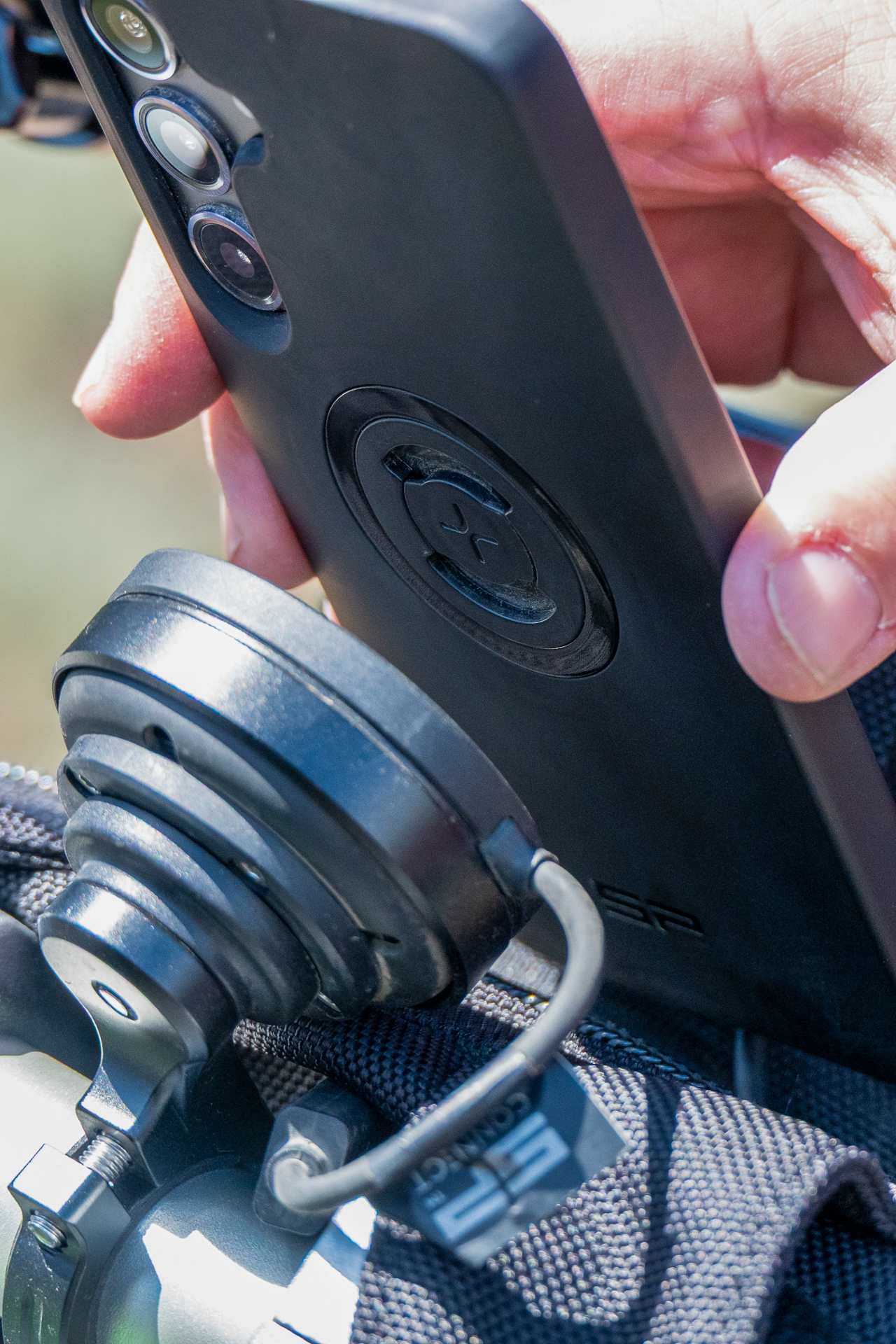
Riders’ smartphone mounting system
www.sp-connect.com - Cardo Systems
Riders communication systems
www.cardosystems.com - Kawasaki
Riders motorcycles
www.kawasaki.com - Power Motorsports
Kawasaki dealer
www.powermotorsports.com - Travel Oregon
Oregon travel information and destination support
www.traveloregon.com - Visit Bend
Bend travel and destination information
www.visitbend.com - McMenamins Old St. Francis School Hotel, Bend
Bend accommodation partner
www.mcmenamins.com - Explore Sisters
Sisters travel and destination information
www.exploresisters.com - FivePine Lodge, Sisters
Sisters accommodation partner
www.fivepine.com
Photos: BTA Media – Words: Mike de la Torre, Pablo Ferrero
Articles in this issue

The Iron Giant Called Us Back
For the 30th Red Bull Erzbergrodeo, BTA returned to Eisenerz to witness a mountain celebrating its past, changing its sound, and pushing 500 riders to the edge“Some places stay with you long...
Steam, Gravel, and the Giant Loop Way
Inside the 2026 Giant Loop Ride in Eastern OregonBy the time the steam rose from the hot pond at Crystal Crane Hot Springs, the Giant Loop Ride had already become something larger than a motorcycle...
Chasing Dust Through Patagonia
Volcanoes, Gravel Roads, and Long Days Riding Out of Bariloche Chapter 2Every long ride has a turning point. A moment when the outward journey ends and the road quietly pivots, pulling you back...
2027 KTM 890 Adventure R Rally
2027 KTM 890 Adventure R Rally Built for the Long Way Around and the Hard Way Through“There are motorcycles designed to reach the end of the road. Then there are motorcycles built for the...
Moto Morini Alltrhike 450
Moto Morini Alltrhike 450 The Golden Eagle Takes Flight Into Lightweight AdventureMoto Morini is stepping into an increasingly competitive and exciting corner of the adventure motorcycle world with...
Alpinestars Tech-Air Off-Road Airbag System
Active Protection Where the Trail Turns UnpredictableFor several days in Oregon, the Alpinestars Tech-Air Off-Road Airbag System became part of the morning routine. Put it on, close it correctly,...