
At Home Almost Anywhere
TRiding the 2026 Kawasaki KLE500 across Oregon, from Cascade pavement to the disappearing trails of the Giant Loop Ride.
Oregon is a good place to find out what an adventure motorcycle is really made of.
Our time with the 2026 Kawasaki KLE 500 began in Sublimity with two nearly new motorcycles, a standard model and an SE, and a route that would take us across the Cascades, through long stretches of pavement and mountain roads, and eventually onto the gravel tracks of the Giant Loop Ride. What started as a comfortable trip across central Oregon gradually moved into rougher territory, until some of those tracks barely looked like roads at all.
It was exactly the kind of terrain that lets a motorcycle reveal itself.
The KLE 500 arrives at an interesting moment for mid-size adventure motorcycles. Riders are increasingly looking for machines that can handle real travel and real dirt without turning every parking maneuver or technical section into a fight. Kawasaki’s answer brings back a familiar name, this time around a 451 cc parallel-twin platform designed to keep things approachable.
Specifications can tell you what Kawasaki intended.
Several days riding through Oregon told us what the KLE 500 actually feels like to live with.
And by the time we handed the keys back in Sublimity, we had learned quite a bit about where this motorcycle feels at home.
Familiar From the First Mile
There are motorcycles you need a few miles to understand. The Kawasaki KLE 500 was not one of them.
We had been looking forward to this ride for a while. The return of the KLE name, Kawasaki’s history behind it, and the growing interest around the mid-size adventure category had created plenty of expectations. At Power Motorsports in Sublimity, Oregon, we collected two nearly new KLE 500s: a standard version with barely one mile on the odometer and an SE showing fewer than one hundred. We would ride both throughout the trip.
The KLE looks purposeful without looking oversized. The front lighting gives it a distinctive face, the bodywork stays relatively slim, and nothing feels unnecessarily bulky. It looks like a motorcycle that knows what it needs to do without trying too hard to prove it.
That same simplicity carried over the moment we climbed aboard.
Everything seemed to be where we expected it. The controls were intuitive, the brake and clutch levers adjustable, and the riding position immediately natural. At 5 ft 9 in (176 cm), I normally prefer handlebar risers on my own adventure bikes, especially for long periods standing on the pegs. On the KLE, I never felt the need for them.
The seat narrows toward the tank, leaving plenty of room to move around while standing, yet has enough cushioning for long hours on the road. Even with luggage behind us, the mirrors remained useful and unobstructed.
Perhaps the most surprising thing was how quickly the motorcycle seemed to disappear underneath you. Direction changes came easily, and once moving, the KLE never felt cumbersome, even fully loaded.
Within the first few miles, we had stopped thinking about adapting to the motorcycle.
We were simply riding.


Across the Cascades
The first two days were almost entirely on pavement. Leaving Sublimity, we crossed the Cascades toward Bend before continuing southeast to Crystal Crane Hot Springs, with short stretches of highway and plenty of mountain roads in between.
It was a good chance to understand the KLE 500 as a travel motorcycle.
Its 451 cc parallel-twin is not about brute force. Power delivery is smooth and predictable, with enough in reserve to hold a comfortable cruising speed and make a clean pass when needed. Through the mountain sections, second and third gear quickly became our natural working range, while the six-speed gearbox and light clutch were so easy to use that we barely thought about them. Sometimes the best controls are the ones that disappear from the conversation.
Through tighter bends, the KLE changed direction with little effort, and the front end gave us a reassuring sense of grip. A few corners inevitably arrived a little faster than planned, but the brakes responded with good feel and enough confidence to correct the mistake without drama. Up front, a 300 mm disc with a dual-piston caliper handles most of the stopping work, supported by a 230 mm rear disc and compact Nissin ABS.
Longer hours in the saddle also revealed the practical differences between the two versions. The standard KLE’s shorter windscreen left considerably more air reaching the rider, something we noticed after several hours on the road. On cold Oregon mornings, the absence of handguards was equally obvious.
Switching between the bikes made us appreciate the SE’s taller screen and handguards every time the miles and cold air started adding up.
By the time we reached Crystal Crane, the KLE had proved comfortable, predictable, and easy to live with.
The pavement, however, was about to end.
When the Pavement Ends
Crystal Crane Hot Springs became the point where the ride changed character. From there, following the Giant Loop Ride tracks, the pavement began to give way to the roads we had been waiting for.
The first gravel sections brought back the same feeling we had found on asphalt: familiarity. Standing on the pegs felt natural, the bike stayed easy to place, and the throttle delivered the predictable response you want when the surface beneath you starts moving around.
Open the throttle coming out of a loose corner and the KLE had enough energy to put a smile inside the helmet without ever feeling intimidating. The 451 cc twin was not trying to turn every fire road into a rally stage, but it gave us all the usable power we needed to have fun and stay in control.
As the roads became rougher, the suspension started earning its place in the story. The KLE uses a 43 mm KYB inverted cartridge fork with 8.3 in (210 mm) of travel, paired with a New Uni-Trak rear setup offering 7.9 in (200 mm). On Oregon’s broken gravel, washboard, potholes, and increasingly uneven tracks, those numbers translated into a motorcycle that remained composed and rarely forced us to back off.
The 21-inch front and 17-inch rear spoked wheels also made sense once the surface loosened up. The front tracked naturally through gravel, and even with luggage behind us, quick corrections and changes of line required little effort.
The ABS can be switched off from the left handlebar control for loose terrain, a small detail that matters once the road stops behaving like a road. What impressed us most, though, was how little the KLE demanded from the rider.
Then the tracks became narrower.
And eventually, they started disappearing altogether.
When the Trail Starts to Disappear
The farther we followed the track, the less it looked like a road.
Gravel gave way to deeper ruts, loose rock, steeper descents, and sections where choosing the right line started to matter. Yet the KLE still felt surprisingly comfortable there. Standing on the pegs, it remained easy to move underneath us, quick to change lines, and responsive enough at the throttle to correct a mistake or carry momentum through a difficult section.
Second and third gear had handled most of the tighter riding, but here there were places where first became the only sensible choice. The clutch remained light and predictable, and the engine pulled cleanly at low speed.
What surprised us was that the suspension never became the concern.
Even as the terrain grew rougher, with abrupt climbs and rocky descents, we never felt close to using everything the suspension had available. The limitation appeared somewhere else.
Ground clearance.
As the ruts deepened and the rocks grew larger, the skid plate started taking hits. Eventually, looking ahead and seeing conditions continuing to deteriorate, we made the sensible decision to turn around.
That meant climbing back through everything we had just descended.
One particular rocky uphill had already given the skid plate a serious workout on the way down. Deep ruts were filled with loose stones, and standing at the bottom looking back up, my first thought was simple: this could get complicated.
The KLE apparently had a different opinion.
“Easy, Mike. I’ve got this.”
Both bikes climbed the section far more easily than I expected. The chassis stayed manageable, the throttle gave us exactly what we needed, and the motorcycles found their way through the rocks without drama.
That moment probably told us more about the KLE 500 than any specification sheet could.
Its off-road ability had carried us into terrain where the motorcycle still felt composed, but the clearance underneath was beginning to dictate how far we should continue. A little more room below the engine would open another layer of possibilities, because the rest of the package clearly still had more to give.
We turned back knowing we had pushed well beyond the easy gravel roads the KLE would probably spend most of its life exploring.
And it had surprised us all the way there.
Back to Sublimity
By the time we pointed the KLEs back toward Sublimity, there was very little left to figure out.
Over the previous days, the bikes had carried us across pavement, mountain roads, fast gravel, broken tracks, and terrain rough enough to make us reconsider where we were going. Through all of it, the same quality kept coming back: the KLE was easy to understand.
The riding position worked seated or standing, the engine delivered its power in a friendly and usable way, and the chassis remained light on its feet even with luggage behind us. On gravel it was playful, and when the terrain became technical, it stayed calm and manageable.
That makes the KLE 500 particularly interesting for riders entering the adventure world, but its appeal does not stop there. Experienced riders will also find plenty to enjoy, especially those who value a motorcycle that is easy to live with and does not require a wrestling match every time the pavement ends.
If there is one thing we would ask Kawasaki to revisit, it is the ground clearance. Our ride showed that the chassis, suspension, and engine were willing to continue long after the skid plate started reminding us how close the rocks were. A little more room underneath would allow riders to take better advantage of capabilities the motorcycle already has.
Eventually, we rolled back into Power Motorsports in Sublimity and parked the two KLEs where the trip had begun.
A few days earlier, one of them had shown barely a single mile on its odometer. Now both carried Oregon dust, a few stories, and considerably more miles.
Handing back the keys felt strangely difficult.
Maybe that was the best compliment we could give them.
Photos: BTA Media – Words: Mike de la Torre
Articles in this issue

Red Bull Romaniacs 2026 Adventure Bikes Find Their Race
Red Bull Romaniacs has spent more than two decades sending riders into the Carpathian Mountains with a GPS, a motorcycle, and very little room for error. The 2026 UNSTOPPABLE edition carried that...
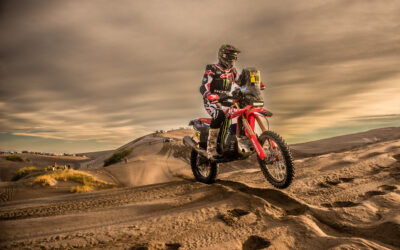
Daniel Sanders Rules the 2026 Desafío Ruta 40 YPF
From San Juan to San Rafael and back again, the Red Bull KTM rider turns a brutal week in western Argentina into a commanding rally-raid victory.The 2026 Desafío Ruta 40 YPF ran from May 24 to 29...
Where the Sun Refuses to Leave
Riding to Nordkapp - Chapter 3 of 3By the time the road turned toward Norway, the journey had already become more than a route across Europe. Behind were long days through England and Scotland, the...
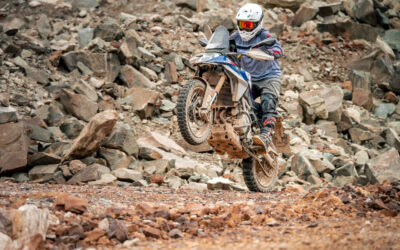
BMW F 450 GS Review
BMW F 450 GS Review Playing Inside Austria’s Iron GiantThe arrival of the BMW F 450 GS immediately caught our attention. A new 420 cc parallel twin, 48 hp, a serious electronics package, capable...
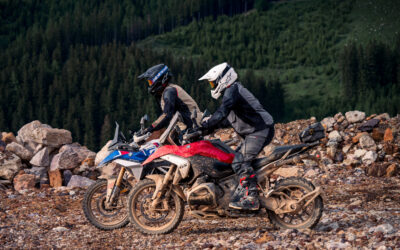
ALPINESTARS ANDES PRO DRYSTAR® XF
Adventure riding gear faces a difficult contradiction. It needs to protect against impact, abrasion, rain, wind, and cold, yet remain comfortable enough to wear for eight hours on the bike. It has...
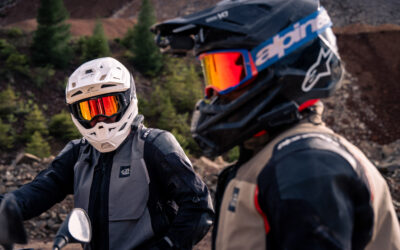
ALPINESTARS VISION 8 WORDMARK GOGGLES
Two weeks, two continents, and nearly every kind of weather Goggles are not easy to judge in a showroom. Their real strengths and weaknesses only become apparent after hours inside a helmet, when...