
The Long Road to a Dream
Diego Roson’s Chapter 1 – Trip from Finisterre to Abbey Road Studios.
From Finisterre to Abbey Road
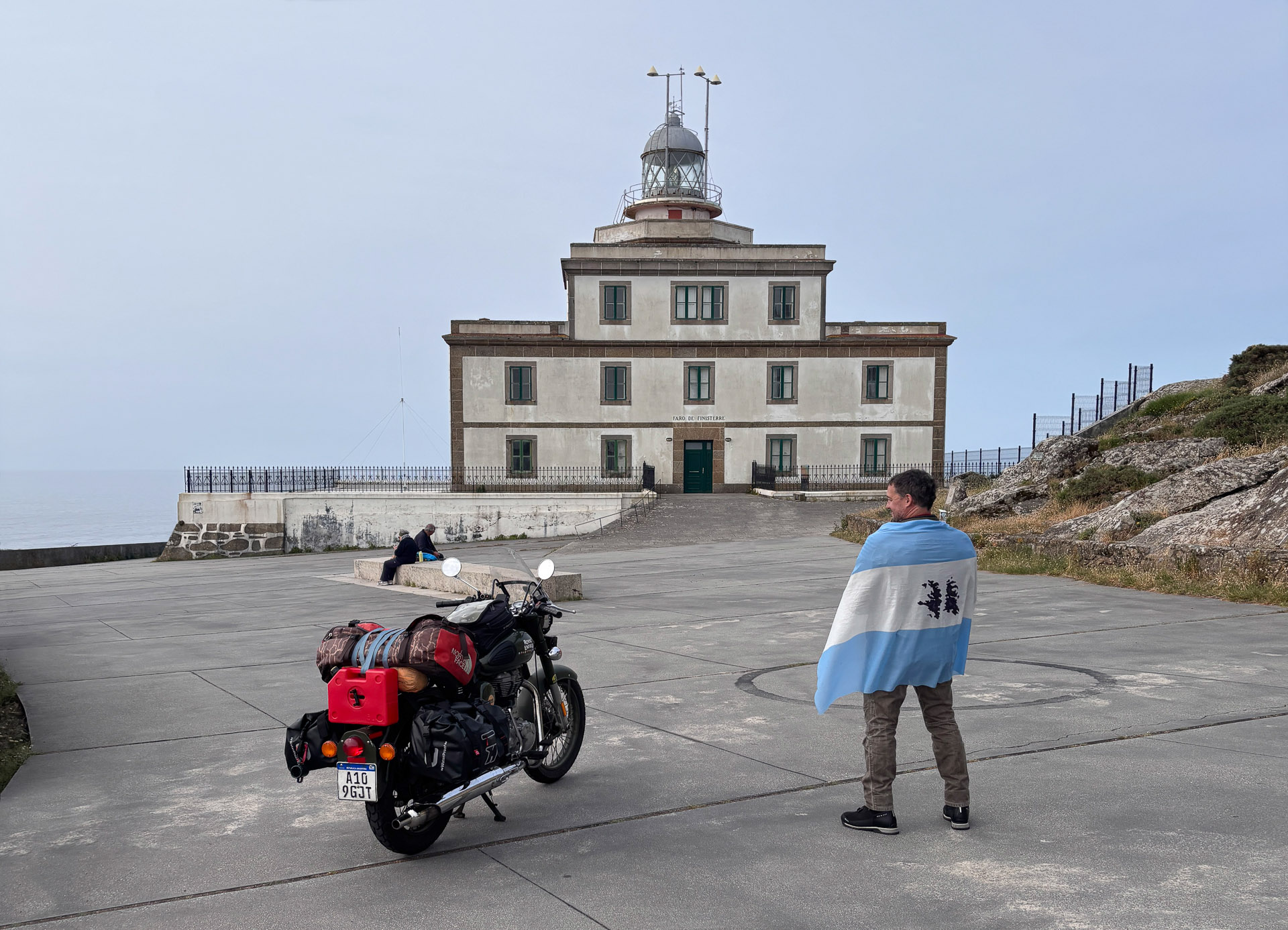
At the western edge of Spain, where the land simply stops and the Atlantic begins, a lighthouse stands above a place the Romans once believed to be the end of the world. Finisterre. Finis Terrae.
For centuries, pilgrims finishing the Camino de Santiago have burned their clothes here as a symbol of renewal, a ritual marking the end of one life and the beginning of another. For Argentine rider Diego Rosón, however, Finisterre was not the end of anything. It was the beginning.
This story is based on Rosón’s book documenting his long-awaited motorcycle expedition across Europe, a journey that would eventually take him from the Atlantic cliffs of Galicia all the way to Nordkapp, the northernmost road point of the continent. What you are reading here is the first chapter of a three-part series following that journey.
Ahead lay thousands of kilometers of mountains, coastlines, cities, storms, and solitude. But the real story had begun long before the engine fired for the first time.
A Dream That Refused to Disappear
Long before the Royal Enfield rolled onto the road at Finisterre, the journey had already been unfolding quietly for decades. Like many great adventures, it began as a simple dream. At eighteen, freshly out of school and standing at the uncertain edge of adulthood, Diego that imagined a life built around movement and discovery, studying architecture, living closer to the mountains, and eventually riding a motorcycle across distant landscapes.
But life rarely follows the neat lines we draw for it. A sudden tragedy took his parents away and shattered the carefully imagined future. The years that followed became less about adventure and more about survival. Jobs changed, opportunities appeared and disappeared, and the dream of traveling by motorcycle was quietly pushed aside while life demanded attention elsewhere.
Yet the idea never disappeared completely. Somewhere, tucked away in what he describes as a private box inside the heart, the dream remained intact, waiting patiently. Not forgotten, just postponed.
Decades passed. Careers evolved. The family grew. Life slowly found a new rhythm. And then, one day, the spark returned in the form of an old motorcycle, a worn collection of parts that most people would have dismissed as scrap metal. Instead, it became the key that reopened the door to a long-dormant dream.
Years later, after persistence, patience, and a fair amount of stubborn determination, the engine finally roared back to life. The ride from Finisterre to Nordkapp might appear, at first glance, like a bold adventure across a continent. The real journey had begun thirty-eight years earlier, the day a young man first imagined the freedom of the open road.
The Freedom of the Open Road
Every long journey has a quiet moment when the noise of preparation finally fades, and the road takes over. For this ride, that moment arrived somewhere along the northern coast of Spain.
The first kilometers leaving Finisterre carried the excitement of departure, photographs at the lighthouse, well-wishes from strangers, and the comforting presence of family riding alongside for the first stretch of the trip. Like many beginnings, it felt ceremonial, almost protected.
Soon the small escort of family motorcycles began to slow. One by one they pulled to the side of the road. Helmets came off. There were smiles, a few jokes, and the quiet understanding that this was the moment the journey would truly begin.
For a few minutes the road felt strangely still. Then engines started again. They rode together for another kilometer before the first bike slowed and turned back toward home. Another rider waved and peeled away at the next intersection. Finally Diego heard the last farewell honk behind him. He checked the mirror. The road was empty.
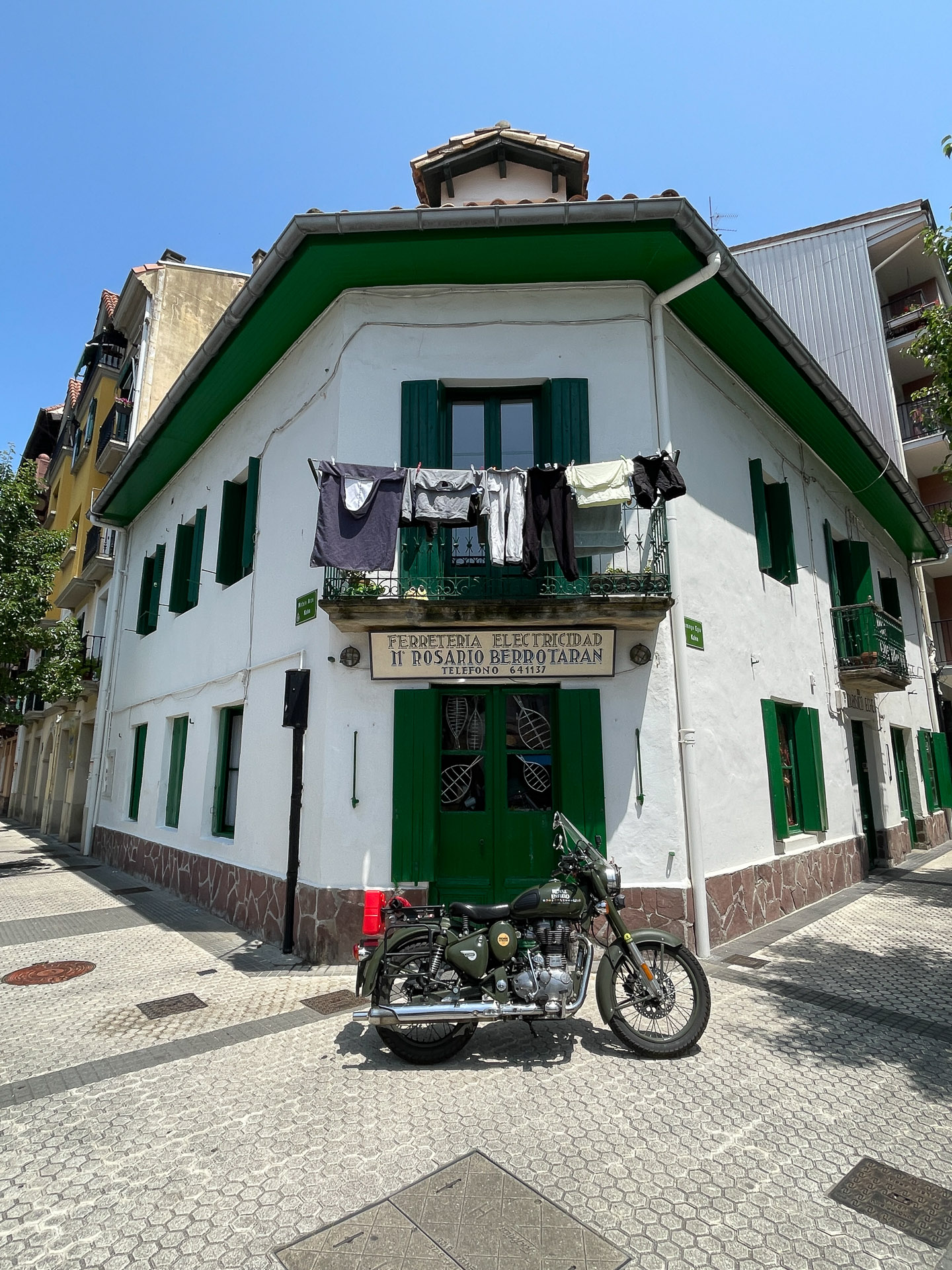
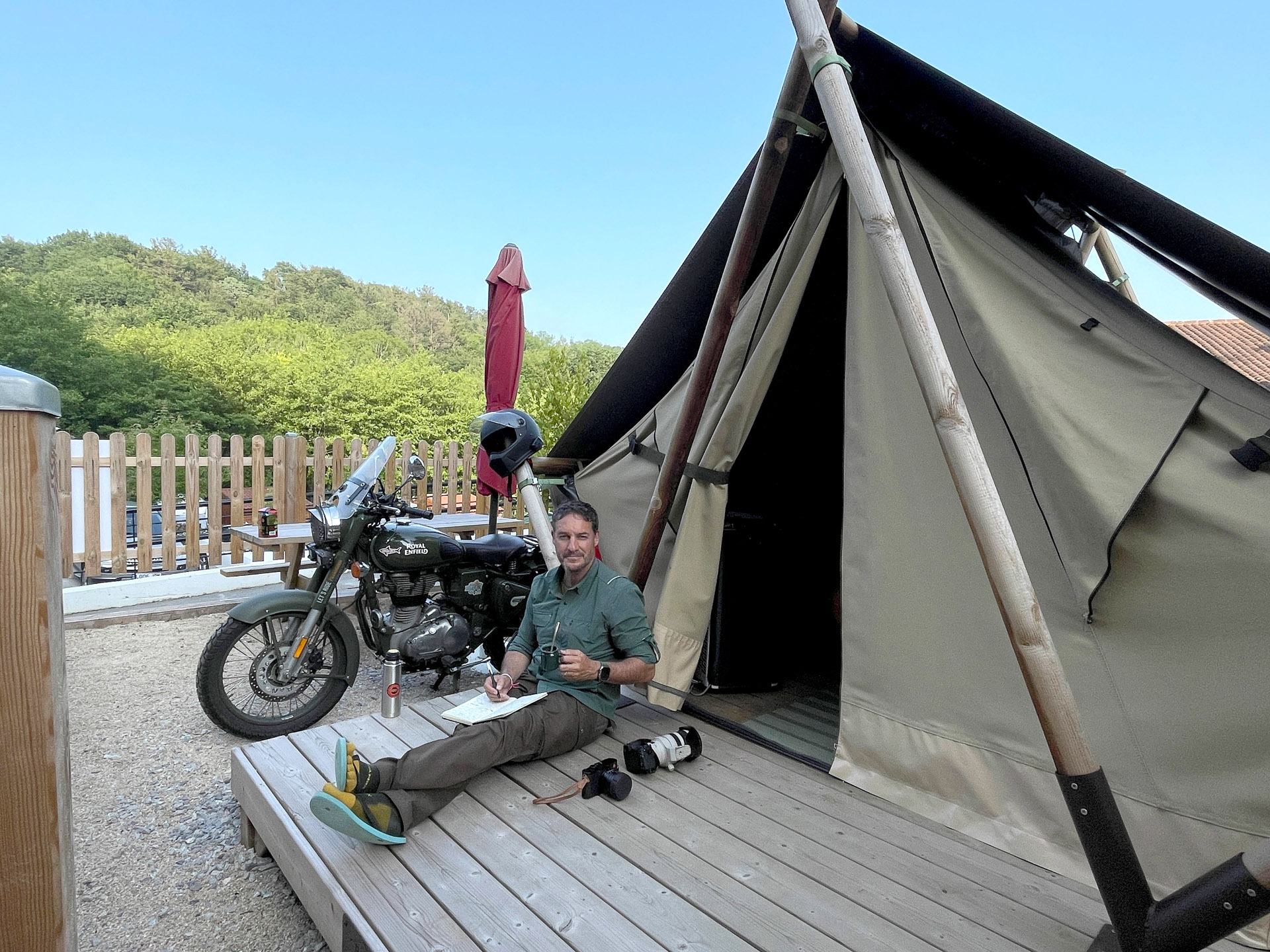
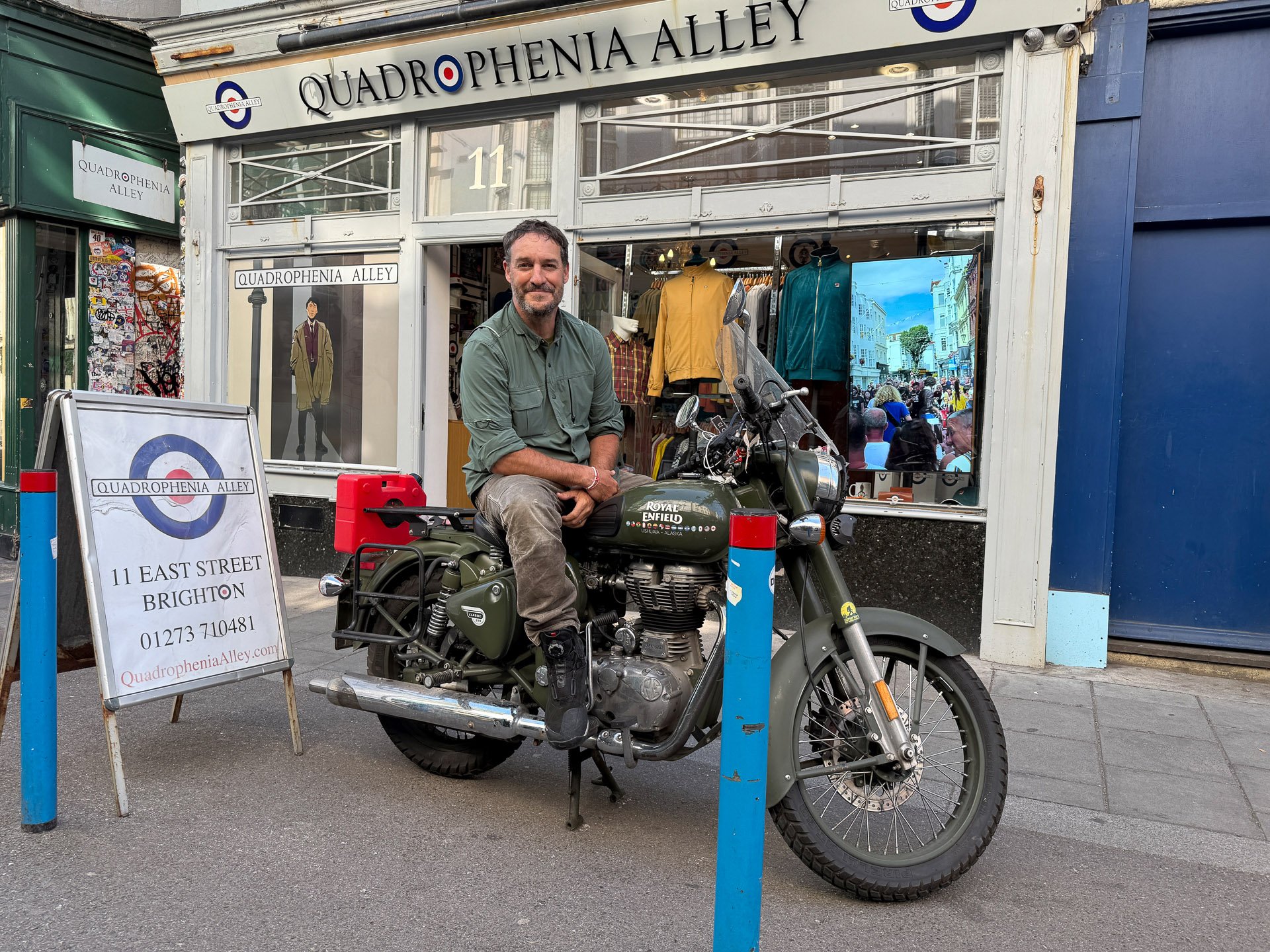
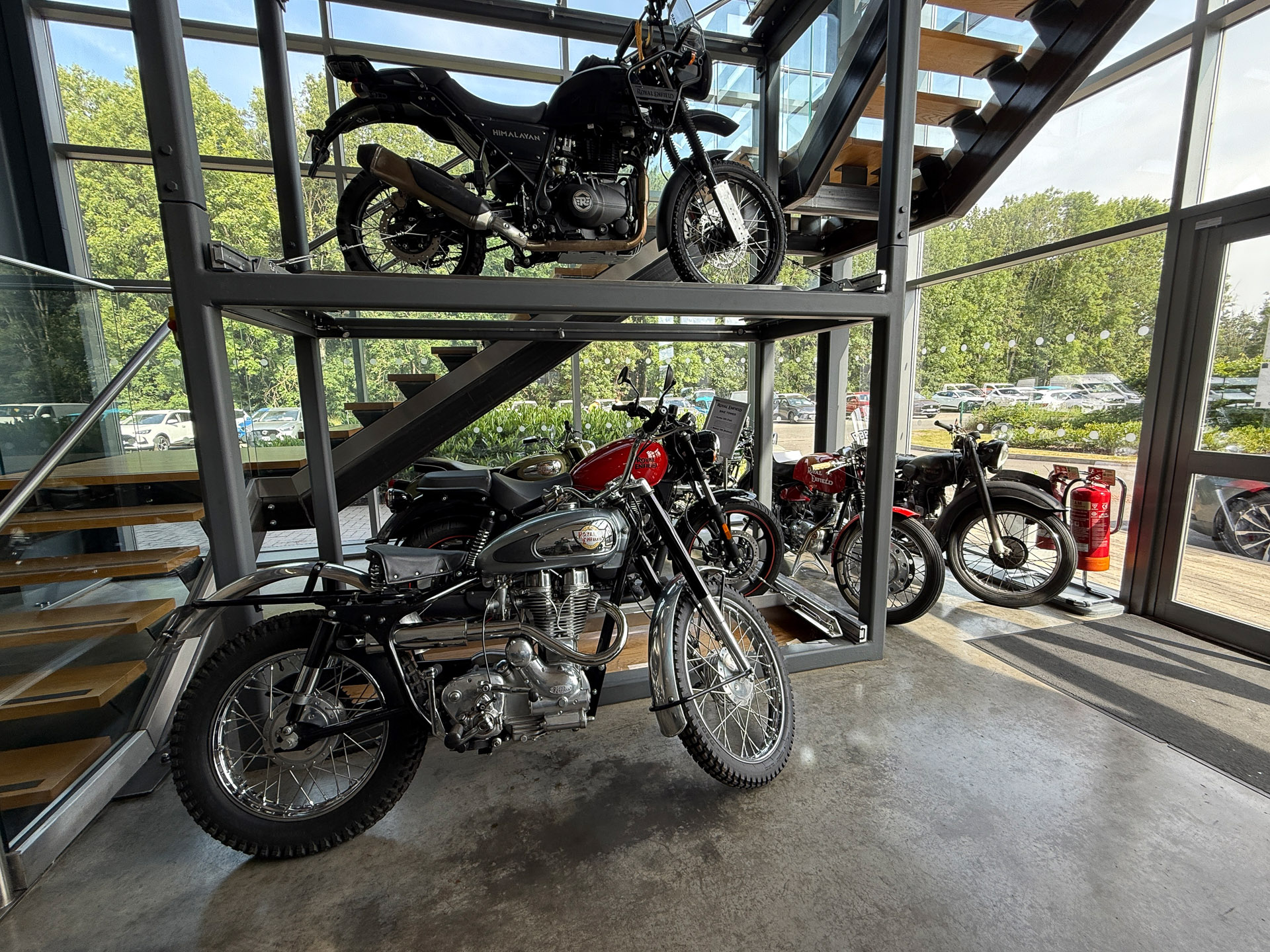
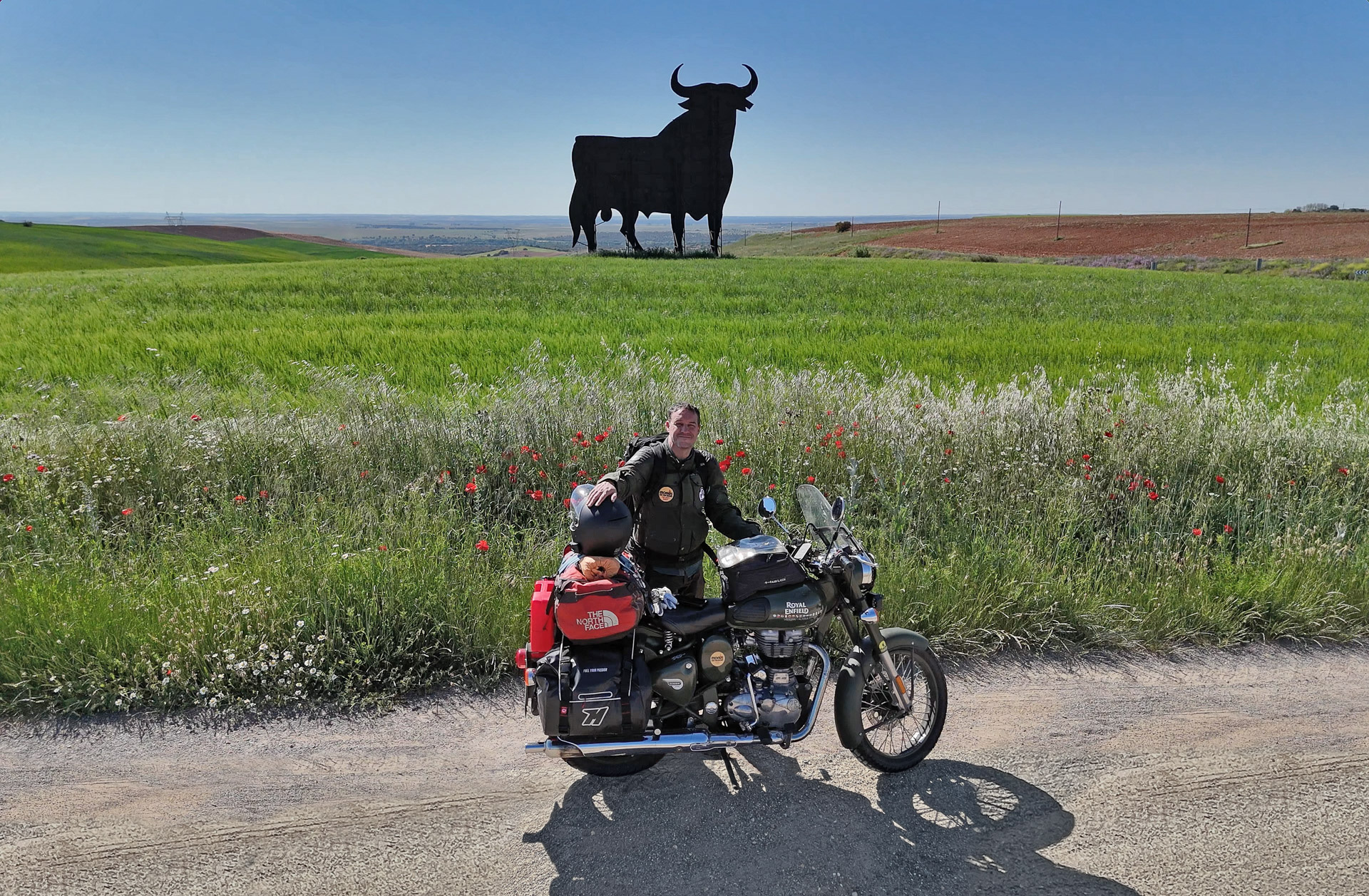
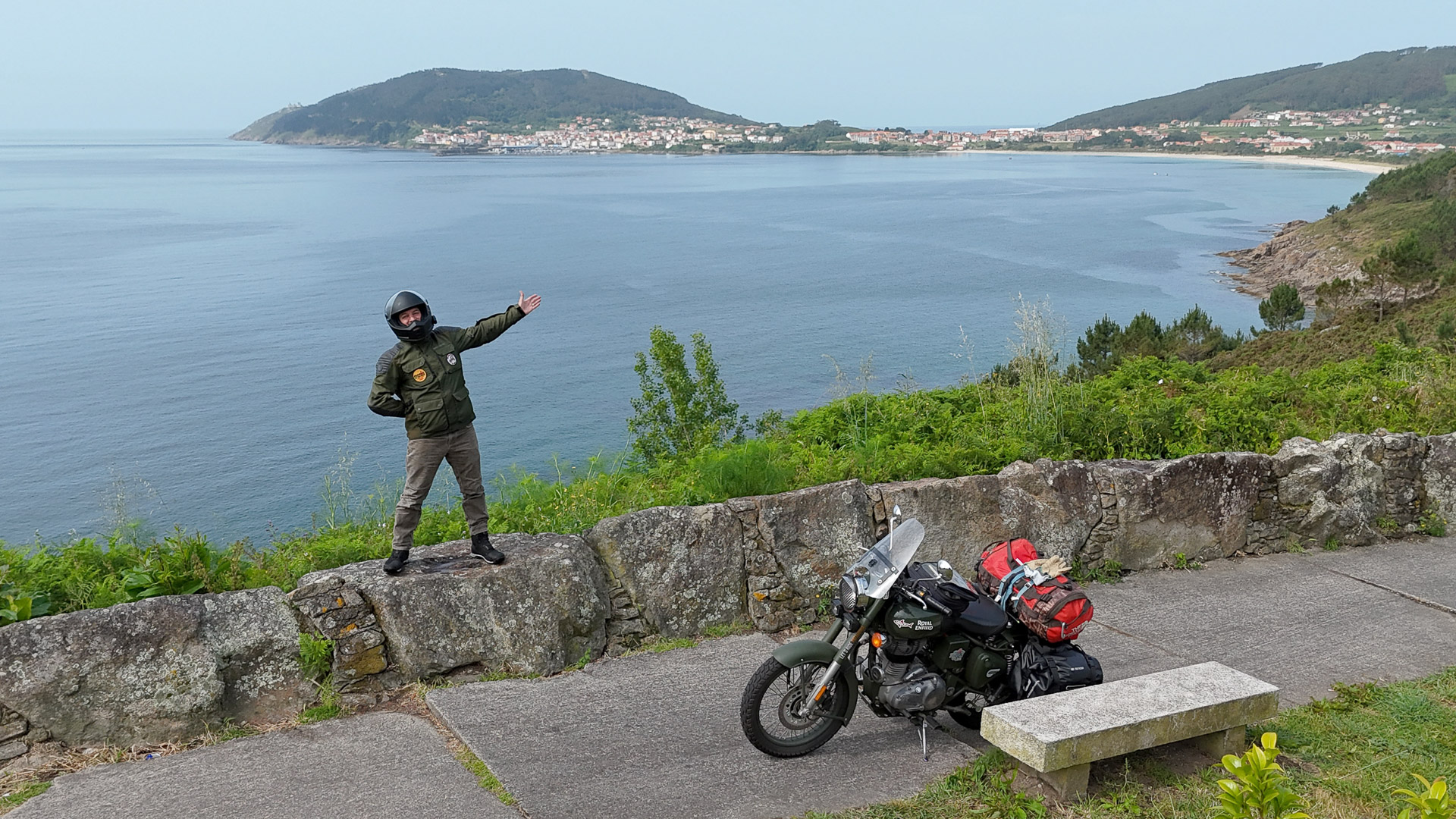
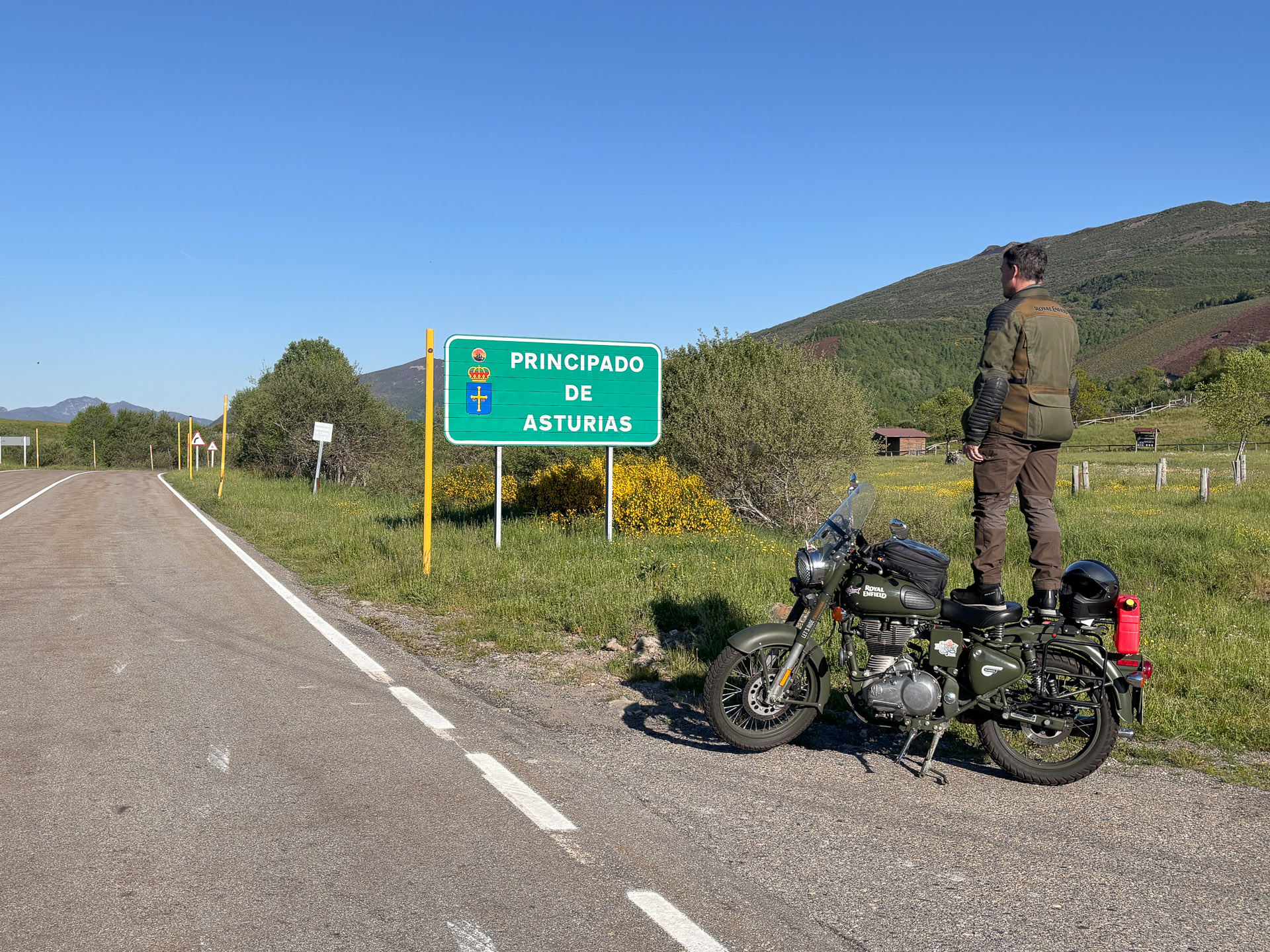
Only the low mechanical heartbeat of the Royal Enfield Classic 500 remained, echoing against the cliffs of the Cantabrian coast. He later wrote in his journal: “That was the moment I understood I was truly alone on the road. And strangely… that was exactly what I had been dreaming of for thirty-eight years.”
But adventure rarely lives in ceremony. Traveling alone on a motorcycle creates a particular state of mind. There is no conversation, no schedule imposed by others, no shared decisions about where to stop or how far to ride. Every kilometer becomes a quiet dialogue between Diego, the machine, and the landscape passing by.
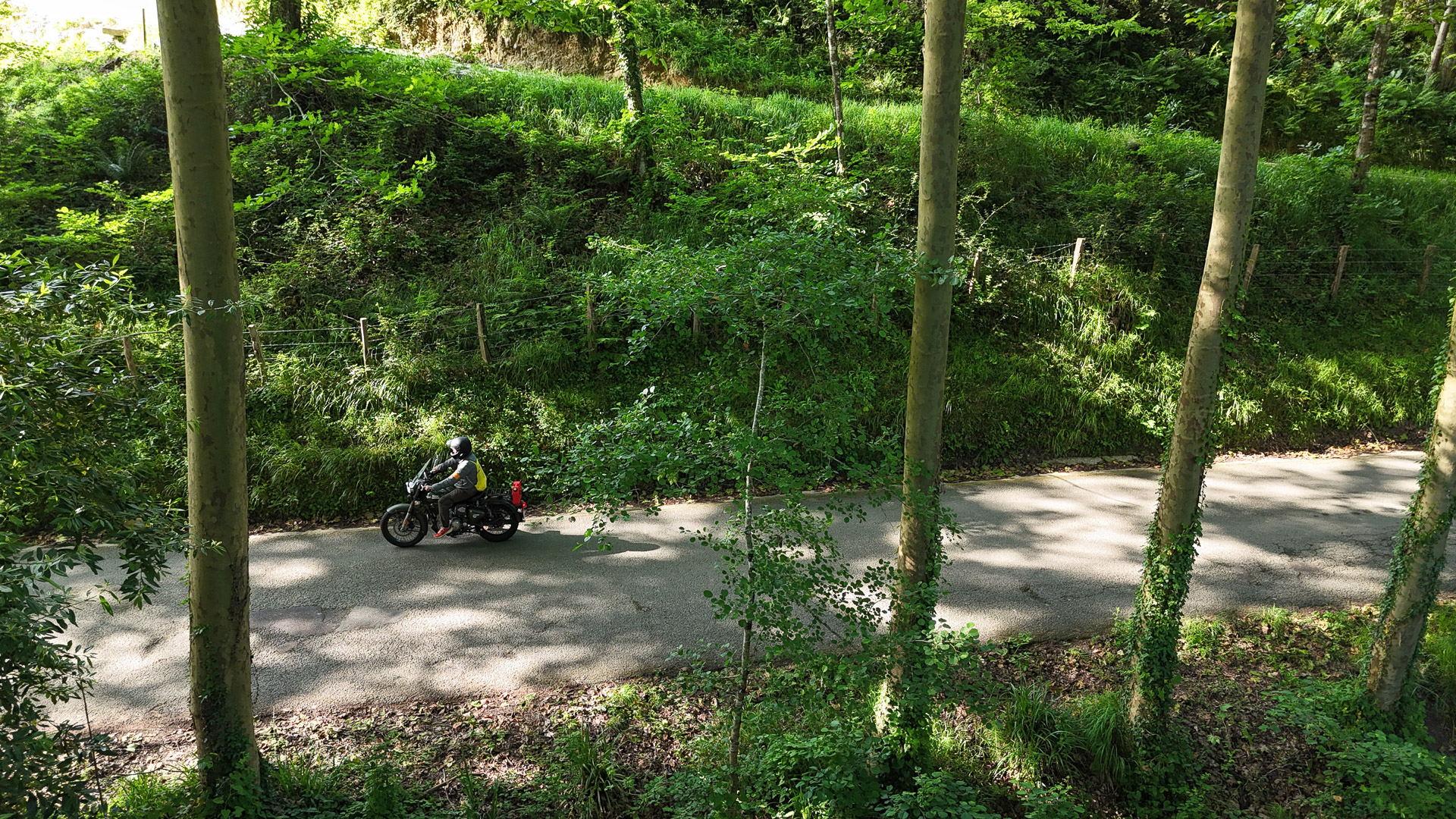
It is a form of solitude that many people fear, but for some riders, it becomes the very essence of freedom. The road along the Cantabrian coast revealed itself slowly: dense green forests giving way to open hills dotted with grazing cattle, small fishing villages clinging to the shoreline, and winding roads that seemed designed more for wandering than for arriving anywhere in particular.
At a steady pace, the Royal Enfield settled into its rhythm, the kind of calm mechanical pulse that allows the mind to drift and the senses to sharpen. For a rider who had waited decades to begin this journey, every kilometer carried a quiet realization: The dream was no longer something imagined. It was finally happening.
Europe from the Saddle
One of the great privileges of crossing a continent by motorcycle is the way landscapes reveal themselves slowly, almost intimately. Inside a car, distance tends to compress. Cities, mountains, and coastlines blur together behind glass and air conditioning. On a motorcycle, every change in terrain is felt immediately, in the wind, in the temperature, in the smell of the air.
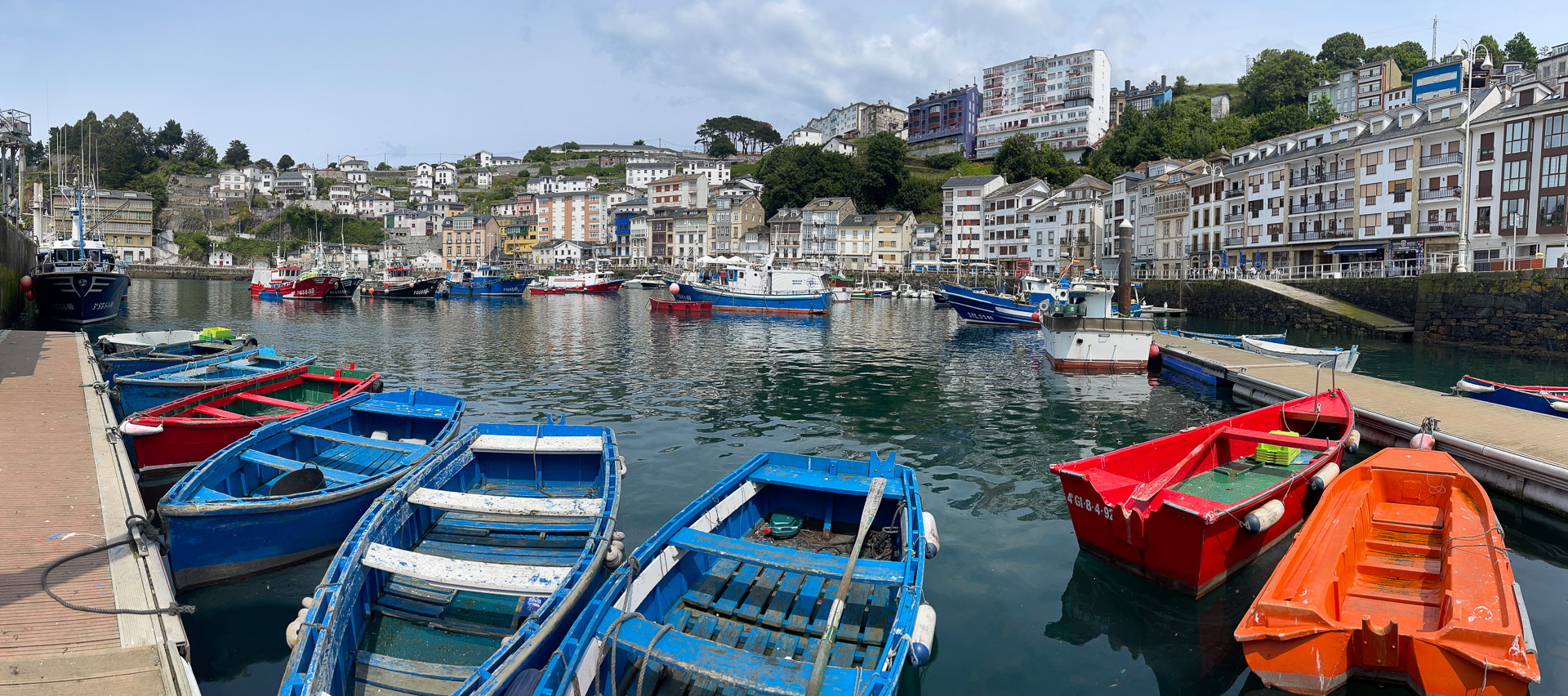
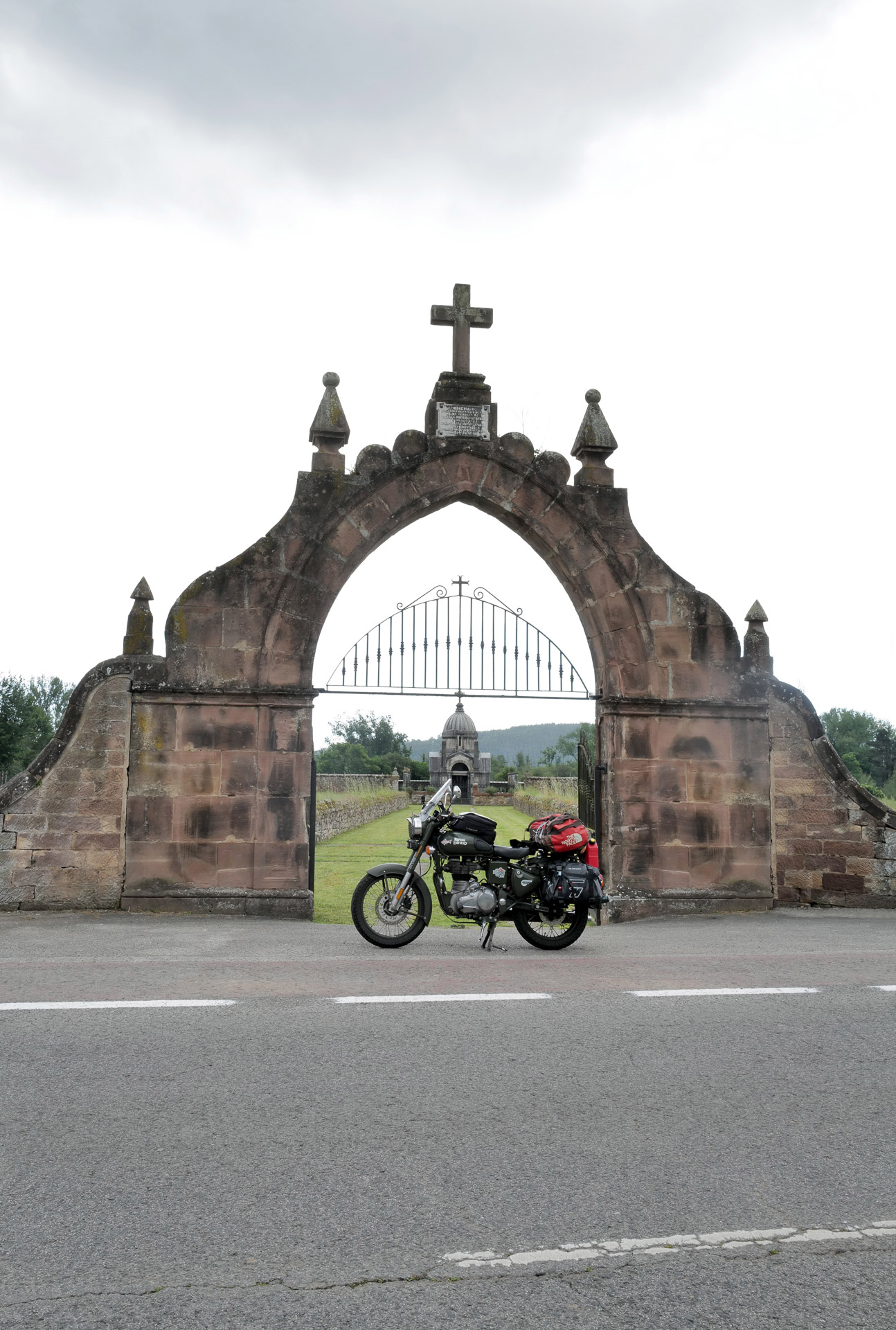
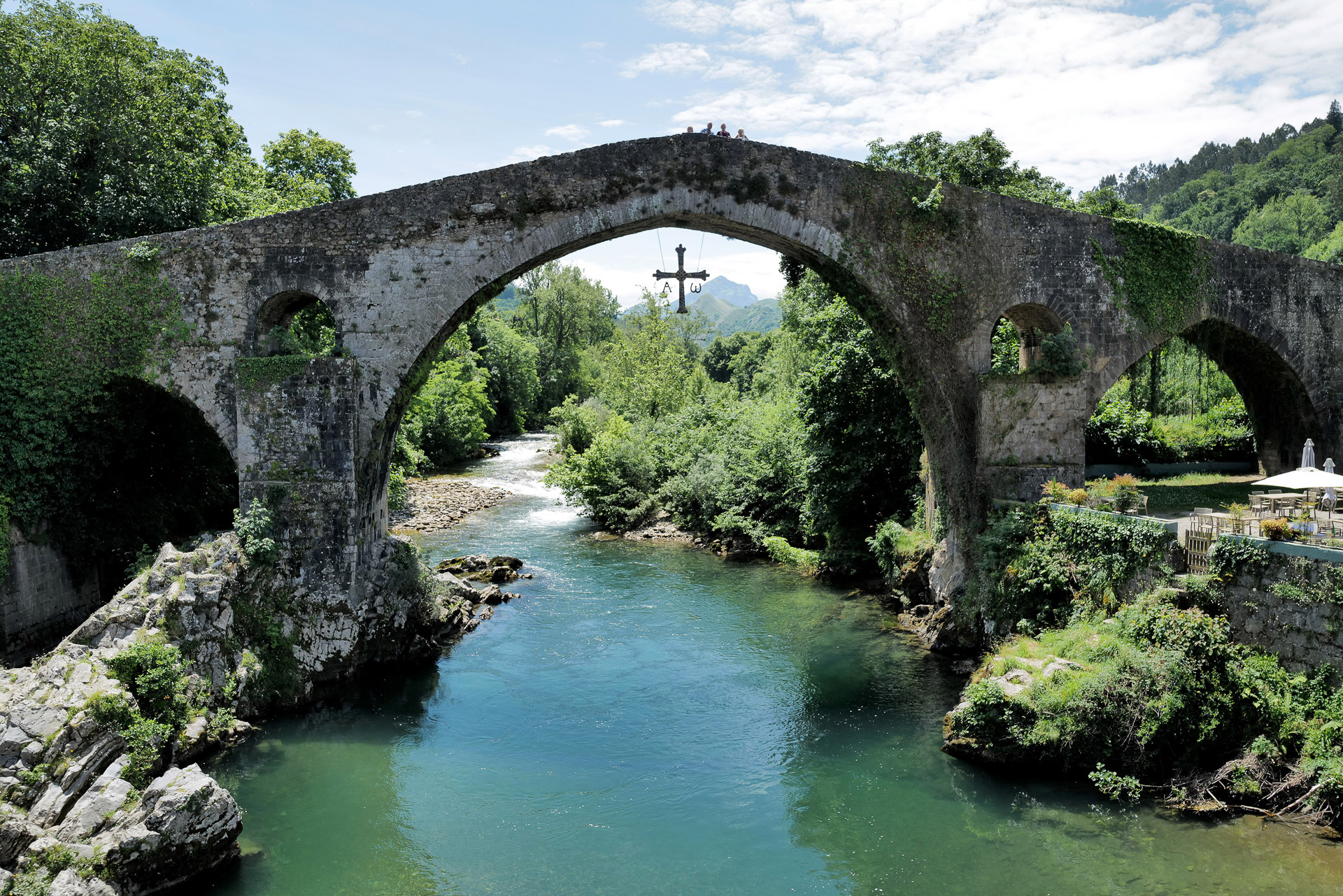
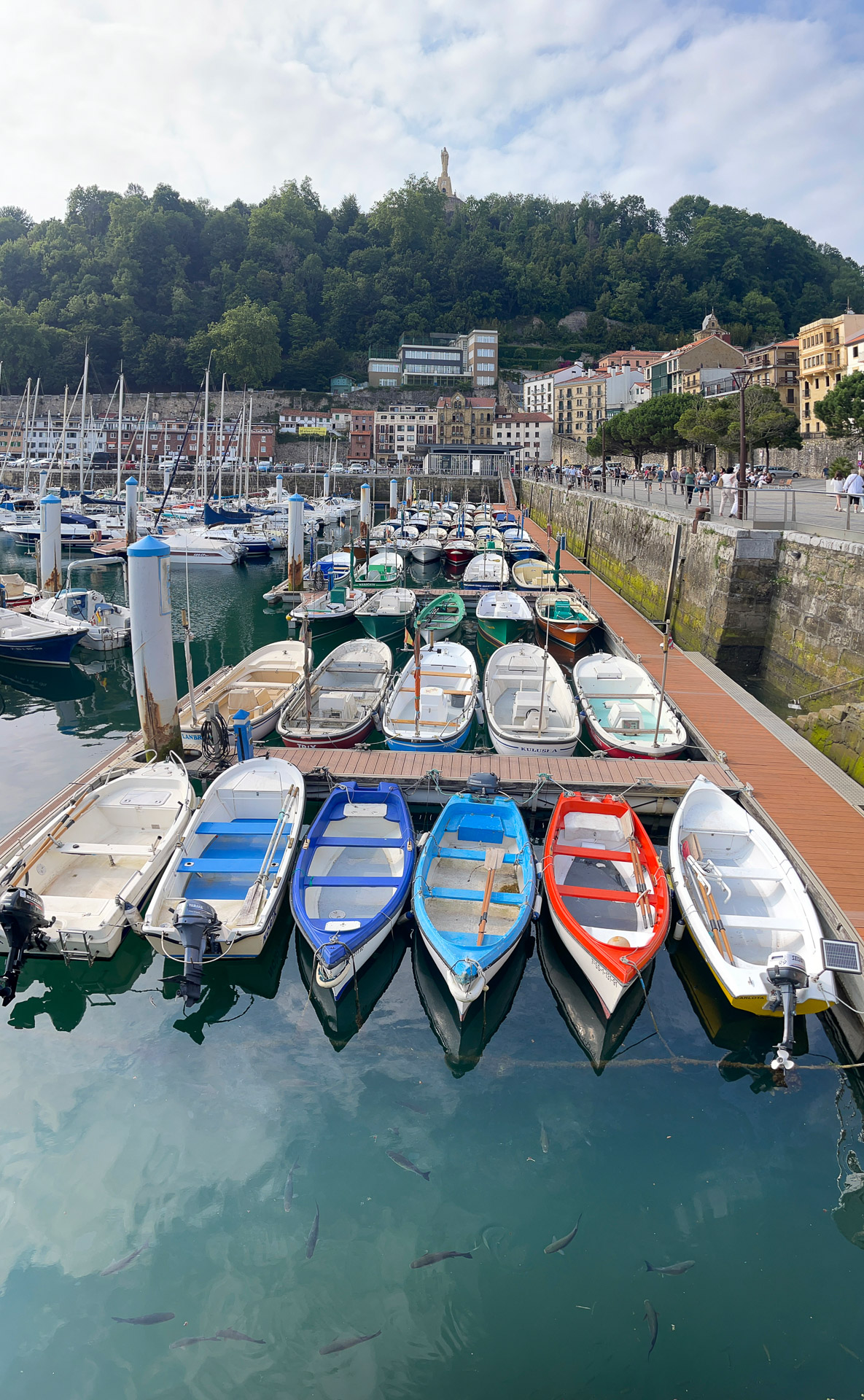
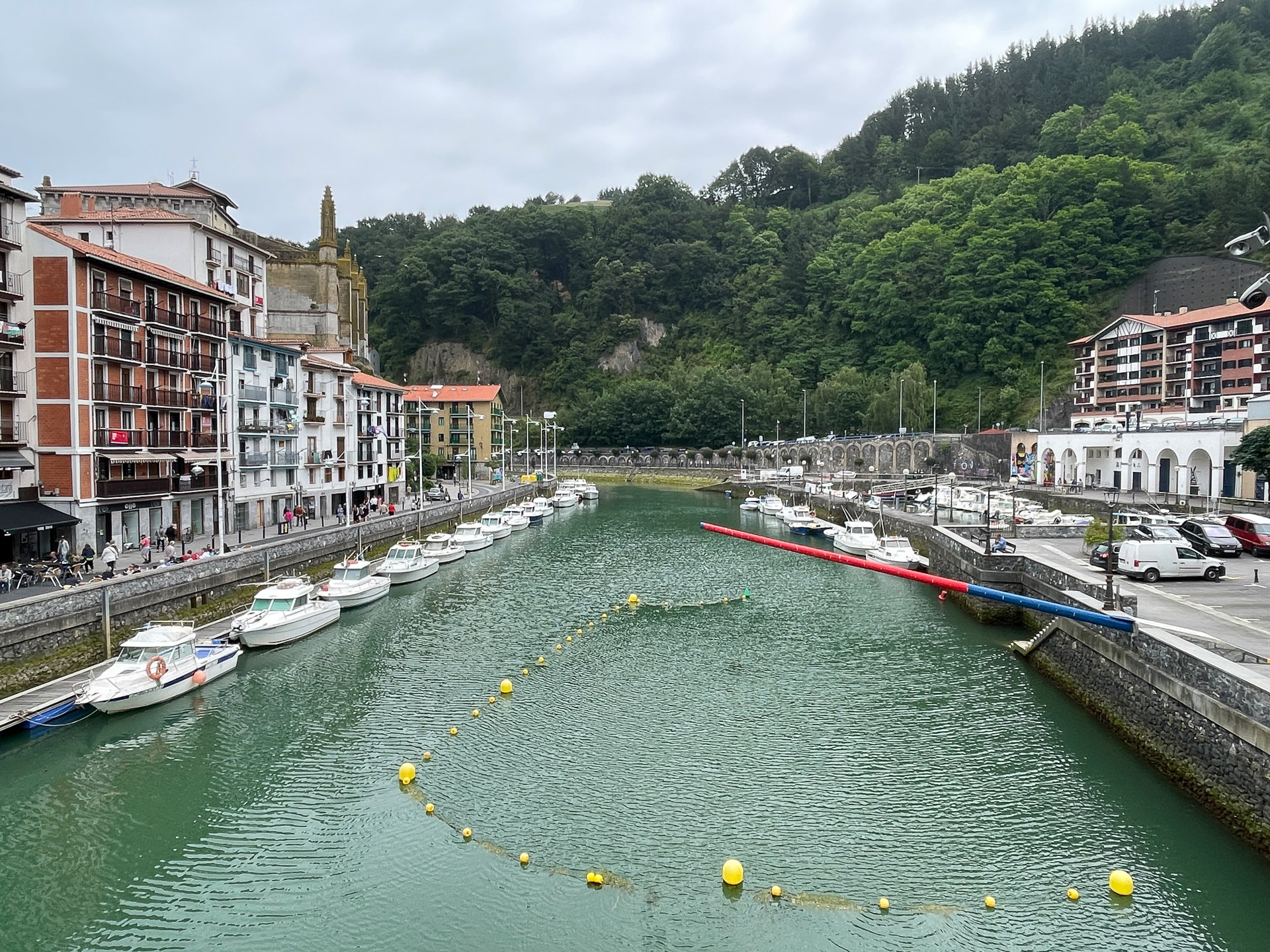
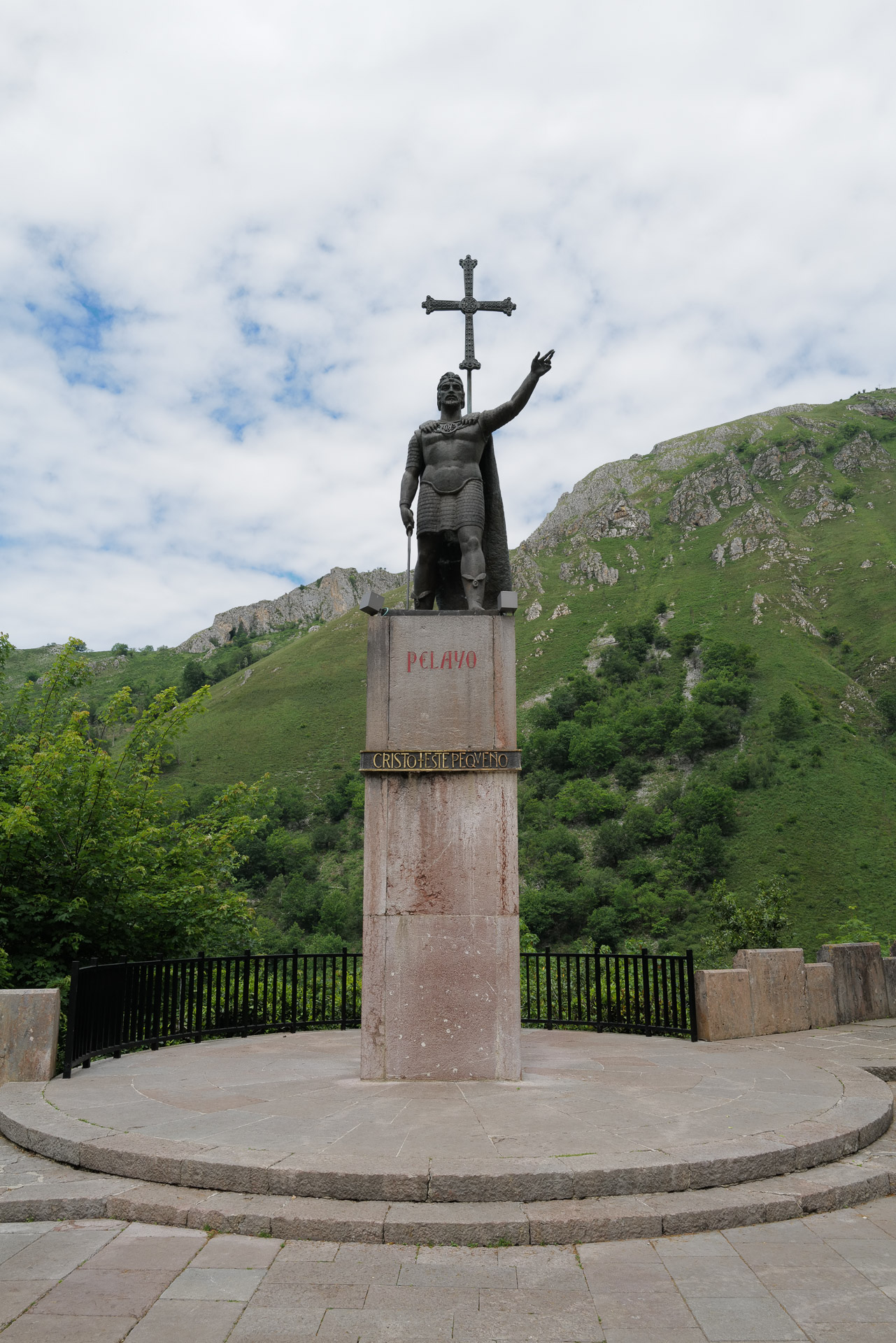
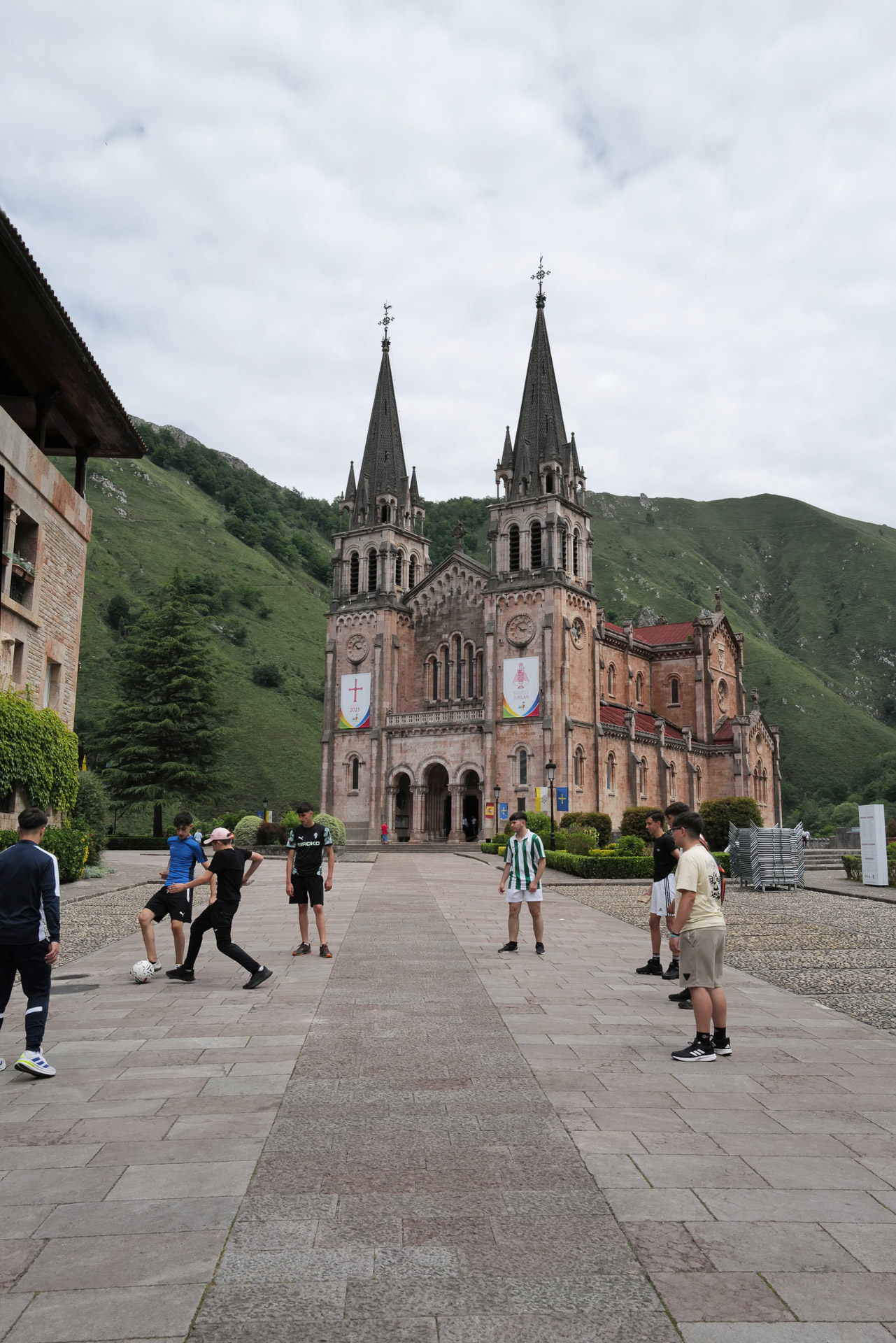
Northern Spain offers a remarkable introduction to that rhythm. Leaving the lighthouse of Finisterre behind, the road winds through Asturias and Cantabria, regions where the Atlantic constantly reminds travelers that the ocean is never far away. Fishing villages cling to the coastline, their harbors filled with small boats returning with the day’s catch, while narrow mountain roads climb inland toward green valleys and steep ridges.
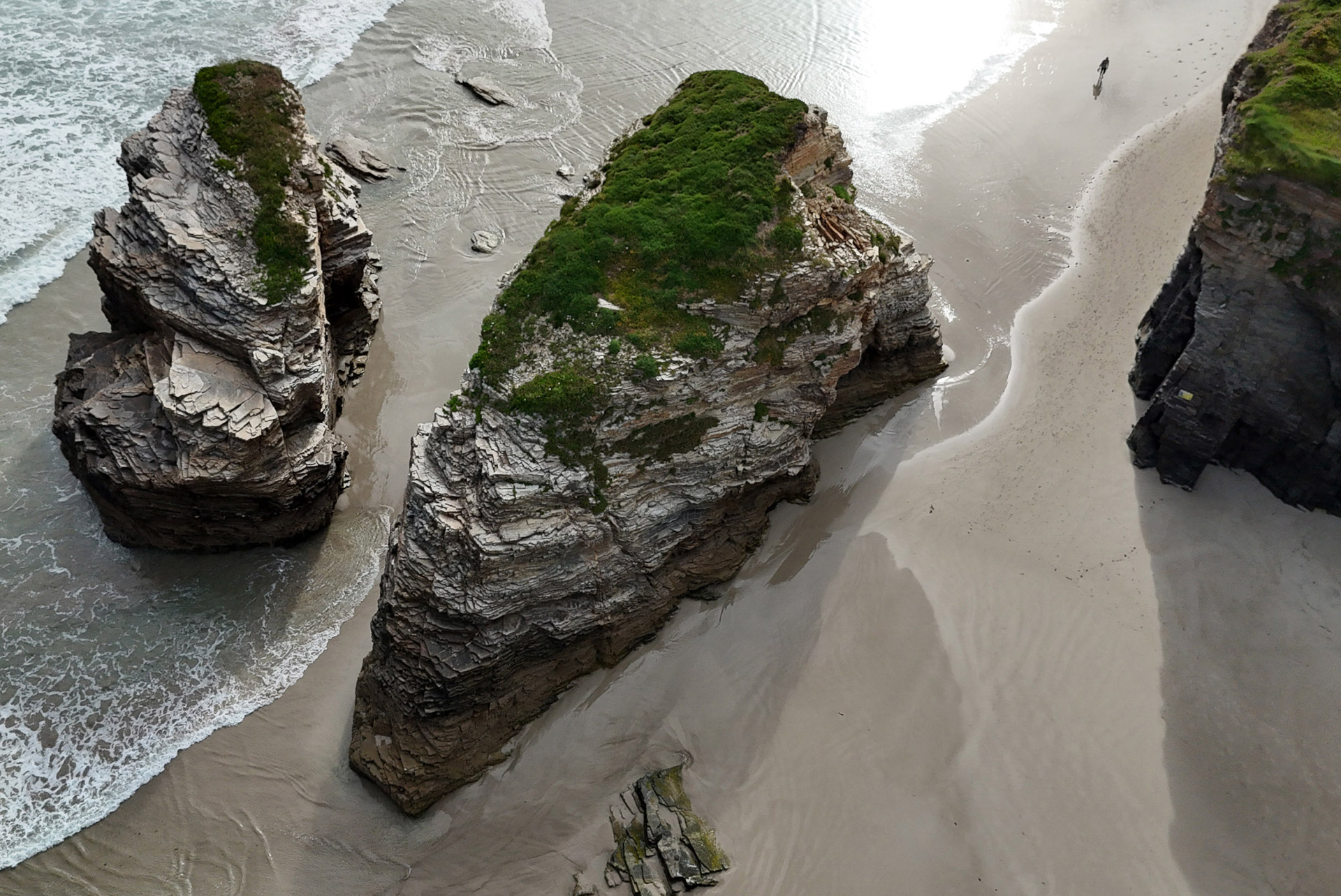
Places like Cudillero appear suddenly along the route, colorful houses stacked along the hillsides above a small harbor, as if an entire town had decided to sit together and watch the sea. Further along the coast, natural landmarks like the Playa de las Catedrales reveal a different side of the landscape. At low tide, enormous rock arches rise from the sand like the flying buttresses of a Gothic cathedral, carved slowly by centuries of wind and water.
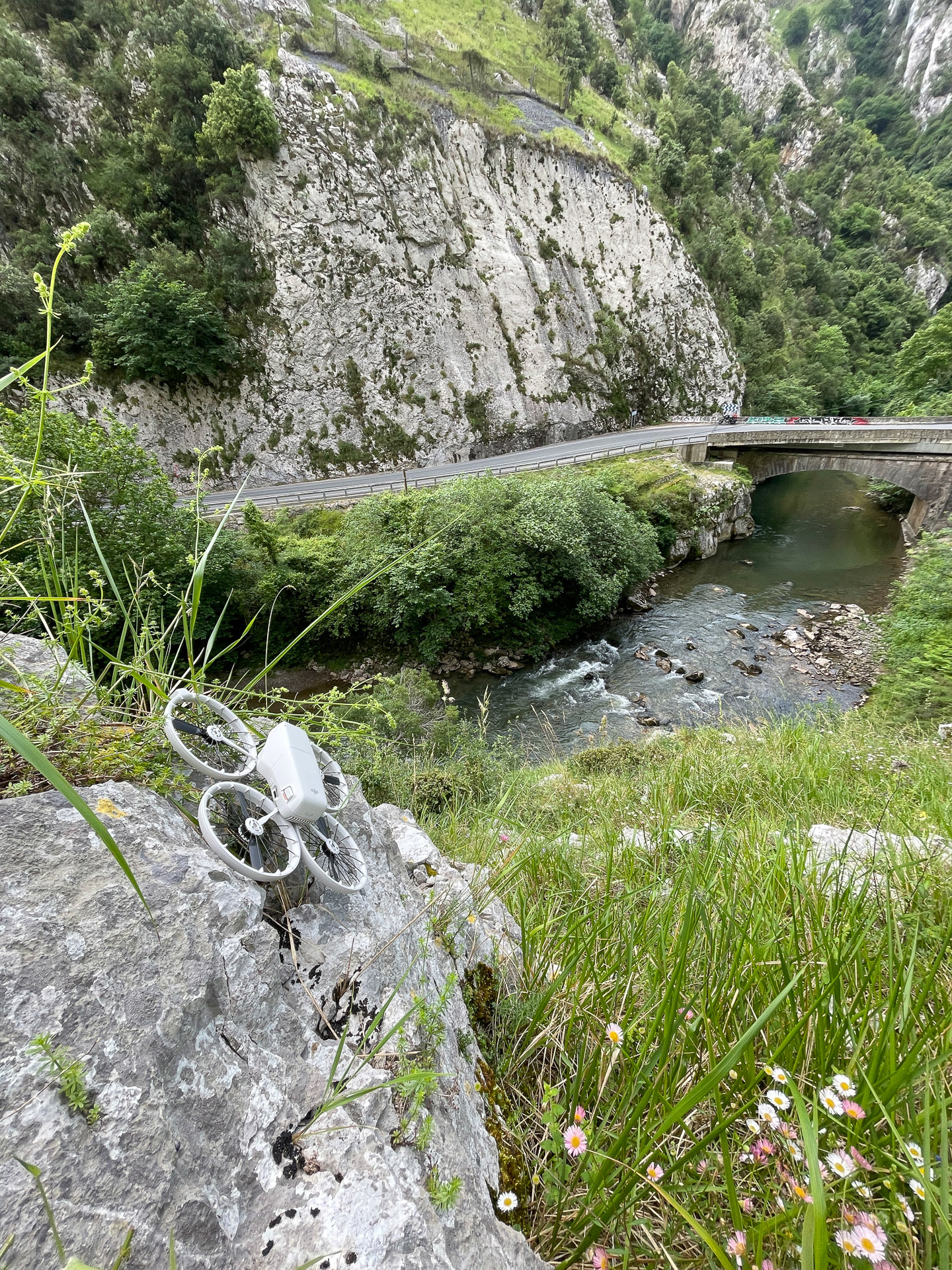
But the road is never just about scenery. Not every memorable moment happens while riding. Some arrive unexpectedly. High above a steep hillside along the Cantabrian coast, Diego launched his drone to capture the winding road cutting through the green mountains. For several minutes, the small aircraft floated silently above the landscape. Then the screen went black.
A sudden gust of wind had pushed the drone off course, sending it crashing somewhere on the rocky slope below. Recovering it would not be easy. The hillside was steep, covered with loose stones and thick vegetation. At one point he stopped halfway down the slope, listening only to the wind and the distant ocean. Then he saw it, a small piece of white plastic glinting in the grass. The drone had survived. Scratched, dusty, but alive. He laughed out loud “Adventure always starts when something goes wrong,” he would later write.
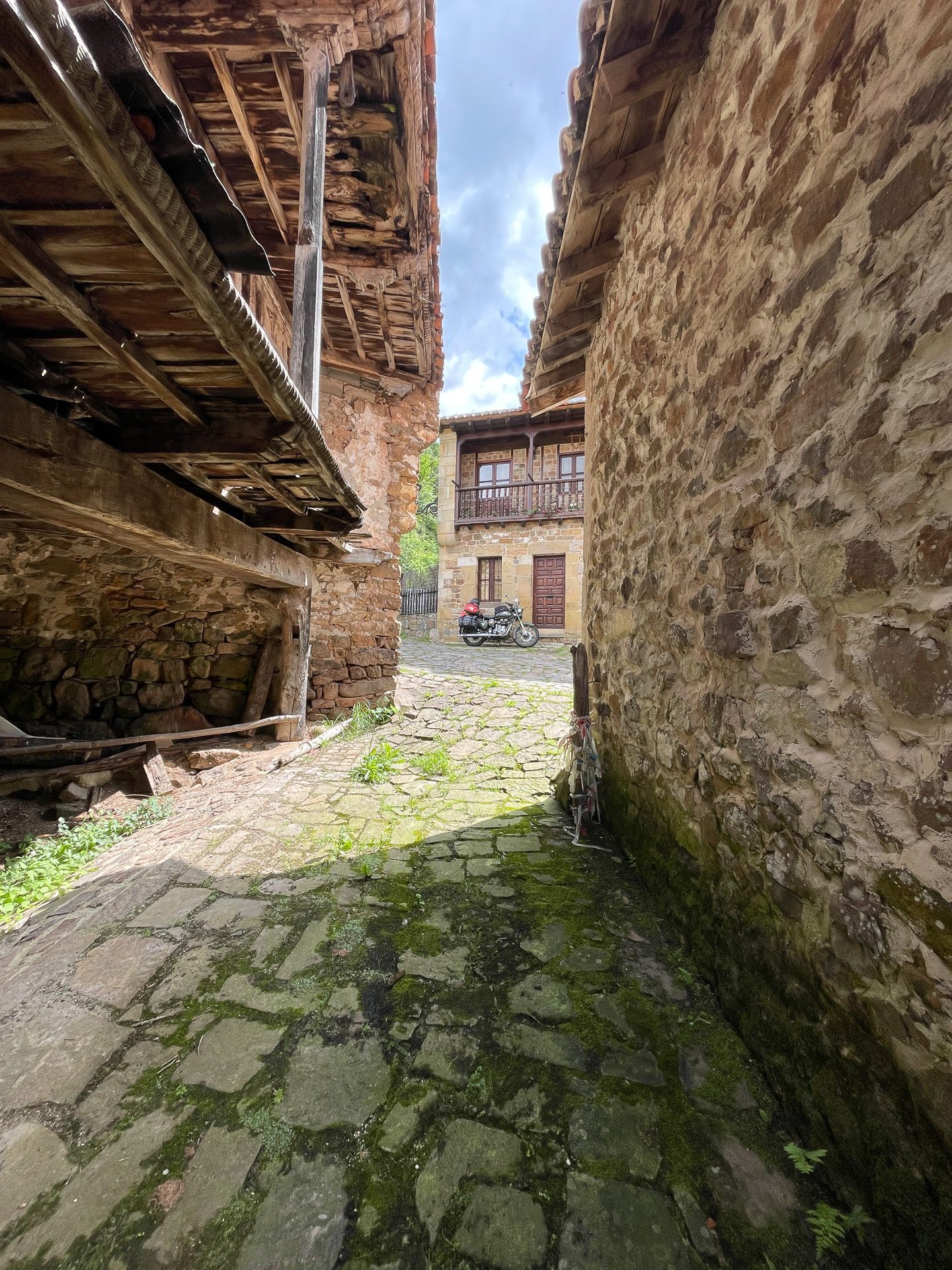
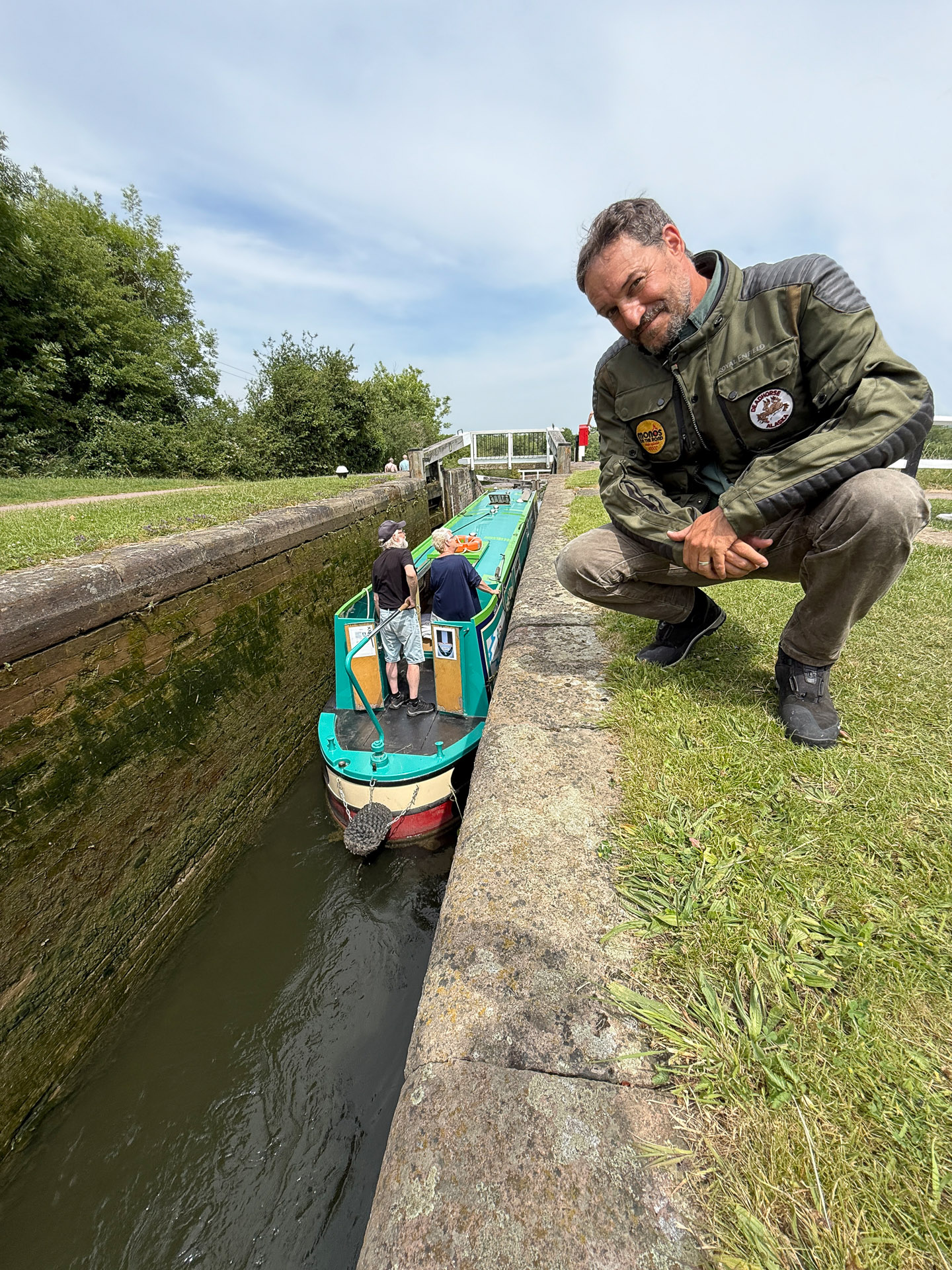
With the drone safely back in his backpack, the Royal Enfield fired up again, its deep exhaust note bouncing between the hills as the road continued north. Sometimes the journey unfolds through small, unexpected moments, a quiet medieval village hidden deep in the mountains, a conversation with other riders curious about a motorcycle that has crossed oceans to reach Europe, or a detour that turns into a small adventure.
The Tribe of Riders
Long-distance motorcycle travel often appears, from the outside, to be a solitary pursuit. Hours pass in silence, with only the sound of the engine and the wind breaking the solitude. But every so often, the road reminds you that motorcycling is also a kind of shared language, one spoken fluently by riders around the world.
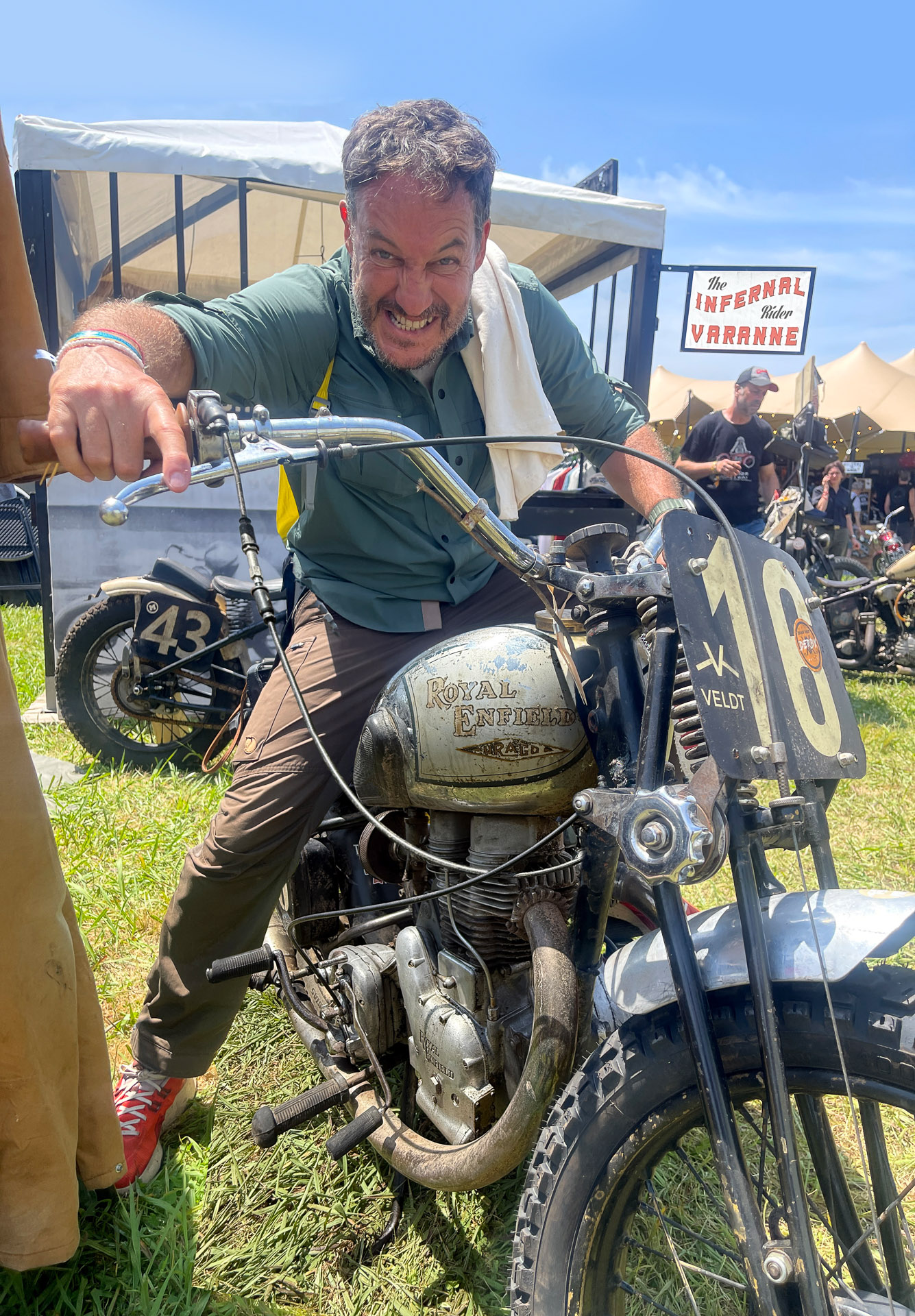
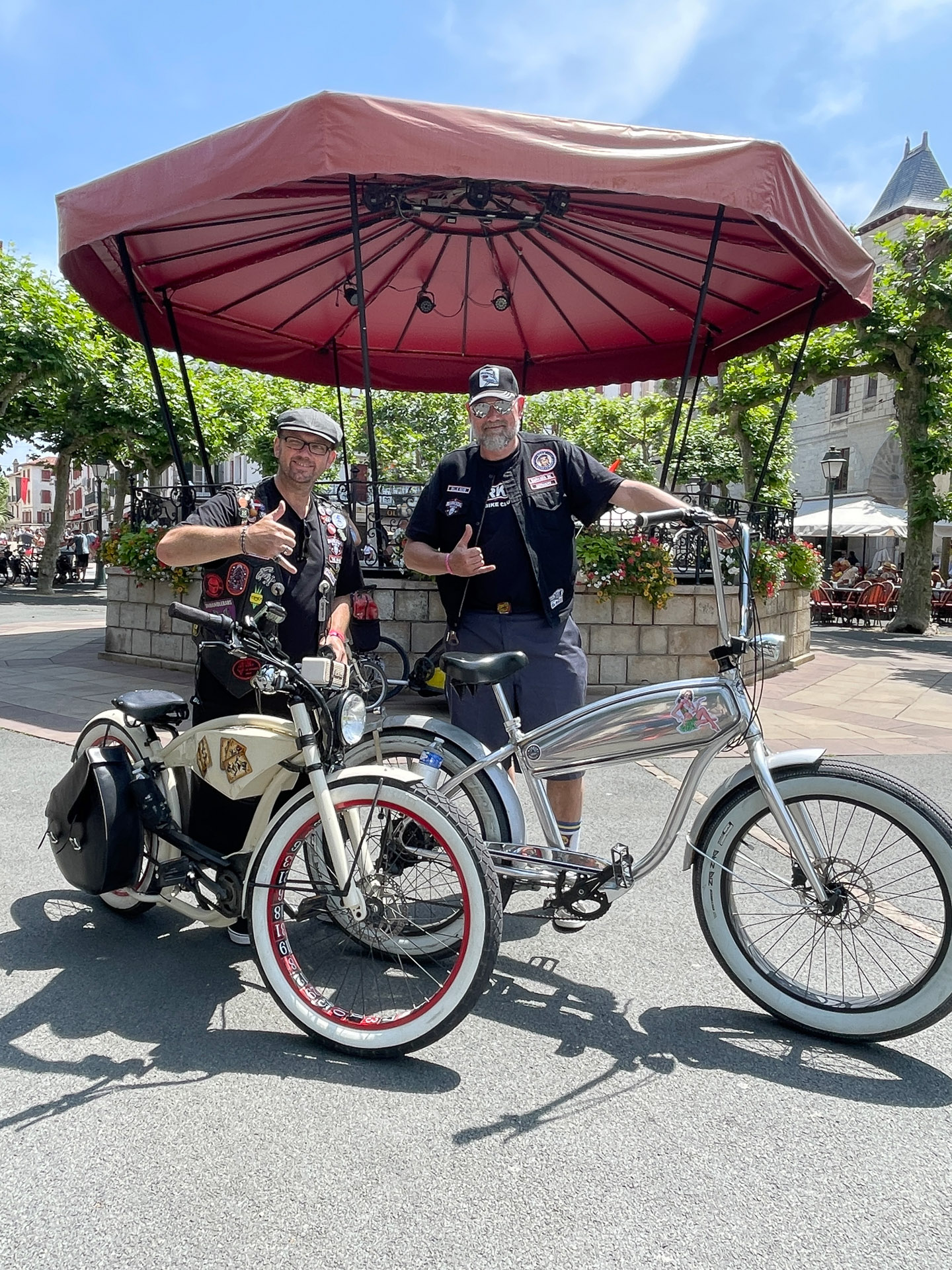
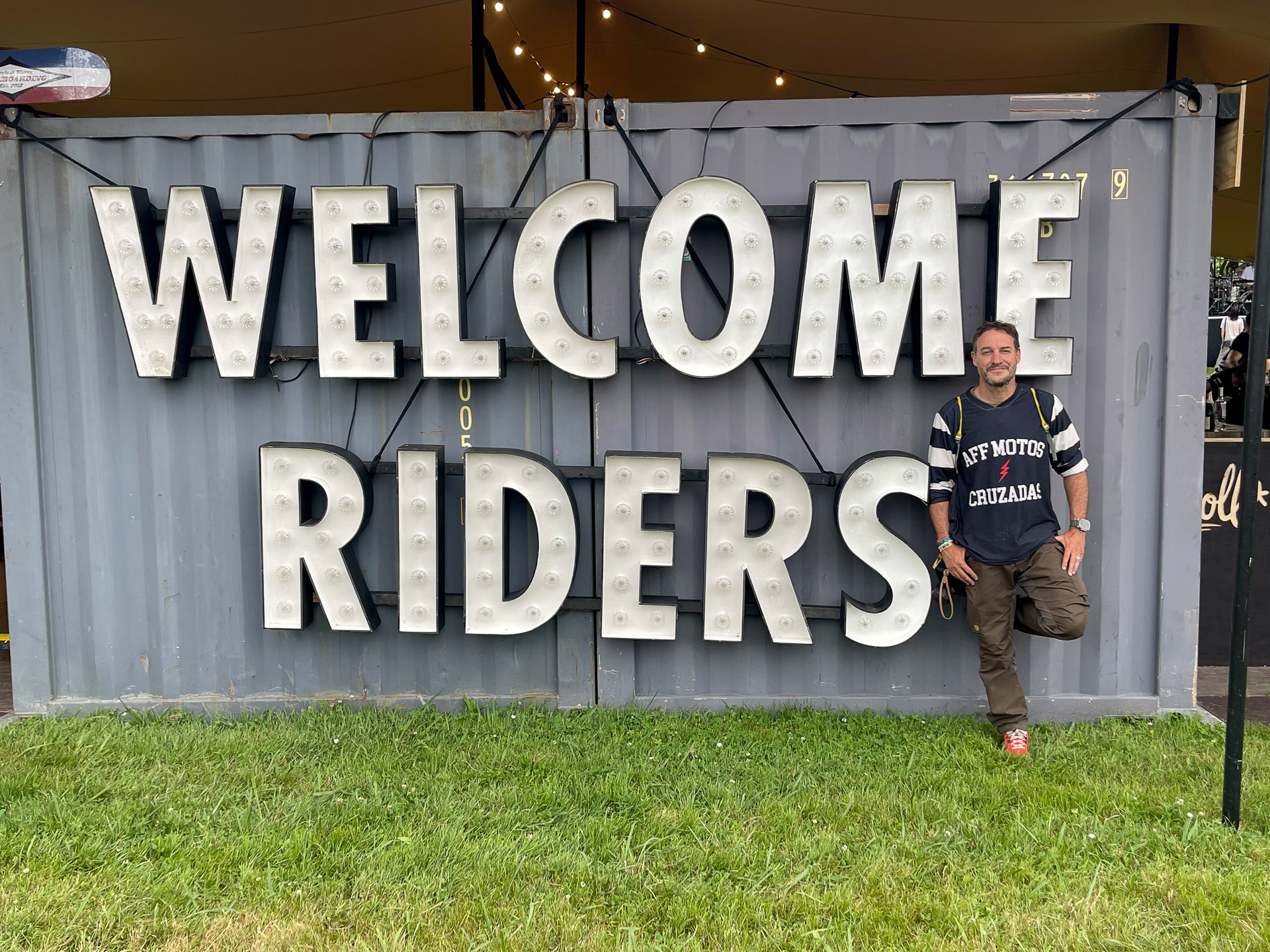
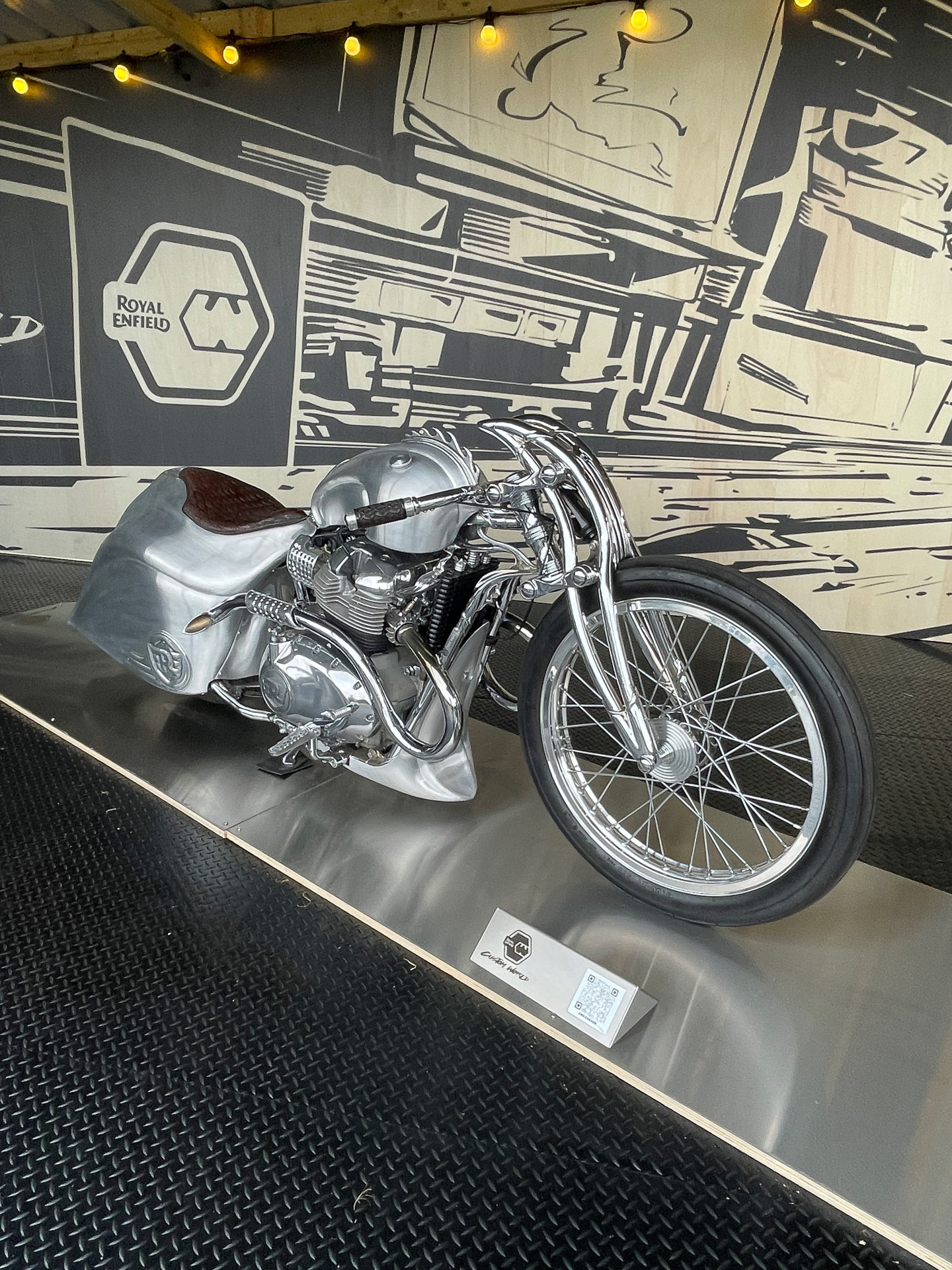
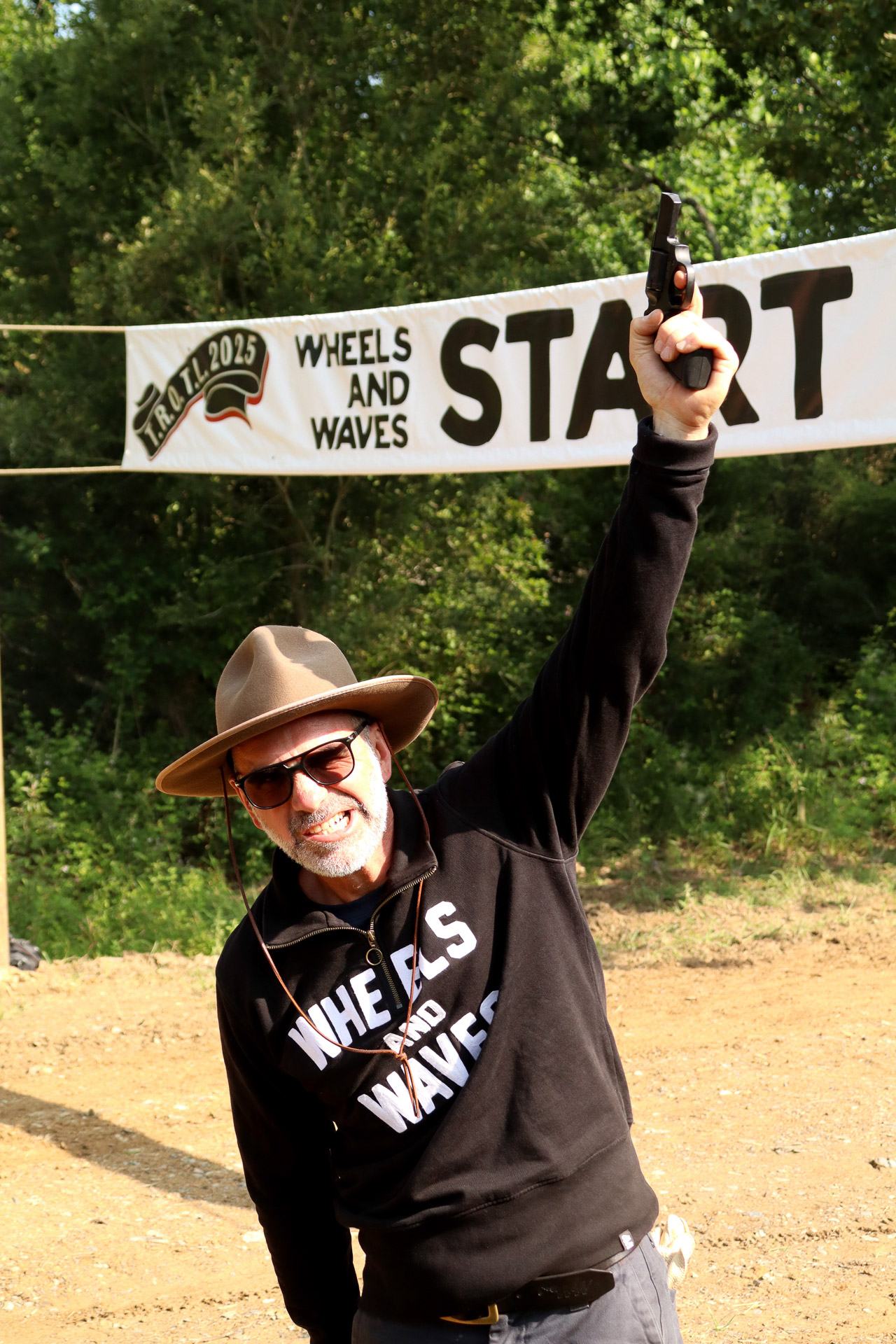
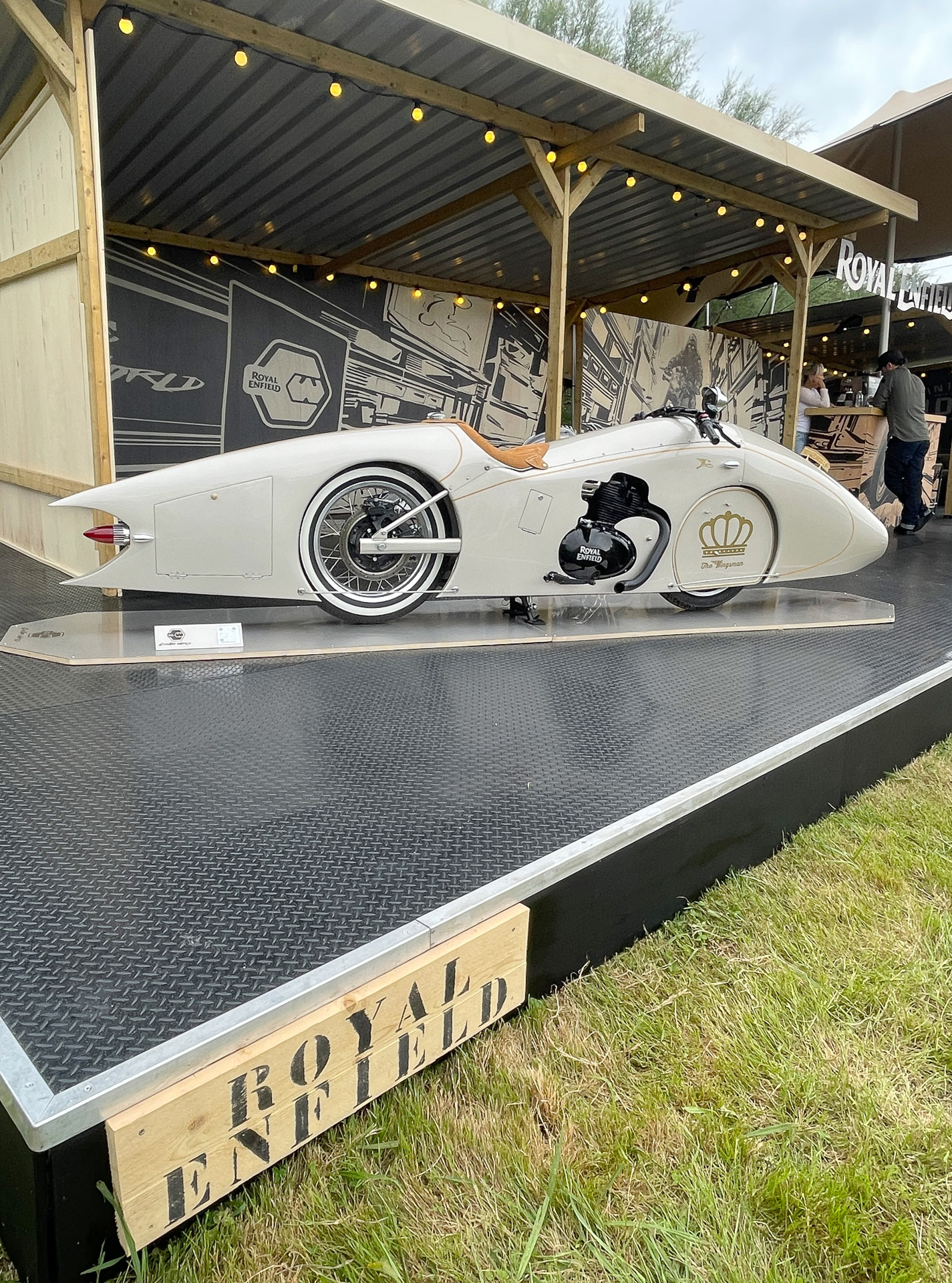
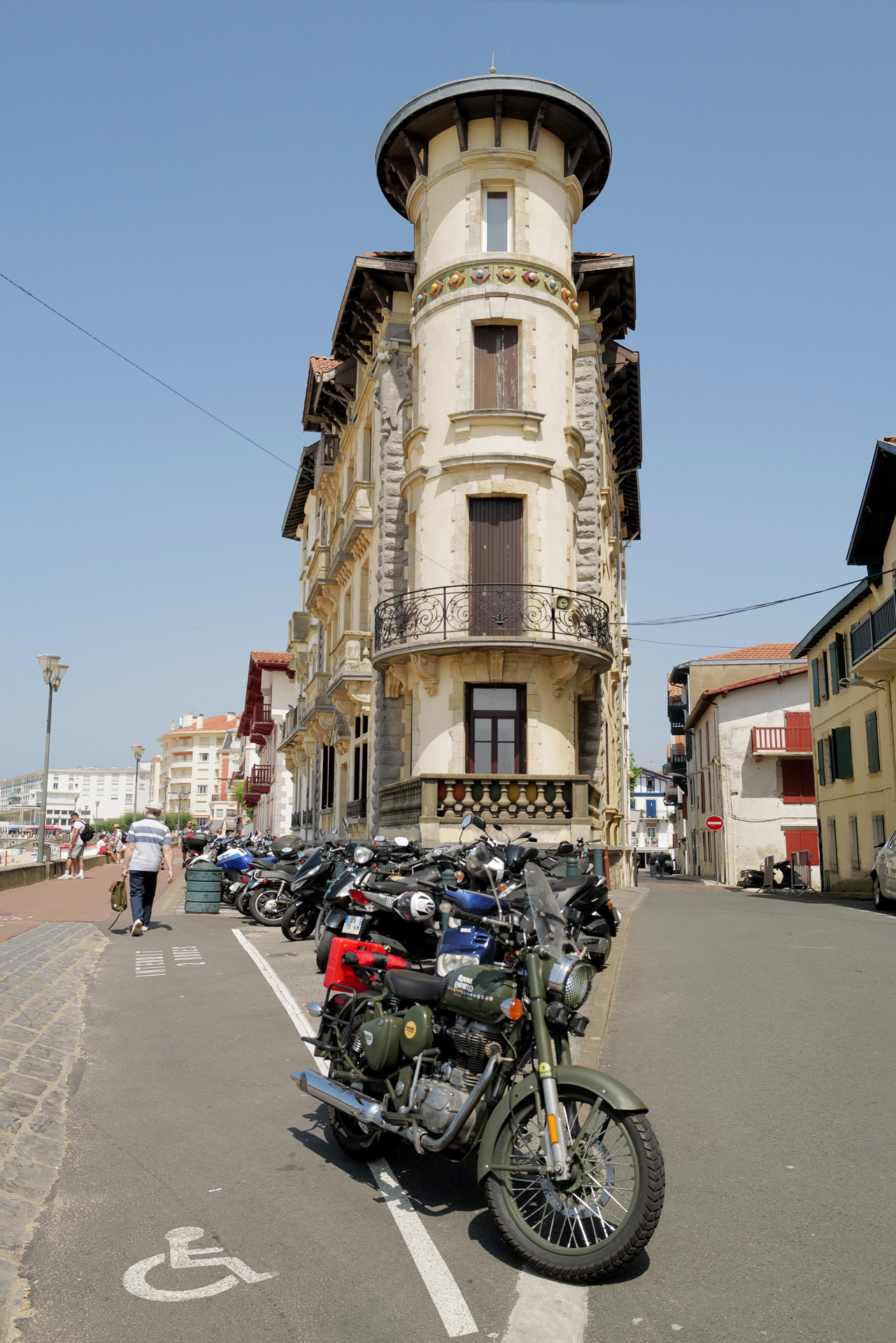
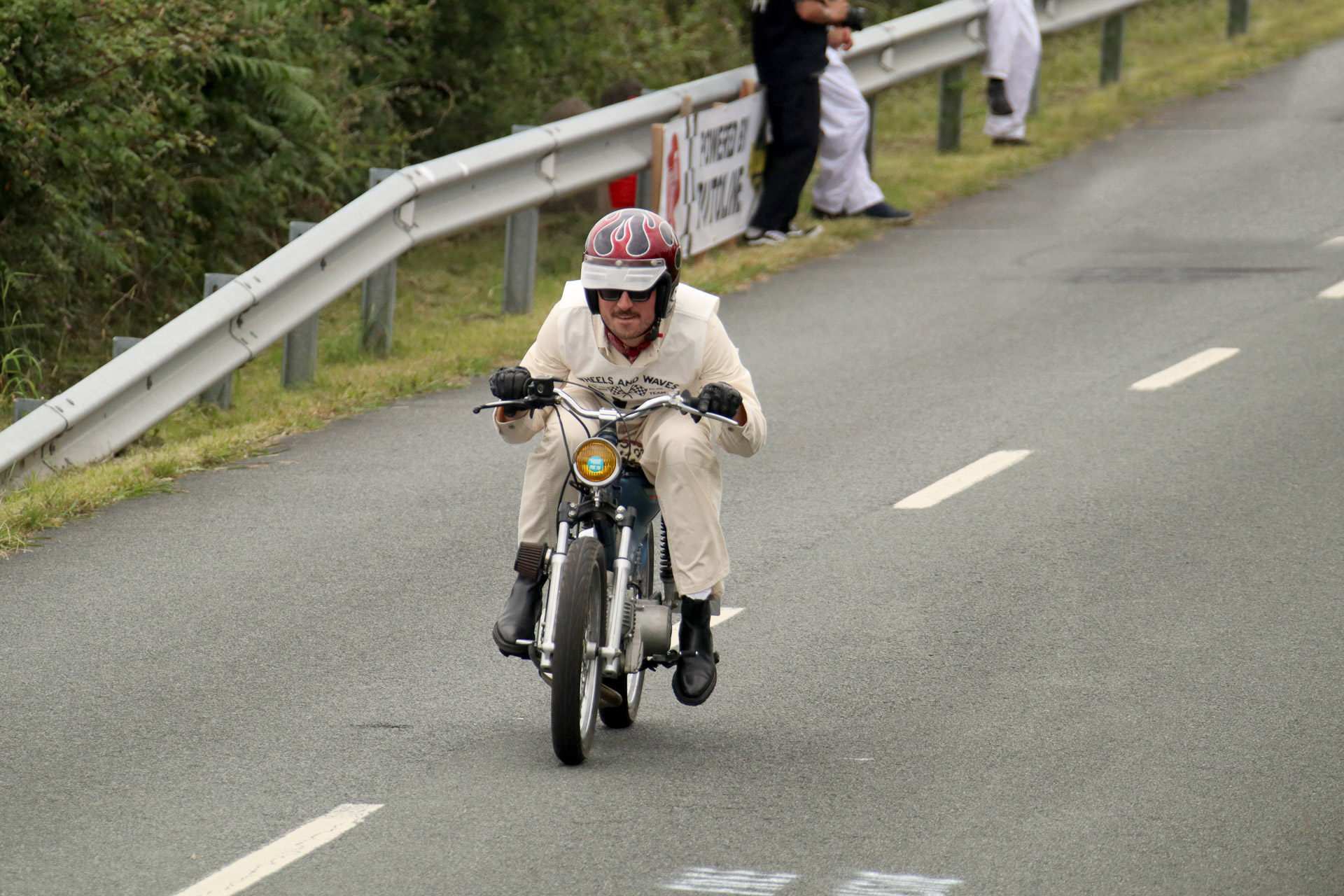
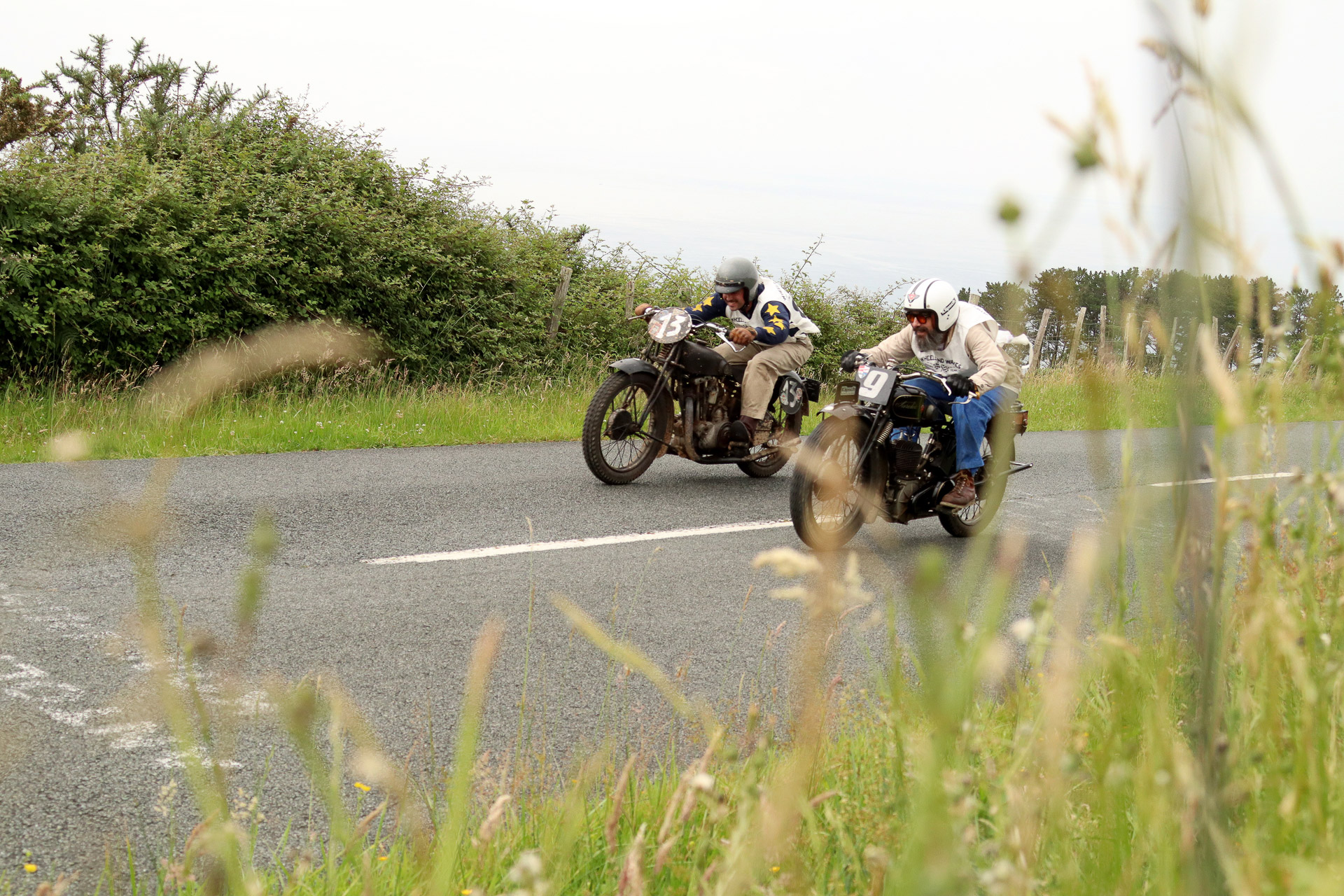
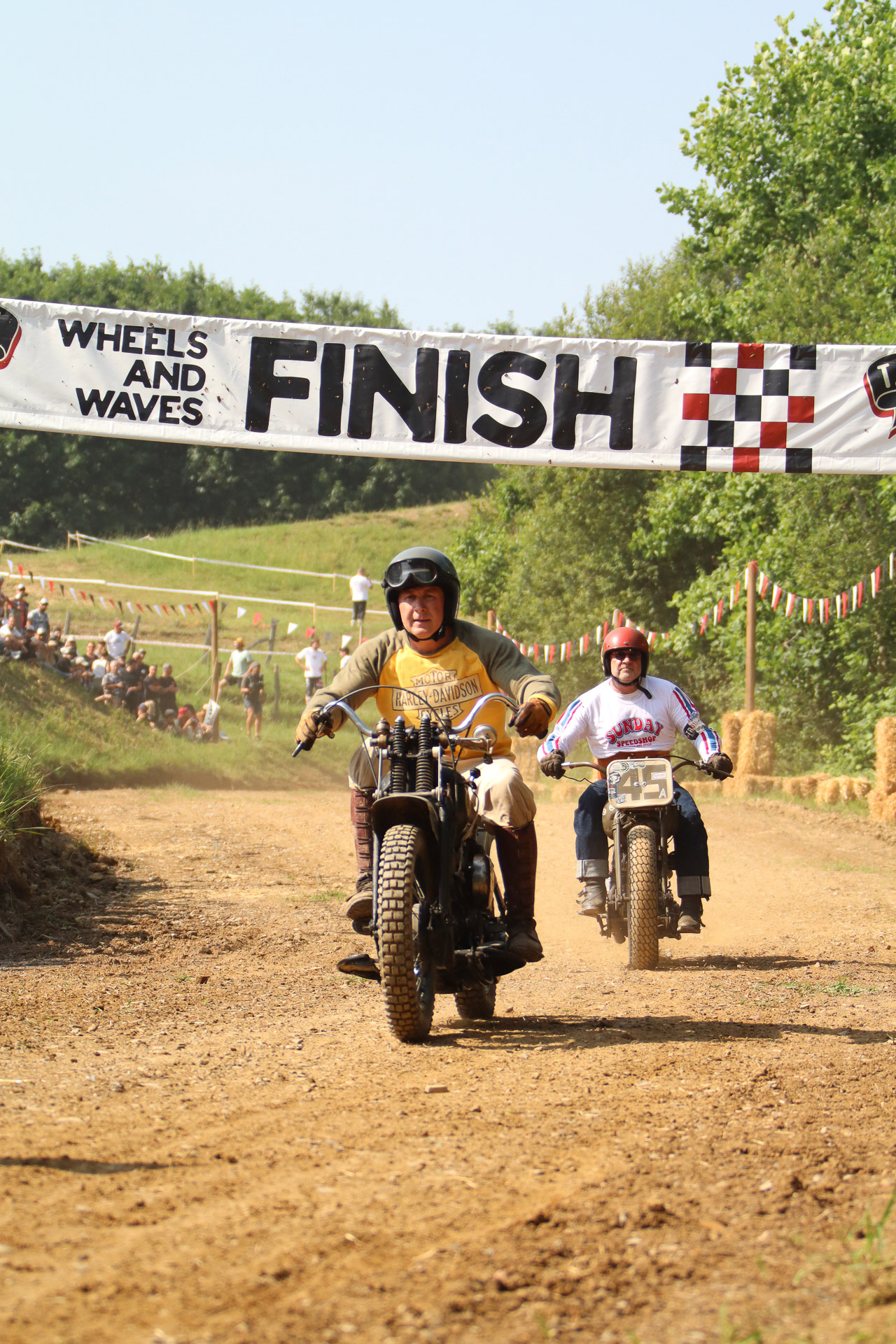
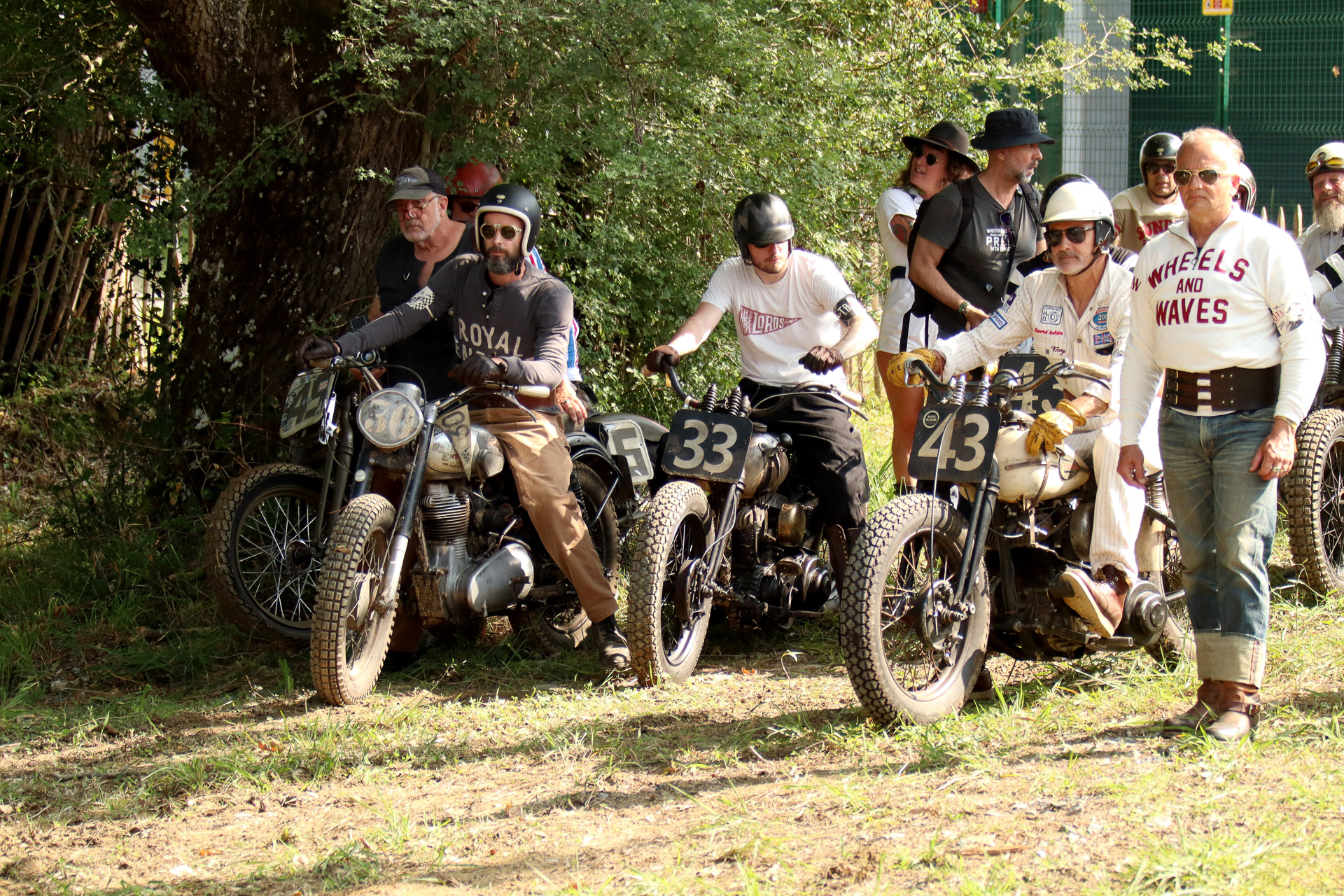
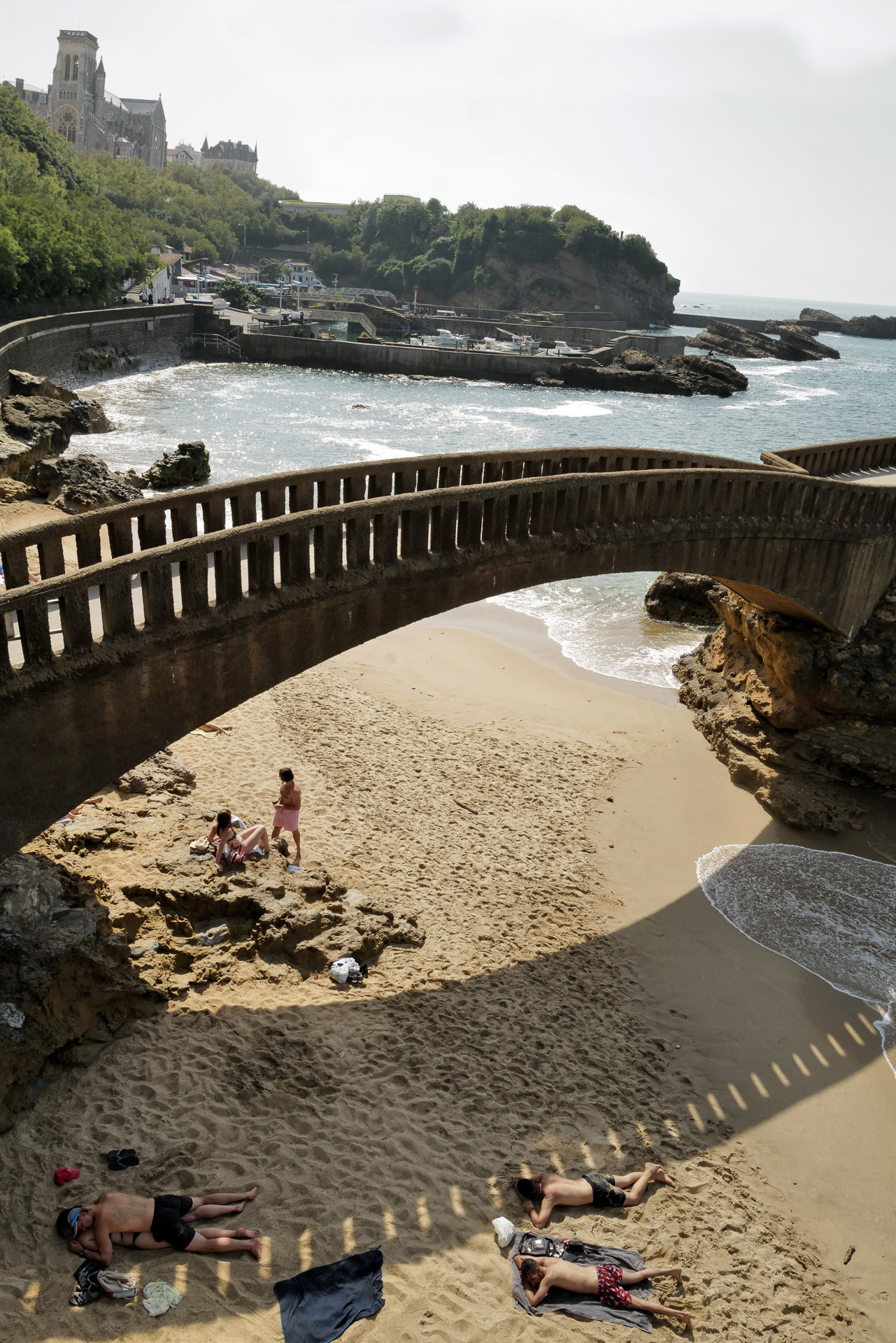
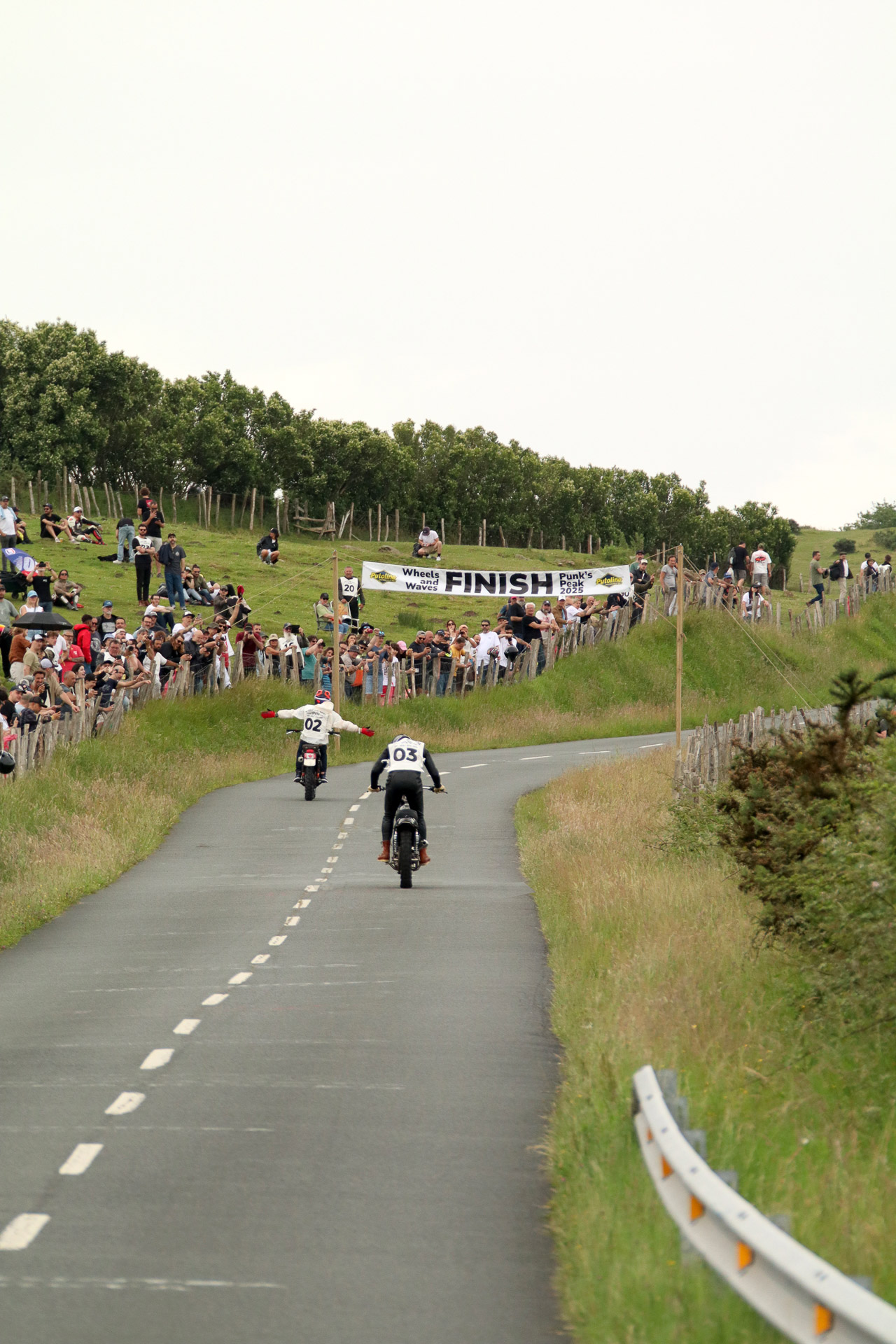
If the coastal roads of northern Spain had been peaceful and meditative, Biarritz was the opposite. During the Wheels & Waves festival, the normally elegant seaside town transforms into a vibrant gathering of motorcycle culture. Engines roar through the streets. Music spills out of beach bars. Custom bikes line the sidewalks like rolling works of art.
At the center of the festival stands one of its most legendary attractions: the Wall of Death. Inside a towering wooden cylinder, riders accelerate until centrifugal force carries them vertically up the walls. The roar is deafening. The wooden structure vibrates. Diego stood among the crowd, watching the spectacle with a grin, “Motorcycles are not just machines,” he wrote, “They are magnets for people who refuse to live quietly.”
But beyond the spectacle, what stands out most is the atmosphere. Strangers quickly become conversation partners. Riders inspect each other’s machines with curiosity and admiration. Stories of journeys, breakdowns, and distant roads flow easily between people who may have just met minutes before.
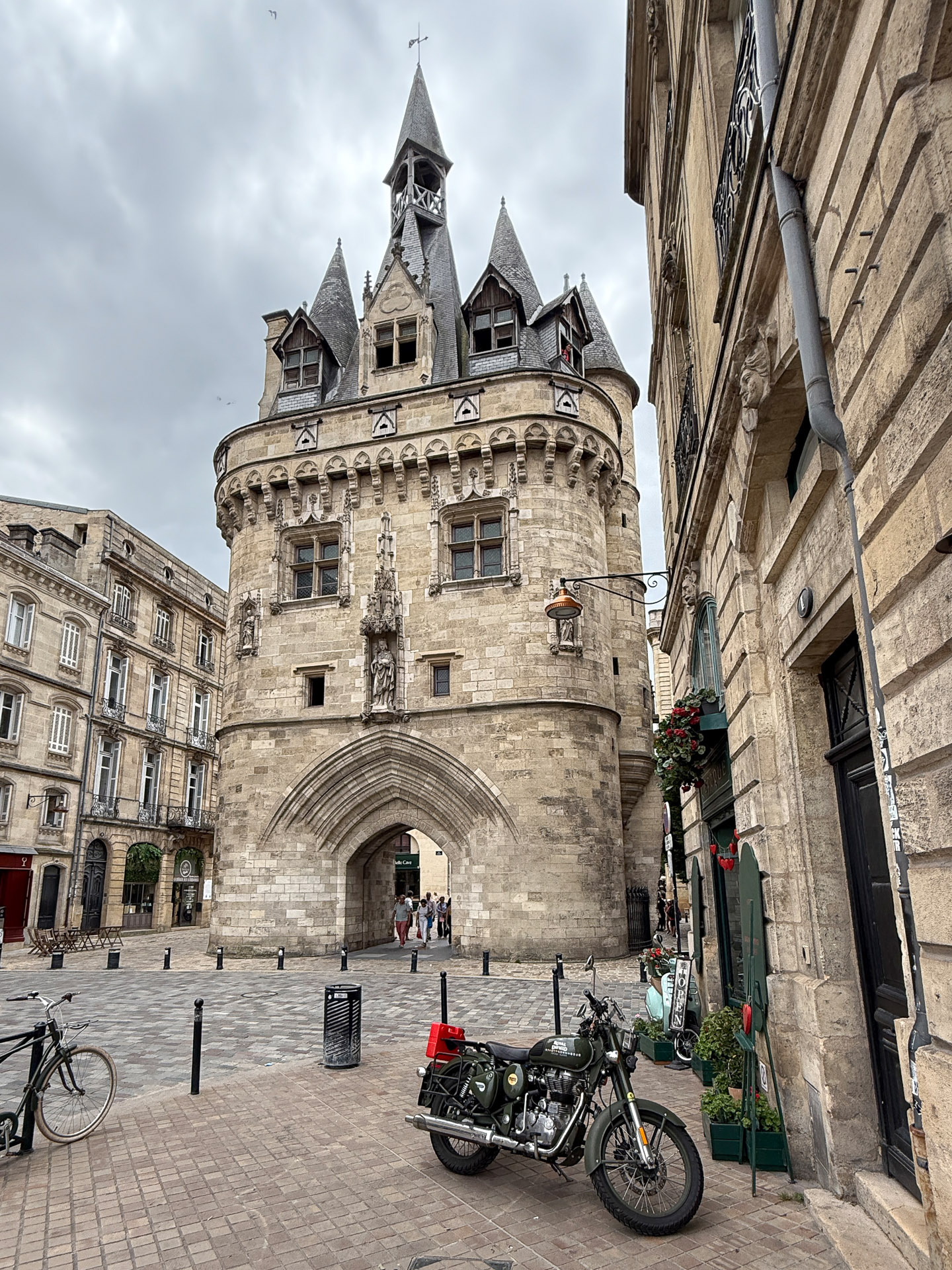
For days the Royal Enfield continued its steady rhythm north across Europe. Cities came and went. Coastal roads gave way to long highways. The weather slowly began to change. The warm Atlantic air of Spain was replaced by colder winds as Diego moved deeper into northern Europe. The road was becoming harder. The distances longer. And the adventure more unpredictable.
Somewhere ahead lay the rugged landscapes of Scotland, the cold waters of the North Sea, and roads that would test both rider and machine. Diego could not yet know that the next stage of the journey would bring one of the most dramatic moments of the entire expedition, a moment that would threaten to end the dream altogether. But for now, the Royal Enfield kept moving. North. Toward the unknown.
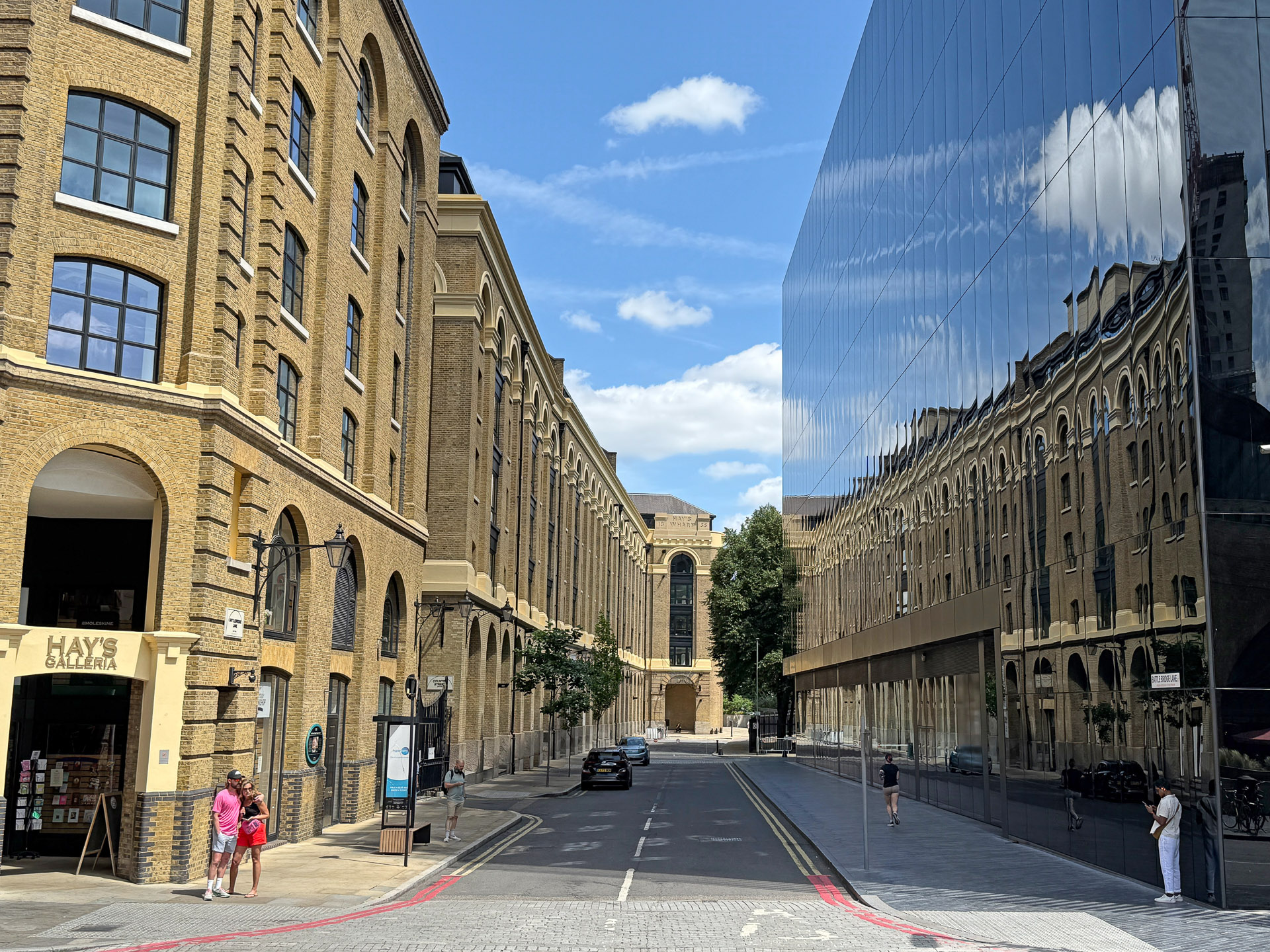
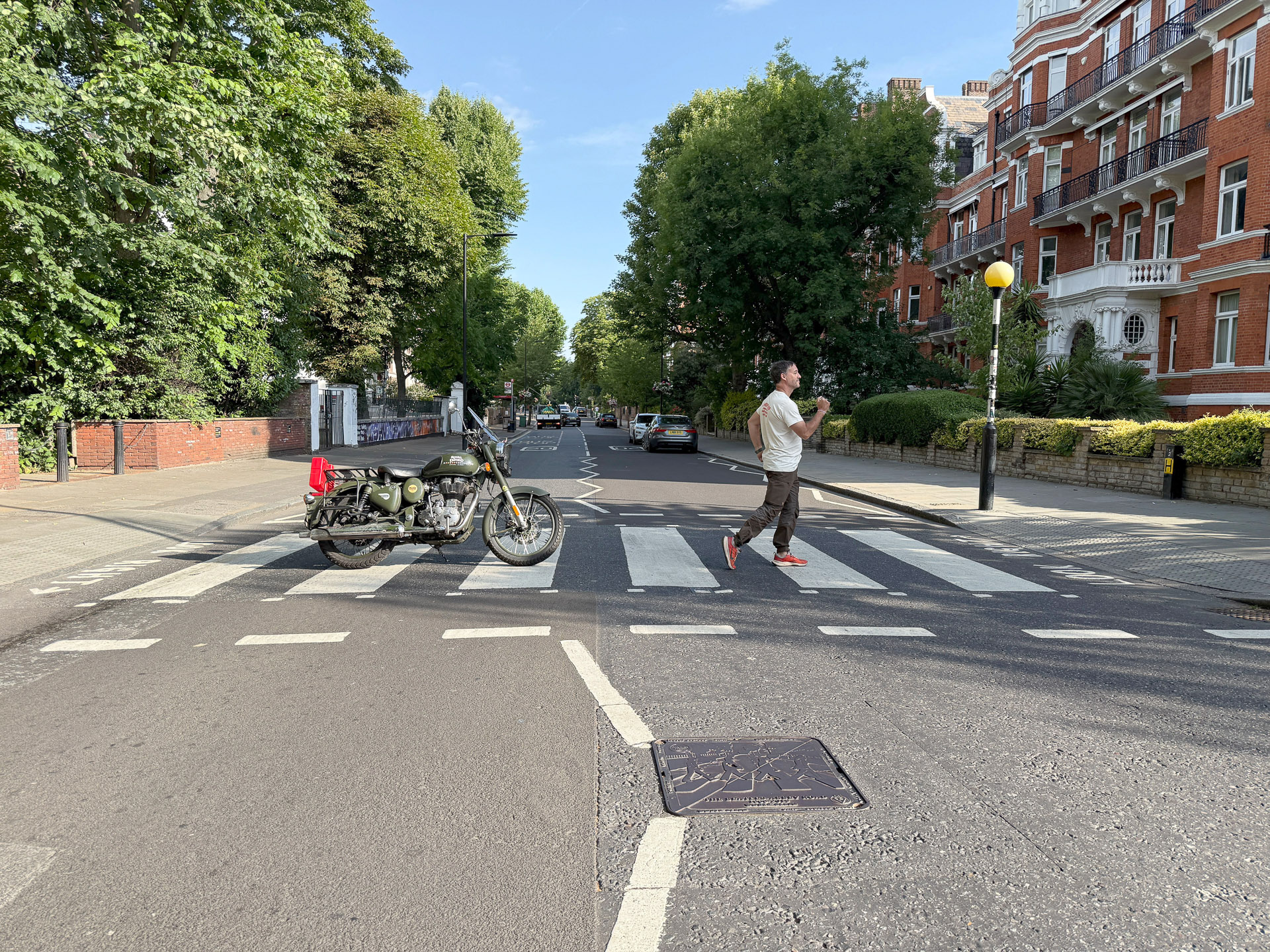
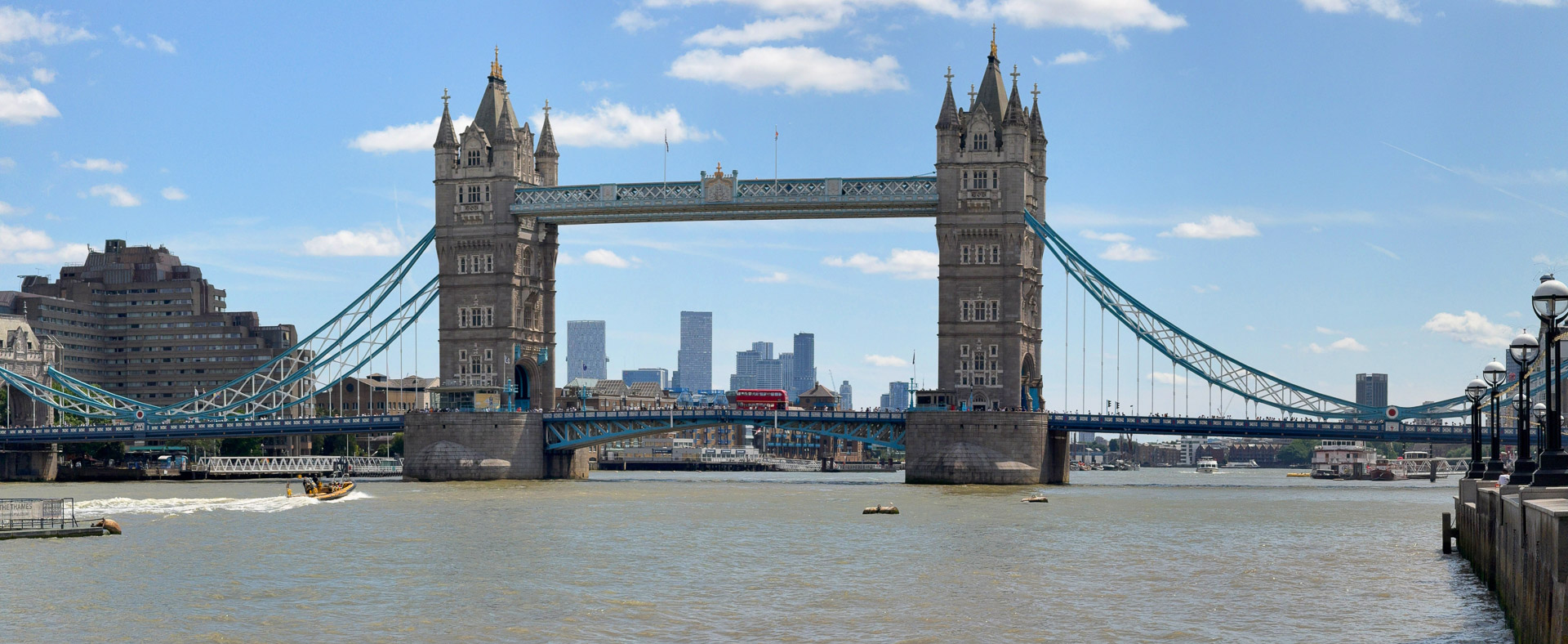
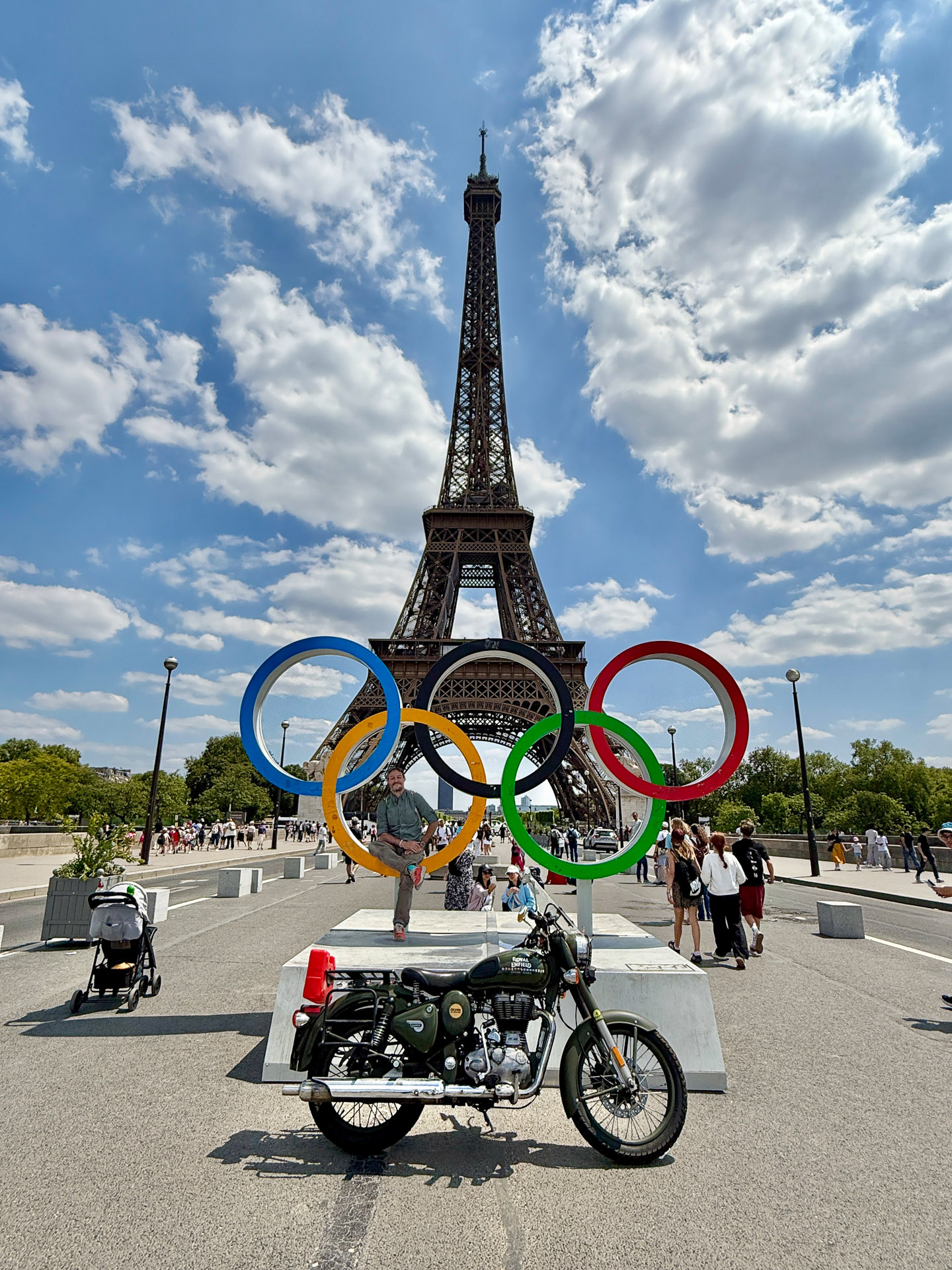
Diego Rosón documented this remarkable expedition in a beautifully crafted trilogy of books. The first volume traces the opening chapter of the journey from Finisterre, through Spain, across France, into England, and finally to the emblematic Abbey Road, blending the spirit of the road with the emotional weight of a long-awaited dream fulfilled.
This first volume is a 112-page, full-color edition, carefully designed and illustrated with more than 150 photographs captured during the journey. The books are available in digital PDF format or as high-quality paperback editions, where the images truly come to life on the printed page.
Readers interested in acquiring a copy or getting in touch with Diego can contact him directly through his Instagram page:
Instagram: @monosontheroad
And remember:
Don’t just collect miles, collect memories.
Words by: Thomas Ferrero – Photo Credits: Diego Roson
Unlock the Full Story!...
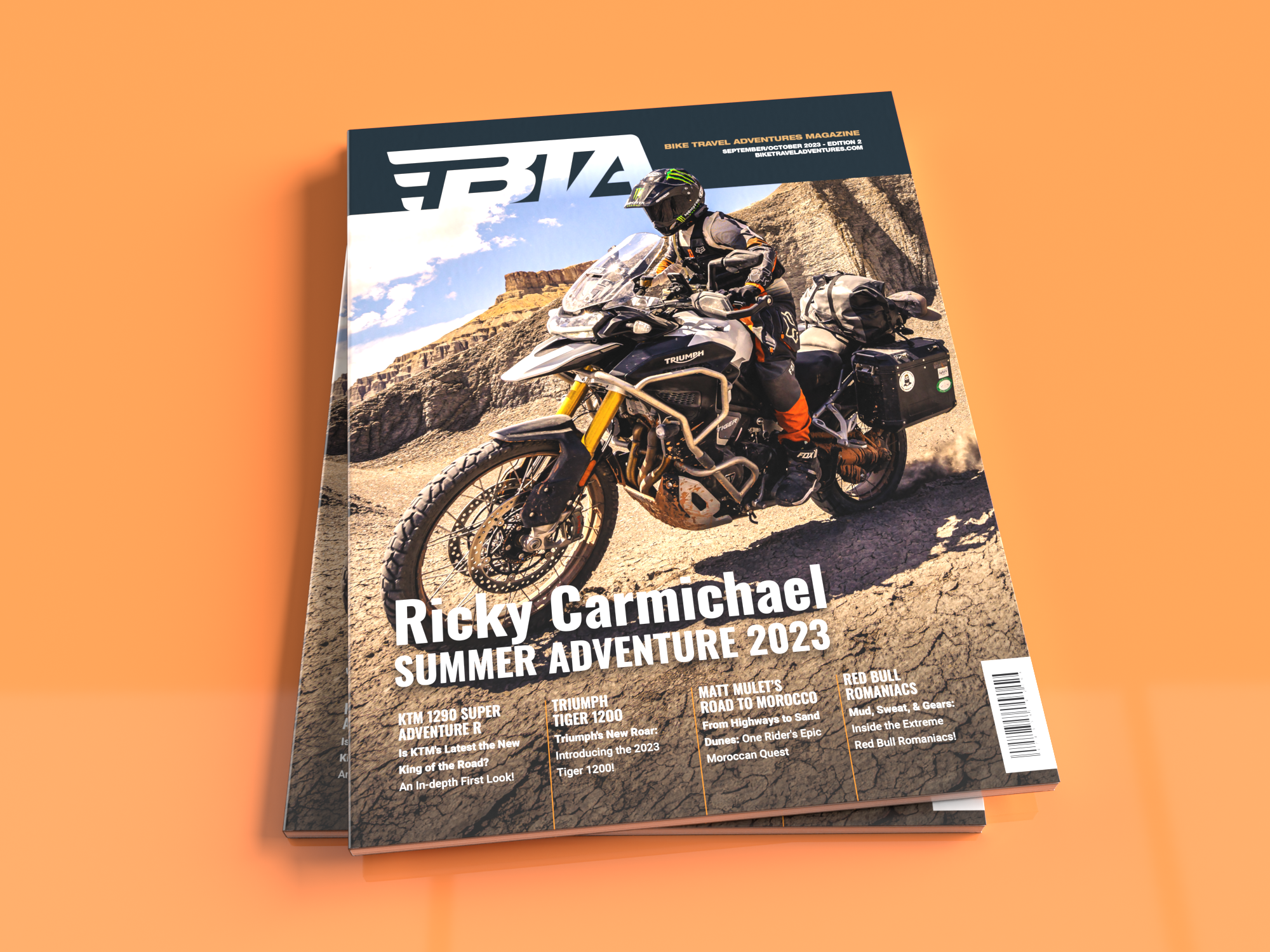
Unlock the full article and much more by purchasing this issue of BTA Magazine. Join an exclusive community of readers who demand the very best in bike travel adventures. Buy your copy today.
Articles in this issue
Riding with Dakar Champion
Riding with Dakar Champion Kevin BenavidesThe long-awaited journey had finally come to fruition... For years, I had dreamed of tracing the same dust-ridden paths that legends carved through the...
Riding the Icelandic Trails
Riding the Icelandic Trails Simon CudbyNote From the Editor Simon Cudby, with his compelling narrative and vivid photography, takes us on a breathtaking expedition through Iceland’s rugged scapes,...
The 2023 FIM World Rally Raid Championship
A look into the 2023 FIM world rally raid championship Thrills and ChallengesThe FIM World Rally Raid Championship, in its second year, continues to captivate the adventure motorcycle segment with...