
Alpinestars Tech 7 Enduro Drystar
The Structure Behind the Protection
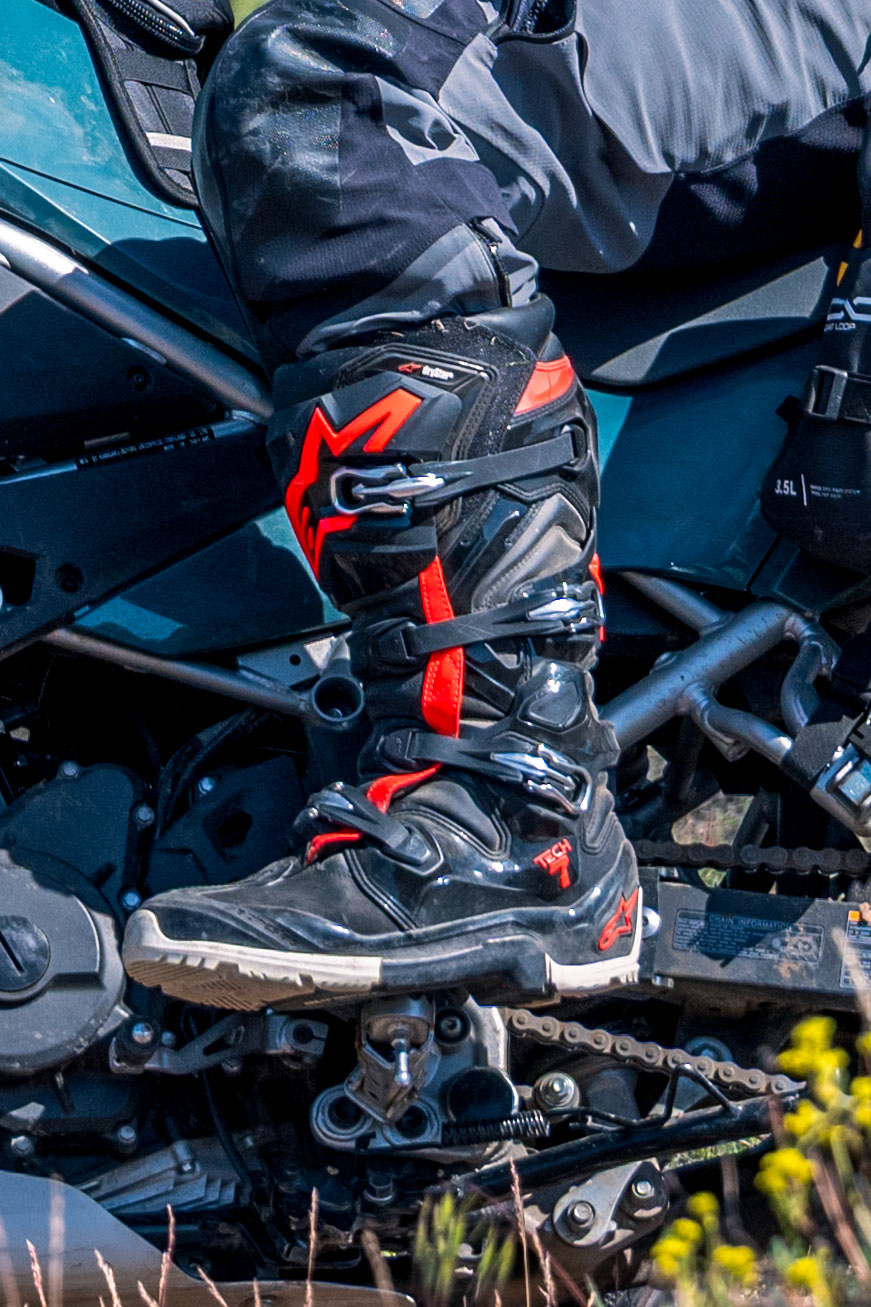
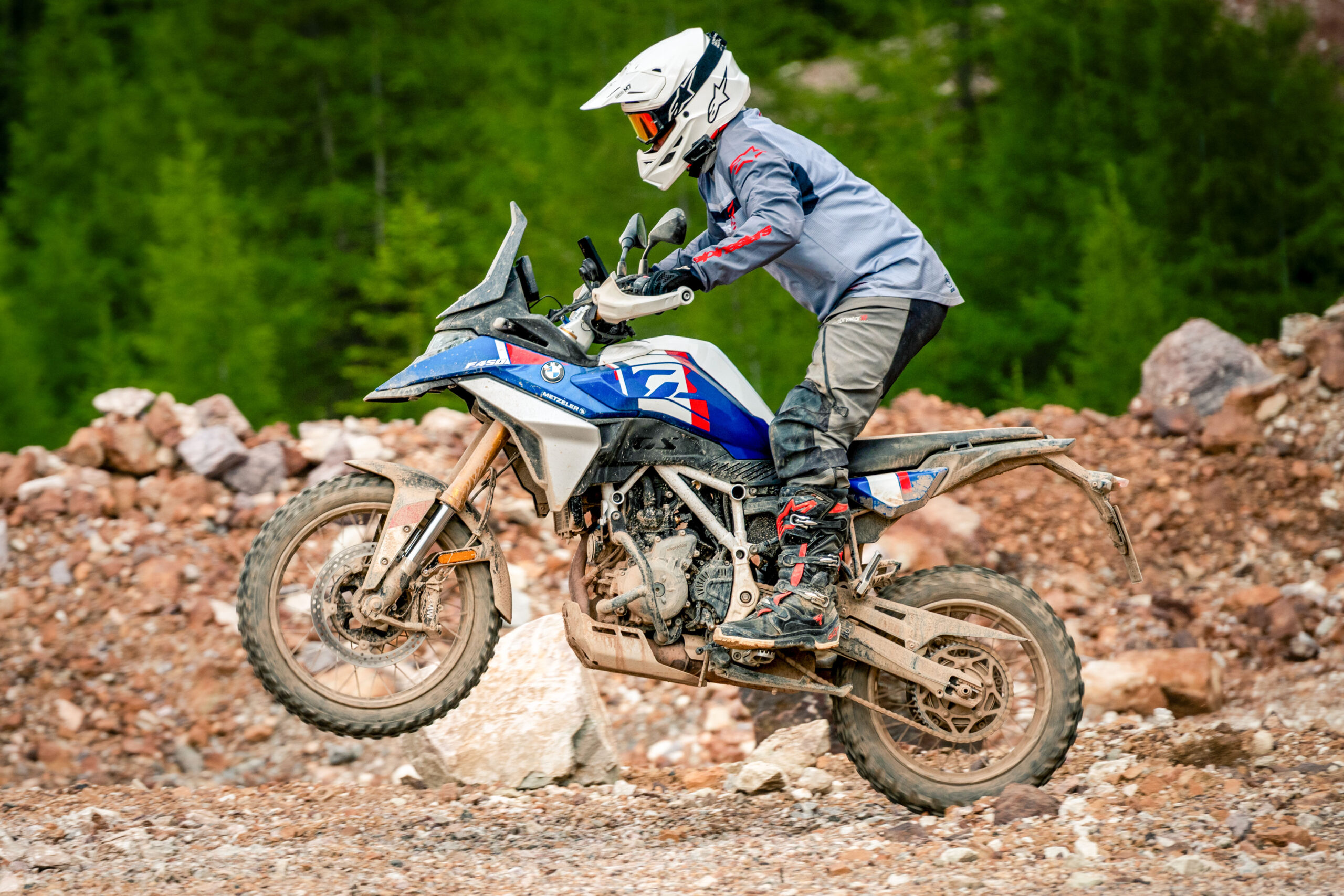
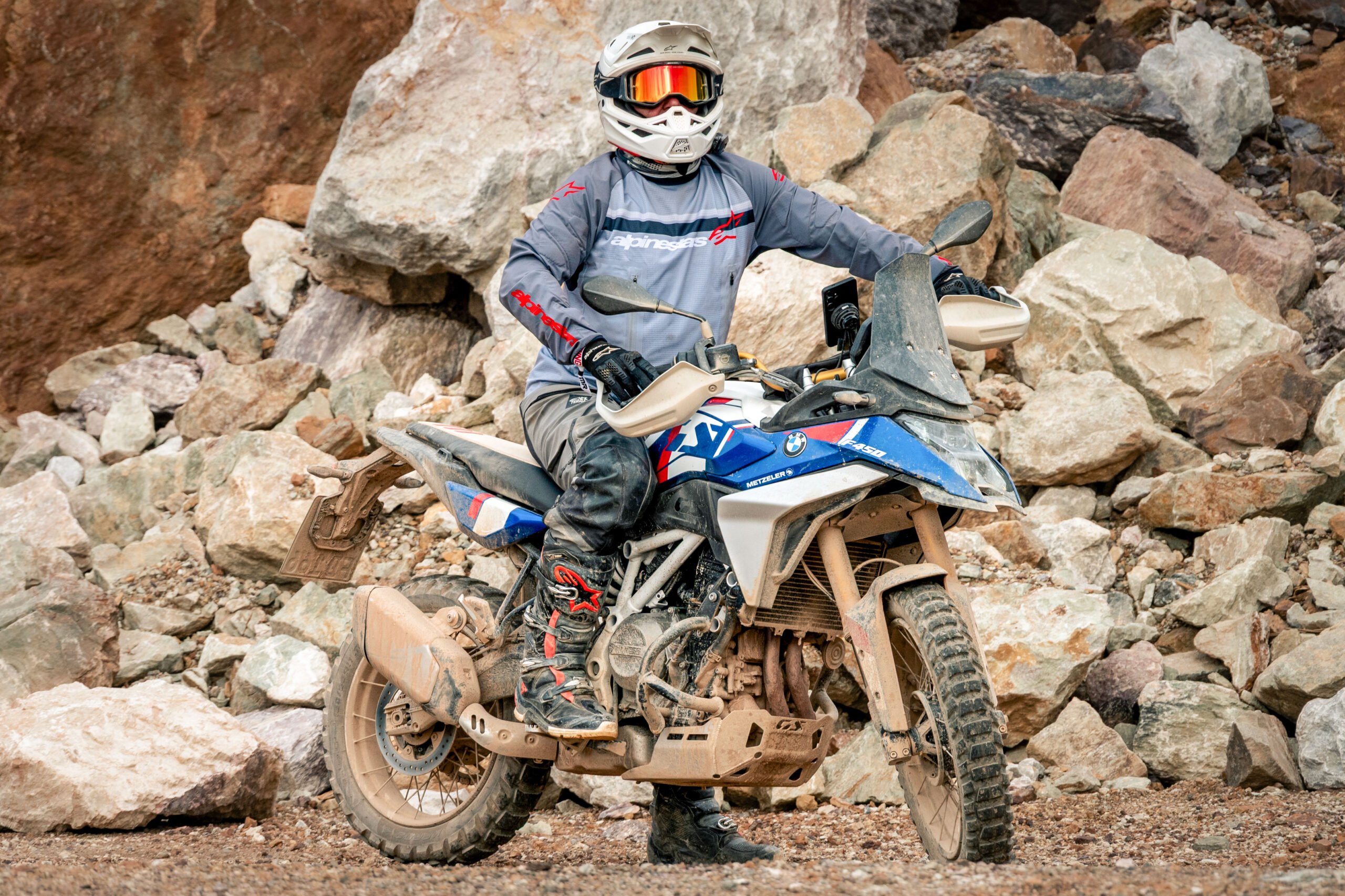
Standing on the pegs of a loaded adventure motorcycle asks a boot to do several jobs simultaneously. It must support the foot over a relatively small contact area, allow enough ankle movement for changes in riding position, and preserve access to the gear lever and rear brake. Beyond the pegs, it needs traction for pushing, recovering, or walking around the motorcycle. The Alpinestars Tech 7 Enduro Drystar addresses those demands through an articulated protective chassis, a reinforced foot enclosure, and an enduro-specific sole. Its construction gives us plenty to examine before adding our riding impressions.
Lower Chassis and Foot Enclosure
The lower structure starts with a one-piece, dual-compound injected foot shell. This incorporates a rigid toe box and an integrated steel shank, combining external protection with reinforcement beneath the foot. The shank is particularly relevant to riders who spend substantial time standing: underfoot reinforcement helps resist the boot folding around the footpeg. However, Alpinestars does not provide stiffness measurements or the shank’s dimensions in the supplied specifications. The shell’s dual-compound construction allows different material properties within the same component, but the precise compounds and their hardness are not identified.
Upper Construction and External TPU Armor
Above that foundation, the upper uses polyurethane-reinforced microfiber. Alpinestars specifies this material for its combination of flexibility, abrasion resistance, water resistance, and reduced weight. No complete boot weight is provided, so the weight-saving claim cannot be translated into a meaningful comparison with other models. Extensive thermoplastic polyurethane (TPU) protection covers the toes, foot, heel, ankle, calf, and shin, with particularly durable compounds specified at the toe and heel. Contoured shin and ankle protectors extend that coverage around exposed areas while following the leg’s shape.
Biomechanical Articulation and Flex Design
The articulation system is central to how those protective elements work together. Medial and lateral pivots guide ankle movement, with a biomechanical linkage intended to combine fore-and-aft flexibility with structural stability. For an adventure rider, the practical purpose is to accommodate changes in body position without relying entirely on uncontrolled deformation of the upper. The system helps reduce the risk of torsional injury.
Front Flex Bellows and Padding
A progressive front flex zone complements the pivots, with impact-absorbing inserts incorporated into the bellows. This gives the front of the boot a dedicated area in which to bend as the rider moves forward over the motorcycle. Soft reinforcement around the ankles and foam padding at the collar cushion the leg against the protective structure. How naturally these elements move together, and how much resistance they offer when new, are questions for the riding assessment.
Enduro Sole and Motorcycle Interface
The sole is specifically configured for enduro use, with a compound intended to balance traction, durability, feel, and structural rigidity. That balance is important on an adventure motorcycle: a sole must engage the footpeg securely while still allowing deliberate foot repositioning, and its behavior on loose ground matters when the rider steps off. A replaceable footpeg insert addresses wear at the concentrated contact area beneath the boot. This is a useful serviceability feature, although the supplied information does not establish whether the entire outsole can also be replaced. It also does not provide tread depth, rubber hardness, or measured grip performance.
Medial Grip and Frame Contact Surface
On the inner side of the boot, a sculpted TPU panel incorporates a honeycomb-pattern rubber insert. This creates a dedicated contact surface against the motorcycle, where riders use their feet and lower legs to stabilize themselves while standing. The TPU panel also resists heat and abrasion. Actual grip depends on the motorcycle’s surfaces, contamination, and riding position; the construction shows where Alpinestars has concentrated that function but doesn’t explain how it performs in mud or rain.
Closure System and Interior Ergonomics
Closure hardware combines polymer buckle components with high-impact aluminum frames. The system includes memory adjustments and self-aligning quick-release closures, allowing the rider to retain a selected setting between uses. A wide entry opening and calf adjustment accommodate fitting and removal. For riders using knee protection, the key assessment is how securely the upper closes around their equipment without creating pressure at the shin or restricting movement. The specifications do not give a calf-circumference adjustment range.
Internal Lining and Footbed Support
Inside, a three-dimensional lining works with an anti-slip microsuede heel area to help keep the foot in place. This is an important part of control: movement inside the footwear can introduce unwanted delay between the rider’s input and the boot’s response. An anatomical, removable EVA/Lycra footbed supplies cushioning and support, and can be replaced when worn. Together with the ankle and collar padding, these components form the comfort system within the relatively substantial external protection. Their effectiveness over a full riding day will depend heavily on fit.
Weatherproofing, Certification, and Practical Value
Drystar Membrane Performance
Weather protection comes from the Drystar construction, supported by an extended microfiber gaiter intended to limit water, mud, and debris entry. The supplied listing quotes a 5,000 mm waterproof rating and a breathability figure of 5,000 g/m². However, it does not identify the test methods or provide a time interval for the breathability measurement. These figures therefore need context before you can compare them with other membranes. They also do not establish a safe wading depth or how the complete boot behaves during prolonged immersion. For travel, the more useful observations will be water ingress during sustained rain, moisture buildup during strenuous riding, and drying behavior afterward.
CE Certification Standards
The Tech 7 Enduro Drystar is listed as CE certified to EN 13634:2017. The supplied description does not include the individual performance levels shown on the boot’s certification label, so it would be premature to assign specific protection ratings beyond that stated certification. Examining the label will allow a more precise account of its tested performance.
Technical Verdict and Pricing
The supplied European listing prices the boot at €529.95 in black, with listed EU sizes spanning 38 to 52. Its strongest technical argument is its reinforced lower shell, guided ankle articulation, extensive TPU coverage, and a serviceable footpeg contact insert. For advanced adventure riders, the remaining judgment concerns how that structure works on the motorcycle: the precision available at the controls, support during prolonged standing, freedom to move through difficult terrain, and comfort when the ride requires time on foot. Those are the points our riding impressions will address.
Photos/Videos: BTA Media – Words: Thomas Ferrero
Related Articles
BMW GS Trophy 2026
BMW GS Trophy 2026 Six Days in the Wild Carpathians Adventure riding has a way of bringing people together. Different backgrounds, different languages, and different riding experiences often lead to...
Edgar Canet Claims His First RallyGP Victory in Morocco
The 27th Rallye du Maroc brought the world's leading rally-raid riders to southern Morocco from September 28 to October 3, for the fourth round of the 2026 World Rally-Raid Championship. Starting in...
Heavy Metal in the Taurus
Heavy Metal in the Taurus Where the Taurus Mountains Become a Playground for Adventure BikesLet's get one thing straight: nobody builds a 485-pound adventure bike to go scrambling up a goat trail....