
Alpine Lines – A Journey Through Austria’s Hidden Passes
Top Motorcycle Adventure Routes in Austria
“So, You Think You’re Ready for the Sauna?”
It’s funny how some of the most memorable parts of a motorbike trip have nothing to do with the bike itself. You spend the day carving through mountain passes, dodging spring showers, eating gravel on forgotten roads, and just when you think you’ve earned a quiet evening… Austria hands you a cultural curveball wrapped in eucalyptus steam.
We’d just rolled into the stunning Hotel Karnerhof after a 12-hour ride across Austria, Slovenia, and Italy, miles of wet hairpins, towering peaks, and a pasta stop inside a converted train station. Our BMWs were mud-splattered trophies in the parking lot, and all we could think about was recovery. That’s when the receptionist handed us our room key and said, with that calm Austrian confidence, “You’re right on time for the sauna.”
Now, we’d heard rumors. Something about towels, silence, and… minimal clothing. Still, nothing prepares you for that moment when you step into a five-star spa and see the rules: No minors. No phones. No swimsuits.
I glanced at Mike. He glanced back. A slow grin spread across his face.
“I’m not going in there with you,” he said, and burst out laughing.
We both did.
But then we paused. The place was stunning, and honestly, after a day like ours, the idea of 194°F (90°C) heat and cold plunge pools sounded like heaven. And let’s be honest, after riding through three countries and over a dozen passes, embracing the local customs felt like the right thing to do. Besides, when in Austria, do as the Austrians do… even if it means leaving your modesty (and your gear) at the door.
Did we go in?
Well… let’s just say Austria has a way of stripping away your expectations, and sometimes more than that.
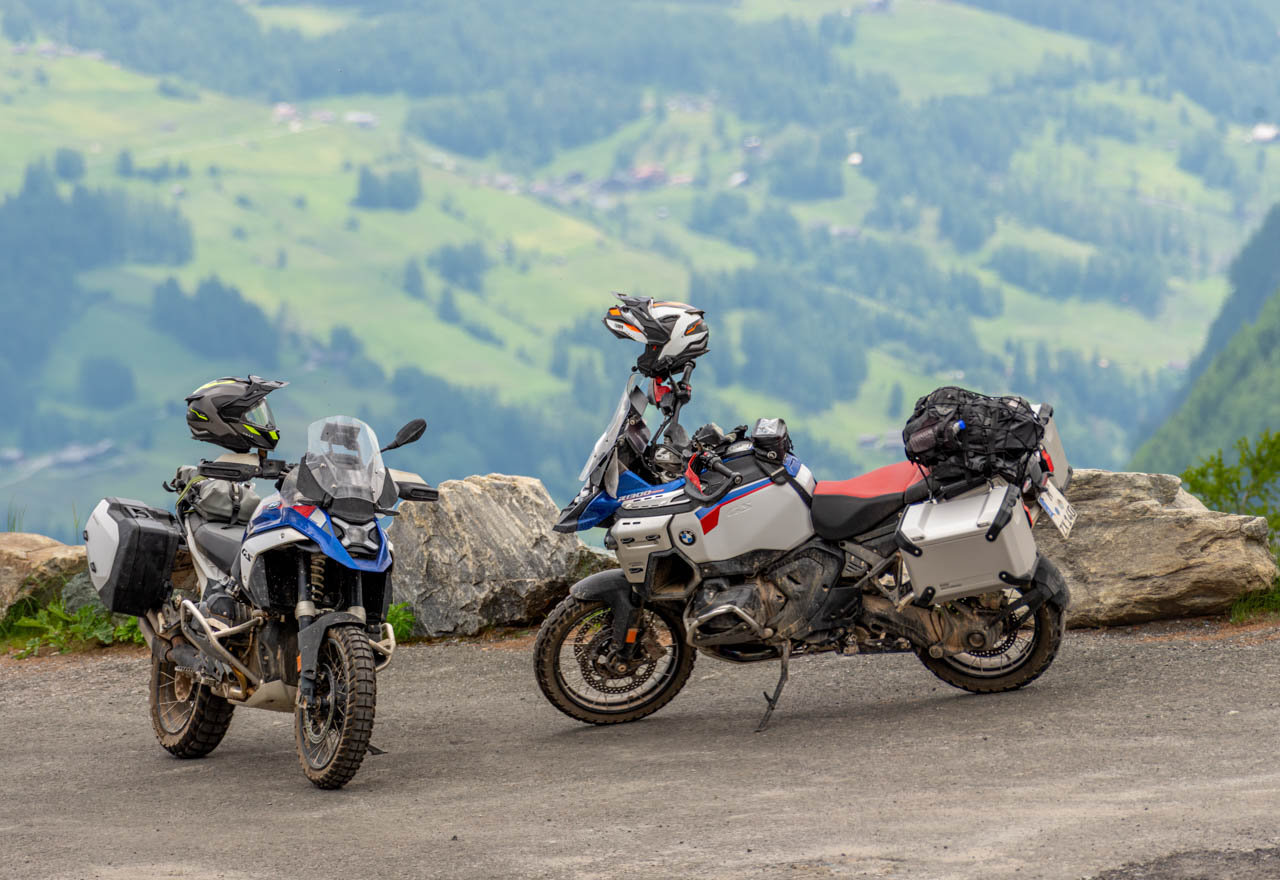
But before we found ourselves debating towel strategy in a wellness temple above Faaker See, this ride started far from steam rooms and sheep cheese salads. It started at BMW Motorrad in Munich, where two brand-new R 1300 GS models, one GS Trophy, one Adventure Trophy, were gleaming in the morning light, waiting to be packed, fueled, and pointed south toward the Alps. And that’s where the real story begins.
Erzberg and the Iron Hills
The ride kicked off under a cloudy Bavarian sky, the kind that promises both sunshine and surprise showers. We left Munich around 9 a.m., avoiding the highways in favor of countryside roads that rolled past tidy villages, green hills, and stretches of forest that looked like they hadn’t changed since the days of fairytales and feudal lords.
The weather wasn’t perfect, light rain came and went like passing thoughts, but it never got bad enough to dampen the ride. In fact, it made the colors richer, the curves more memorable. The BMWs were loaded up, panniers shut with that satisfying click, and the ride to Eisenerz stretched ahead like a ribbon through Austria’s forgotten center.
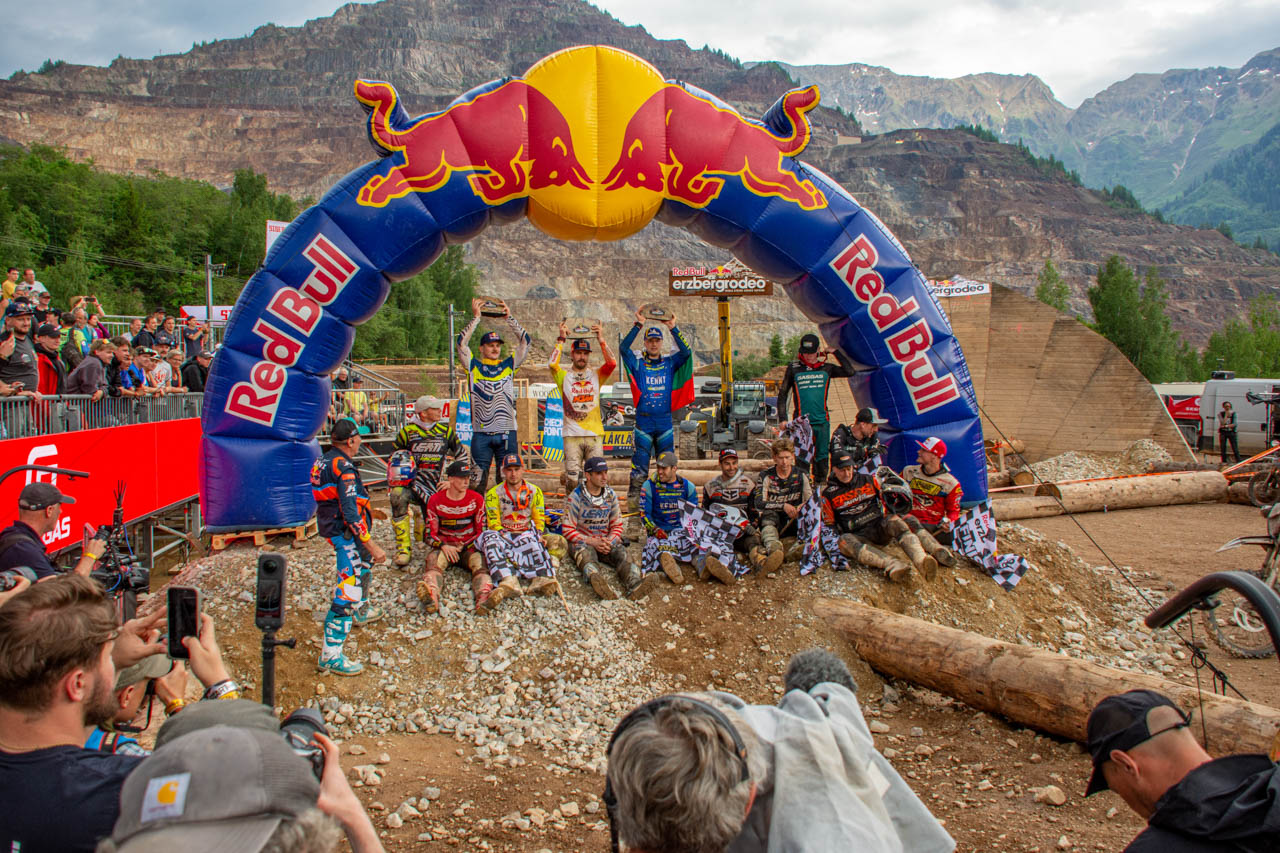
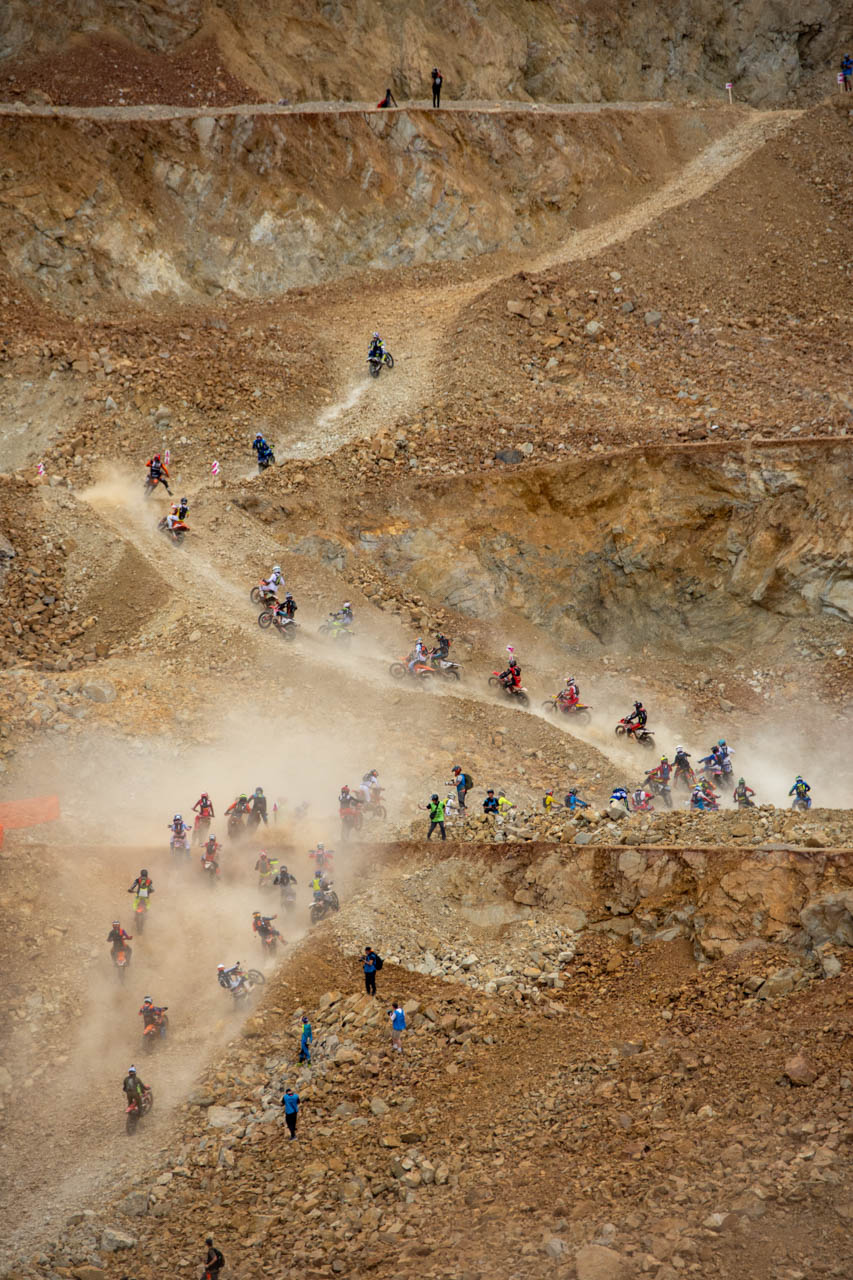
Five hours later, we rolled into Eisenerz. Tucked between steep mountains and crowned by the raw, jagged walls of Erzberg, the town felt like a set from a post-apocalyptic Western. But it’s no ghost town. This is the heart of Austria’s mining past, and once a year, it roars back to life for the wildest hard enduro event in the world: the Erzbergrodeo.
The iron dust, the machine echoes from the hills, the sheer industrial drama of it all. It’s a pilgrimage site for off-road fanatics, and if you’re coming, bring your own wheels. This place is vast, and unless you’re planning to jog from one hill to another (we weren’t), two wheels are essential.
We checked into a restored miner’s flat through ALPS Resorts; modern on the inside, alpine nostalgia on the outside.
The apartment had a sauna (of course it did), and the bathroom could’ve fit three bikes if we were so inclined. The details were immaculate, a clear sign that the old mining town had embraced its new identity with pride.
While unpacking, we started noticing a pattern: every Austrian we spoke to had a sauna. Every lodge, every hotel, even a few gas stations, probably. That night, as we lay back listening to the faint echo of rain on alpine rooftops, we didn’t realize it yet, but Austria was about to teach us how to ride and rest like professionals.
We stayed in Eisenerz for four days, soaking in the madness and magic of the Erzbergrodeo, a full-throttle spectacle that deserves its own story (which you’ll find in this same edition of BTA Magazine).
The morning of the last day came fast. We brewed strong coffee, zipped up jackets still damp from the ride, and opened the GPS app to chart a course deeper into the Alps. What we found looked like the perfect playground: a network of mountain roads, valleys, and scenic passes tracing a jagged path toward Lake Millstätter See.
Little did we know, one of those “roads” was about to teach us the difference between adventurous and illegal.
Gearing Up for the Unknown
You can’t take on Austria’s high passes, gravel climbs, and sudden snow squalls with half-baked prep, or half-decent gear. And after spending days researching what June might throw at us in the Alps, one thing became crystal clear: everything was on the table. Rain, sunshine, thick alpine mud, loose stone tracks, cliffside curves, tight urban corners. Except for sand, every terrain and riding surface was in play.
So we built our setup around one question: what’s the one bike that can handle this with power, precision, and comfort?
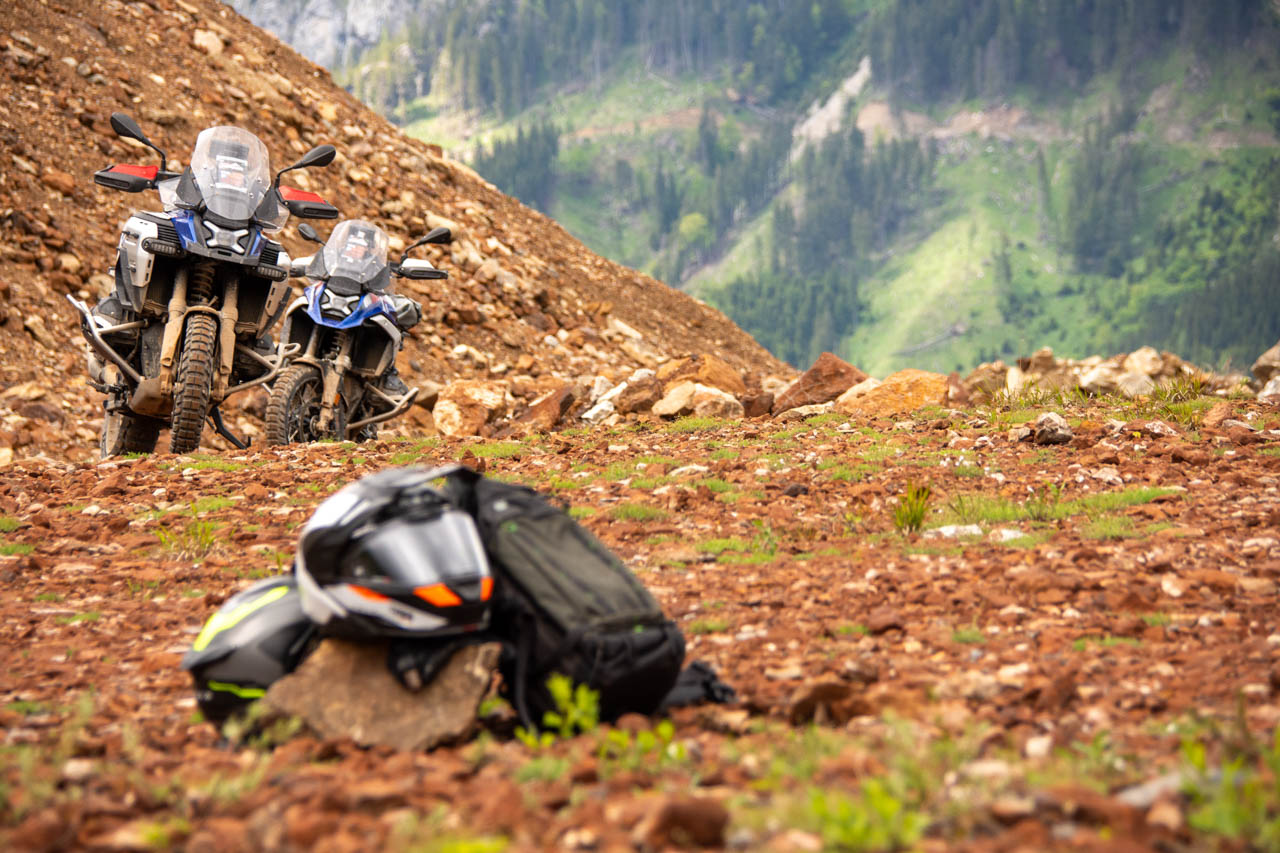
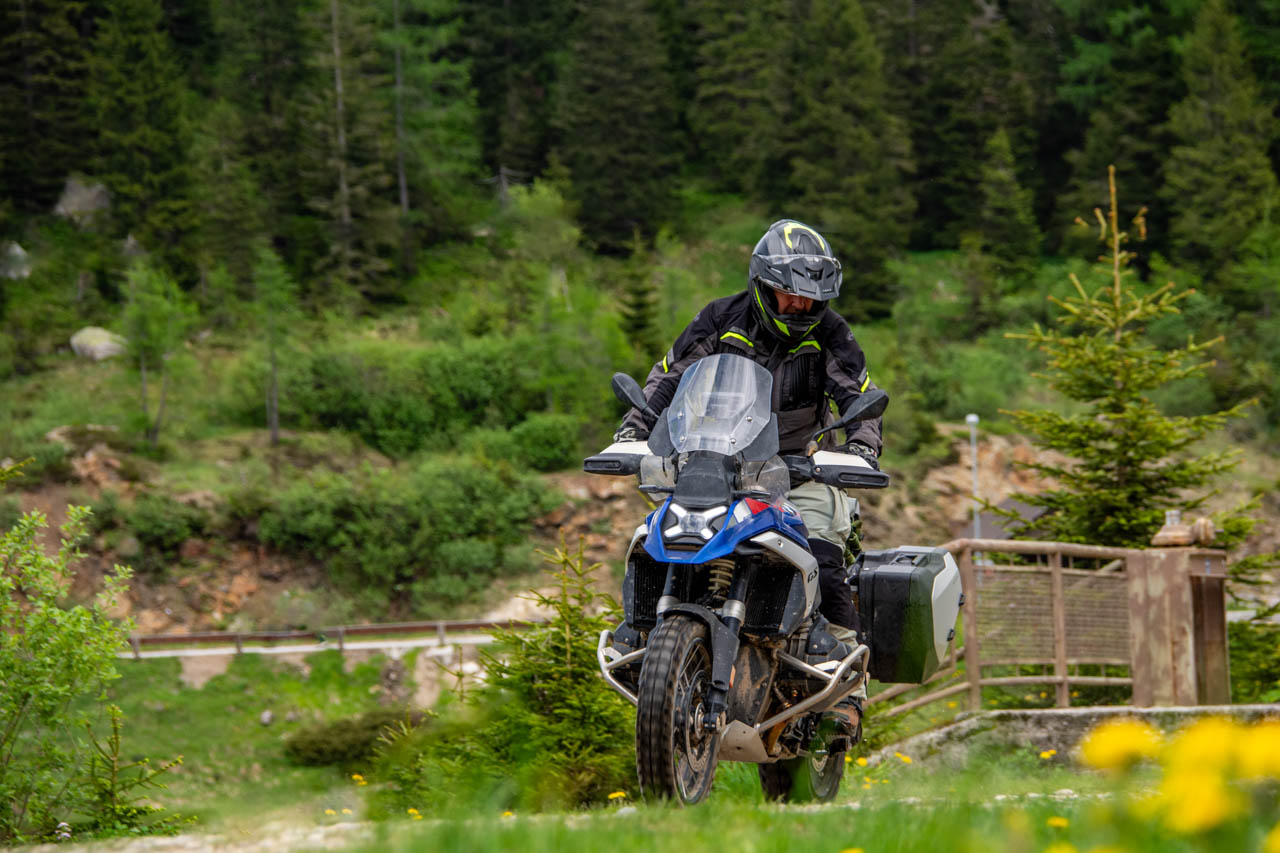
The answer was obvious: the new BMW R 1300 GS Trophy or the GS Adventure Trophy. Comfortable enough for long days in the saddle, powerful enough to eat up alpine climbs, and smart enough to switch personalities when the weather turns from sunshine to sleet in five minutes flat. There was no second choice.
But even a perfect bike needs the right shoes. The BMW team didn’t hesitate: Metzeler Karoo 4s. A 50/50 adventure tire that could keep us upright through tarmac sweepers and mountain gravel in equal measure. Their confidence sold us.
Turns out, they were right.
Next: the rider. Or more specifically, what protects the rider from the elements, the ground, and sometimes their own ambition. Martin, our Austrian friend and weather oracle, put it bluntly:
“Just be flexible. You’ll find sun, rain, and snow, sometimes all in the same day.”
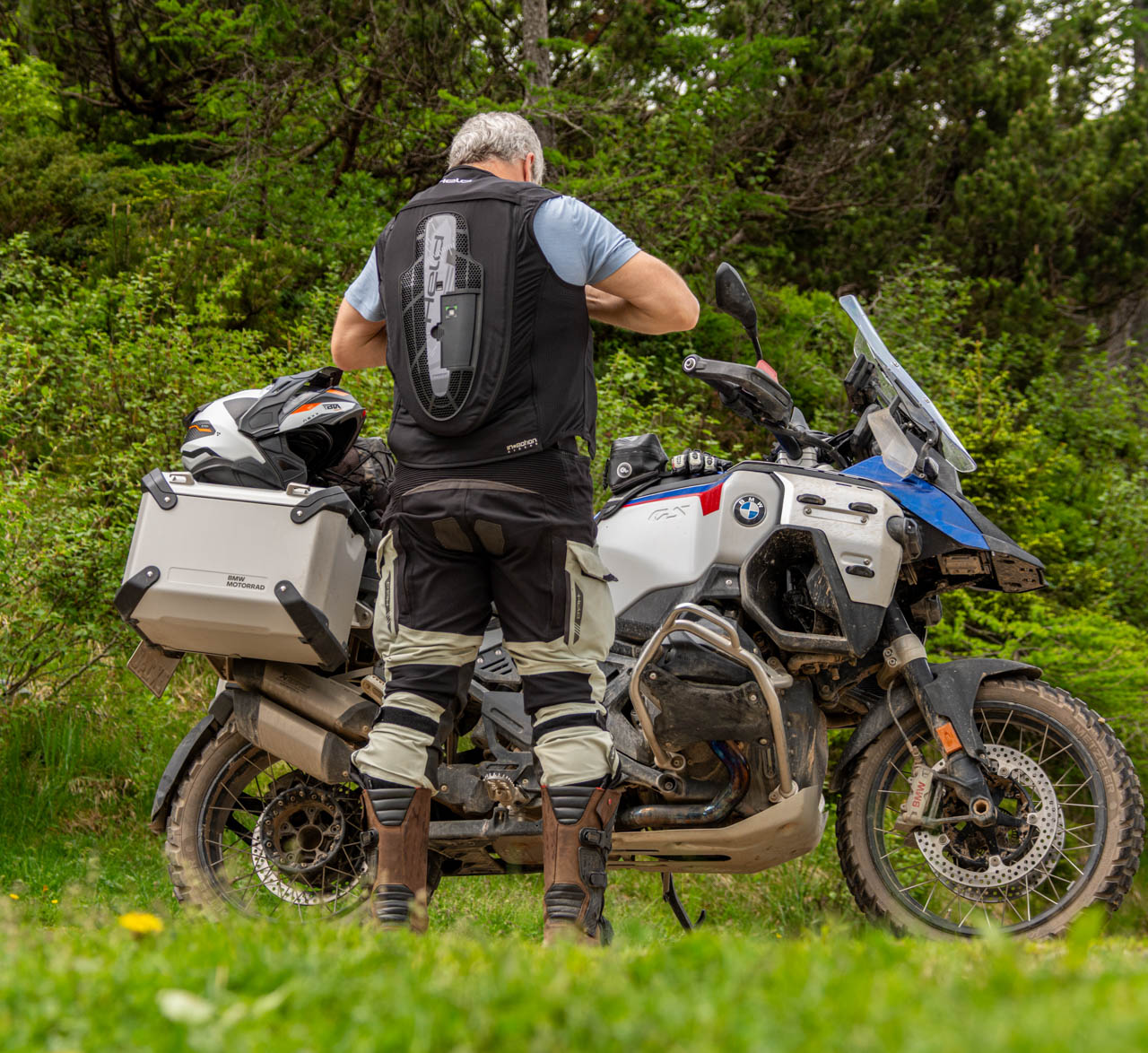
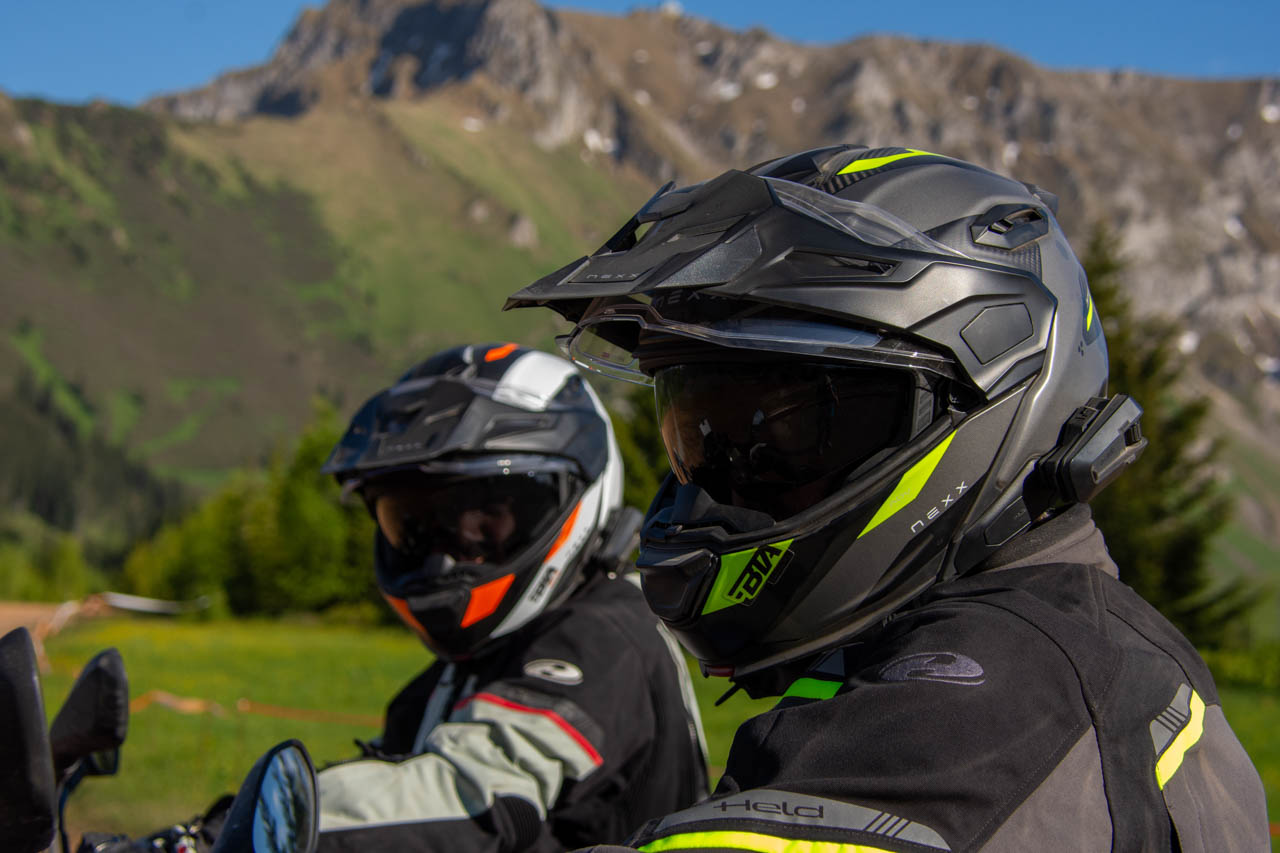
With that forecast in mind, we stepped into one of HELD’s flagship stores in Germany, a two-wheeled wonderland for any gearhead, and geared up like pros. Mike went with the HELD Tridale jacket and pants, while I picked the LONBORG combo, both rugged, breathable, and built for rapid climate change. For our hands, we didn’t compromise: Sambia 2in1 Evo GTX gloves, and for our feet, the BRICKLAND GTX boots, possibly the most comfortable and capable adventure boots we’ve ever worn.
Safety wasn’t an afterthought. At HELD, they introduced us to their airbag vests powered by Inemotion technology, and it was a no-brainer. Fast, reactive, and built into the riding experience without getting in the way.
To top it off, literally, we chose the NEXX X.LIFECOUNTRY helmets, sleek adventure touring lids with perfect ventilation and comfort. We rigged them up with the CARDO Packtalk Pro communication system, which became our lifeline across valleys, tunnels, and tight mountain switchbacks. For essential gear that needed to stay dry and accessible, we relied on Giant Loop’s waterproof dry bags and tank bags, rugged, compact, and built to handle every surprise.
When we finally rolled out, we were ready. For rain. For snow. For hidden gravel detours and sudden altitude. For whatever the Alps wanted to throw at us. And they threw a lot.
Private Roads and Public Revelations
Leaving Eisenerz in the early morning mist felt like rolling out of a storybook, only this one had more horsepower. The town faded behind us as we traced a series of narrow backroads, pushing deeper into the heart of Austria. The plan was simple: ride through the Alps toward Lake Millstätter See, threading through valleys and peaks on routes that looked promising on the GPS. But we quickly learned that Austrian maps can’t always tell you who owns the road.
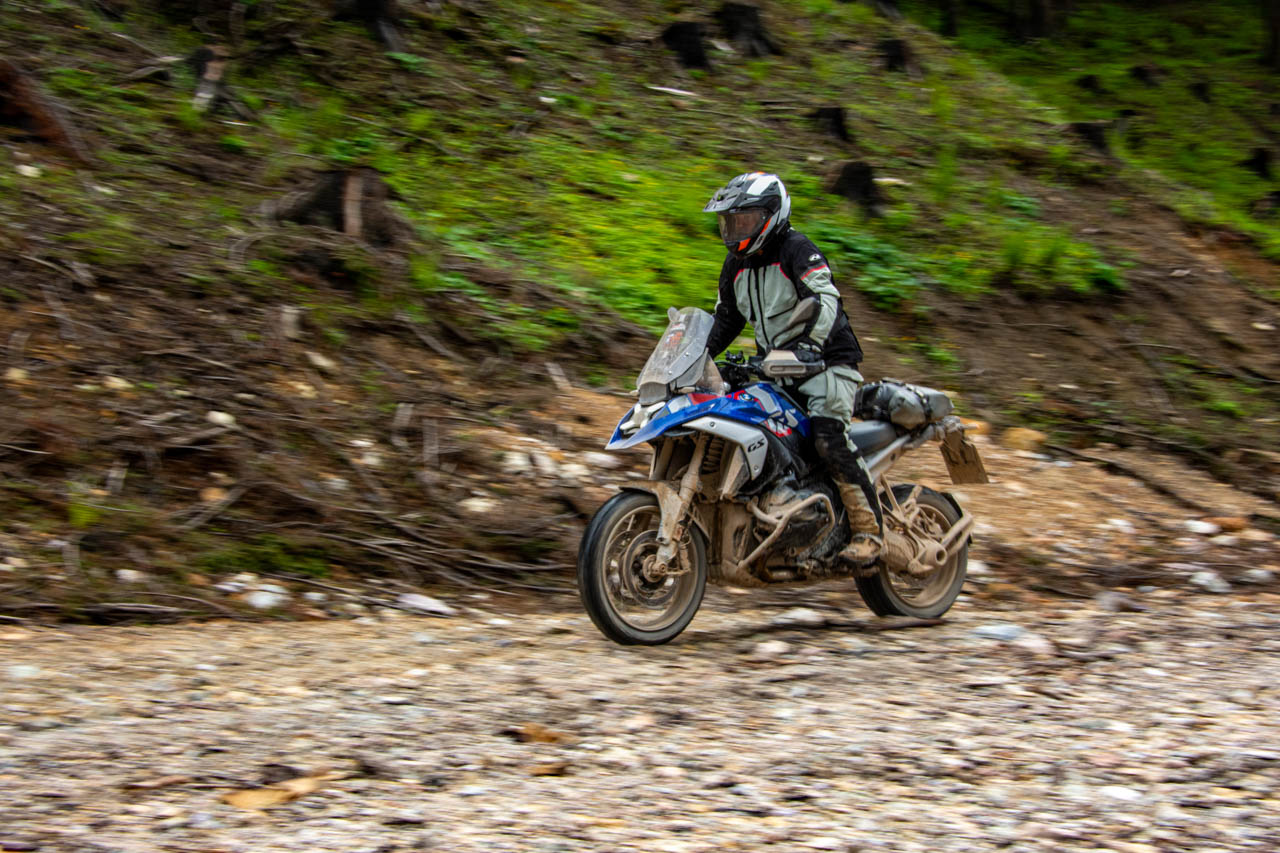
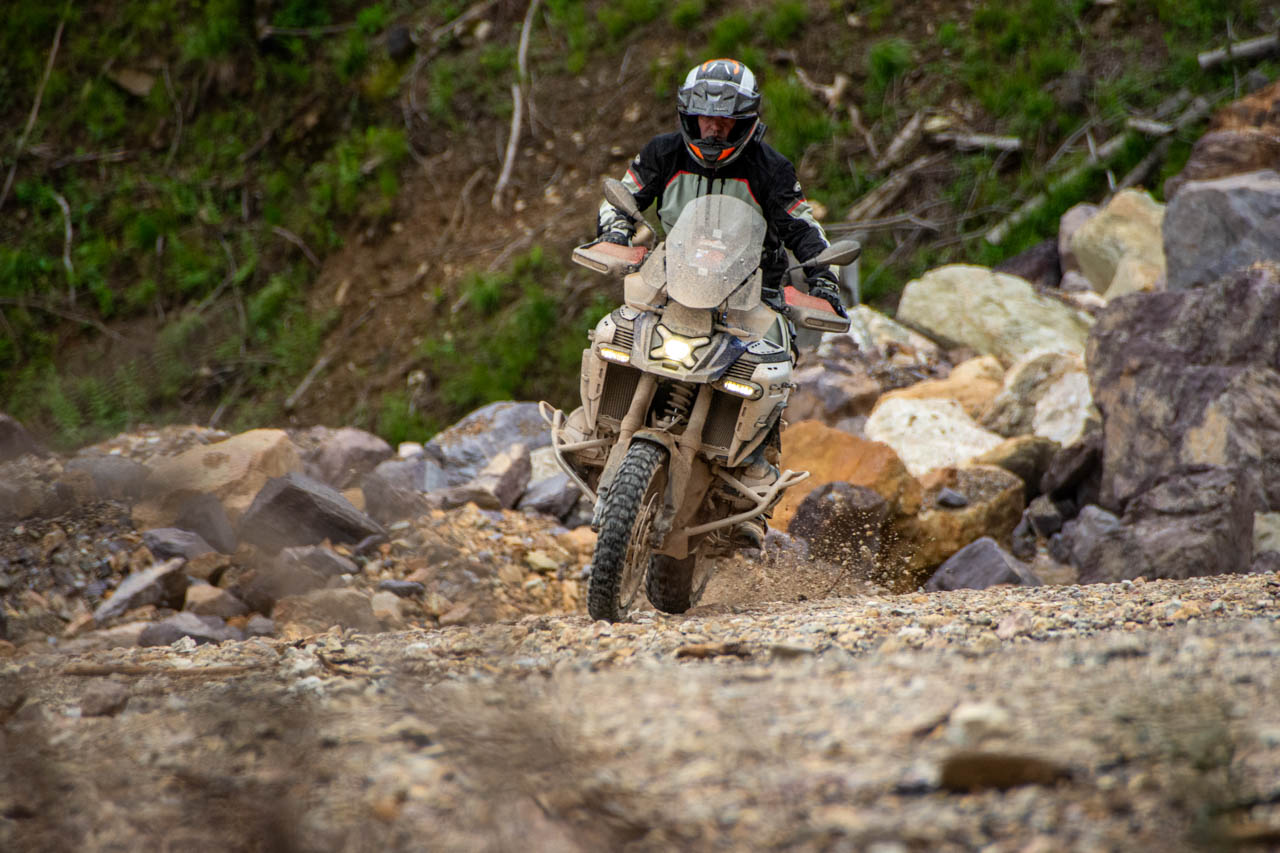
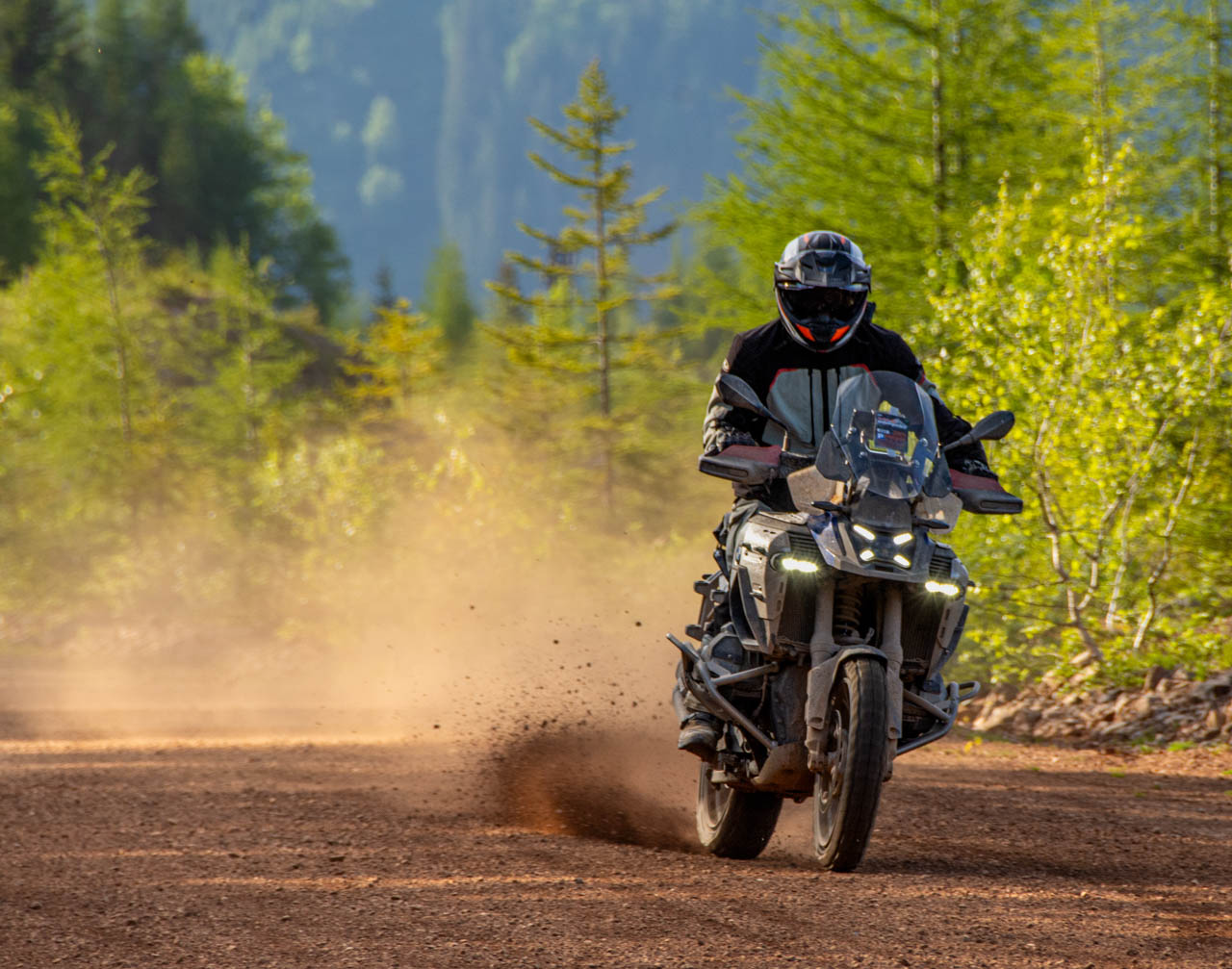
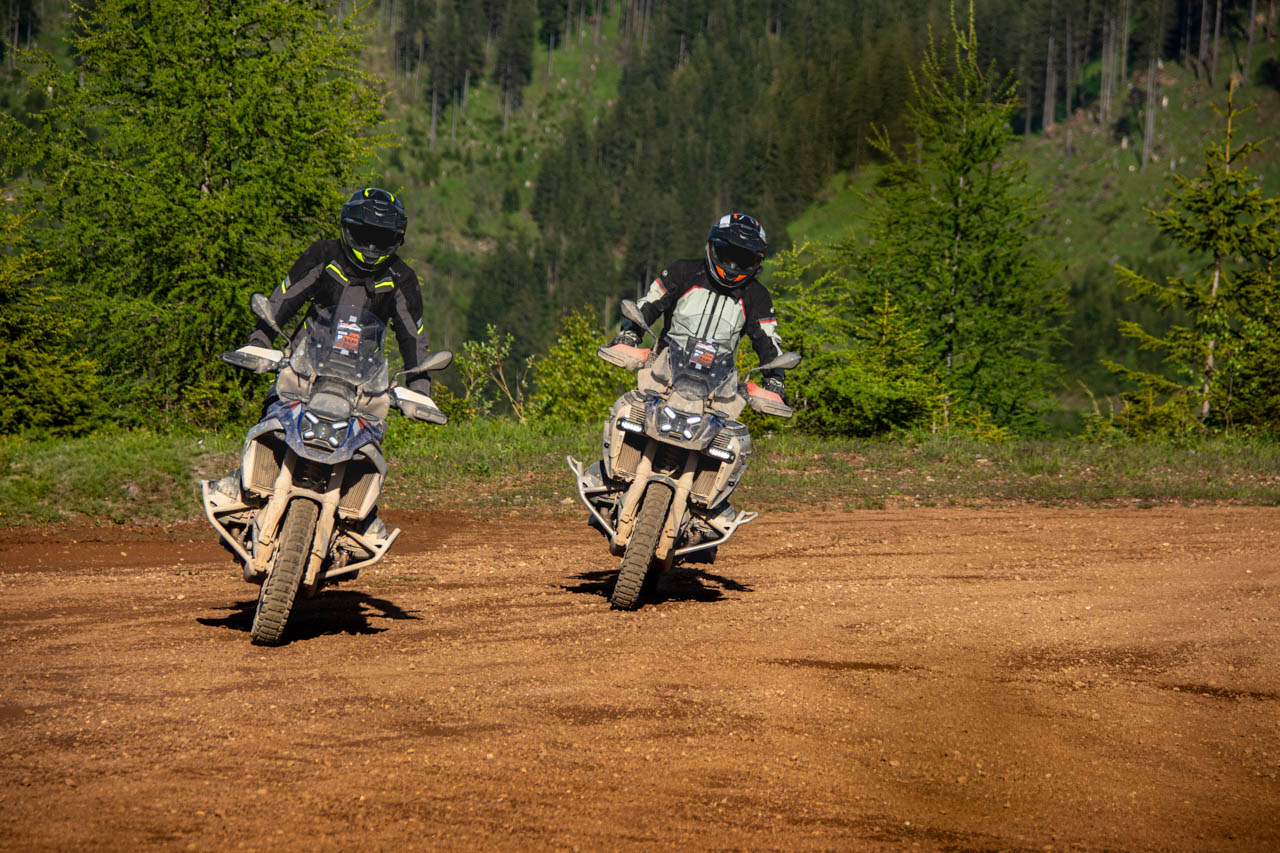
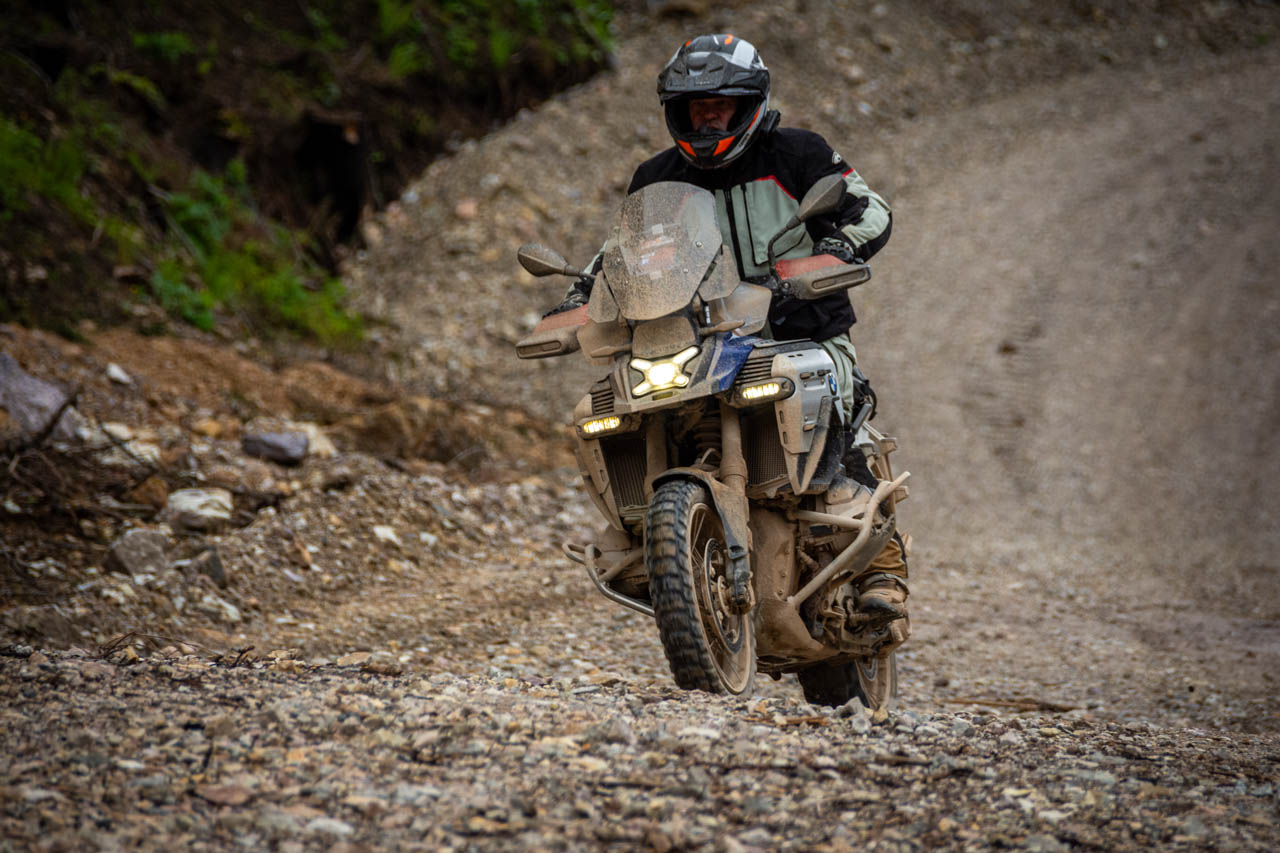
Just outside Eisenerz, our GPS guided us onto a gravel road climbing through a dense, pine-covered valley, one of those tempting tracks scattered all over Austria’s mountain maps. The view was incredible, the ride even better, until a pickup truck came flying down to stop us. That’s when we learned the catch: while countless gravel routes appear on GPS apps and seem publicly accessible, most are actually private roads owned by forestry companies and off-limits without a permit. The driver was polite, but the message was clear. We turned back, switched to a safer route, and rolled toward Turracher Höhe.
We aimed for the high-altitude jewel of Turracher Höhe, a winding climb that delivered exactly what the brochures promised: hairpins, switchbacks, and jaw-dropping views. The pass sits at over 5,800 feet (1,763 m), straddling the border of Carinthia and Styria, and rides like a mountain made for motorcycles.
But that was just the appetizer.
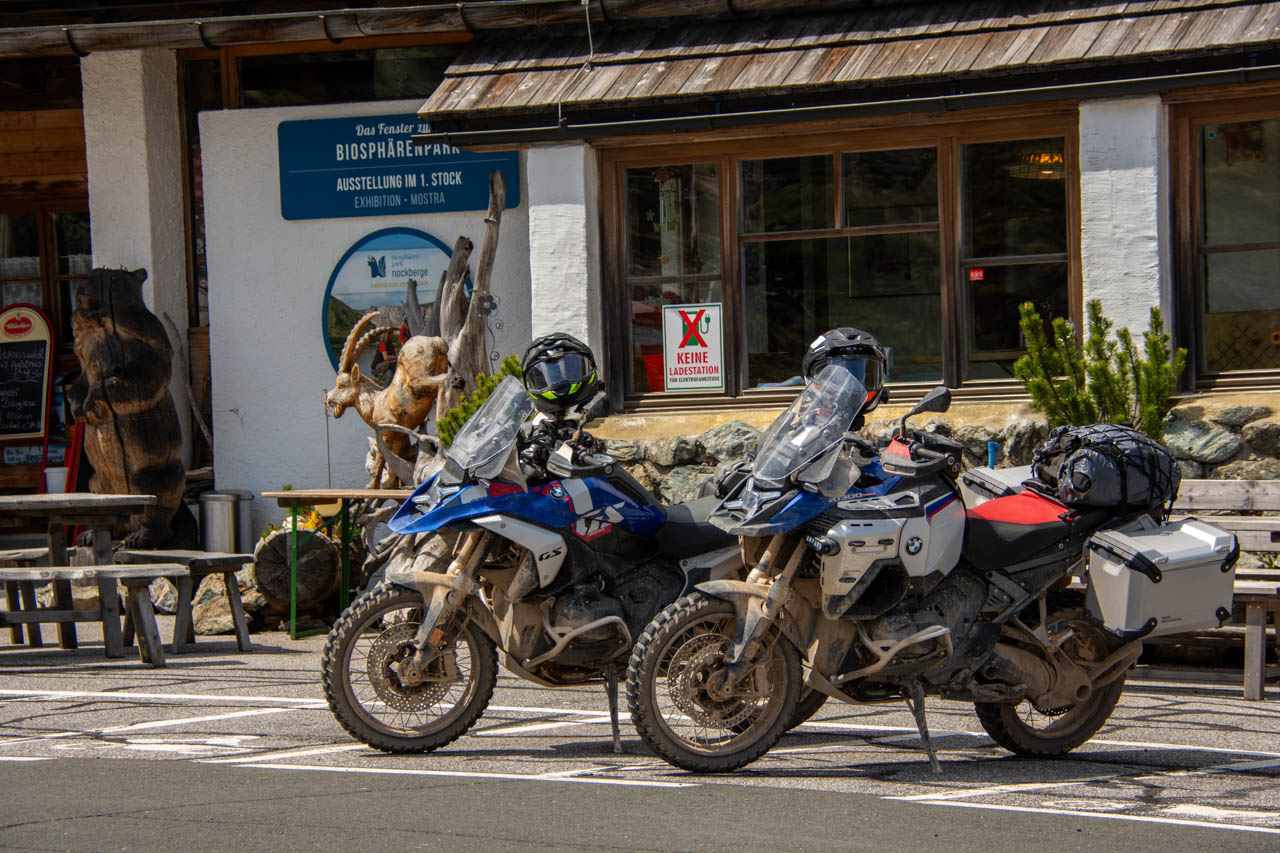
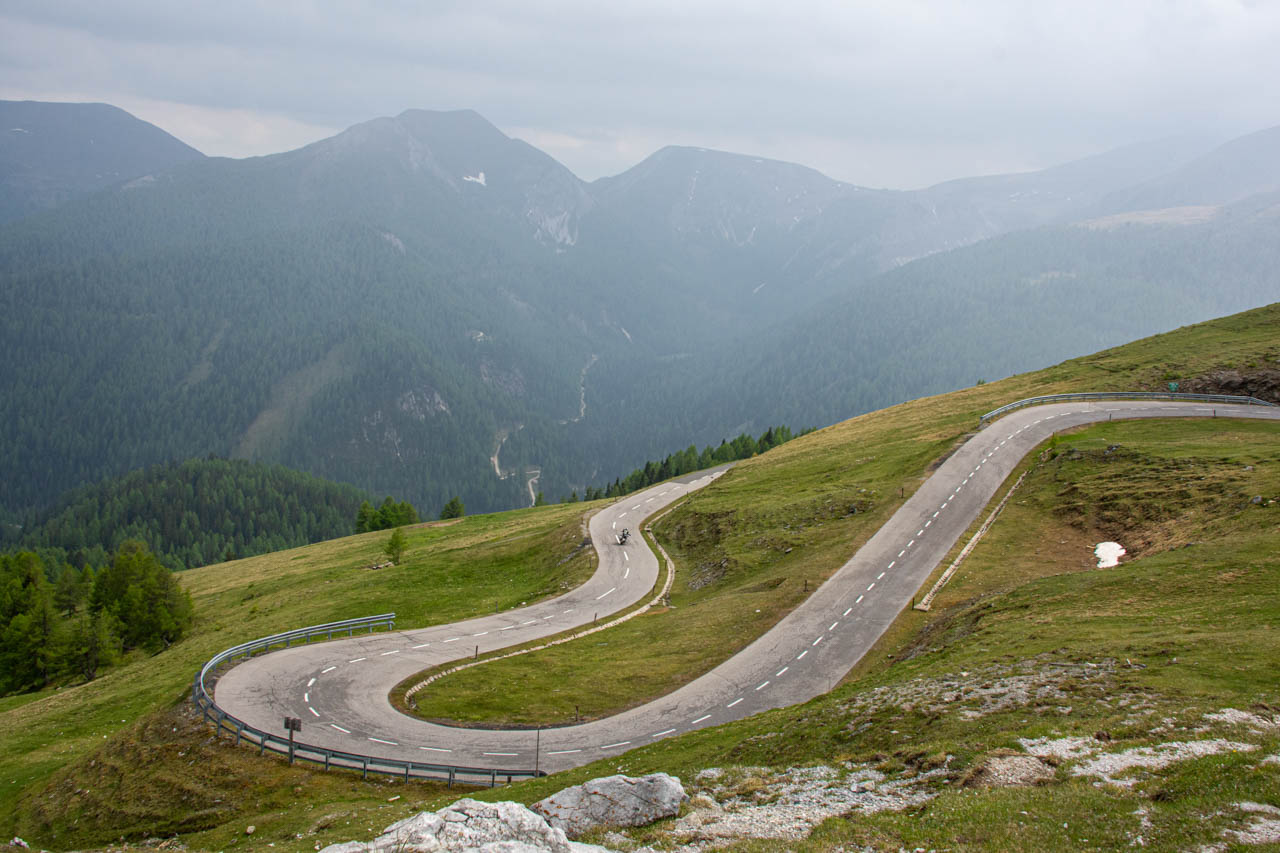
From Turracher Höhe, we rolled straight into the Nockalmstraße, a 22-mile (34 km) ribbon of riding perfection through the Nockberge Biosphere Reserve. Fifty-two hairpins (“Kehren,” as the Austrians proudly call them), flawless pavement, and the kind of scenery that makes you forget to blink.
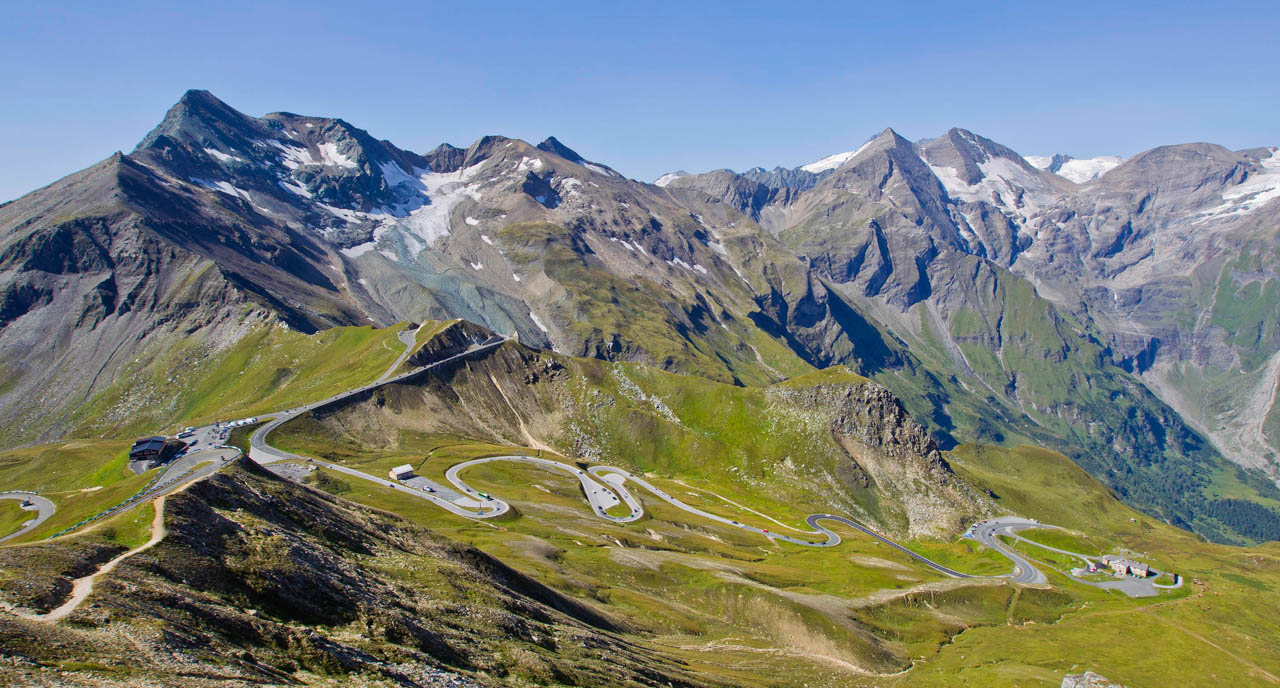
At the summit, a roadside restaurant designed with bikers in mind offered the perfect place to pause, park, and refuel, not just with food, but with the kind of awe you don’t get at sea level.
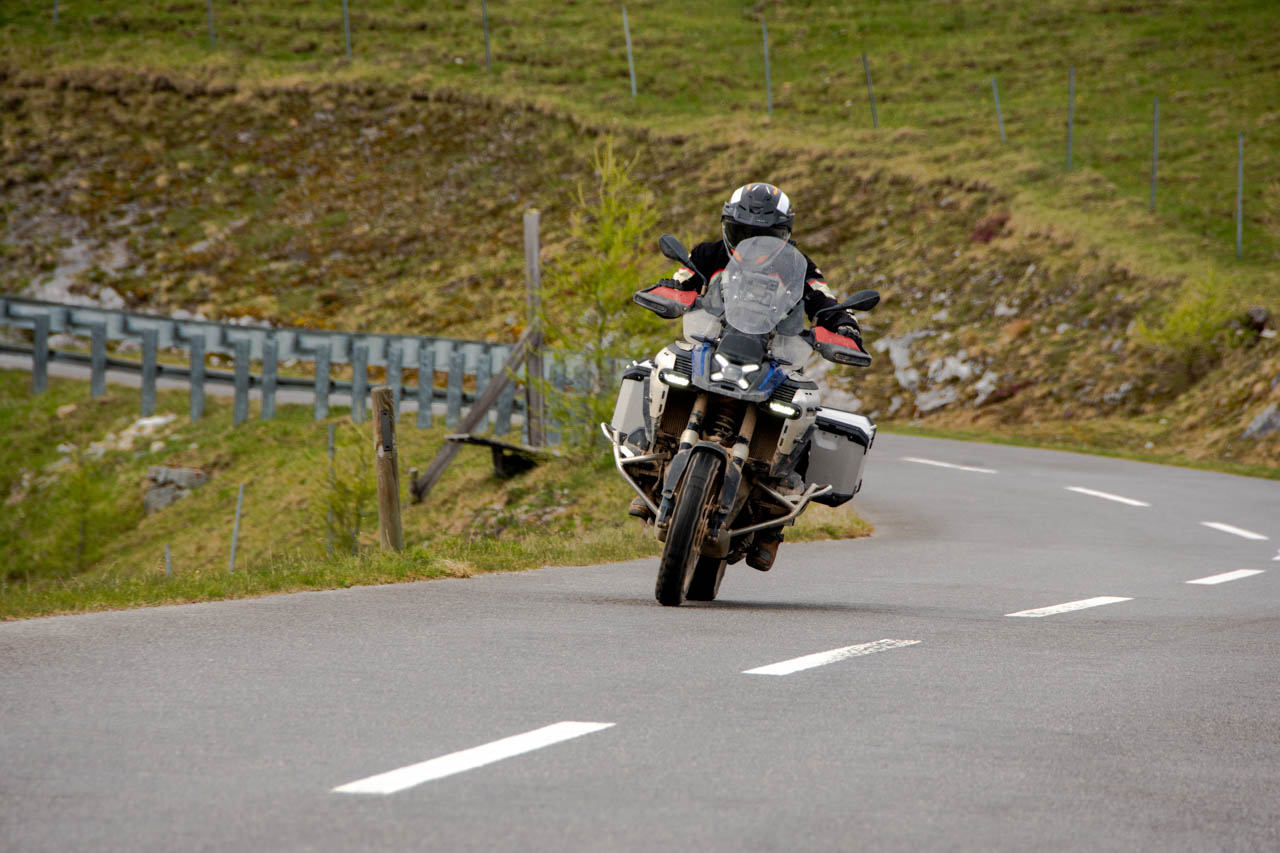
This was where the BMW R 1300 GS bikes proved their worth all over again. Tight curves, steep climbs, and quick transitions were handled with absolute precision. These bikes are athletic. You feel it in the way they dive into corners and launch out of them. And when it really matters, they stop like nothing else. At one point, Mike was riding ahead, scouting for a photo spot in the rain, when two Murmeltiere (marmots) darted across the road out of nowhere. He hit the brakes hard, and the bike responded like it was on dry tarmac. No skidding, no drama, just controlled deceleration. That moment sealed it: these machines are built to save you when the Alps throw wildcards.
By the time we coasted into Gmünd that evening, the sun was dipping low and our smiles were stuck in place. We rolled past medieval towers, through narrow streets, and into a town where creativity still hums in the cobblestones.
Once the temporary home of Porsche, now a living gallery of Austrian art and history, Gmünd gave us a moment of peace before the final push to Döbriach, where Hotel zur Post waited, its warm lights glowing like a welcome home.
From the outside, the hotel was pure alpine charm: wooden balconies draped in flowers, rustic shutters, and a timeless presence that made it feel like it had always been part of the village. Dinner was far from an afterthought, it was a genuine highlight. We started with fresh salads and soup from the buffet, then moved to a main of organic lamb ragout, served with bacon green beans and crisp rosemary potatoes. For dessert, we both cleaned our plates of the Topfenknödel, sweet curd dumplings rolled in sugar breadcrumbs and served with a generous scoop of strawberry purée.
It wasn’t fancy. It didn’t need to be. It was simple, honest Austrian cooking done exceptionally well, and exactly what we needed after a full day of carving through mountain passes.
Triple Borders, Triple Challenges
After a breakfast at Hotel Zur Post, fresh bread, local ham, coffee strong enough to wake the Alps, we geared up for what would become one of the wildest riding days of the trip. The plan was ambitious: cross four alpine passes through Austria, Slovenia, and Italy, climb to over 5,300 feet (1,618 m), and return before sunset. What we got was a full-throttle immersion in everything that makes this region a rider’s dream, and a few moments that reminded us just how unpredictable it can be.
The morning roads were smooth and empty. We followed the GPS into Slovenia, past the quiet beauty of Kozorog, then veered onto a narrow path running alongside a crystal-clear river. With almost no traffic, the rhythm was perfect, flowing curves, forest scent in the air, and the occasional old bridge that looked like it remembered empires.
Then came the climb. The road pitched up fast, switching from tarmac to cobblestone as we tackled the legendary Vršič Pass, 50 hairpins carved into the Julian Alps, many of them still paved with the same stones laid by WWI prisoners of war. The altitude changed fast, and so did the mood: mist crept between jagged peaks, and the cliffs began to close in around us.
By the time we reached the top, 5,285 ft (1,611 m), we were soaked, freezing, and completely exhilarated. Vršič is not a road you ride; it’s one you survive and remember. The view? Unreal. The history? Unmistakable.
From there, we crossed into Italy and picked up Passo di Tanamea, a softer contrast to the drama of Vršič. The road wound through forests and alpine meadows, barely a car in sight. It was quiet, introspective, the kind of road that makes you breathe a little slower. We needed it after the adrenaline of the climb.
Then came Passo Rest, and things got wild again. Steep, narrow, packed with switchbacks, and slick from patchy rain, it was a technical ride that demanded full focus. Twenty-six hairpins up, ten down, no room for error. The BMWs never flinched, especially in Rain Mode. Their stability in the wet was unreal, confidence-boosting without ever being intrusive.
By now, we were starving. In the small town of Chiusaforte, we asked a local for a lunch recommendation. His answer: “La Stazione.” We assumed it was a restaurant. Turns out, it was the old train station, now reborn as a restaurant and rest stop for cyclists on the Alpe-Adria Cycle Path, a converted railway that runs all the way to the Adriatic Sea. Inside, we found pasta, laughter, and a dozen cyclists in Lycra talking about their beach plans.
Unexpected. Perfect.
Lunch refueled both body and spirit, and good thing, because we weren’t done. Two more passes were calling, and we weren’t about to take the easy route.
Over the Edge and Back Again
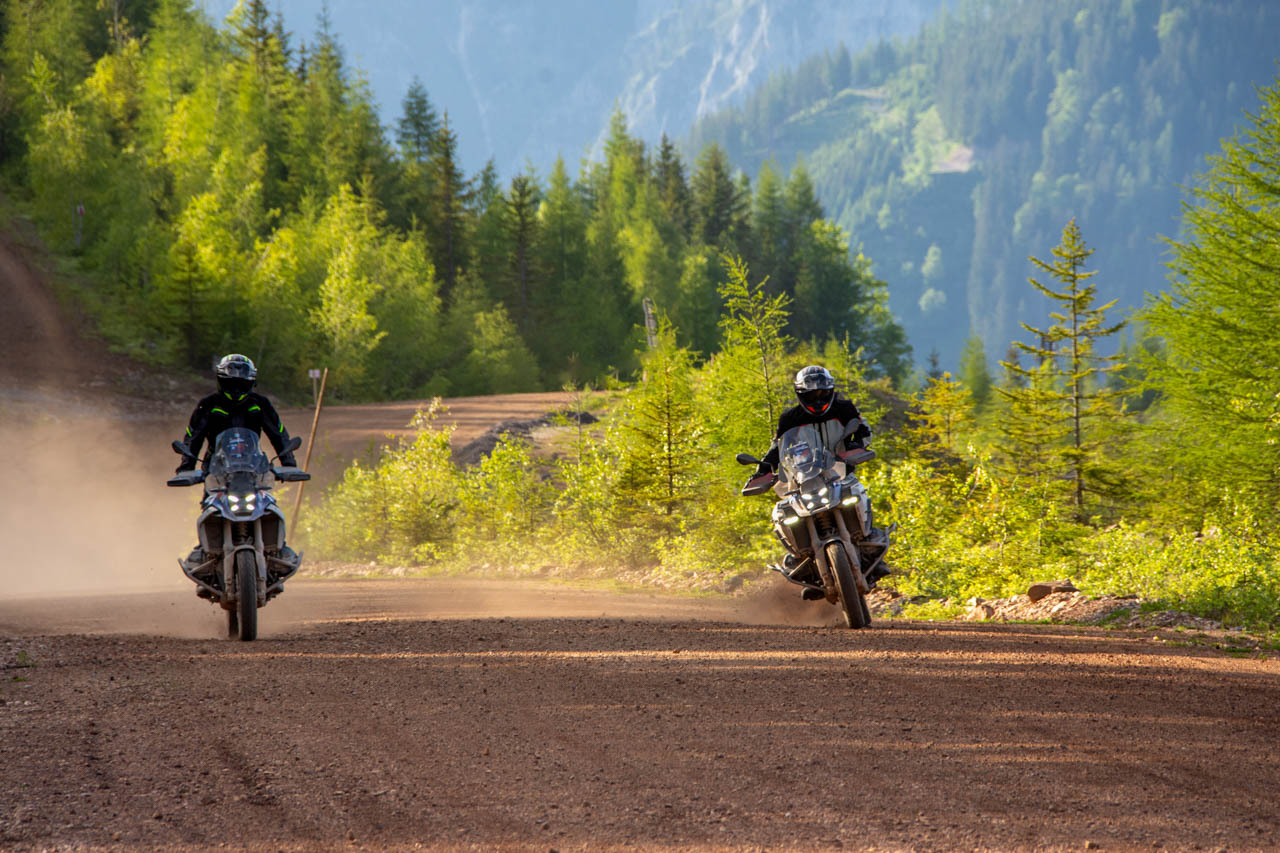
Refueled and feeling bold, we saddled up and aimed for what would become the most challenging, and visually stunning, part of the day. First came the Sella Nevea Pass, or Neveasattel, climbing out of Chiusaforte like a secret path to another world. A perfect sliver of tarmac followed a turquoise river, climbing rapidly into thick forest and tighter curves. Ancient Roman bridges appeared out of nowhere. Every bend seemed to deliver another postcard. It was one of those roads that you ride with your eyes wide and your mouth slightly open.
From there, we dropped into Tarvisio, blasted south toward Tolmezzo, then turned back north to tackle the mighty Plöcken Pass, a high-altitude frontier that slices between Italy and Austria. The road was wet, the air cold, and the sky moody. Perfect.
Plöcken was built for motorcyclists with grit. Steep gradients, 12 tight hairpins, old military tunnels carved into the rock face, and cliffside drops. But this was a ride through history. Roman routes, WWI bunkers, alpine fortifications… each switchback felt like a step deeper into the past.
We crested the pass and crossed back into Austria as the light began to fade, exhausted but wired. It had been 12 hours of nearly nonstop riding, three countries in a single day (Austria, Slovenia, and Italy), five serious alpine passes, and nearly every kind of terrain the region could throw at us. From cobblestones to wet tarmac, cliffside climbs to forested descents, it was the kind of day that tests everything: your bike, your gear, and your ability to keep smiling through the rain.
And now, it was time to rest. Or so we thought.
Ride, Sauna, Repeat
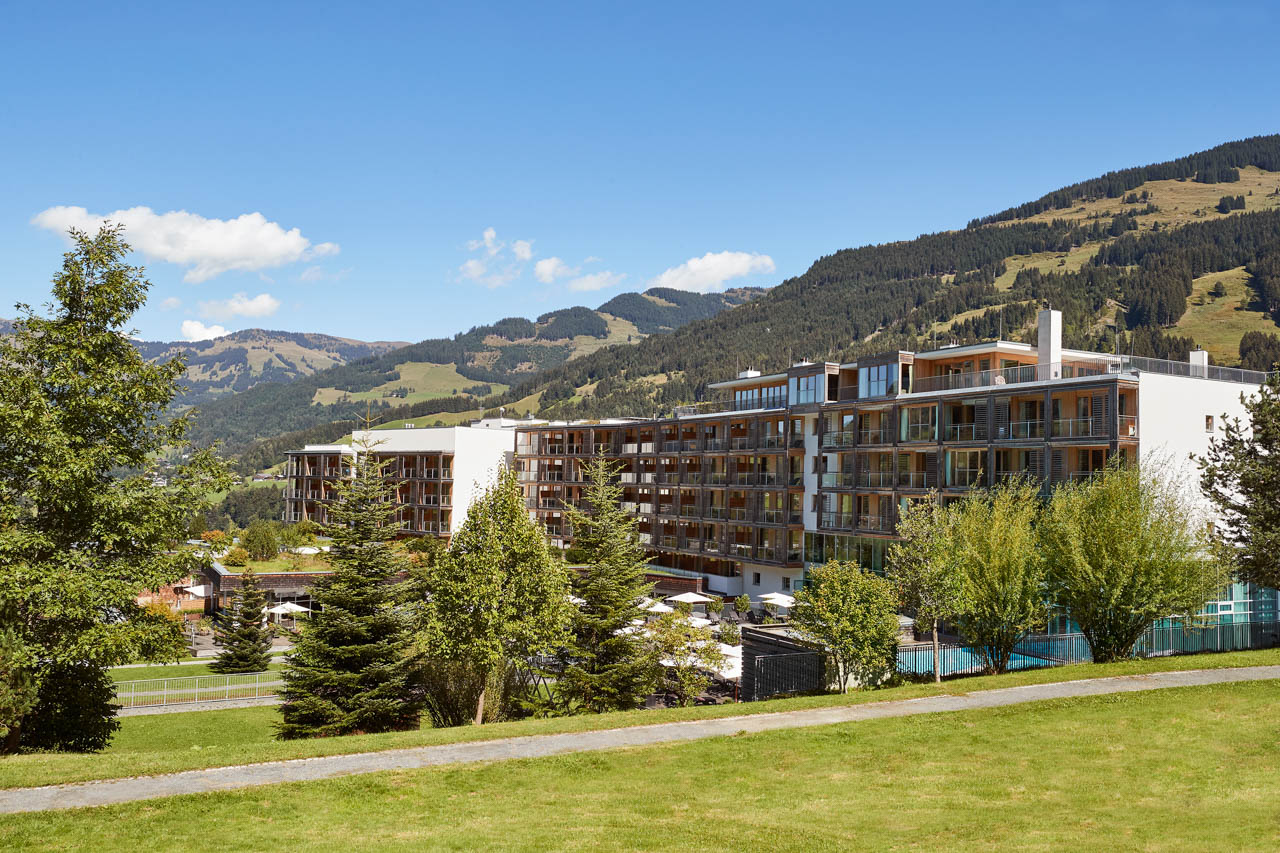
After the adrenaline of the Plöcken Pass, we rode east toward Villach, watching the landscape soften from alpine aggression into lakeside serenity. The final stretch into Neuegg am Faaker See brought us to Hotel Karnerhof, perched like a postcard above the lake, facing south with a view that practically begged you to stay an extra day.
We checked in just in time to hear those now-familiar words from the receptionist:
“You’re right on time for the sauna.”
Cue the déjà vu.
Still half-wet and fully sore, we took the elevator down to the spa level, only to be greeted by a sign that confirmed it wasn’t just an Erzberg oddity:
No kids. No phones. No clothes.
I looked at Mike. Mike looked at me.
He grinned.
“I’m not going in there with you.”
And we both cracked up.
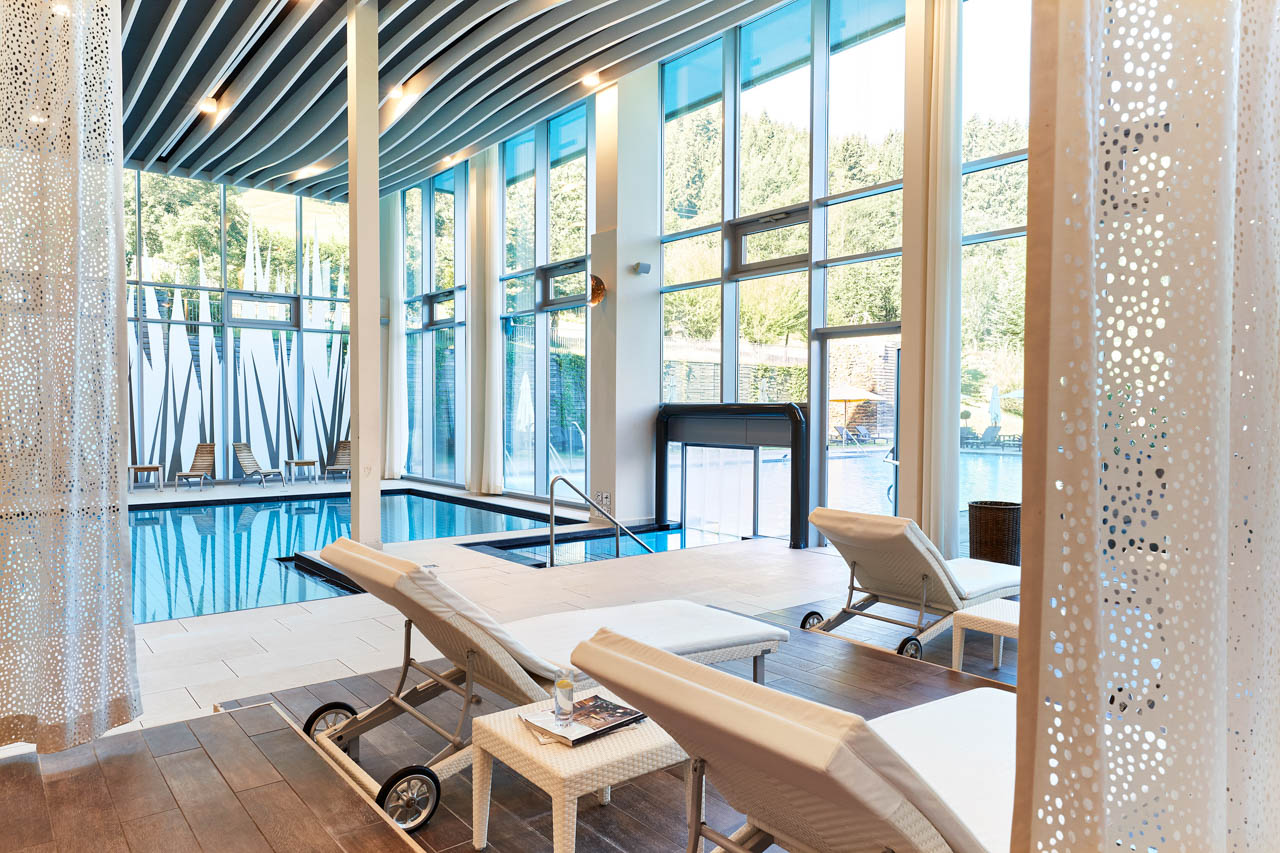
But Austria has a way of softening your skepticism. The spa was stunning, oak panels, glass walls, lake views, silence you could hear. We didn’t rush in. We stood there, towels in hand, weighing cultural curiosity against personal modesty. And, well… let’s just say this is where the intro to our story began.
So, You Think You’re Ready for the Sauna? Willkommen to Austria, Where Towels Are Armor and Silence Is Sacred
Step one: brace yourself. This isn’t your gym’s awkward, half-broken steam box. This is Austria. And Austrians take their saunas very seriously. Like, almost philosophically.
First rule of Austrian sauna club? Thou shalt be naked. That’s right. No swimsuits allowed. Towels only. Why? Because textiles trap sweat, and sweat should be free (just like your soul, apparently). You’re expected to sit or lie entirely on your towel, so every inch of you is separated from the sacred wood. It’s hygiene, not hedonism.
Next, silence reigns supreme. No small talk, no phones, no Spotify playlists about “zen.” Just the gentle hiss of steam and your inner monologue questioning your life choices as the heat soars to 90°C.
Then there’s the Aufguss ceremony. This is when a sauna master (sometimes wearing a robe, sometimes not) appears like a wizard, armed with a ladle and towel. They pour water over hot stones, usually infused with oils like eucalyptus or mint, and begin flinging aromatic heat at your face with dramatic towel flourishes. It’s intense. It’s steamy. It’s strangely theatrical. And yes, you clap afterward.
Finally, don’t forget the cold shock. After sweating out your sins, you’re expected to march, with dignity, into the icy plunge pool, a cold shower, or sometimes a snow pile. You’ll scream a little on the inside, but don’t worry: so is everyone else.
So when in Austria, do as the Austrians do: drop the modesty, embrace the heat, sweat in silence, and come out spiritually purified, and maybe slightly traumatized. Just remember: the towel is your friend. Use it wisely.
By the time we resurfaced, steamed, and half-reborn, we were ready for dinner. And Iris, our Austrian friend and culinary authority, had made one thing clear: “Eat at the hotel. The chef is serious.”
She was right.
It was a six-course revival. Fresh salad with warm sheep cheese and toasted seeds, slow-cooked beef with horseradish potatoes, plum tart with vanilla sauce. Every plate more comforting than the last. After twelve hours in the saddle, it felt like a Michelin-starred hug.
That night, with full bellies and clear minds, we sat on the balcony watching the light fade over Lake Faak. The spa, the dinner, the ride, it all blended together. A perfect reset. And tomorrow, the mountains would call again.
The Wild Heart of the Carnic Alps
We woke up the next morning still floating from the previous night six courses, a spa-induced coma, and a room with a view that made you wish time moved slower. Breakfast at Hotel Karnerhof was something else: outside, facing the lake, two cappuccinos deep before 8 a.m., and a buffet that felt like a farewell letter from Austria’s culinary gods.
We left Karnerhof with purpose that morning, the sky clear and the bikes eager. From Tröpolach, we aimed south to tackle the Naßfeld Pass, also known as Passo di Pramollo, a rider’s gem tucked between Austria’s Hermagor and Italy’s Pontebba. Once a medieval trade route, later a WWII supply road, today it’s a smooth, sweeping climb through thick pine forests, with broad curves on the Austrian side and a dramatic, rock-carved descent on the Italian flank. Quiet, scenic, and wildly underrated.
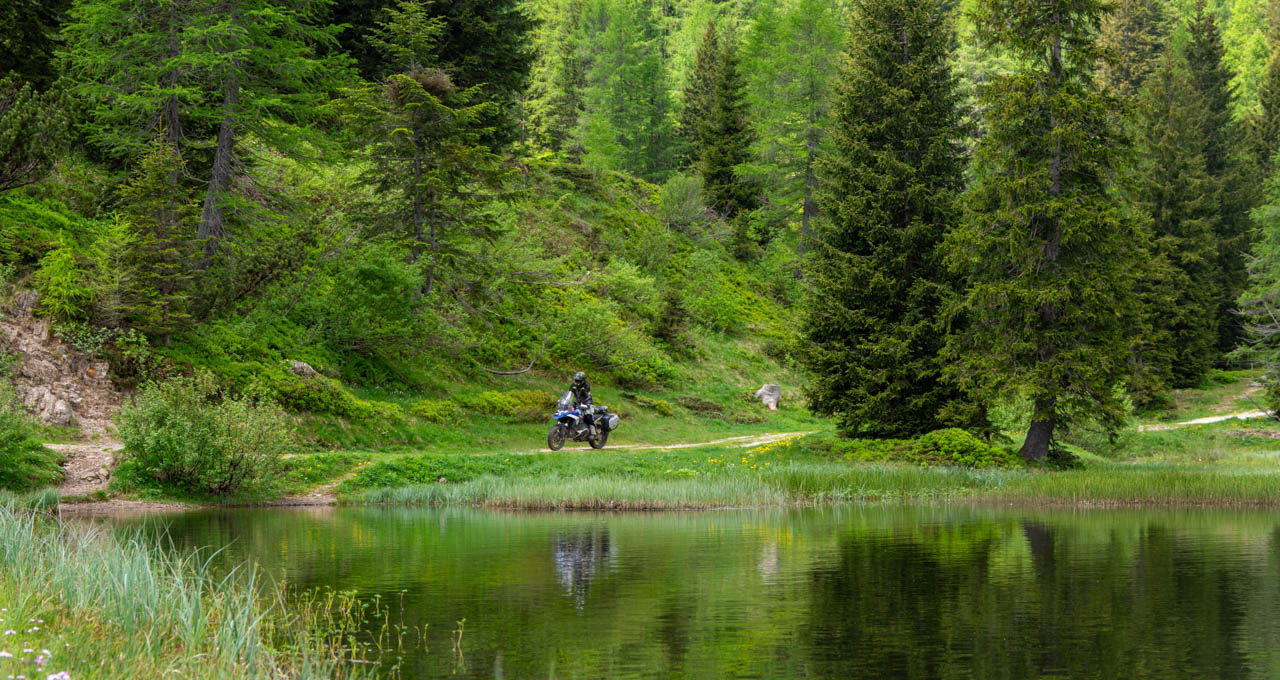
From Pontebba, the route got spicier. We picked up Via Paularo, climbing into the Cason di Lanza Pass. Just a few hundred meters in, a sign flashed Passo Chiuso. We circled back to read it properly.
Mike looked at it, squinted, and shrugged:
“Think it says this is a fun pass.”
And with that, we rode on.
He wasn’t wrong. What followed was one of the most raw, remote, and technically challenging rides of the trip.
Narrow and rugged, the road twisted through thick forest, past silent pastures and limestone cliffs. Then, a barricade: two massive New Jersey barriers blocking the way. No traffic, no sound, until a lone cyclist rolled down the hill from the opposite side.
We asked if it was safe to continue. His reply was classic Italian understatement:
“È buona, è buona… ma attenzione.”
Mike nodded.
“Sounds like a yes.”
There was just enough room to thread the GSs between the blocks. We measured, maneuvered, and squeezed through.
The reward? A ride straight into the heart of the Carnic Alps, where roads barely felt paved and cliffs loomed like ancient guardians. At over 5,085 feet (1,550 m), Rifugio Cason di Lanza appeared, warm food, cold drinks, and a view that made the whole sketchy decision completely worth it.
Beyond the hut, the descent to Paularo was narrow, steep, and broken in places. Not a place for mistakes. Gradients hit 17%, the road surface crumbled under our wheels, and one wrong move meant a long, long slide. But this was where the BMWs shined. And thanks to their Intelligent Emergency Call system, we had peace of mind even in the middle of nowhere. The SOS feature is something you never want to use, but when you’re 40 miles from the nearest town with no cell signal, it’s comforting to know it’s there.
With adrenaline wearing off, we pushed north. In Paluzza, we realized we were still hours from our next hotel, but a local tip pointed us toward the Mur Valley for the final stretch, a smooth, gentle ribbon of road winding through villages, past Schloss Moosham, and beside the flowing Mur River. Riding from Murau to Pischelsdorf at sunset, with warm light casting long shadows over green meadows, was the perfect cool-down after such a brutal day.
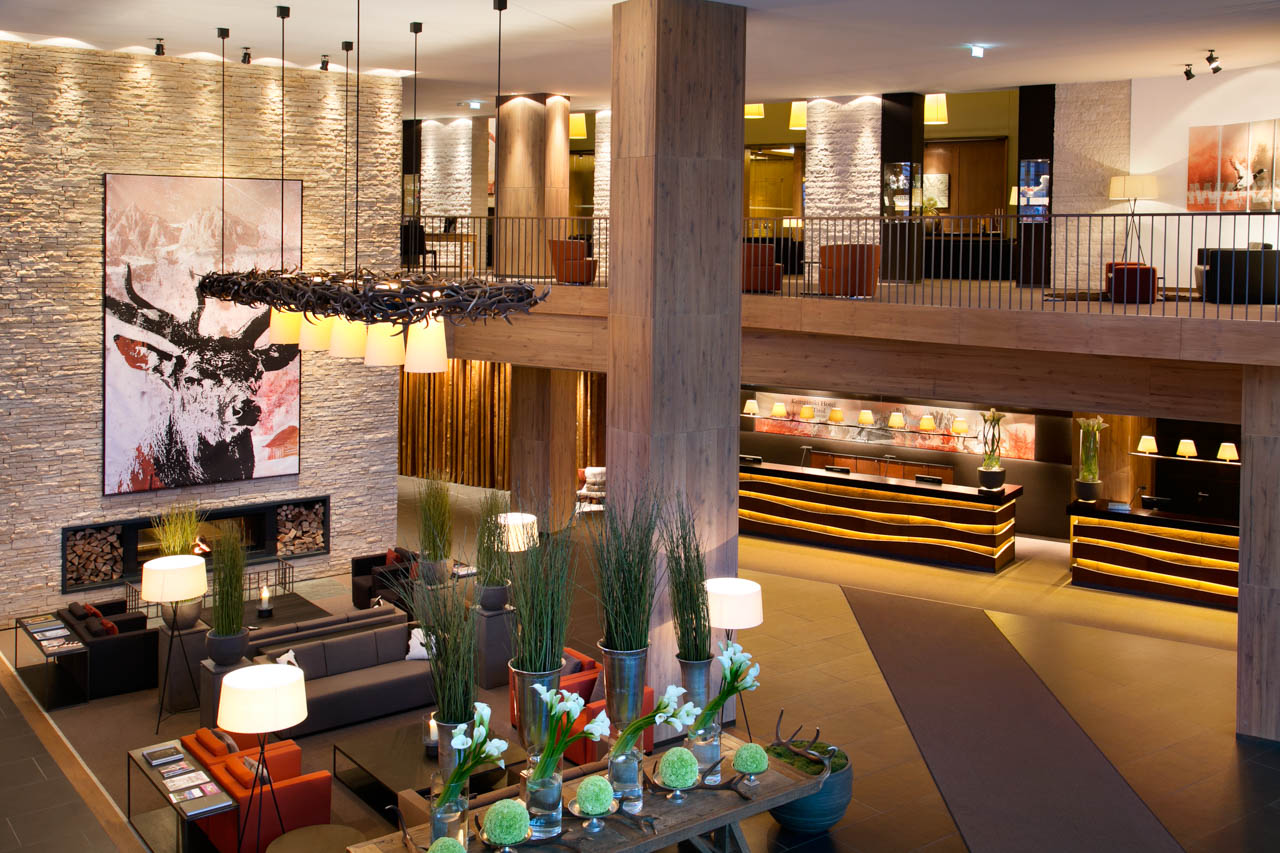
By the time we rolled into Jochberg, the light was gone but our spirits were high. And there, waiting for us like a reward, was the Kempinski Hotel Das Tirol, a cathedral of alpine comfort perched in the Kitzbühel Alps. The lobby alone felt like a deep breath. Within minutes, we were in robes, exploring the 3,600-square-meter spa with indoor and outdoor pools, saunas, and enough luxury to make us forget we’d spent twelve hours wrestling the Alps.
We agreed instantly: tomorrow, we rest. No passes, no gravel, no rain, just hot saunas, cold pools, and a view we could finally enjoy without a helmet on.
The Art of Getting Lost
If there’s such a thing as the perfect breakfast to start a day in the Alps, Kempinski Hotel Das Tirol nailed it. Served in the sunlit Steinberg restaurant, the buffet was more like an alpine feast: live omelet station, local cheeses and hams, flaky breads, sparkling wine, and even spreadable sausage, a regional specialty we never knew we needed. It was fuel for the soul.
But after the chaos and climb of the previous days, we weren’t chasing passes or maps. We just wanted to ride. Anywhere. So we opened Google Maps, picked a random road out of Kirchberg, and headed into the hills to see where the mountain would take us.
What we found was Austria in its purest form.
The road narrowed as we climbed out of town, a delicate thread of tarmac stitched between meadows, fir-covered slopes, and rivers so clear they looked unreal. No destination, no schedule, just curve after curve through a perfectly organized wilderness. It felt like the country had been built for motorcyclists who liked to wander.
A cluster of parked cars caught our eye near a wooden bridge. We pulled over and wandered toward a sign that read:
Kneippanlage Spertental. What we discovered was a mountain wellness oasis, icy pools for foot-soaking, reflexology paths, drinking fountains, and benches under the trees. Kids played by the water wheels. Retirees soaked their legs in glacier runoff. We kicked off our boots and joined them, letting the cold rush hit our calves and carry off whatever fatigue the passes hadn’t already shaken loose.
Further up, the road grew wilder. At one point, we reached a closed barrier covered in German instructions. Too lazy to open a translator app, we did the sensible thing, asked the two carpenters nearby.
“Cars no. Motorbikes? Go.”
So we went.
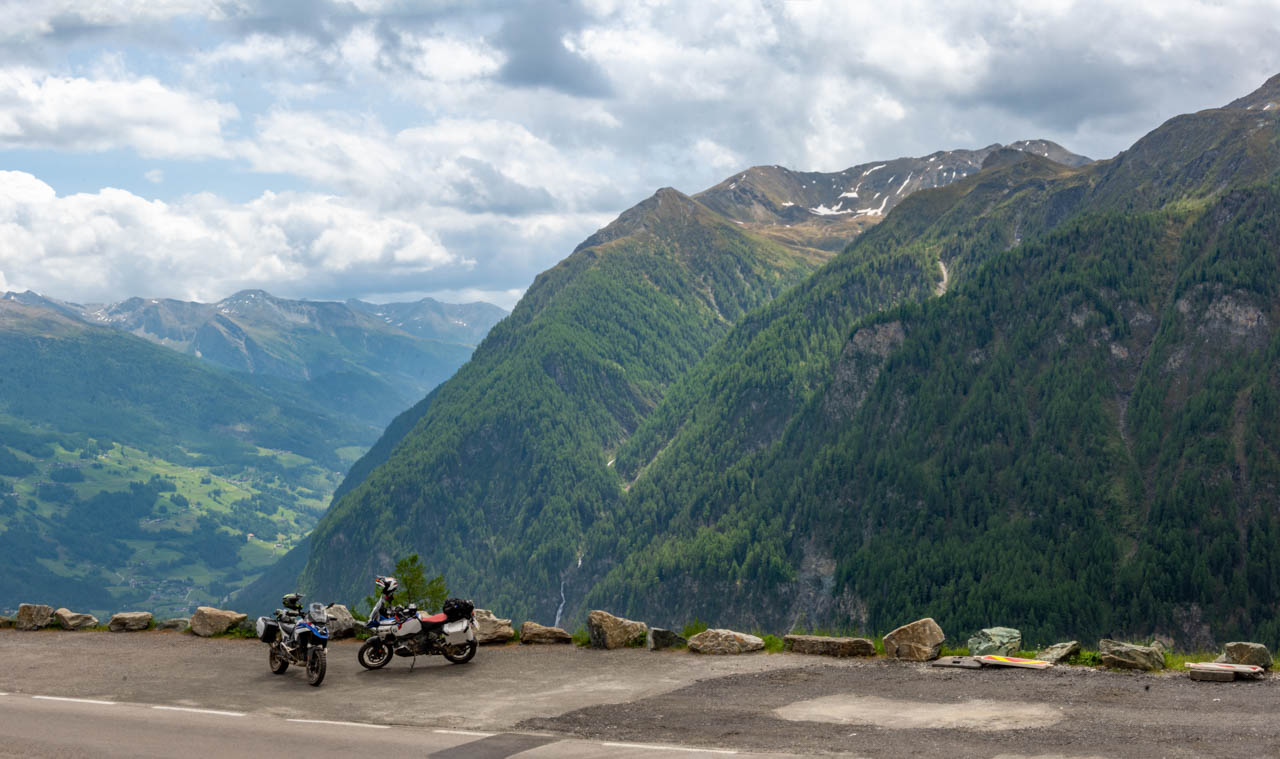
And that’s when the road turned into magic. Riding beside a pristine river, the forest grew denser. Spruce and fir trees closed in above us while wildflowers and cow parsley filled the spaces below. Every turn offered a new texture, a new smell, a new silence. No traffic. No signs. Just the occasional clanging of distant cowbells echoing through the valley like wind chimes from another world.
We kept climbing. The woods began to thin, giving way to open alpine pastures, where we finally reached Alpengasthaus Labalm, a storybook hut surrounded by green peaks. It served hot Austrian dishes, housed overnight guests, and felt like it had existed on that mountaintop since before the idea of time. If we’d had one more day, we would’ve stayed the night.
Back at the Kempinski, looking through our photos, we agreed on something: one of the best roads of the trip didn’t have a name. It wasn’t even marked clearly on a map.
Sometimes, the best rides come from simply getting lost.
The Crown of the Alps
We saved it for the last day, not by chance, but by design. After a week of narrow mountain roads, muddy climbs, cobblestones, waterfalls, and saunas, it was time to close the loop with Austria’s most iconic stretch of asphalt: the Großglockner Hochalpenstraße.
We left early from Jochberg, pointed the GSs toward Heiligenblut, and within hours, the road began to rise. What followed was the grand finale.
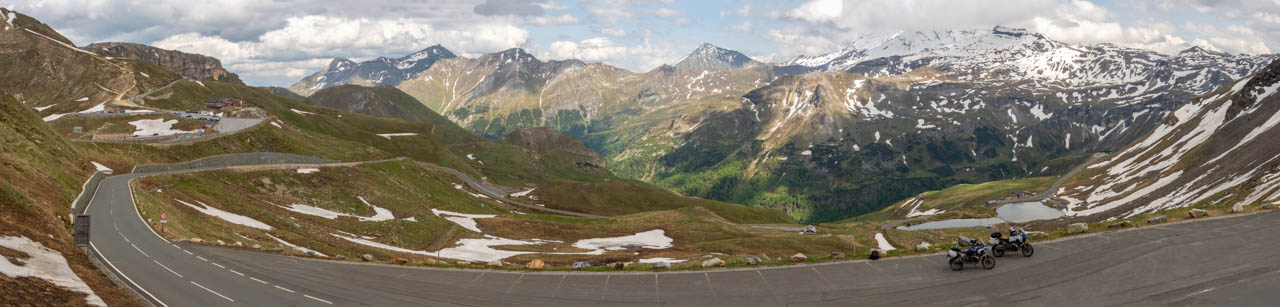
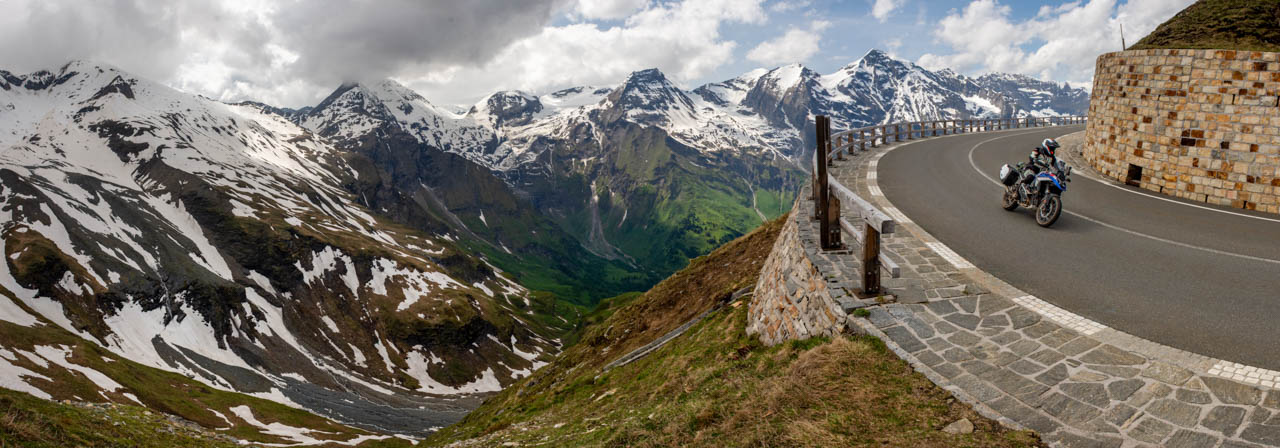
Built in the 1930s, the Großglockner Hochalpenstraße is the summit of Austrian road engineering: 30 miles (48 km), 36 hairpins, and 8,215 ft (2,504 m) at its highest point, the Hochtor Tunnel. It slices through four vegetation zones, from lush valleys to alpine tundra, and somehow makes it all feel effortless. The road is silky, the signage flawless, the curves pure rhythm.
Halfway up, we took the turnoff to the Kaiser-Franz-Josefs-Höhe, a massive viewing platform perched above the Pasterze Glacier and Austria’s tallest peak, the Großglockner (3,798 m / 12,461 ft). Below us: icefields, climbers, and clouds. Around us: hundreds of riders, vintage sports cars, and a parking garage that felt like an open-air motorcycle expo.
While exploring the area we noticed a tunnel, almost hidden, carved into the rock. No signs. No tourists. Just a path. We walked in.
It was the Gamsgrubenweg, a surreal trail blasted into the cliffs above the glacier in the 1950s to bypass dangerous landslides. Inside: silence, darkness, and the occasional window carved out for a staggering glacier view. We passed only a handful of climbers, all geared up for something far more intense than us. But in that quiet, in the cool stone corridors, we felt something shift, a deeper connection to the mountains we’d been chasing all week.
Back on the bikes, we continued the climb to Hochtor, the highpoint and historical border of Salzburg and Carinthia. The stone tunnel, carved with the Latin motto In Te Domine Speravi (“In you, Lord, I have placed my trust”), felt like a portal between worlds.
But another surprise came just after: a small detour off the main road. We saw a few bikes take it and followed instinct.
It was Edelweißstraße, a narrow cobblestone ribbon climbing to Edelweißspitze, the highest point of the road at 2,571 meters (8,435 ft). The view at the top? Infinite. Beneath us, the entire Großglockner road snaked through the Alps like a dream you didn’t want to wake from.
At the summit stood the Edelweißhütte, a humble mountain inn dating back to 1935. If we’d known about it, we might have booked a room. Instead, we lingered, took photos, and made promises to return.
The ride down was quiet. Not from silence, but reflection. The road back to Munich passed in a blur of forests and rolling hills. We reached the city by sunset, returned our bikes to BMW Motorrad, and stood there for a long moment before removing our helmets.
No crashes. No breakdowns. No regrets.
The R 1300 GS and GS Adventure had delivered everything; they gave us a platform for discovery, comfort through chaos, and confidence in every lean. Our gear held up, our spirits held strong, and Austria… Austria gave us more than we ever expected.
For those thinking about Europe’s greatest playground, come to Austria. But don’t just follow the guidebook. Load up a GPX file, pack some layers, and leave room for detours. The passes will thrill you, the people will surprise you, and the saunas—well, those you’ll never forget.
Words by: Pablo Ferrero – Photo Credits: Andreas Kolarik, Kempisnki Hotel Media, Michael Stabentheiner, Julius Silver, BTA Magazine
Articles in this issue
Erzbergrodeo 2025
Deep in the Heart of the Iron GiantErzbergrodeo. The name speaks for itself. Nearly 30 years of history, tradition, and mechanical brutality wrapped into one of the toughest motorcycle events on...
Sisters of the SEBDR
A Grit-Fueled Journey Across the Southeast Backcountry Chapter 1 of 2In the summer of 2024, after learning of the upcoming release of the new South East BDR route (SEBDR) from Backcountry Discovery...
BMW R 1300 GS, That Did It All
The BMW R 1300 GS, That Did It All Hard Trails, Alpine Passes.The first thing that hits you is their size. They’re huge, especially the Adventure. Broad, tall, full of muscle and purpose. And yet,...
KOVE 450
KOVE 450 Rally Purpose-Built for the WildIn a market flooded with adventure bikes that promise the world but shy away from true grit, the KOVE 450 Rally stands out as a machine that doesn’t just...
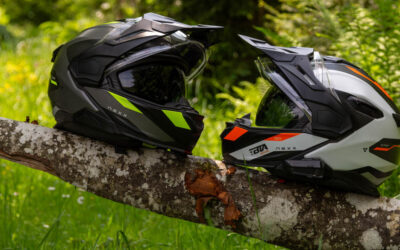
NEXX X.LIFECOUNTRY Terra
If you’ve been searching for an adventure helmet blending lightweight comfort, tech-savvy design, and premium safety credentials, we’ve just returned from Austria with a story worth sharing. Over...
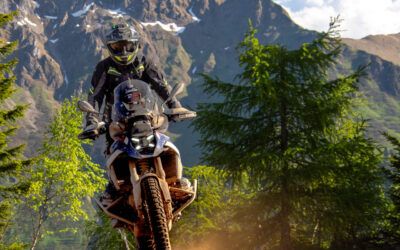
Held Lonborg Jacket & Pant Set
Adventure riding is rarely about staying on course. It’s about adapting, reacting, and embracing every twist, both on the map and under the tires. The same could be said of your gear. On a recent...