
Kove 450 Rally
Patagonia, Gravel, and a Big Smile
For a while now, I had been curious about this new wave of middleweight rally-style bikes that everyone seems to be talking about. Lighter, more focused, and a lot closer to what many of us actually ride when we leave the pavement behind.
So when the opportunity came up to spend a few days with the Kove 450 Rally, I did not need much convincing.
What I did not expect was how quickly it would stop feeling like a bike I was getting to know, and just become part of the ride.
A few days, around 870 miles through Patagonia, a mix of gravel, sand, mountain tracks and long open sections… and somewhere along the way, things started to click in a way that is hard to explain unless you have felt it yourself.
What follows is my side of that story, the way the bike felt, the way it flowed, and everything that stayed with me after those days in Patagonia.
First Miles, First Feelings
I had been wanting to get my hands on one of these new middleweight bikes for a while. It is a segment that is growing fast, and when the chance came up to ride one of the names everyone is talking about right now, the Kove 450 Rally, I did not think twice.
This time it was with the guys from Big Trail Argentina. Guille and Pato Marelli, with whom I had already shared a few trips before, now running a full fleet of ten bikes for their tours. We were riding out of San Carlos de Bariloche in Patagonia, covering around 870 miles (1,400 km) over a few days on gravel roads, mountain passes, stretches of steppe, and the occasional bit of pavement linking it all together.
Even on those short asphalt sections, the bike behaved better than I expected. Considering the tires and what it is built for, it felt surprisingly comfortable. Nothing awkward, nothing fighting you.
But those first miles… that is where everything starts.
You leave town, still on pavement, and begin that quiet process of getting used to a new bike. Feeling the weight, the clutch, the brakes, how each gear comes in. All those small things that on your own bike happen without thinking, but here make you pay attention again.
We stopped briefly to adjust the basics. Levers, a small tweak on the shifter. Just enough to start feeling at home.
And then, about thirty minutes in, the pavement disappeared and the gravel took over.
That is always a moment.
At first you are cautious, just letting things settle. But it did not take long before I felt completely comfortable. The transition was almost too easy.
The riding position just makes sense. Sitting feels natural, the seat is comfortable enough for long hours, and it lets you move around easily when the terrain asks for it.
And when you stand up… that is where the bike really comes alive.
It feels right. No need to adjust, no need to think about it. You are just there on the pegs, and everything lines up. The bike almost tells you how it wants to be ridden.
By that point, I was already smiling inside the helmet.
And somewhere later that afternoon, I caught myself thinking…
“Yeah… I need one of these in my garage.”
When the Corners Start Talking Back
By the afternoon of that first day, it hit me.
Not in a dramatic way, just one of those thoughts that shows up quietly while you are riding.
“Yeah… I want one of these.”
It had been building up since the morning, but somewhere along the way everything just clicked. The bike, the terrain, my body… it all started to work together without me having to think too much about it.
And that is when things get fun.
You start entering corners a bit more committed, even on loose, rocky surfaces that usually keep you on edge. You trust the front a little more, let the rear move, and suddenly you are sliding out of turns with a smile inside the helmet.
The Kove has a way of making those moments feel easy and natural.
There is enough power here to have real fun off-road. You can break traction, steer with the rear, and enjoy those little rally moments without feeling like the bike is about to punish you for getting too enthusiastic. It builds confidence quickly, letting you play without feeling like you are constantly managing risk.
And of course… that is where your imagination starts to get ahead of you.
For a little while there, I was feeling like Kevin Benavides in full Dakar mode, sliding through corners and loving life, until one of the faster riders in our group blasted by and gave me a quick reality check. No drama, no effort, just gone. A reminder that I am not a rally rider, just a guy who really enjoys this kind of riding when everything starts to flow.
And that is exactly the point.
This bike gives you that feeling. Especially in tighter mountain sections with loose rocks and narrow lines, where you would normally be more tense, you just stand up, let the bike move underneath you, guide it with your legs, and everything starts to feel easier, more natural, and a lot more fun.
Where the Bike Speaks for Itself
One of the things that really impressed me on this bike was the suspension. And I mean really impressed, because plenty of the roads we rode on during this trip had clearly not seen any kind of maintenance in a very long time. Rocks everywhere, holes you only noticed at the last second, and uneven surfaces that normally keep you wide awake whether you like it or not. And the Kove just kept eating it all up. You still knew what was going on underneath you, but the bike never felt nervous or unsettled. It just kept moving forward in a way that made everything feel easier than it probably should have.
Then there was one moment I could not resist.
A few times during the ride we crossed the line of the old Patagonian railway, the narrow-gauge train they call La Trochita. In some areas it still runs as a tourist attraction, and just seeing those tracks out there in the middle of nowhere already puts you in a strange mood. You look at it and immediately start thinking bad ideas.
So of course I had one.
At one point I turned the bike and rode right between the rails, like a kid doing something he probably should not be doing, but doing it anyway because… how could you not?
In some parts, the sleepers were almost buried under the sand, so it was not a big deal. But in others, where the wind had blown everything clean, the wooden beams were fully exposed.
That was where things got interesting.
I expected the bike to start bouncing all over the place, kicking me around and breaking the rhythm completely. But no. I kept a steady pace and the suspension just did its thing. Hit after hit, beam after beam, the bike stayed composed in a way that really surprised me.
That was one of those moments where you stop thinking about technical data and just laugh inside your helmet.
Because you know the bike is doing something very right.
And that is exactly what happened there. The suspension did not ask for attention, it just made the whole thing feel controlled when it had every reason not to. That kind of stuff stays with you.
When the Pace Opens Up
Not everything on this trip was tight, rocky and technical. At some point the trails opened up, the horizon stretched out, and the pace naturally picked up. That is where the Patagonian steppe starts doing its thing, because once you see those wider tracks disappearing into the distance, all you want to do is keep rolling on the throttle.
And the Kove was very happy there too.
On those faster sections, the bike felt planted, stable, and more composed than I expected for something that still felt so light and playful in the tighter stuff. You could let it run over the gravel and it never gave you that nervous feeling that sometimes shows up when speed starts climbing on loose surfaces. It felt firm, predictable, and willing.
That little rally windscreen also started to make a lot more sense out there. It is not huge, but it gives you enough protection to take some pressure off your chest on the faster stretches, especially when you get into that rhythm where it feels like you are flying low over the gravel. And even when standing up and moving around the bike, it never feels like it is in the way.
And then, just when you start feeling comfortable again, the terrain changes.
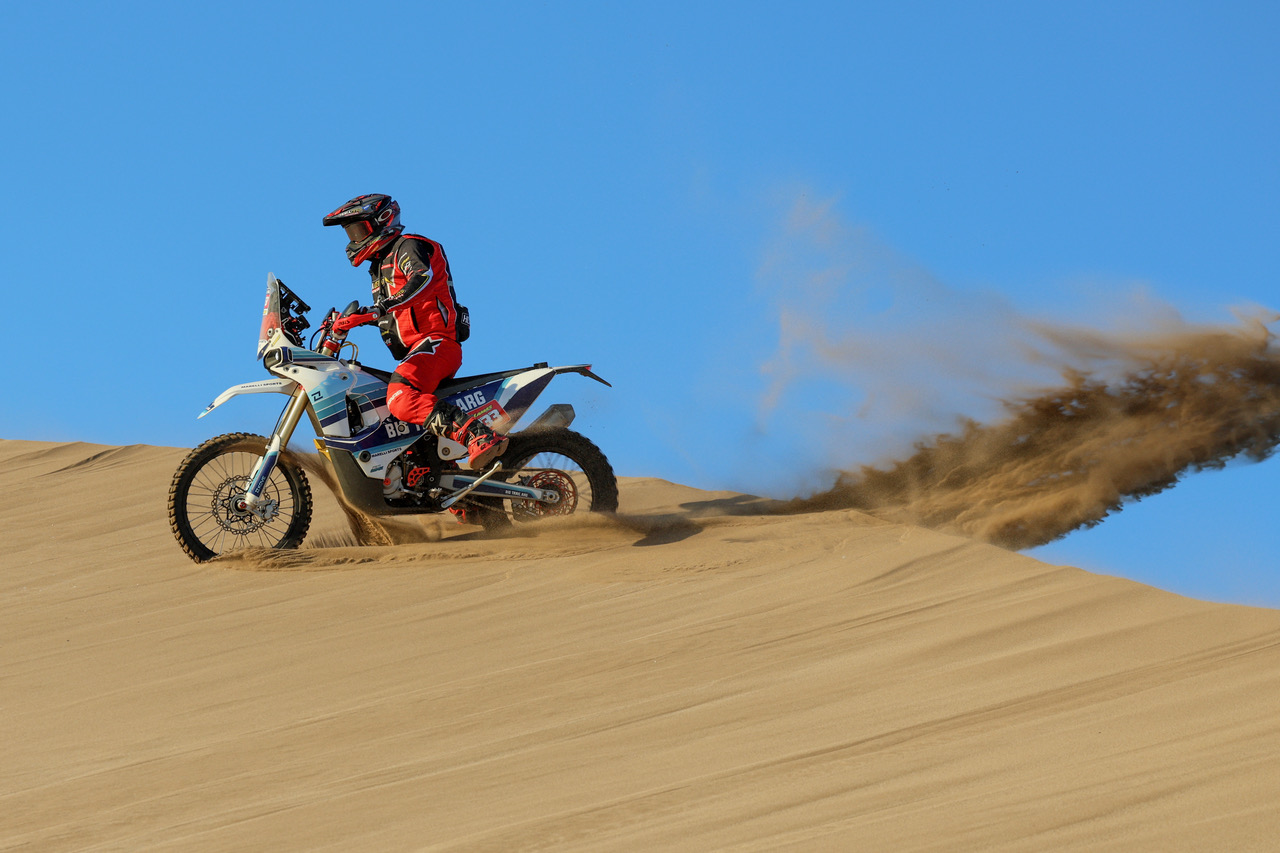
Some sandy sections started showing up here and there, much softer than the hard-packed gravel we had been riding most of the day, and that always gets your attention. But again, the bike made the transition feel easy. A little more weight to the rear, a small adjustment in body position, and everything settled down nicely.
The shape of that long, flat rally seat helps a lot there too. You can move back and forth without fighting the bike, and that makes a real difference when the surface suddenly goes from solid to soft.
That was probably one of the things I liked most about the bike over those days. It never felt tied to just one kind of terrain. Tight mountain tracks, faster open sections, sandy patches, gravel, even the short paved links in between… it just kept adapting without making a big show out of it.
It just did the job.
And it did it in a way that kept a smile on your face the whole time you were riding.
The Small Things You End Up Remembering
There were also those small moments along the way that you do not really think about before the ride, but end up sticking with you. One of them happened the first time we crossed a small river.
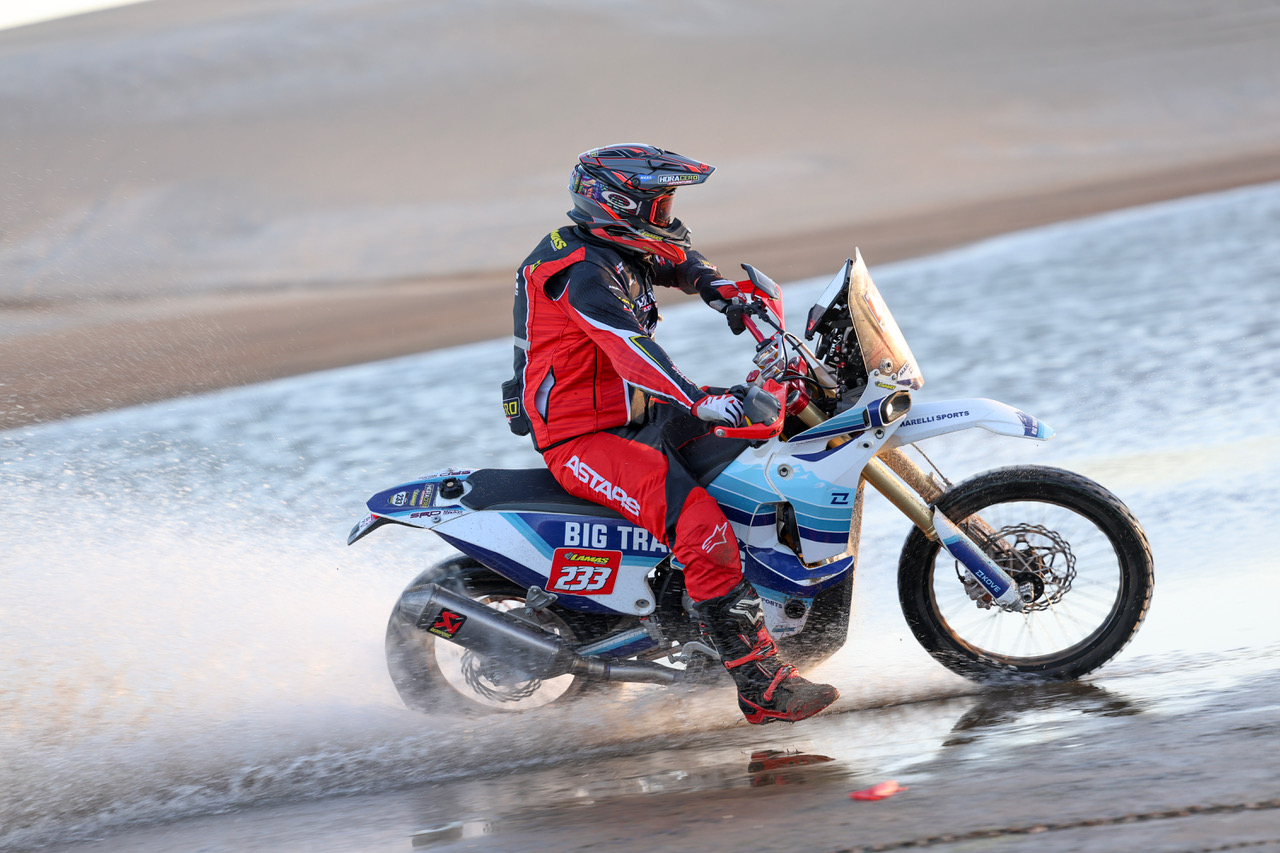
By that point, I was already feeling pretty comfortable on the bike, so I went in without overthinking it, expecting the usual splash from the front wheel hitting my boots like a pressure washer. And then… nothing. For a second I thought I had somehow missed the water. I looked down, a bit confused. Boots completely dry. I even laughed inside the helmet… what just happened?
It turns out the shape of the skid plate and the front of the bike pushes the water away instead of throwing it straight back at you. One of those little details you would never really think about, but after a full day of riding, it makes a big difference.
Then there was the intake sound. You notice it pretty quickly. It sits right under the front of the seat, and every time you roll on the throttle, it opens up with this deep, raw sound that at first feels louder than you expect, almost like it is competing with the exhaust.
I remember thinking that first day, “I might need earplugs for this.” A few hours later, I did not want it to go away. It became part of the ride, that sound you start to recognize without thinking, the kind of thing that connects you to the bike in a different way.
By the end of the day, once the helmets came off, conversations were not exactly crystal clear. “What did you say?” became a pretty common thing as we relived the day over a well-earned beer.
Living With It, And Not Wanting to Stop
After a few days and a good amount of miles, you already know the first impression was a good one, and the wow moments are still there. By then, the real character of the bike starts to come through, and that is where the Kove really begins to make sense.
What stood out most was how easy it was to just keep going. Hours on the bike, changing terrain, long sections standing, short ones sitting, and it never felt like hard work. You stop because the ride stops, not because the bike wears you out.
The three-tank setup adds a lot to that feeling. With around 7.9 gallons (30 liters) of fuel capacity, range stops being a concern, which in Patagonia makes a big difference. You just ride, and long before the bike needs fuel, your body is already asking for a break.
Of course, a few small things start to stand out. The ABS resets every time you turn the bike off, so if you are riding off-road all day, you need to switch it off again each time you restart. Not a big deal, but noticeable.
Then there are the things you start wishing for once you get comfortable. A quickshifter would be nice, and for my height (5’9” / 176 cm), I would probably add a small handlebar riser to make standing even more natural.
In sandy sections, riding further back and loading the rear, I also found myself wishing for a bit more support around the rear tank area, similar to what you see on Dakar-style bikes when riders really lock themselves in through long soft terrain. Not a deal breaker at all, but a detail that could take it further for those who want to push it.
From a practical point of view, you also realize you do not always need to use all three tanks. For most days, running just the front tanks gives you more than enough range while keeping the bike lighter.
I also had the chance to talk with Alejandro Lamas, who has been living around Bariloche and Villa La Angostura for years and comes from a strong motocross and enduro background. As a Kove 450 Rally owner, his take added another perspective.
From his side, the bike delivers a very solid package for what it offers, especially considering how close it gets to a rally-style machine. He has already taken things further with upgrades like a navigation tower, roadbook setup, and other additions.
And that says a lot.
You can ride this bike exactly as it comes… or build it into something even more serious.
Key Specs – Kove 450 Rally
- Engine: 27.4 cu in (449cc) single-cylinder, DOHC, 4-valve, oil/liquid-cooled
- Power: 51 hp
- Torque: 29.5 lb-ft at 7,000 rpm (40 Nm)
- Transmission: 6-speed
- Fuel Capacity: 8.5 gal (32 liters), three tanks
- Dry Weight: 342 lb (155 kg)
- Seat Height: 35.8 in (910 mm)
- Front Suspension: Fully adjustable inverted fork
- Rear Suspension: Fully adjustable shock
- Front Tire: 90/90-21
- Rear Tire: 140/80-18
- Front Brake: Single disc, 2-piston caliper
- Rear Brake: Single disc, 1-piston caliper
- ABS: Dual-channel, switchable
- Display: TFT with navigation
- Lighting: Full LED
- Dimensions: 86.2 in L x 31.7 in W x 54.7 in H (2,190 x 805 x 1,390 mm)
The Feeling That Stays
By the end of the trip, after all those miles, gravel, sand and everything in between, I got off the bike and just stood there for a second, helmet still on, smiling to myself.
It had been one of those trips where everything just flows. You ride, the terrain keeps changing, the miles keep adding up, and at some point you stop paying attention to the bike. You are just there, riding, enjoying it, letting it happen.
That is what stayed with me.
The Kove never felt like something I had to figure out. It just became part of the ride. You get on in the morning, start moving, and the rest of the day sort of takes care of itself. Gravel, sand, rocky sections, faster tracks… it all connects in a very natural way.
And when the day ends, you are tired, dusty, legs a bit sore, hands a little stiff… but still with that feeling that you would happily keep going a while longer.
That kind of feeling.
The one that stays with you even after you stop.
And yeah… I think I already know how this goes.
I still want one in my garage.
Photos: Julio Stadelman, BTA Media – Words: Mike de la Torre
Articles in this issue
bp Ultimate Rally-Raid Portugal
always within reachFurther down the order, the same conditions were telling a different story. Bruno Santos of BS – Frutas Patrícia Pilar continued to ride with confidence on familiar ground,...
Chasing Dust Through Patagonia
Volcanoes, Gravel Roads, and Long Days Riding Out of BarilochePatagonia has always carried a magnetic pull for motorcycle travelers. Endless gravel roads, snow covered volcanoes, deep blue lakes,...
Stolen Miles
Stolen Miles A Ride Through Rain, Loss, and Loyalty Across the United KingdomThere are days on the road that feel like they belong to someone else. Days where everything is slightly off, the light,...
Where the Rivers Decide
Riding the Ozarks Arkansas BDR-X.It starts quietly. No dramatic skyline. No towering peaks announcing themselves on the horizon. Just a narrow ribbon of gravel slipping into a wall of green...
Ducati DesertX 2026
Ducati DesertX 2026 Built to Go Further, Ride Harder "There’s a moment, somewhere between the last paved corner and the first stretch of loose terrain, when a bike reveals what it’s really made of."...
Arai MX-V EVO Review
Purpose-Built Protection for Serious Off-Road RidingWhen Arai updates one of its most respected off-road helmets, expectations are high, but also very specific. Riders don’t want radical change;...